12 Relaxing Calm Bedroom Ideas For A Soft Peaceful Feel
12 Relaxing Calm Bedroom Ideas For A Soft Peaceful Feel
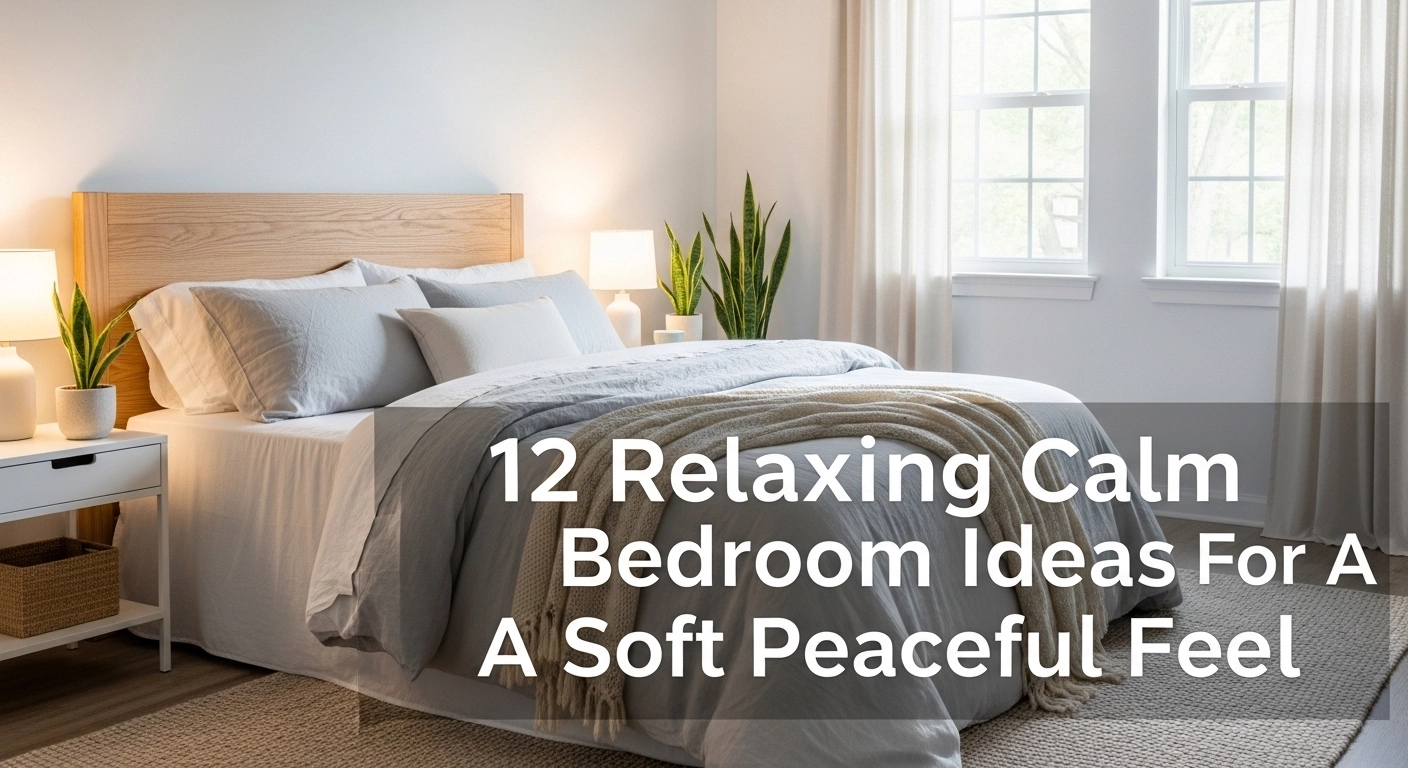
A bedroom does not need a full makeover to feel calmer. In most cases, the difference comes from a handful of thoughtful choices: softer colors, quieter textures, better lighting, and less visual noise competing for your attention.
These calm bedroom ideas are meant for real rooms and real lives. They are practical, easy to picture, and simple to adapt whether your space is large, small, bright, dark, modern, traditional, or somewhere in between.
Why Calm Bedroom Ideas Work
A peaceful bedroom usually feels good for a reason. The room is visually settled, the colors don’t clash, and the materials feel soft rather than harsh. Even small details, like the height of your bedside lamp or the finish of your furniture, can influence whether the room feels relaxing or a little tense.
The best calm bedrooms are not empty or boring. They just feel balanced. There is enough softness to make the room inviting, enough function to make it usable, and enough restraint to keep it from feeling busy.
1. Start With a Soft, Muted Color Palette

One of the easiest ways to create a peaceful bedroom is to quiet the color story first. Think warm white, soft beige, dusty taupe, muted sage, pale gray, clay, or a gentle blue with a bit of gray in it. These shades help the room feel settled without looking flat.
This works because the eye doesn’t have to bounce between strong contrasts. When the walls, bedding, rug, and curtains all sit in the same general mood, the room feels seamless and easy to relax in.
This idea suits almost any bedroom, but it is especially helpful in small rooms, rooms with limited natural light, or spaces that already feel visually busy because of storage, windows, or awkward layouts.
To make it look intentional, choose one main neutral, one supporting tone, and one subtle accent. For example, warm white walls, oatmeal bedding, and a muted olive throw can feel calm without looking plain. Natural wood helps keep the palette from feeling washed out.
The main mistake to avoid is going too cold or too flat. A bedroom full of stark gray and bright white can feel more clinical than calm. A little warmth usually makes the room feel softer and more livable.
2. Choose Bedding That Looks Relaxed, Not Overly Perfect
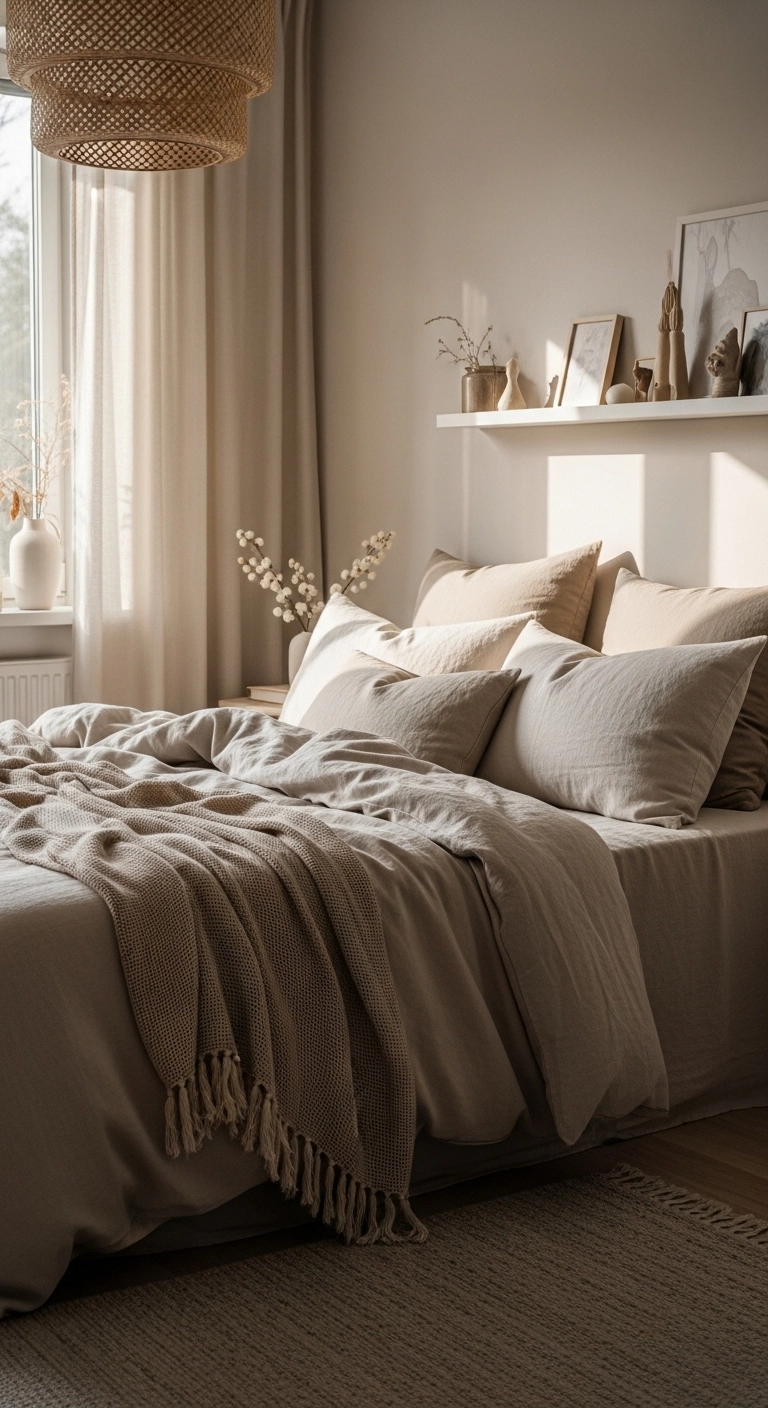
The bed has a huge impact on the mood of a bedroom because it takes up a lot of visual space. If the bed looks stiff, flashy, or overly formal, the room can lose that soft, easy feeling. Serene bedrooms usually look best with beds that feel inviting rather than bustling.
This works because relaxed bedding adds quiet texture and softness right at the center of the room. It makes the room feel comfortable before you even sit down.
It is a great choice for anyone who wants a bedroom that feels cozy without getting heavy or overly decorated. It also works well in minimalist rooms that need warmth.
Try washed cotton, linen, cotton gauze, or a matte quilt instead of anything too glossy or rigid. Layer a fitted sheet, simple duvet, and one light coverlet or throw. Two sleeping pillows plus one or two supportive accent pillows are usually enough. That keeps the bed styled, but not crowded.
One common mistake is overloading the bed with decorative pillows and multiple competing patterns. A calm bed should look like you can actually use it without moving half the room onto a chair first.
3. Use Layered Lighting Instead of One Harsh Overhead Light
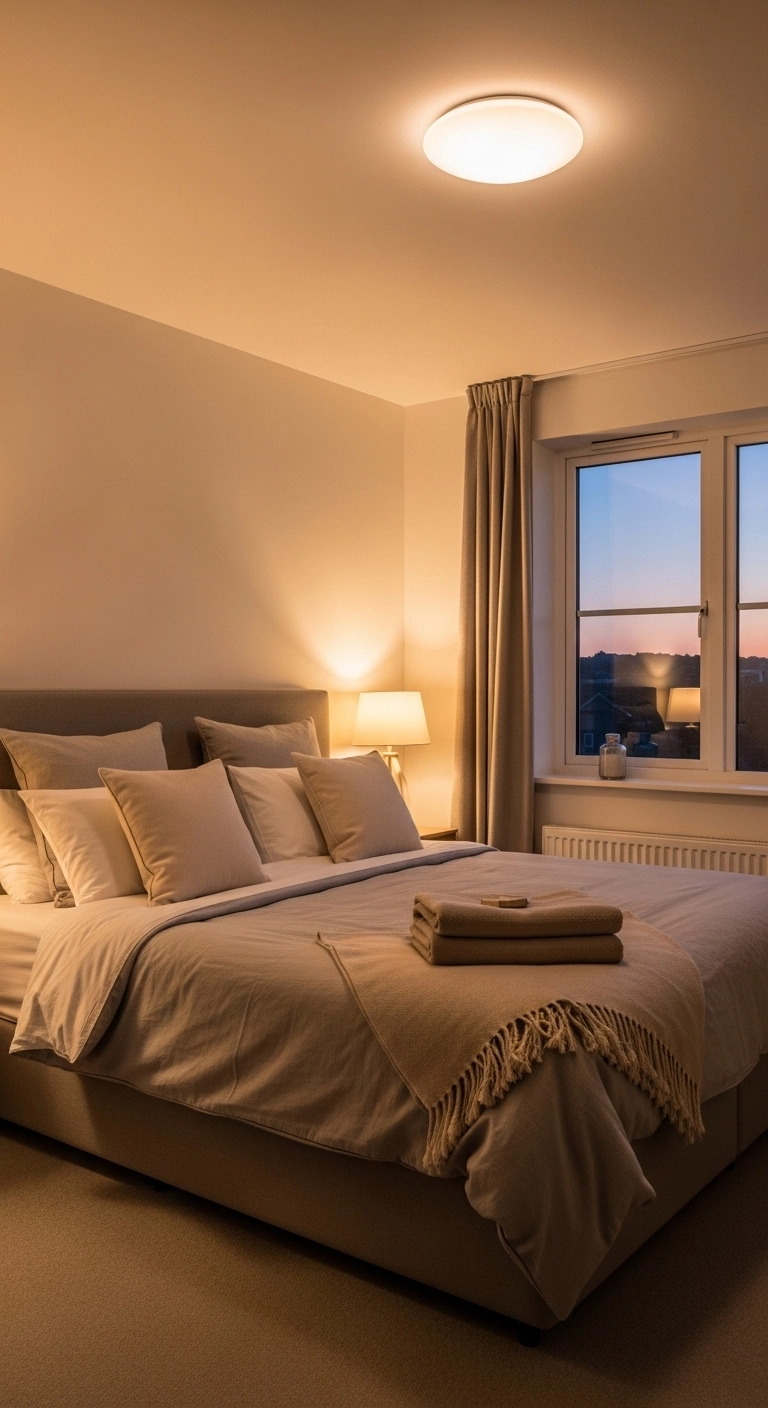
If a bedroom only has one bright ceiling fixture, it will rarely feel truly restful. Calm spaces need light that can shift with the time of day and the mood you want.
Layered lighting works because it lets you soften the room in the evening and create gentle pools of light instead of one flat flood of brightness. That instantly makes a room feel more peaceful.
This idea works especially well in bedrooms used for more than sleep, like rooms where you read, journal, get dressed, or unwind before bed.
A good setup often includes three types of light: overhead lighting for function, bedside lighting for comfort, and one extra soft source, such as a small table lamp, wall sconce, or even a dim corner lamp. Lamps with fabric shades, frosted glass, or soft diffused finishes tend to feel calmer than exposed bulbs.
The caution here is simple: avoid lighting that is too blue, too bright, or too cool in tone. Bedrooms usually feel better with warm light, especially at night. A beautiful room can still feel wrong if the lighting is harsh enough to make it look like a waiting room.
4. Bring In Natural Wood for Quiet Warmth
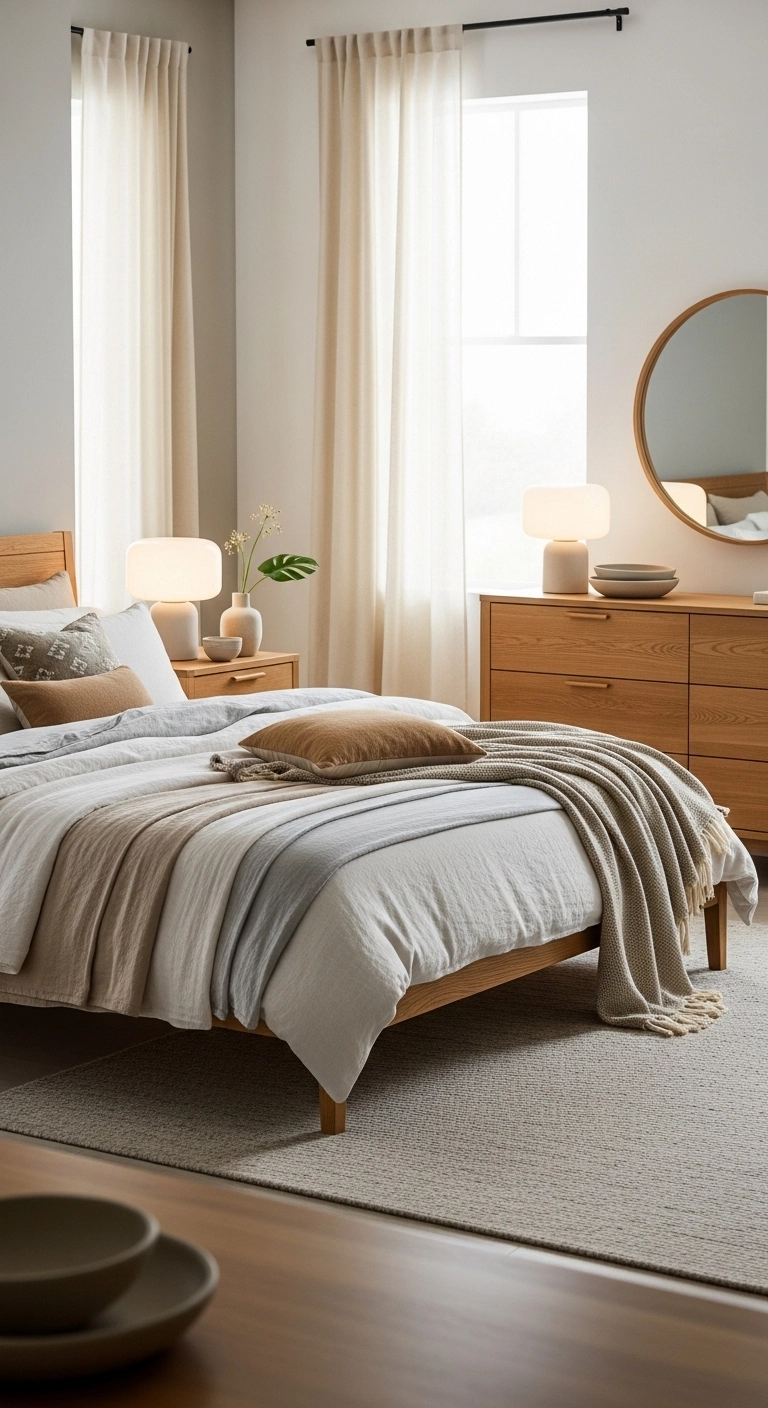
A room full of painted or glossy furniture can sometimes feel a little flat. Natural wood adds warmth in a way that feels calm, grounded, and easy on the eyes.
It works because wood introduces texture and variation without creating clutter. Even a simple oak nightstand or walnut bench can make a bedroom feel more settled and less sterile.
This idea is suitable for modern, Scandinavian, rustic, Japanese, traditional, and transitional bedrooms. It’s especially useful in rooms with a lot of white, gray, or upholstered surfaces that need some balance.
You do not need a full matching furniture set. In fact, a calmer look often comes from mixing a few wood tones carefully rather than buying everything from the same showroom display. A wood bed frame, small stool, dresser, mirror frame, or floating shelf can all do the job.
The main thing to avoid is using too many unrelated finishes at once. If one piece is pale ash, one is orange oak, one is red cherry, and one is black-stained wood, the room can start to feel accidental instead of calm.
5. Keep Window Treatments Light and Gentle
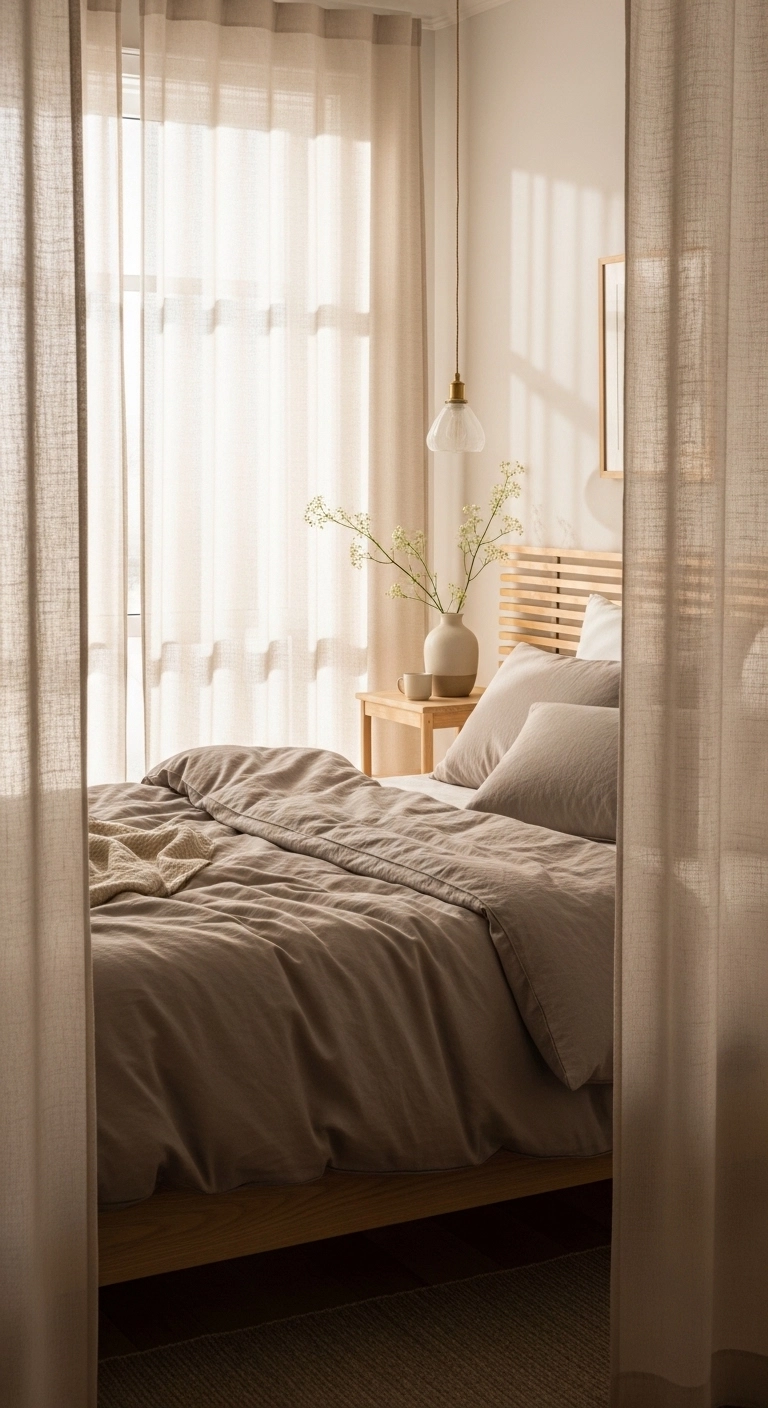
Curtains can completely change the softness of a bedroom. Heavy, stiff, or overly dramatic treatments often make a room feel formal. Lighter fabrics tend to create a quieter, more relaxed look.
This works because soft window treatments filter light, reduce harsh lines, and add movement and texture without being distracting. They help the room feel more cocooned, which is part of making a bedroom cozy.
This is especially effective in bright bedrooms, rooms with large windows, or spaces that need a little softness to balance sharper furniture lines.
Linen-blend curtains, soft cotton panels, or simple drapery in a tone close to the wall color usually work well. If you need darkness for sleep, combine airy curtains with a shade behind them rather than choosing one heavy option that dominates the whole wall.
A common mistake is hanging curtains too short or using a fabric that is too thin for the room’s needs. Short curtains can make a room feel choppy, while flimsy ones may look limp instead of elegant. Aim for a relaxed drape with enough body to feel intentional.
6. Reduce Visual Clutter Around the Bed
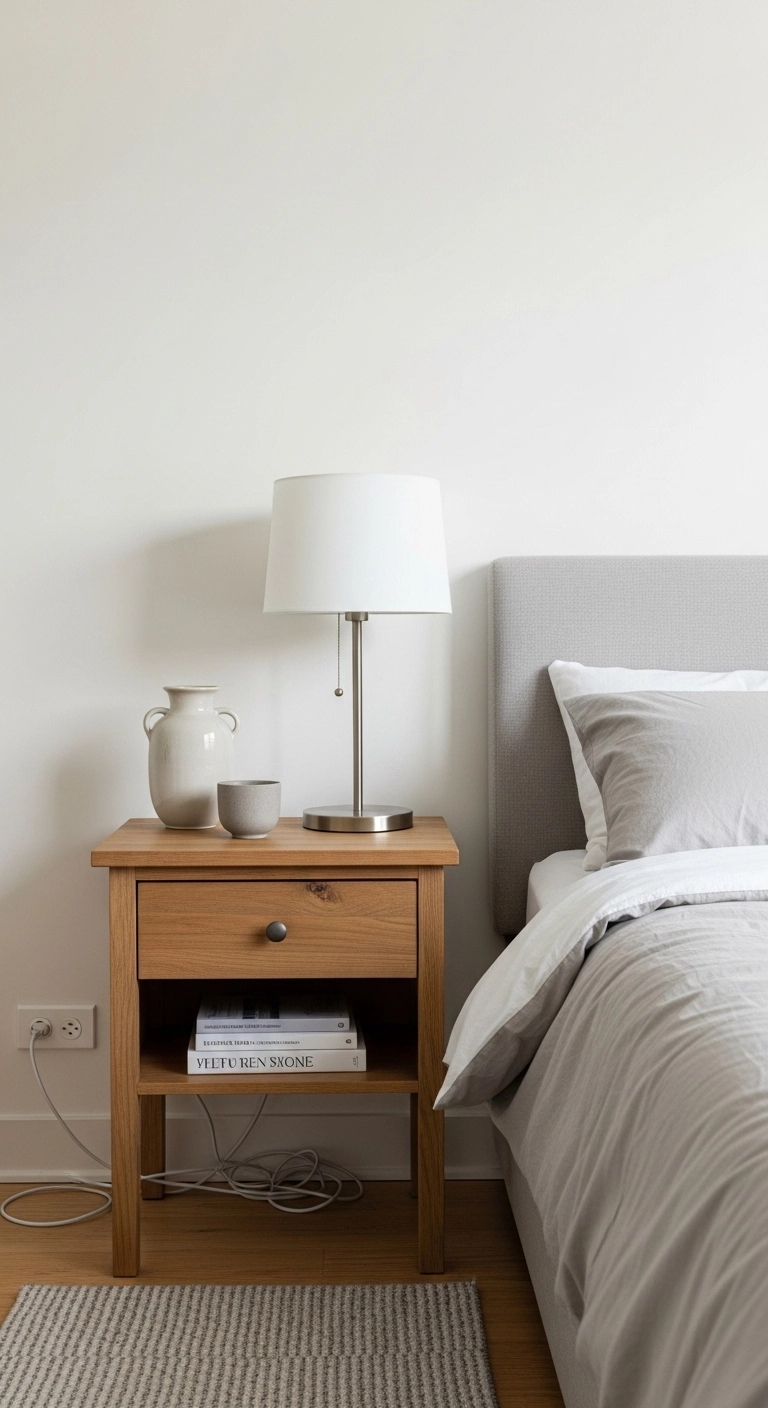
Nothing interrupts a peaceful bedroom faster than too many small things competing for space near the bed. Stacks of books, tangled cords, extra decor, random trays, and laundry-adjacent chaos all add low-level visual stress.
This works because the area around the bed is where your eye naturally lands first. When that zone feels clear, the whole room feels calmer, even if the rest of the bedroom is fairly simple.
This idea is perfect for small bedrooms, apartments, or anyone who has to work hard for storage in their room. It’s also helpful if your bedroom often doubles as an office, dressing area, or catch-all space.
Try limiting each nightstand to the essentials and one intentional decorative element. A lamp, a small dish, and perhaps a single vase or framed print is often enough. Hide charging cords, use closed storage if possible, and keep under-bed clutter under control if your frame leaves it visible.
The caution is not to strip the room of everything useful in the name of calm. A peaceful bedroom should still work for your daily routine. The goal is edited, not empty.
7. Add a Rug That Softens the Floor and the Whole Room
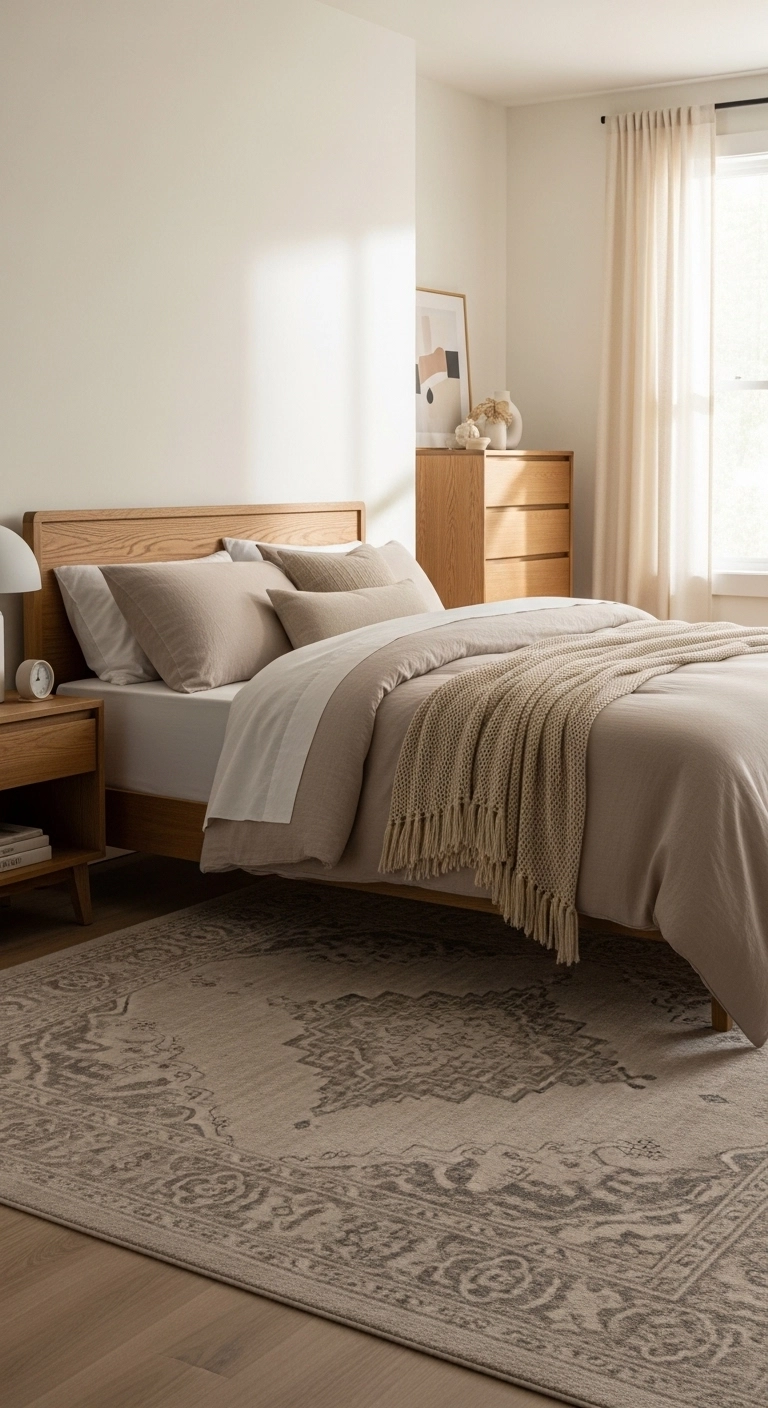
A rug is not just for comfort underfoot. In a bedroom, it also softens sound, adds texture, and visually grounds the furniture. That can make the space feel quieter in every sense.
This works because rugs reduce the hard, echoing feel that bare floors sometimes create. They also help separate the sleeping zone from the rest of the room, which makes the layout feel more intentional.
This idea works particularly well in bedrooms with wood, laminate, or tile floors, and in rooms that feel a little too stark or unfinished.
For a calming look, go for low-contrast patterns, soft neutrals, or tone-on-tone textures. A large rug often works better than a small one because it makes the room feel more connected. If possible, let the rug sit partially under the bed and spread out on either side to anchor the room.
One mistake to avoid is choosing a rug that is too small. A tiny rug floating at the side of the bed can make the space feel pieced together rather than restful.
8. Use Fewer Decor Pieces, but Make Them Matter
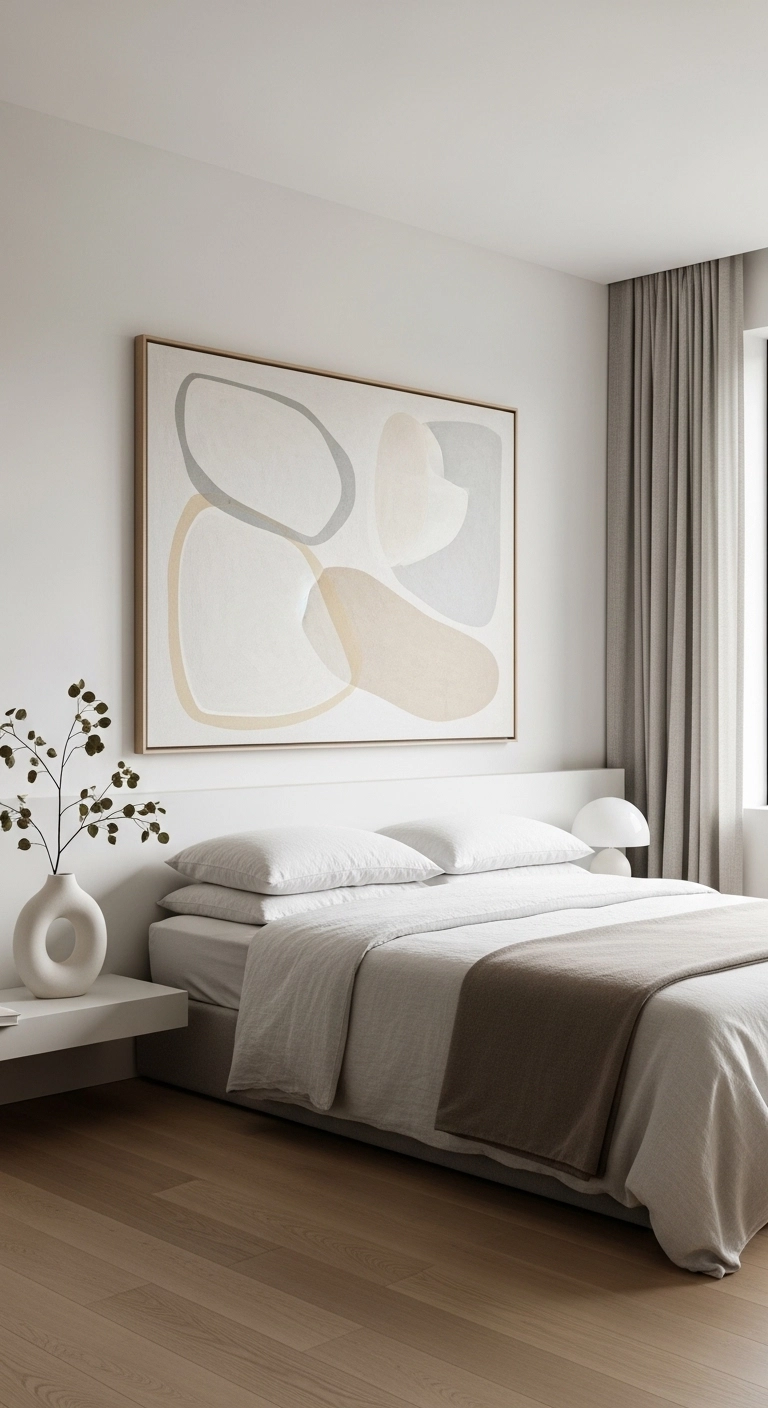
A calm bedroom does not need lots of accessories. In fact, too many decorative objects often work against the peaceful look people want. A few well-chosen pieces usually create a stronger effect than a shelf full of filler.
This works because meaningful, visually quiet decor gives the eye places to rest. The room feels thoughtful instead of overstyled.
This suits anyone who likes a polished bedroom but does not want it to feel staged. It is also perfect for smaller rooms where every object has more visual impact.
Think one large piece of art instead of a busy gallery wall, one ceramic vase instead of several small accents, or one beautiful mirror instead of multiple wall pieces fighting for attention. Decorating with natural materials, matte finishes, and simple silhouettes creates a soft feel in the bedroom.
The caution here is to avoid choosing decor that is calm in color but still busy in shape or quantity. Ten beige objects can still look cluttered if they all compete for attention.
9. Create a Small Reading or Resting Corner
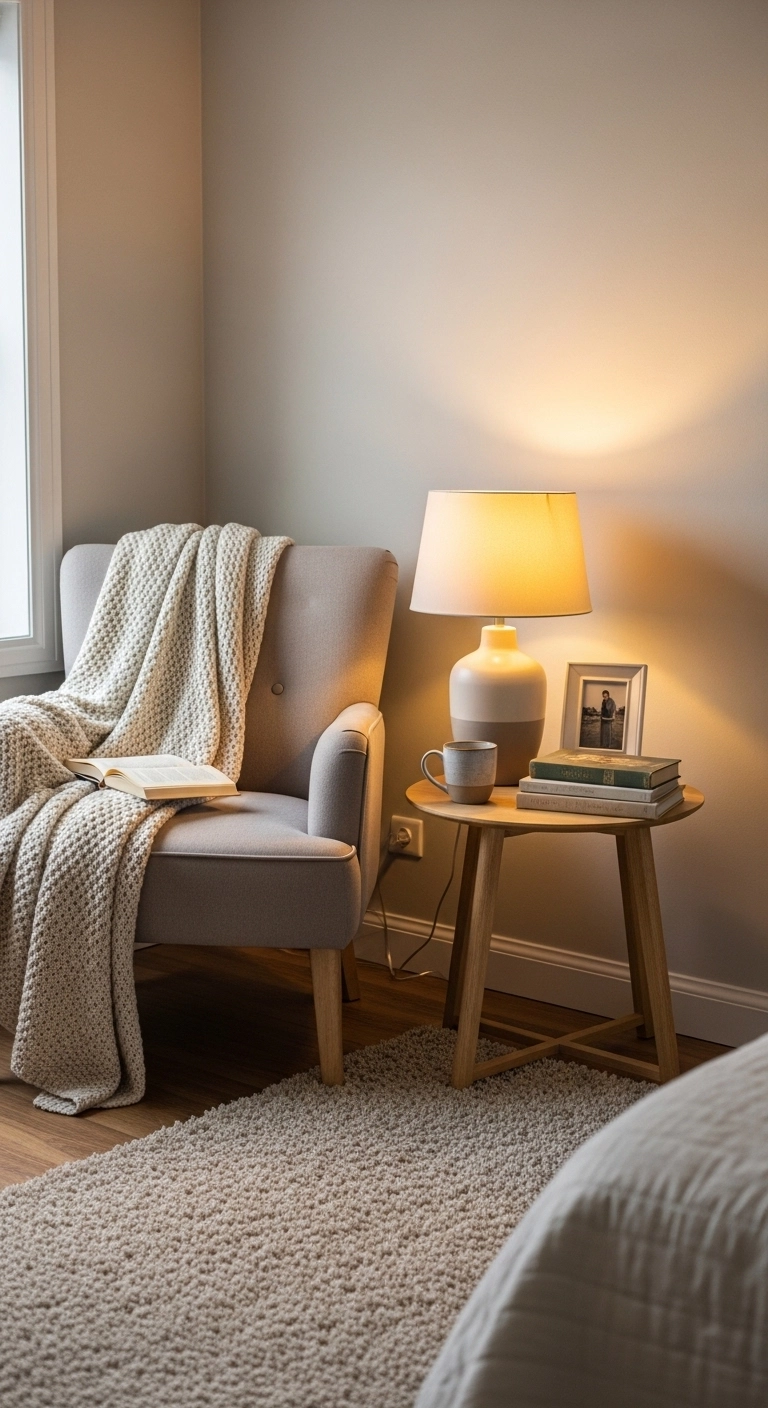
If you have the space, adding a quiet corner can make the bedroom feel more like a retreat and less like a place that only exists for sleep and storage.
This works because it gives the room a second soft function. A chair by the window, a bench at the foot of the bed, or a small nook with a lamp and side table can encourage a slow routine and make the bedroom feel more intentional.
This idea works best in medium to large bedrooms, empty corners, bay windows, or awkward layouts that need a little purpose. It also suits people who like reading, stretching, journaling, or having a calm place to sit that is not the bed.
Keep the setup simple. One upholstered chair, one soft throw, and one lamp is often enough. If you use a bench, choose one with a soft fabric seat or a wood finish that ties into the rest of the room. The point is to add ease, not another zone that needs constant styling.
The mistake to avoid is turning this area into clutter overflow. A “reading corner” that ends up holding clothes, packages, and half-used candles is just a nicer-looking pile.
10. Mix Texture Quietly for a Soft, Layered Look
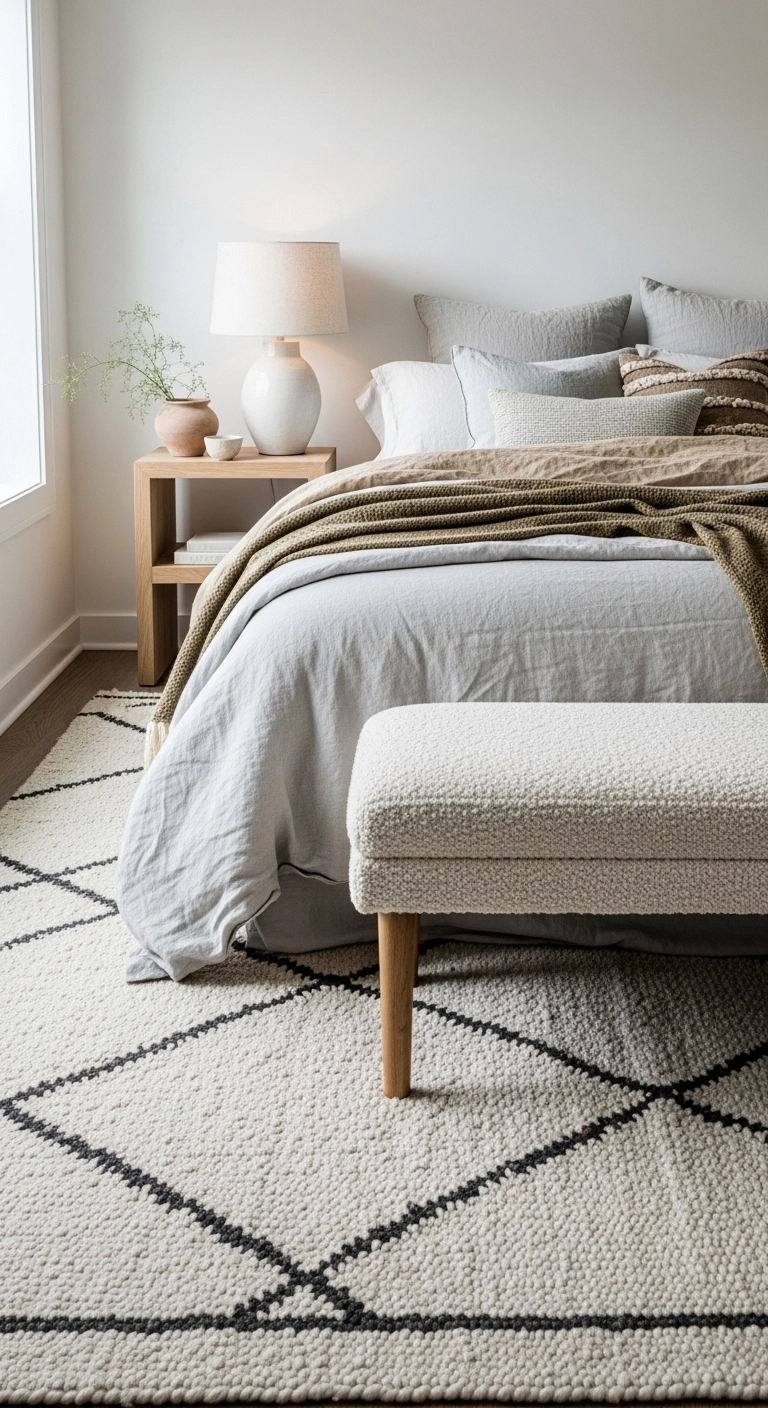
Calm bedrooms rarely rely on color alone. Texture does a lot of the work. Without it, a neutral room can feel flat. With it, even a simple space feels warm and inviting.
This works because texture adds depth without needing louder colors or heavy contrast. It keeps the room interesting while still feeling peaceful.
This idea suits almost every style, especially neutral bedrooms that risk feeling a little bland. It is also useful in minimalist spaces where every element needs to earn its place.
A good mix might include a linen bed, a woven rug, a wooden nightstand, a matte ceramic lamp base, and soft curtains. The room remains soft, but it doesn’t feel one-note. Try combining smooth, knobby, washed, woven, and lightly padded surfaces rather than repeating the exact same finish everywhere.
The caution is not to confuse texture with bulk. Too many chunky knits, shaggy rugs, tufted surfaces, and heavy quilts can make a room feel crowded or overly warm, especially in a smaller space.
11. Let the Bed Be the Clear Focal Point
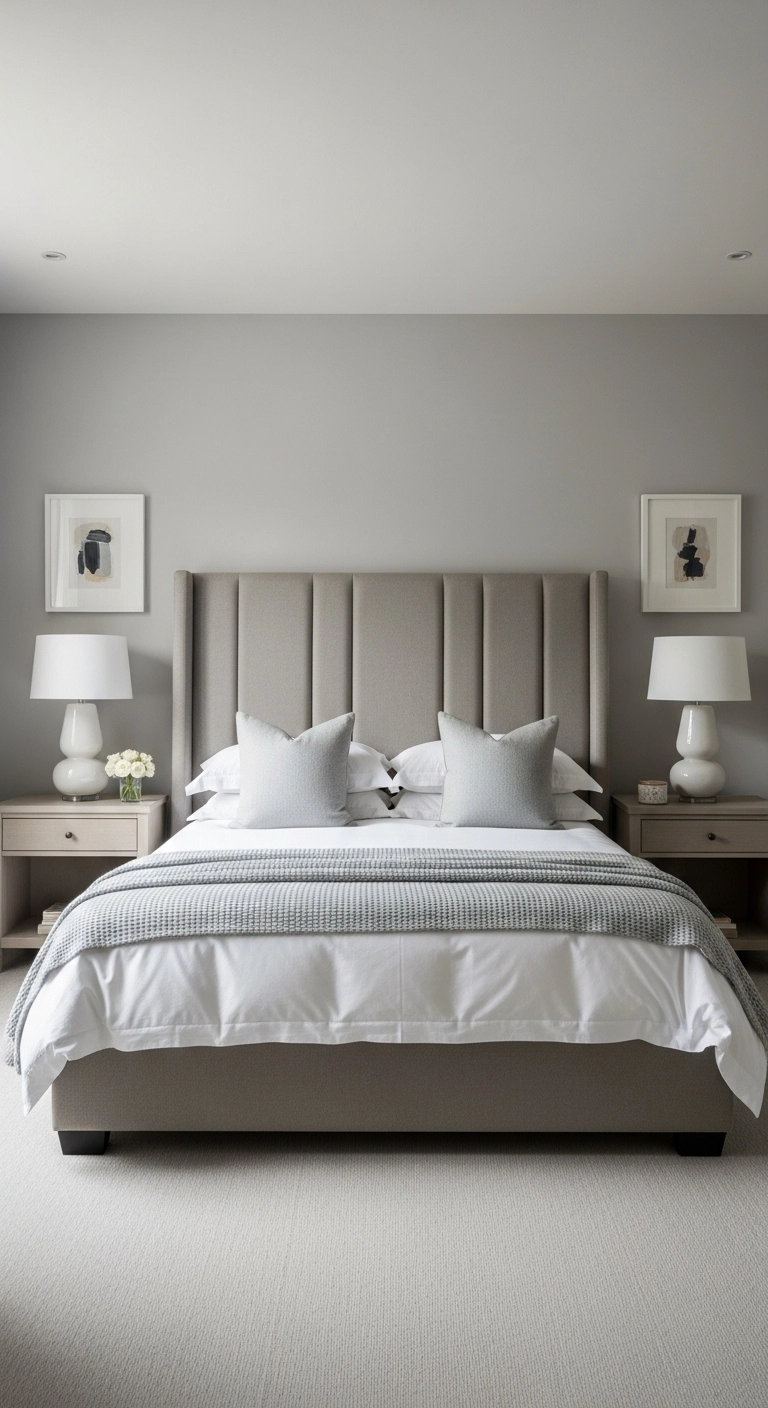
In a calm bedroom, the layout matters just as much as the styling. When the bed feels visually centered and supported, the room usually feels more peaceful. When too many other items compete with it, the room can feel unsettled.
This works because a clear focal point helps the room make sense at a glance. Your eye knows where to land, and that creates a more restful visual flow.
This idea is especially helpful in bedrooms with awkward furniture arrangements, oversized storage pieces, or too many decorative features pulling attention in different directions.
Start by giving the bed the strongest presence in the room. That could mean centering it on the main wall, using matching lamps, adding one large artwork piece above it, or choosing a simple but substantial headboard. Then keep surrounding furniture visually supportive rather than dominant.
A common mistake is letting another piece overpower the bed, like a huge dresser covered in decor or a loud accent wall on the opposite side of the room. In a peaceful bedroom, the bed should feel like the room’s quiet anchor.
12. Add One Nature-Inspired Element

You do not need a jungle of plants to make a bedroom feel softer. Just one nature-inspired detail can shift the mood in a calm direction.
This works because natural elements bring in shape, texture, and a little life without making the room feel busier. They also pair well with almost every calming palette.
This idea suits nearly everyone, including renters and people who prefer low-maintenance decor. It is especially helpful in urban spaces or bedrooms that feel slightly boxed in.
You could use a small live plant, a branch in a ceramic vase, botanical artwork in muted tones, a stone tray, woven baskets, or bedding in a soft leaf-inspired pattern. If you do use plants, choose varieties that suit the room’s light conditions so they stay healthy and actually look relaxing instead of sad.
The caution is to avoid overdoing the “natural” look with too many themed pieces at once. One or two subtle elements usually feel more calming than a full nature motif.
Conclusion
The most effective calm bedroom ideas are often the simplest ones. Softer color, better lighting, quieter textures, and less visual clutter can change the entire feel of a room without making it look plain or predictable.
You don’t have to use all 12 ideas at once. In fact, choosing just two or three that suit your space often works best. A calming bedroom usually comes from modifying, softening, and balancing what’s already there, rather than endlessly adding more.

Muskan Saleem
BukayHome shares practical home decorating ideas, room inspiration, and simple styling tips to help readers create a home they truly love.