16 Sweet Baby Nursery Ideas For A Calm Cozy Little Space
16 Sweet Baby Nursery Ideas For A Calm Cozy Little Space
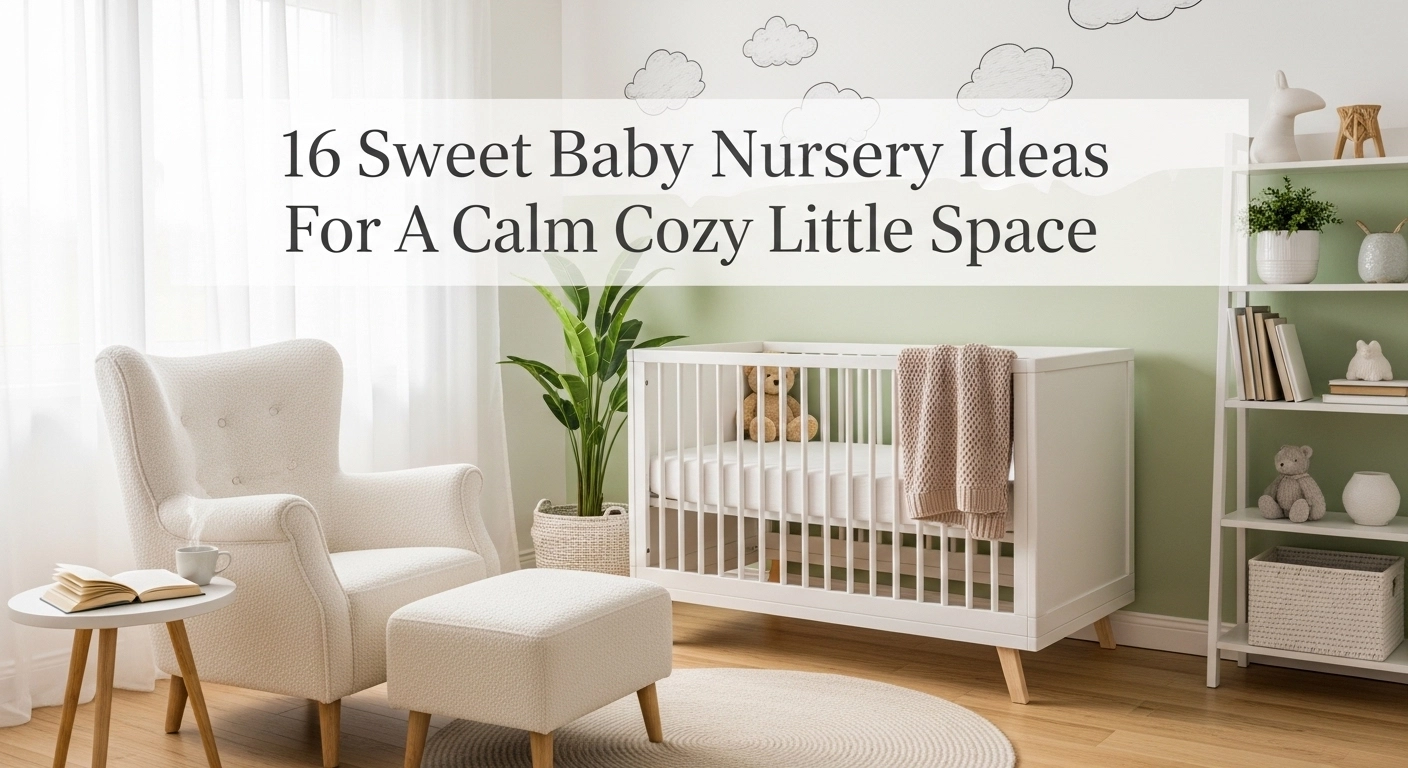
Creating a nursery can feel oddly high-pressure. You want it to look sweet, feel peaceful, work for real daily life, and still leave room for all the practical things a baby needs. The good news is that the best baby nursery ideas are usually not the fanciest ones. They are the choices that make the room softer, simpler, and easier to use when you are tired, busy, and holding a baby with one arm.
A calm nursery often comes down to a few basics: gentle color, comfortable lighting, smart storage, easy routines, and a layout that does not fight you. The ideas below focus on comfort and function together, so the room feels cozy without becoming cluttered or overly styled.
Why calm nursery ideas work so well
A nursery does not need to be packed with decor to feel warm. In fact, a calmer space often works better because it is easier to keep tidy, easier to move around in, and easier to settle into during diaper changes, feeding sessions, and quiet bedtime routines.
That does not mean the room has to look plain. Soft layers, thoughtful details, and a few personal touches can make it feel special while still supporting the real purpose of the space: helping daily care feel smoother and more peaceful.
Start with soft, quiet wall colors
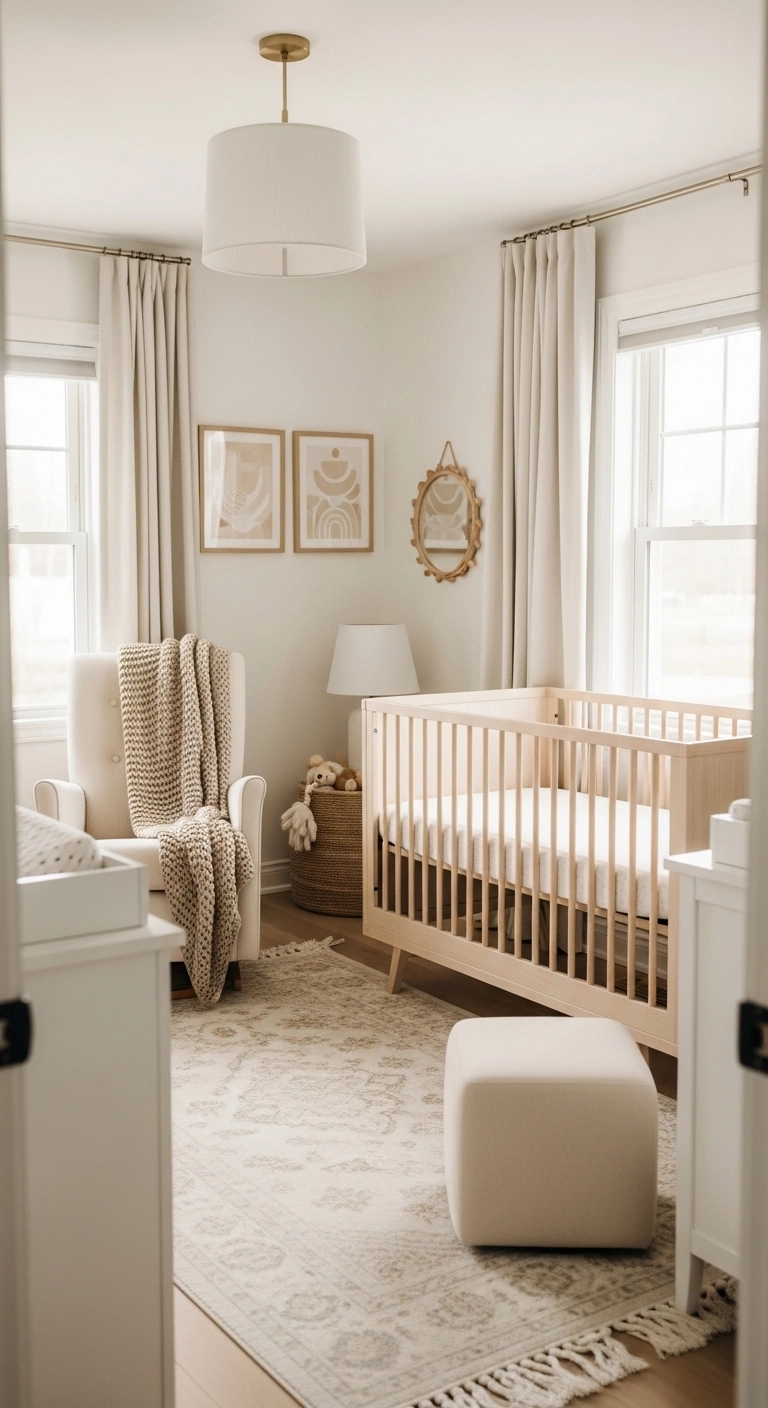
Soft wall color is one of the simplest baby nursery ideas because it shapes the whole mood of the room. Think warm white, creamy beige, dusty blush, pale sage, soft gray-beige, or muted blue. These shades help the room feel settled instead of visually busy.
This works especially well in small nurseries, rooms with limited natural light, or spaces you want to feel restful at any time of day. A soft backdrop also makes it easier to mix furniture and textiles without the room feeling chaotic.
To apply it well, choose one main color and keep it consistent across most large surfaces. You can add interest through texture rather than strong contrast. A matte or eggshell finish often looks softer than anything too shiny.
One common mistake is picking a color that looks calm on a paint swatch but turns icy, yellow, or dull once it covers the whole room. Always test a sample on the wall and look at it in morning, afternoon, and evening light before deciding.
Use blackout curtains with a softer outer layer
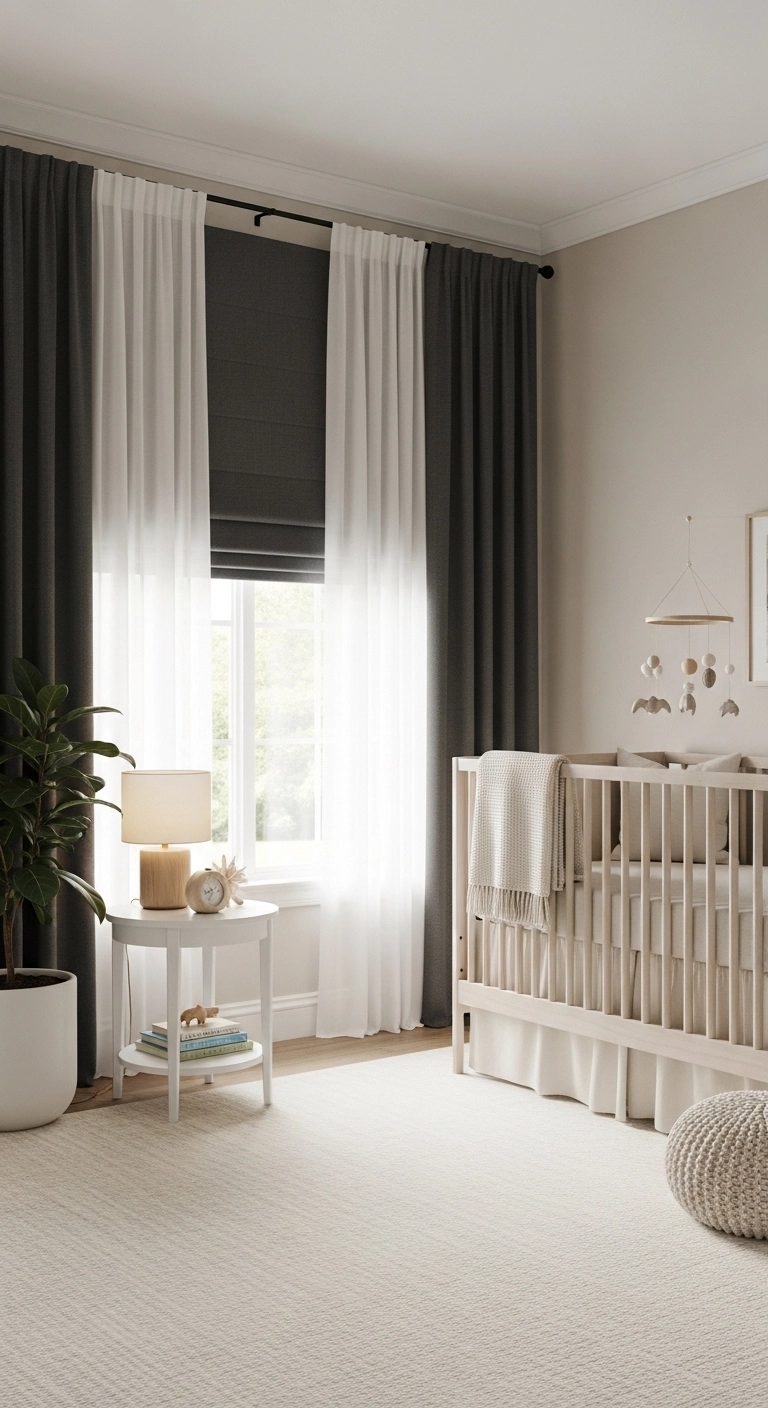
Window treatments do a lot of heavy lifting in a nursery. Blackout curtains help control brightness for naps and early bedtimes, while a softer outer layer such as linen-look panels or light drapes keeps the room from feeling heavy.
This combination works because it gives you function and coziness at once. You get better light control when needed, but the room still looks gentle during the day.
It suits almost any nursery, especially rooms that get strong afternoon sun or streetlight at night. If the nursery doubles as a guest room or small shared room, layered curtains also make the space feel more finished.
Choose blackout panels in a neutral shade and hang them high and wide so the window looks larger and the curtains block more light when closed. Add a lighter outer curtain if you want a softer, more decorative finish.
The main caution is bulk. Very thick, dark curtains can make a small room feel closed in. If the nursery is already tight, keep the color light and the fabric simple.
Add one comfortable chair that you truly want to sit in
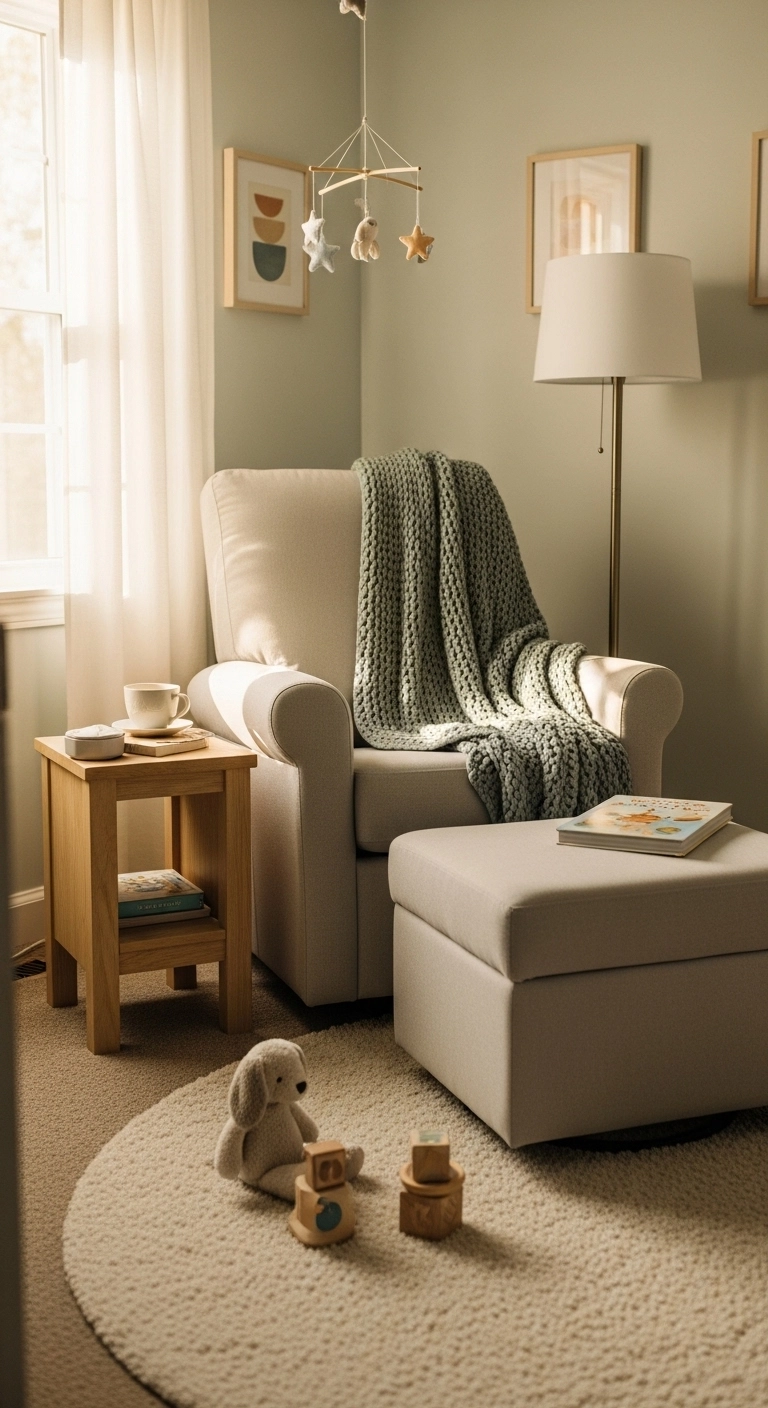
A nursery chair is not just a styling piece. It is one of the most used items in the room, which is why practical baby nursery ideas should always include comfortable seating. A good chair gives you a place to feed, cuddle, read, or simply pause for a minute.
This works because comfort changes how the room functions. Even a beautiful nursery can feel frustrating if the chair is stiff, too upright, or awkwardly placed.
It works best for anyone who wants the nursery to support daily routines rather than just look pretty in photos. In a larger room, a glider or rocker may fit well. In a smaller room, a compact armchair with a footstool can work just as nicely.
To apply it well, place the chair near a side table or small shelf so essentials are within reach. Add a washable cushion or throw for softness, but keep the setup simple enough that it still feels easy to manage.
A frequent mistake is choosing a chair mainly for its look. Before buying, think about arm height, seat depth, and whether you can sit in it comfortably for longer stretches.
Keep the crib area simple and visually calm
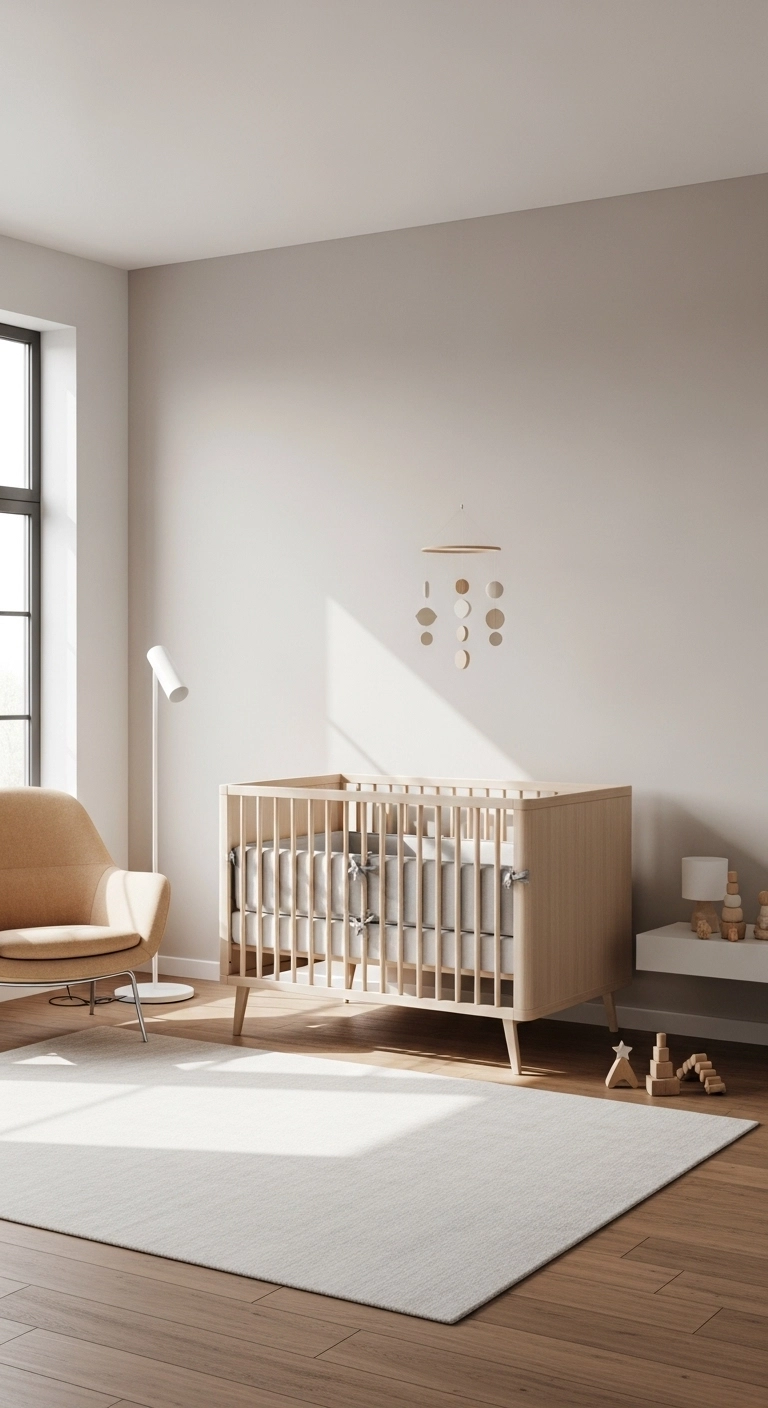
The crib naturally becomes the visual center of the nursery, so it helps when that part of the room feels clean and uncluttered. A simple crib, a calm wall behind it, and minimal visual noise can make the whole nursery feel more restful.
This works because the eye has somewhere to settle. When the crib wall is overloaded with shelves, bold prints, and lots of small objects, the room can start to feel crowded even if it is not physically full.
This approach suits nearly every style, from modern to cottage to classic. It is especially useful in small rooms where too much on one wall can make the whole space feel cramped.
To apply it well, let the crib stand out through shape, tone, or placement rather than by surrounding it with too many extras. A soft framed print, subtle wallpaper, or one meaningful detail above another part of the room often works better than over-decorating the crib wall.
The main caution is safety and simplicity around the sleep area. Keep the setup straightforward and follow current safe sleep guidance from your pediatrician or local health authority when planning the crib space.
Bring in warmth with natural wood tones
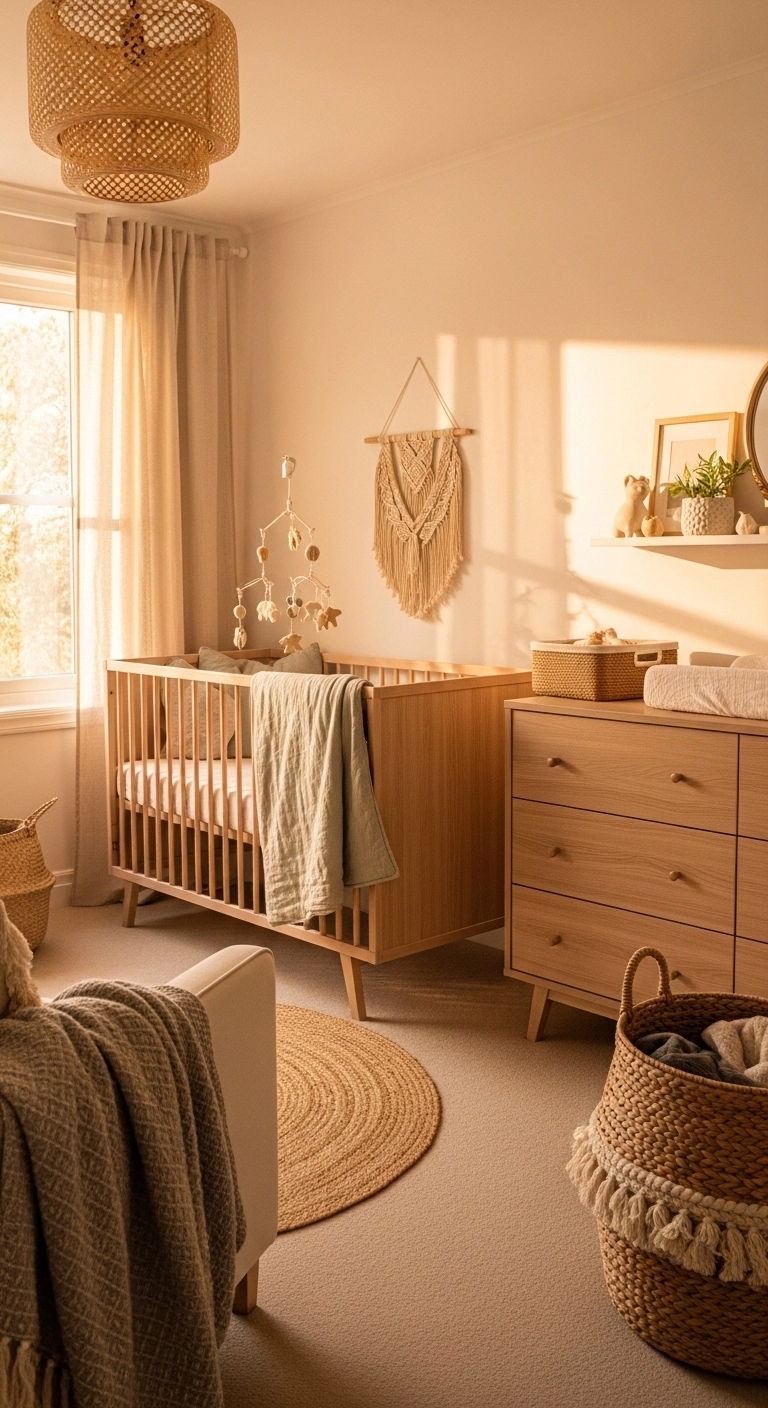
Natural wood instantly adds warmth to a nursery. It softens painted walls, balances cooler colors, and gives the room a grounded, lived-in feel. This could mean a crib, dresser, bookshelf, picture frame, or even just a few smaller accents.
This works because wood adds texture without adding clutter. It makes a room feel cozy in a quiet way.
It is especially helpful in nurseries that lean minimal or modern, since it keeps the space from feeling flat or overly sleek. It also pairs well with a wide range of colors, from cream and white to green, blush, terracotta, or blue-gray.
To use it well, keep the undertones fairly consistent. You do not need every wood finish to match, but it helps if they feel related rather than random. A light oak and warm walnut can work together more easily than several competing tones scattered across the room.
A common mistake is adding too many different finishes at once. If the room already has patterned textiles or colorful decor, keep the wood palette simpler.
Layer in soft textures instead of more decor
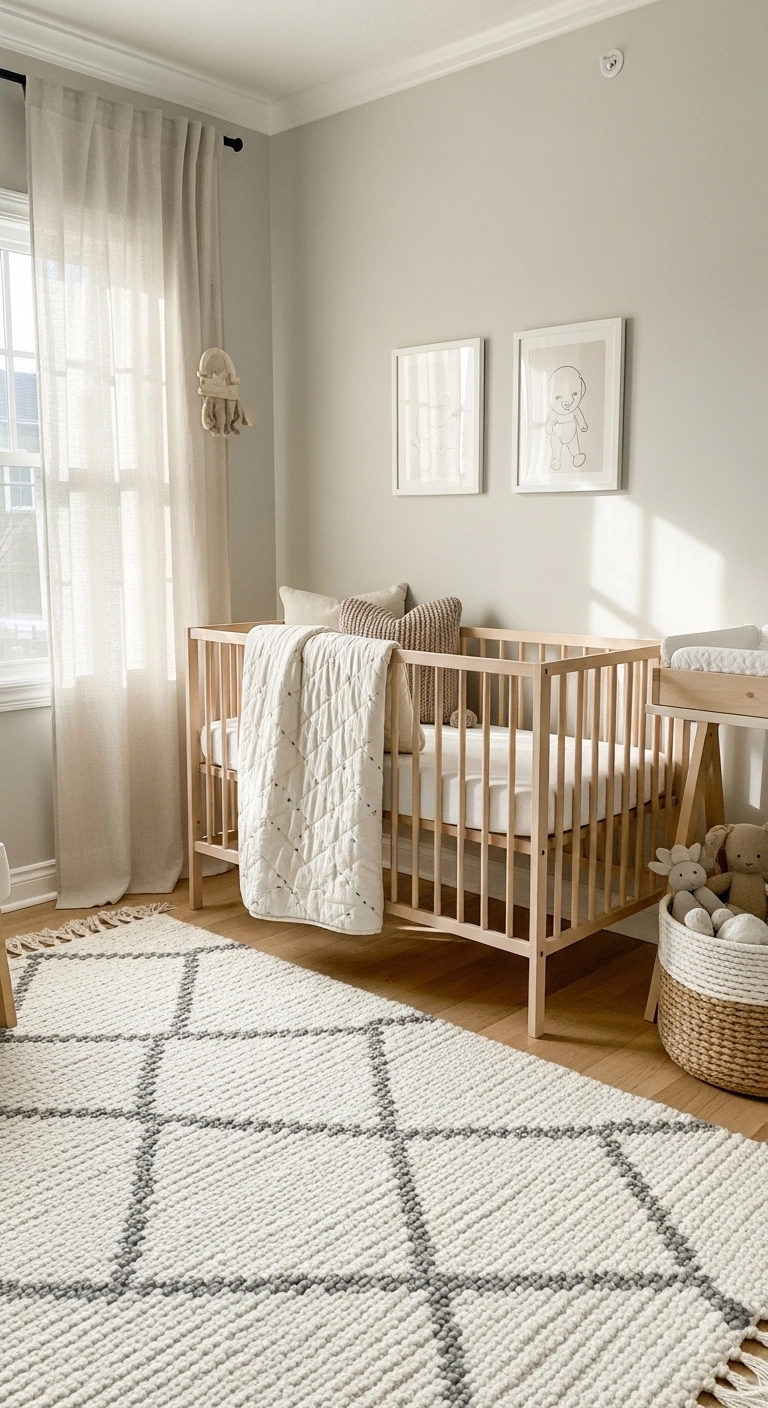
If a nursery feels a little plain, the answer is not always more objects. Often, it just needs softer texture. A woven rug, quilted blanket, knit pillow, fabric lampshade, or linen-look curtain can make the room feel warm without making it feel crowded.
This works because texture adds comfort visually and physically. It makes the space feel cared for and cozy, even with a limited color palette.
It works best in neutral or lightly decorated rooms, where texture can do more than color to create depth. It is also useful if you want the nursery to feel sweet but not overly themed.
To apply it well, mix a few different textures rather than piling on many similar ones. For example, pair a smooth painted wall with a soft rug, a cotton crib skirt, and a woven basket. That creates balance without clutter.
The caution here is maintenance. Some beautiful textures are harder to wash or keep clean. In a nursery, it helps to choose materials that can handle real life.
Use a rug to define the cozy zone
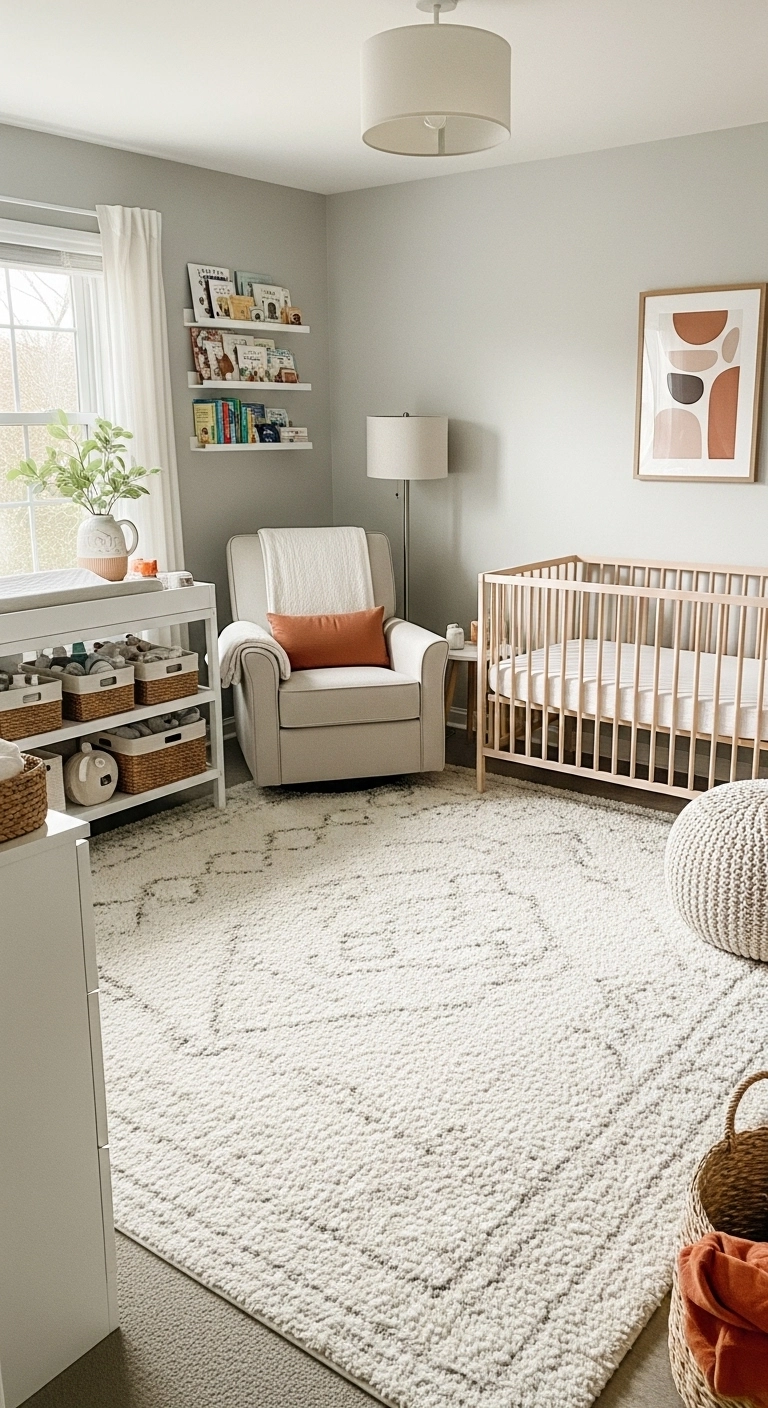
A rug can make a nursery feel finished in seconds. It also helps define the room, especially if the nursery is part of a larger bedroom or if the space has hard flooring that feels cold.
This works because a rug visually gathers the furniture and adds softness underfoot. It can make even a simple nursery feel intentional.
It suits almost every room, but it is especially helpful in nurseries with echo, bare floors, or an awkward layout. A rug under the crib and chair area can make the whole setup feel connected.
Choose a size that is large enough to anchor the room rather than floating like a small mat in the middle. Soft patterns often hide wear better than very pale solid rugs, and low-pile styles are usually easier to clean.
One limitation is practicality. Very thick or shaggy rugs can be harder to vacuum and may collect dust more easily. A softer flatweave or low-pile option is often easier to live with.
Create a changing station that feels calm, not chaotic
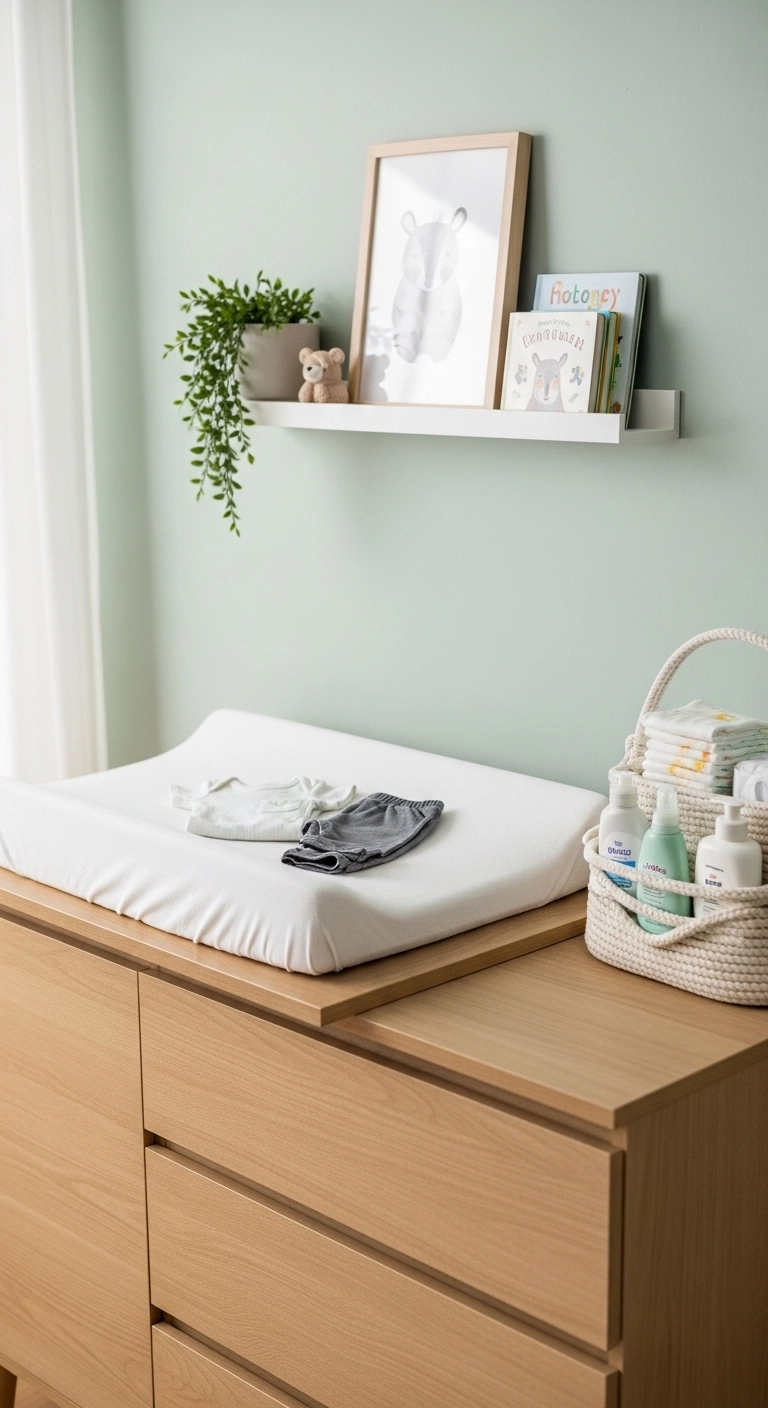
A changing area works best when it is simple and efficient. Instead of treating it like a storage dump for every baby product, treat it like a small workstation with only what you actually use often.
This works because daily tasks feel easier when you are not sorting through clutter every time you need a diaper, wipe, or extra outfit. A calm setup saves effort.
This idea suits every nursery, but it is especially valuable in small rooms where surface clutter quickly takes over.
To apply it well, use a dresser or changing table with a tray, basket, or top drawer system that keeps the essentials grouped. Limit the visible items to a few practical basics and store back-up supplies nearby but out of sight.
The biggest mistake is letting the changing surface become permanent storage. Once creams, toys, receipts, random socks, and unopened packs pile up, the whole room starts to feel busier.
Choose open storage only for beautiful or useful things
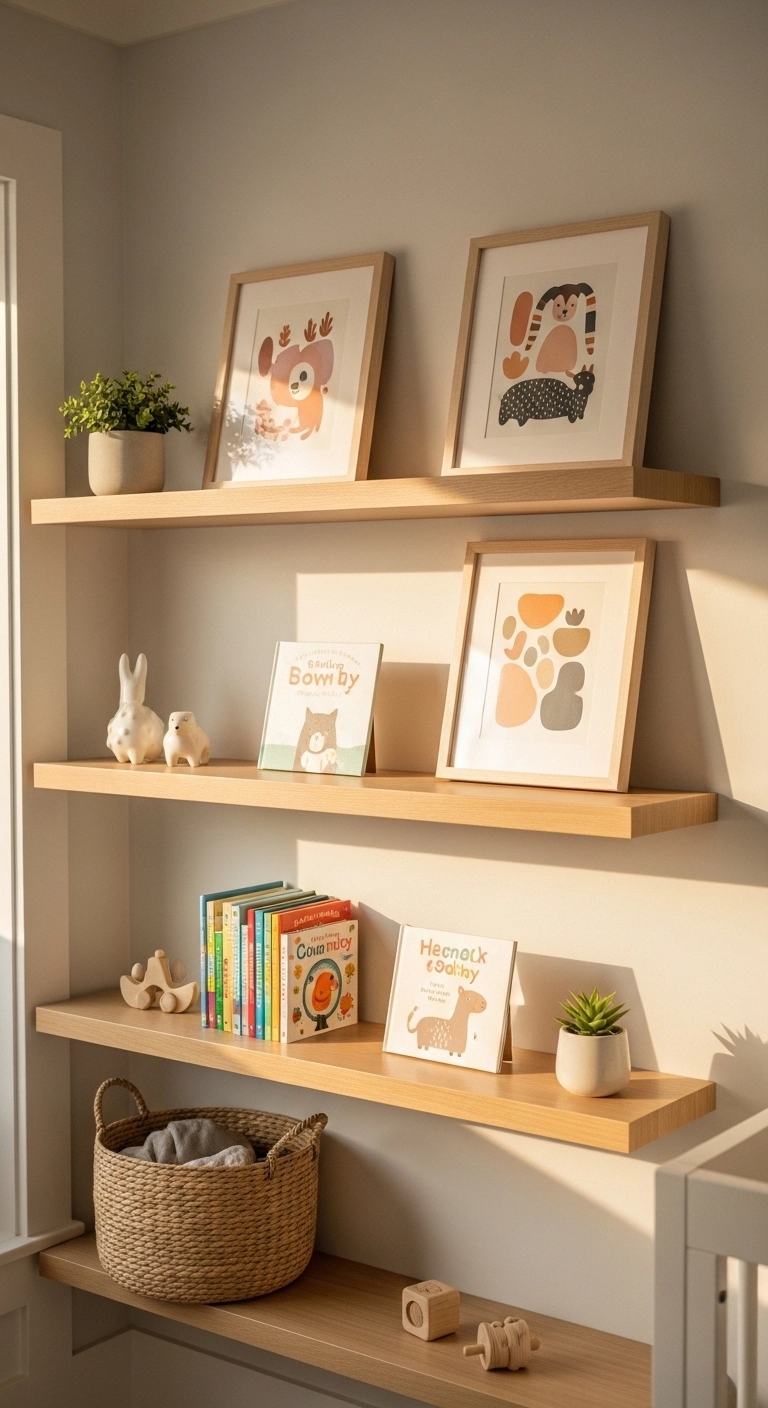
Open shelves can look lovely in a nursery, but they work best when they are not overloaded. A few board books, one framed print, a basket, and one sentimental item usually feel calmer than a shelf full of tiny decor pieces.
This works because open storage is always visible. When it is edited well, it adds charm. When it is overfilled, it adds visual stress.
It suits parents who want the room to feel personal and styled without sacrificing order. It is also useful in nurseries where you want a few things easy to grab, like bedtime books or a sound machine shelf.
To apply it well, think in small groups. Leave some empty space. Mix practical items with decorative ones so the shelf feels lived-in rather than staged.
The caution is that open storage does not hide mess. If you know you prefer quick cleanups, closed drawers and baskets may serve you better for most items.
Use baskets to hide the everyday mess
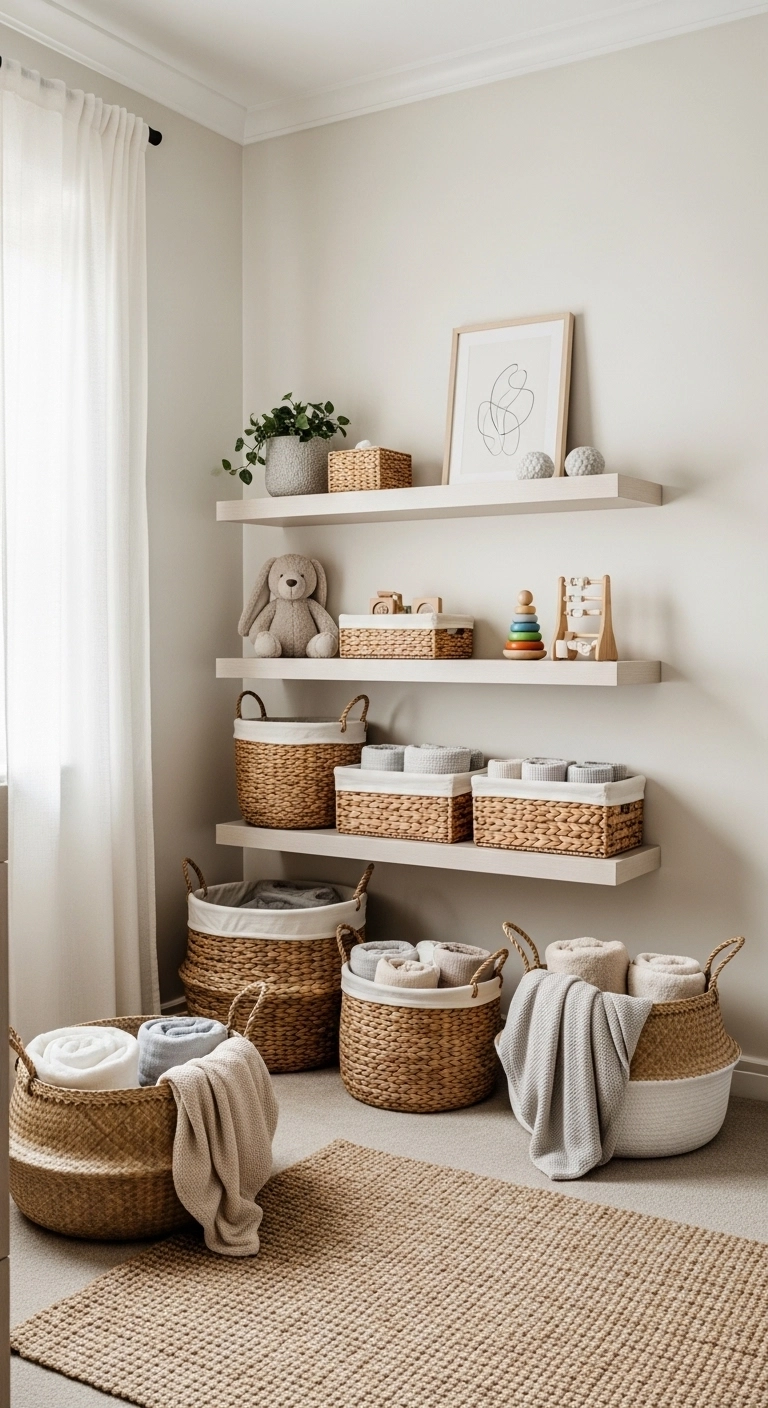
Baskets are one of the most practical baby nursery ideas because they make real-life storage look softer. They can hold blankets, burp cloths, toys, extra diapers, laundry, or outgrown clothes without making the room feel like a utility zone.
This works because nurseries collect small items fast. Baskets help you group them quickly and keep surfaces clear.
They work best in almost any nursery style, especially cozy, natural, or neutral rooms. They are also helpful if the room has limited built-in storage.
To apply this well, choose a few basket sizes for different jobs rather than one large catch-all for everything. Labeled bins inside a closet can also make life easier without affecting the room’s look.
One mistake is choosing baskets only for appearance. Very floppy or overly decorative styles can be hard to use daily. Go for baskets that actually hold their shape and are easy to move.
Add gentle lighting at more than one level
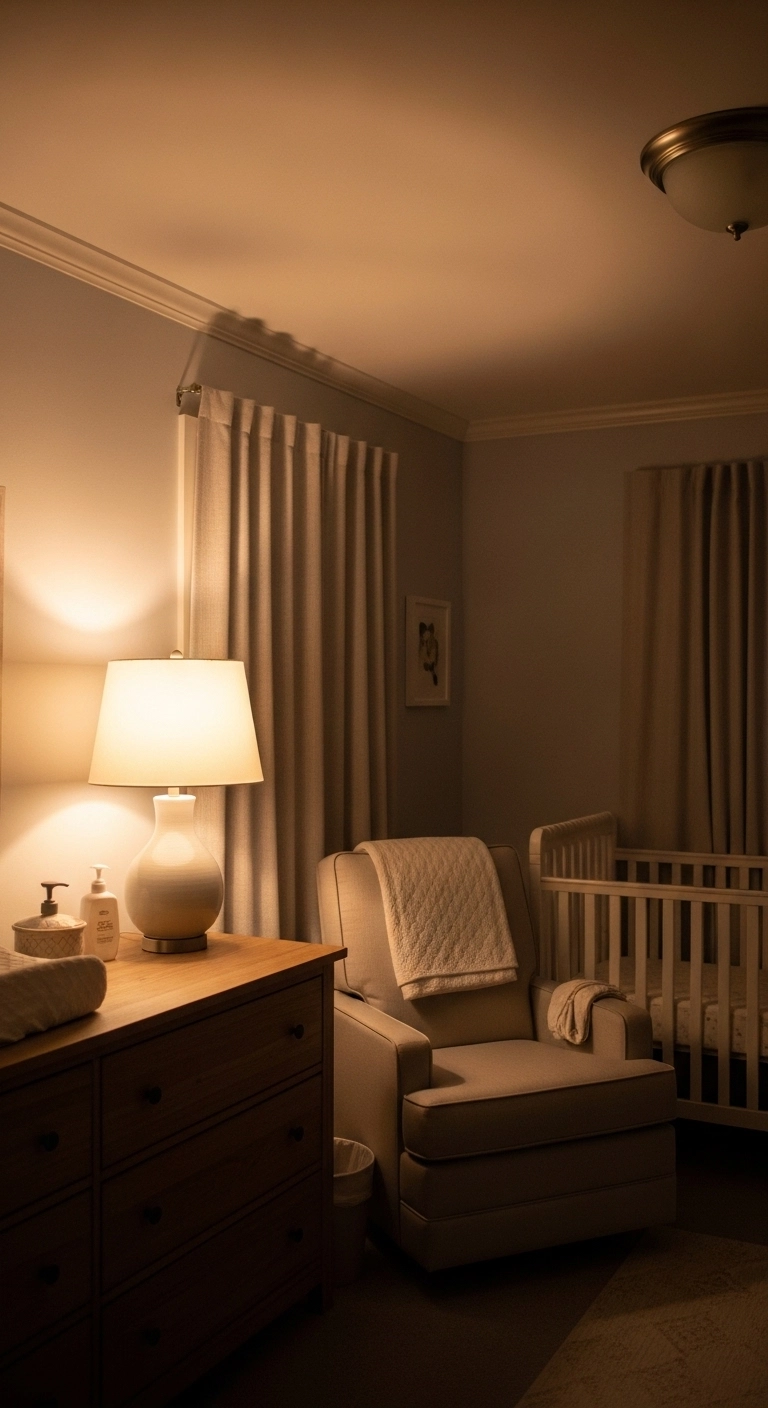
Nursery lighting matters more than people expect. A single bright ceiling light can make the room feel harsh, especially during nighttime changes or late feedings. Layered lighting feels much calmer.
This works because it gives you options. A ceiling light, a lamp, and maybe a dimmable or low-level light source make the room easier to use at different times without turning it into a spotlight.
This setup suits every nursery, but it is especially useful if you expect to spend time there after dark or during early mornings.
To apply it well, combine overhead lighting with one warm lamp near the chair or changing area. If possible, use bulbs with a soft, warm tone instead of anything stark or bluish.
The main caution is overcomplicating it. You do not need a lot of specialty fixtures. You just need enough light in the right places for the room to feel usable and calm.
Pick one gentle theme instead of decorating around ten
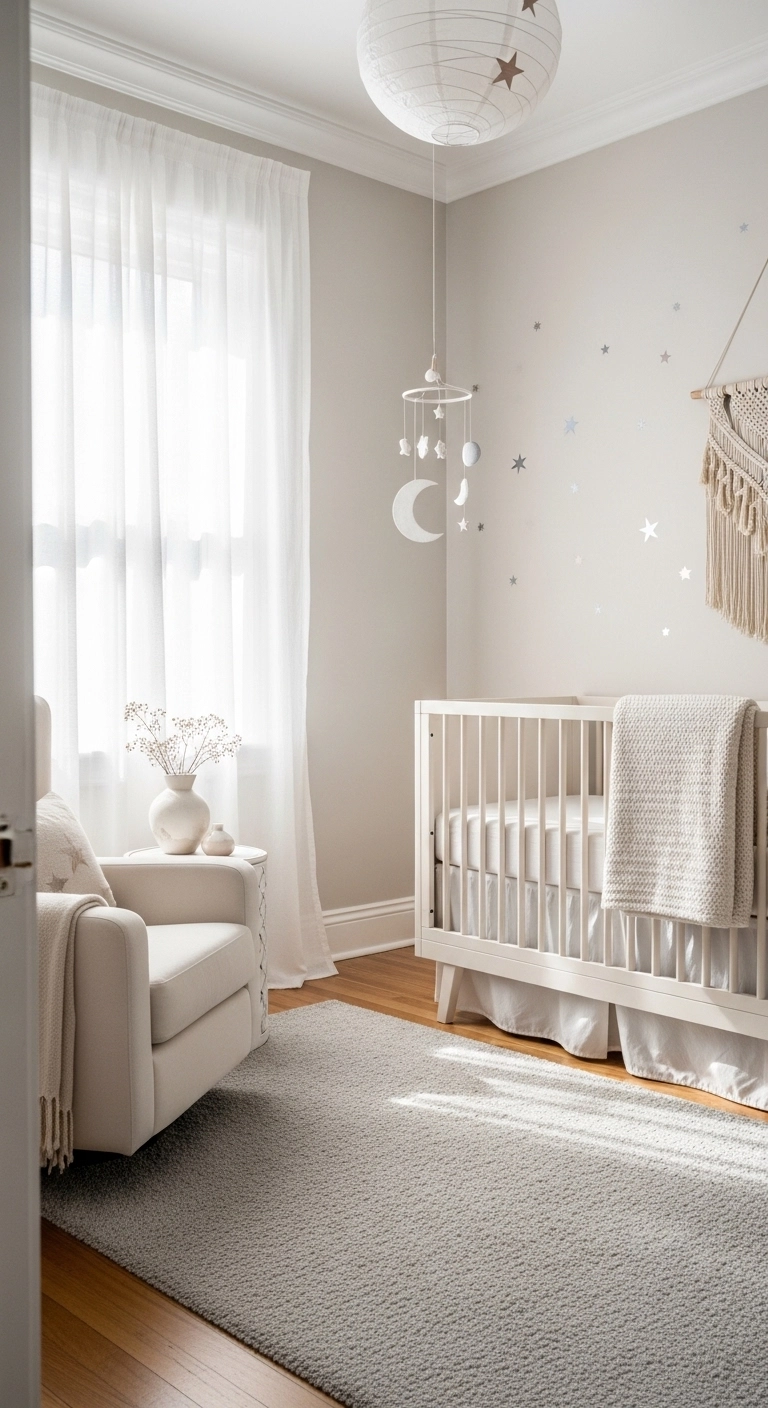
A nursery theme can be lovely, but it works best when it is subtle. Instead of trying to carry a theme into every object, use it as a light thread through the room. Think woodland, moon and stars, garden, clouds, heirloom florals, or quiet storybook details.
This works because it gives the nursery identity without making it feel busy or overly themed. A softer approach also tends to age better.
It is ideal for people who want the room to feel charming and memorable without being overly coordinated. It also helps if you want to update the room later without starting from scratch.
To apply it well, let the theme show up in two or three places, such as wall art, bedding accents, or one decorative object. Keep the bigger pieces timeless.
A common mistake is buying every themed item you see. That can make the room feel crowded fast and may limit how the space evolves later.
Make room for books from the beginning
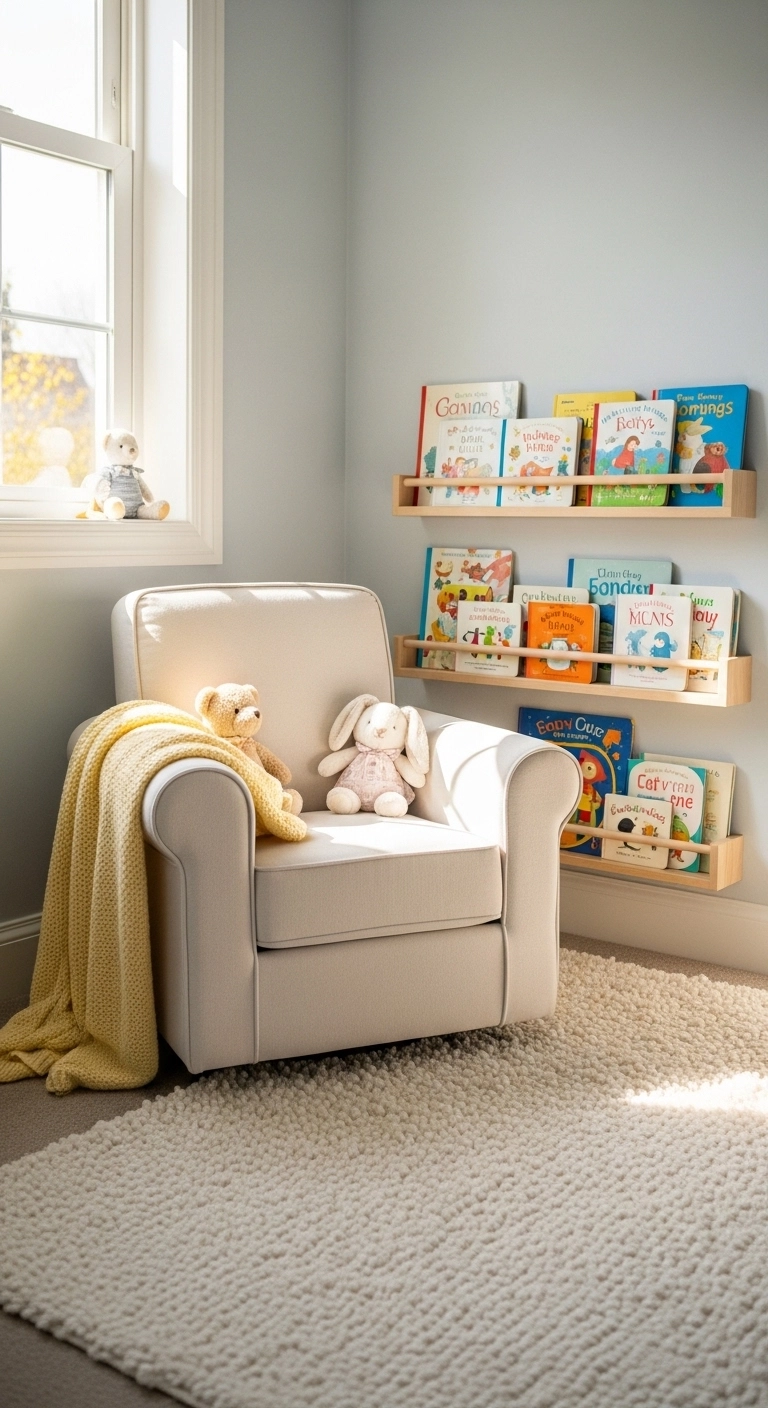
Even a tiny reading corner can add warmth to a nursery. A short shelf, a slim ledge, or a basket of board books makes the room feel nurturing and lived in, not just decorated.
This works because books add personality, color, and a sense of routine. They also grow with the child, which makes them one of the more lasting nursery elements.
This idea suits almost every family, especially anyone who wants the nursery to feel cozy and meaningful rather than purely decorative.
To apply it well, keep a small number of books within easy reach and rotate them occasionally. Displaying a few covers outward can also make the area feel more inviting.
The only real caution is scale. Too many books too early can create clutter. Start small and build the collection gradually.
Include one personal detail that makes the room feel special
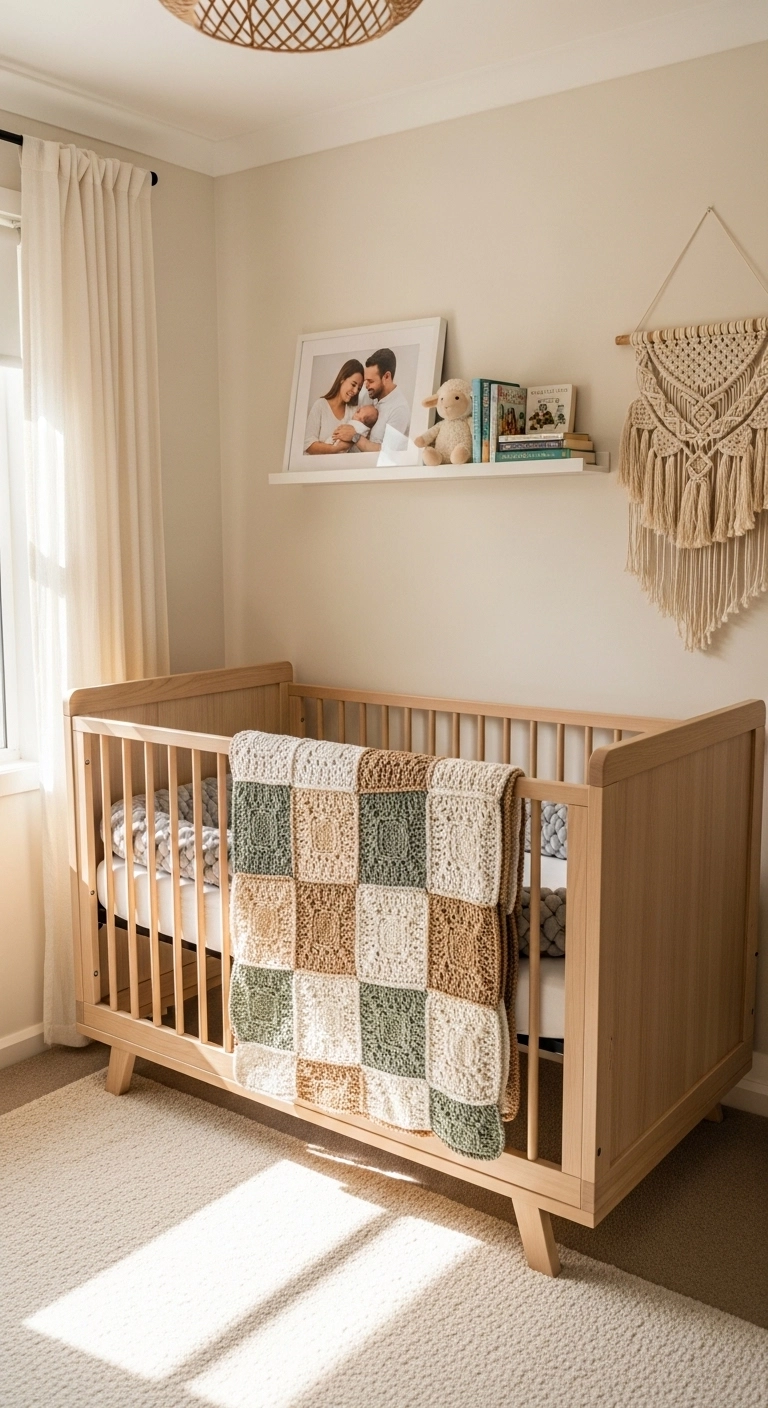
The sweetest nurseries usually have one or two personal touches that give them heart. That might be framed family photos, a handmade blanket, a name print, a favorite quote, or a small heirloom piece used in a simple way.
This works because it keeps the nursery from feeling generic. Personal details create emotional warmth without needing a lot of decor.
It works best for anyone who wants the room to feel thoughtful and grounded in family life rather than trend-driven.
To apply it well, choose details that mean something and give them room to stand out. One well-placed item often has more impact than five smaller sentimental things scattered around.
A mistake to avoid is turning every surface into a memory display. Too many personal items can lose the quiet feeling you are trying to create.
Leave open space so the room can breathe
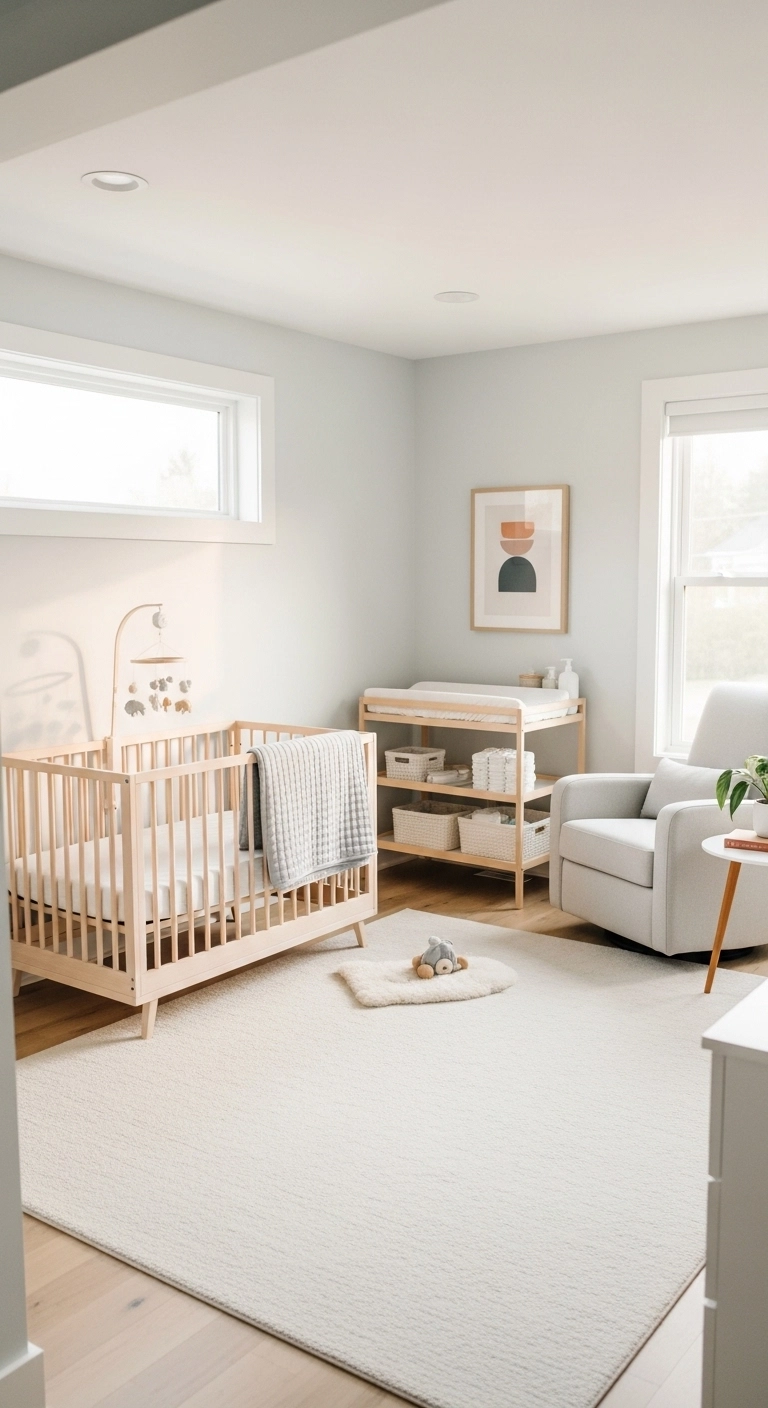
Not every part of the nursery needs to be filled. Empty space is useful. It makes the room easier to move through, easier to clean, and visually calmer. It also gives the space flexibility as your needs change.
This works because coziness does not come from crowding. It comes from comfort, softness, and ease. A room with breathing room often feels more peaceful than one filled corner to corner.
This idea is especially important in smaller nurseries, where too much furniture can make basic routines harder.
To apply it well, choose only the furniture that supports how you will actually use the room. If a piece is mostly decorative but makes the room tighter, it may not be worth it.
The main caution is feeling pressure to “finish” every corner. A blank wall or open floor area is not necessarily missing something. Sometimes it is what keeps the room feeling calm.
Design the nursery around daily routines, not just the reveal
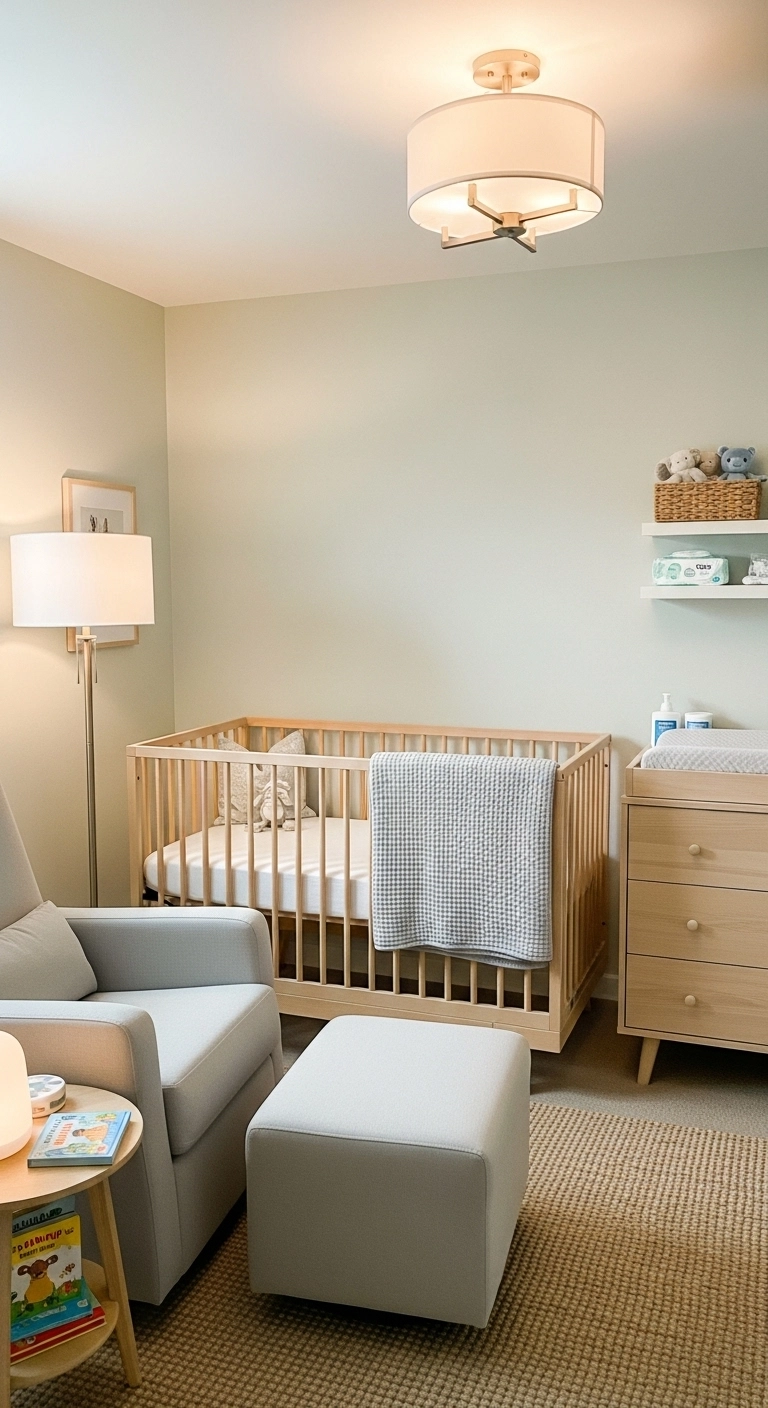
One of the most useful baby nursery ideas is also the least glamorous: plan the room around what you will do in it every day. Where will you sit? Where will you place a bottle, burp cloth, or phone? Where do clean clothes go? Where do the late-night essentials live?
This works because a nursery is not just a pretty room. It is a working space for repeated routines. When the layout supports those routines, the room feels calmer almost automatically.
It suits everyone, especially people who want a nursery that keeps working after the initial excitement of decorating wears off.
To apply it well, stand in the room and imagine the daily flow. Keep the most-used items close to the chair and changing area. Make sure drawers, baskets, and doors open easily. Let convenience guide the layout as much as looks.
The mistake here is designing only for appearance. A beautiful nursery that feels awkward to use will start to feel stressful very quickly.
Final thoughts
The most comforting nursery is rarely the one with the most decor. It is the one that feels soft, useful, and easy to live in. If you focus on warmth, function, and a few thoughtful details, you can create a calm cozy little space that feels sweet from day one and still works well over time.
When choosing between nursery ideas, it helps to ask one simple question: will this make the room feel easier, gentler, and more peaceful to use? If the answer is yes, you are probably on the right track.

Muskan Saleem
BukayHome shares practical home decorating ideas, room inspiration, and simple styling tips to help readers create a home they truly love.