13 Cozy Warm Kitchen Aesthetic Ideas You Will Want Fast
13 Cozy Warm Kitchen Aesthetic Ideas You Will Want Fast
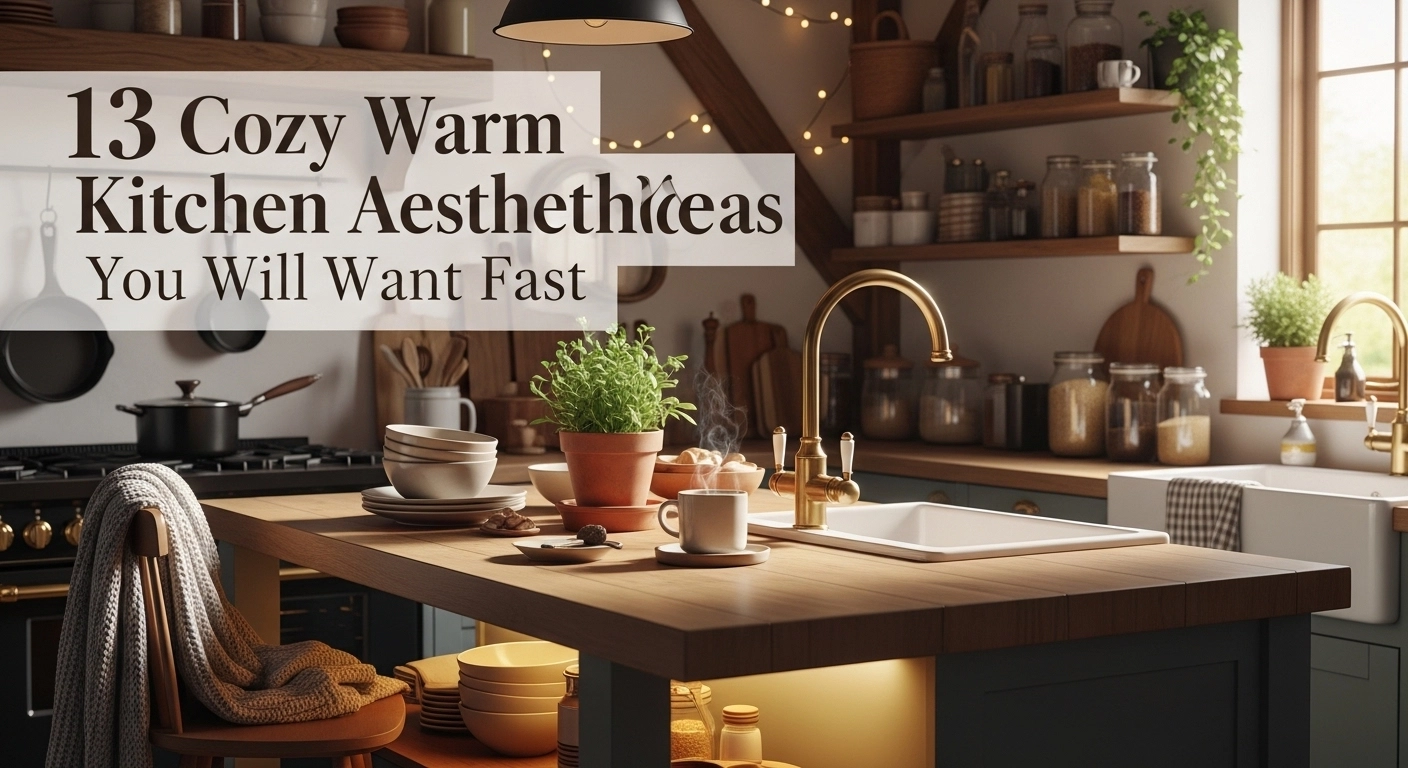
A warm kitchen aesthetic is not about making your kitchen dark, rustic, or overly themed. It is about making the room feel settled, welcoming, and easy to live in. Right now, kitchen design is moving away from cold grays and stark all-white spaces and leaning more toward warm neutrals, stained wood, layered lighting, texture, and a more lived-in look that feels personal instead of showroom-stiff.
The good news is that you do not need a full remodel to get there. In many kitchens, warmth comes from a few smart choices that work together: better light, softer color, natural texture, useful styling, and less visual noise. These ideas are practical, realistic, and easy to picture in a real home.
Start With a Soft Wall Color Instead of a Stark One
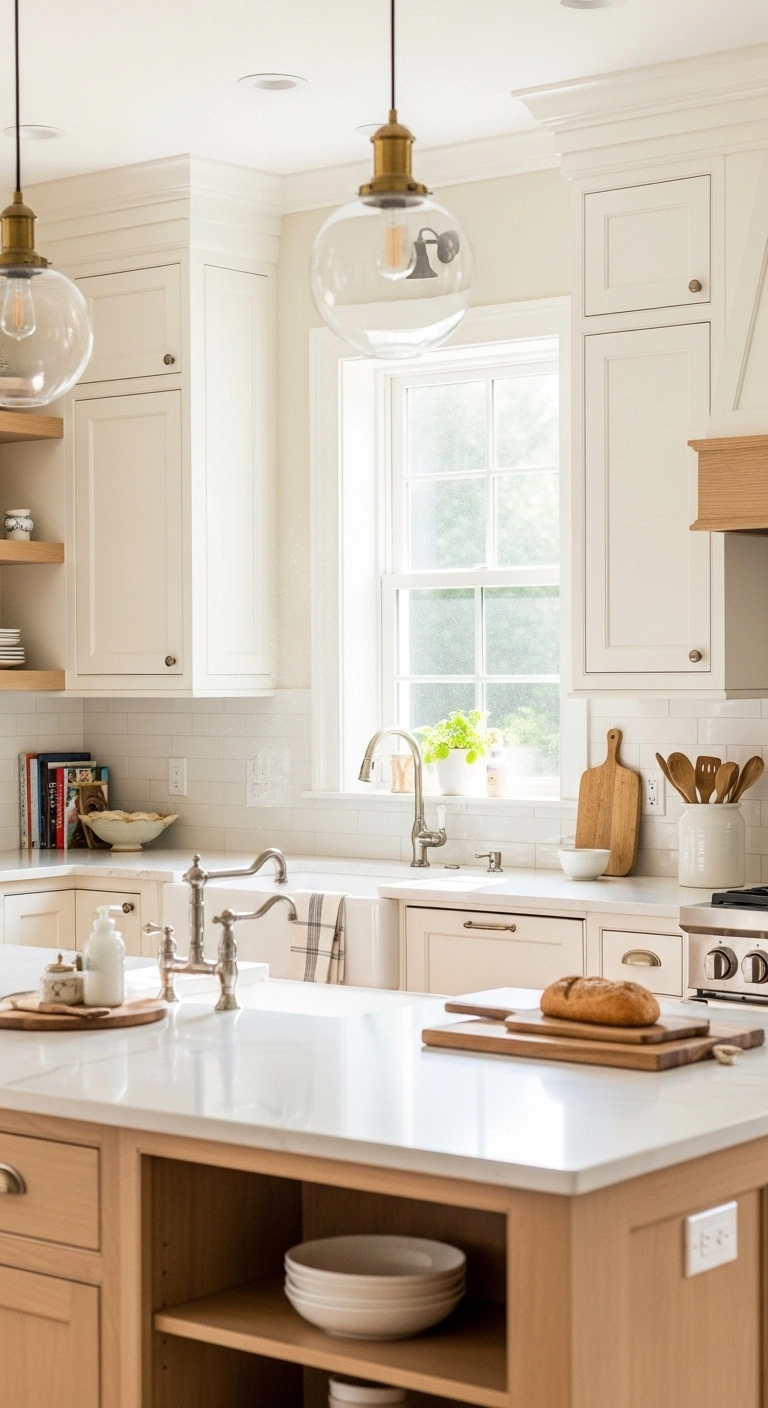
If your kitchen feels cold, the wall color is often the first reason. Bright, icy whites can make cabinets, counters, and lighting feel sharper than they need to. A softer base usually works better for a warm kitchen aesthetic.
Look for whites and neutrals with a little depth in them. Think cream, putty, sand, mushroom, oat, or a very quiet clay tone. These shades do a better job of catching natural light gently, and they make wood, brass, stone, and black accents feel more balanced. Designers are also leaning toward warmer, more grounded neutrals for kitchens rather than crisp, cool ones.
This does not mean your kitchen has to look beige. It just means the backdrop should feel calm rather than clinical. When the walls are softer, almost everything else in the room looks better.
Bring in Real Wood Tones Wherever You Can
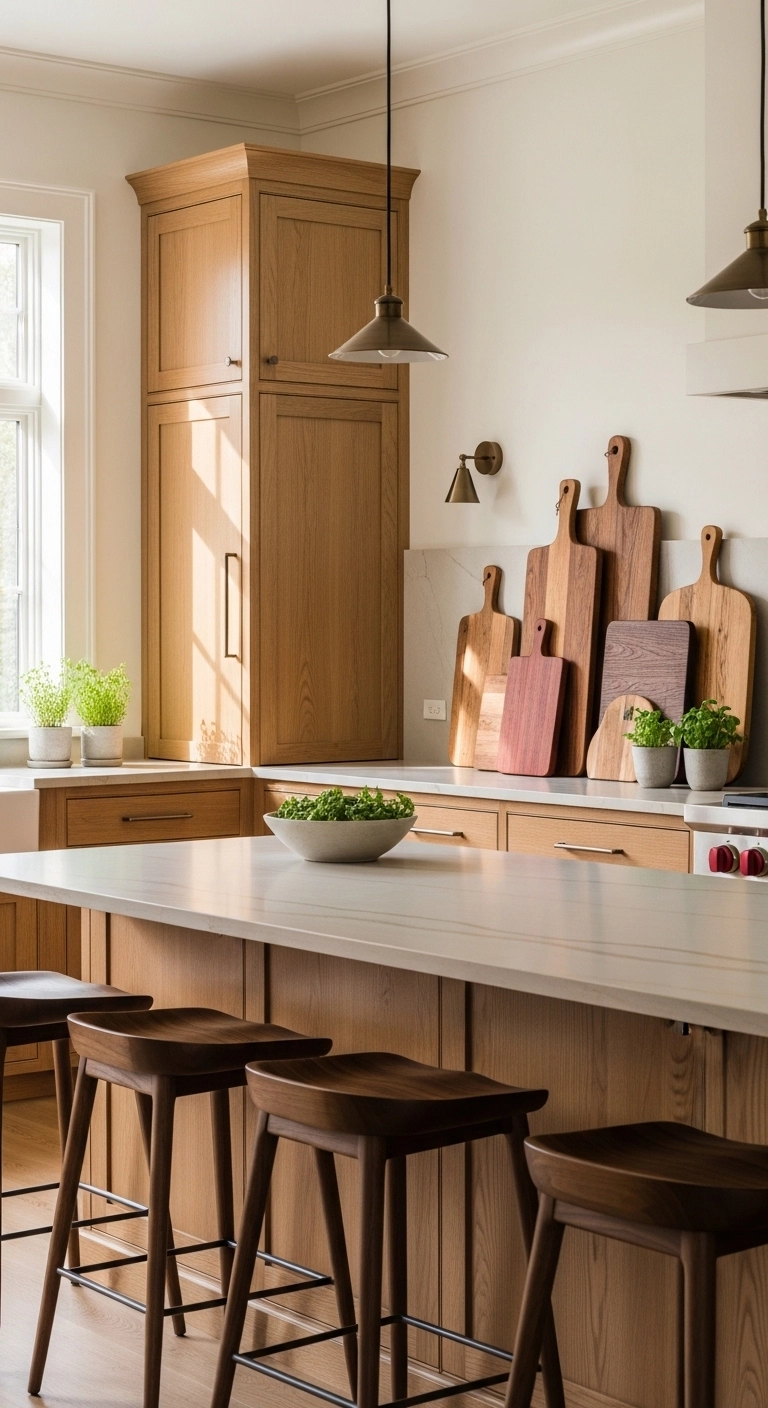
Nothing warms up a kitchen faster than wood. Even a small amount can change the mood of the room. Wood adds visual weight, natural variation, and a feeling that the space has some age to it, even when the kitchen itself is fairly new.
That wood can show up in full cabinetry, open display shelves, a vent hood wrap, bar stools, a table, cutting boards, or even a simple frame around artwork. Stained wood cabinetry is gaining momentum again, especially finishes that feel honest and not too orange or glossy. White oak, walnut, chestnut, and updated honey oak all help kitchens feel richer and less flat.
The trick is to let the grain show. Matte or satin finishes usually feel warmer than high-gloss ones. If you already have painted cabinets, a wood island, wood stool legs, or a butcher-block section can still give you that grounded look without changing the whole kitchen.
Choose Cabinet Colors That Feel Quiet and Warm
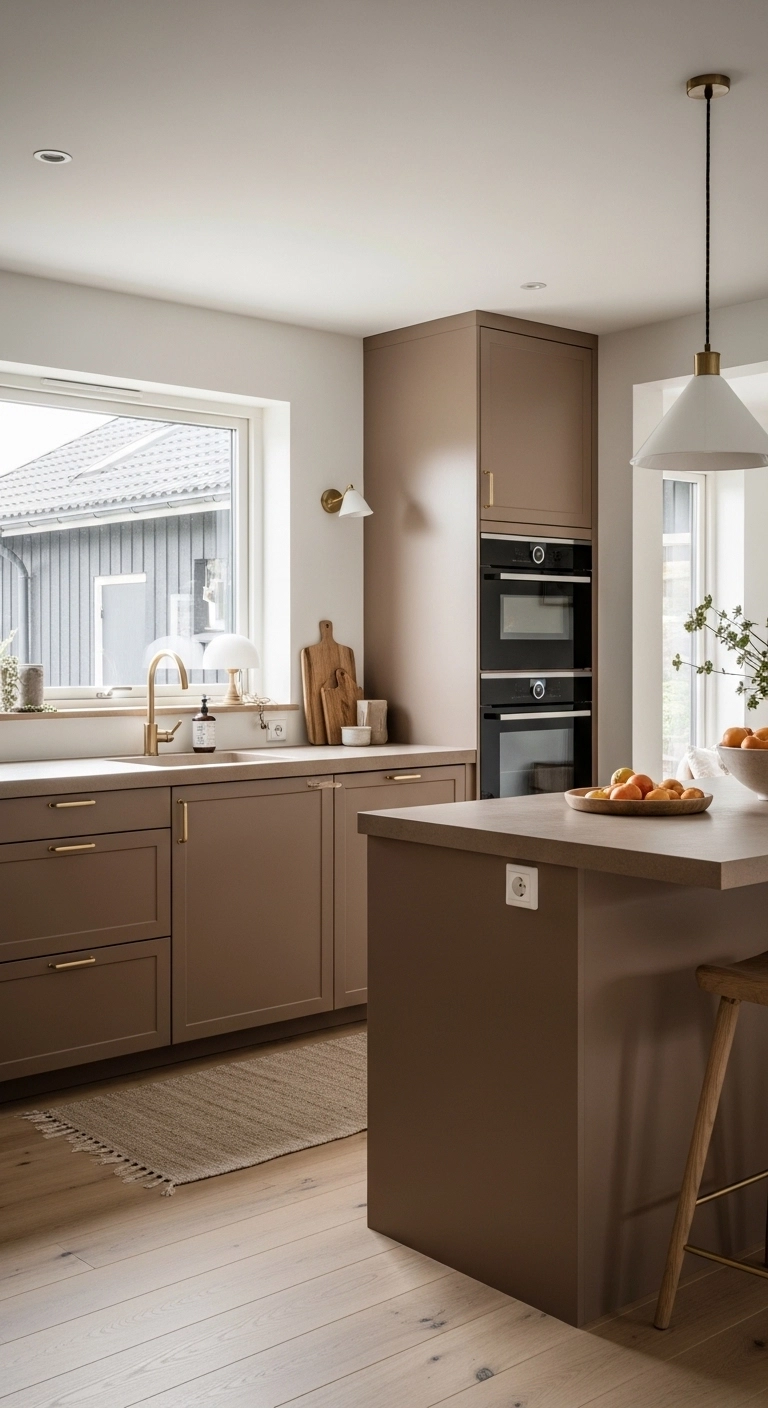
Cabinet color does a lot of emotional work in a kitchen. If you want warmth, look for colors that feel settled rather than sharp. Warm mushroom, stone, muted green, clay, brown, and deeper earthy shades all work well. Even when the color is dark, it can still feel warm if it has the right undertone.
That is one reason forest green, clay-based tones, warm browns, and soft earthy neutrals keep showing up in current kitchen design coverage. They pair naturally with wood, stone, and aged metals, and they help the room feel more layered than flat white cabinets alone.
If repainting all your cabinets feels like too much, paint only the island or lower cabinets. That one move can anchor the room and make the rest of the kitchen feel more intentional.
Layer the Lighting Instead of Relying on One Bright Ceiling Fixture
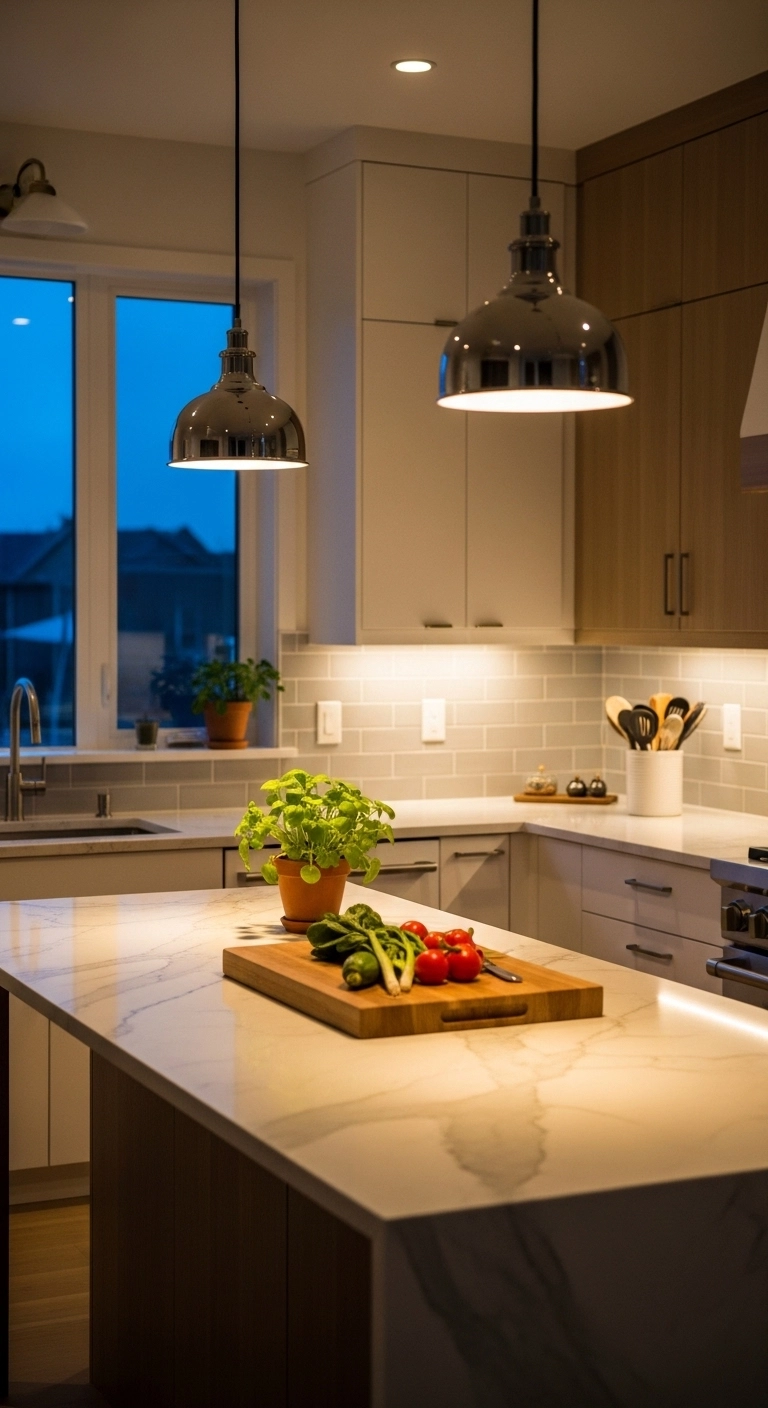
A warm kitchen aesthetic depends heavily on light, and not just how much light you have. It matters where the light falls and how it feels at different times of day.
Many kitchens have one problem: they are bright but still not warm. That usually happens when there is only overhead lighting. Good kitchen lighting has layers. You want general light for the room, task light where you prep food, and softer accent light that makes the space feel comfortable in the evening. Under-cabinet lighting is especially useful because it removes shadows from the counters. Pendant lights can also make a kitchen feel more comfortable than a grid of harsh ceiling cans, especially when paired with dimmers.
If you do nothing else, add warm under-cabinet lighting and put your main lighting on a dimmer. That one change can shift the whole mood of the room after sunset.
Use a Backsplash With Texture, Not Just Color
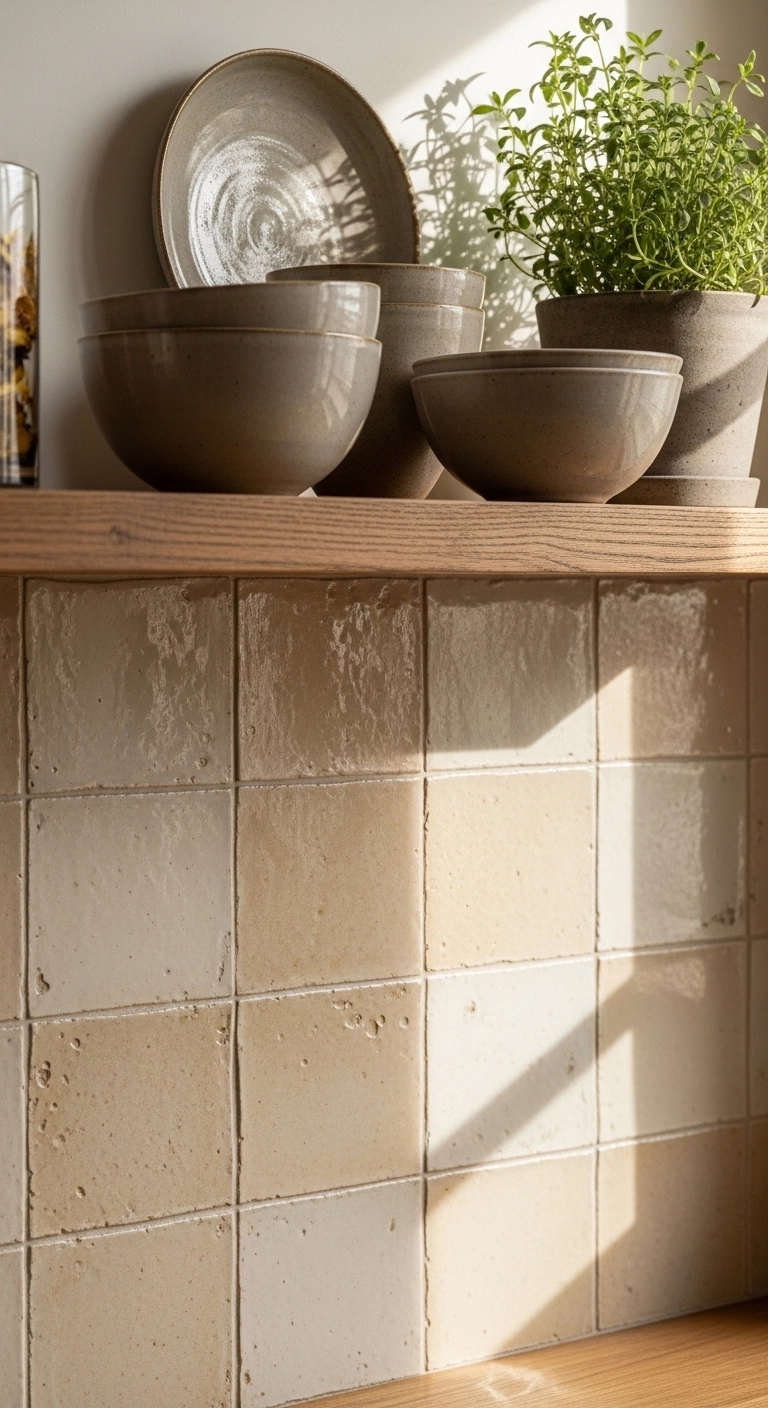
A backsplash is a practical surface, but it also gives you a chance to add warmth without taking over the room. If everything in the kitchen is smooth and flat, the space can feel cold even with good colors.
That is why textured and handmade-looking surfaces work so well here. Think zellige-style tile, soft matte ceramic, tumbled stone, lightly varied subway tile, or a tile with visible glaze movement. Current kitchen tile trends are leaning toward more texture, craftsmanship, and subtle variation rather than perfectly uniform surfaces.
For a warm look, choose finishes in cream, sand, taupe, muted green, warm white, or soft terracotta-leaning tones. The goal is not to create a loud feature wall. The goal is to make the kitchen feel a little more human.
Swap Basic Hardware for Something With Patina
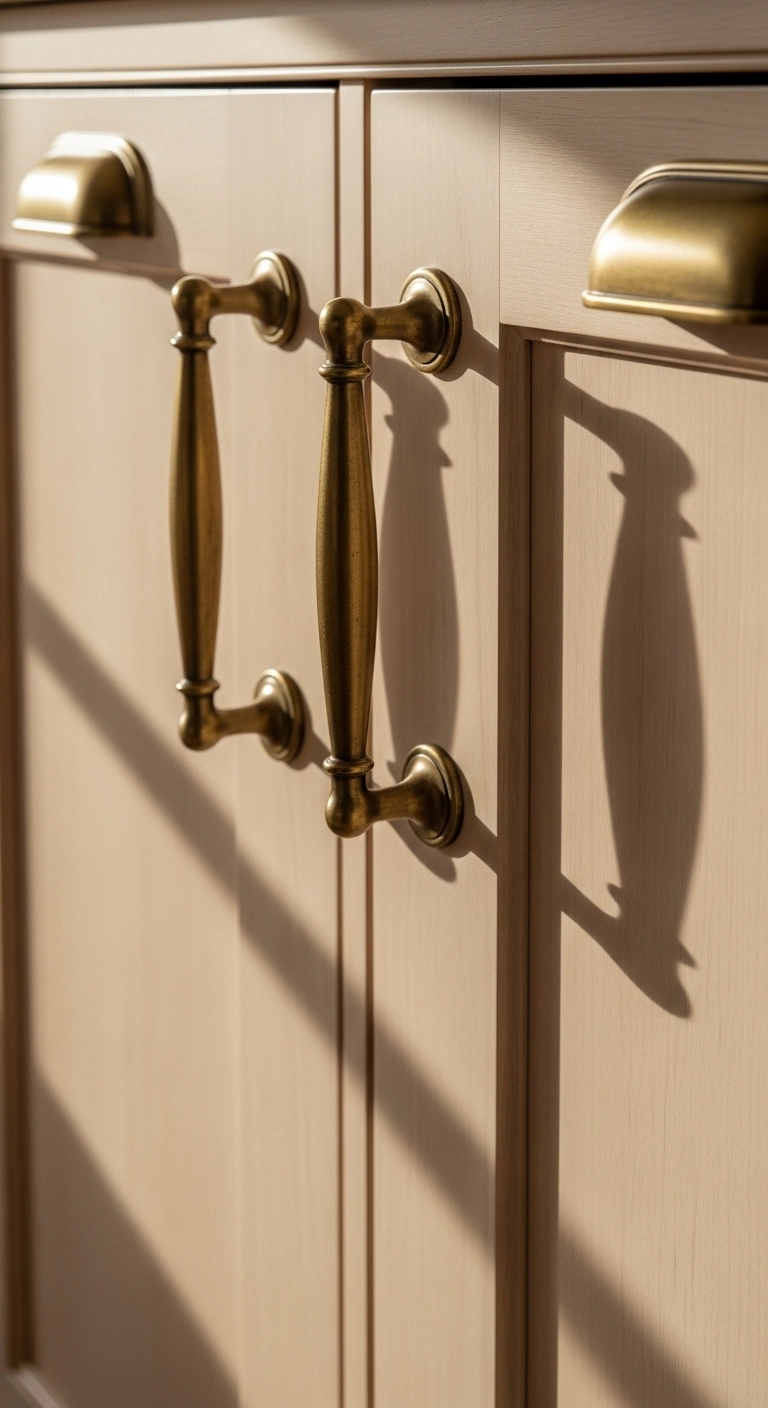
Cabinet hardware is a small detail until it is not. It is one of the first things your eyes and hands notice, which means it has a bigger effect than most people expect.
If your current knobs and pulls feel cheap, shiny, or too modern for the room, replacing them can move the kitchen closer to a warm aesthetic very quickly. Aged brass, antique bronze, warm black, and brushed nickel usually feel softer than chrome-heavy pieces. Better hardware also gives cabinets more presence and makes the whole kitchen feel more finished. Designers regularly point to hardware updates as one of the easiest ways to improve the look of a kitchen without major work.
Go simple with the shape. Warmth comes more from finish and scale than from fancy forms.
Add Soft Materials That Make the Room Feel Less Hard
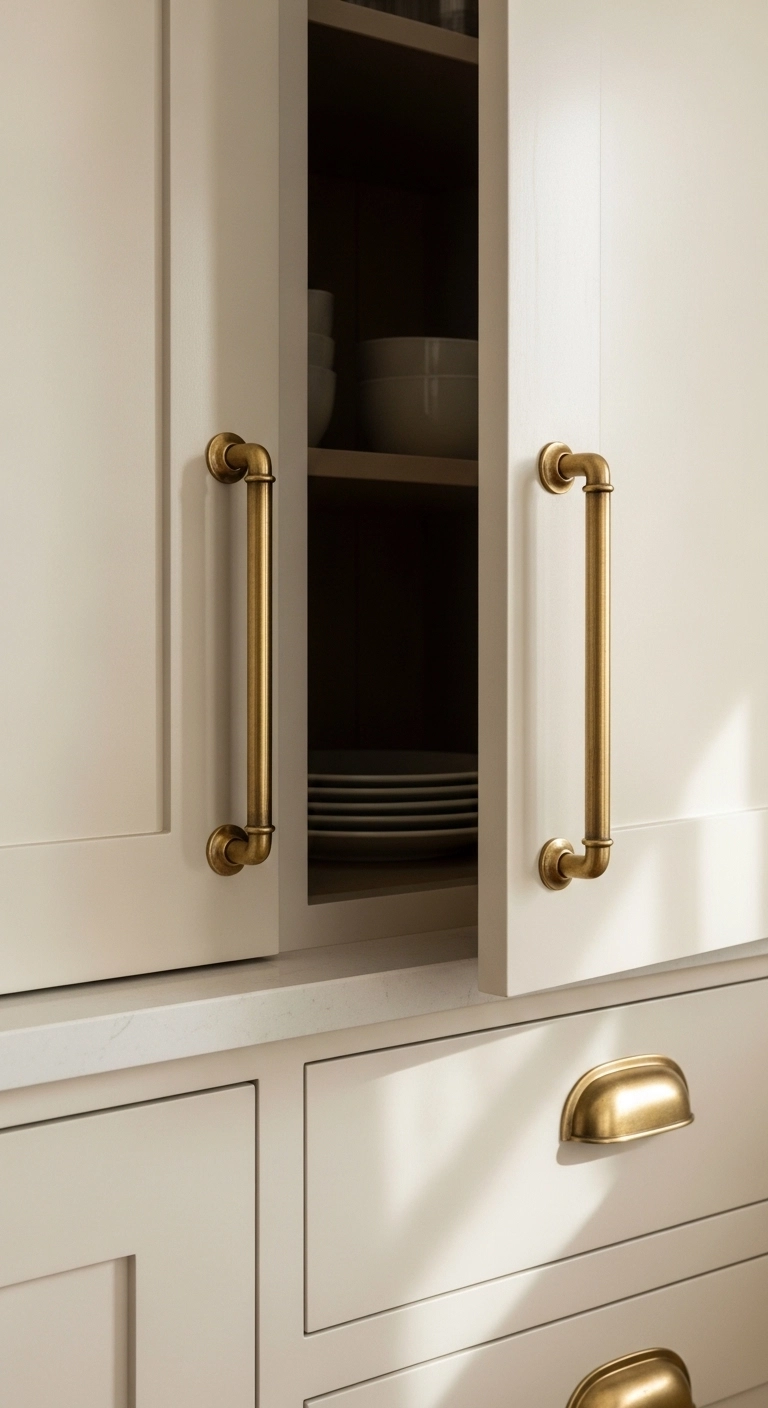
Kitchens are full of hard surfaces: cabinets, counters, tile, glass, metal, and appliances. That is practical, but it can leave the room feeling a little echoey and stiff. Warmth often comes from giving the eye a place to rest.
This is where textiles help. A washable runner, a soft Roman shade, café curtains, padded counter stools, or even linen tea towels hanging where they are easy to reach can soften the whole kitchen. These details do not need to be decorative for the sake of decoration. They just need to bring a little softness into a room that is mostly hard edges.
Choose materials that age well and look better with use. Stripes, checks, faded florals, quiet plaids, and simple solids all work. If the rest of your kitchen is clean and plain, even one runner near the sink can make the room feel more settled.
Keep the Counters Useful, but Style Them Like Someone Actually Lives There
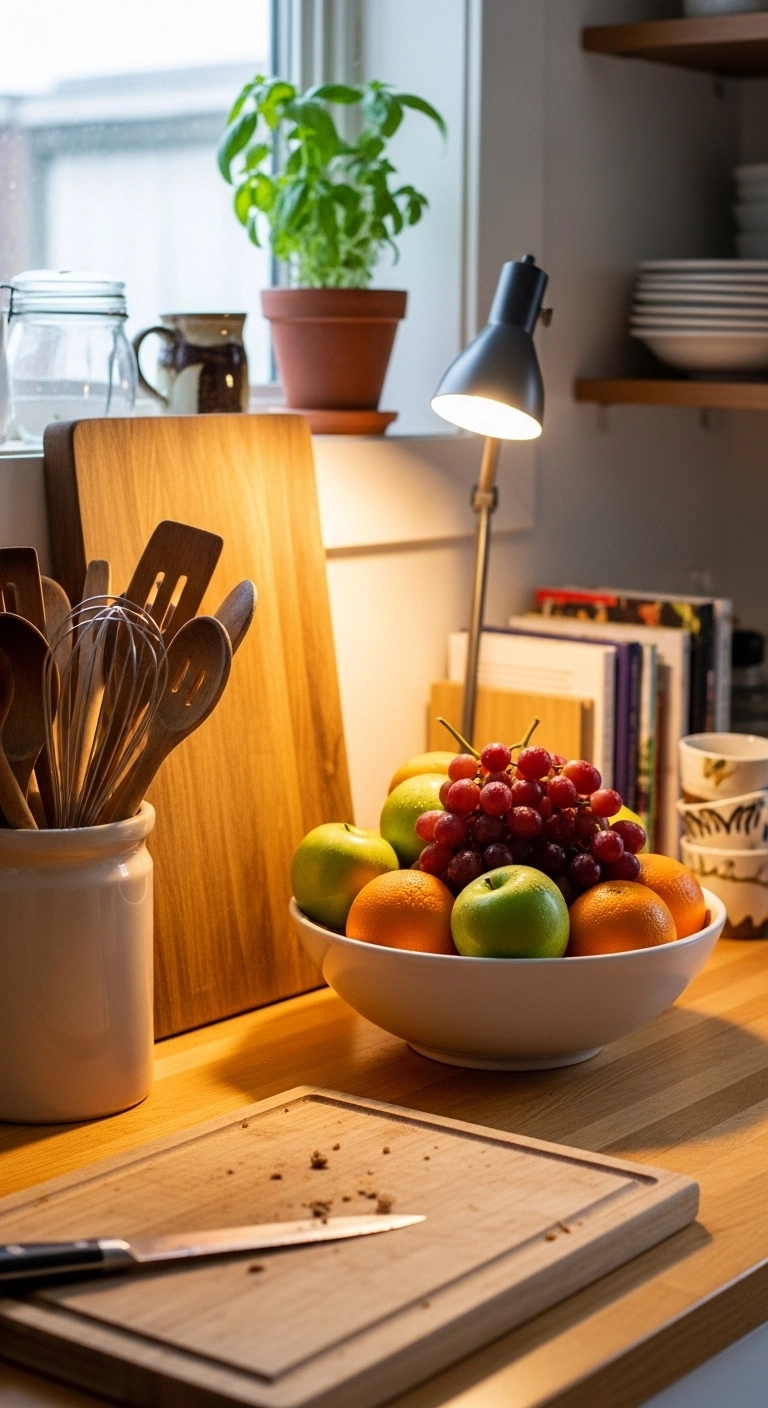
There is a sweet spot between empty counters and cluttered counters. A warm kitchen aesthetic usually lives right in the middle.
Completely bare counters can make a kitchen feel staged. Overfilled counters make it feel stressful. What works better is keeping out only the things that are useful or beautiful enough to earn the space. A ceramic utensil crock, a wood board leaned against the backsplash, a stoneware bowl of fruit, a coffee tray, or a small lamp can all add warmth without creating mess. Designers also keep emphasizing that less clutter and more intentional counter styling instantly improves how a kitchen feels.
A good test is simple: if you use it often, or it adds real character, keep it. If it is just taking up visual space, put it away.
Make the Island or Dining Spot Feel More Like Furniture
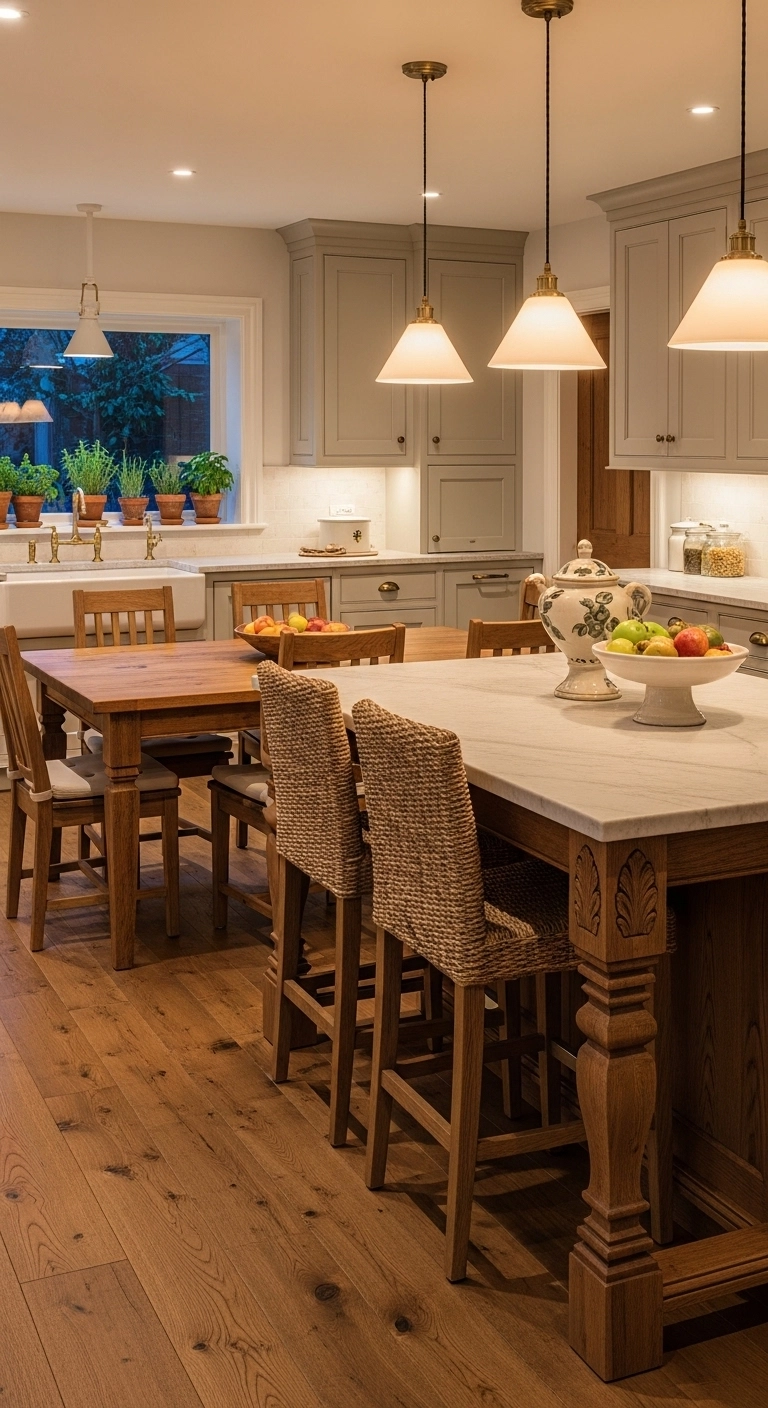
One of the easiest ways to make a kitchen feel cozy is to make part of it feel less like built-in cabinetry and more like a room where people linger.
An island painted a different color, stools with wood or woven details, a freestanding hutch, or a breakfast table with a lamp above it can all help. Furniture-style details break up the “wall of cabinets” effect and give the kitchen more personality. This fits with the broader move toward homes that feel collected, practical, and personal rather than too perfect.
If your kitchen is small, even a narrow rolling cart with a wood top can do some of this work. Warmth often comes from the feeling that the room grew over time instead of arriving all at once from a catalog.
Use Open Shelving Carefully, or Skip It and Go for Glass Fronts
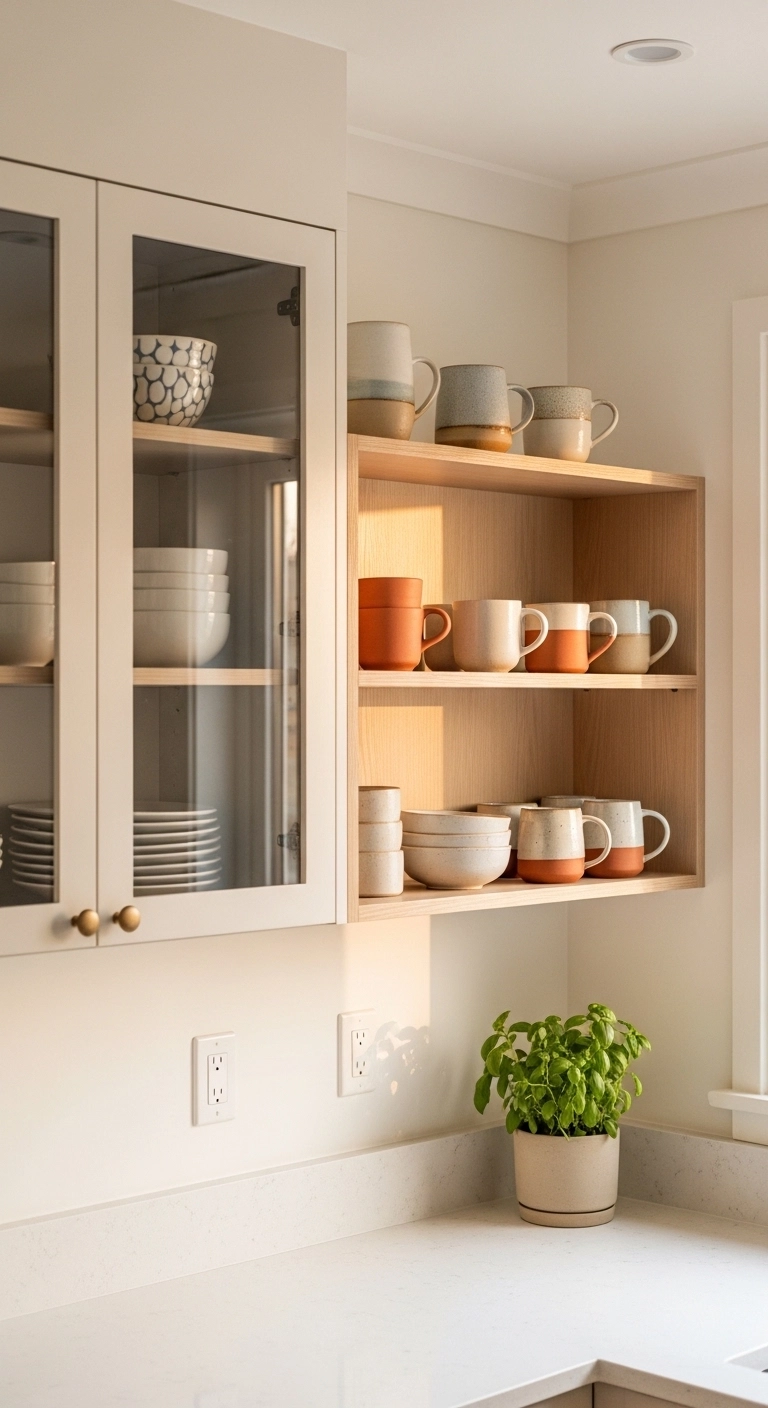
Open shelving can look warm in photos, but in real kitchens it needs restraint. Too much open storage quickly becomes visual clutter, and clutter kills coziness faster than people expect.
If you like the idea, keep it small. One short shelf for mugs, a few bowls, or everyday plates can work well. Style it with things you actually use and a few pieces that bring shape and texture, such as pottery or small framed art. Designers are increasingly warning that too much open shelving can feel messy and dated, especially in busy households.
If you want the softness of display without the maintenance, glass-front upper cabinets are often the better move. They let the kitchen breathe a little while still hiding most of the chaos.
Bring in Stone, Clay, and Ceramics for Quiet Texture
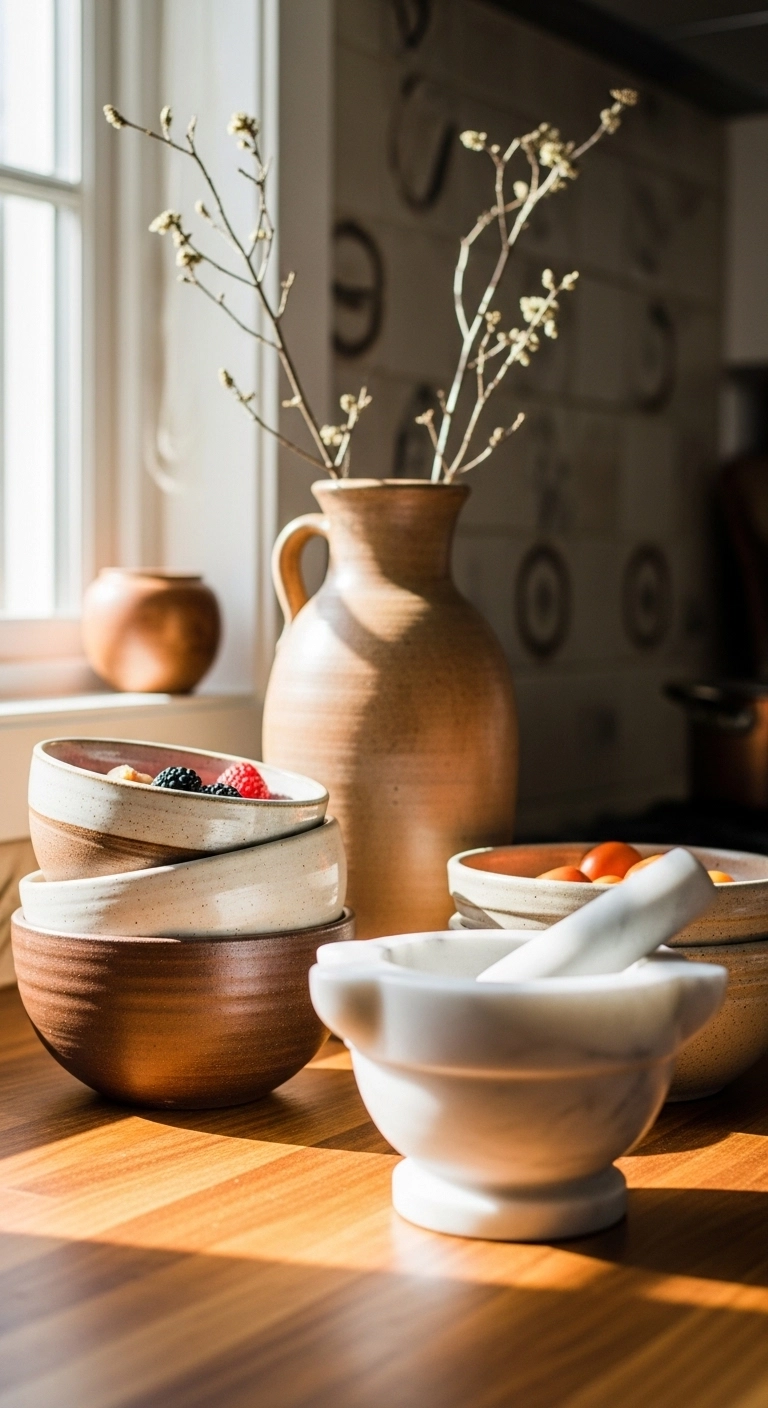
A warm kitchen does not need expensive finishes everywhere, but it does benefit from a mix of surfaces that do not all look factory-flat.
Stoneware bowls, handmade mugs, a travertine tray, a clay vase, a marble mortar, or a crock for wooden spoons all add gentle texture. These pieces do not have to match perfectly. In fact, it is better when they do not. A kitchen starts to feel warmer when things look gathered over time instead of bought in one set.
This also connects nicely with the current interest in materials that feel tactile, natural, and a little imperfect. Textured tile, natural finishes, and artisanal touches are all part of that shift.
Create a Small “Zone” That Supports Daily Life
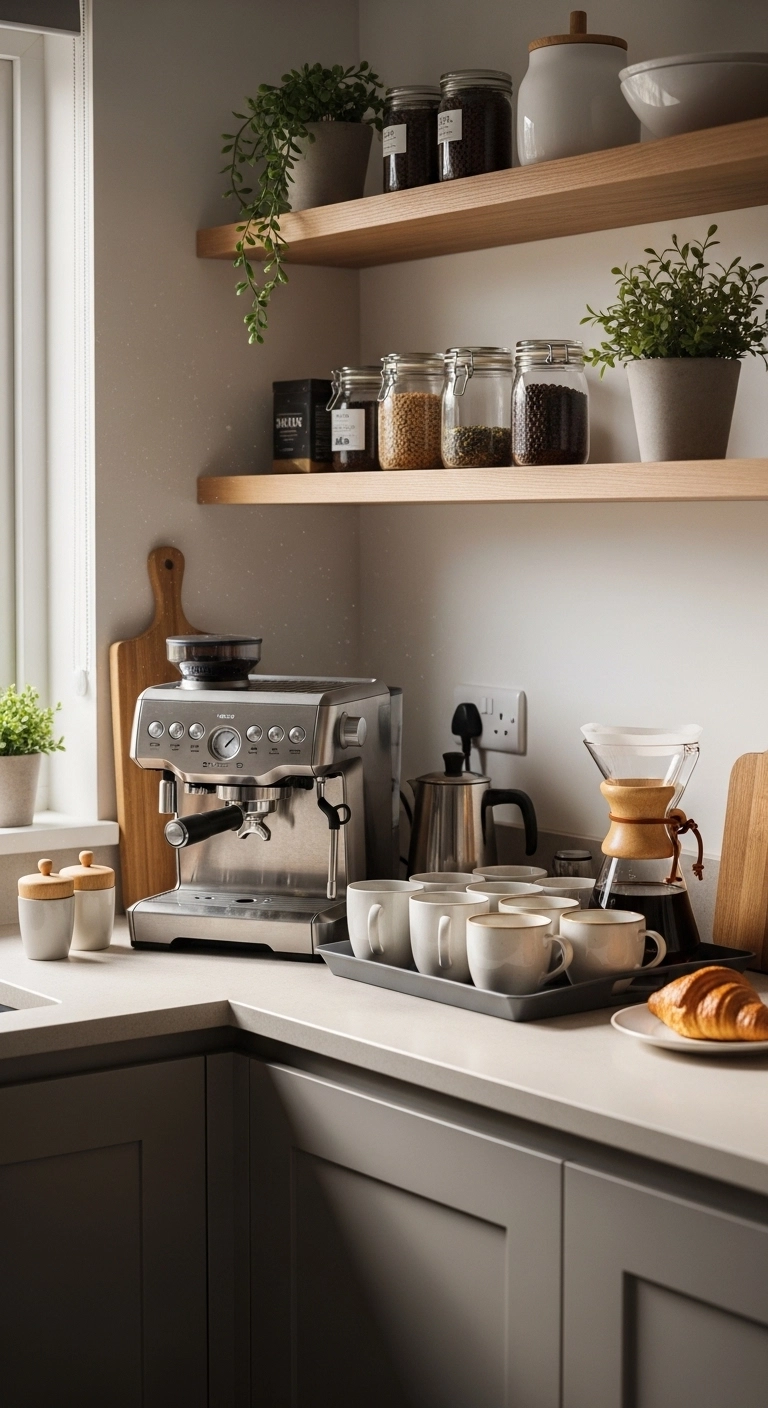
Warmth is not just visual. It is also functional. Kitchens feel better when they support real routines without making the room look busy.
That might mean a coffee corner, a baking drawer, a breakfast shelf, a tray for oils and salt near the stove, or a neat beverage station. Current design coverage is even spotlighting more support spaces and thoughtful storage zones that help keep the main kitchen calmer and more usable.
When daily-use items have a home, the counters stay cleaner, the room feels easier to use, and the kitchen naturally looks more composed. Cozy rooms are rarely random. They usually work well.
Finish With the Little Signs of Life
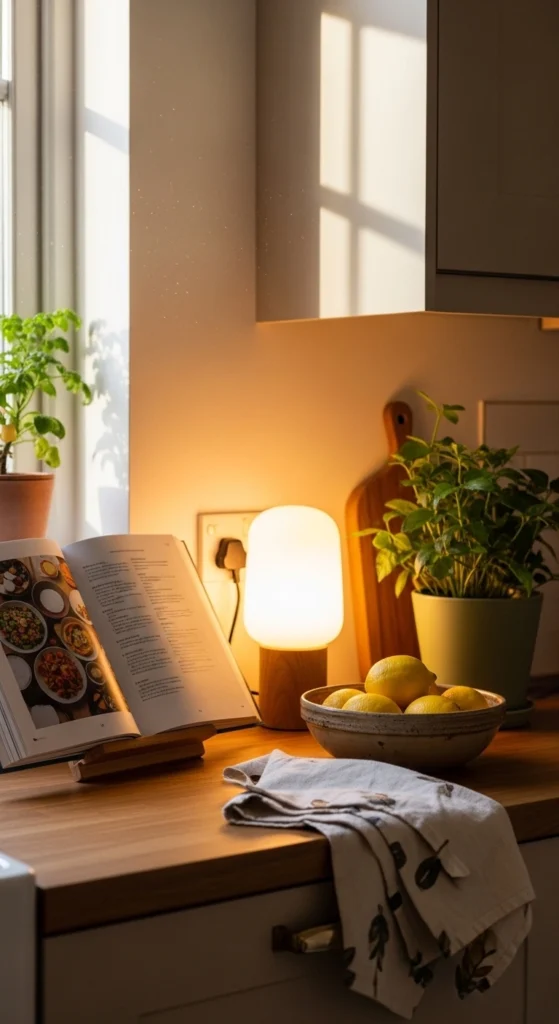
The last layer is what makes the kitchen feel truly warm instead of just nicely decorated. This is where you add signs that the room belongs to real people.
A cookbook left open on a stand. A bowl of lemons. A lamp turned on in the late afternoon. A linen towel by the sink. A cutting board with knife marks. A small plant that looks healthy, not fussy. These details matter because they make the kitchen feel inhabited.
The wider decorating mood right now is moving toward rooms that feel personal, comfortable, and useful instead of overly styled. That is exactly why these little everyday touches work so well in a warm kitchen aesthetic.
Do not force this layer. Pick a few pieces that fit your actual life, and the room will feel warmer almost on its own.
FAQ About a Warm Kitchen Aesthetic
What colors work best for a warm kitchen aesthetic?
The easiest colors to work with are soft warm whites, cream, mushroom, putty, muted green, clay, brown, and wood tones. These shades tend to feel calm and grounded, and they pair well with natural materials like oak, walnut, brass, and stone. Warm kitchen trends in 2026 are also favoring these softer, earthier directions over colder grays and stark whites.
How can I make my kitchen feel warm without remodeling?
Start with lighting, hardware, textiles, and counter styling. Add under-cabinet lights, swap shiny hardware for a softer finish, use a washable runner, and keep only a few useful, attractive items on display. Those changes are affordable, fast, and often more effective than people expect.
Can a small kitchen still have a warm kitchen aesthetic?
Yes. In a small kitchen, warmth often works even better because a few details have a bigger impact. A soft wall color, one wood element, better lighting, and reduced clutter can make a compact kitchen feel cozy instead of cramped. The key is editing carefully so the room feels layered, not crowded.
What lighting makes a kitchen feel cozy instead of harsh?
Layered lighting is the best approach. Use overhead light for general brightness, under-cabinet lighting for work areas, and softer accent lighting or pendants for atmosphere. Dimmers help a lot because kitchens need different kinds of light in the morning, at dinner, and at night.
Is white still okay in a warm kitchen aesthetic?
Yes, but the undertone matters. A warm white or creamy white can look soft and inviting, while a blue-based bright white can feel sharper and colder. If you like white, pair it with wood, warm metal, textured tile, and softer lighting so the room still feels balanced.
Final Thoughts
A good warm kitchen aesthetic is less about chasing one trend and more about building a room that feels good to be in. Softer color, real wood, layered light, useful styling, and a few honest textures will usually get you much farther than a dramatic makeover.
If the kitchen feels calm, lived-in, and easy to use, you are already on the right track. That is the version of cozy people actually want to keep.

Muskan Saleem
BukayHome shares practical home decorating ideas, room inspiration, and simple styling tips to help readers create a home they truly love.