
14 Rich Brown Bedroom Ideas For A Warm Stylish Retreat Home
Brown can make a bedroom feel grounded, calm, and genuinely comfortable in a way trendy colors often cannot. The trick is using it with intention. Done well, brown feels layered, warm, and quietly luxurious. Done poorly, it can make a room look flat, heavy, or a little too stuck in the past.
These brown bedroom ideas are built for real homes, real budgets, and real-life decorating decisions. Whether you want a cozy cocoon, a polished modern space, or a softer earthy look, there is a way to bring brown into your bedroom without making it feel dark or dated.
Why Brown Bedroom Ideas Work So Well
Brown is one of the easiest colors to live with because it connects naturally to materials people already love in bedrooms: wood, linen, leather, wool, rattan, velvet, and warm-toned metals. It brings instant warmth, helps a room feel settled, and plays well with a wide range of styles from modern to rustic to classic.
It also has more range than people expect. Deep espresso feels dramatic. Walnut feels refined. Camel feels soft and modern. Chocolate feels cocooning. Taupe-brown feels airy and understated. That variety makes brown especially useful if you want a bedroom that feels stylish but not overly staged.
The best brown bedroom ideas usually rely on contrast and texture. Brown looks strongest when it is balanced with lighter tones, layered materials, and enough variation to keep the room from feeling one-note.
Build the Room Around a Deep Brown Accent Wall
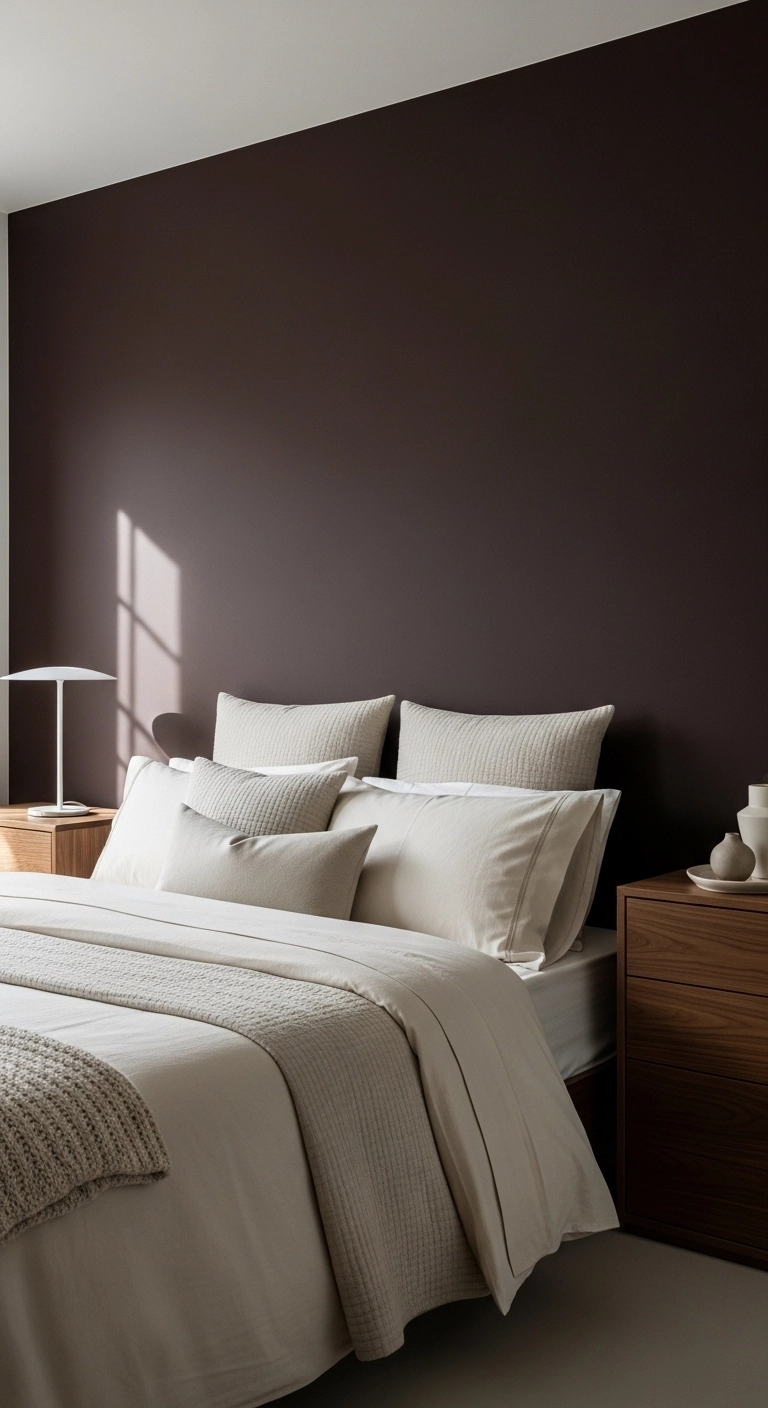
A deep brown accent wall is one of the simplest ways to make a bedroom feel warmer and more finished. It creates a clear focal point behind the bed and gives the whole room more depth without requiring every surface to be dark.
This works because brown has a naturally grounding quality. A rich cocoa, espresso, or dark walnut tone can make the bed wall feel more architectural and help lighter bedding stand out. It is especially effective in medium to large bedrooms, or in rooms that get a decent amount of natural light during the day.
To style it well, keep the other walls lighter so the room still breathes. Cream, warm white, sand, or light taupe all pair beautifully with a dark brown feature wall. Add bedding with visible texture, like quilted cotton, linen, or a chunky throw, so the contrast feels soft rather than stark.
The main mistake to avoid is going too dark everywhere at once. If you paint all four walls in a very heavy brown without enough light, contrast, or texture, the room can start to feel closed in. One accent wall often gives you the mood you want without tipping into gloom.
Pair Brown With Cream for a Soft, Balanced Look
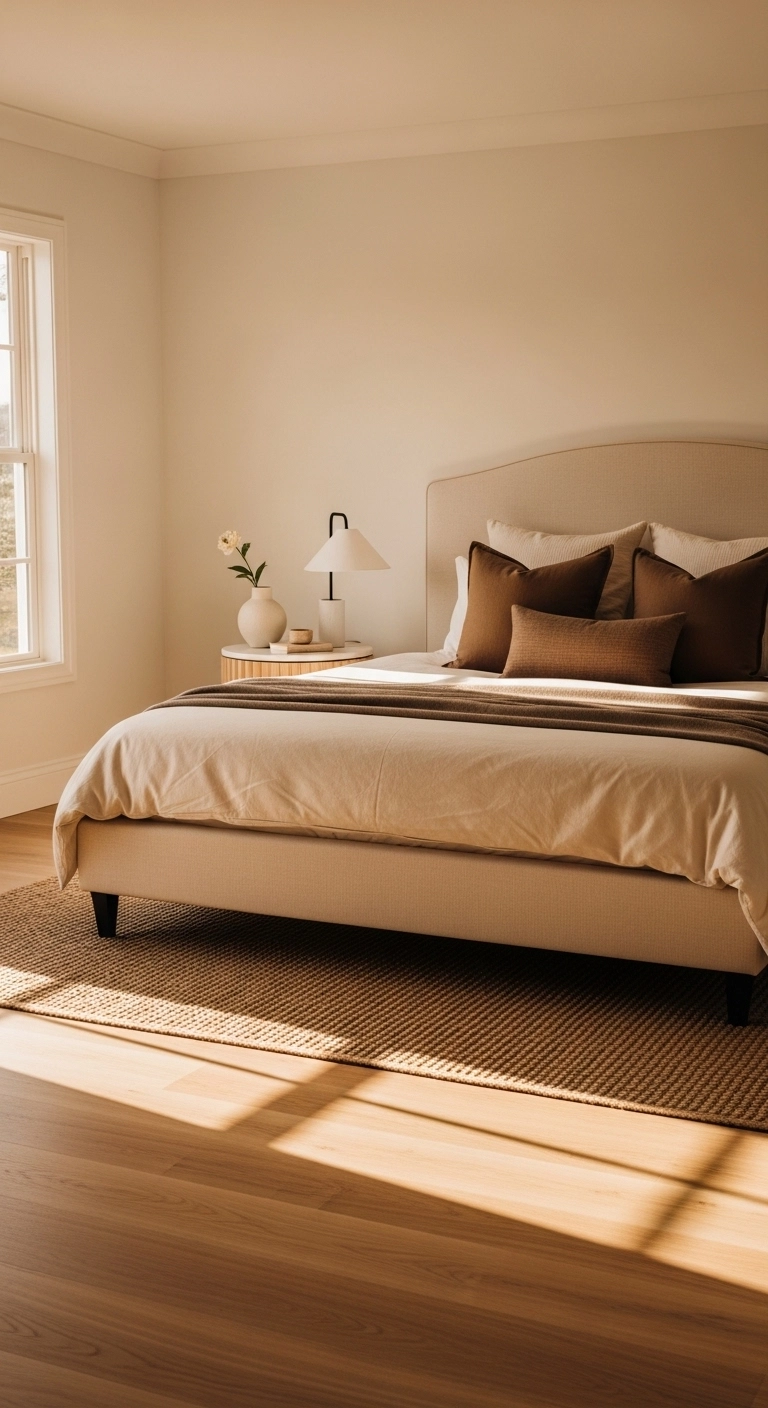
If you want brown to feel inviting rather than heavy, cream is one of its best partners. Brown and cream together create a bedroom that feels warm, calm, and easy on the eyes without looking boring.
This pairing works because cream softens brown’s weight. It keeps the room from feeling too dark while still preserving that cozy, earthy mood. It suits almost any bedroom style, from modern farmhouse to quiet luxury to relaxed contemporary spaces.
A practical way to use this idea is to let brown show up in larger grounding pieces such as the bed frame, nightstands, curtains, or rug, then use cream in bedding, lampshades, walls, or upholstered pieces. If your room already has medium or dark wood furniture, cream bedding is an easy win. It brightens everything without fighting the existing tones.
One thing to watch is undertones. A yellow-leaning cream can look muddy next to some cooler browns, while a pink-beige cream can clash with very orange woods. Test your fabrics and paint together in natural daylight before committing. Brown is forgiving, but undertones still matter.
Use Walnut Wood Furniture for Timeless Warmth
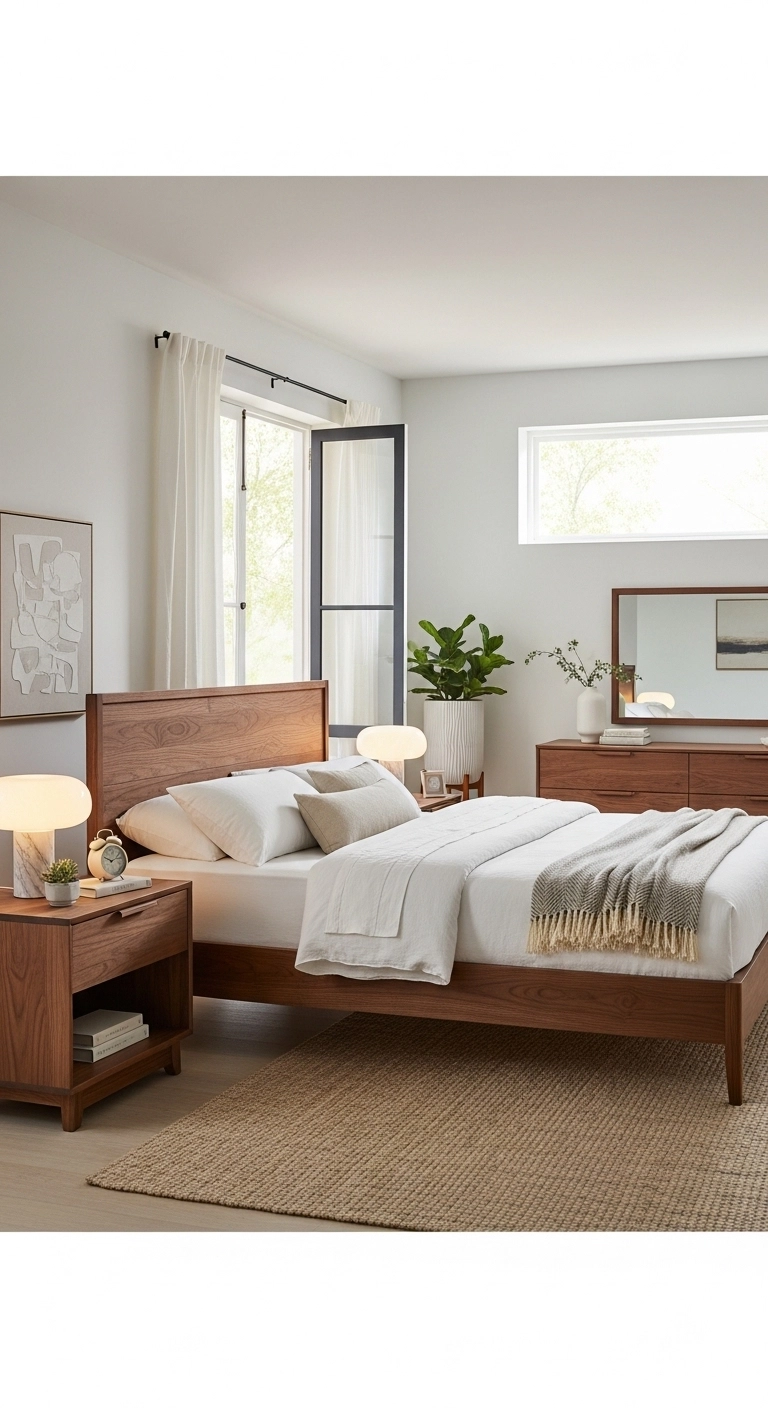
Walnut furniture brings one of the best versions of brown into a bedroom. It has depth, richness, and natural variation, which makes the room feel more collected and less flat than painted furniture often does.
This idea works because walnut adds warmth without shouting for attention. It suits people who want a stylish bedroom that still feels classic enough to age well. It also works in both small and large bedrooms because wood brings interest through grain and tone, not just color.
A walnut bed, dresser, or pair of nightstands can anchor the room beautifully. Keep the surrounding palette simple so the wood remains the star. Soft white walls, oatmeal bedding, black accents, and maybe one muted green or rust detail can make walnut look especially polished. If you like a more contemporary finish, mix walnut with clean-lined furniture and low-profile lighting.
A common mistake is mixing too many unrelated wood tones in the same room. Some variation is fine and can even make the space feel more natural, but a bedroom with red-toned cherry, gray-washed oak, and dark walnut all competing at once can feel visually messy. Try to keep your wood tones in the same warm family.
Try Brown Linen Bedding for an Effortless Earthy Feel
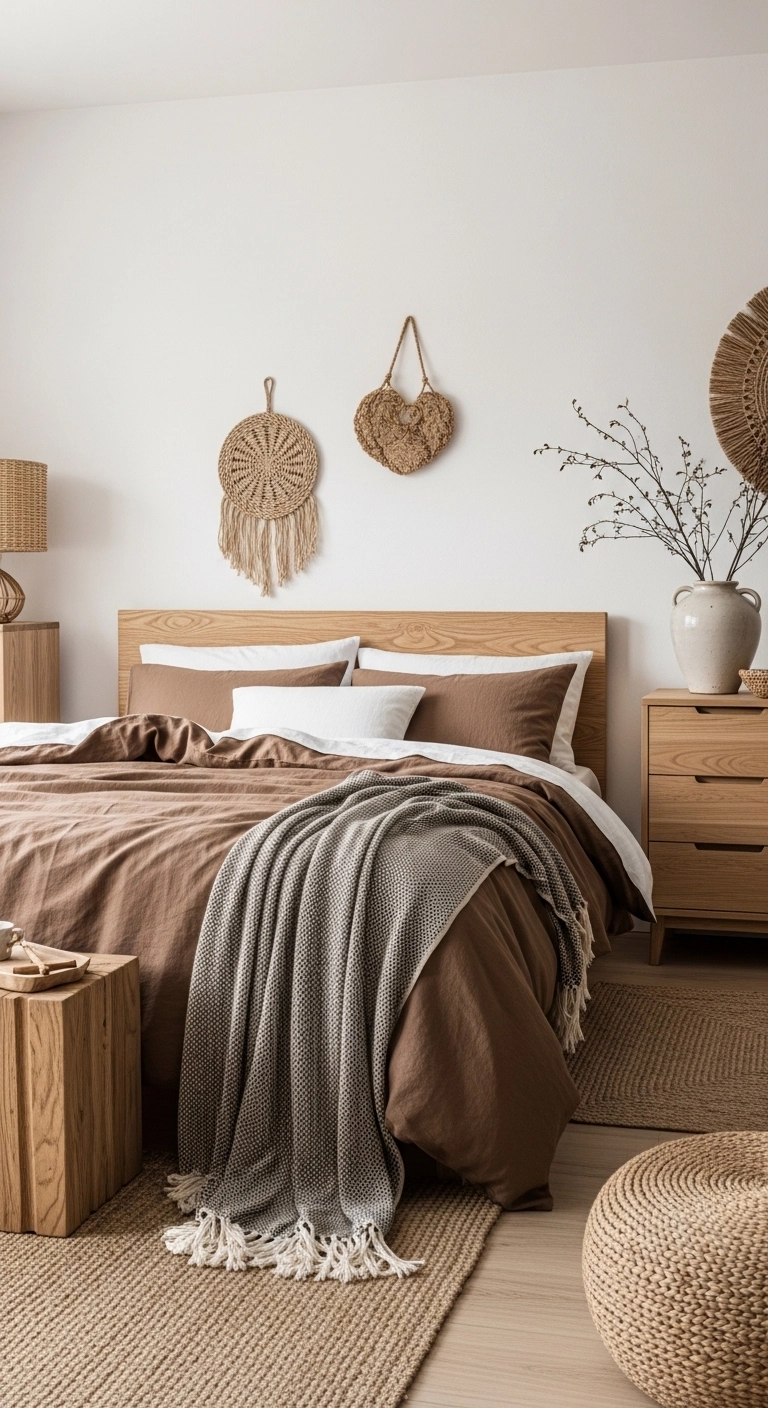
Brown bedding can sound heavy in theory, but brown linen bedding often looks relaxed, airy, and modern. It is one of the easiest brown bedroom ideas to try if you do not want to paint walls or replace furniture.
It works because linen has natural texture and movement. That texture keeps brown from feeling stiff or too formal. Shades like cinnamon, clay brown, mushroom brown, and cocoa can make the bed feel inviting without looking overly dark. This is a great option for people who want a low-fuss, organic look.
Use brown bedding with lighter sheets or pillowcases to keep some contrast near the top of the bed. Layer in cream, beige, muted olive, or soft rust for a more dimensional palette. If your bedroom has white walls and simple wood furniture, brown linen bedding can instantly make it feel warmer and more considered.
The caution here is to avoid matching everything too exactly. Brown duvet, brown sheets, brown pillows, brown bench, brown rug, and brown curtains in nearly identical tones can make the room feel dull. Brown looks better when it has a few tonal shifts and textural differences.
Add a Camel or Cognac Leather Bench at the Foot of the Bed
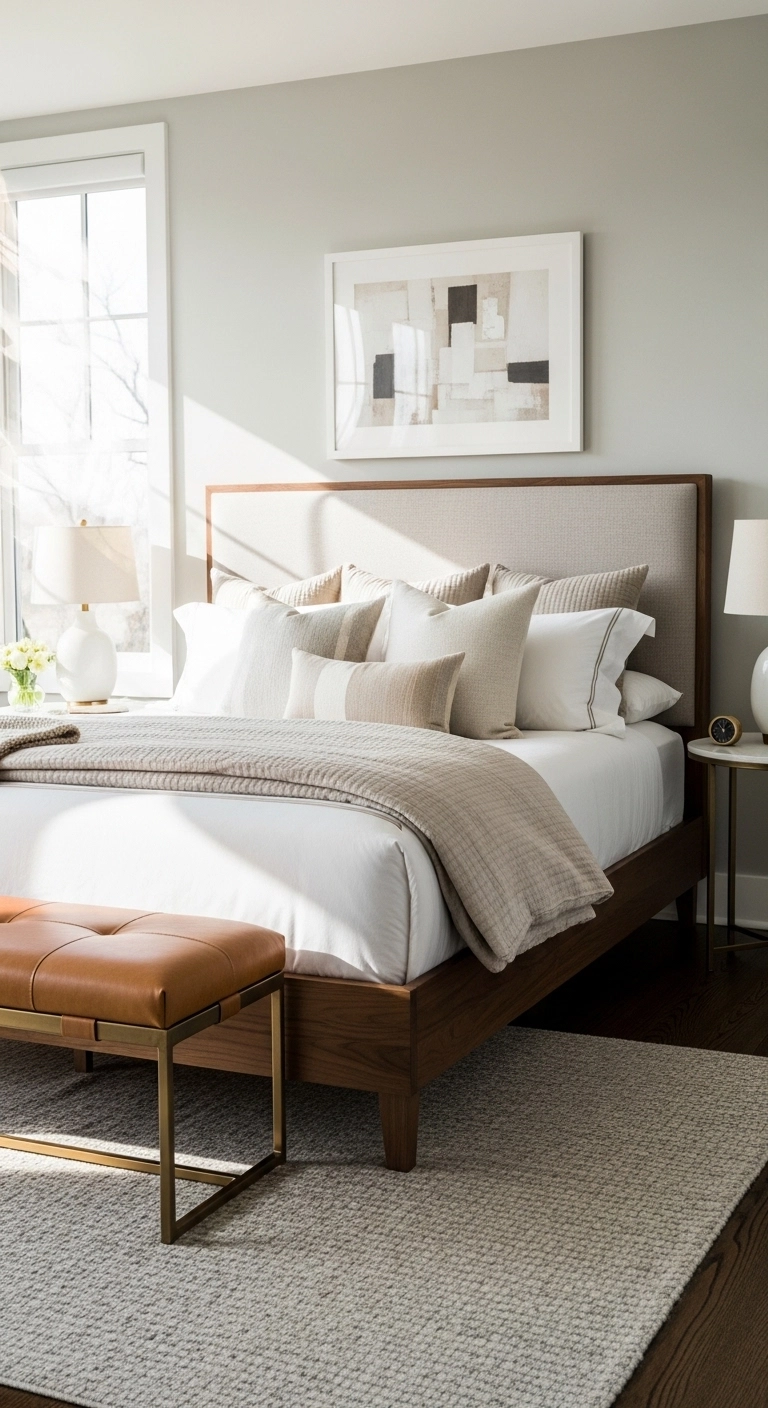
A leather bench brings brown into the room in a practical, stylish way. Camel and cognac shades are especially useful because they feel rich and warm without reading too dark.
This works well because leather adds contrast through material, not just color. In a bedroom with fabric bedding, wood furniture, and maybe painted walls, a leather bench introduces a smoother, slightly more polished element. It suits modern, transitional, industrial, and masculine-leaning bedrooms particularly well, but it can also warm up a softer room.
Style it with restraint. A simple bench at the foot of the bed can hold a folded throw, a book, or nothing at all. Sometimes empty is better. If your room is small, choose a slim bench with visible legs so it does not visually block the floor. Pair it with brown accents elsewhere, such as a picture frame, lamp base, or pillow, so it feels connected.
The main limitation is scale. A bulky leather bench in a compact bedroom can make the room feel crowded fast. Measure carefully and leave enough walking space around the bed. Brown may be warm, but not so warm that you want to trip over it half asleep.
Layer Different Shades of Brown Instead of Using Just One
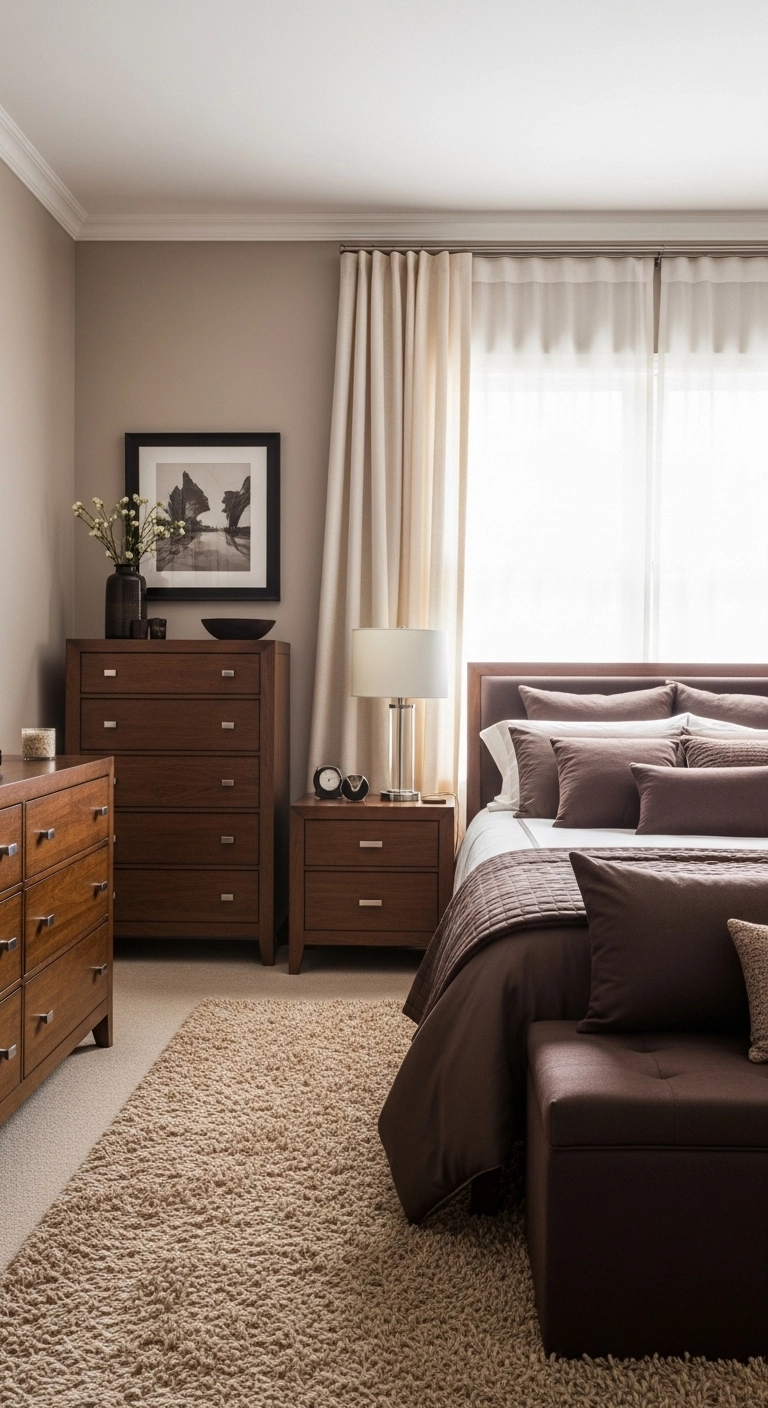
Some of the best brown bedroom ideas rely on tonal layering. Instead of choosing one single brown and repeating it everywhere, mix several shades from light taupe-brown to deep chocolate.
This works because variation creates depth. A room with pale brown walls, medium wood furniture, dark brown pillows, and a warm tan rug feels richer and more intentional than a room where every brown element looks almost identical. It is also a smart strategy if you want a bedroom that feels designed but not overly coordinated.
A good formula is to use one light brown, one mid-tone brown, and one deeper accent. For example, you might have sandy brown curtains, walnut nightstands, and espresso picture frames. Keep a few lighter neutrals in the room too, so all the browns have space around them.
The mistake to avoid is mixing random brown tones without a clear temperature. If half the room leans cool taupe and the other half leans orange-red, the result can feel off. Aim for browns that share a similar warmth level, even when the depth changes.
Bring in Brown Through Textured Wallpaper
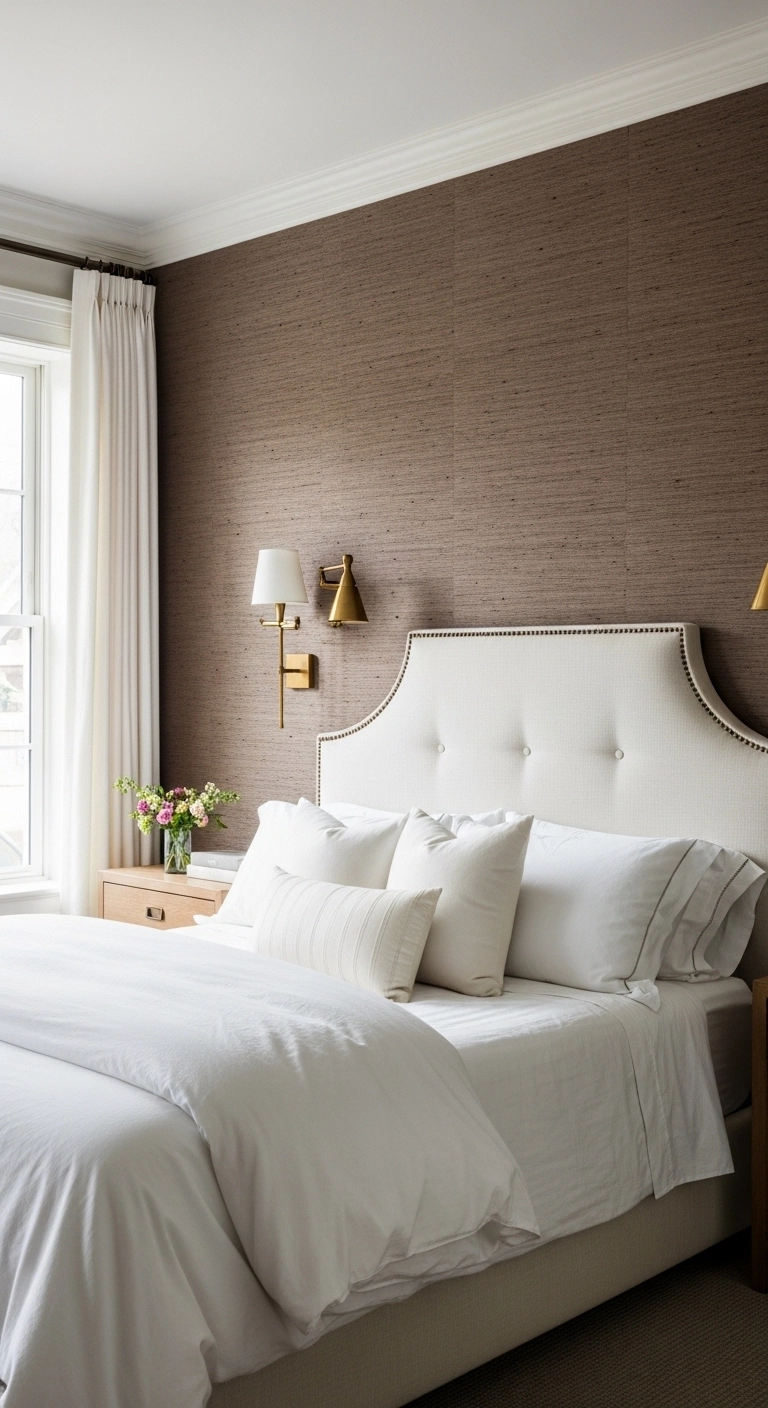
If paint feels too plain, textured wallpaper in a brown tone can add warmth and visual interest at the same time. Grasscloth-style wallpaper, subtle prints, or soft geometric patterns can give the bedroom more personality without overwhelming it.
This works especially well in bedrooms that need warmth but also need something to break up large flat wall areas. It suits primary bedrooms, guest rooms, and even smaller bedrooms where you want to create a cozy boutique-hotel feeling.
The best approach is to let the wallpaper do the decorative heavy lifting. Keep the bed, art, and textiles a bit simpler so the room does not feel busy. Brown wallpaper pairs particularly well with upholstered headboards, warm brass lighting, and crisp bedding in cream or ivory.
One caution: highly patterned brown wallpaper can start to feel dated more quickly than subtle texture. If you want something with staying power, choose a design that adds depth rather than a loud motif that dominates the room.
Mix Brown With Black for a Sharper Modern Edge
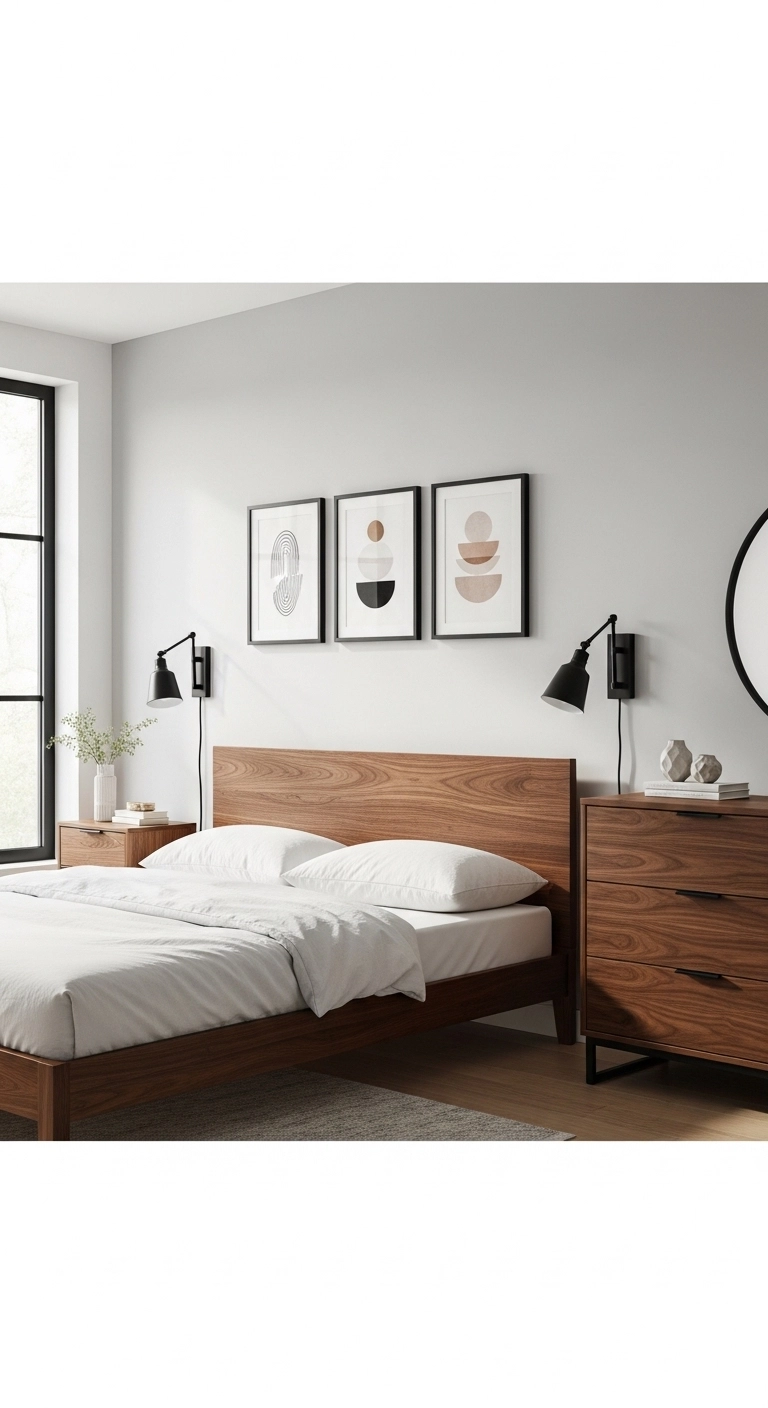
Brown does not always have to feel soft and rustic. Pairing it with black can give a bedroom a cleaner, more modern edge while still keeping the space warm.
This combination works because black sharpens the look and gives structure, while brown prevents the room from feeling cold or too stark. It is ideal for modern, minimalist, and masculine bedrooms, or for anyone who likes stronger contrast without defaulting to plain black and white.
Try a brown upholstered headboard with black wall sconces, or walnut furniture with black-framed art and black curtain rods. A camel throw on white bedding with black bedside lamps is another simple version of the look. Keep the palette edited so it feels deliberate rather than scattered.
The risk is making the room feel too severe if you skip softer elements. Add texture through bedding, a rug, curtains, or wood grain so the space still feels like a bedroom and not a very stylish waiting room.
Warm Up a Small Bedroom With Light Brown and Tan Tones
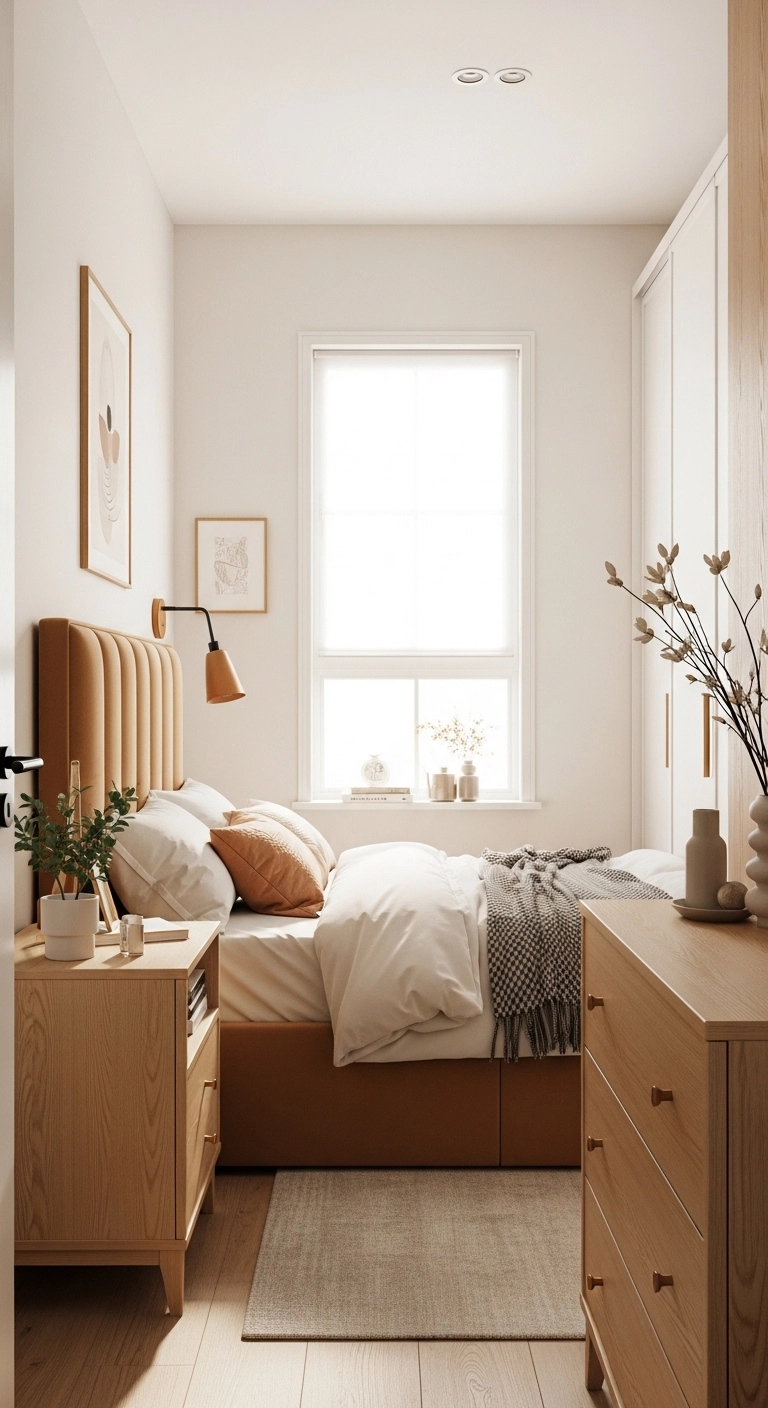
Dark brown can work in small bedrooms, but lighter brown tones are often easier if the room already feels tight. Tan, camel, mushroom, and soft mocha can make a small bedroom feel warm and welcoming without swallowing light.
This idea works because lighter browns give you the mood of brown without the visual weight of deeper shades. It suits guest rooms, apartments, smaller main bedrooms, and spaces with limited natural light.
Use light brown on bedding, curtains, rugs, or an upholstered headboard. Pair it with warm white walls and wood furniture for a layered but open look. Mirrors, lighter flooring, and simple lamps also help the room feel airy. If you want a little contrast, add one deeper brown element, such as a throw blanket or framed artwork.
A common mistake is assuming all brown will make a small room feel cramped. The issue is usually not brown itself but using too many dark finishes with too little contrast. Soft browns can actually make a compact room feel more restful and cohesive.
Add Brown Velvet for a Richer, More Luxurious Mood
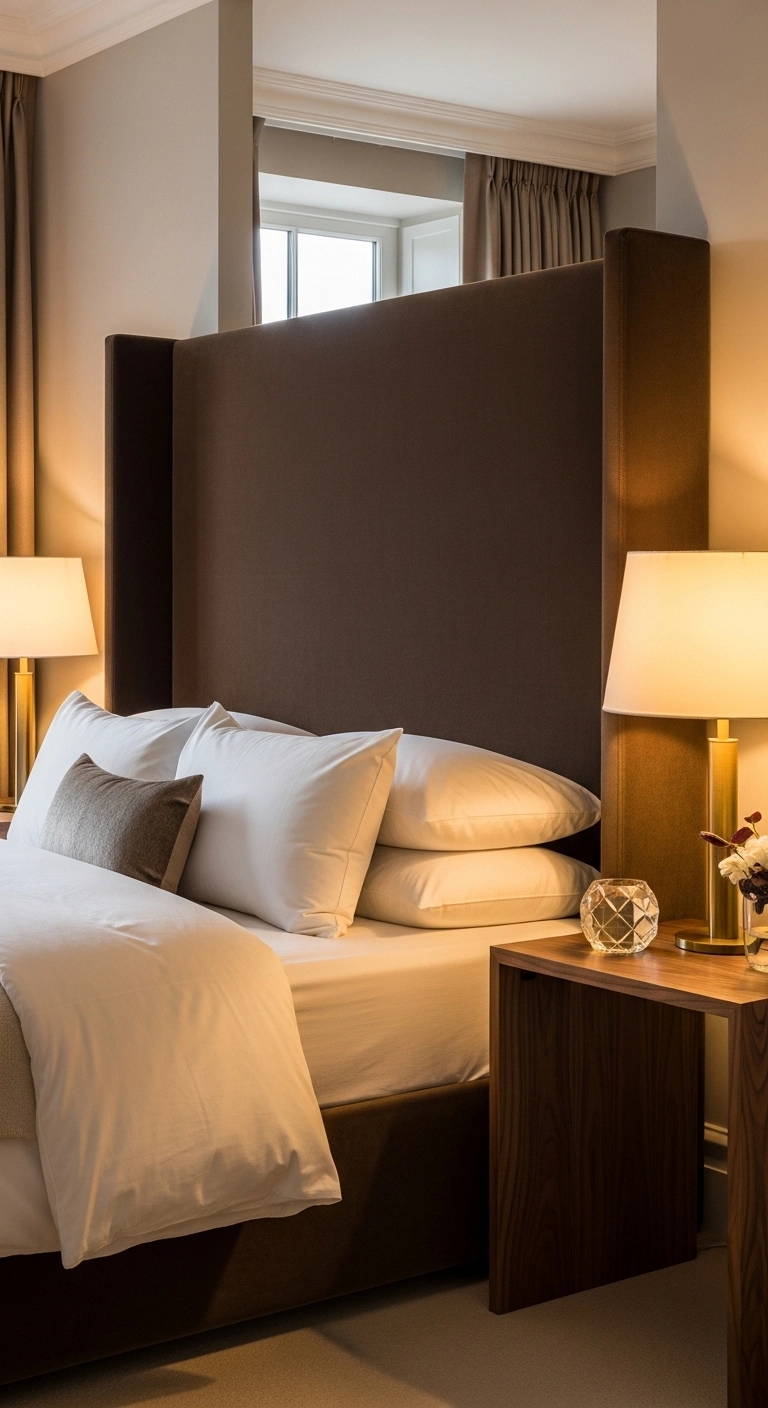
Velvet in a brown tone can make a bedroom feel richer almost immediately. Think a chocolate velvet headboard, mocha accent chair, or a few deep brown velvet pillows layered onto lighter bedding.
This works because velvet reflects light differently than matte fabrics. It gives brown a little depth and softness at the same time, which helps the room feel elevated rather than plain. It suits bedrooms that lean classic, glamorous, or slightly moody.
To use it well, keep velvet as an accent rather than the entire story. One standout piece is usually enough. Brown velvet looks especially beautiful with warm whites, muted gold, walnut wood, and soft lighting. If you want the room to feel refined instead of flashy, let the velvet sit within a calm color palette.
The caution is maintenance and proportion. Too much velvet can make the room feel heavy, and in everyday life it may not be the most forgiving fabric for every household. A little goes a long way.
Use Brown Curtains to Frame the Room and Add Depth
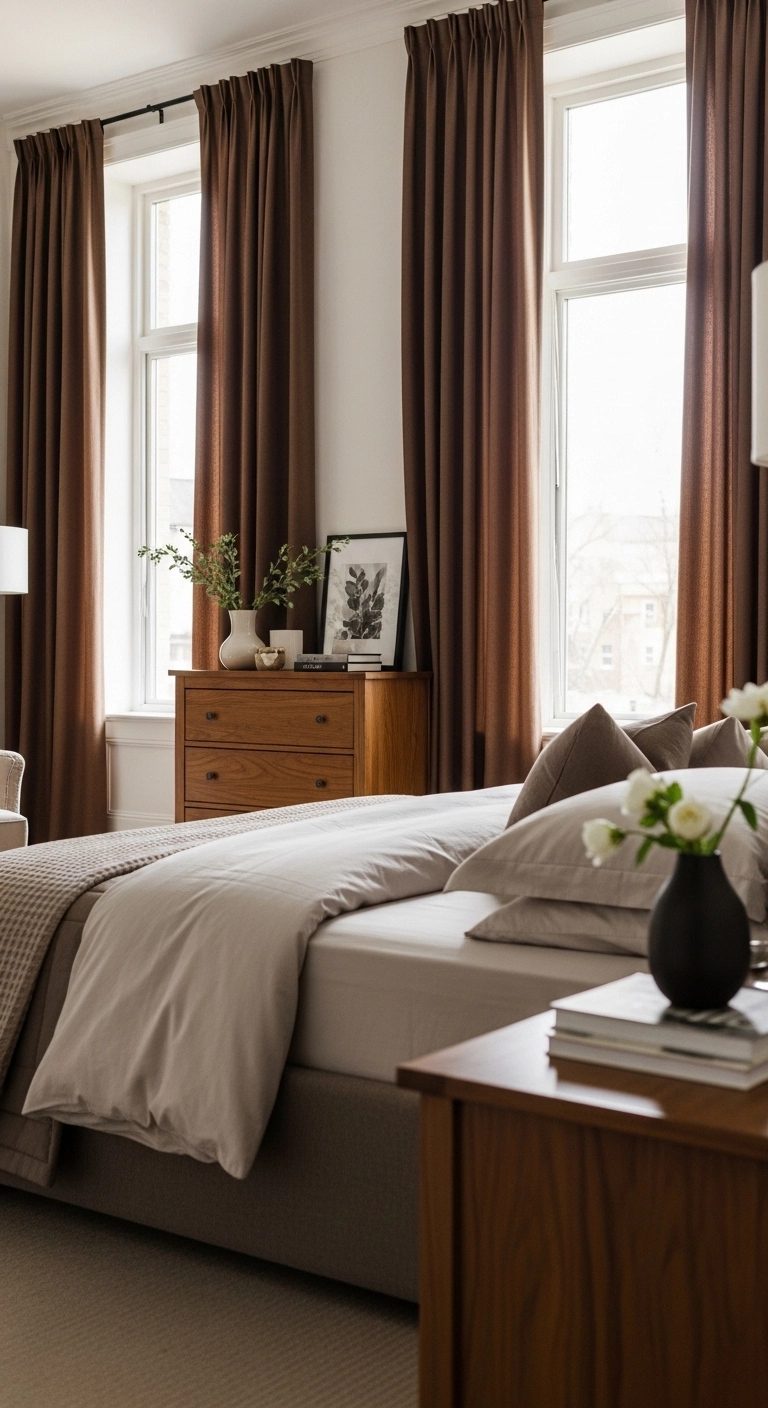
Curtains are often overlooked, but brown curtains can quietly pull a bedroom together. They add vertical softness, help frame the windows, and bring another layer of warmth that feels subtle rather than flashy.
This works because fabric introduces color in a gentler way than painted walls or large furniture pieces. Brown curtains are especially useful in bedrooms with white or beige walls that need a bit more depth. They also work well if you already have brown furniture and want the room to feel more cohesive.
Choose the shade based on the mood you want. Lighter brown curtains feel softer and more casual. Deeper browns feel more dramatic and grounding. Hang them high and wide so the windows look taller and the room feels more polished. Linen blends, cotton weaves, and soft textured fabrics usually look better than anything too shiny.
The mistake to avoid is choosing curtains that are too close to the wall color without enough contrast or texture. In that case, they can disappear in an unhelpful way. Either go a touch deeper or pick a fabric with some visible texture.
Pair Brown With Green for a Natural, Restful Palette
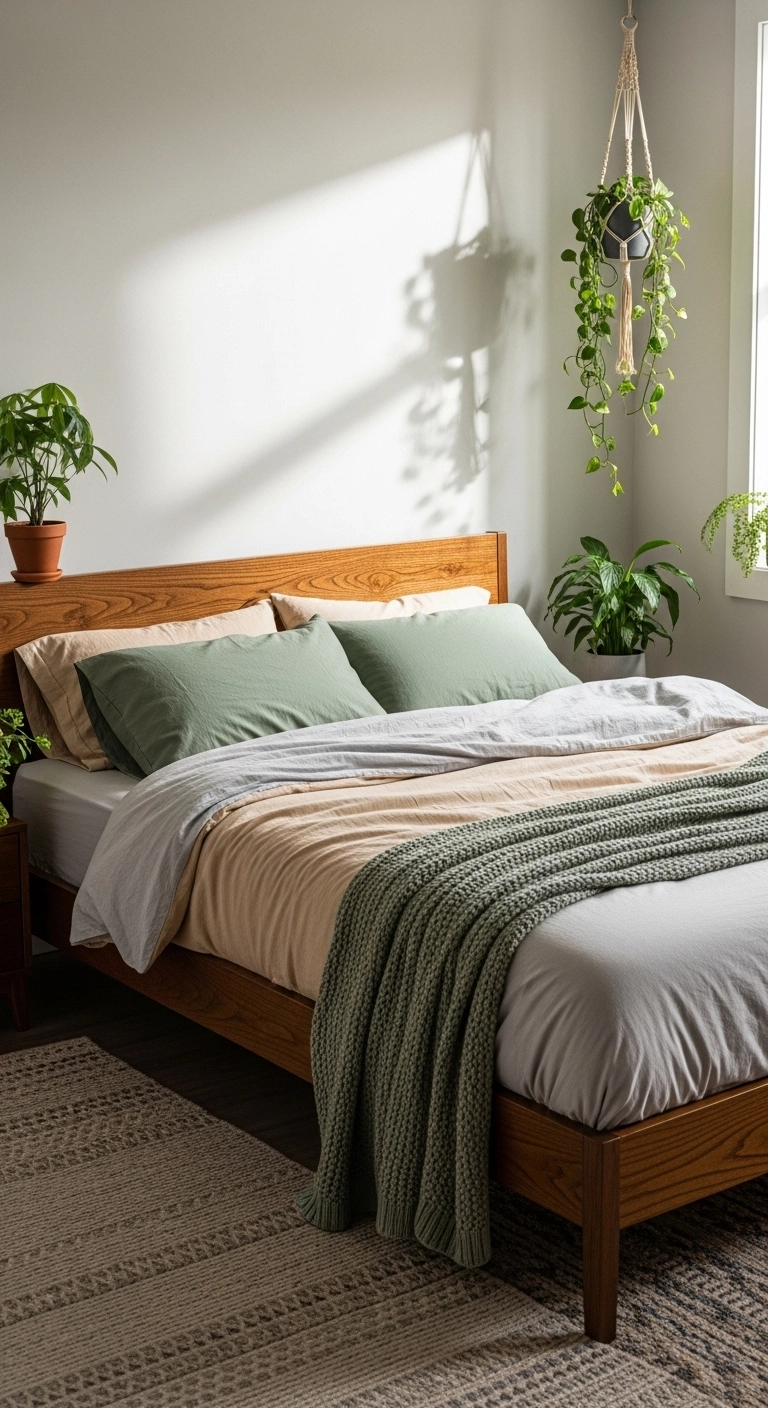
Brown and green are one of the most reliable combinations for a calm bedroom. Brown brings warmth and stability, while green adds freshness and a gentle sense of life.
This works because it echoes what already feels natural outdoors: wood, soil, leaves, moss, bark. That makes the room feel restful without trying too hard. It is a great choice for anyone who wants a bedroom that feels earthy, grounded, and a little bit softer than a strict neutral palette.
You can bring in green through pillows, art, a painted accent piece, or even just a few plants if the room gets enough light. Olive, sage, moss, and muted eucalyptus tones all work well with brown. This palette suits relaxed modern, organic, and transitional spaces especially well.
One thing to watch is saturation. Very bright green can fight with brown and make the room feel less restful. Stick with muted greens if you want the pairing to feel elegant and easy to live with.
Make the Headboard the Brown Statement Piece
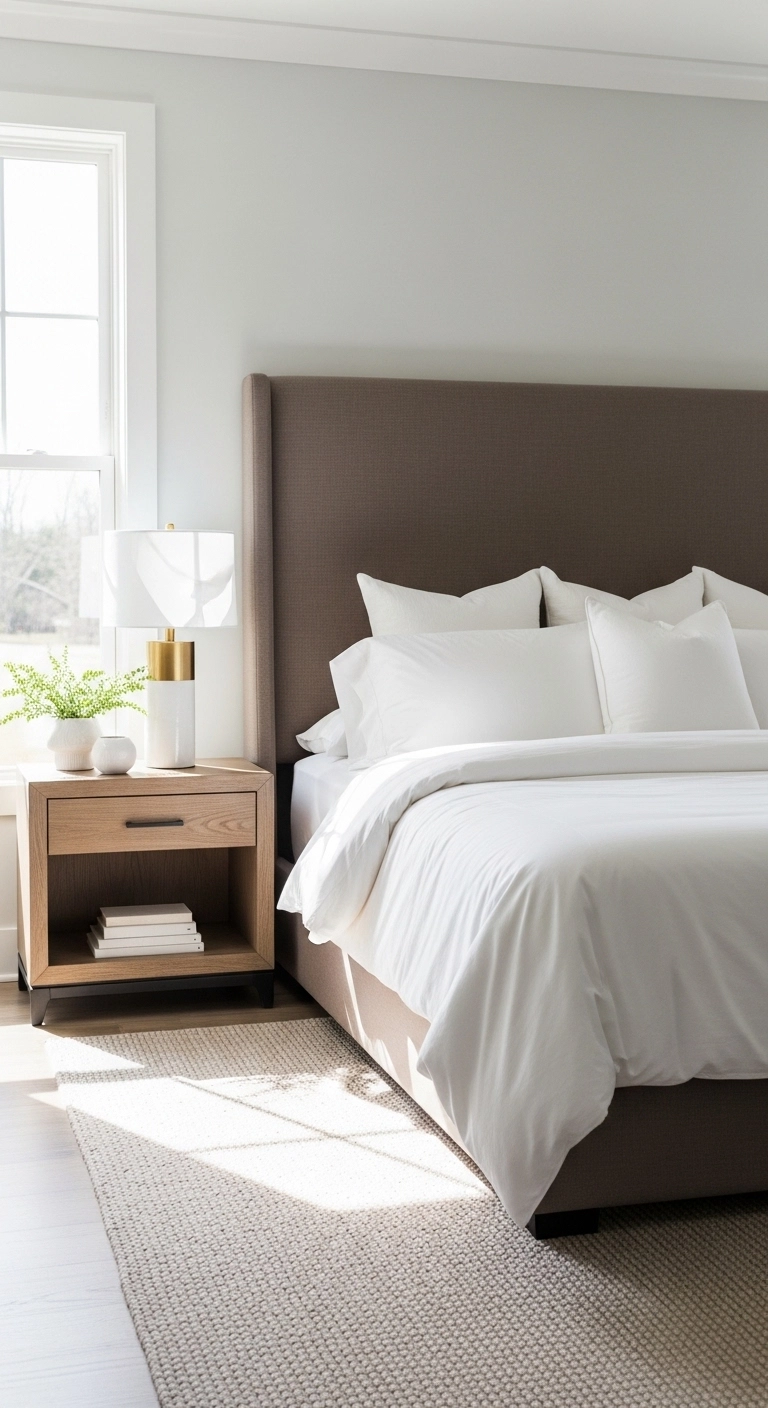
If you do not want brown spread all over the room, concentrate it in one major piece: the headboard. A brown upholstered or wood headboard can anchor the bed and set the tone for the rest of the space.
This works because the bed is naturally the focal point of the room anyway. A strong brown headboard adds definition, warmth, and structure without requiring you to commit to brown walls, brown rugs, or brown curtains all at once. It works especially well in neutral bedrooms that need one grounding element.
For a softer look, choose a brown upholstered headboard in linen, boucle, or velvet. For a cleaner, more timeless feel, use wood. Then echo that brown in just a few smaller details, such as the bedside table, picture frames, or a throw blanket. That creates balance without overdoing the theme.
The caution here is proportion. A very dark, oversized headboard in a tiny room can dominate everything else. Make sure the scale suits the room and that the bedding provides enough contrast.
Finish With Brown Accents for a Low-Commitment Update
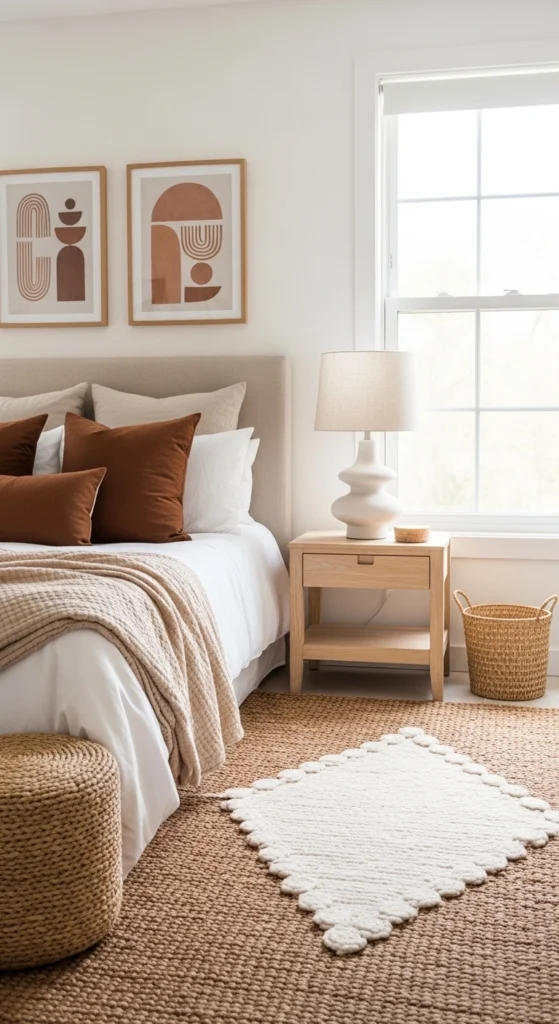
Sometimes the smartest way to use brown is the least dramatic one. Brown accents such as throw pillows, a woven rug, baskets, lampshades, ceramic decor, or framed art can warm up a bedroom without requiring a full redesign.
This works because brown is naturally easy to layer into existing spaces. If your bedroom currently feels too cold, too gray, or a bit unfinished, brown accents can make it feel more settled quickly. This is ideal for renters, for people decorating on a budget, or for anyone who wants to test brown before making bigger changes.
The key is to choose accents with texture and purpose. A brown woven bench, a clay-toned lamp, or a patterned rug with brown in it will do more for the room than a pile of random brown objects scattered around. Let each accent contribute something useful or visually grounding.
The mistake to avoid is adding brown in tiny disconnected doses that feel accidental. A few well-placed pieces work better than lots of small ones that never quite relate to each other.
Conclusion
The best brown bedroom ideas are not about making a room dark. They are about making it feel warm, layered, and comfortable in a way that still looks stylish. Brown works beautifully on walls, furniture, bedding, and accents, but it works best when it is balanced with texture, contrast, and a little breathing room.
If you are unsure where to start, begin with one easy change such as brown bedding, a walnut nightstand, or a camel bench. Once you see how much warmth it adds, the rest of the room usually gets easier to shape. Brown is one of those rare decorating choices that can feel both timeless and current, which is exactly what most bedrooms need.