
13 Beautiful Dining Room Ideas For A Warm Gathered Feel
A dining room does more than hold a table and chairs. It sets the tone for everyday meals, slow weekend breakfasts, family celebrations, and the kind of conversations that linger after plates are cleared. The best dining room ideas do not just look good in photos. They make people want to sit down, stay longer, and feel at ease.
If you want your space to feel warmer, softer, and more welcoming, small design choices often matter more than expensive ones. The right lighting, textures, layout, and finishes can turn even a simple dining area into a room that feels thoughtful and lived in.
Why These Dining Room Ideas Work
A warm gathered feel usually comes from a mix of comfort, balance, and visual softness. Rooms like this tend to have a few things in common: lighting that flatters, materials that add texture, furniture that fits the space properly, and details that make the room feel personal instead of staged. These ideas work because they focus on how a dining room feels to use, not just how it looks from the doorway.
Start With a Table That Feels Generous, Not Oversized
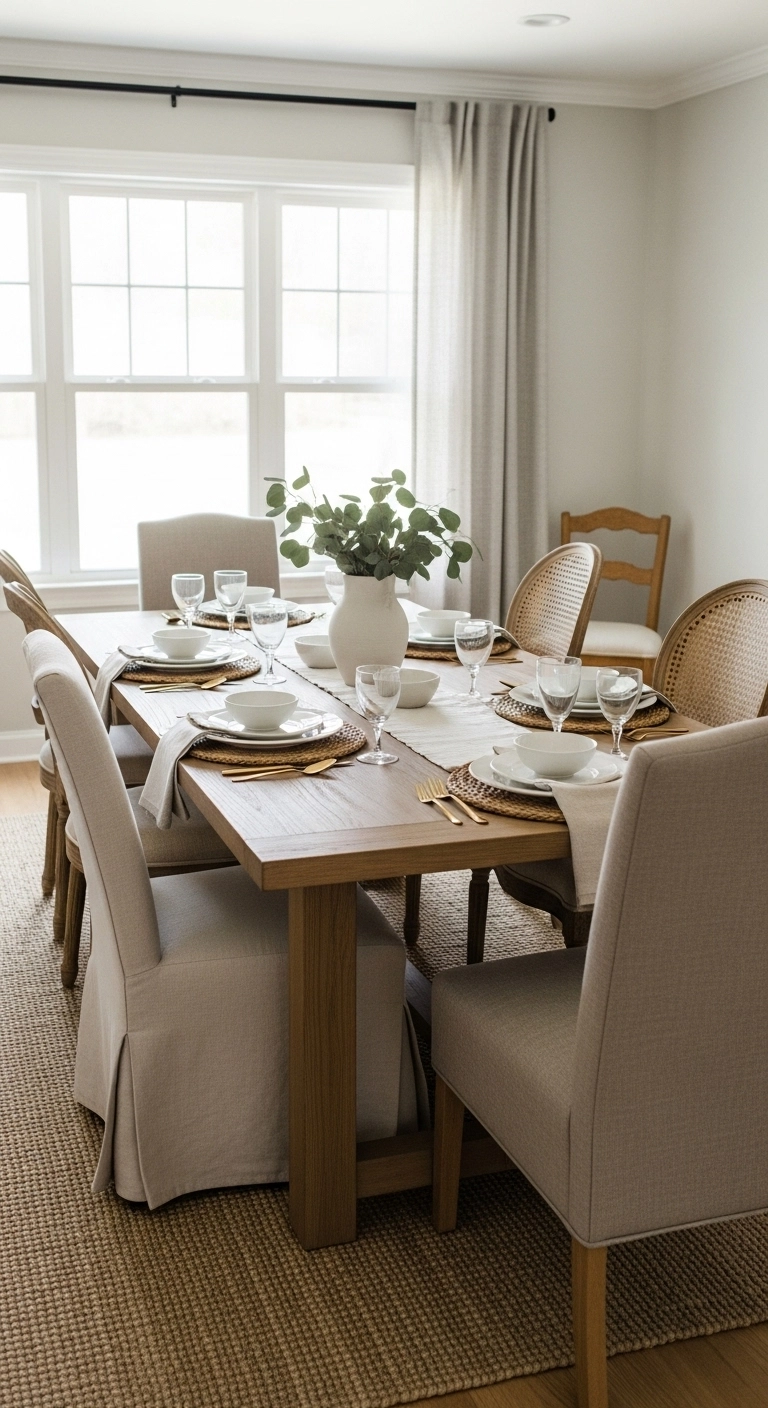
The dining table is the center of the room, so its shape and size affect everything else. A generous table gives people enough space to eat and talk comfortably, while still leaving room to move around it without squeezing past chairs.
This works because comfort is part of warmth. If a table is too large for the room, the space can feel cramped and awkward. If it is too small, the room may feel underfurnished and less inviting.
This idea works great in almost any dining room, but it’s especially important in smaller homes where every inch counts. In a compact space, a round table can soften the layout and improve flow. In a long room, a rectangular table often feels more natural.
To apply it well, measure the room before choosing furniture. Make sure chairs can pull out easily and people can walk around the table without bumping into walls or cabinets. A table with a natural wood tone often adds warmth faster than glass or high-gloss finishes.
One common mistake is choosing a table for occasional large gatherings instead of everyday life. If you need flexibility, consider an extendable table rather than living with one that always feels too big.
Layer Warm Lighting Instead of Relying on One Overhead Fixture
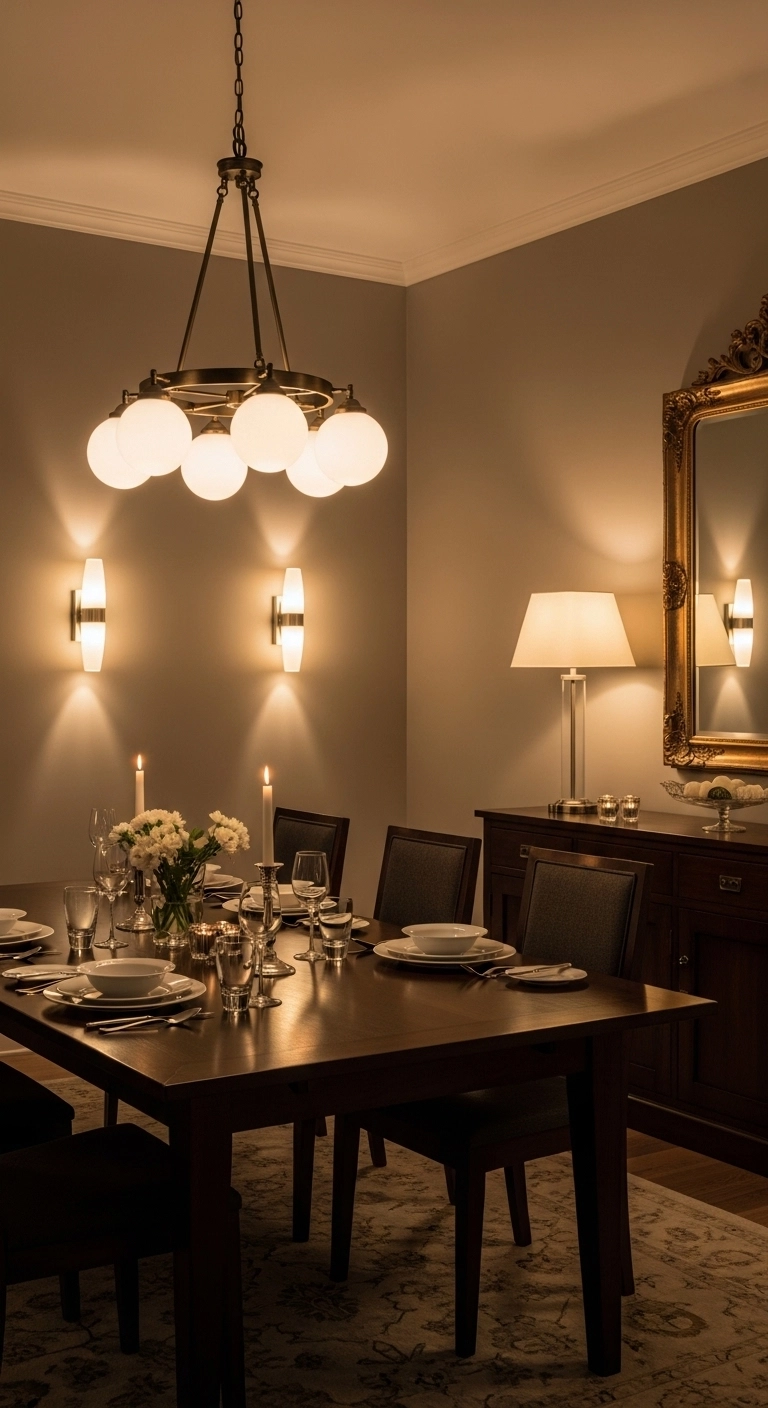
Lighting has a huge effect on mood. A single harsh ceiling light can make even a beautiful room feel flat. Layered lighting creates depth and makes the room feel softer and more lived in.
This works because warm light helps people look better, food look more appealing, and the room feel calmer. It also adds dimension, which makes the space feel intentional rather than purely functional.
This idea suits every dining room, but it is especially useful in rooms that feel cold at night or do not get much natural light during the day.
A good way to start is with a pendant or chandelier in the center above the table, then add lamps on sideboards, wall sconces, or nearby ambient lighting if the layout allows. If you’re aiming for a cozy atmosphere, opt for warm-colored bulbs rather than cool-white bulbs.
The main caution is scale. A fixture that is too small can look disconnected, while one that is too bright can dominate the room in the wrong way. The goal is glow, not glare.
Use Upholstered Seating for a Softer, More Relaxed Feel
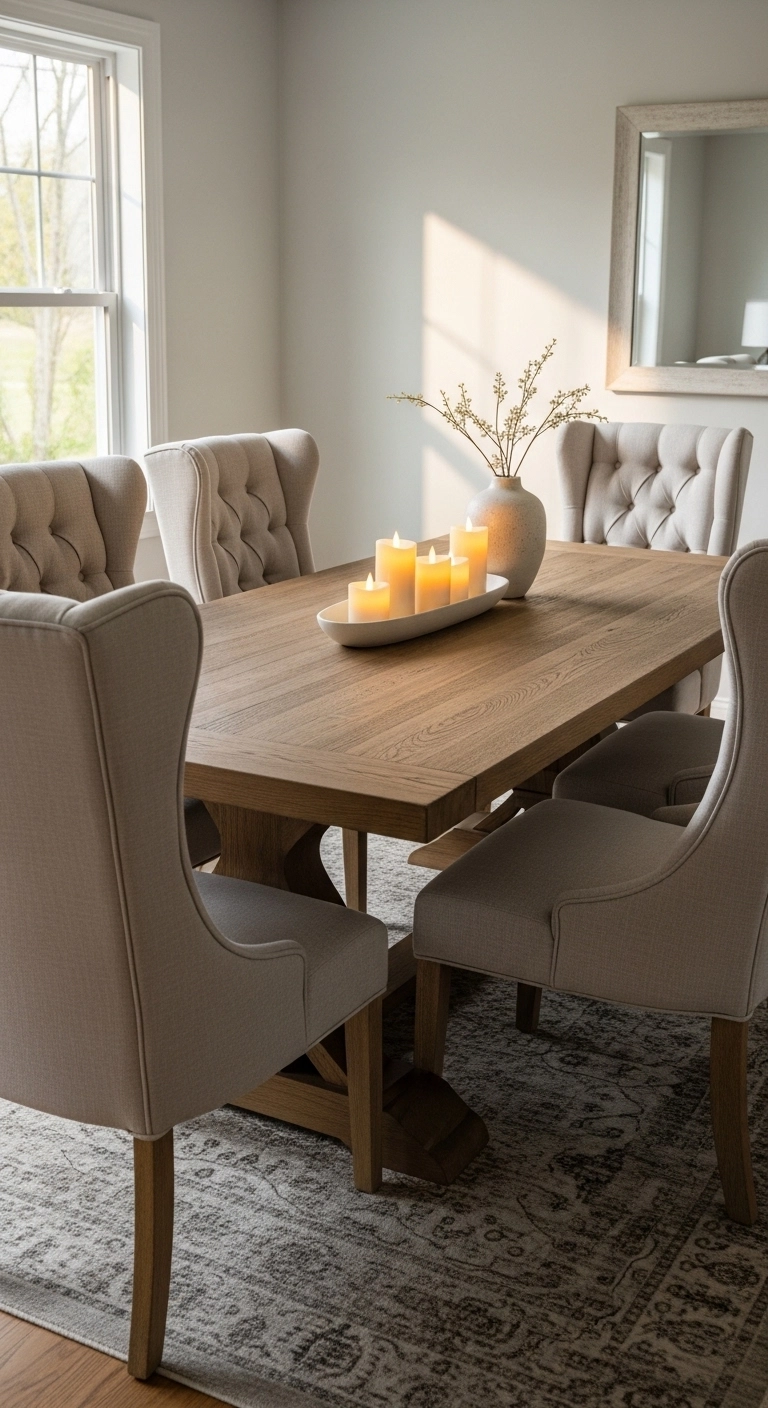
Upholstered chairs instantly make a dining room feel more comfortable. Even one or two upholstered host chairs can soften the room and make it feel less rigid.
This works because fabric adds texture, absorbs some visual hardness, and encourages people to stay seated longer. A room that feels physically comfortable also tends to feel emotionally warmer.
This idea works especially well in formal dining rooms that feel a little stiff, or in open-plan homes where you want the dining area to feel distinct and cozy.
To pull this off well, choose durable, easy-care fabrics in soothing tones or subtle patterns. If full upholstery feels too high-maintenance, chairs with seat cushions or slipcovers can offer a similar effect. Pairing high chairs with simple side chairs is another practical option.
One limitation is upkeep. Lighter fabrics can show spills more easily, so this may not be the most practical choice for households with very young children unless you choose performance fabric or washable covers.
Add a Rug That Grounds the Whole Space
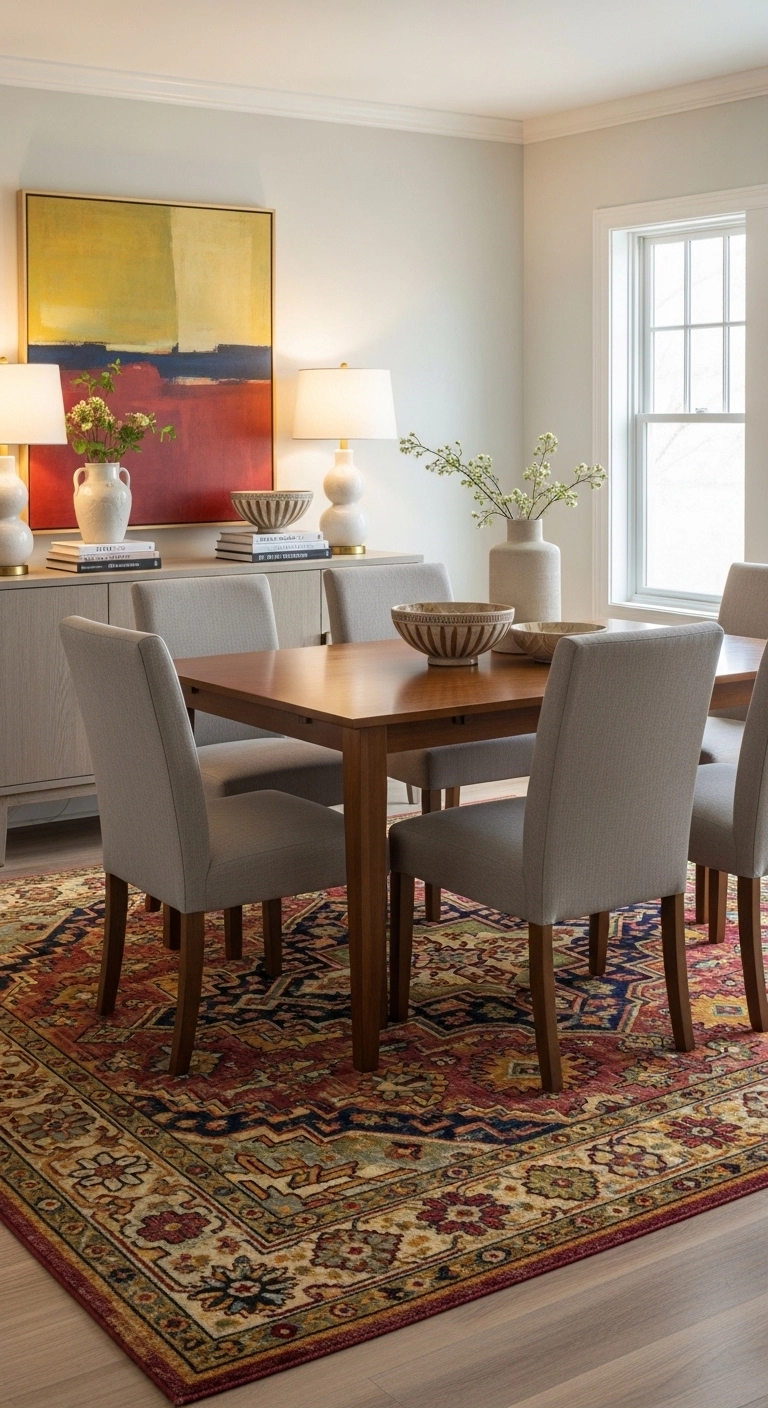
A rug can make a dining room feel finished, anchored, and warmer underfoot. It visually gathers the table and chairs into one defined zone, which is especially helpful in open layouts.
This works because rugs soften sound, add color and texture, and make the room feel layered instead of bare. They also help the dining area feel intentional rather than like furniture placed in a pass-through space.
This idea is best for dining rooms with hard flooring or for combined kitchen-dining areas where you want more definition.
To make it work, choose a rug large enough that the chairs still sit on it when pulled out. Flatweave or low-pile styles are often easier to live with in dining areas. Patterns can also be practical because they tend to hide minor marks better than very plain light surfaces.
A common mistake is choosing a rug that is too small. That can make the room look disconnected and create a constant annoyance when chairs catch at the edges.
Bring in Natural Wood for Instant Warmth
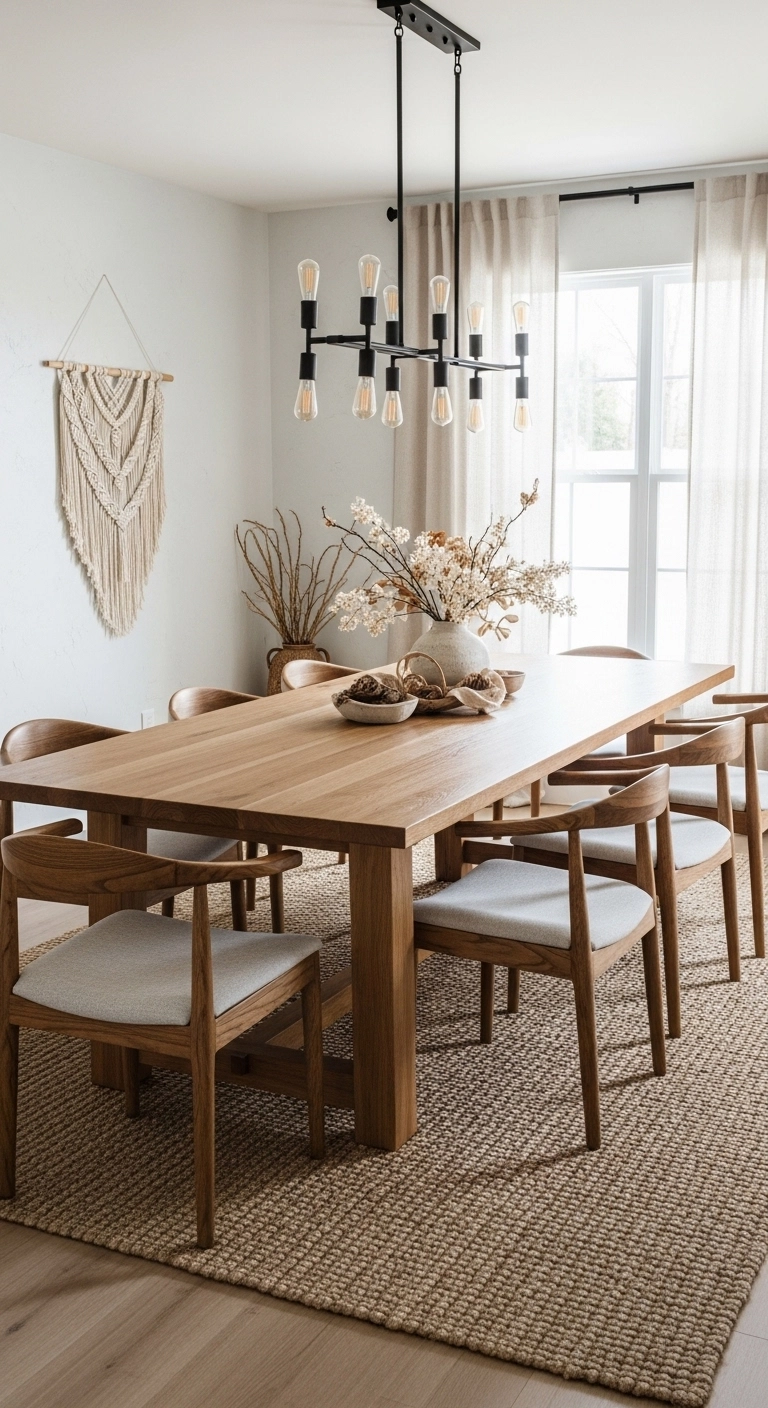
Wood is one of the easiest ways to make a dining room feel welcoming. Whether it shows up in the table, chairs, sideboard, ceiling beams, or decor, it adds depth and a natural warmth that painted or glossy finishes often lack.
This works because wood has visual texture and variation. It feels grounded and real, which helps a room feel relaxed and timeless.
This suits almost every style, from traditional to modern. Even a clean, minimal dining room often benefits from one or two wood elements to keep it from feeling cold.
To apply this well, don’t worry about matching every wood tone perfectly. A room often feels richer when the tones relate rather than match perfectly. For example, a medium wood table can still work beautifully with dark frames or light flooring if the overall palette feels balanced.
The caution here is overdoing it. Too many heavy wood tones in one room can make the space feel dark or dated. Balance wood with lighter textiles, soft walls, or reflective surfaces.
Use a Bench on One Side for a More Casual Gathered Look
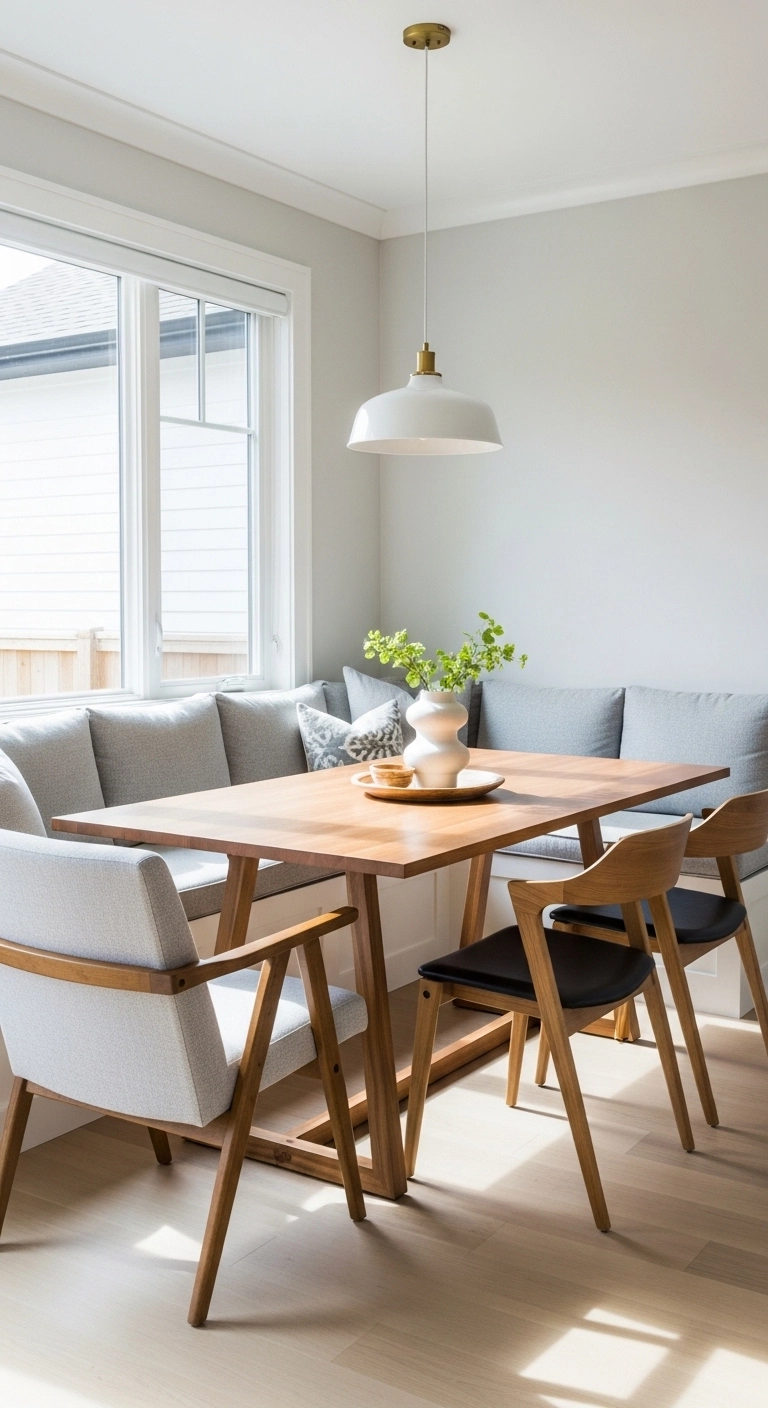
A bench can make a dining area feel more relaxed and communal than a full set of matching chairs. It changes the tone of the room in a subtle but useful way.
This works because benches feel informal and flexible. They can seat more people when needed, and they often make the room look less rigid and more welcoming.
This idea works best in family dining rooms, breakfast nooks, or homes where the dining area needs to feel easygoing rather than formal.
To apply it well, pair a bench with chairs on the opposite side or at the ends of the table. Add a cushion if you want extra comfort, and make sure the bench tucks in neatly when not in use so the room stays visually tidy.
One limitation is back support. Benches are not always as comfortable for long meals, so they may work better when balanced with standard chairs elsewhere.
Choose a Color Palette That Feels Soft and Grounded
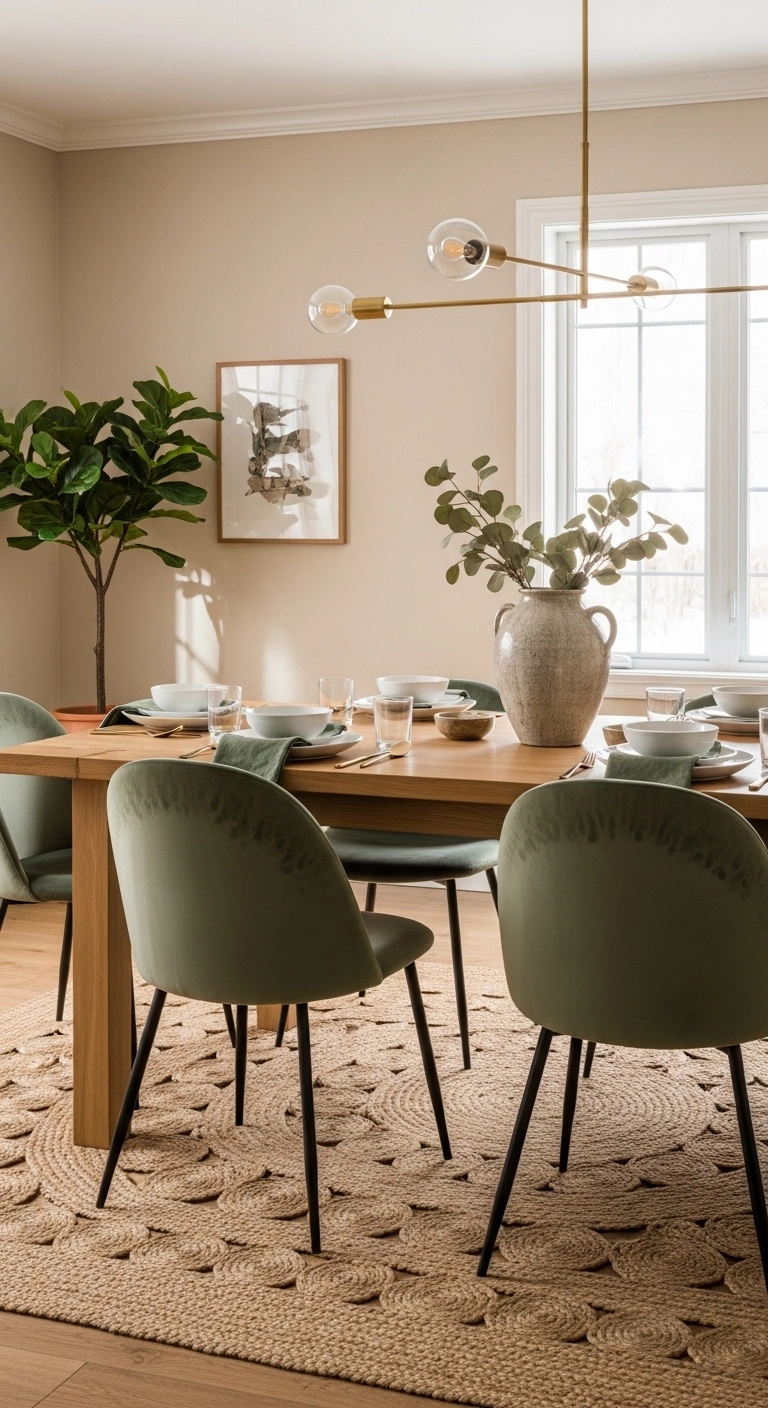
Color shapes atmosphere quickly. If you want a warm gathered feel, softer grounded colors tend to work better than stark contrasts or overly bright schemes.
This works because gentle, earthy, or muted colors help a room feel calm and cohesive. Warm whites, clay tones, soft greens, muted blues, taupe, mushroom, and warm gray can all support a welcoming mood.
This idea suits any room, but it is especially helpful in dining rooms that currently feel cold, sharp, or disconnected from the rest of the home.
To apply it well, think in layers rather than a single paint choice. Wall color, wood tone, textiles, artwork, and table decor should support each other. Even a neutral room feels richer when it includes slight variation in tone and texture.
The main caution is making everything too similar. A dining room still needs some contrast so it does not look flat. Darker chairs, a deeper rug, or a bold light fixture can help.
Add Curtains or Drapery to Soften the Edges of the Room
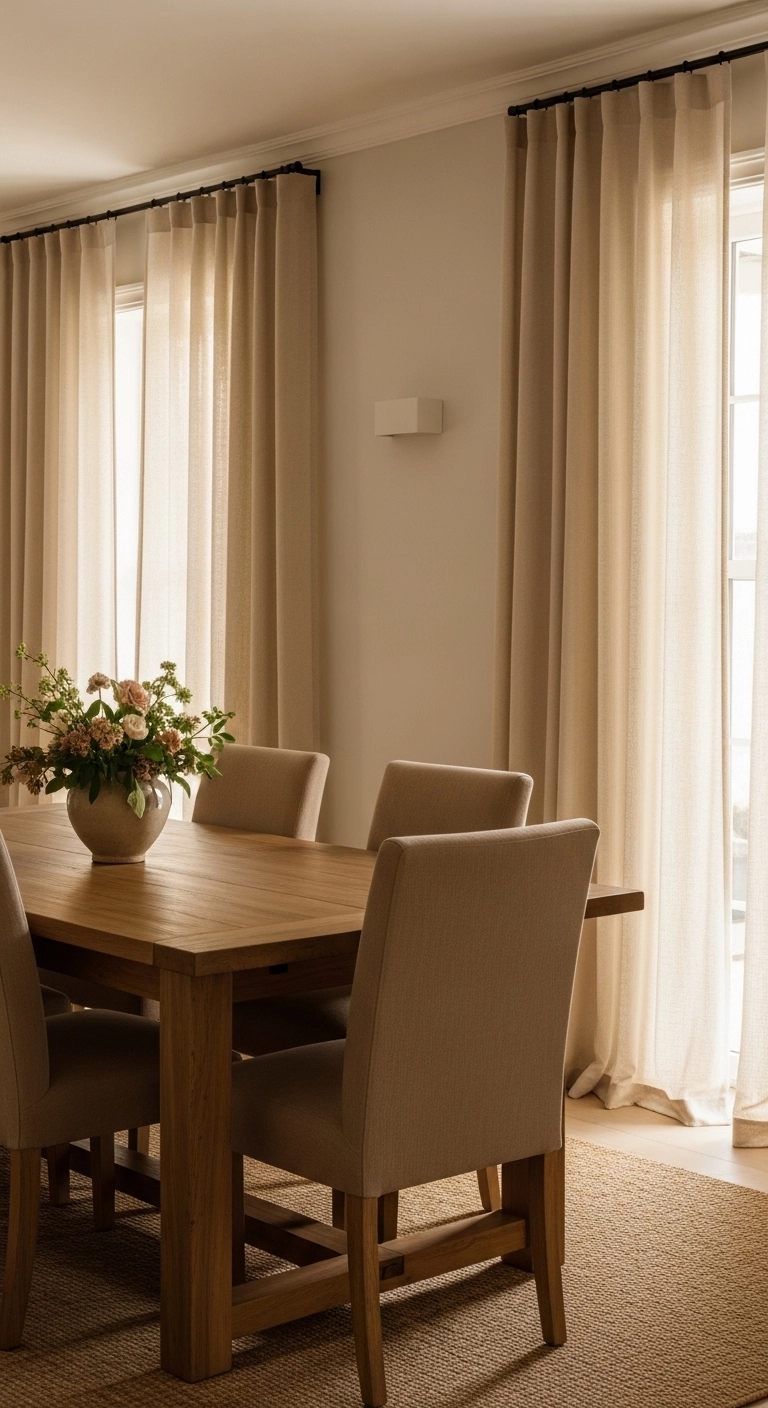
Dining rooms often have hard surfaces: wood, metal, glass, flooring, and straight lines. Fabric at the windows helps soften all of that.
This works because drapery adds movement, warmth, and a fuller quality. It can also improve acoustics and make a room feel more intimate.
This idea works especially well in dining rooms with large windows, high ceilings, or an echo that makes the room feel empty.
To apply it well, choose fabric with some body so it hangs nicely. Mount curtain rods high enough to give the room a taller, more polished feel. Linen blends, cotton, or subtly textured fabrics often work well because they feel relaxed rather than formal.
A mistake to avoid is using curtains that are too short or too skimpy for the window. Thin, undersized panels can make the room feel less considered instead of more welcoming.
Include a Sideboard or Cabinet That Adds Both Beauty and Function
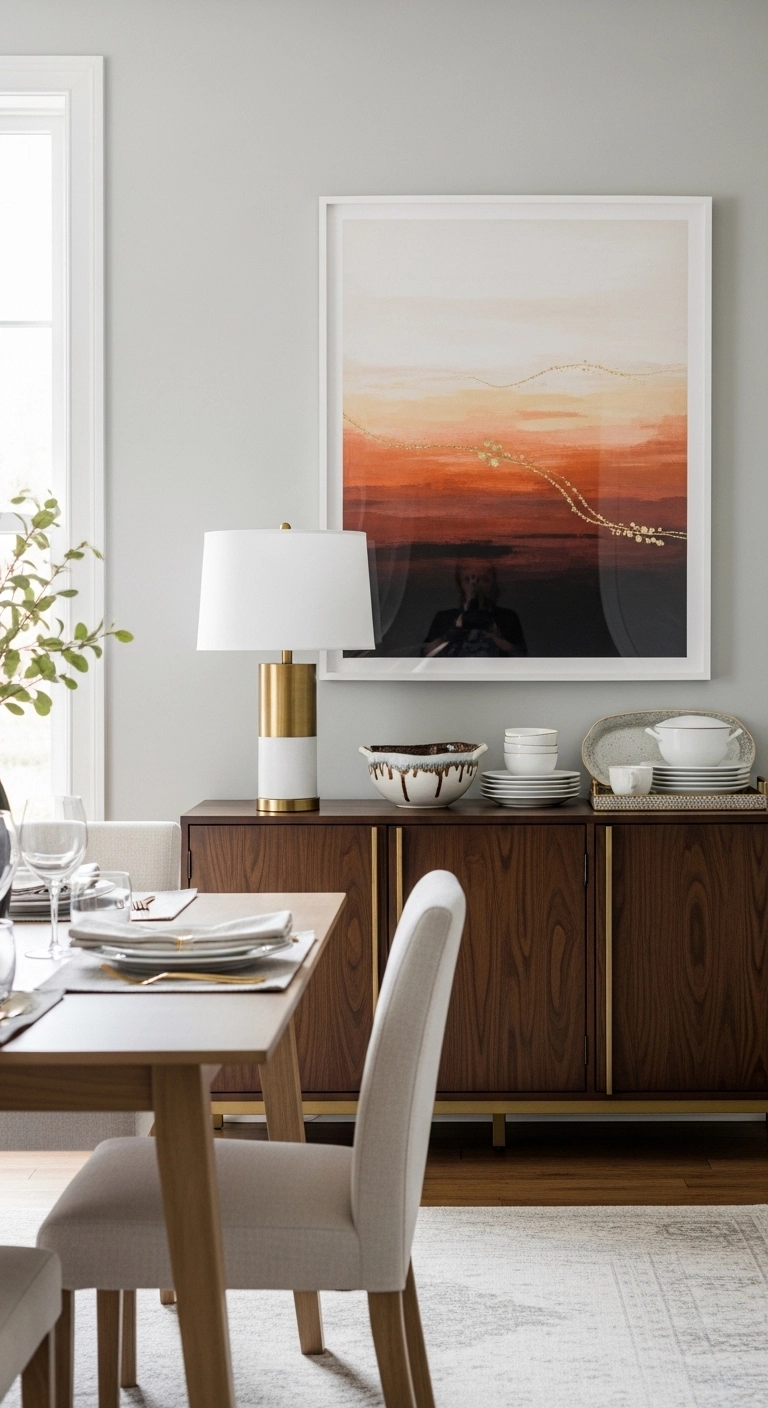
A sideboard does a lot quietly. It offers storage, gives you a place for lamps, candles, or serving pieces, and adds visual weight that helps the room feel complete.
This works because functional furniture reduces clutter and gives the room more purpose. It also creates an opportunity to style without crowding the table.
This idea works best in dining rooms with a blank wall or enough space to include one without making circulation difficult.
To apply it well, choose a piece that fits the room in scale and style. Then keep the top relatively simple: a lamp, a bowl, a few candlesticks, or framed art can be enough. The goal is warmth, not visual overload.
The caution is crowding. If the room is small, a bulky cabinet may make it feel tighter. In that case, a slimmer console or wall-mounted storage may be more appropriate.
Decorate the Table Lightly So It Still Feels Usable
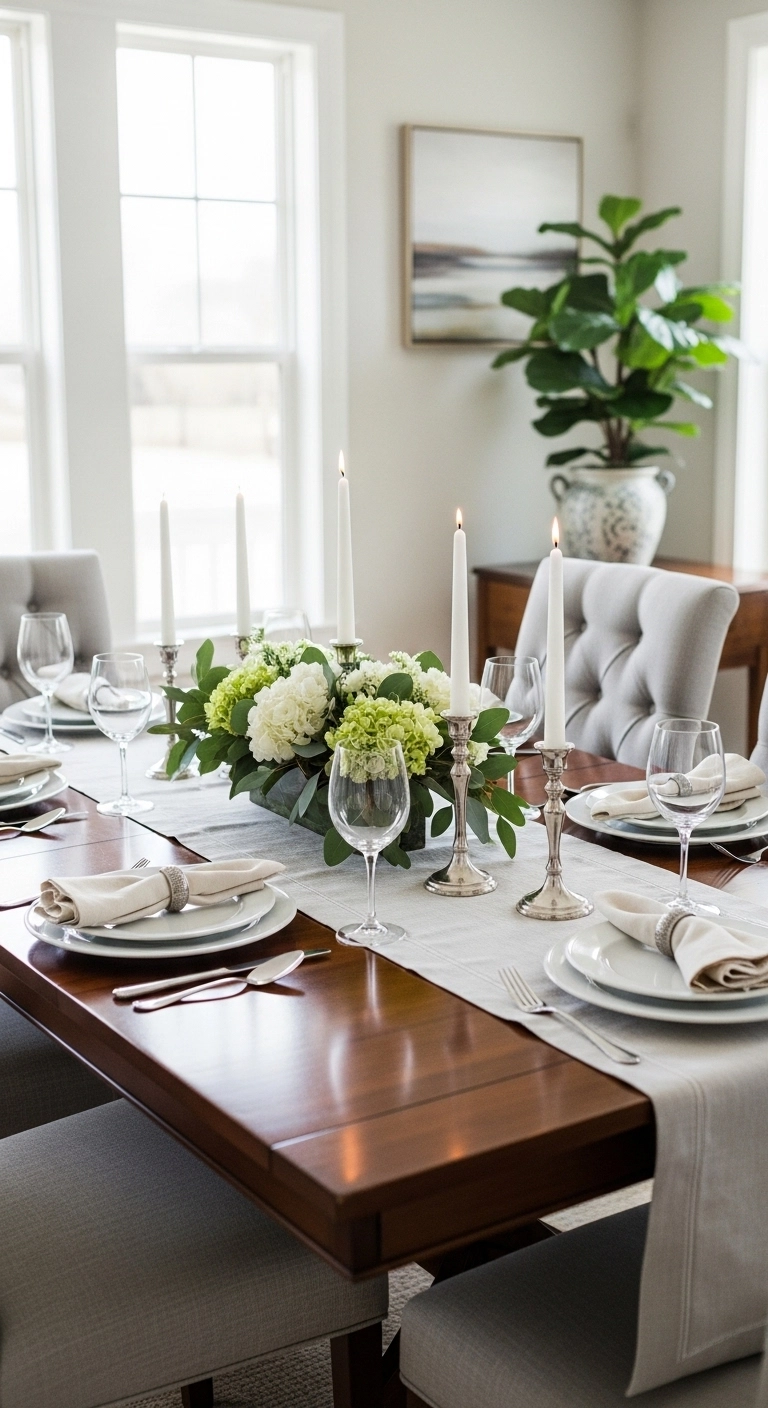
A beautifully styled dining table can add warmth, but it should still feel ready for real life. Oversized centerpieces or too many decorative objects can make the room feel more like a display than a place to gather.
This works because a simple centerpiece signals care without getting in the way. It keeps the room welcoming and practical at the same time.
This idea suits every dining room, especially ones used daily. A bowl of fruit, a low arrangement, candles, or a small cluster of objects often does enough.
To apply it well, keep height in mind. Lower centerpieces help people see each other across the table and make everyday meals easier. Seasonal changes can also help the room feel fresh without requiring a full redesign.
One common mistake is filling the table with decor that has to be moved every time someone wants to eat. That usually becomes frustrating fast.
Mix Old and New Pieces for a More Personal Room
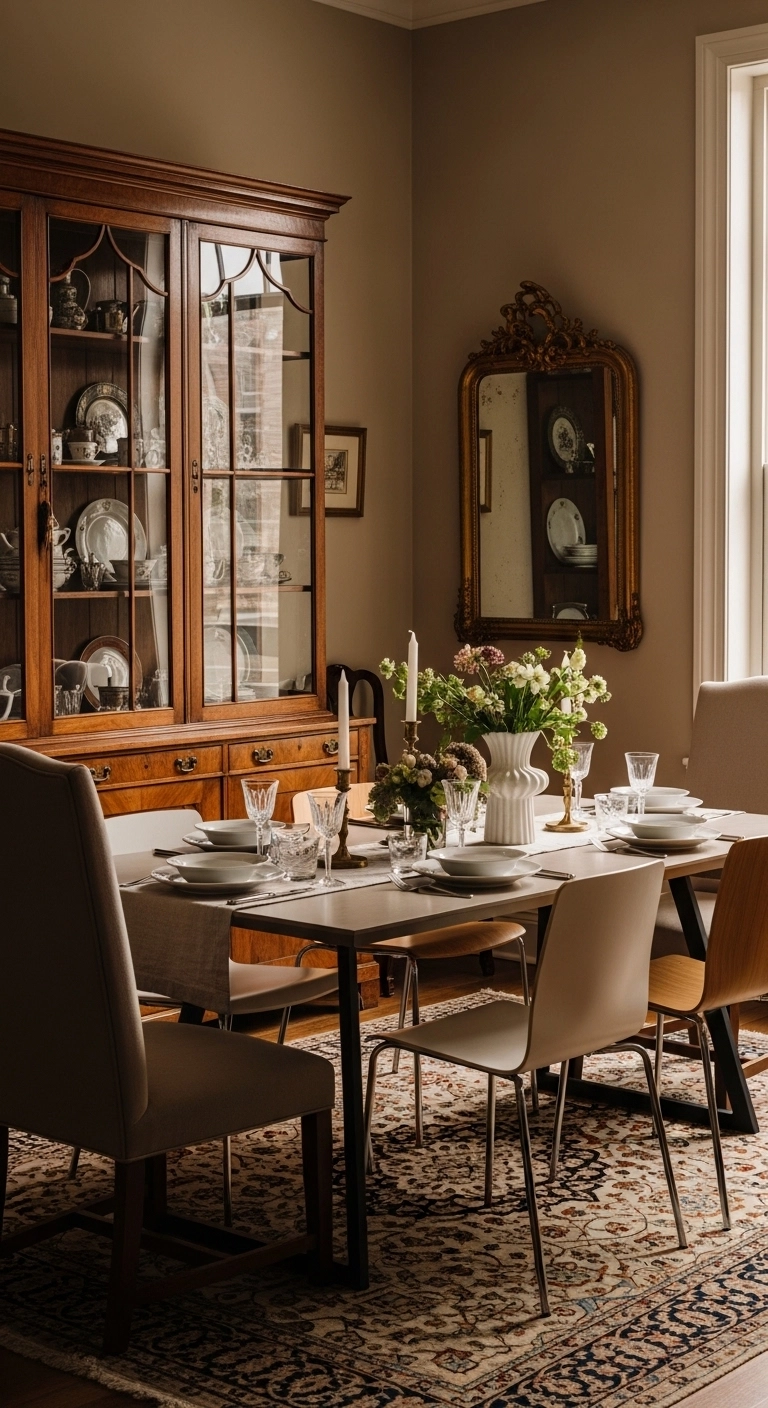
Rooms often feel warmer when they do not look bought all at once. Mixing newer pieces with older, vintage, or character-rich items gives the dining room more personality.
This works because contrast adds depth. A modern table with antique-style chairs, or a clean-lined room with a weathered wood cabinet, feels more layered and human.
This idea works best for people who want a space that feels collected instead of overly matched. It is also useful if you are decorating gradually rather than replacing everything at once.
To apply it well, connect pieces through scale, tone, or material rather than expecting them to match perfectly. A room can handle variety if there is some common thread, like repeated wood tones, similar shapes, or a consistent color palette.
The caution is balance. Too many unrelated statement pieces can make the room feel confused. Aim for contrast with a clear sense of restraint.
Use Art and Wall Decor to Make the Room Feel Lived In
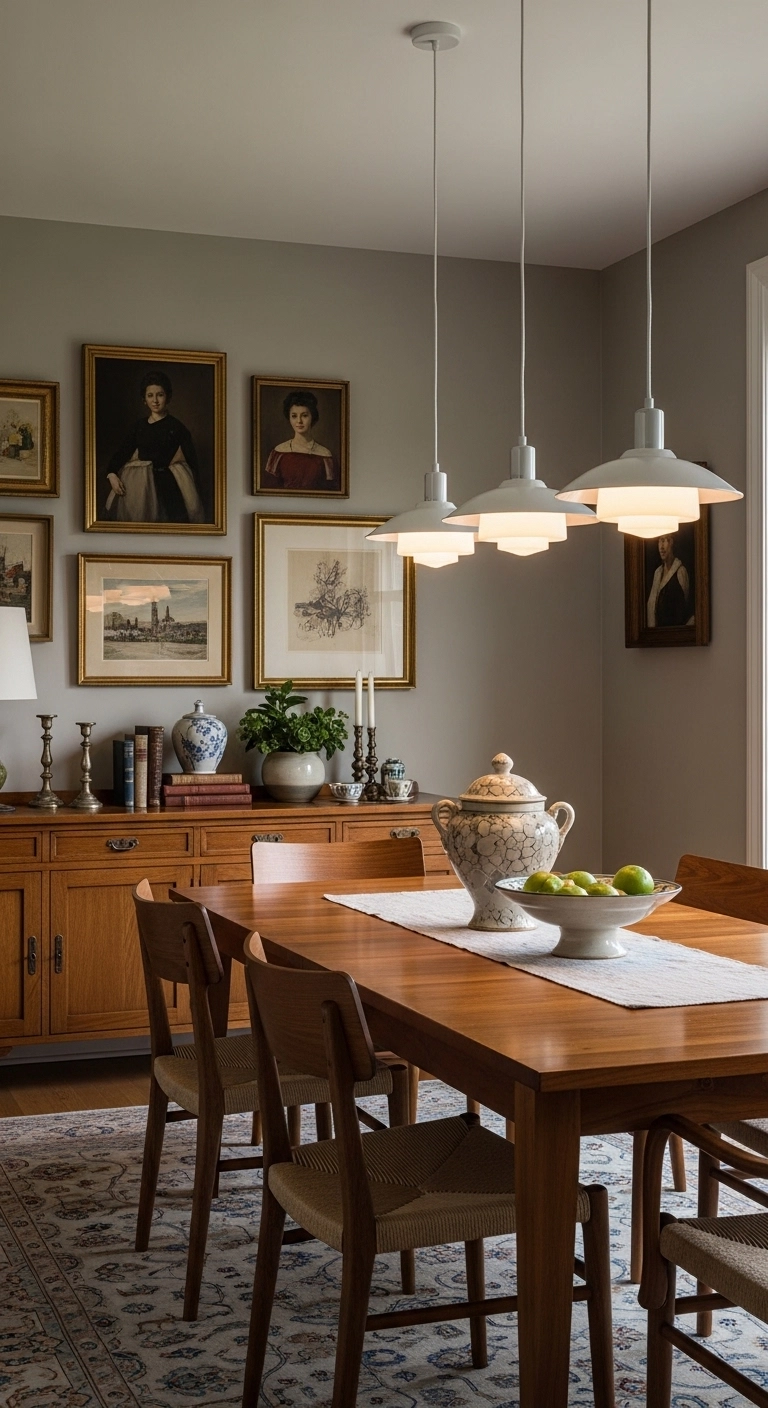
Blank walls can make a dining room feel unfinished, even when the furniture is right. Art, mirrors, shelving, or framed prints can help the room feel personal and complete.
This works because wall decor adds visual warmth and tells you something about the people who live there. It makes the room feel less generic and more settled.
This idea works especially well in dining rooms that feel plain, echoey, or disconnected from the rest of the home.
To implement this well, choose pieces that are in keeping with the scale of the room. An oversized artwork can feel calm and powerful, while a smaller gallery arrangement can add intimacy. Mirrors can also help reflect light, which is useful in dark spaces.
A mistake to avoid is hanging art too high or choosing pieces that feel too small for the wall. Scale matters more than people often expect.
Make Room for Candlelight and Small Rituals
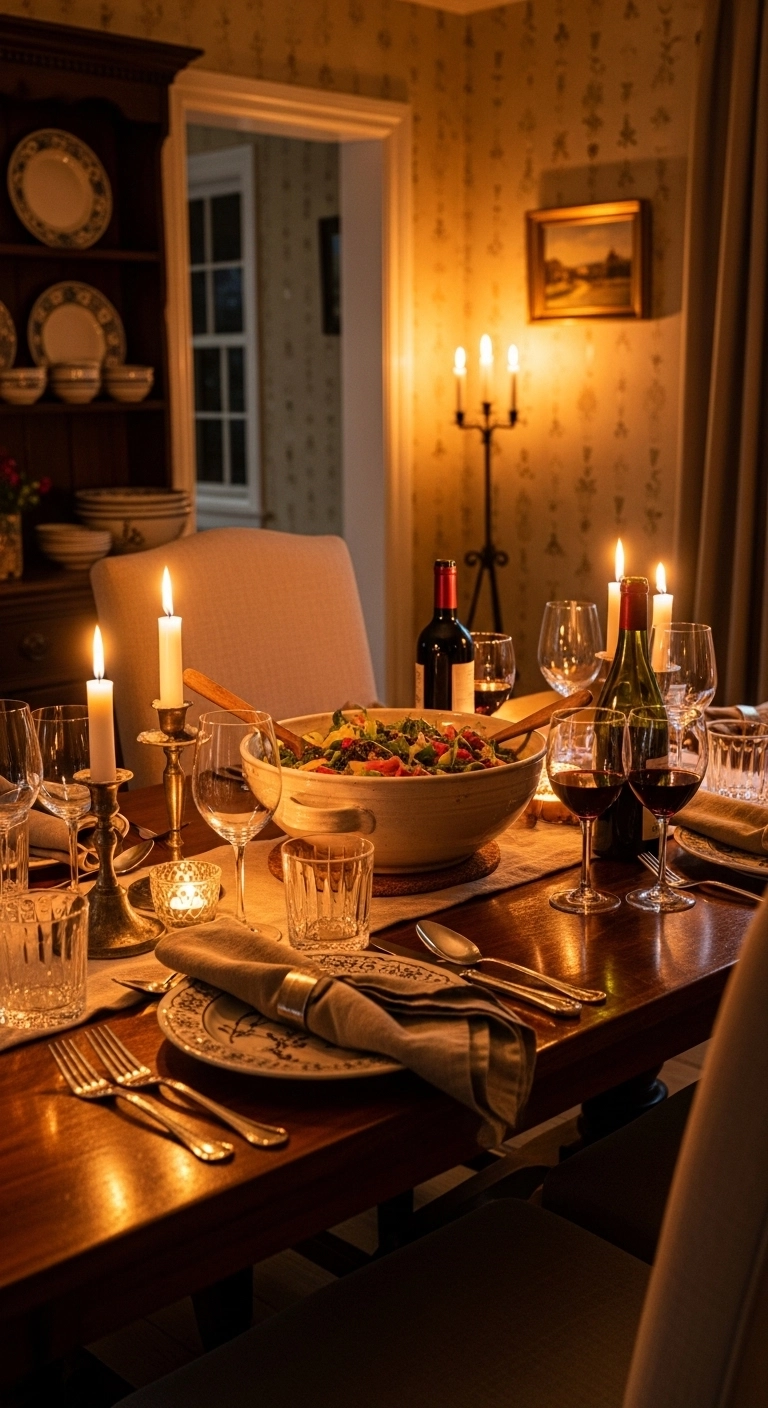
Some of the warmest dining rooms are not the most expensive. They are the ones that support simple habits people actually enjoy, like lighting candles before dinner, setting out cloth napkins, or using a favorite serving bowl on ordinary days.
This works because atmosphere is not only visual. It comes from repeated use and small rituals that make the room feel special without making it feel formal.
This idea suits anyone who wants a dining room that feels emotionally warm, not just nicely decorated.
To implement this well, keep a few simple elements within reach: candles, placemats, linen runners, or trays for salt and pepper, and a small vase. When these items are easy to use, they are more likely to become a part of everyday life.
The caution is not to turn every meal into a styling project. The goal is ease and comfort, not pressure.
Conclusion
The most effective dining room ideas are those that make the space easy to enjoy. A warm, inviting feel usually comes from thoughtful choices that support comfort, conversation, and real life: better lighting, soft textures, practical furniture, and details that feel personal. You don’t have to use every idea at once. Even a few well-chosen changes can make your dining room more inviting, more livable, and much more enjoyable to spend time in.