11 Smart Home Office Ideas For A Calm Productive Work Space
A good home office should help you focus without making the rest of your home feel like a spare cubicle. That balance is harder than it sounds. The space needs to work well, look good, and feel calm enough that you can actually sit down and get things done without fighting clutter, glare, bad posture, or constant distractions.
The best home office ideas are not always the fanciest ones. They are the ones that make everyday work easier. A better desk setup, softer lighting, smarter storage, or a more thoughtful layout can change how a room feels and how you function in it.
Why calm home office ideas work so well
A productive workspace is not just about fitting a desk into a room. It is about reducing friction. When the lighting is right, the chair supports you, the cables are under control, and the room does not feel visually noisy, it becomes much easier to focus.
Quiet spaces are also more sustainable in real life. They’re easier to keep clean, easier to share with the rest of the household, and you’re less likely to be mentally drained by midday. That’s why the most useful home office ideas often combine function and ambiance, rather than choosing one over the other.
Create a clear work zone, even in a small room
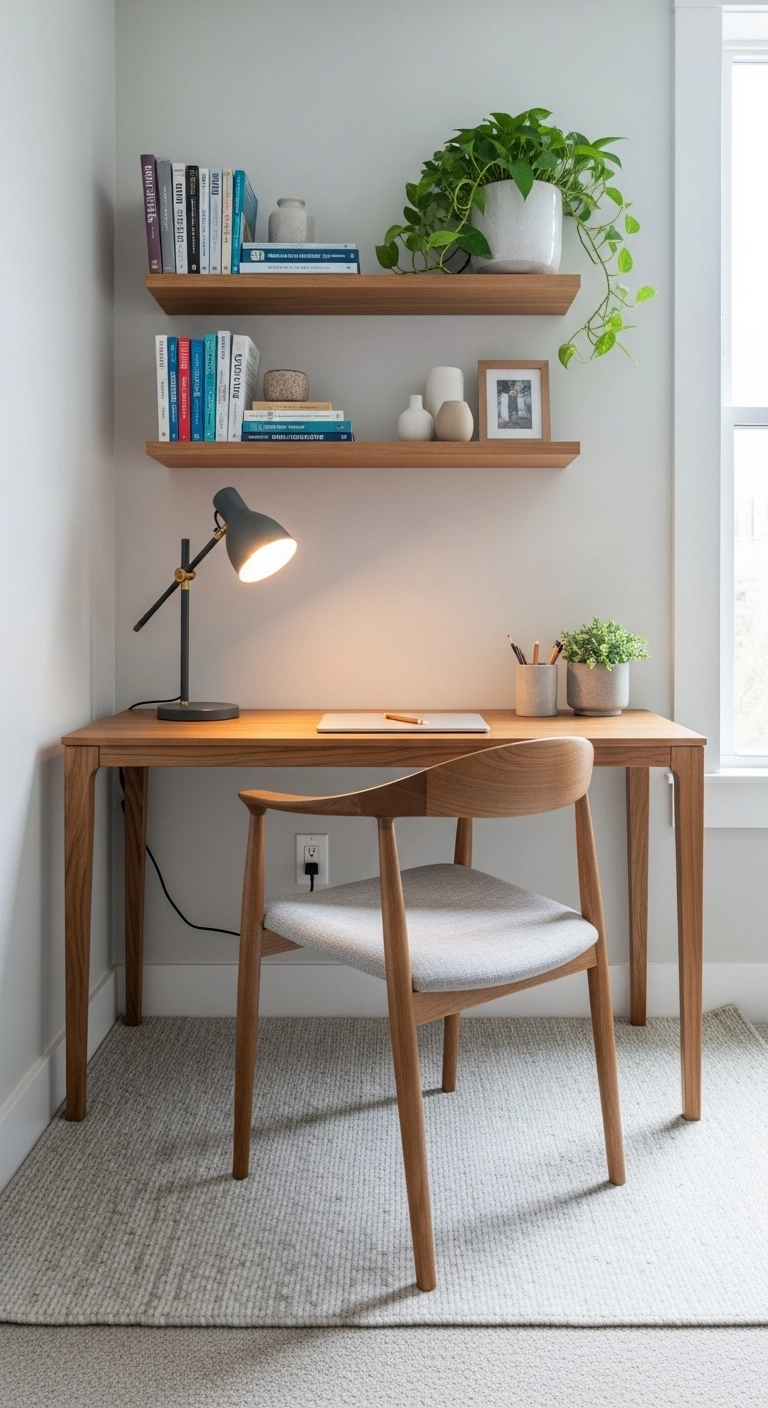
One of the smartest things you can do is define where work starts and where it ends. That does not require a separate office. It can be a corner of a bedroom, a quiet stretch of a hallway, or one side of a living room. What matters is that the area feels intentional.
This works because boundaries reduce mental clutter. When your desk is floating between laundry baskets, dining chairs, and random storage, your mind has to work harder to stay in place. A clearly marked zone tells you and everyone else in the house that the space has a purpose.
This idea suits small apartments, multipurpose rooms, and anyone who does not have a dedicated office. A slim desk, a rug under the chair, a small lamp, or even a different paint color on one wall can help visually separate the space.
To make it look cohesive, repeat one or two finishes across the zone. For example, if your desk has oak accents, bring in an oak shelf or frame. If your workspace is minimalist, keep nearby accessories simple as well. The goal is to make the office corner feel designed, not overdone.
The main mistake to avoid is letting the work zone spill everywhere. Once paperwork, chargers, and notebooks start migrating across the room, the boundary disappears.
Position the desk near natural light, but not directly in glare
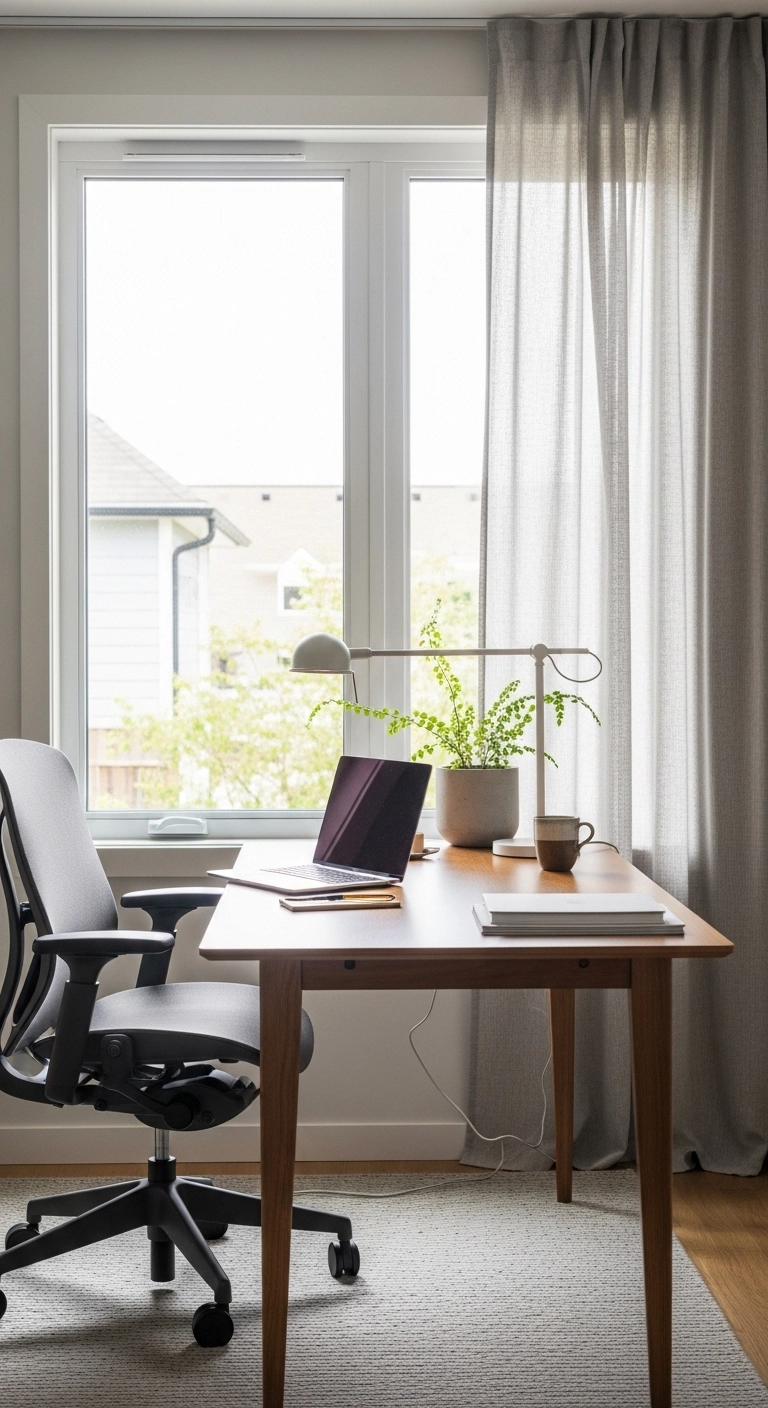
Natural light can make a home office feel bigger, fresher, and less tiring to sit in all day. A desk near a window is one of the most reliable upgrades you can make, especially if you work long hours.
This works because daylight supports alertness and improves the overall mood of a room. It also helps colors look more natural, which is more important than people think when choosing paint, wood tones, and textiles. Even a very simple setup can feel bright when it has good lighting.
This idea works best in spare bedrooms, box rooms, loft conversions, or any room with a decent window. If you spend a lot of time on video calls, soft side light is usually more flattering and practical than having a bright window directly behind you.
The best placement is often perpendicular to the window rather than straight in front of it. That gives you daylight without turning your screen into a mirror. Add a simple blind or linen curtain so you can soften the light during the brightest part of the day.
A common mistake is chasing the window view and forgetting screen comfort. If glare makes you squint all afternoon, the setup is not actually helping.
Use layered lighting instead of relying on one overhead fixture
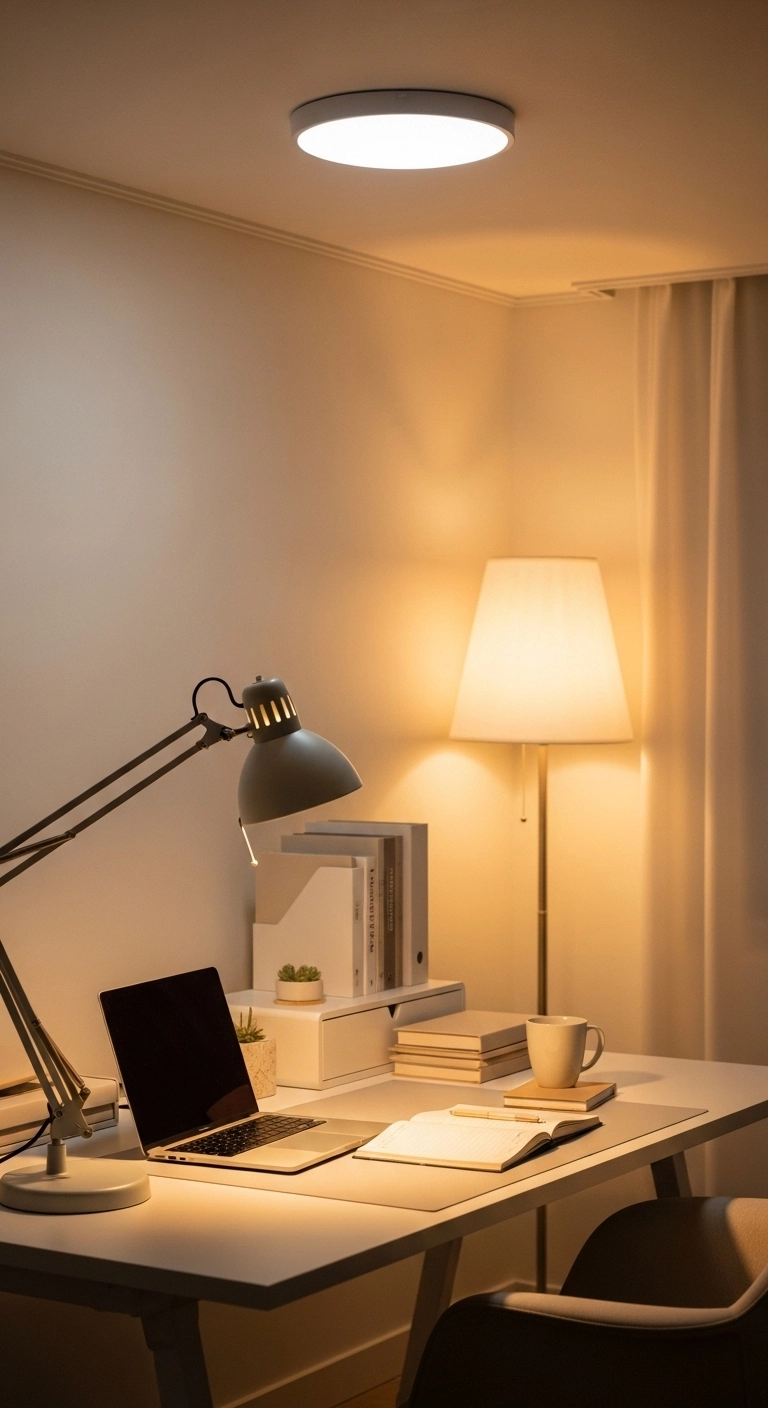
A single ceiling light rarely makes a room feel calm. It usually does the opposite. It can be harsh, flat, and oddly gloomy all at once. A better approach is layered lighting: an ambient light for the room, a task light for the desk, and perhaps a soft accent light nearby.
This works because different tasks need different kinds of light. Reading documents, typing at a laptop, and winding down after work all benefit from different levels of brightness. Layering also gives the room more depth, which makes a workspace feel finished rather than temporary.
This idea suits almost any home office, but it is especially useful in darker corners, north-facing rooms, or workspaces that double as guest rooms. It is also one of the easiest upgrades if you are renting and cannot change much else.
A desk lamp with an adjustable arm is usually the most practical place to start. Pair it with a warm but yellow floor lamp or wall sconce to soften the room. If you want the space to be calm, choose shades and materials that diffuse the light rather than spotlighting everything, like an investigative scene.
The main caution here is color temperature. If every bulb in the room is wildly different, the space can feel off without you knowing why. Keep the lighting family consistent.
Build the room around a calm color palette
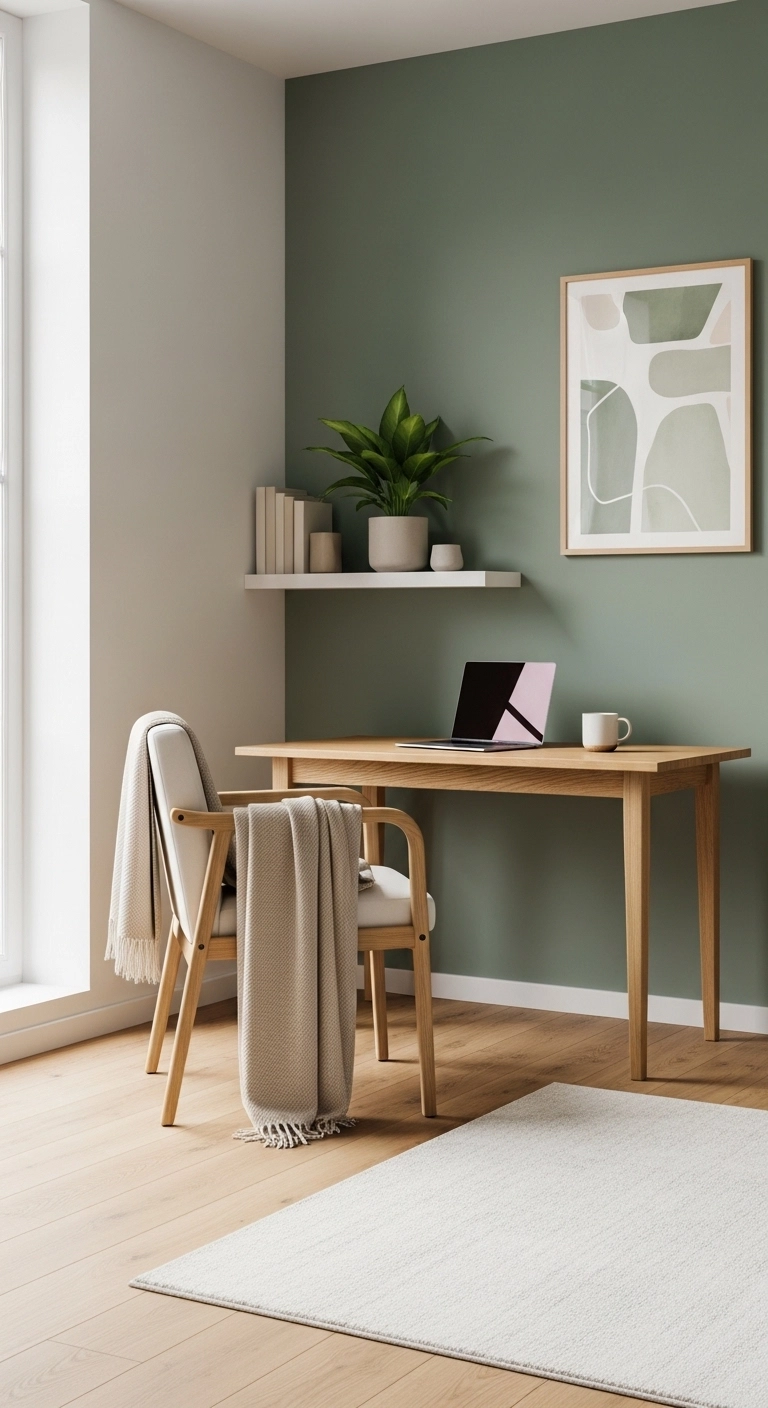
Color has a bigger effect on a workspace than most people expect. A calm palette can make a small room feel more open and a busy day feel slightly less busy. That does not mean everything has to be beige. It just means the room should not fight for attention.
This works because visual noise is still noise. If the walls, furniture, storage boxes, and accessories all compete, the room feels unsettled. Softer neutrals, muted greens, dusty blues, warm whites, greige, and natural wood tones tend to create a steadier backdrop for work.
This idea works especially well in small offices, bedroom office combos, and homes where the workspace is visible from another room. It helps the office blend in while still feeling intentional.
To implement it well, choose a base tone, a supporting tone, and an accent. For example, warm white walls, light oak furniture, and a muted olive chair cushion look calming without being overwhelming. Texture is also important. Matte paint, wood grain, woven baskets, and linen curtains keep a neutral space from feeling flat.
The mistake to avoid is stripping out too much personality. Calm should not become sterile. A room can still have character through art, books, ceramics, or one strong accent piece.
Mix closed storage with one small open display area
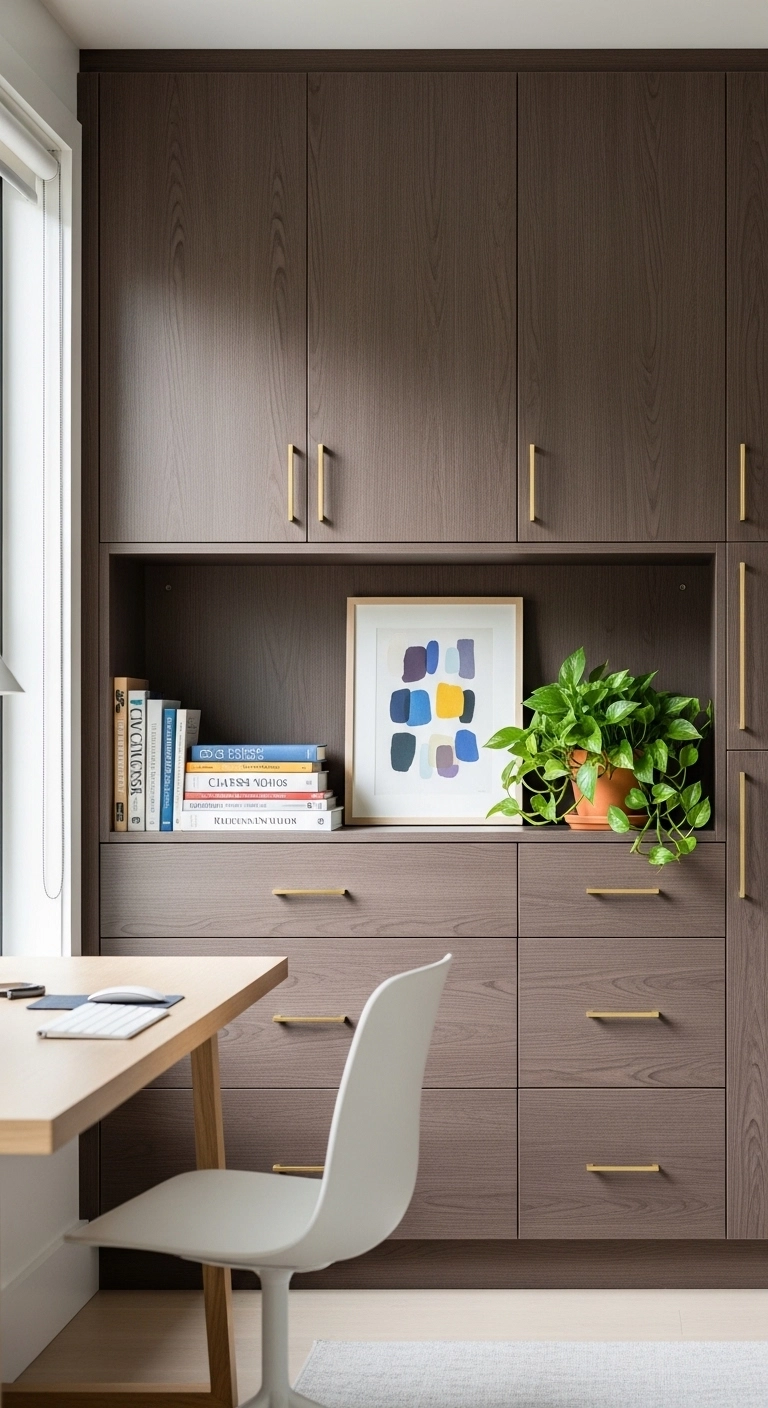
Storage can make or break a home office. The trick is not just adding more of it. It is choosing the right kind. A room with only open shelves can look stylish for about three hours. After that, it starts collecting cables, receipts, folders, and mystery objects.
A mix of closed and open storage works because it balances function with visual breathing room. Closed storage hides the less attractive but necessary parts of working from home. A small open section gives the room warmth and personality.
This suits people who deal with paperwork, stationery, tech accessories, or craft materials, and it is especially helpful in shared or visible spaces where clutter spreads quickly.
Use drawers, cupboards, storage boxes, or filing cabinets for practical items you need but don’t want to see all day. Then set aside a shelf or surface for a few things that soften the room: a framed print, a ceramic bowl, a plant, or a small stack of books. This small, curated area keeps the office from feeling too utilitarian.
The caution here is over-decorating the open section. If every shelf becomes a mini showroom, you are right back to visual clutter.
Choose an ergonomic chair that still looks like it belongs in your home
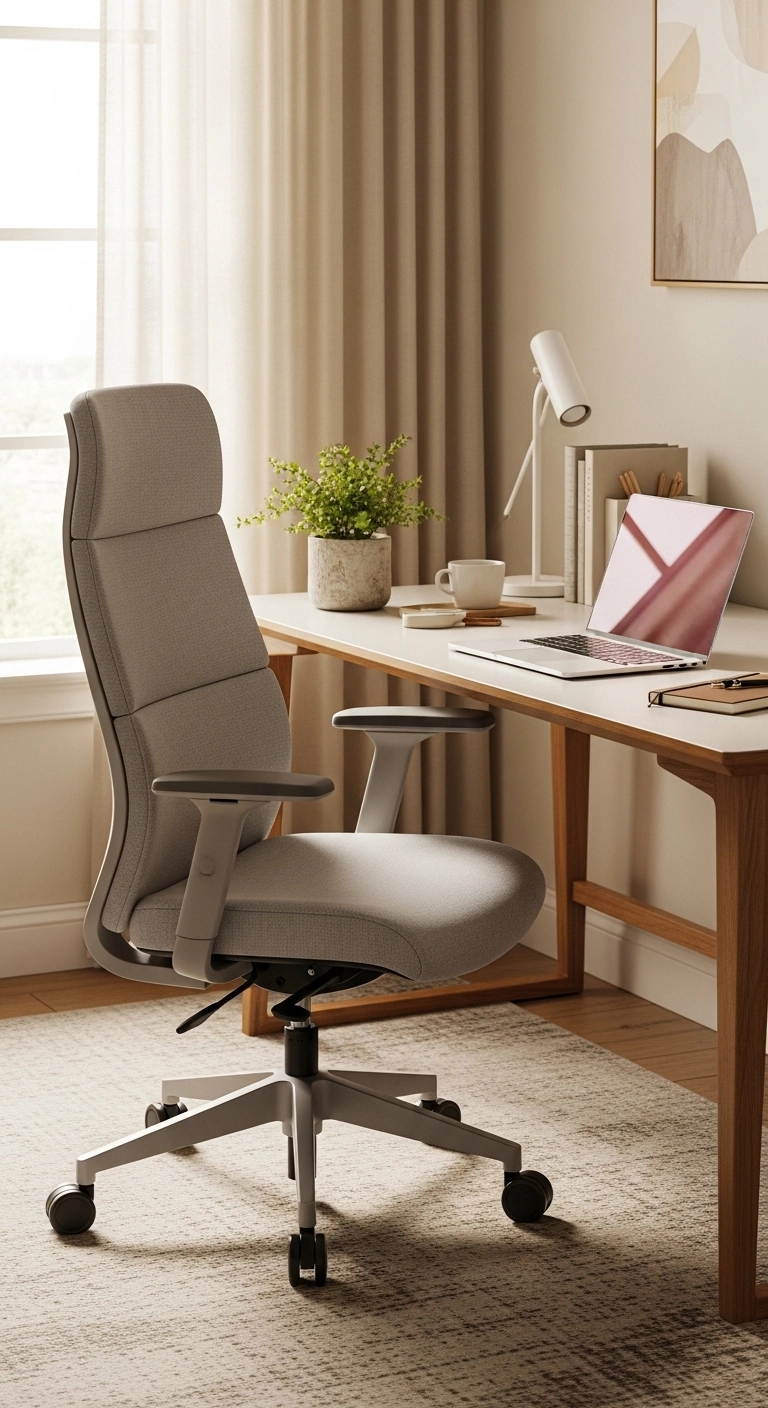
A home office chair has to do more than look decent in a product photo. If you spend hours sitting in it, comfort matters. But there is good news: supportive seating no longer has to look like it escaped from a corporate training room in 2009.
This works because posture, comfort, and concentration are closely linked. A chair that supports your back, lets your feet rest properly, and keeps you at the right desk height can reduce the physical irritation that slowly chips away at focus.
This idea is essential for anyone who works from home regularly, but it is especially important if your setup is in a dining room, bedroom, or any place where you might be tempted to use a pretty chair that is completely wrong for actual work.
Look for a chair with adequate lumbar support, adjustable height, and a seat depth that will feel comfortable for long periods of time. Upholstered styles in textured fabrics or soft neutrals often blend better into a home than shiny black mesh, although either can work depending on the room. If you’re on a tight budget, upgrading the seat cushion and back support on an existing chair can also help.
The big mistake is prioritizing appearance so much that the chair becomes decorative punishment. A beautiful chair is not a bargain if your shoulders hate it by Thursday.
Soften the room acoustically with rugs, curtains, and fabric
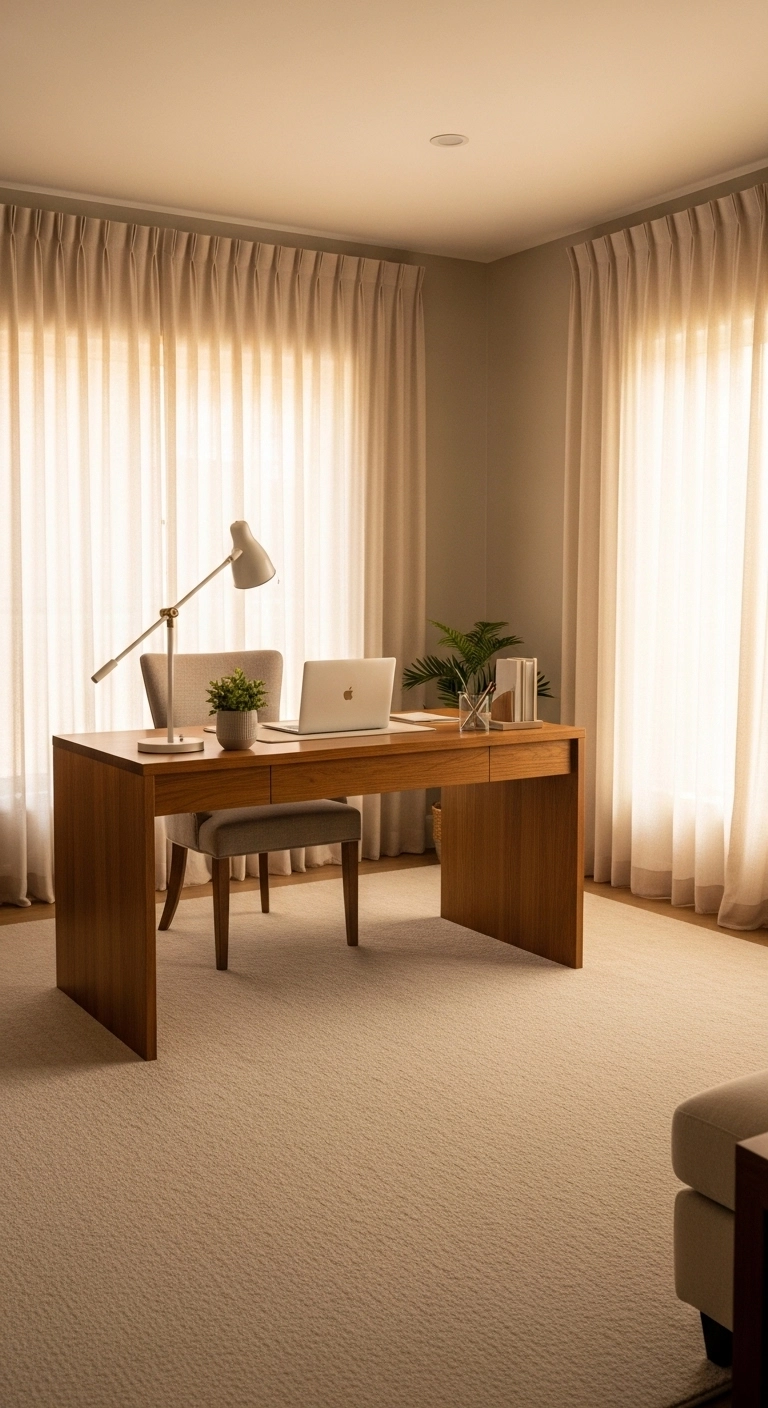
A calm workspace is not only visual. Sound matters too. Hard floors, bare walls, and empty windows can make a room feel echoey, sharp, and oddly stressful, even when it looks nice.
Soft materials help because they absorb sound and make the room feel more settled. They also add warmth, which is useful if your office has a lot of flat surfaces like screens, desks, and shelving.
This idea works best in rooms with wood or tile floors, minimal furnishings, or lots of natural echo. It is also helpful if you take calls often and want your voice to sound less hollow.
A low-pile rug under the desk can anchor the workspace and reduce noise from chair movement. Curtains, especially fuller fabric panels, soften both sound and light. An upholstered bench, fabric pinboard, or padded desk chair can also help without adding clutter.
The caution is practical: do not choose a thick rug that catches your chair wheels every few minutes unless you enjoy small daily annoyances.
Use the wall space vertically so the desk stays clear
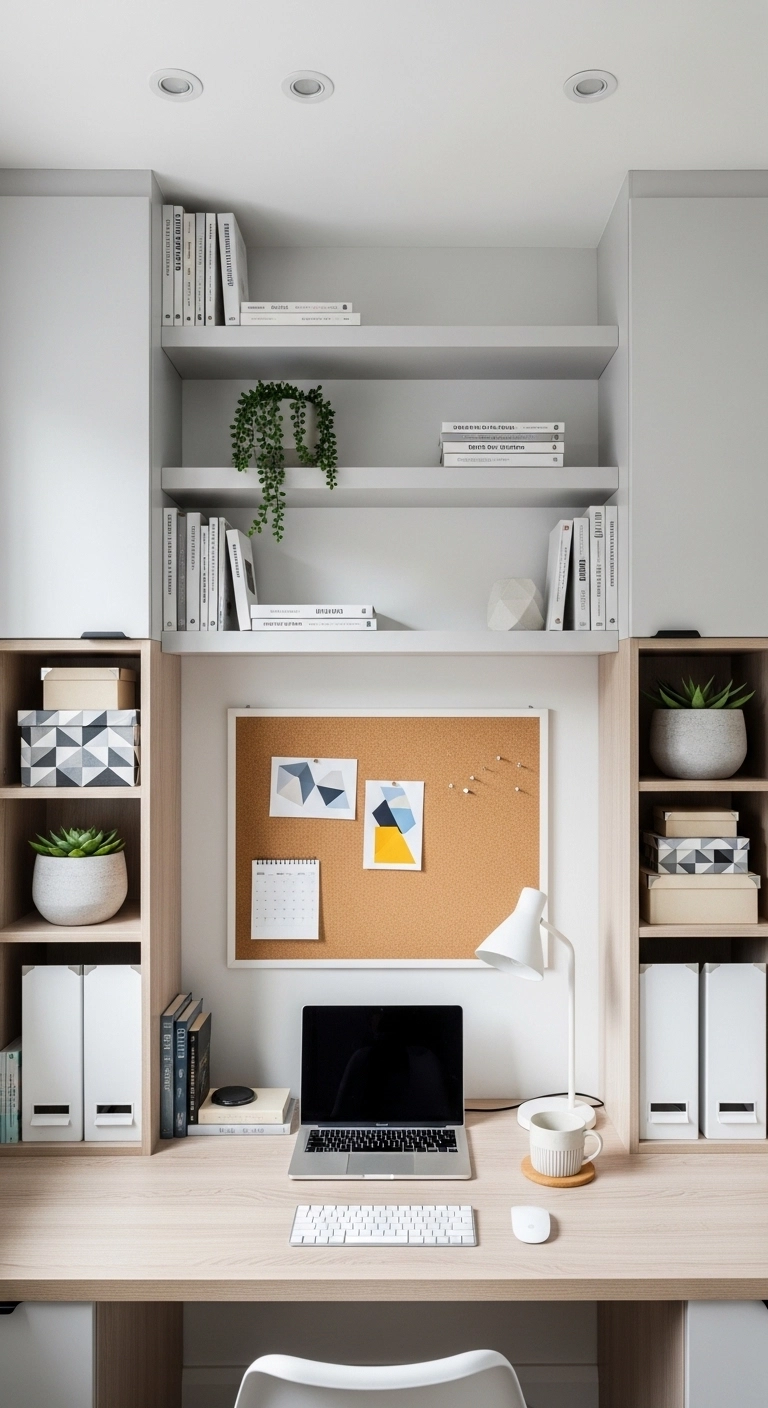
A calm desk is easier to work at, but clear desks do not happen by luck. The smartest way to keep the main surface usable is to move some storage and function upward.
Vertical storage works because it frees up your desk without forcing you to hide everything. Shelves, wall grids, slim cabinets, peg rails, or bulletin boards can keep essentials close at hand while maintaining order.
This is especially useful in compact home office setups where every inch matters. If your desk is small, using the wall properly can make it feel twice as functional.
The key is to be selective. Set aside one or two shelves for books, supplies, or reference materials. If you really need visual reminders, add a pinboard. Use attractive containers so that storage looks intentional rather than improvised. Keep frequently used items on high shelves for easy access and less frequently used items on low shelves.
One mistake to avoid is hanging too much directly above the desk. If the wall becomes crowded, the room can start to feel top-heavy and distracting.
Hide cables and charging clutter before it takes over
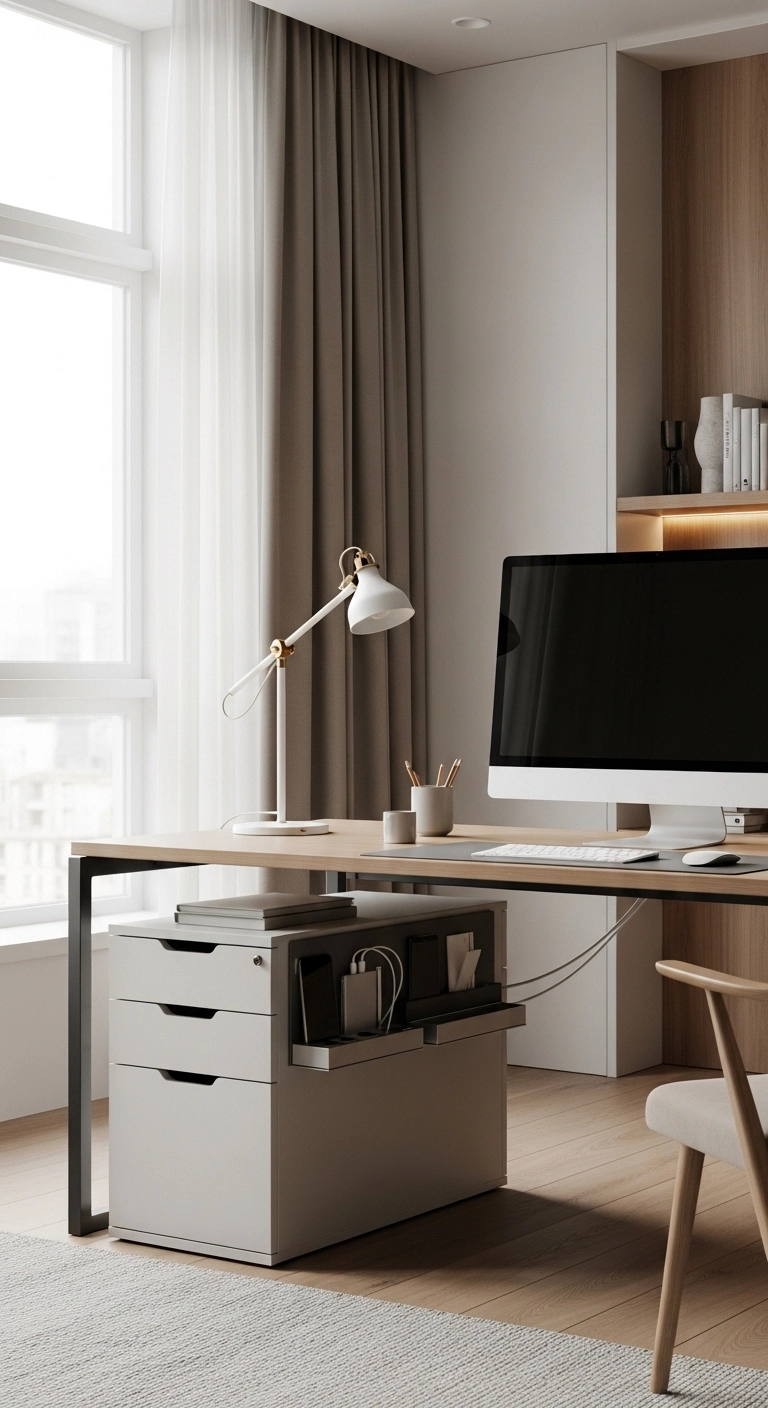
Nothing ruins a calm workspace faster than a knot of visible cords, extra chargers, adapters, and power strips collecting dust behind the desk. It is a small detail that has a surprisingly large visual impact.
Cable control works because it reduces background chaos. It also makes cleaning easier and lowers the chance of accidentally unplugging something mid-meeting, which is not a peaceful experience for anyone.
This idea suits every home office, but it is especially useful if you use multiple monitors, a desk lamp, speakers, or a printer. The more devices you have, the more important cable management becomes.
Use cable trays, adhesive clips, sleeves, or a box to hide the power strip. Route cords along desk legs or the back edge of furniture instead of letting them puddle on the floor. A drawer with a charging station can also help keep smaller devices out of sight while staying accessible.
The caution is to leave a little flexibility. If everything is tied too tightly and labeled like a small data center, simple changes become more annoying than they need to be.
Add one living element to keep the space from feeling flat
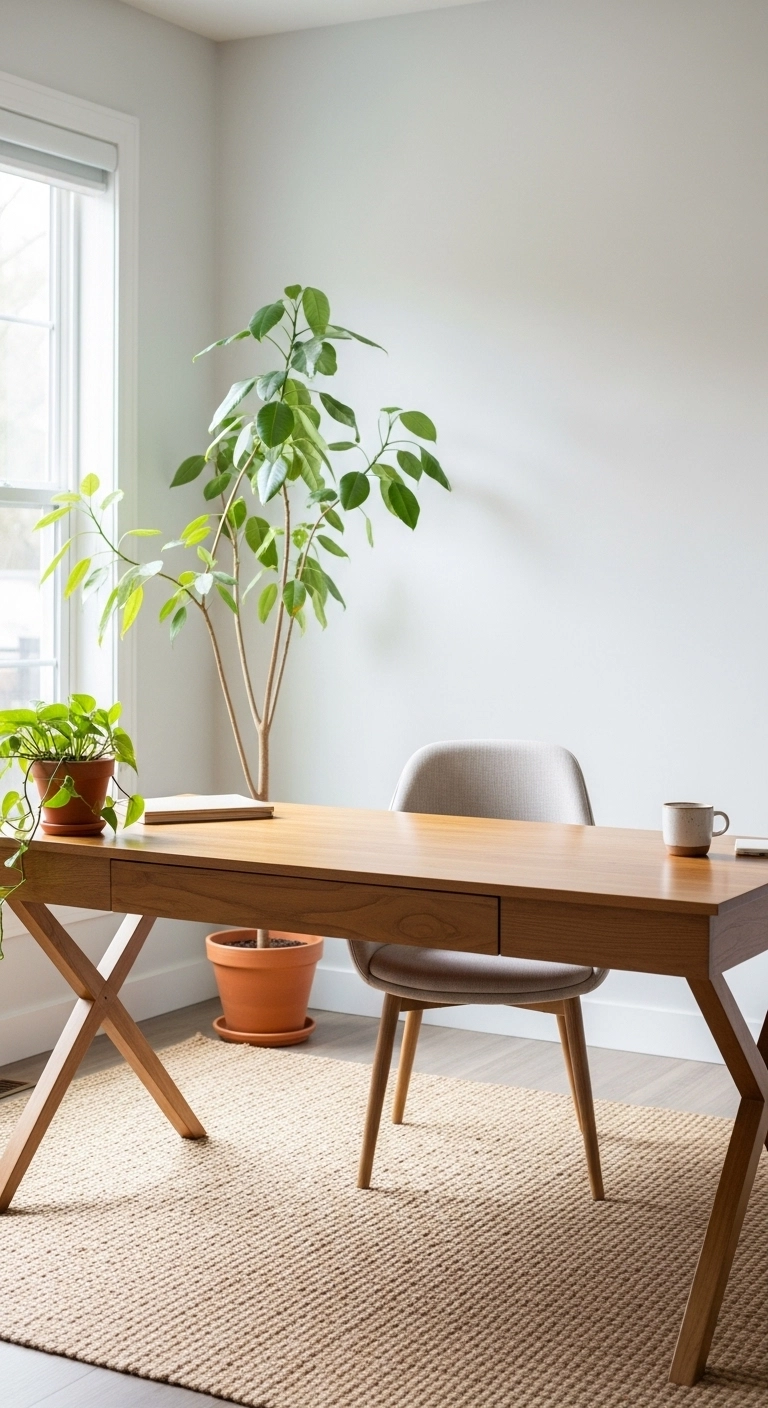
A home office should feel alive, not sterile. One plant, a vase of branches, or even a small arrangement of natural materials can change the tone of the room without demanding much space.
This works because natural elements soften the edges of a functional setup. They introduce shape, color, and a bit of movement in a space that can otherwise feel very rigid. Even one plant can make a desk corner feel more settled and finished.
This idea works in almost any style of office, from minimalist to cozy to more traditional rooms. It is especially helpful in spaces dominated by white walls, dark screens, and straight lines.
Choose something proportionate to the room. A trailing plant on a shelf, a snake plant beside the desk, or a small ceramic pot on a filing cabinet often works better than squeezing a large leafy plant into a tight corner. If live plants are not realistic for your routine, dried stems or branches can still add softness.
The mistake is treating greenery like filler. One well-placed plant looks thoughtful. Five random ones can start to feel like a garden center waiting room.
Design a flexible background if your office is visible on calls
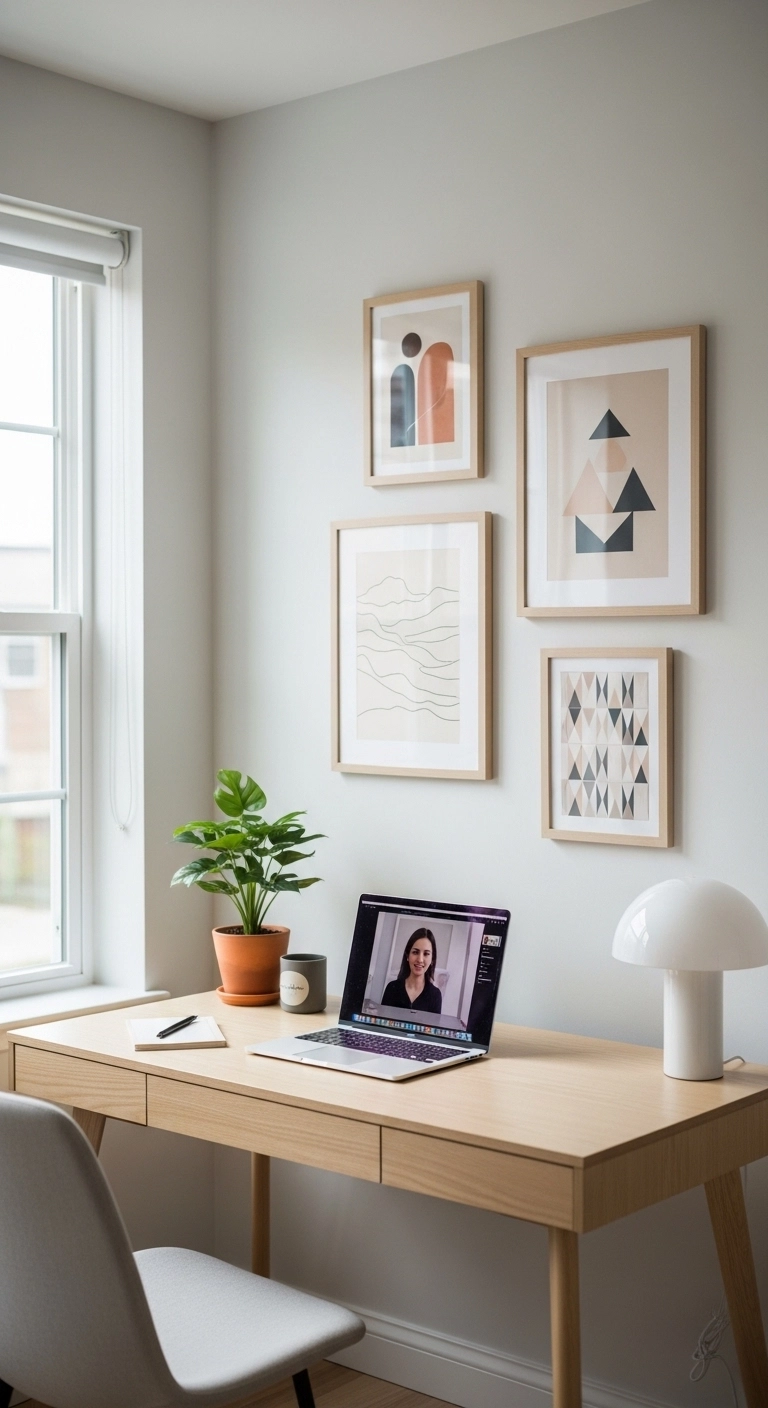
For many people, the home office is also a video call backdrop, and that changes how the room functions. The best setup does not need to look staged, but it should look considered.
This works because a tidy, balanced background helps the space feel calmer for you and more professional for anyone seeing it. It also reduces the temptation to keep moving your laptop around the house looking for one decent corner.
This idea is best for remote workers, freelancers, teachers, consultants, or anyone who spends part of the day on camera. It is especially useful in multipurpose spaces where the office may be visible from the bed, kitchen, or living area.
A good background usually includes a clean wall, simple shelving, art with some breathing room, or a soft lamp and plant. Keep the visual weight balanced. Too much empty space can look cold, but too many small objects can look messy on camera even when they do not in person. If possible, set the desk angle so the background is intentional without forcing you to face a wall all day.
The caution is not to design the whole room around the camera. You live in the space. The room still needs to work for your actual day, not just for the three hours you spend on calls.
Final thoughts on choosing home office ideas that actually help
The most effective home office ideas are usually the ones that solve everyday problems in a calm, practical way. Better light, smarter storage, quieter materials, and a clearer layout can do more for your workday than adding trendy pieces that look nice but do very little.
You don’t have to use all 11 ideas at once. Start with the friction points that appear every day. Maybe your desk is too shiny, your chair isn’t working, or the room feels cluttered despite being clean. Fix those first. A calm, productive workspace is rarely built in one dramatic transformation. More often, it comes together through a series of smart choices that make the room easier to use and better to live in.