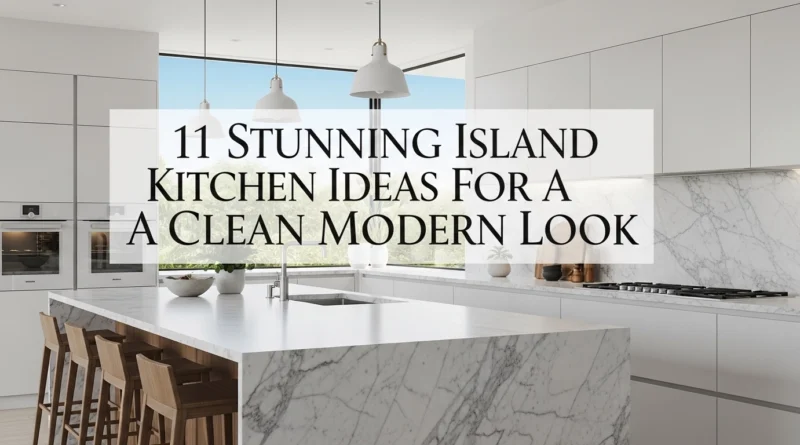
11 Stunning Island Kitchen Ideas For A Clean Modern Look
A kitchen island can do a lot of work in a modern kitchen. It can add storage, create a better prep zone, give people a place to gather, and help the whole room feel more intentional. But not every island improves a space. The wrong size, finish, or layout can make a kitchen feel crowded, awkward, or visually heavy.
The best island kitchen ideas balance style with function. They look clean and modern, but they also make daily use easier. That is what makes them worth considering in the first place.
Why These Island Kitchen Ideas Work
A clean modern kitchen usually feels calm, open, and easy to move through. An island plays a big role in that because it sits at the center of the room, both visually and practically. When the island is well planned, it can simplify the layout, reduce clutter, and make the kitchen feel more polished without becoming cold or overly minimal.
The ideas below focus on that balance. Each one offers a different way to create a modern look while still respecting how people actually use a kitchen.
Waterfall Edge Island
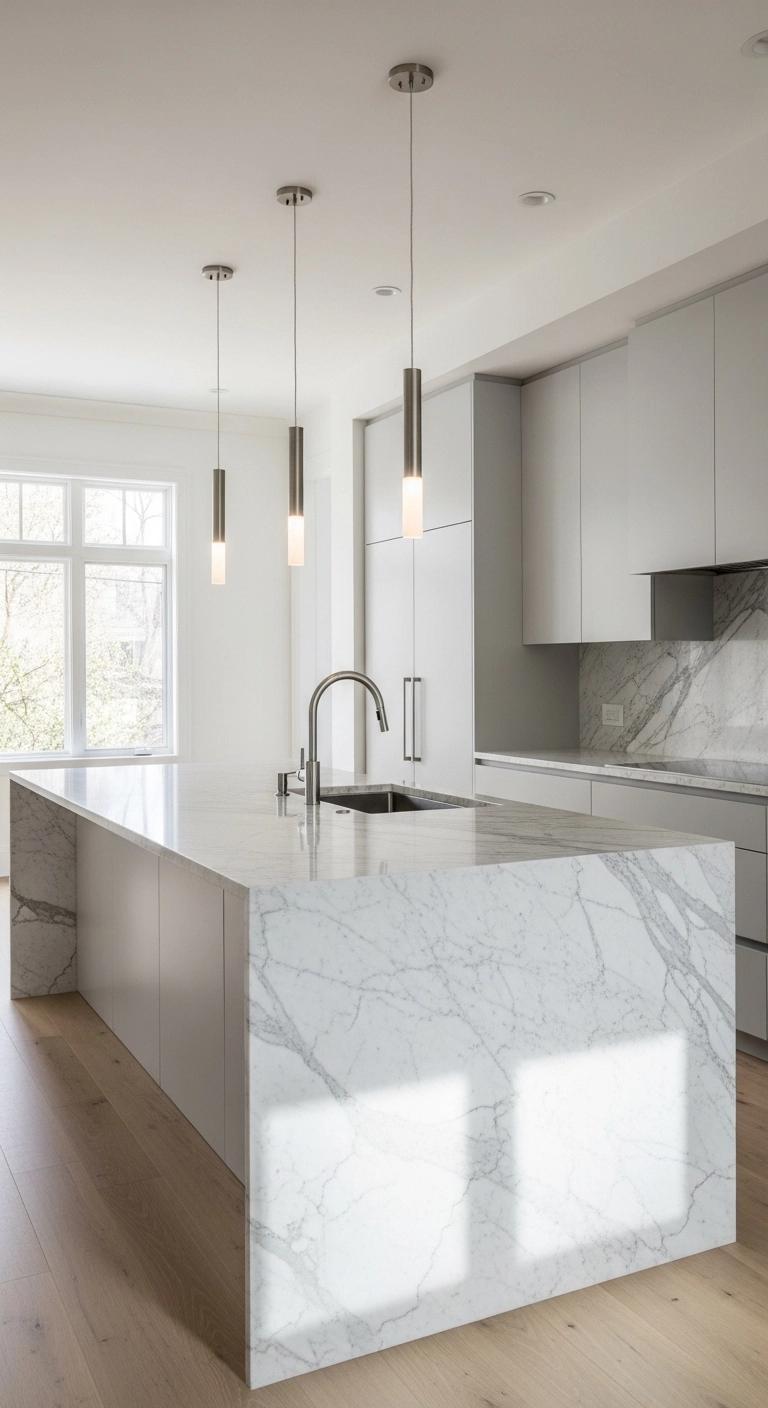
A waterfall island has the countertop material continuing down the sides of the island, creating one continuous surface. It gives the island a clean, sculptural look that feels sharp without needing much decoration.
This works because it simplifies the visual lines in the room. Instead of looking like a separate top and base, the island reads as one solid piece. It usually fits very well in modern kitchens where fewer visual breaks make the space feel calmer.
It works best in open-concept kitchens or larger rooms where the island is meant to be a focal point. If the island is highly visible from a living or dining area, this style can help it feel more polished from every angle.
To apply it well, keep the rest of the island design fairly restrained. Let the shape and surface do the work. Clean cabinet fronts and simple hardware, or no visible hardware at all, usually help.
One caution: this look can feel too heavy in a small kitchen if the island itself is bulky or the surface pattern is too busy.
Two-Tone Island
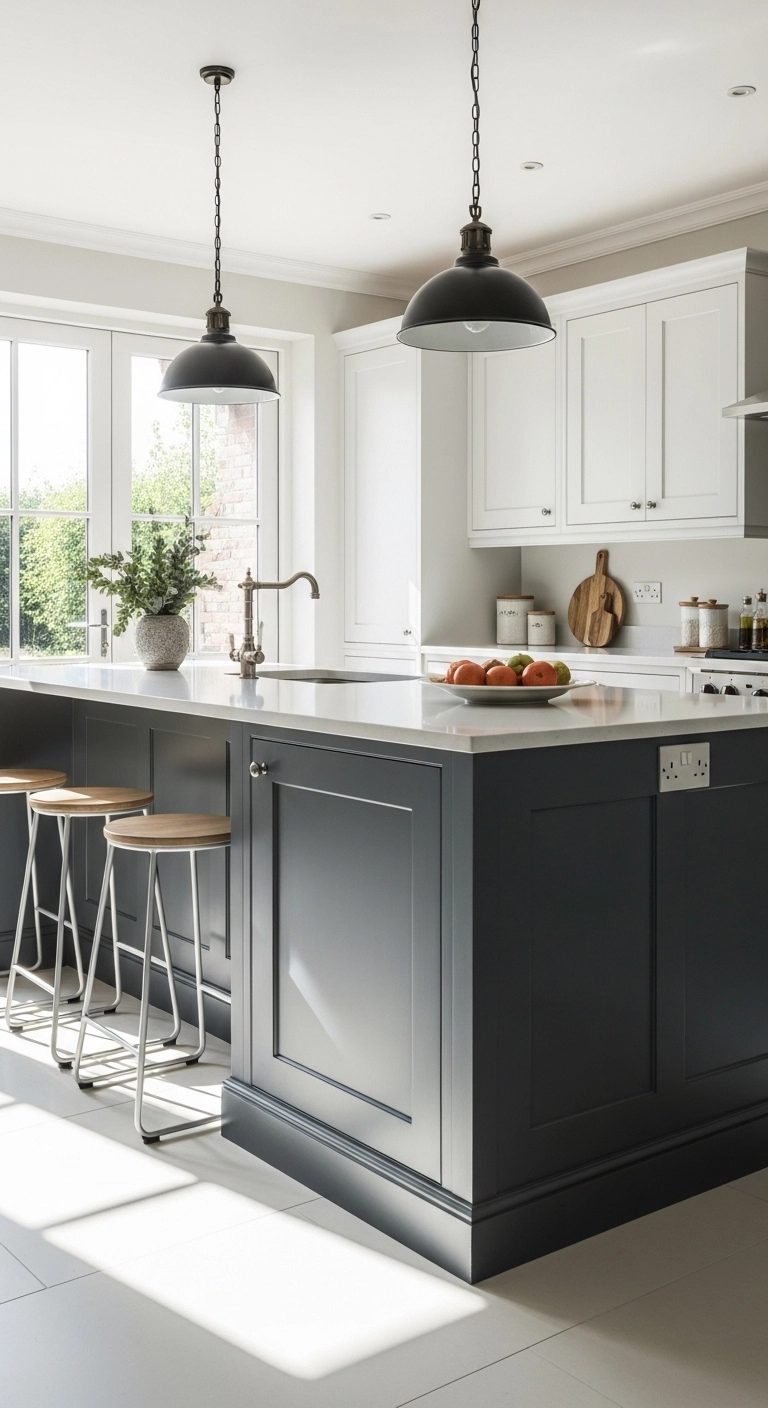
A two-tone island uses a different finish or color than the main kitchen cabinets. For example, the base cabinets can remain light and simple while the island adds contrast in wood, charcoal, dark green, or soft black.
It works because it gives the island definition without needing ornate details. In a modern kitchen, contrast can create interest while still keeping the overall design clean.
This idea suits kitchens that feel a little flat with one finish throughout, especially open spaces where the island needs to stand out just enough.
To apply it well, keep the contrast intentional. The island should feel connected to the rest of the kitchen, not random. Repeating the island tone somewhere else in the room, such as stools, shelving, or lighting, can help.
A common mistake is choosing a color that feels trendy but disconnected from the rest of the space. A clean modern look usually feels stronger when the contrast is calm and deliberate.
Slim Island With Seating on One Side
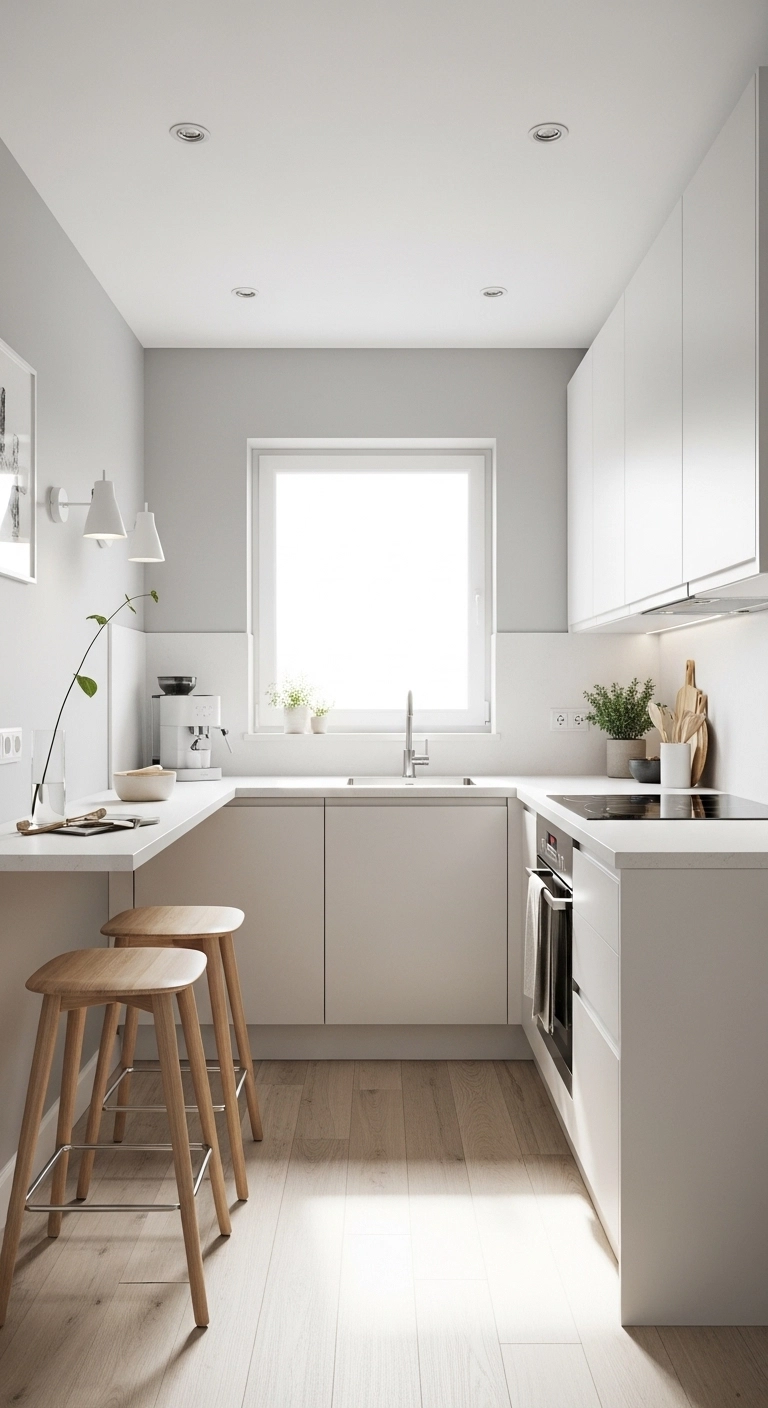
Not every modern island needs to be oversized. A slimmer island with seating on one side can still offer function while keeping the room open and easy to navigate.
This works because modern kitchens often benefit from visual lightness. A smaller footprint can make the space feel better planned, especially when the island does not try to do everything at once.
It is suitable for small kitchens, apartments, and homes where the island is needed for quick meals, prep work, or casual conversation without obstructing movement.
To apply it well, think clearly about priority. If seating matters most, give enough overhang and keep the shape simple. If prep space matters more, do not sacrifice too much usable surface just to squeeze in extra stools.
The limitation is obvious: a slim island cannot offer the same storage or work zone as a deeper one, so it works best when the rest of the kitchen is already efficient.
Warm Wood Island in an Otherwise Light Kitchen
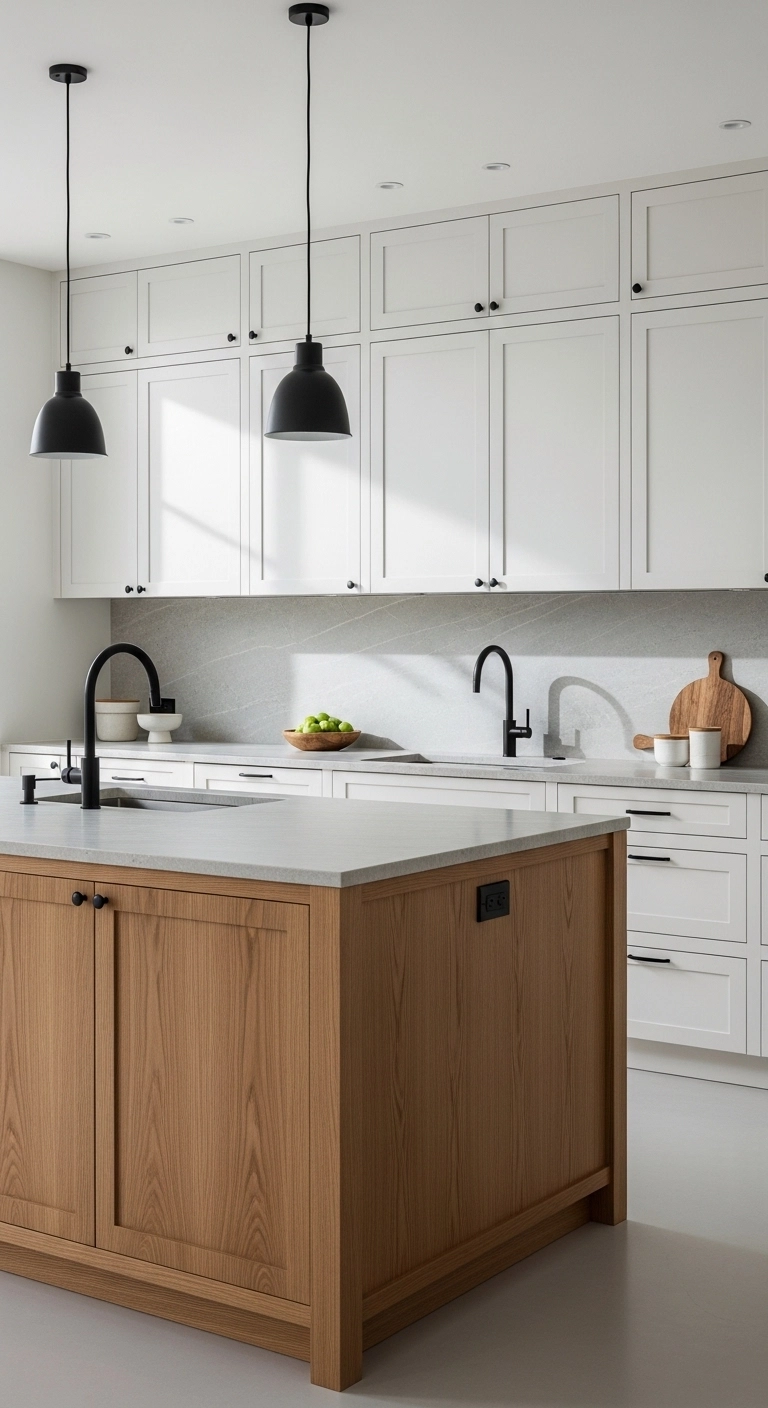
A warm wood island can soften a modern kitchen that might otherwise feel too stark. It brings warmth, texture, and a more grounded feeling to a clean palette.
This works because modern design does not have to feel cold. Natural-looking wood tones can break up white, gray, or matte finishes and make the kitchen feel more inviting.
This idea works especially well in bright kitchens with white cabinets, soft stone surfaces, and simple lines. It’s also suitable for those who want a modern look that still feels livable and comfortable.
To apply it well, choose a wood tone that feels clean rather than rustic. Straight grain, smooth surfaces, and uncluttered shapes usually support the modern style better.
One caution: if there are already many wood tones in nearby flooring, shelving, and furniture, the island can start to compete instead of adding balance.
Handleless Island for a Seamless Look
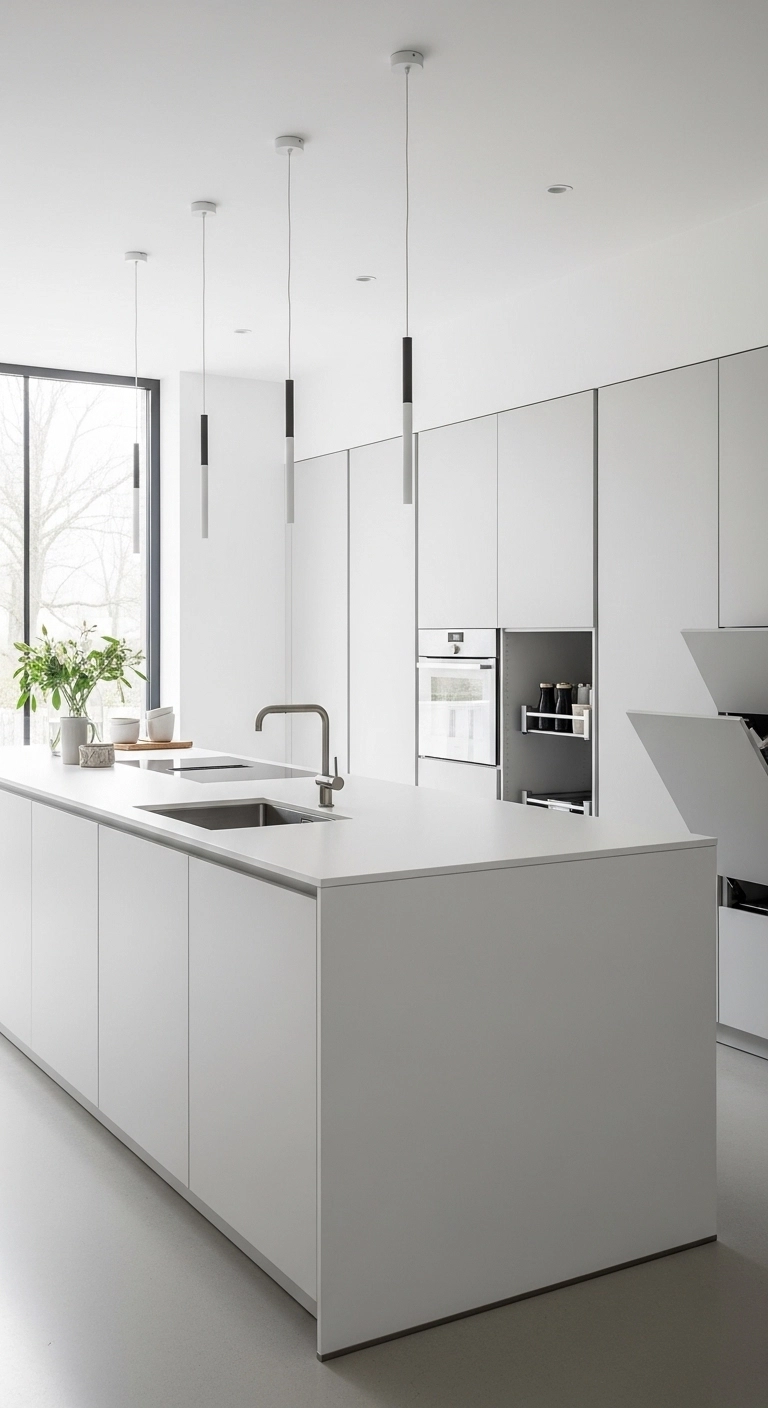
A handleless island uses push-to-open storage, recessed pulls, or integrated finger grooves instead of standard cabinet hardware. The result is a sleek surface with fewer interruptions.
It works because modern kitchens often rely on uninterrupted lines. Removing visible hardware can make the island feel simpler, cleaner, and more architectural.
This suits people who love minimal design and want the island to feel streamlined rather than detailed. It is especially effective in kitchens with flat-front cabinetry.
To apply it well, keep proportions crisp and surfaces uncluttered. The cleaner the island looks, the more important it becomes to manage countertop items well too.
A realistic caveat: Completely handleless designs may not suit everyone’s daily habits. Some people prefer the ease and feel of a traditional pull, especially in heavily used storage areas.
Island With Hidden Storage on the Back
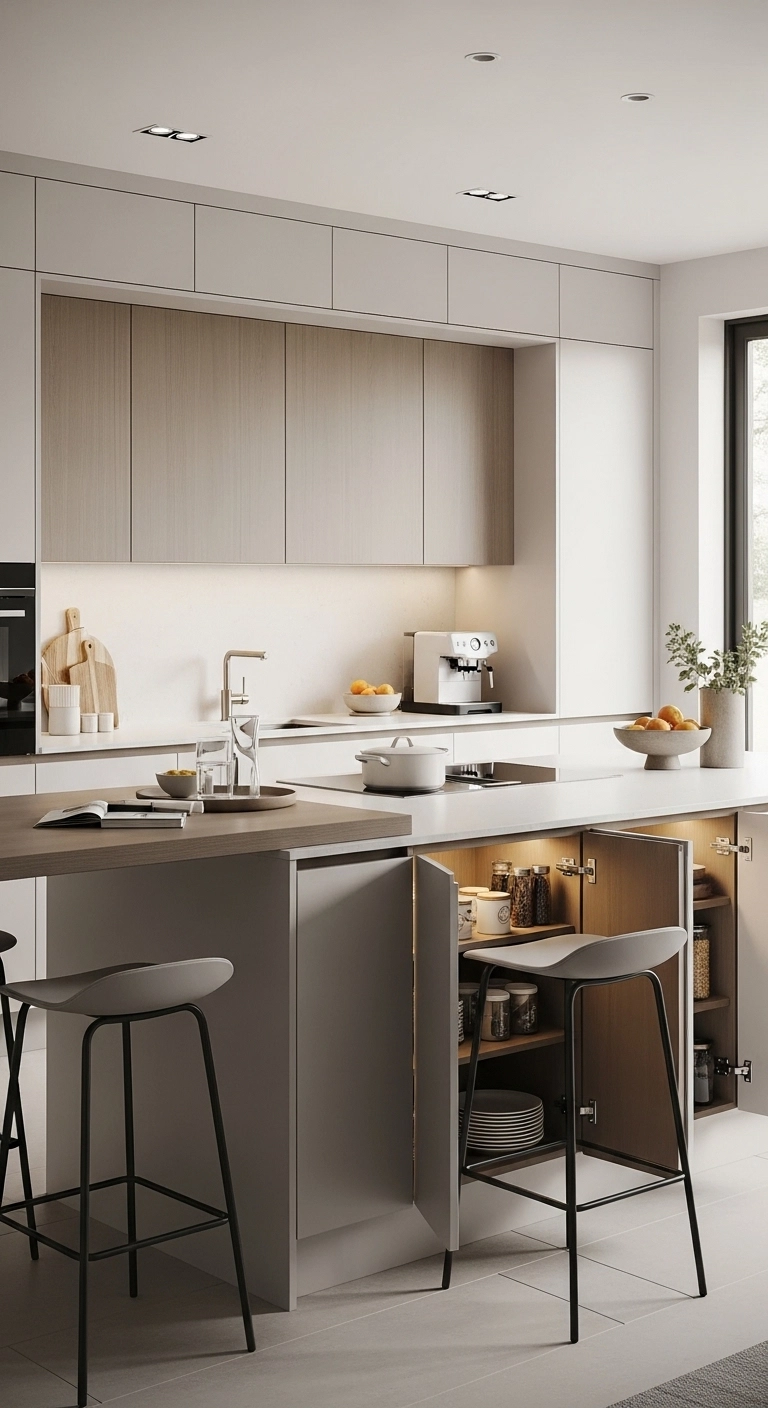
This island keeps the seating side or outer-facing side visually neat while adding concealed storage on the back or ends. That might include cabinets, drawers, or open shelves used very selectively.
It works because it supports a clean modern look without wasting space. The island can stay calm and simple from the most visible angle while still helping with storage needs.
This suits busy households and smaller kitchens where extra storage matters, but the goal is still a tidy, uncluttered feel.
To put it well, place the most frequently used items inside the island to keep the countertop clear. Think about what’s actually there: serving pieces, small appliances, clothes, or less-used cookware.
One mistake to avoid is mixing too many storage styles on one island. Closed storage usually keeps the look cleaner than combining cabinets, cubbies, and decorative shelving all at once.
Monochrome Island for a Quiet Minimal Look
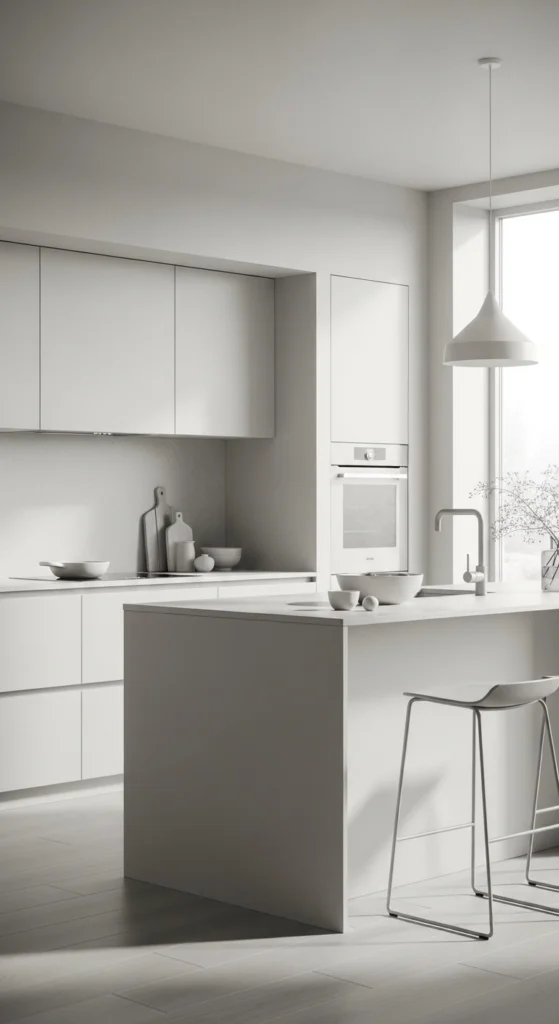
A monochrome island uses closely matched tones across the countertop, cabinetry, and often even the surrounding palette. It is subtle rather than dramatic.
This works because limiting contrast reduces visual noise. In the right space, that can make the whole kitchen feel more spacious and more restful.
This works best for those who truly love minimalist design and don’t need the island to act as a bold statement piece. It can be especially effective in small or medium-sized kitchens where simplicity helps the room breathe.
To apply it well, use texture and shape to keep the island interesting. Even when the tones are similar, the room still needs some depth through lighting, stools, backsplash texture, or natural materials.
The caution here is that monochrome can fall flat if every surface feels too similar without any warmth or contrast anywhere else in the room.
Rounded or Softly Curved Island Corners
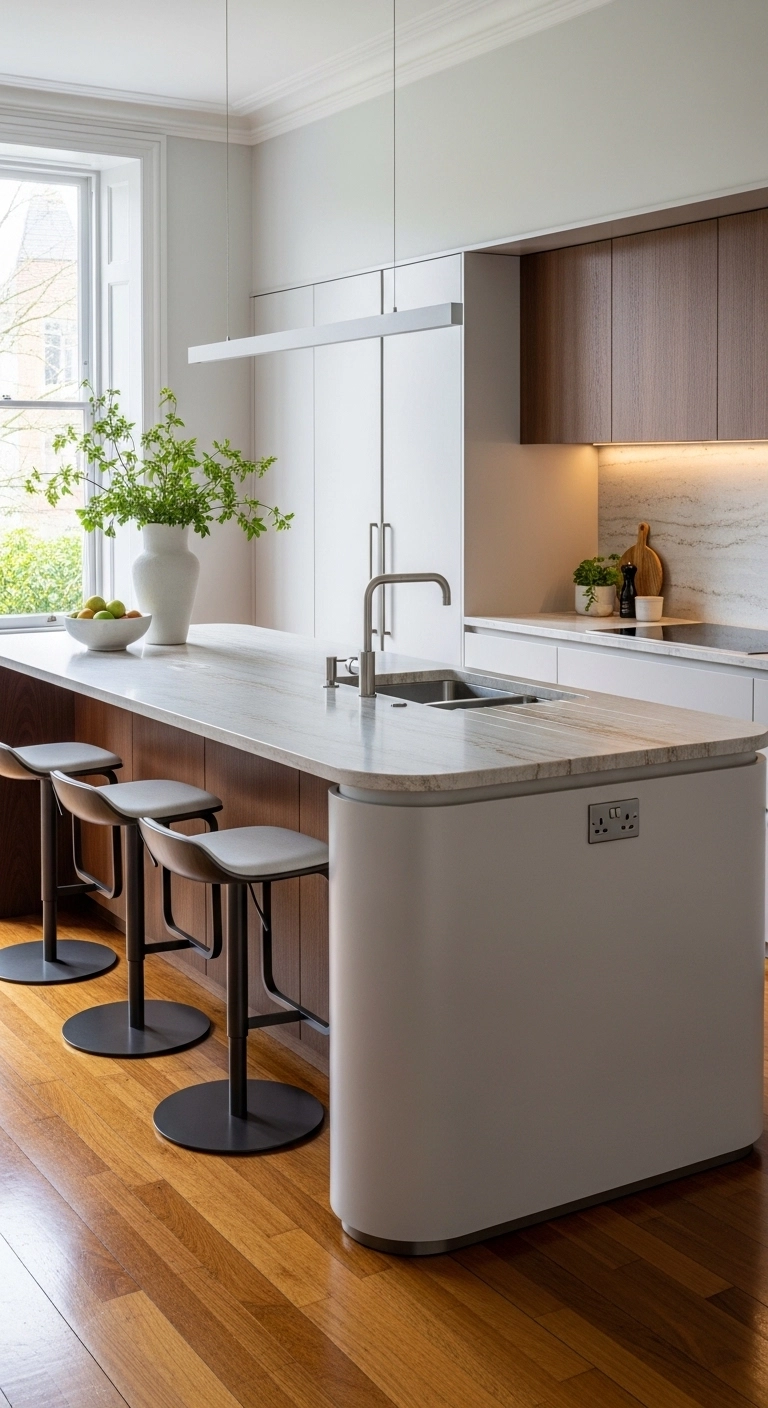
A modern island does not have to be all hard edges. Softly rounded corners or a gently curved end can make the island feel more refined and more comfortable to move around.
This works because modern design often looks best when it balances crisp structures with some softer shapes. Curves can make an island feel more welcoming, especially in a family kitchen.
This idea suits homes where people naturally gather in the kitchen or where traffic flows tightly around the island.
To apply it well, keep the curve subtle. A gentle shape usually feels more modern than a dramatic one. It can be especially useful at seating ends or corners that people pass frequently.
One limitation is cost and complexity. Curved details may be harder to execute depending on the cabinetry and countertop choices.
Island With Open Leg Space and Airy Stools
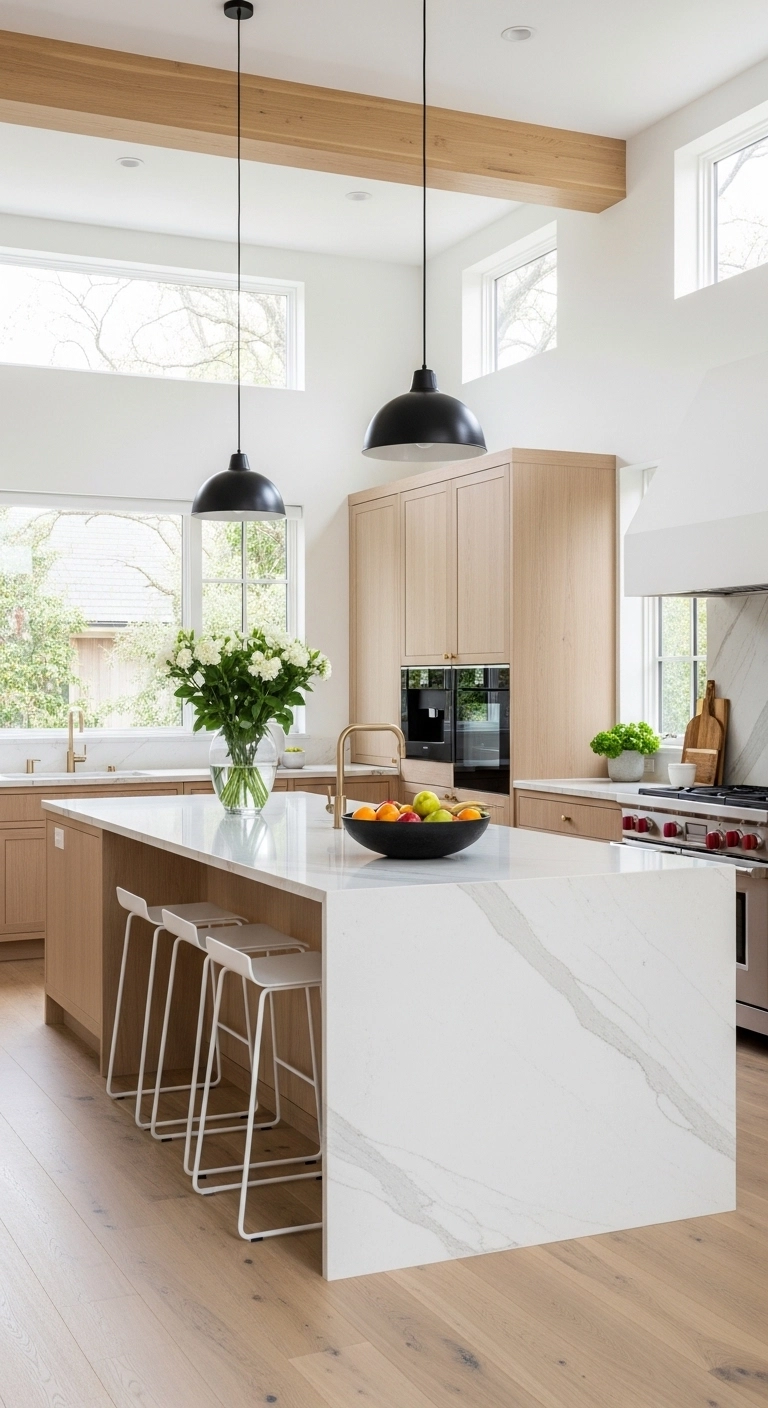
This style uses lighter visual elements around the seating area, such as slim stools, leg space, and a less bulky silhouette. The island still functions well but feels less dense in the room.
It works because a clean modern kitchen often benefits from breathing room. Even a large island can feel lighter when the seating side looks open instead of solid and heavy.
It suits open kitchens where the island is visible from multiple rooms and needs to feel integrated with the surrounding living space.
To apply it well, choose stools with simple lines and avoid overcrowding them. Leaving a little empty space between stools often looks cleaner than trying to maximize every inch.
A common mistake is choosing stools that are too bulky, ornate, or visually busy. They can quickly undo the island’s clean look.
Prep-Focused Island With a Clear Work Surface
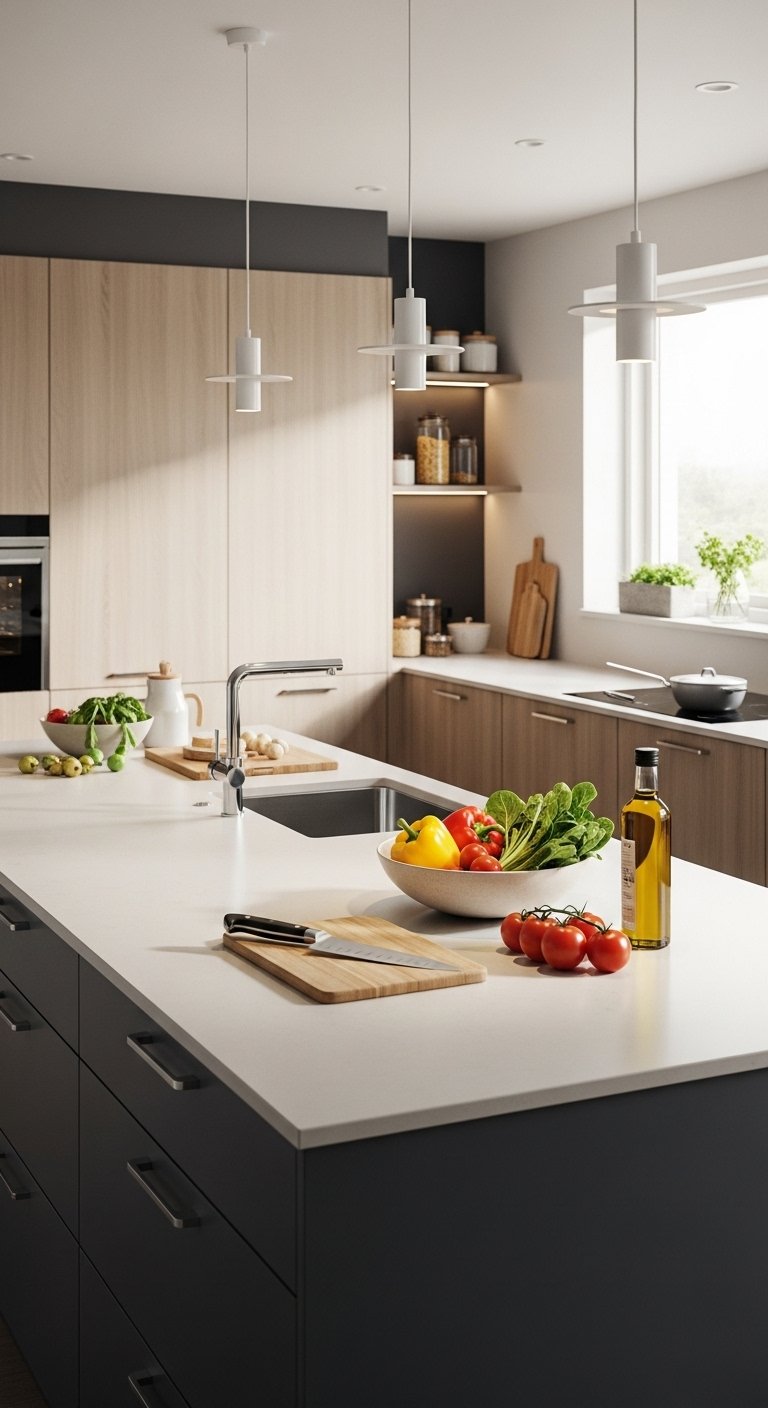
Some of the smartest island kitchen ideas are not about decorative features at all. A prep-focused island simply gives you a generous, uncluttered work surface with thoughtful storage nearby.
This works because a modern kitchen often looks best when it is practical enough to stay tidy. A usable island is more likely to remain clear and organized than one overloaded with competing features.
This suits people who cook often, want easier meal prep, or prefer a kitchen that feels functional first and styled second.
To apply it well, resist the urge to put everything on the island. If you want a clean modern look, leave enough open countertop area to actually work. A single bowl, tray, or vase often feels more effective than multiple decorative items.
The limitation is that this approach may feel plain to someone hoping for a more dramatic design statement. Its appeal comes from usefulness and restraint.
Statement Lighting Over a Simple Island
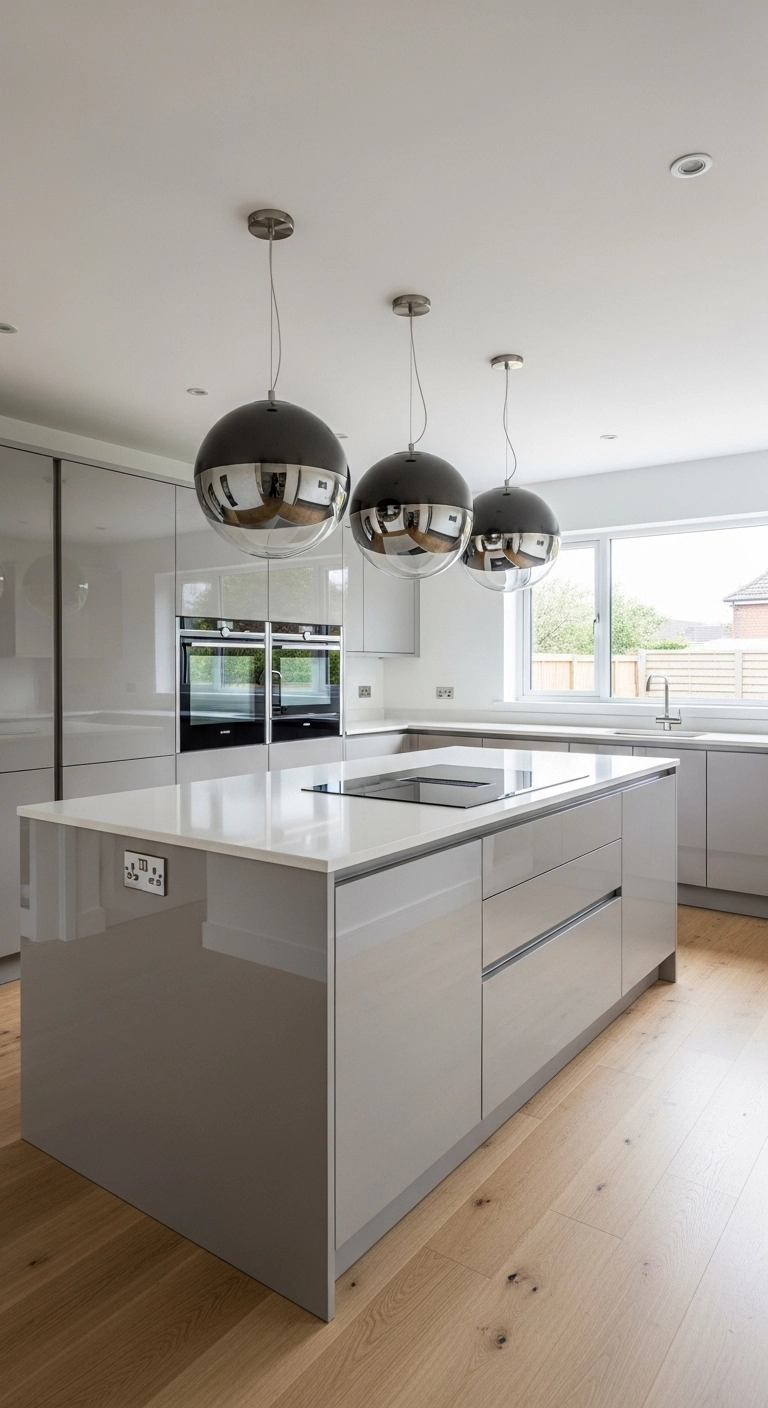
Sometimes the island itself should stay very simple while the lighting above it adds character. A clean-lined island paired with striking pendants can create a modern focal point without making the base overly complicated.
This works because it keeps the island grounded while still giving the room personality. In many kitchens, lighting is one of the easiest ways to create emphasis without adding clutter.
This suits people who like modern kitchens with a bit of visual interest but do not want bold cabinetry or strong color contrast.
To apply it well, match the scale of the lighting to the size of the island. The fixtures should feel intentional, not oversized for drama alone. Clean shapes usually work better than highly decorative styles if the goal is a modern finish.
One caution: statement lighting can quickly dominate a kitchen if the island and the rest of the finishes already have a lot going on.
Final Thoughts
The best island kitchen ideas don’t start with what looks impressive in the picture. They start with how the kitchen needs to function and then shape the design around that. A clean, modern island should feel useful, comfortable, and visually calming. It may stand out, but it still belongs in the room.
If you are choosing between ideas, it often helps to decide what matters most first: more seating, better prep space, extra storage, a lighter look, or a stronger focal point. Once that is clear, the right island style usually becomes much easier to spot.