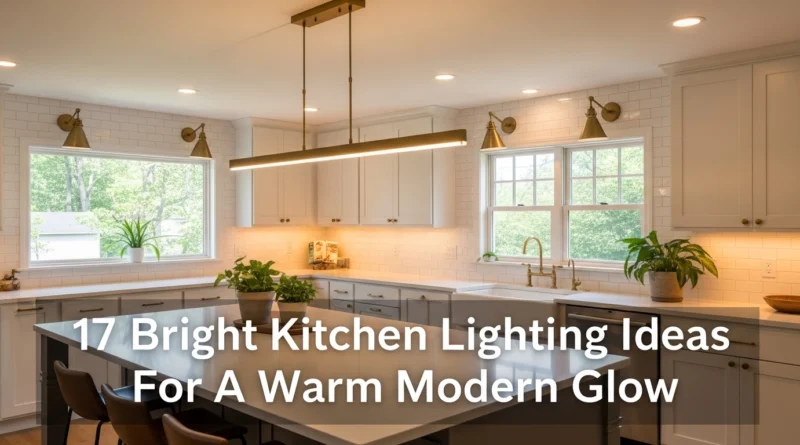
17 Bright Kitchen Lighting Ideas For A Warm Modern Glow
Good kitchen lighting can completely change how a room feels. It can make a compact kitchen look more open, help dark corners feel more usable, and transform a simple layout into something warmer and more luminous. The tricky part is getting that balance right. Too much bright white light can make a kitchen feel stark. Too little layered lighting can leave it flat, shadowy, and awkward to work with.
The best kitchen lighting ideas do more than brighten the room. They help the kitchen feel welcoming, practical, and visually balanced from morning coffee to evening cleanup.
Why Kitchen Lighting Matters So Much
A kitchen has to do several jobs at once. It is a workspace, a gathering spot, and often part of a larger open-plan living area. That means one ceiling fixture alone usually is not enough. A warm modern kitchen works best when lighting is layered thoughtfully across the room.
That usually means combining general lighting, task lighting, and a few softer decorative sources. When those layers work together, the kitchen feels brighter without losing warmth.
Pendant Lights Over the Island
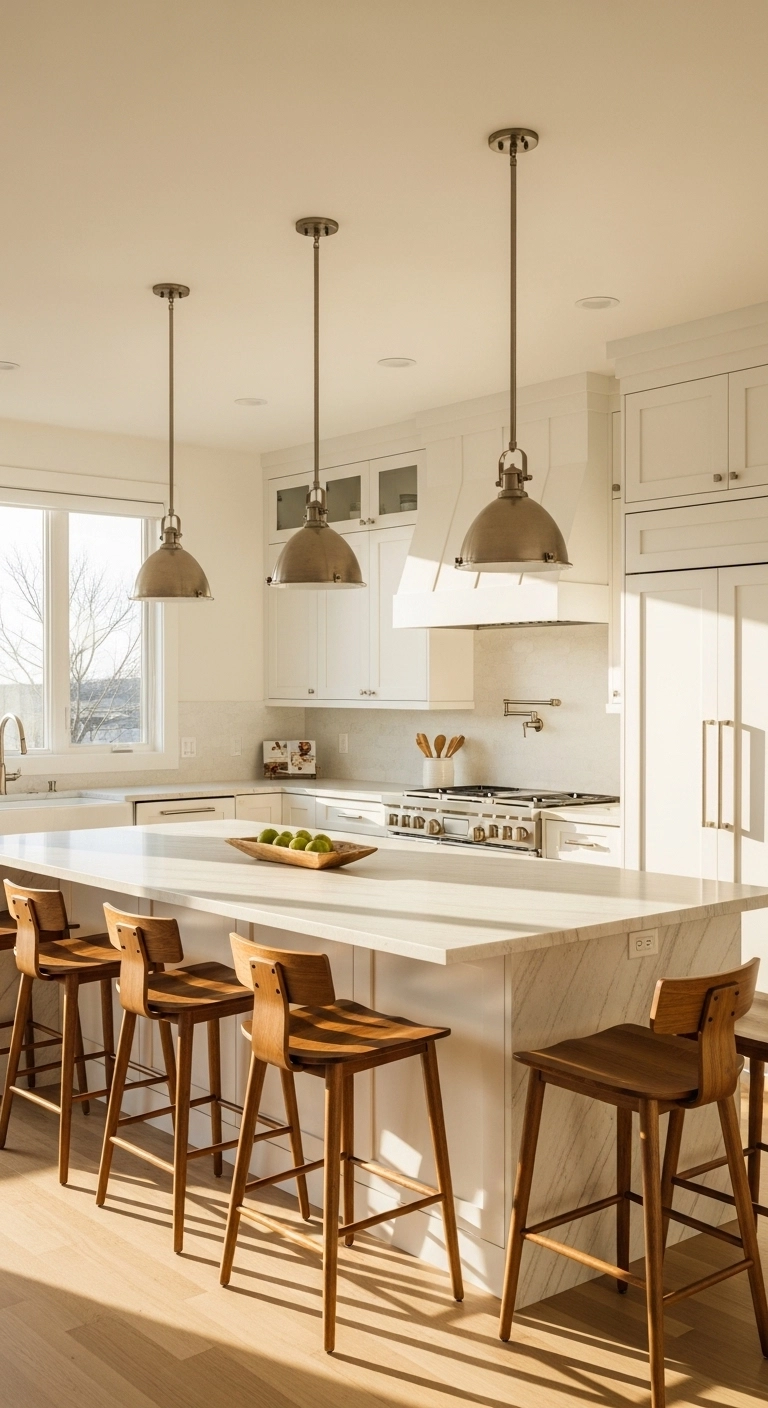
Pendant lights over an island are one of the most popular kitchen lighting ideas because they combine function and style in a very visible spot. They help define the island while giving focused light where people prep, serve, or sit.
This works because the island often sits at the center of the kitchen. Good pendant lighting makes it feel intentional and can help the whole room look more finished.
It works best in kitchens with an island or peninsula that needs both task lighting and a stronger focal point.
To apply it well, match the pendant scale to the size of the island. Two or three well-proportioned pendants often look better than several small ones crowded together. Warm-toned bulbs usually help keep the room feeling inviting.
One caution: pendants hung too low can block sightlines and feel intrusive, especially in open-plan spaces.
Under-Cabinet Lighting for Clearer Work Surfaces
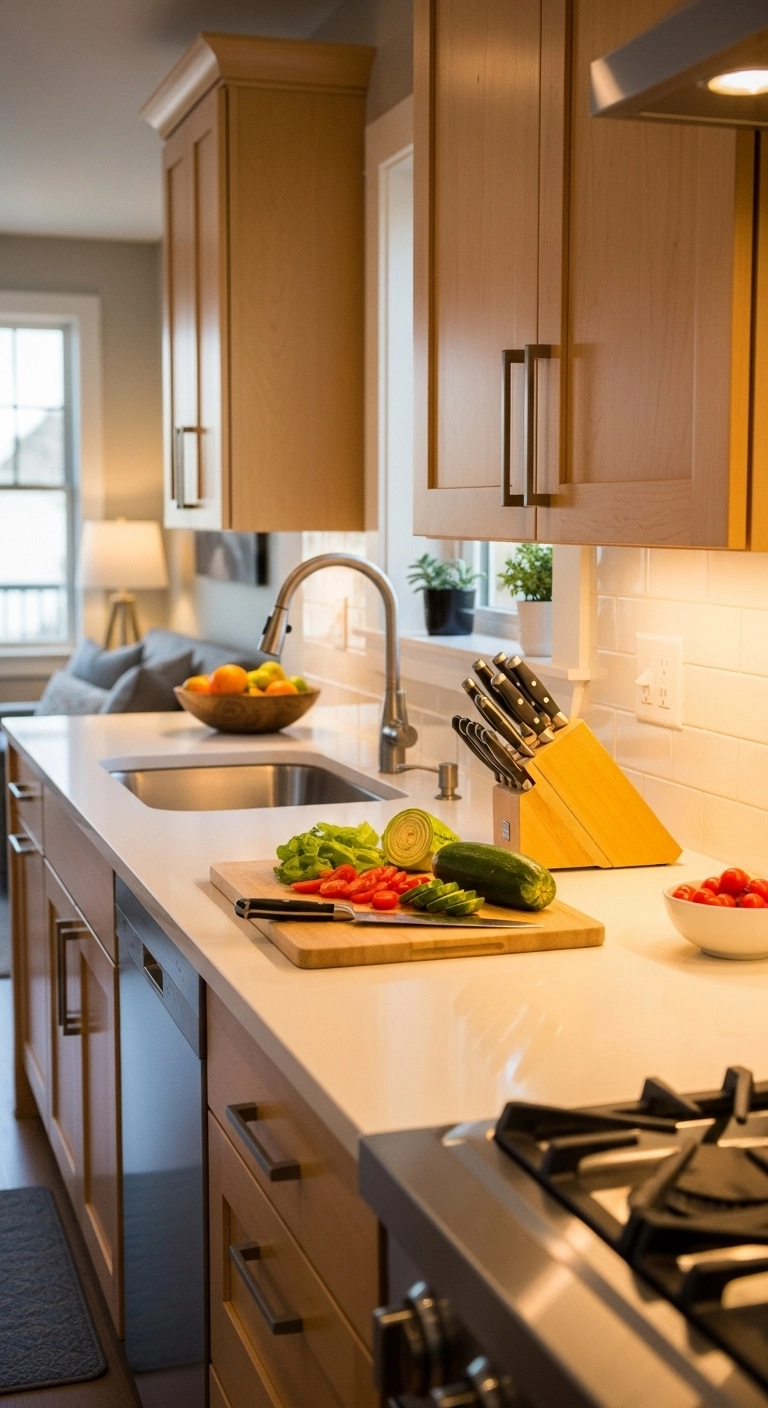
Under-cabinet lighting sits beneath upper cabinets and shines directly onto the countertop below. It is one of the most useful upgrades for everyday kitchen tasks.
This works because it lights the work surface where overhead fixtures often create shadows. It also adds a softer glow that can make the kitchen feel more layered and less flat.
It suits almost any kitchen, especially those with upper cabinets and frequently used prep areas.
To apply it well, use it across the sections of counter where chopping, cooking prep, or small appliances are used most often. Keep the light even and discreet so the fixtures themselves do not dominate.
A common mistake is using lighting that is too cool in tone. That can make the kitchen feel more clinical than warm.
Recessed Ceiling Lights for Clean Overall Brightness
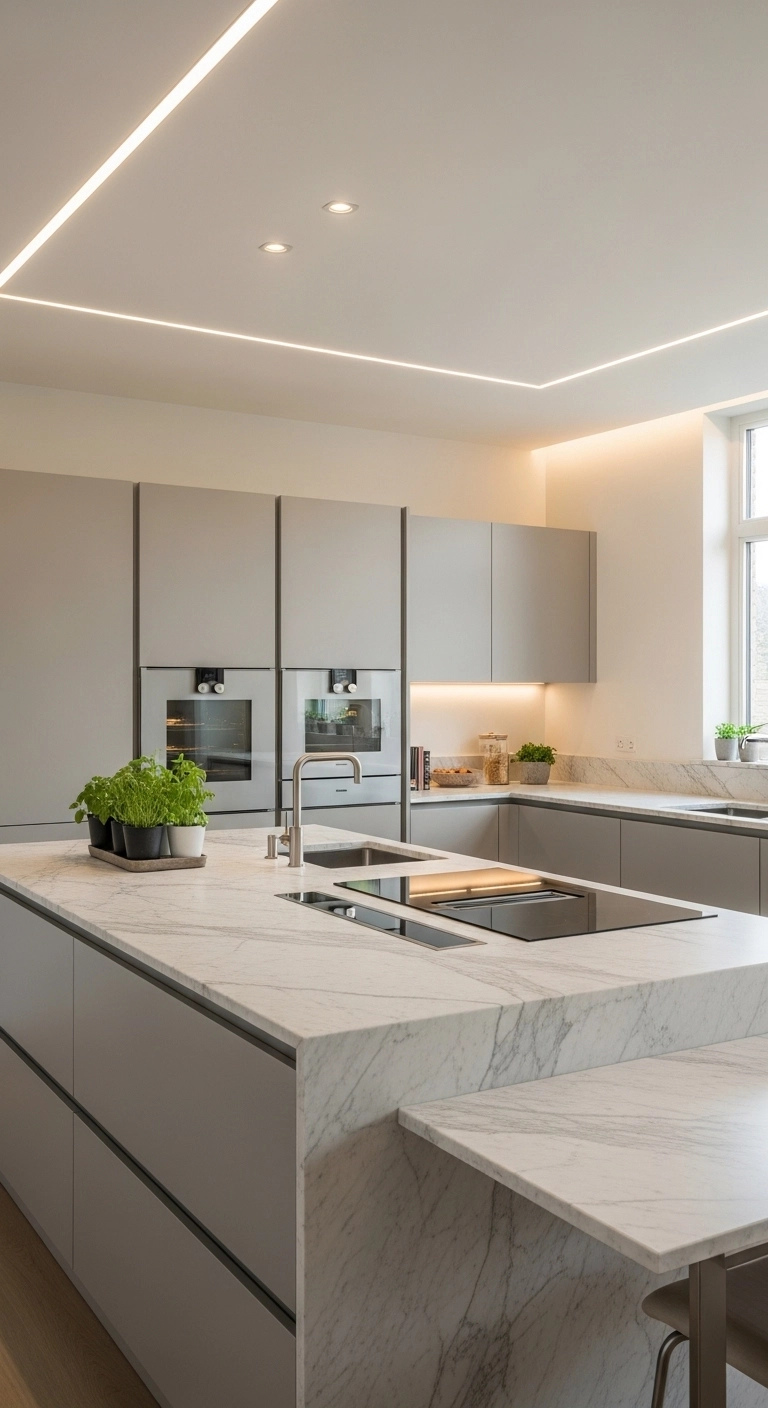
Recessed lights sit flush with the ceiling and provide broad, even illumination without taking up visual space. They are often the base layer of a modern kitchen lighting plan.
This works because it keeps the ceiling clean while spreading light across the room. It is especially helpful if you want the kitchen to feel open and uncluttered.
It works best in modern kitchens, low-ceiling kitchens, or spaces where hanging fixtures would feel too busy.
To apply it well, space the lights thoughtfully rather than simply centering them by the room shape. What matters more is lighting the functional zones of the kitchen well.
One limitation is that recessed lighting alone can feel flat if it is the only source. It usually works better as part of a layered setup.
Wall Sconces for a Softer Decorative Layer
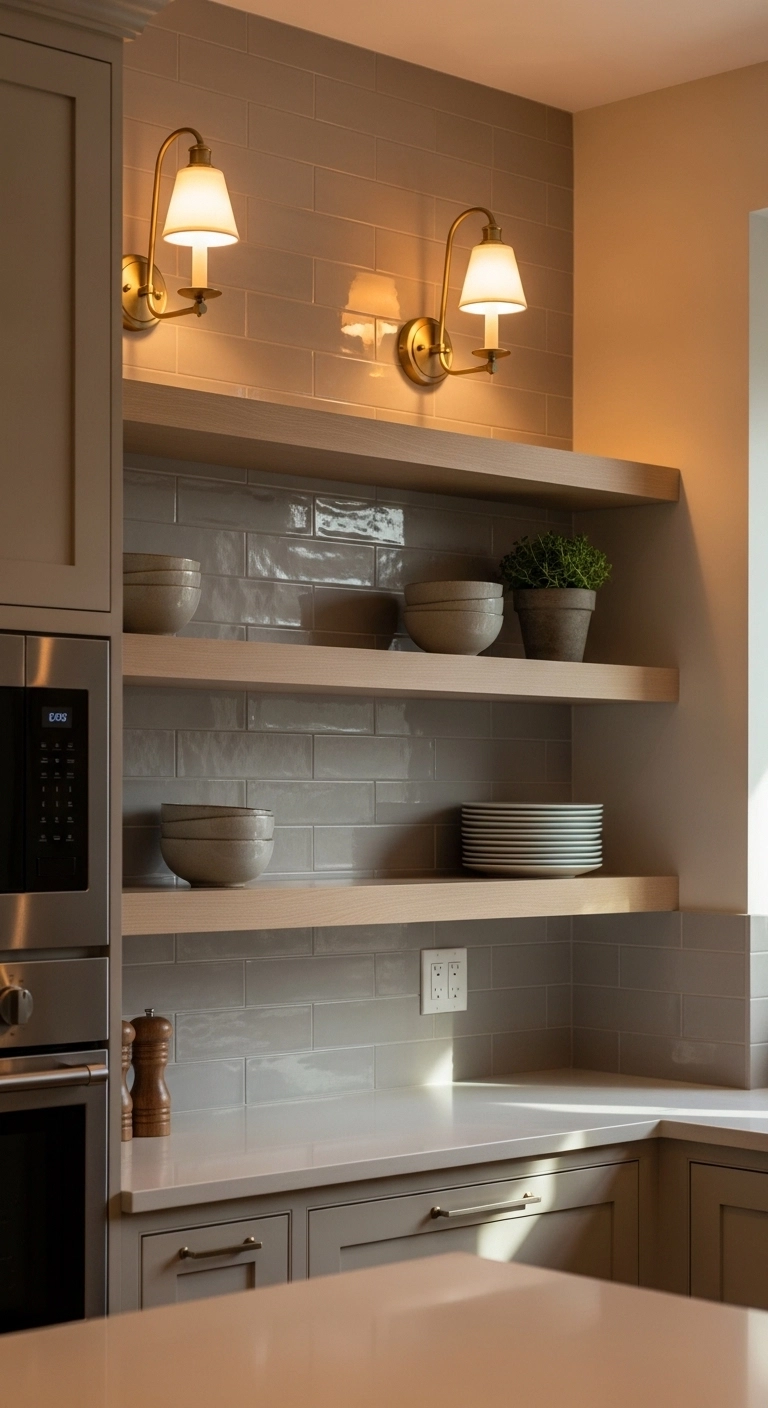
Wall sconces in a kitchen can sit above open shelves, near a breakfast nook, or on either side of a window or range feature. They are less common than ceiling fixtures, which is exactly why they can add so much character.
This works because sconces introduce warmth at eye level. They help the kitchen feel more like part of the home rather than just a utility zone.
They suit kitchens with enough wall space and people who want a more collected, less purely functional look.
To apply it well, keep the sconce style connected to the rest of the kitchen finishes. They usually work best as a secondary layer, not the main source of bright task lighting.
One caution: in a very small kitchen, wall sconces can feel crowded if the walls are already busy with cabinets, shelves, and artwork.
A Statement Chandelier Above a Dining Corner
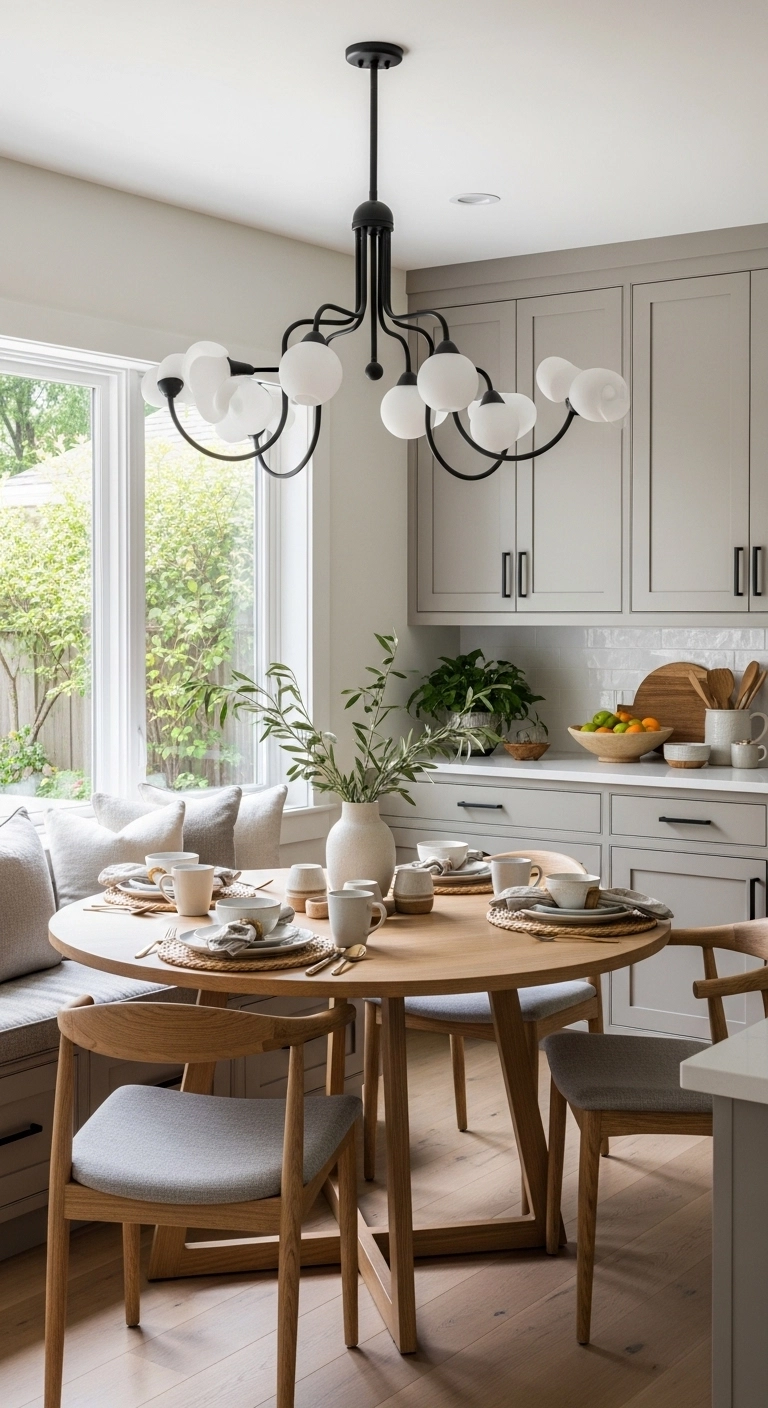
If your kitchen includes a dining nook or breakfast table, a chandelier or larger decorative fixture can make that zone feel warmer and more intentional.
This works because it separates the dining area visually from the working side of the kitchen. It also adds softness and personality where task lighting is less important.
It works best in eat-in kitchens or open kitchens with a dedicated table area.
To implement this well, choose a fixture that suits the size of the table and the tone of the kitchen. It doesn’t have to be flashy to feel special. Sometimes a simple modern fixture with soft curves or a warm metal finish works best.
A mistake to avoid is choosing something oversized just for drama. If the fixture dominates the room, it can upset the balance.
Glass Pendants for an Airy Feel
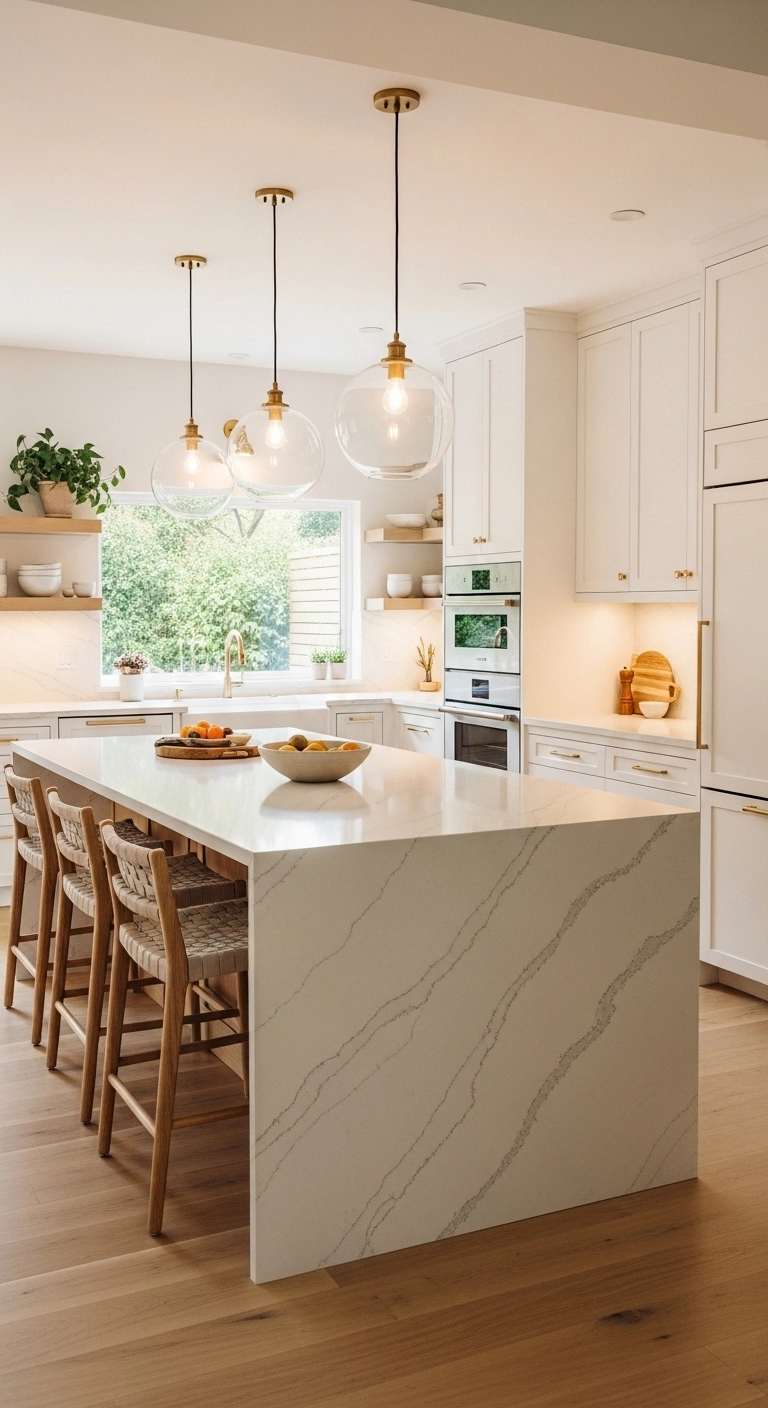
Glass pendants give you the structure of pendant lighting without as much visual heaviness. Clear, frosted, or lightly tinted glass can all help keep a kitchen looking bright.
This works because the transparent or translucent material allows light to spread more easily and keeps the fixture from feeling bulky.
It suits smaller kitchens, kitchens with lower ceilings, or anyone who wants overhead lighting that feels open and light.
To apply it well, pair glass pendants with warm bulbs so the result feels soft rather than sharp. Clean-lined shapes tend to support a modern look better than overly decorative ones.
One caution: clear glass can show dust and fingerprints more easily, so it may need more regular cleaning.
Warm LED Strip Lighting Above Cabinets
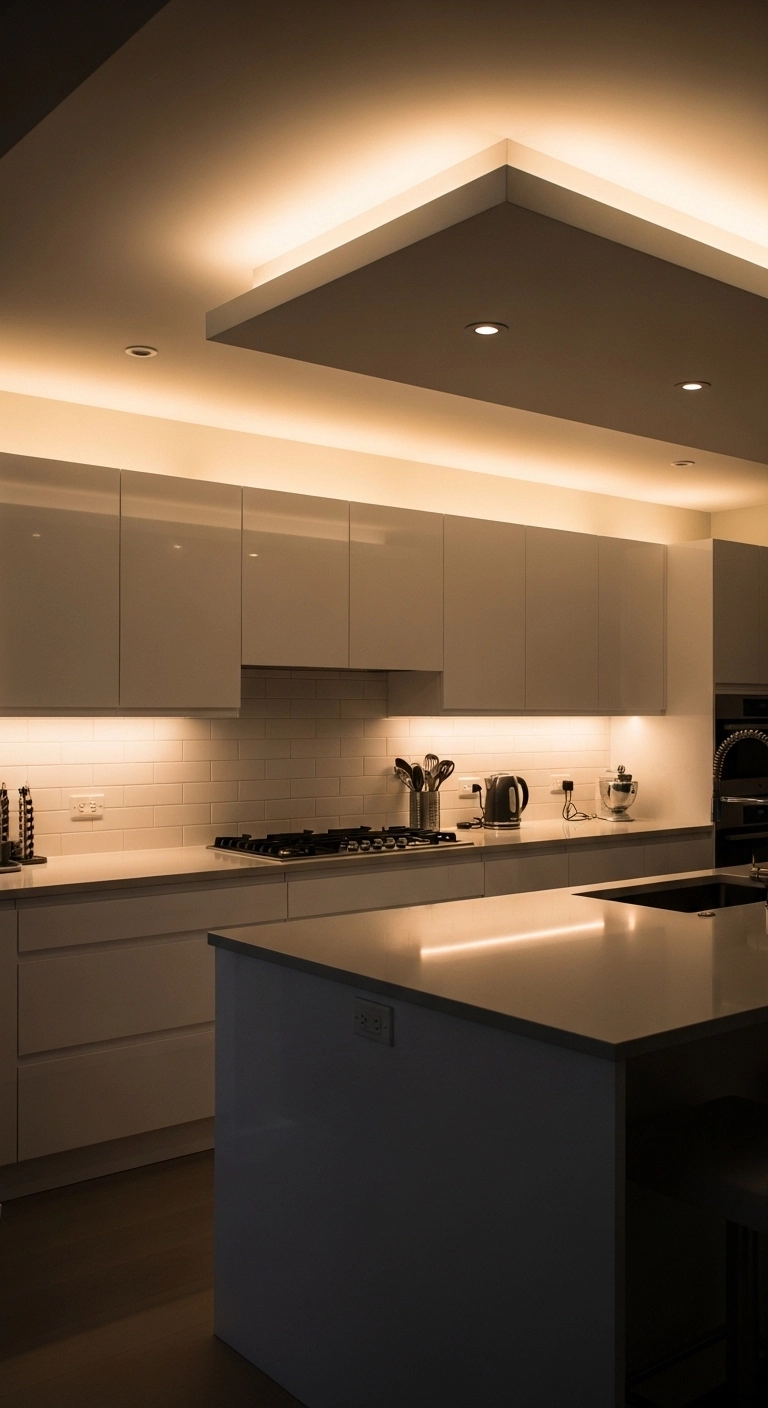
LED strip lighting above upper cabinets creates a gentle upward glow that softens the ceiling area and makes the room feel more layered in the evening.
This works because it reduces harsh contrast between bright task lighting and a dark ceiling. It can also make the kitchen feel taller and more finished.
It works best in kitchens where the cabinets stop below the ceiling and there is room for hidden lighting above them.
To apply it well, keep the glow subtle. The goal is atmospheric warmth, not a strong visible beam.
A limitation is that this lighting is more about mood than function. It should support the room rather than replace brighter working light.
Integrated Shelf Lighting for Open Shelves
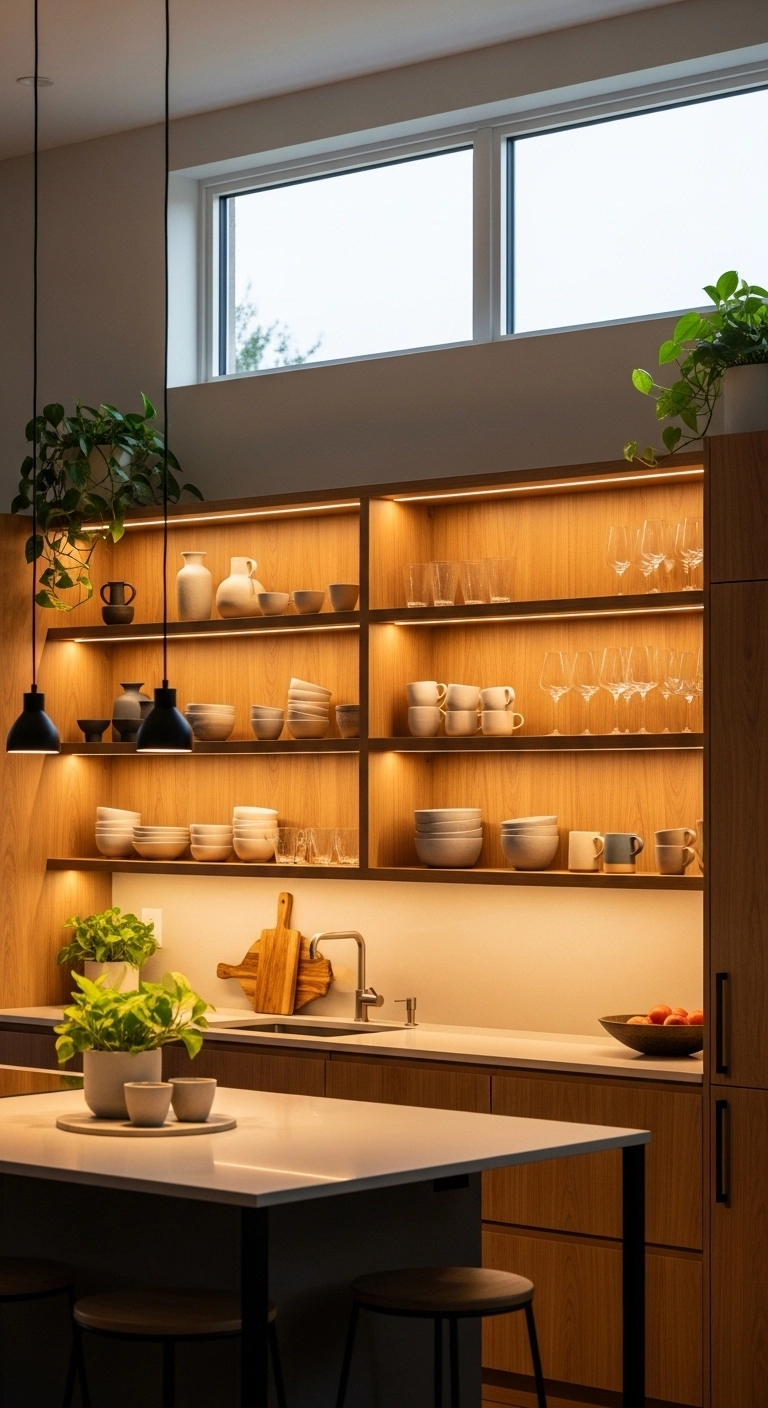
If your kitchen has open shelving, integrated lighting under or within the shelves can highlight dishes, glassware, or carefully chosen everyday items.
This works because it adds both function and display value. It also helps open shelving feel more intentional and less like storage that was left unfinished.
It works best in kitchens where the shelves are styled neatly and used in moderation.
To apply it well, keep shelf styling simple so the light enhances the objects instead of drawing attention to clutter. Warm white lighting usually gives the nicest effect.
One caution: open shelves already demand some upkeep, and lighting can make disorganization more obvious.
Flush-Mount Fixtures for Small Kitchens
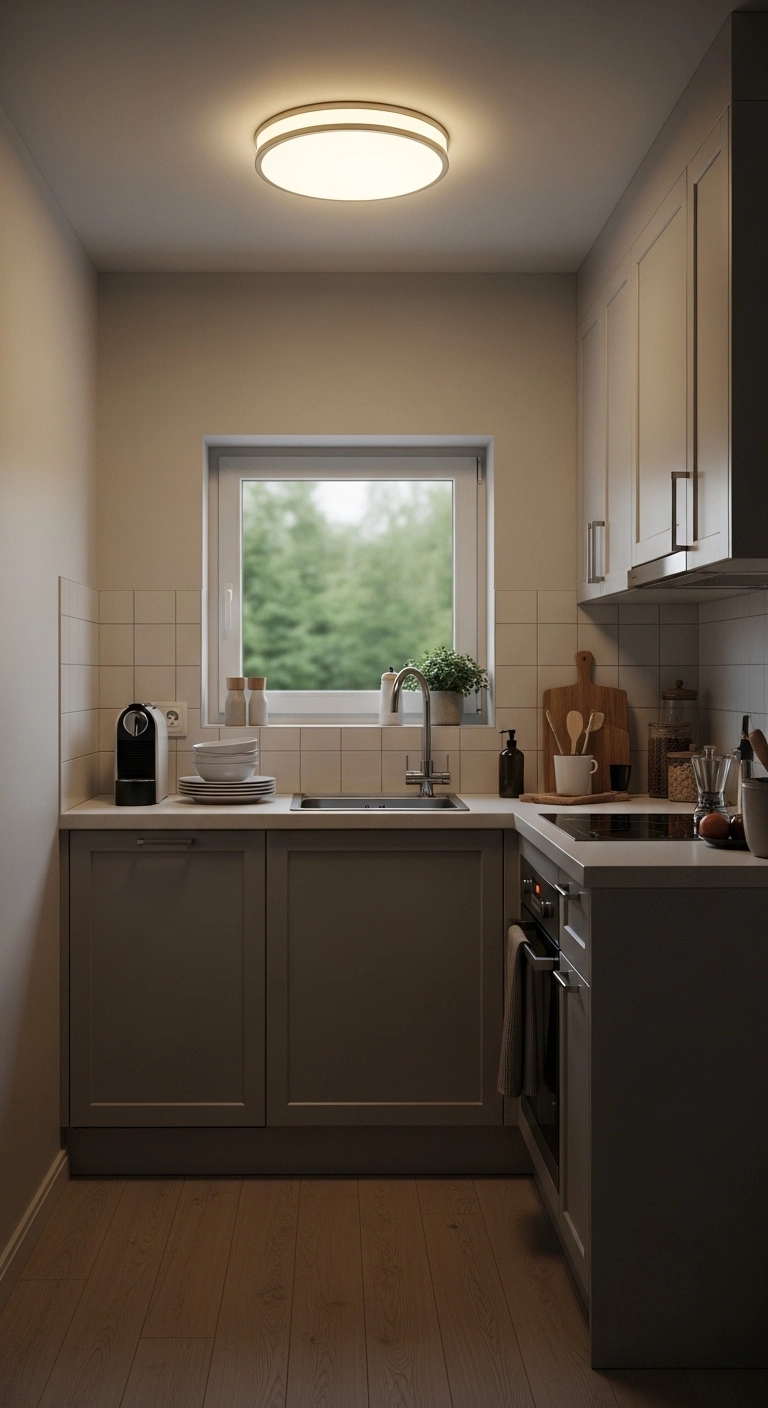
A flush-mount or semi-flush ceiling fixture can be a smart choice in kitchens that do not have room for pendants or chandeliers but still need something more decorative than basic recessed lights.
This works because it adds style without hanging too low. It can make a compact kitchen feel more thoughtfully designed while still keeping movement easy.
It suits small kitchens, galley kitchens, and spaces with lower ceilings.
To apply it well, choose a fixture with clean lines and enough brightness for the size of the room. Diffused glass or fabric details can help soften the light.
One mistake is choosing a fixture that is too decorative for the scale of the room. Small kitchens usually look better with simpler shapes.
Lighting Inside Glass-Front Cabinets
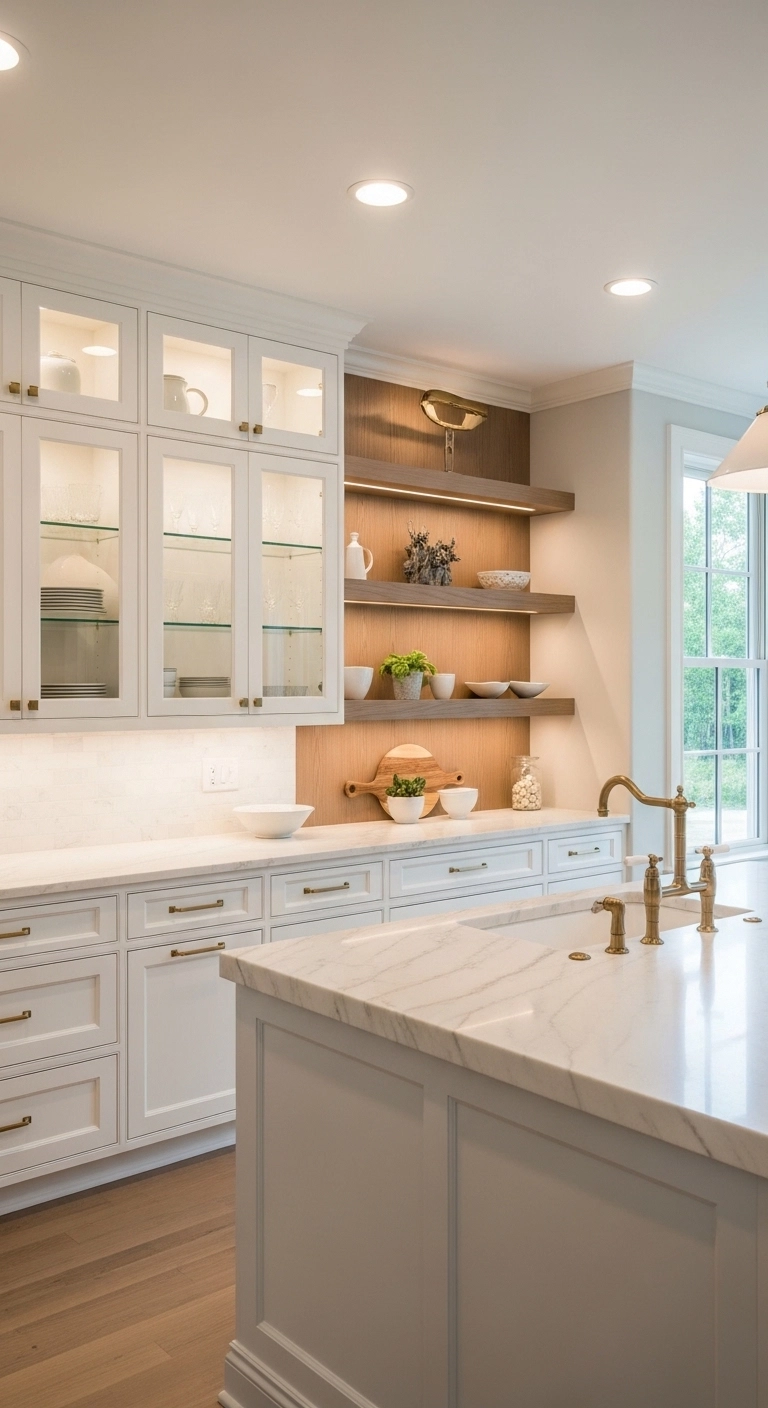
Lighting inside glass-front cabinets can create a soft glow and highlight dishes, glassware, or decorative pieces while adding depth to the room.
This works because it turns storage into a subtle design feature. In the evening, it can make the whole kitchen feel calmer and more layered.
It works best in kitchens that already have glass cabinet doors and a reasonably edited cabinet interior.
To apply it well, use it sparingly and keep the contents neat. The goal is to make the cabinets look warm and intentional, not crowded.
A caution here is obvious: if the cabinets are filled with mismatched or overly busy items, the lighting may emphasize that rather than improve it.
Black Fixtures for Contrast in a Light Kitchen
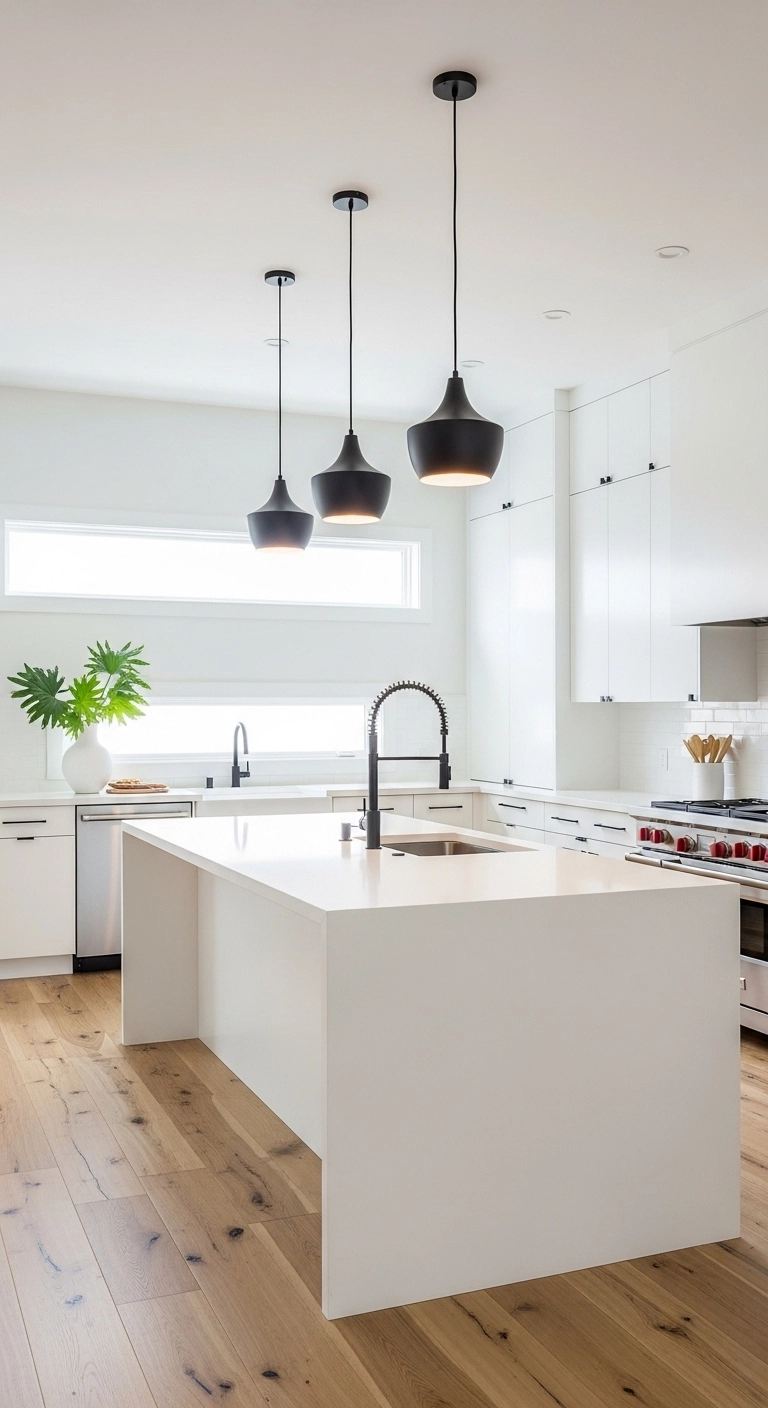
Black kitchen lighting fixtures can add structure and definition, especially in kitchens with white cabinetry, pale wood, or light stone surfaces.
This works because black creates a visual anchor. It can help overhead lighting feel more deliberate and give the room a modern edge without changing the whole palette.
It works best in kitchens that need contrast or already use black in smaller accents like hardware, faucets, or window frames.
To apply it well, repeat the black finish in a few other places so the lights feel connected to the room. Simple silhouettes often look strongest.
One caution: in a darker kitchen, too many heavy black fixtures can make the room feel more closed in rather than brighter.
Brass or Warm Metal Fixtures for a Softer Glow
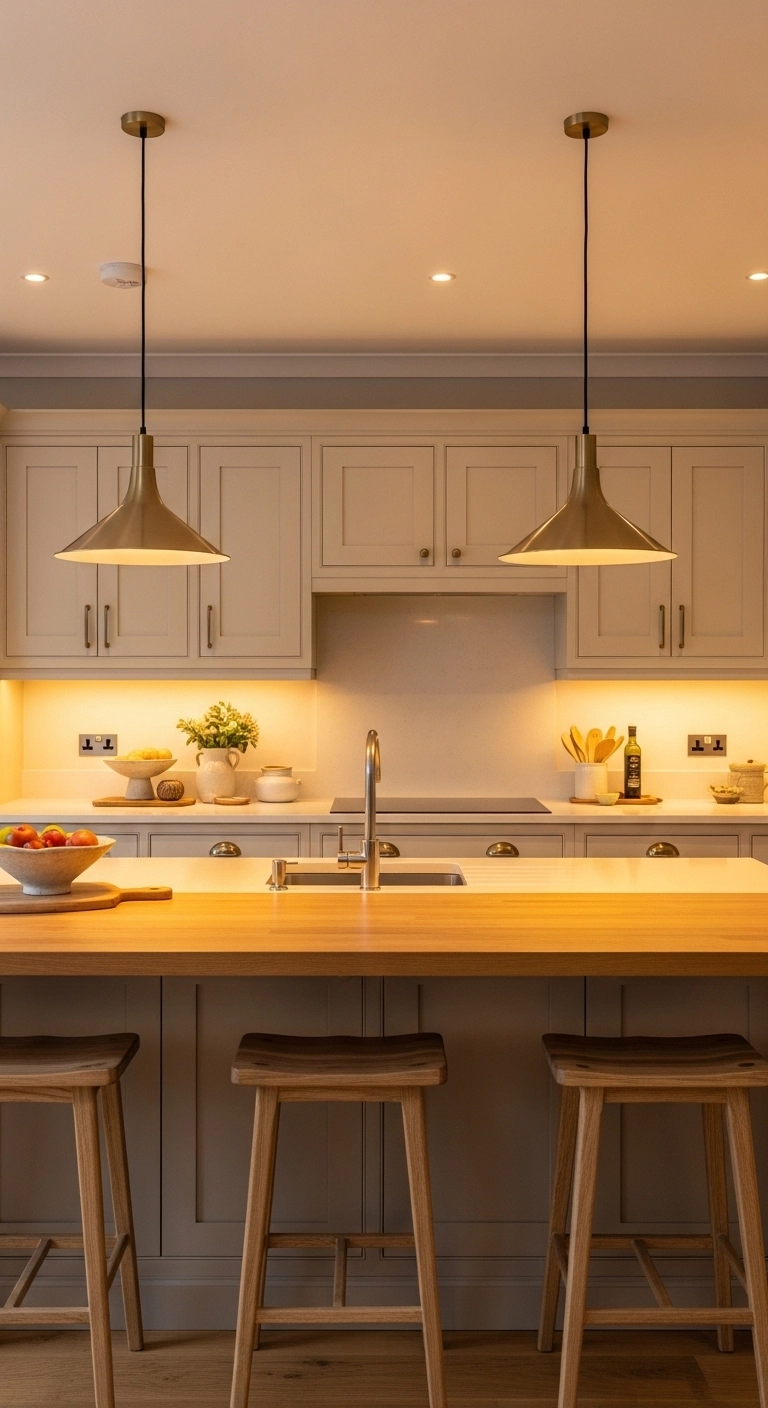
Brass, antique bronze, or other warm-toned metals can make a kitchen feel more inviting than cooler chrome-heavy lighting choices.
This works because warm metals reflect light gently and bring a subtle richness that supports a cozy modern look.
It suits kitchens with warm woods, neutral cabinetry, creamy whites, or natural stone details.
To apply it well, keep the finish feeling calm rather than shiny and overly glamorous. A muted or brushed finish often blends more naturally into a modern kitchen.
One limitation is mixing too many metals without a clear plan. That can make the lighting feel disconnected from the rest of the room.
Linear Lighting Over a Long Island
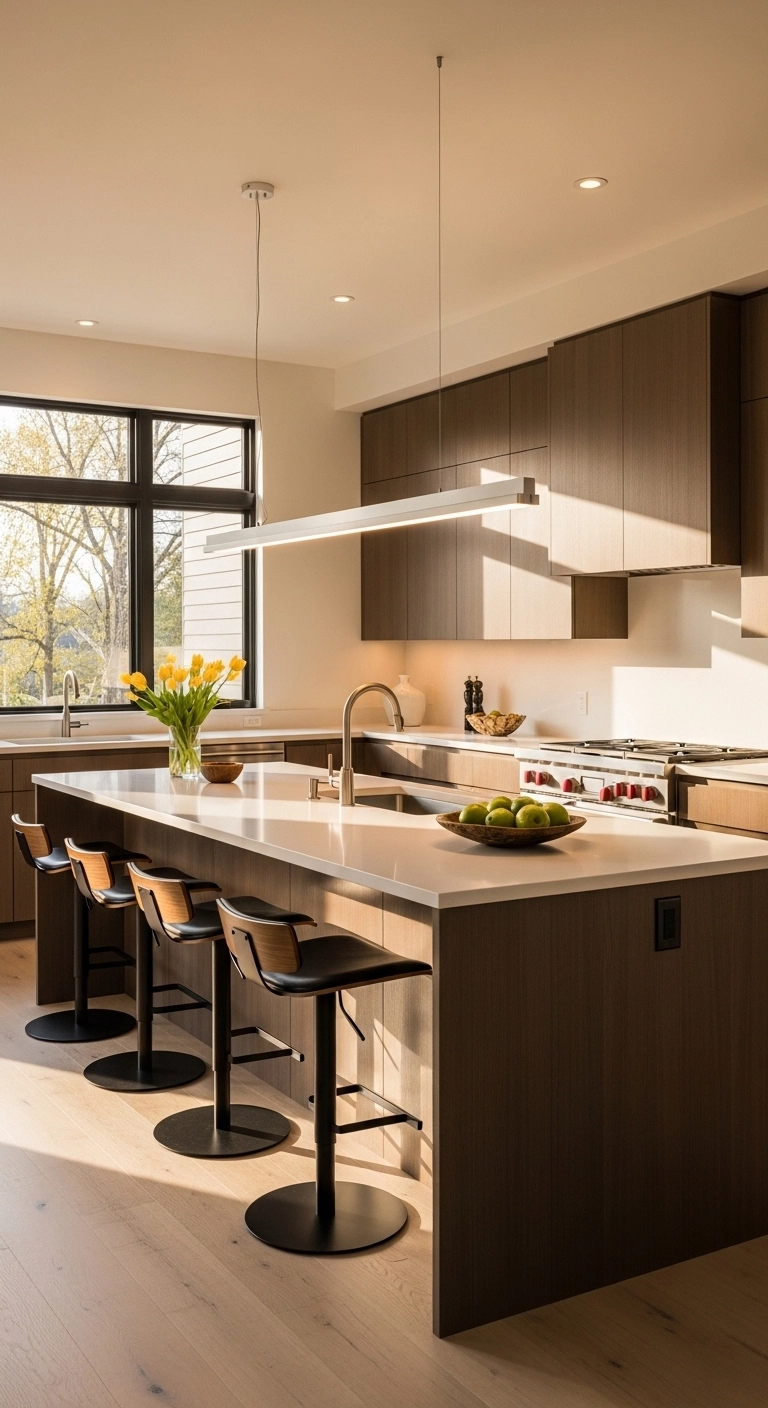
A linear pendant or elongated fixture can work beautifully over a long island, especially if you want a more streamlined alternative to multiple separate pendants.
This works because it gives coverage across the entire island while creating a strong modern line in the center of the room.
It works best in larger kitchens or long narrow islands where one fixture can simplify the visual layout.
To apply it well, make sure the length suits the island rather than stretching almost edge to edge. It should feel centered and proportional.
A common mistake is choosing a linear fixture that is too thin or too small for the island, which can make it look visually weak.
Dimmable Lighting for Better Mood Control
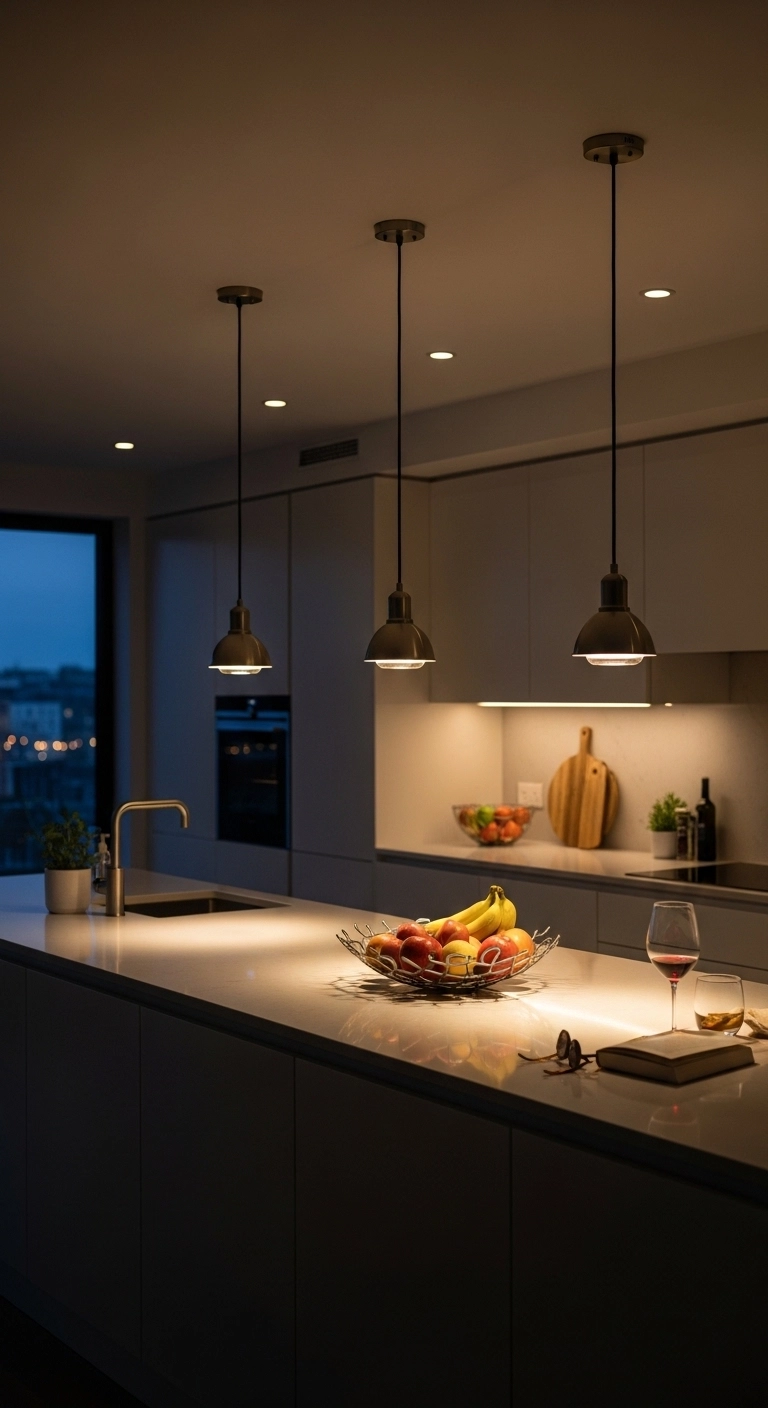
Dimmable lighting lets you adjust brightness depending on the time of day and how the kitchen is being used. Morning prep, daytime cooking, and evening dining often need different light levels.
This works because brightness is not the same thing as comfort. A kitchen that can shift from bright and practical to soft and warm usually feels much nicer to live with.
It suits almost any kitchen, especially open-plan homes where the kitchen remains visible long after cooking is done.
To apply it well, use dimmable bulbs or fixtures in the main lighting layers you rely on most, such as pendants, recessed lights, or dining fixtures.
One caution: dimming works best when the bulbs and controls are actually compatible. Otherwise the light may flicker or not dim smoothly.
Toe-Kick Lighting for a Soft Evening Glow
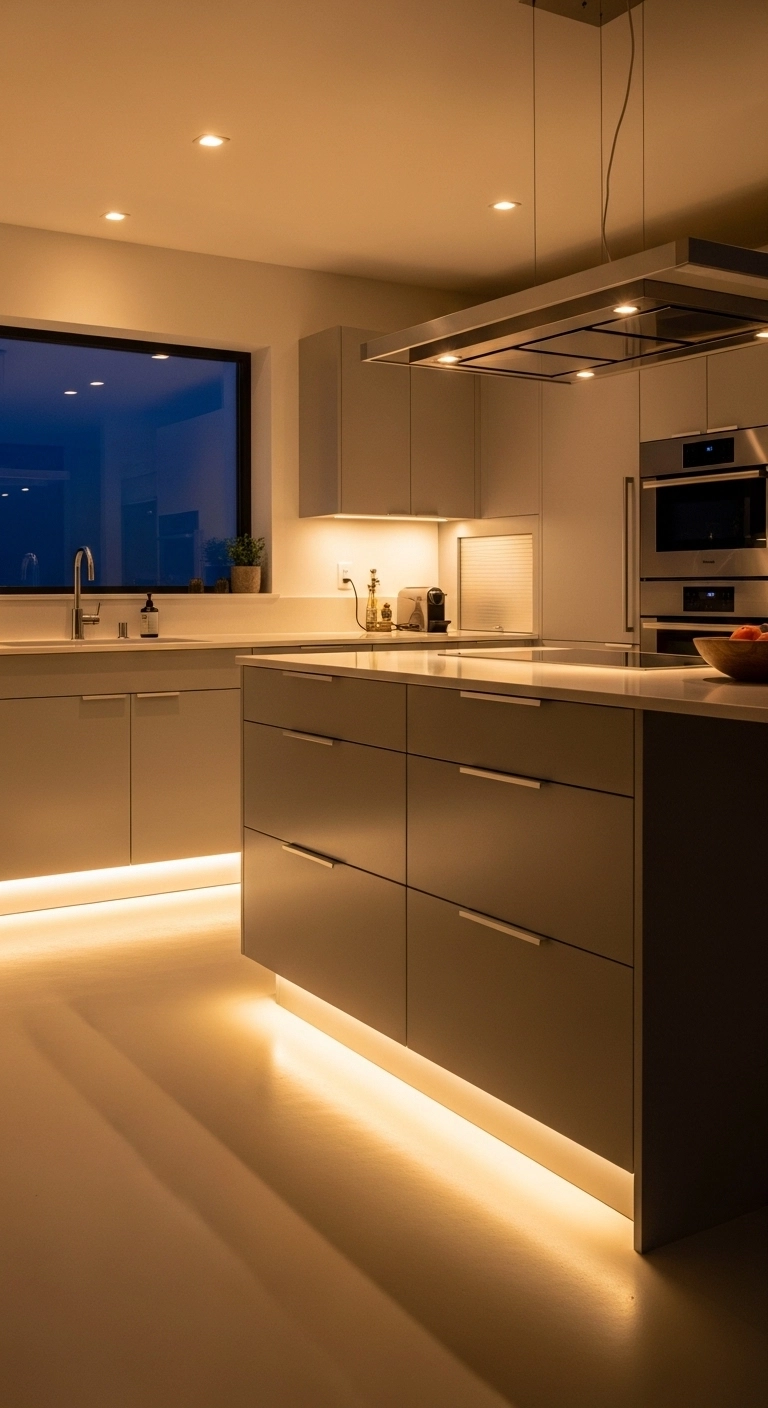
Toe-kick lighting runs along the base of lower cabinets or an island near the floor. It creates a subtle floating effect and a gentle nighttime glow.
This works because it adds depth and low-level light without glare. It can also make late-night trips to the kitchen feel easier without turning on the main lights.
It works best in modern kitchens and homes where evening ambiance matters as much as daytime brightness.
To apply it well, keep it discreet and warm-toned. It should feel almost hidden until the light comes on.
The limitation is that this is accent lighting, not working light. It adds atmosphere but will not replace brighter task sources.
Matching Fixture Shapes for a More Cohesive Look
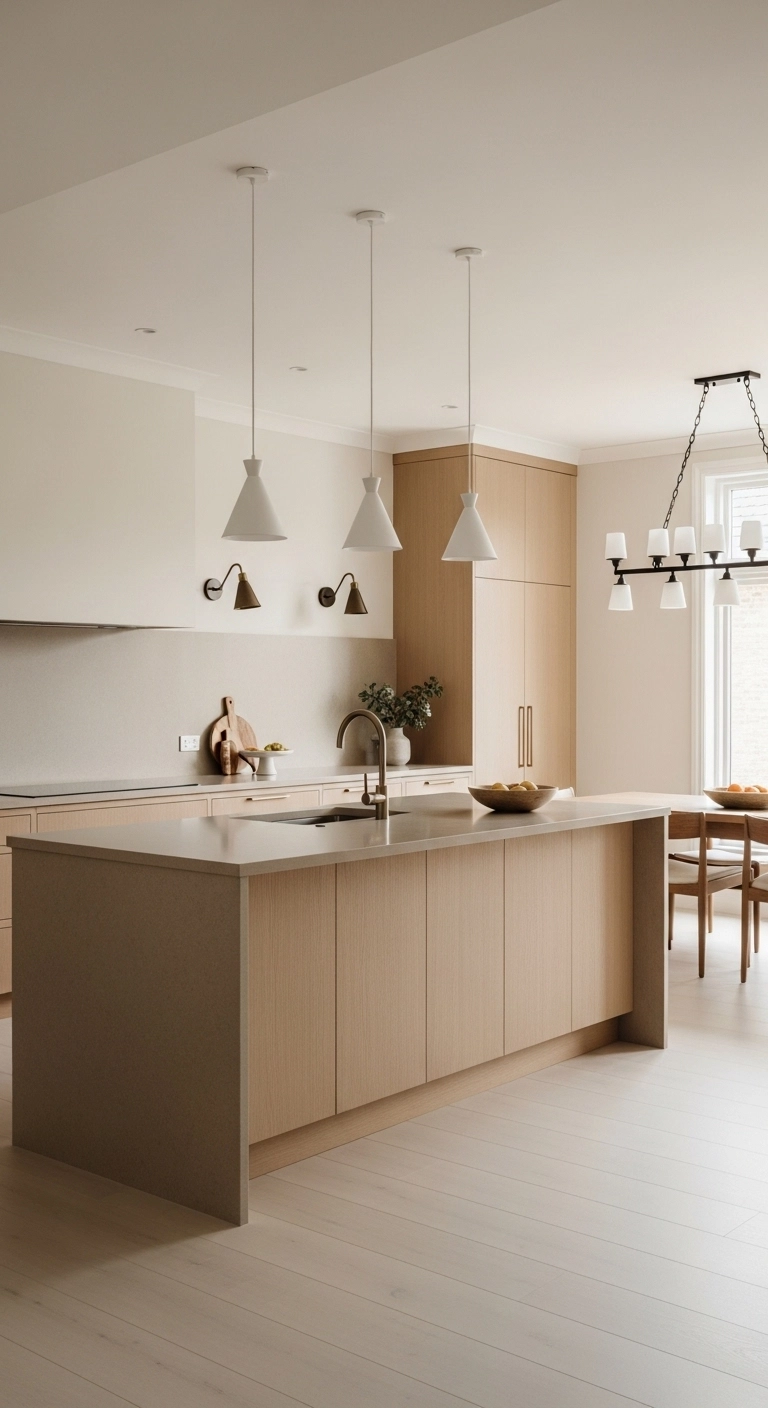
One of the smartest kitchen lighting ideas is not about a single type of fixture at all. It is about choosing shapes and finishes that relate to each other across the room.
This works because kitchens often include several lighting zones. When the pendant lights, sconces, and dining fixture feel connected, the room looks calmer and more polished.
It suits any kitchen where multiple lighting layers are visible at once.
To apply it well, repeat one or two design cues such as a curved shape, matte finish, or similar metal tone rather than trying to make everything identical.
A mistake to avoid is treating each fixture as a separate decision. Even beautiful lights can clash if they do not speak the same design language.
Layered Lighting That Mixes Function and Warmth
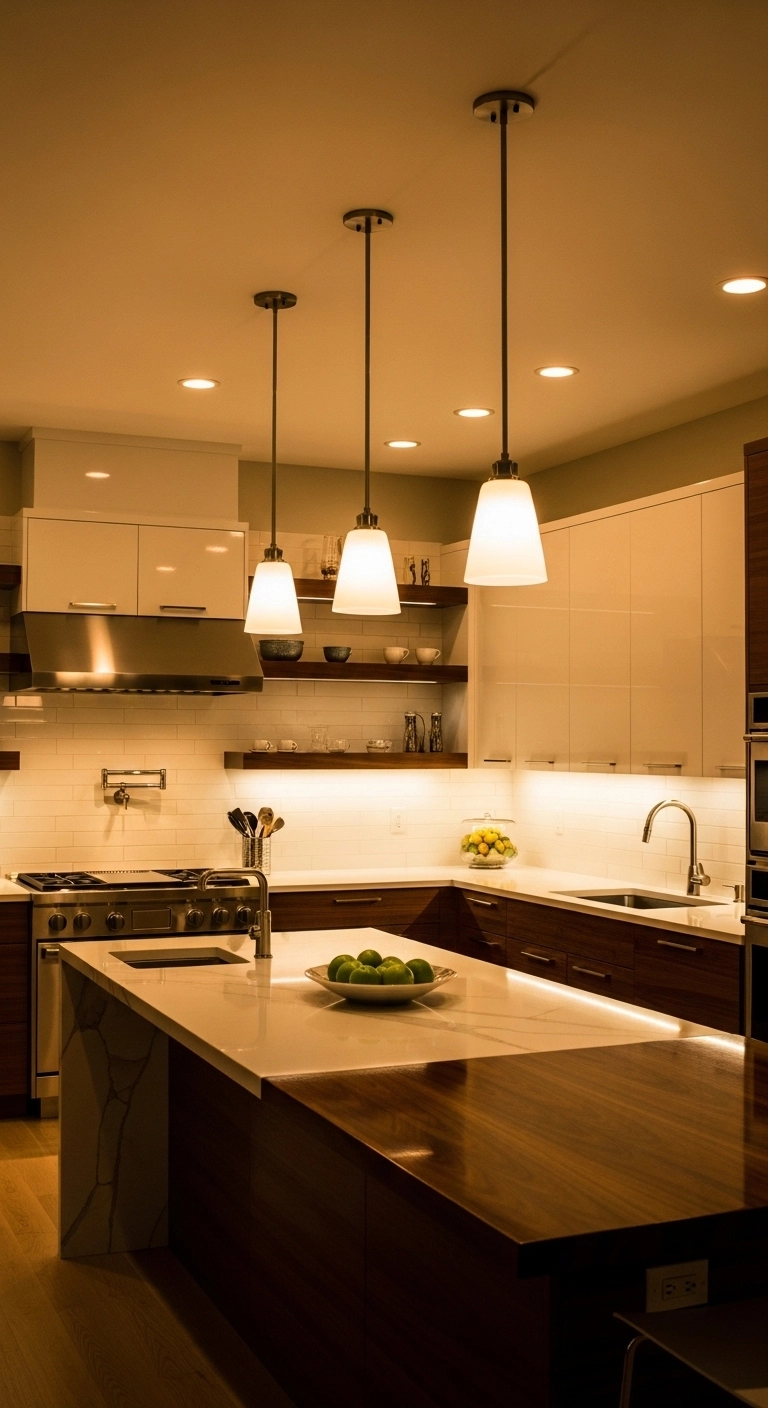
The strongest kitchens rarely rely on one fixture type alone. A thoughtful mix of ceiling lights, task lighting, and softer accent sources usually gives the best result.
This works because the kitchen needs to perform in different ways throughout the day. Layered lighting makes the room more flexible, more attractive, and easier to use.
It works best for almost everyone, whether the kitchen is large or small, open or enclosed.
To apply it well, start with what the kitchen needs functionally first. Make sure prep areas, islands, and dining zones are properly lit, then add warmer accent layers that improve mood and depth.
One caution: layering does not mean adding every type of lighting possible. Too many competing fixtures can make the room feel overdone instead of well planned.
Final Thoughts
The best kitchen lighting ideas don’t just brighten up the room. They make cooking easier, gathering better, and living in it more comfortable every day. A warm modern glow usually comes from layering practical lighting with soft ambient sources, then choosing fixtures that feel connected to the rest of the kitchen.
If you are planning an update, it helps to think in zones rather than starting with one pretty fixture. Once the task areas, island, dining space, and evening mood are all considered together, the kitchen usually comes together in a much more natural way.