
17 Cozy Library Room Ideas For A Quiet Stylish Reading Spot
A good reading room does not need to be huge, expensive, or filled with floor-to-ceiling built-ins to feel special. The best library room ideas create comfort, reduce visual noise, and make it easier to settle in with a book for longer than five distracted minutes. That can mean a full home library, a small spare room with shelves, or even a carefully designed corner that feels like its own little world.
The real goal is simple: create a space that feels calm, usable, and personal. These ideas focus on comfort, layout, storage, lighting, and style choices that make the reading space feel warm without turning it into a stage set.
Why Cozy Library Room Ideas Work So Well
Reading rooms tend to work best when they balance two things: function and atmosphere. You need enough light, seating support, and storage to use the room regularly. But you also need softness, warmth, and a sense of quiet so the room feels inviting instead of stiff or overly decorated.
The most successful library room ideas usually share a few traits. They have a clear reading zone, materials that add warmth, lighting that does more than one job, and shelves that feel organized without looking overly perfect. In other words, they feel lived in, not overly styled.
Build a Wall-to-Wall Bookcase for a Classic Library Look
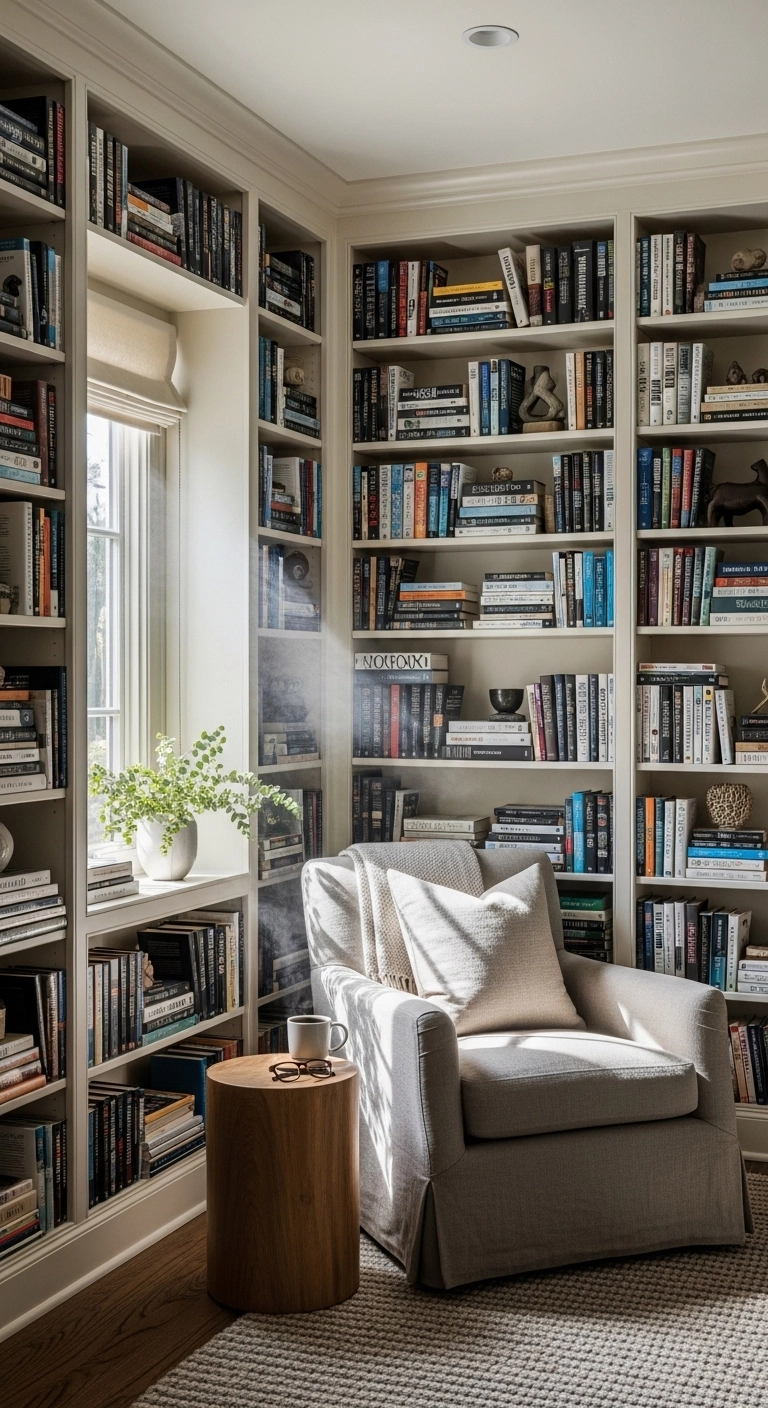
A wall of books instantly gives a room purpose. Even in a modest space, a full-height bookcase creates that traditional library feeling people usually picture first.
This works because it adds visual structure and makes storage part of the design rather than an afterthought. Books bring texture, color, and personality on their own, so the room already feels layered without the need for too much decor.
It suits spare rooms, home offices, dens, and even wide hallways with enough depth for shelving. If you have an awkward blank wall, this is one of the most practical ways to use it.
Style it with a mix of vertical and horizontal stacks, a few framed pieces, and some open breathing room so the shelves do not look packed to the point of stress. Painted wood shelves in warm white, mushroom, deep green, or walnut tones all work beautifully depending on the mood you want.
One mistake to avoid is making shelves too deep. Oversized shelves waste space and make standard books look lost. Around 10 to 12 inches deep is usually more useful for most home collections.
Add a Window Seat Reading Nook
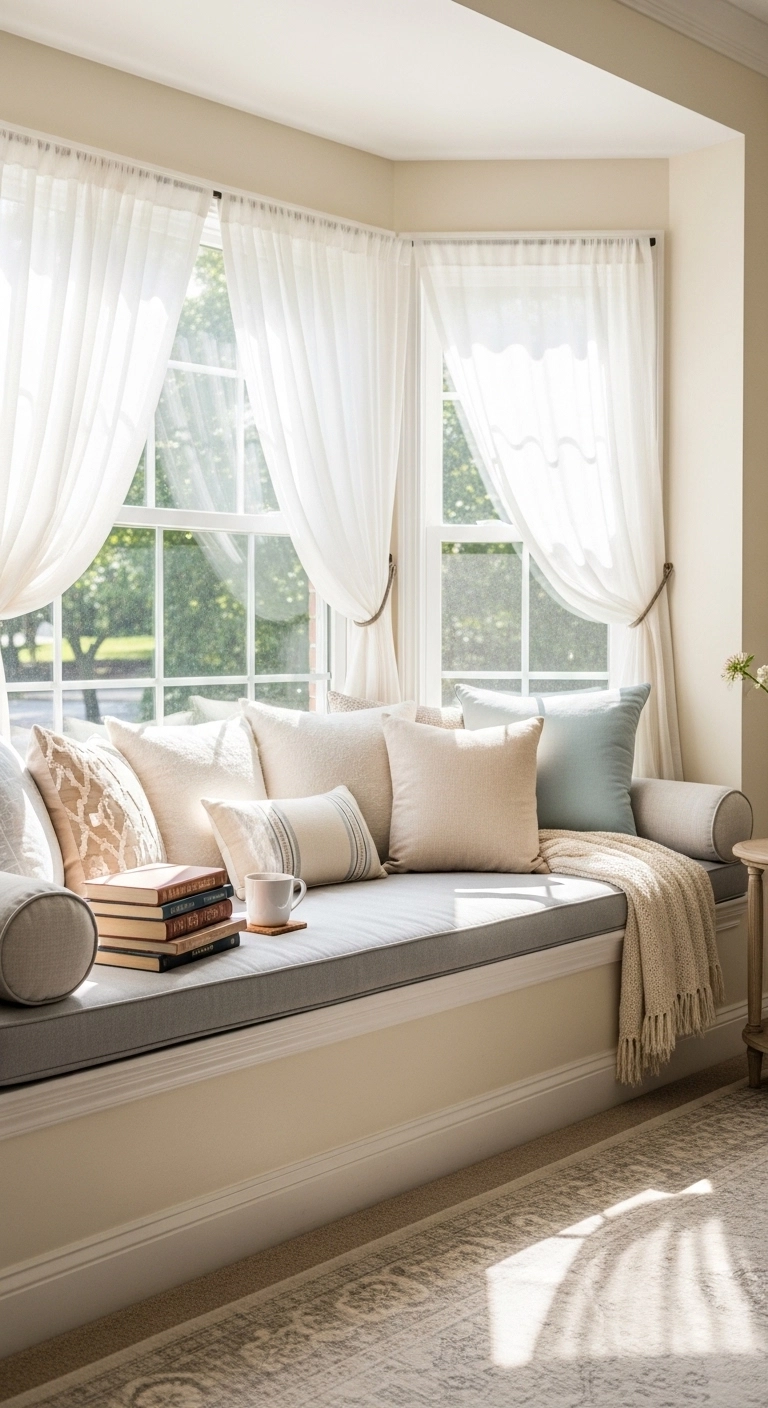
A window seat gives a room a natural focal point and turns an ordinary window into the best seat in the house. It almost feels automatically comfortable, which is honestly rude for regular chairs.
It works so well because it combines natural light, enclosure, and comfort. Even a simple bench with a thick cushion feels tucked away in a way that encourages longer reading sessions.
This idea suits bay windows, recessed windows, dormers, and bedrooms or small library rooms where floor space is limited. It is especially good for people who want a reading zone without filling the room with bulky furniture.
Use a foot cushion, two or three supporting pillows, and either a bottom drawer or surrounding baskets for extra storage. Linen, cotton, and textured knits keep it soft without feeling too formal. A small reading lamp on a nearby wall helps when daylight fades.
The main caution is comfort. A beautiful window seat that is too shallow, too hard, or poorly supported tends to become decorative furniture instead of a real reading spot.
Create a Dark Moody Library Room
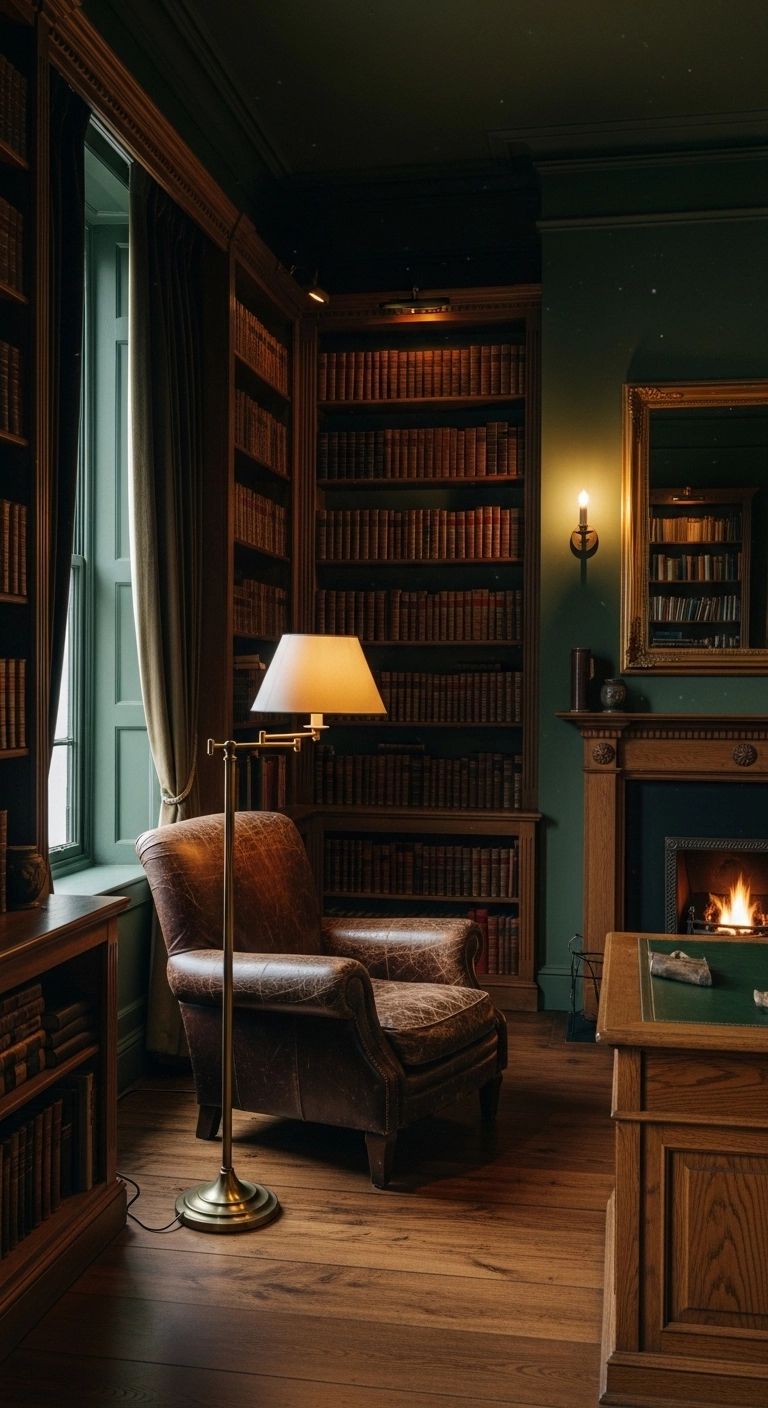
If you want a library that feels quiet, cocooning, and slightly dramatic in the best way, deep wall color is hard to beat. Think charcoal, forest green, navy, espresso, or rich brown.
Dark colors work because they visually recede, which makes shelves, artwork, and lamp light feel richer and calmer. The room tends to feel more focused and less busy, even when it holds a lot of books.
This style works best in rooms with decent natural light, library spaces used mostly in the evening, or anyone who loves a more intimate atmosphere over bright airy decor.
Pair dark walls with warm woods, brass or bronze hardware, soft cream textiles, and layered lighting. Leather, velvet, wool, and matte painted finishes all add depth without the need for pattern. If the room is small, trim and shelving like walls can make everything feel more streamlined.
The caution here is lighting. A dark room without enough lamp light can shift from cozy to cave-like very quickly. Plan for ambient, task, and accent lighting from the start.
Use Floor-to-Ceiling Curtains to Soften the Room
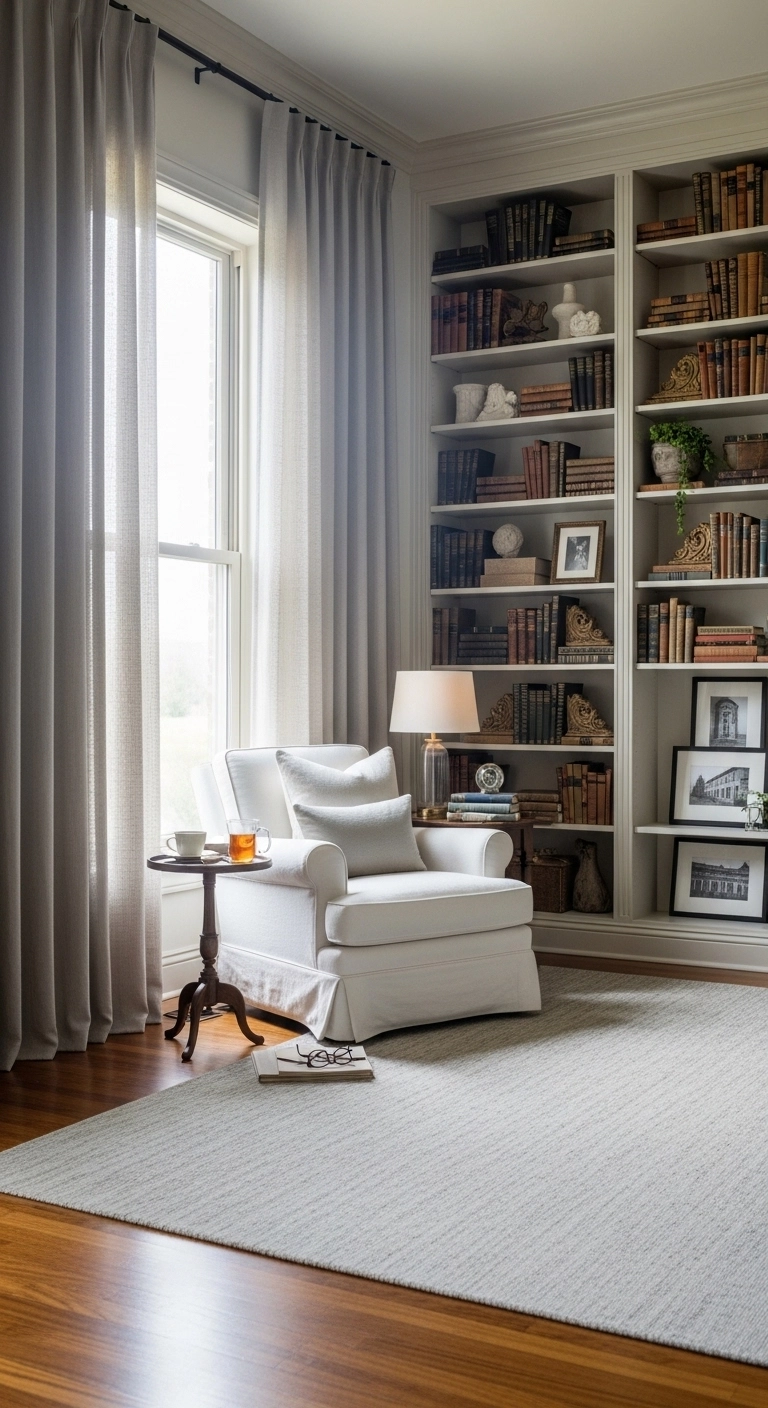
Bookshelves can make a room feel structured, but a library also needs softness. Full-length curtains help balance all those hard edges.
They work because fabric absorbs some sound, adds warmth, and makes the room feel finished. Even simple curtains can make a reading room feel more restful and less echo-prone.
This is especially useful in library rooms with wood floors, lots of shelving, large windows, or minimal upholstery. It is also helpful in multipurpose rooms where you want to separate the library zone from the rest of the space visually.
Choose curtains in linen, velvet, cotton blends, or soft-textured woven fabrics. Hang them high and wide to make windows appear taller and the room feel more spacious. Neutral colors keep things calm, while darker tones can make a room feel richer.
A common mistake is choosing curtains that are too skimpy or too short. In a room built around comfort, thin under-scaled curtains can make everything feel less grounded.
Anchor the Space With One Exceptional Reading Chair
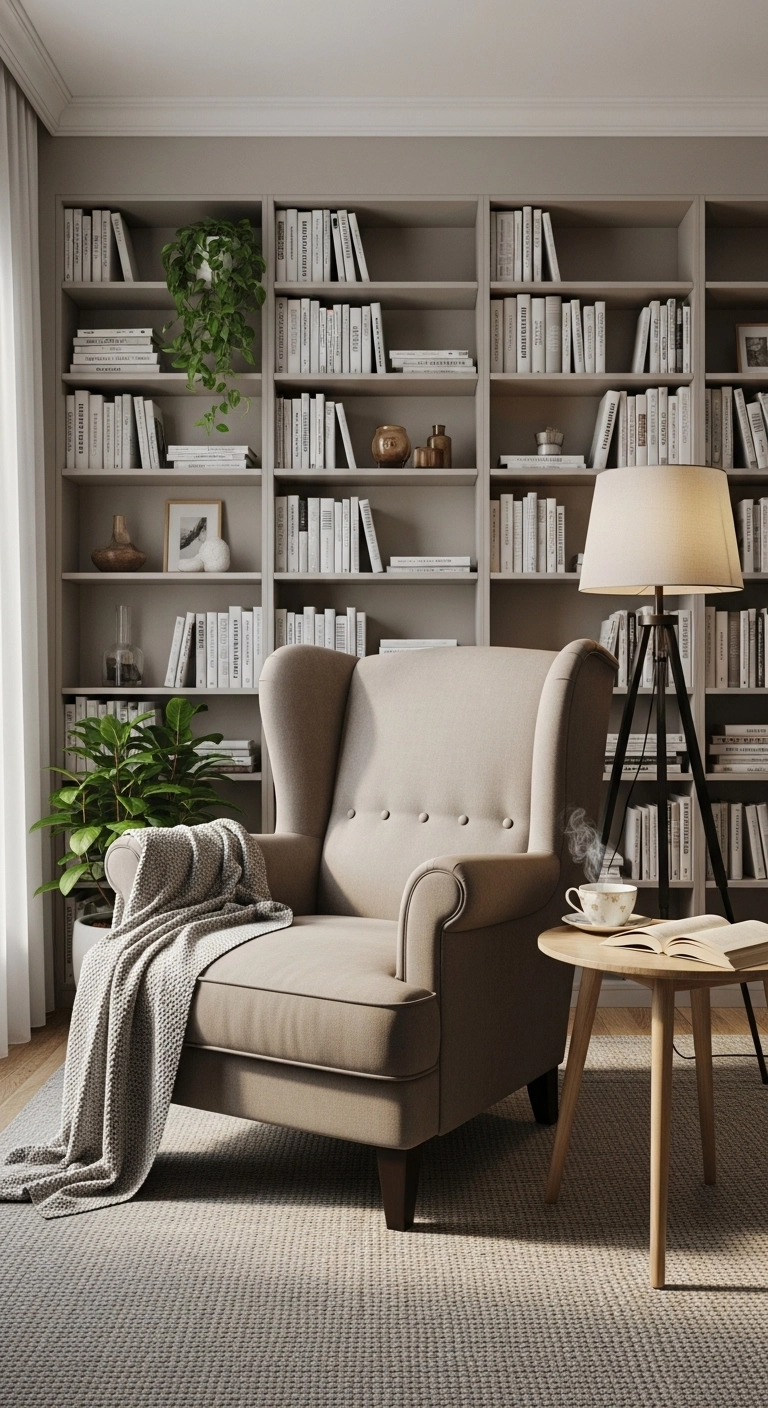
Sometimes the smartest move is not adding more furniture. It is choosing one chair that actually makes you want to sit down and stay there.
A great reading chair works because it creates a clear destination in the room. It tells the eye where the quiet part happens and gives the space a strong functional center.
This idea works in almost any room size, from a full library to a small bedroom corner. It is especially useful if you are building the room gradually and want one high-impact starting point.
Look for a chair with good lumbar support, a comfortable seat depth, and enough width to feel comfortable without swallowing up the room. Pair it with a small side table, a footstool if needed, and a nearby lamp. Upholstery in boucle, linen, leather, or velvet can all work, depending on the mood.
The mistake to avoid is picking a chair for looks alone. If the seat is too upright, too low, or awkward on the neck, it will not matter how stylish it is.
Layer Warm Lighting Instead of Relying on One Overhead Fixture
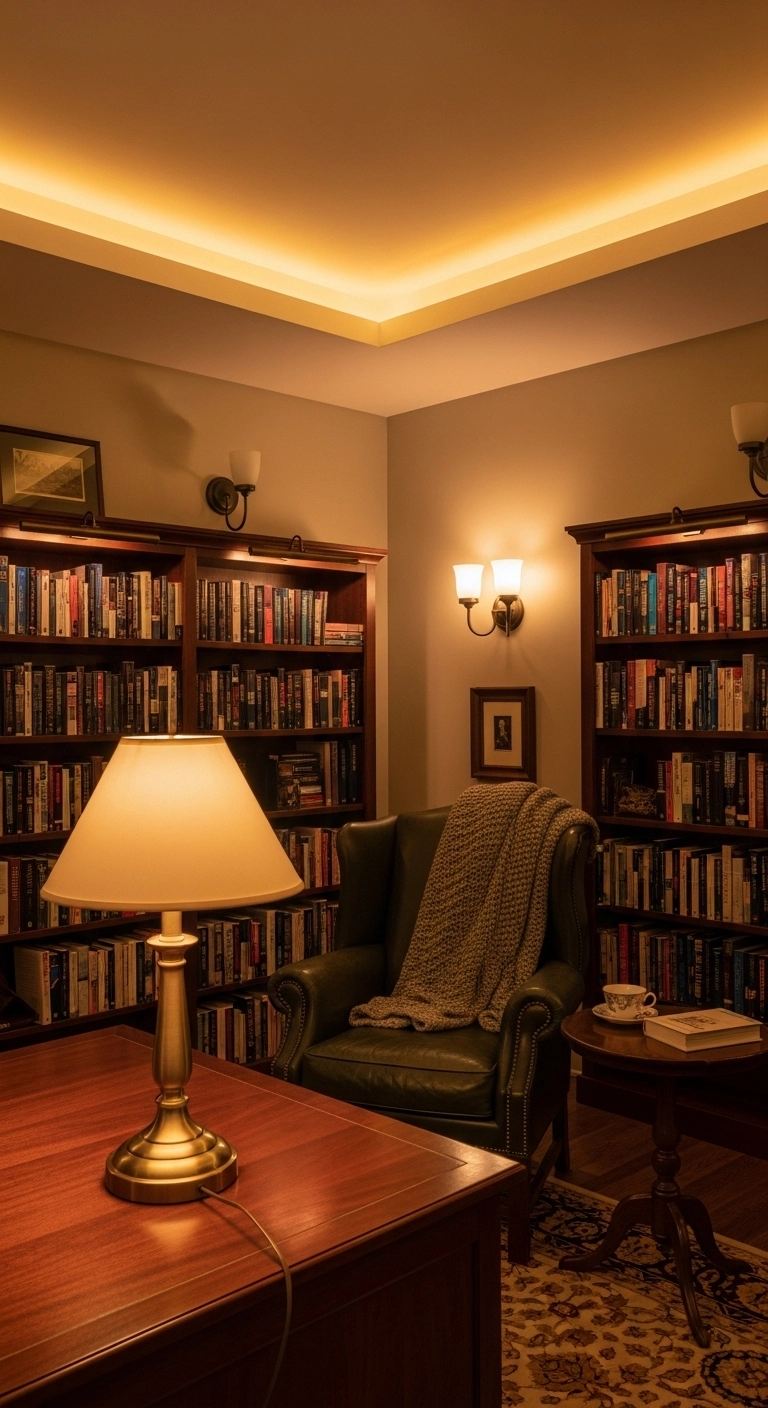
One central ceiling light rarely does a reading room any favors. A library feels better when light comes from several softer sources.
This works because layered lighting lets you control mood and function at the same time. You can make the room brighter for browsing shelves, softer for evening reading, or gently lit for quiet downtime.
It suits every kind of library room, but it matters most in spaces used after dark or in rooms with dark walls and deep corners.
A strong setup usually includes an overhead light, a dedicated reading lamp, and one or two soft accent lights like sconces, picture lights, or a table lamp on a console. Warm bulbs usually feel better than harsh cool white light in a cozy reading room.
The main caution is placing lamps without thinking about shadows. A beautiful lamp that lights your shoulder instead of your pages is not helping nearly as much as it thinks it is.
Add a Library Ladder for Height and Character
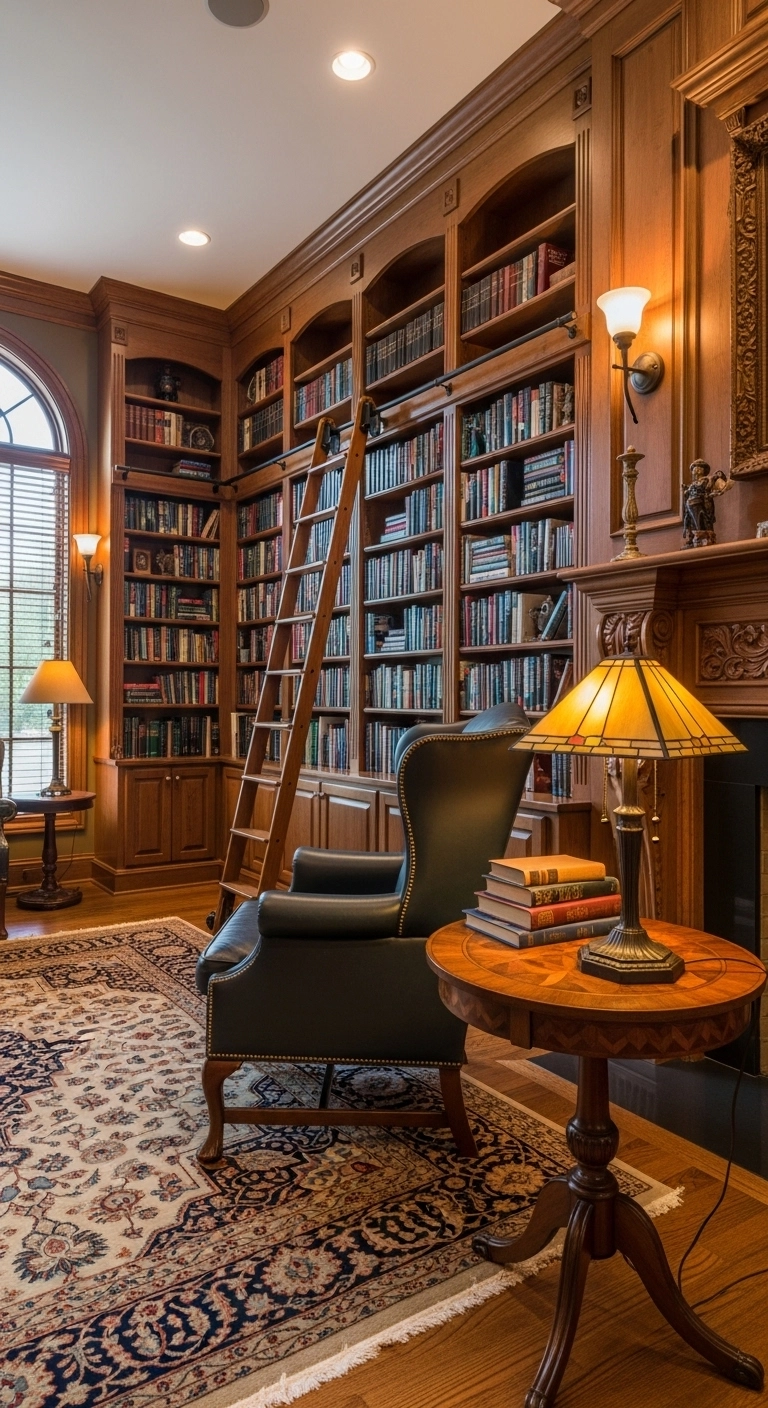
A ladder is not necessary in every reading room, but when you have tall shelving, it adds both function and charm. It also gives the room that unmistakable library detail without needing a grand space.
It works because it makes upper shelves usable and draws the eye upward, which can make the room feel taller and more complete.
This idea is best for rooms with built-ins, high ceilings, or shelving that goes well above reach. It suits traditional, transitional, and even modern library rooms if the ladder hardware is chosen carefully.
Wooden stairs feel warm and classic. Metal rail systems can read more tailored and polished. Keep frequently used books within easy reach and reserve the top shelf for books you look at less often or for decorative storage.
The caution is obvious but important: do not add a ladder just because it looks nice if the shelves are not high enough to justify it. In a smaller room, it can start to feel theatrical instead of practical.
Mix Closed Storage With Open Shelving
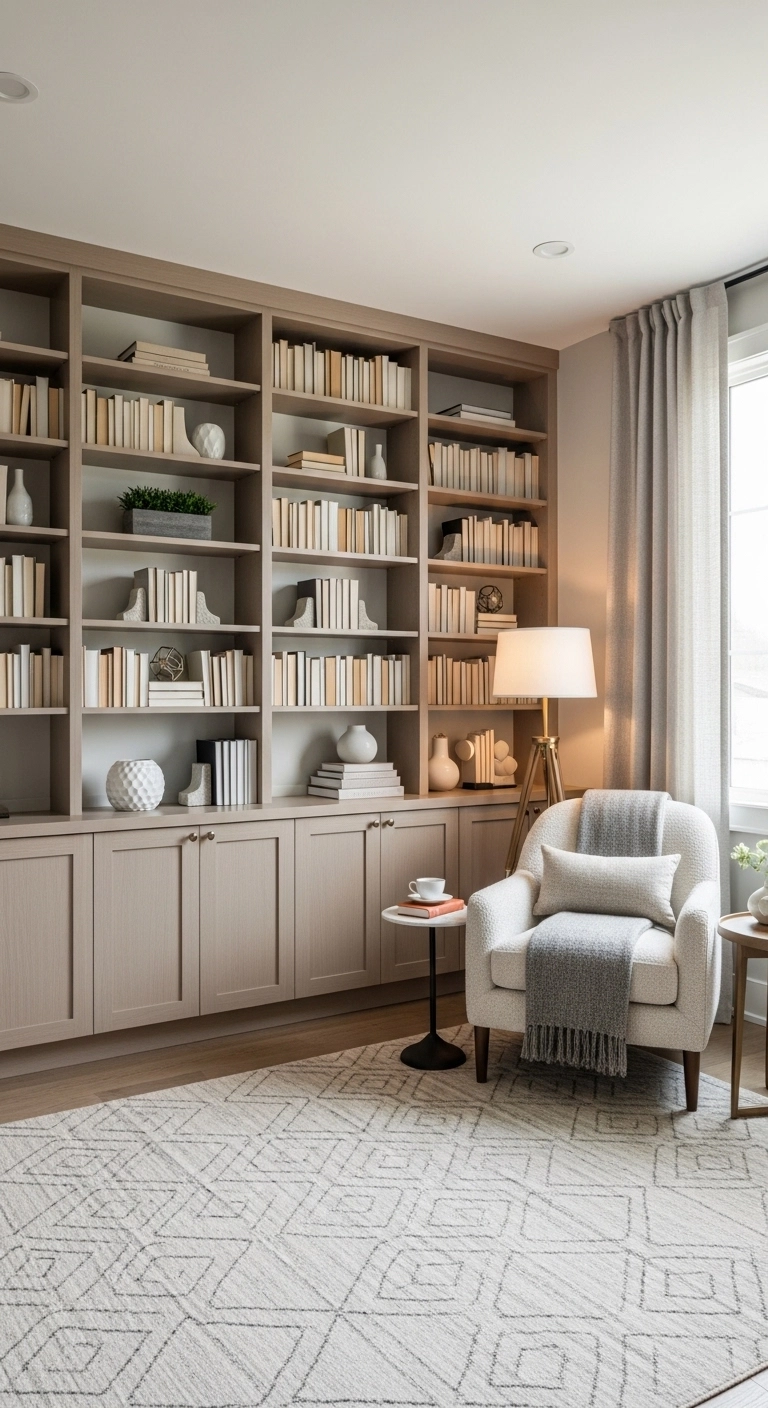
Not everything in a library needs to be on display. Closed cabinets are one of the easiest ways to keep a room feeling calm.
This works because open shelving gives personality, while closed storage hides the less photogenic but very real parts of life: cords, paperwork, extra blankets, odd-shaped games, and the random items every household seems to collect.
It is ideal for family homes, multipurpose library rooms, home offices, and anyone who wants the room to feel styled without constantly tidying it.
Try bottom cabinets with bookcases above. Cabinets painted the same color as the walls can help the room feel more cohesive. This setup also creates opportunities to display art, lamps, and a few meaningful objects without overwhelming the room.
The mistake here is going too open if you know you need hidden storage. A library that looks good only when nobody actually uses it gets annoying fast.
Use a Rug to Make the Reading Zone Feel Grounded
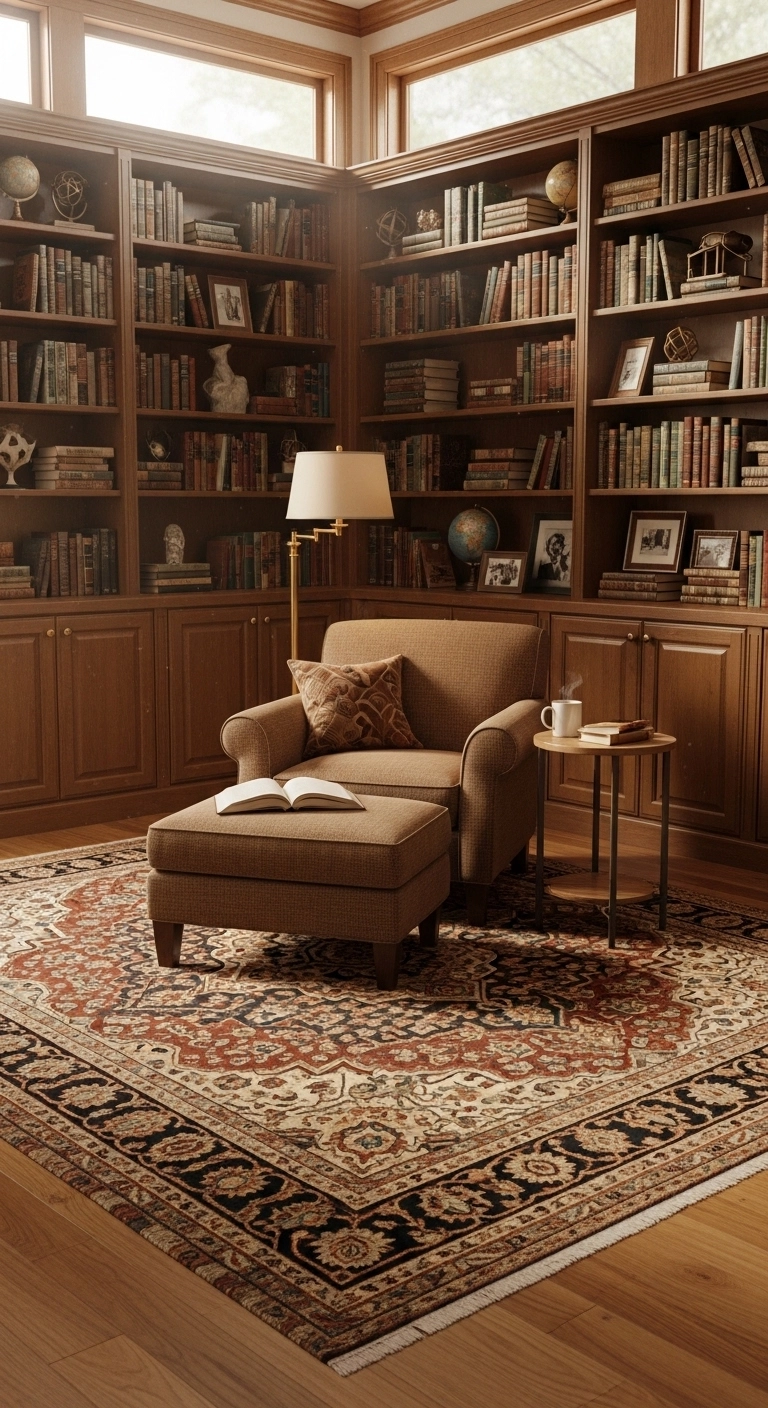
A rug can do a lot of quiet work in a reading room. It softens sound, defines the layout, and helps the space feel settled.
This works because bookshelves and wood furniture can make a room feel visually heavy. A rug adds softness underfoot and ties the seating area together so it feels intentional.
It works best in library rooms with hard flooring, open layouts, or furniture that otherwise feels a little scattered. It is especially useful when the library shares space with an office or sitting area.
Choose a rug large enough to accommodate at least the front legs of large furniture. Wool rugs, low-pile vintage-style rugs, and flat weaves are all good choices, depending on how plush or practical you want the room to be. Rich tones, muted patterns, or earthy neutrals usually go well with books.
The main caution is scale. A too-small rug tends to make the room feel less polished, not more.
Turn a Spare Bedroom Into a Soft Home Library
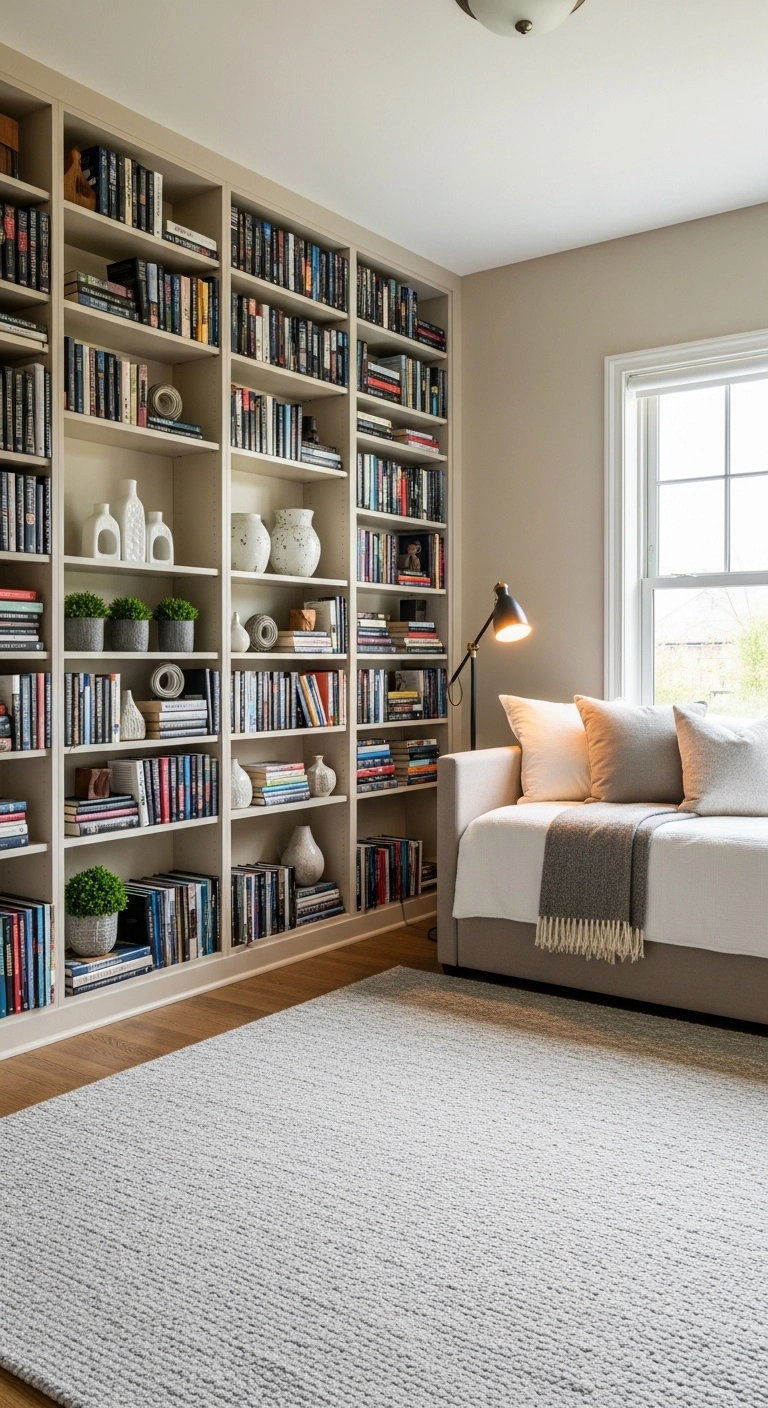
A spare room can become a far more useful home library than a rarely used guest room that mostly holds forgotten pillows and vague guilt.
This works because a separate room gives reading a dedicated place. That sense of purpose can make the space feel more restful than a library corner squeezed into a busier room.
It suits homes with an extra bedroom, box room, or underused office. It is especially good for people who want a quieter retreat away from the television, kitchen traffic, or general household noise.
Use one wall for shelving, another for seating or a small table, and leave the middle of the room open. A daybed, chaise, or compact sofa can serve as a reading nook and occasional guest room without losing the library feel. Soft paint colors, warm lighting, and simple window treatments help it stay calm.
The caution is overcrowding the room just because there is extra space. A library feels better when you leave room to breathe.
Style a Small Library Corner With Vertical Shelving
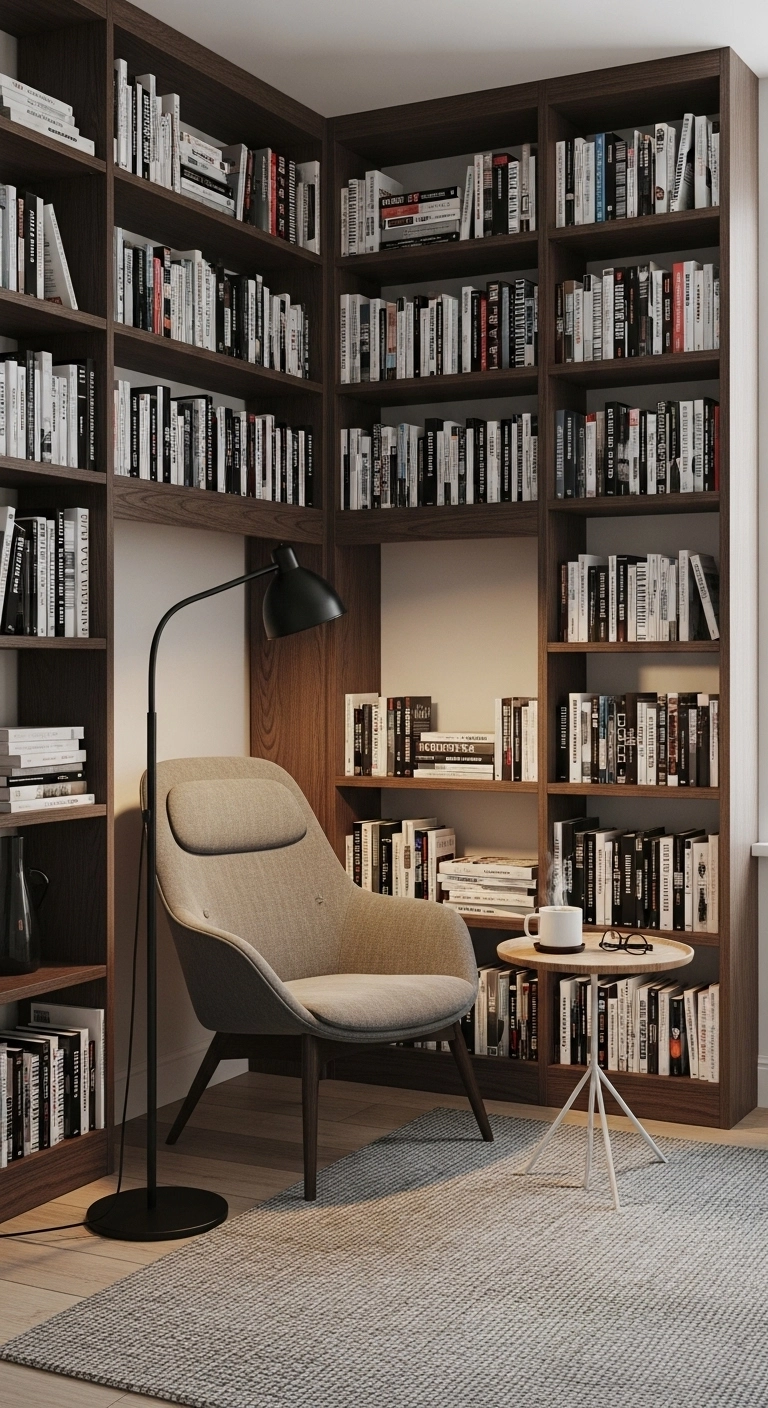
Not every home has room for a full library, but a small corner can still feel complete if it is planned well. Vertical shelving is the key.
It works because it uses wall height instead of floor area. That gives you meaningful storage while keeping the footprint compact.
This is best for apartments, bedrooms, hallway ends, living room corners, or any home where square footage is tight but you still want a dedicated reading spot.
Use a tall narrow bookcase, floating shelf, or corner shelving unit paired with a compact armchair or even a slim bench. Add a sconce or floor lamp to make the corner feel intentional rather than enhanced. A small round table is often easier to fit than a square one.
The main caution is clutter. In a small zone, too many decorative extras can make the whole corner feel busy instead of peaceful.
Bring in Warm Wood for Instant Comfort
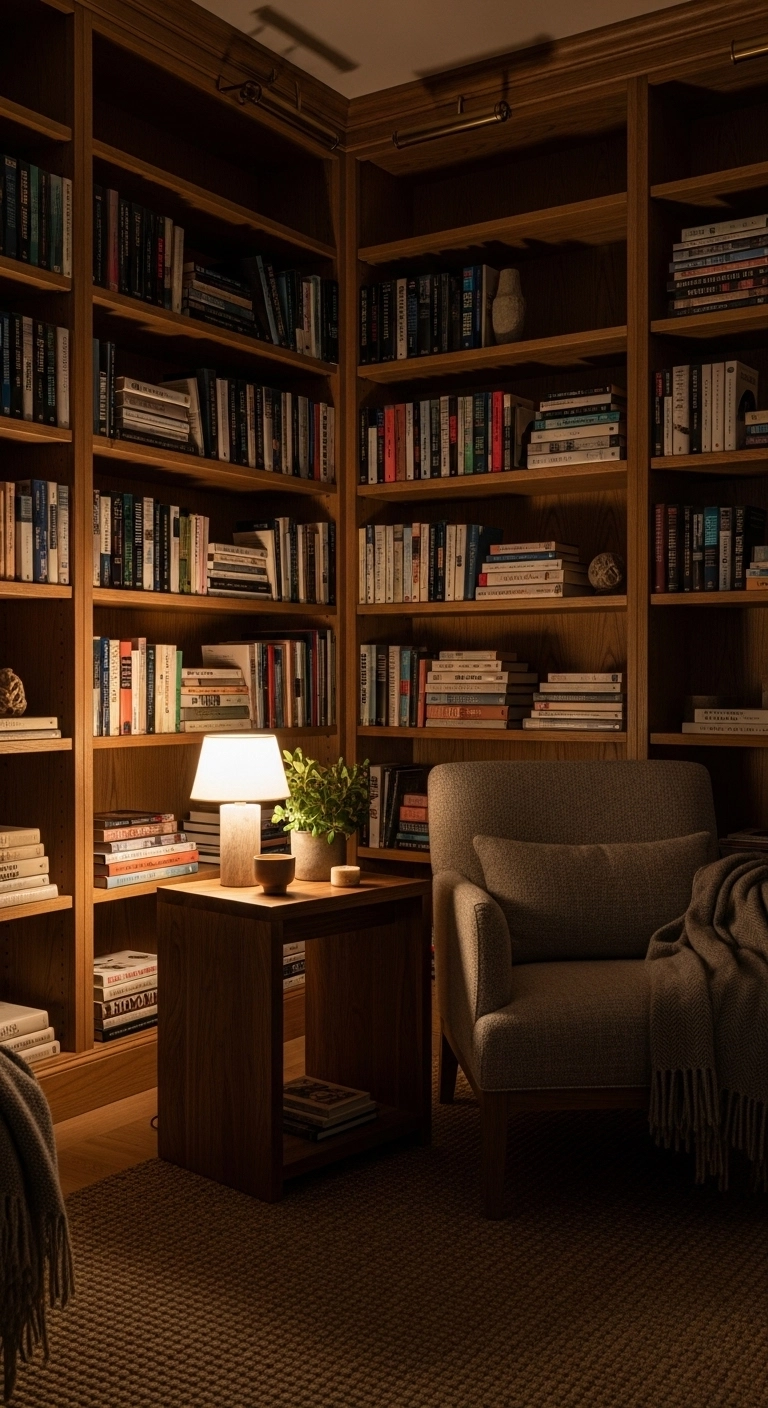
Wood makes library rooms feel grounded in a way many other materials do not. Even a few wooden elements can shift a room from plain to inviting.
It works because wood adds grain, warmth, and natural variation. That matters in book-heavy spaces, where the room can otherwise feel flat if everything is painted or upholstered in similar finishes.
This suits almost every style, from modern to traditional. It is especially helpful in newer homes that need a bit more character and visual warmth.
Try walnut shelving, oak flooring, a wooden reading table, picture frames or a vintage desk. If you prefer painted shelves, bring in the wood through smaller pieces like stools, side tables or ladders. Mixing tones is usually fine as long as they feel intentionally warm rather than too orange or too brown.
The caution is not to overmatch everything. A room full of identical wood tones can look stiff. A little variation gives the space more depth.
Use Built-In Benches or Banquette Seating for Family-Friendly Reading
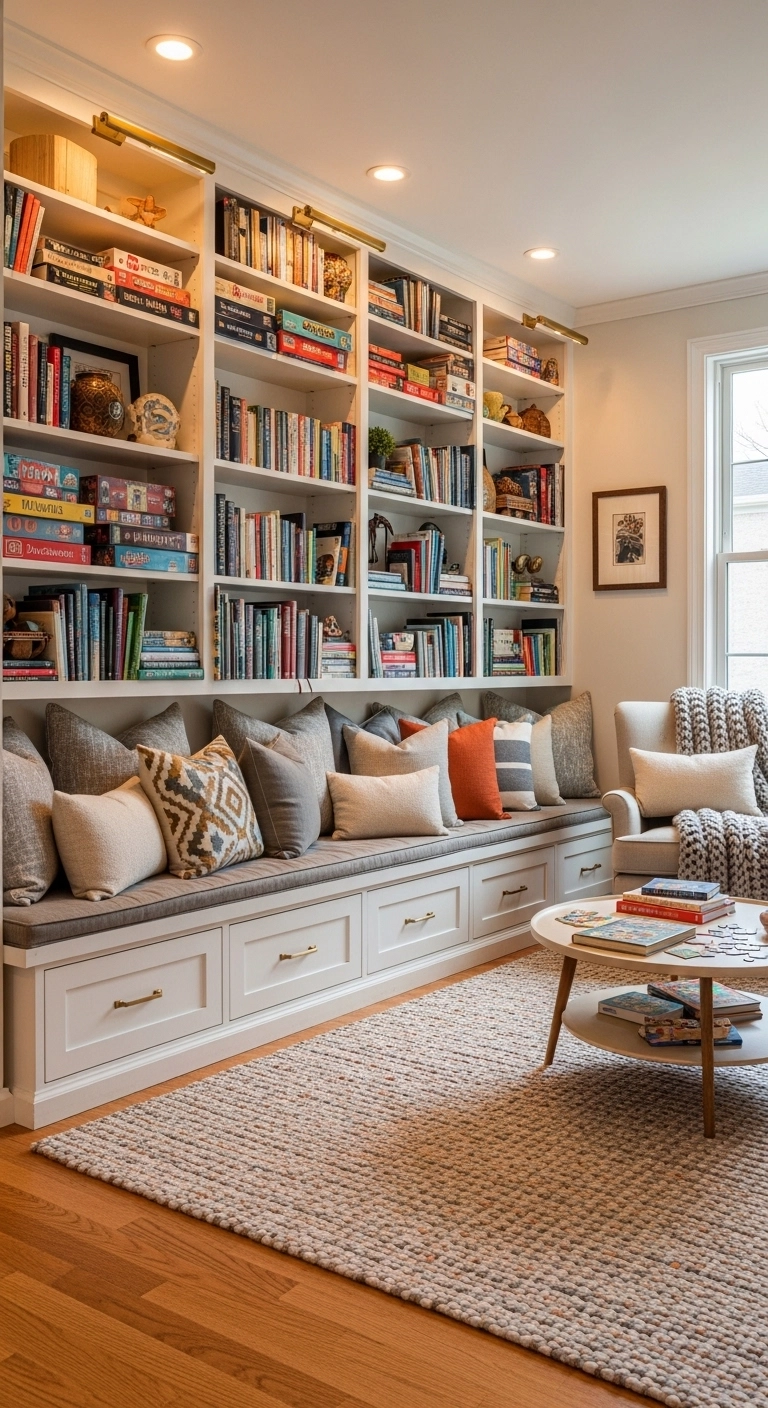
If the library is a shared room, built-in bench seating can make it far more flexible. It creates room for more than one person without filling the space with extra chairs.
This works because benches hug the wall, free up floor space, and can double as storage if designed with drawers underneath. They also make the room feel more architectural and custom.
It works best in family rooms, larger libraries, basement reading spaces, or homes where children use the room too. It is also practical in rooms with odd layouts where standard furniture never quite fits.
Add a tailored cushion, a few washable pillows, and a nearby table or ledge for drinks and books. This kind of seating looks especially nice under windows, between bookcases, or along one long wall.
The main caution is cushion thickness and support. Built-in seating can look amazing and still feel tiring after twenty minutes if the proportions are off.
Display Books by Mood, Color, or Theme in Small Doses
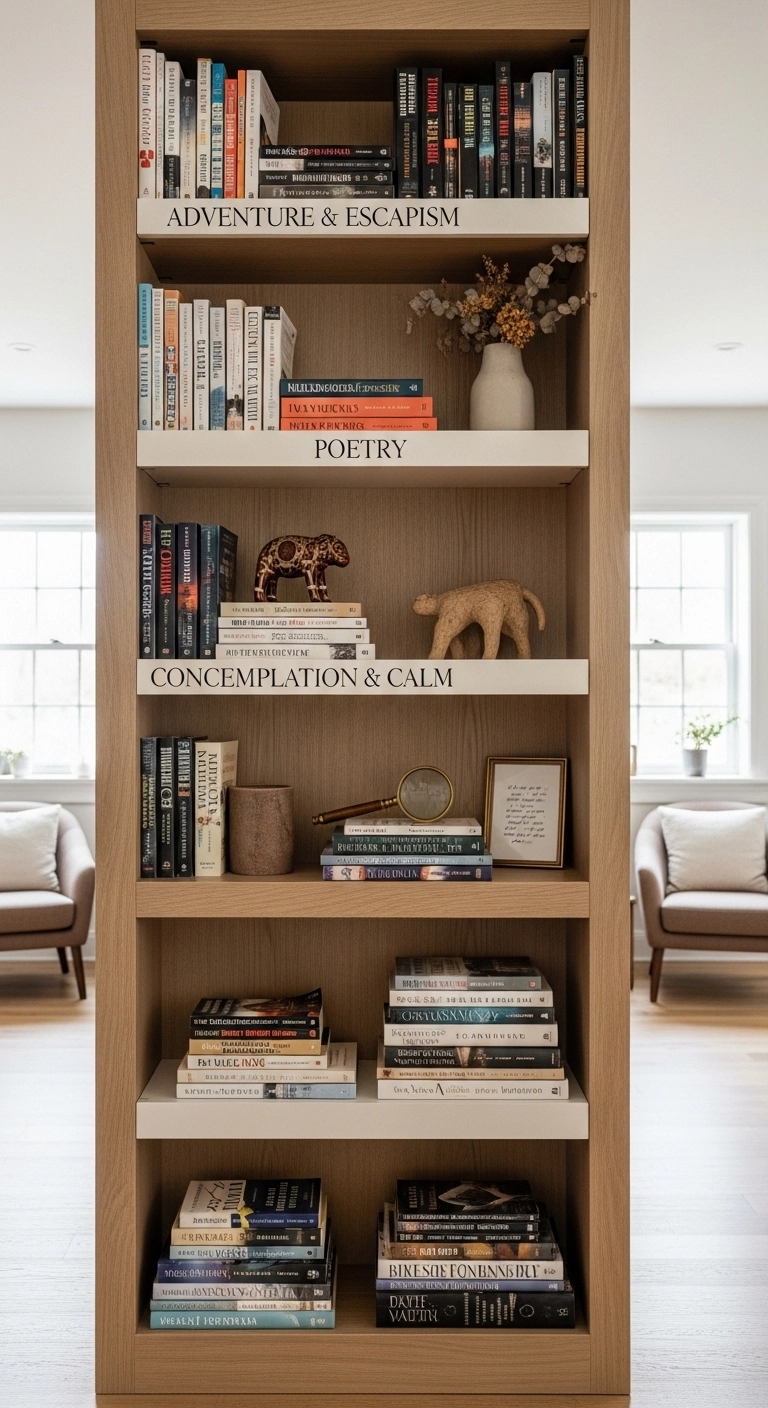
Organizing books can shape the room just as much as the furniture does. You do not need a strict decorative system, but thoughtful grouping can make shelves easier to use and nicer to look at.
This works because the eye reads groups more calmly than total visual randomness. It also helps you find what you want without turning every shelf into a scavenger hunt.
This idea suits anyone with open shelving, especially people whose collection is large enough to look messy quickly. It works well in both formal libraries and relaxed reading rooms.
You can group by genre, subject, author, color, or even reading mood depending on how you actually use your collection. The key is to stay consistent enough that the shelves feel intentional. Mixing upright rows with a few stacked books and a small decorative object or two usually looks better than trying to style every shelf like a showroom.
The caution is overdoing color coordination at the expense of usability. Beautiful shelves are nice, but not if nobody can find the mystery novels anymore.
Add a Small Desk for Notes, Journaling, or Quiet Work
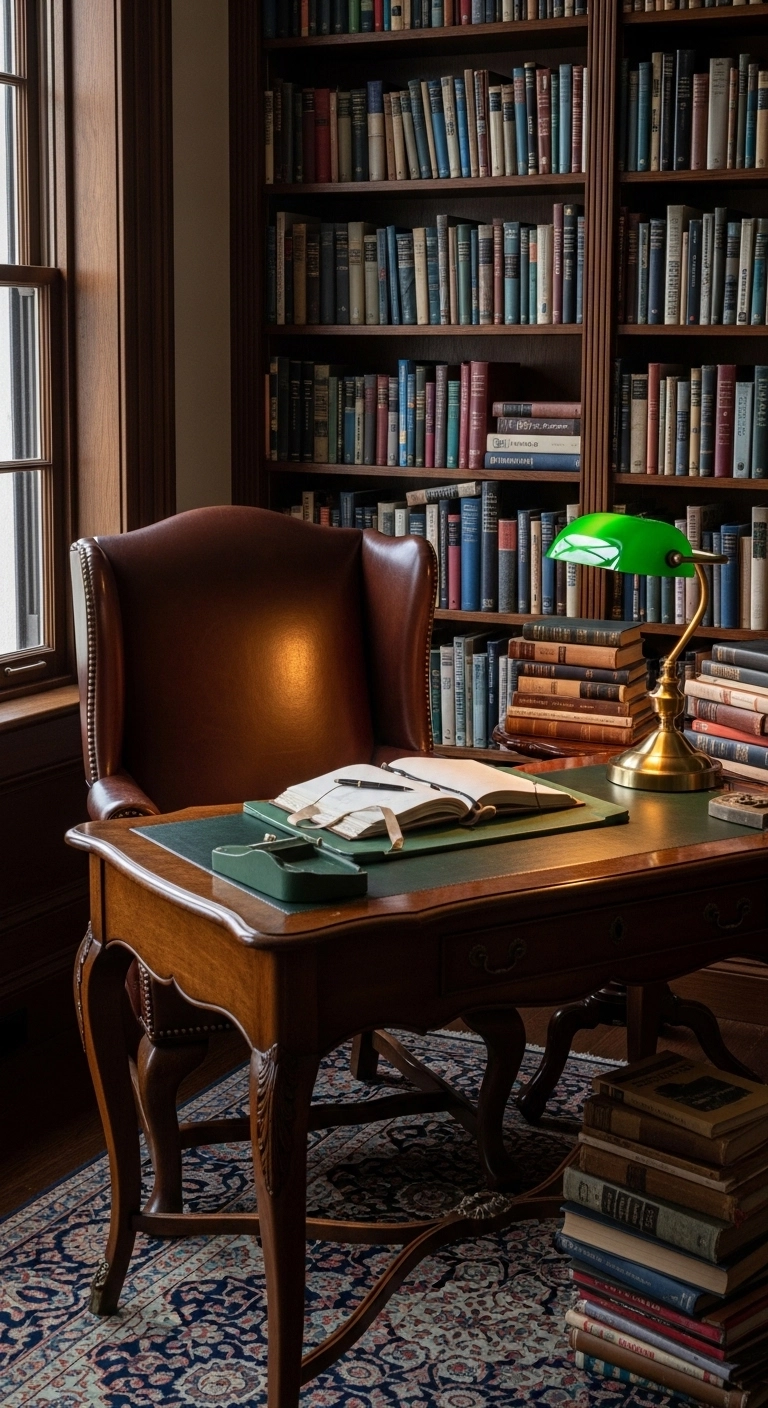
A library room often becomes more useful when it supports more than just reading. A small desk can turn it into a place for writing, studying, or simply collecting your thoughts after a chapter that ruined your emotional stability.
This works because reading and writing naturally belong together. A desk adds function without changing the mood of the room if it is kept simple.
It suits home libraries that double as offices, study rooms, or creative spaces. It is especially helpful for readers who annotate books, keep journals, or want a calm place for paperwork.
Choose a desk that feels visually light if the room is small. A writing desk, slim console-style desk, or vintage table often works better than a bulky office setup. Pair it with a comfortable chair and keep accessories limited to a lamp, tray, and a few essentials.
The caution is letting the desk take over the room. Once office clutter creeps in, the library mood can disappear quickly.
Soften the Room With Textiles and Quiet Layers
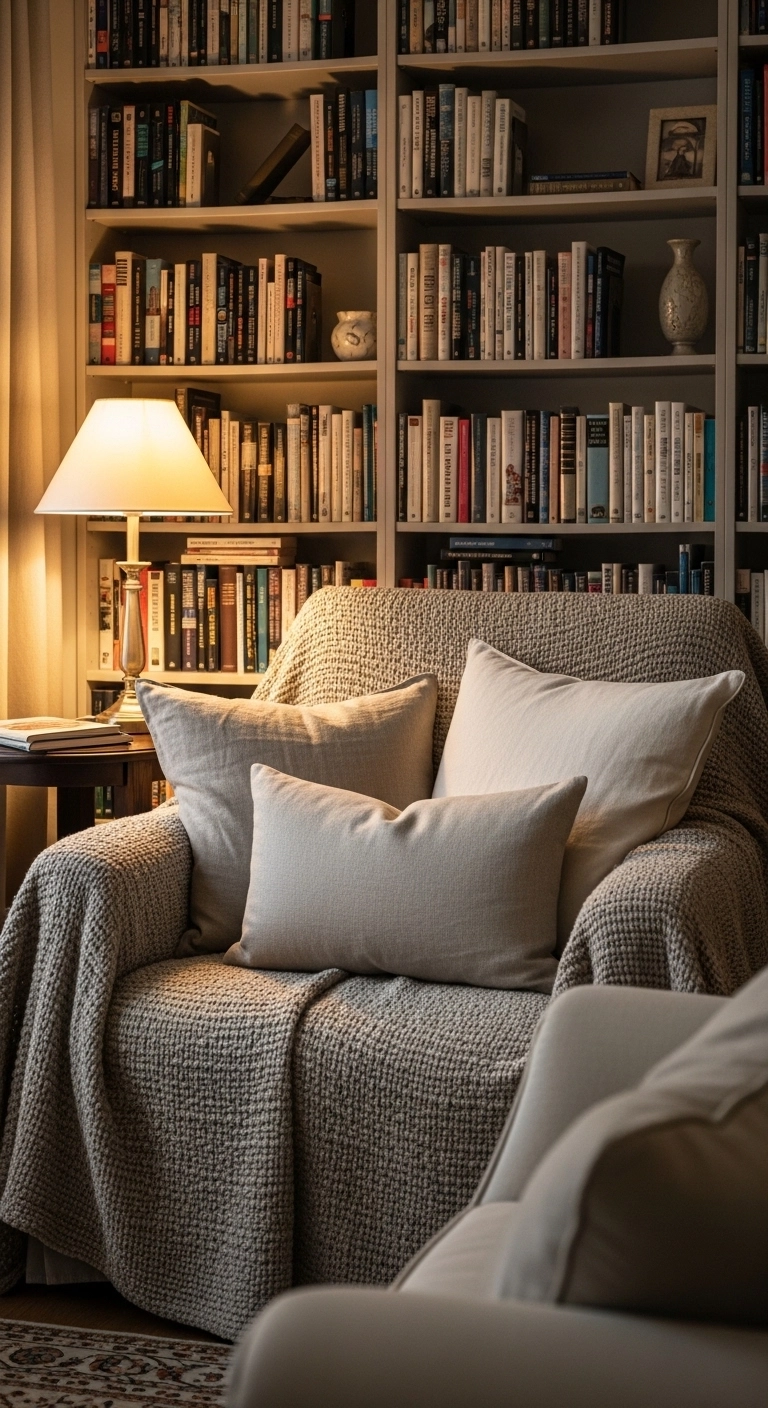
A cozy library needs more than books and shelving. Textiles are often what make the room feel comfortable enough to actually use often.
This works because soft layers reduce the formality that library rooms can sometimes slip into. Throws, cushions, upholstered seating, and even fabric lamp shades make the room feel gentler and more welcoming.
It works best in any space that feels a little hard, echoey, or visually cold. If your library has a lot of wood, painted shelves, and straight lines, this idea matters even more.
Use a folded throw over a chair, a cushion on a bench, and fabric choices with subtle texture rather than loud pattern if you want the room to stay restful. Wool, linen, cotton, boucle, and velvet all add comfort in different ways. Mixing a few textures usually looks better than making everything the same.
The mistake is adding softness without restraint. Too many pillows, too many throws, or too many competing fabrics can make the room feel cluttered instead of cozy.
Keep the Decor Personal but Edited
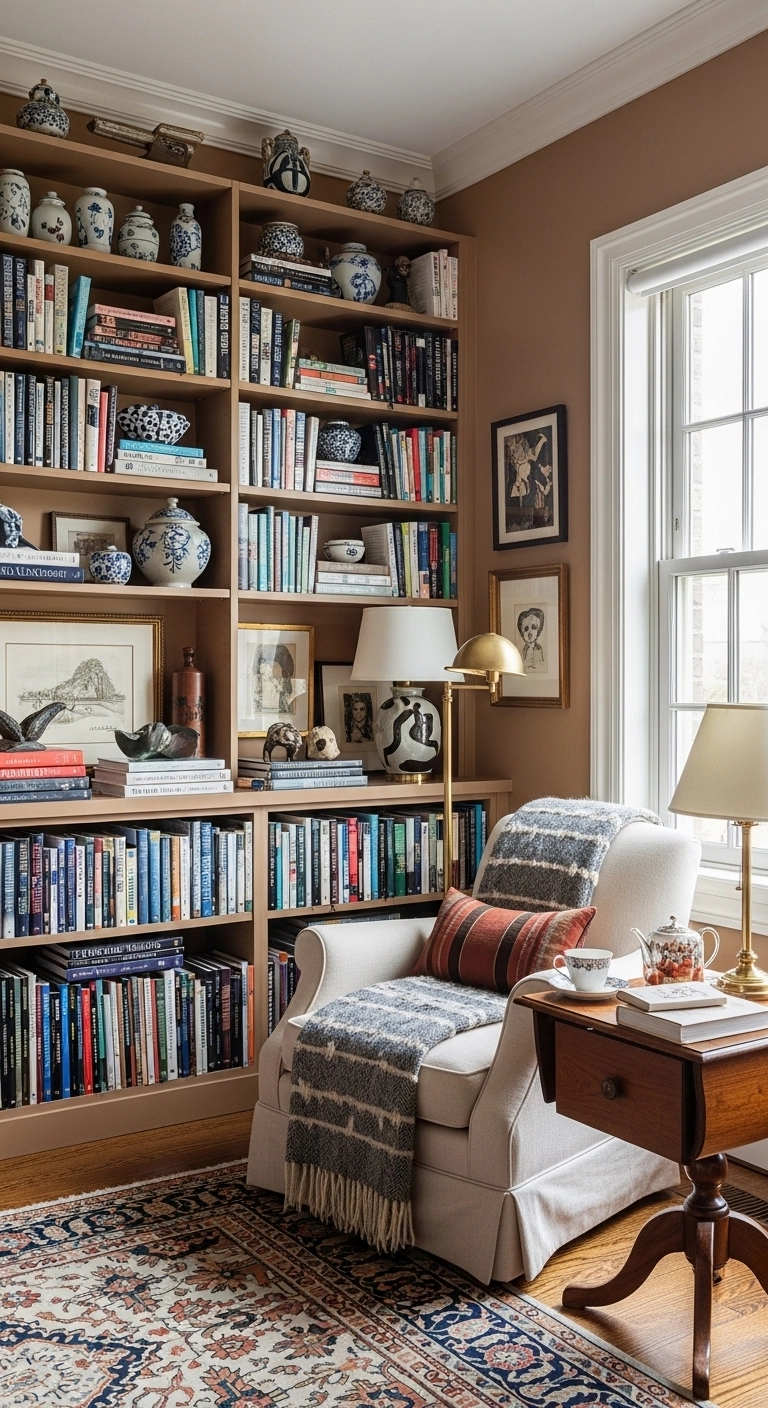
The best library room ideas usually have some personality beyond books alone. A reading room should feel like it belongs to someone, not like it was assembled from a generic mood board.
This works because personal objects give warmth and meaning. Art, framed photos, ceramics, heirlooms, bookends, and collected pieces can make the room feel settled and individual.
This suits every library style, whether the room is traditional, modern, rustic, or somewhere in between. It is especially important if the room risks feeling too formal or too catalog-like.
The key is to edit. Choose a few key pieces and spread them out so the room still feels calm. A framed print leaning on a shelf, a bowl on a side table, or an antique on a stack of books can be enough. Let the books be the centerpiece.
The caution is turning every shelf into a display zone. When too many objects compete with the books, the room loses the quiet rhythm that makes it feel restful.
Final Thoughts on Creating Cozy Library Room Ideas That Last
The most useful library room ideas are the ones that match the way you actually live. A stylish reading spot should not just look cozy in a photo. It should feel easy to use on an ordinary evening when you want better light, a comfortable seat, and a little less noise from the rest of the house.
Whether you have room for a full home library or just a thoughtful reading nook, focus on the basics first: comfort, lighting, storage, and a calm layout. Once they’re in place, the style comes together much more naturally, and the room starts to feel like somewhere you’ll keep coming back to.