
14 Stylish Living Room Curtain Ideas For A Softer Space
If a living room feels a little hard, a little flat, or just not quite finished, curtains often fix more than people expect. They soften edges, filter harsh daylight, add privacy at night, and make a room feel more settled. Right now, the strongest living room curtain ideas are moving away from flat, bare window treatments and toward fuller drapery, layered textures, warmer hardware, and more thoughtful light control.
Before you choose a style, get the basics right. Curtains usually look better when the rod is mounted 4 to 6 inches above the window frame, extends past the window so the glass is not blocked when panels are open, and uses enough fabric for real fullness rather than thin, stretched panels. A good rule is panels that total about 2 to 2.5 times the width of the window. That one step alone makes almost any curtain idea look better.
Warm White Linen-Blend Curtains for an Easy, Soft Look
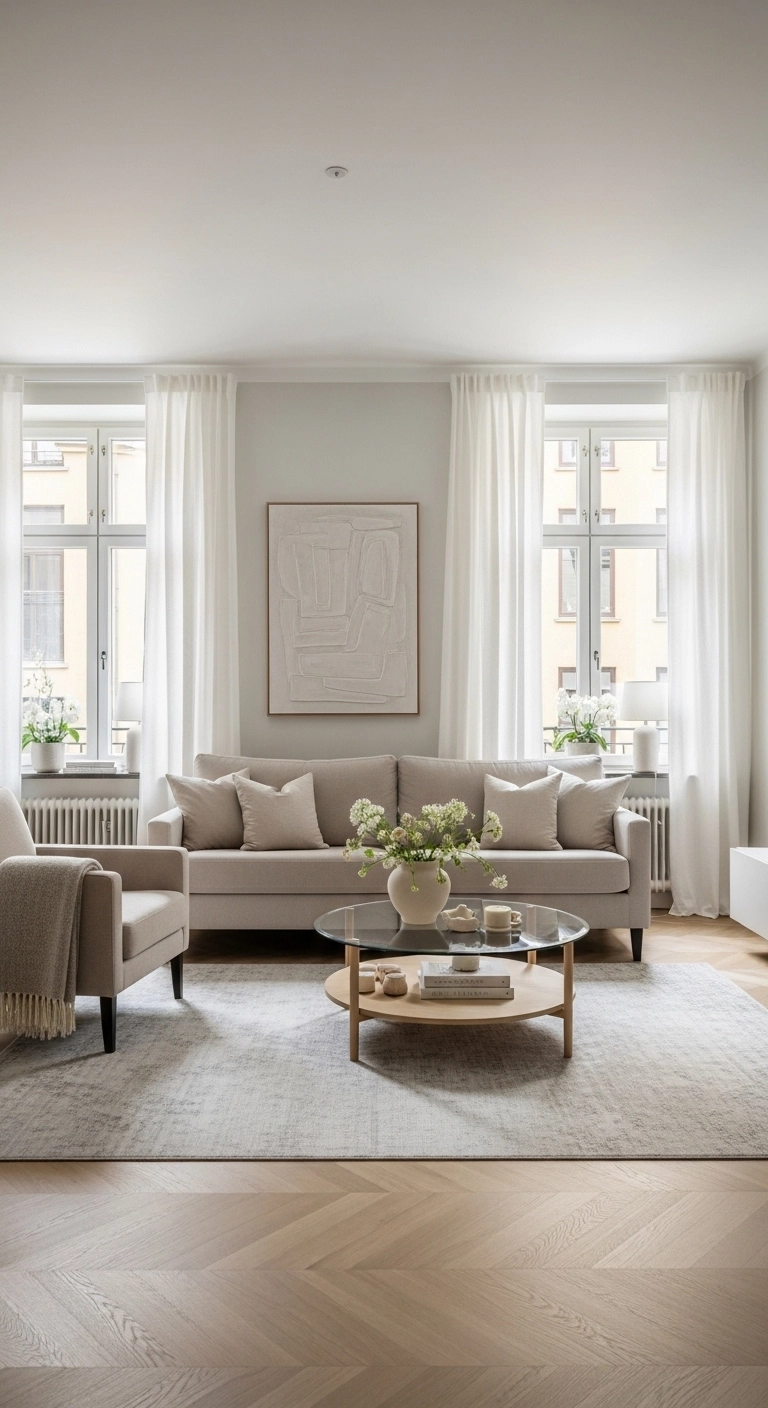
If you want the safest good-looking option, start here. Warm white or soft ivory linen-blend curtains make a living room feel lighter without looking stark. They work especially well in homes with wood furniture, natural rugs, plaster walls, light oak floors, or any room that already leans calm and neutral.
The reason this look works is simple: linen and cotton-linen blends have enough texture to feel warm, but they still keep the room from getting visually heavy. They also handle daylight well. Instead of blocking the room off, they soften it. In daily use, that matters more than people think. Morning light feels gentler, afternoon glare is reduced, and the room still looks open. Light, airy curtain fabrics also pair well with blinds when you want flexibility without a cluttered look.
The mistake to avoid is choosing a bright, cold white in a room full of warm finishes. If your sofa, floor, or wood tones have warmth, go with cream, oatmeal, flax, or a soft off-white instead.
Full-Length Pinch-Pleat Curtains for a More Finished Room
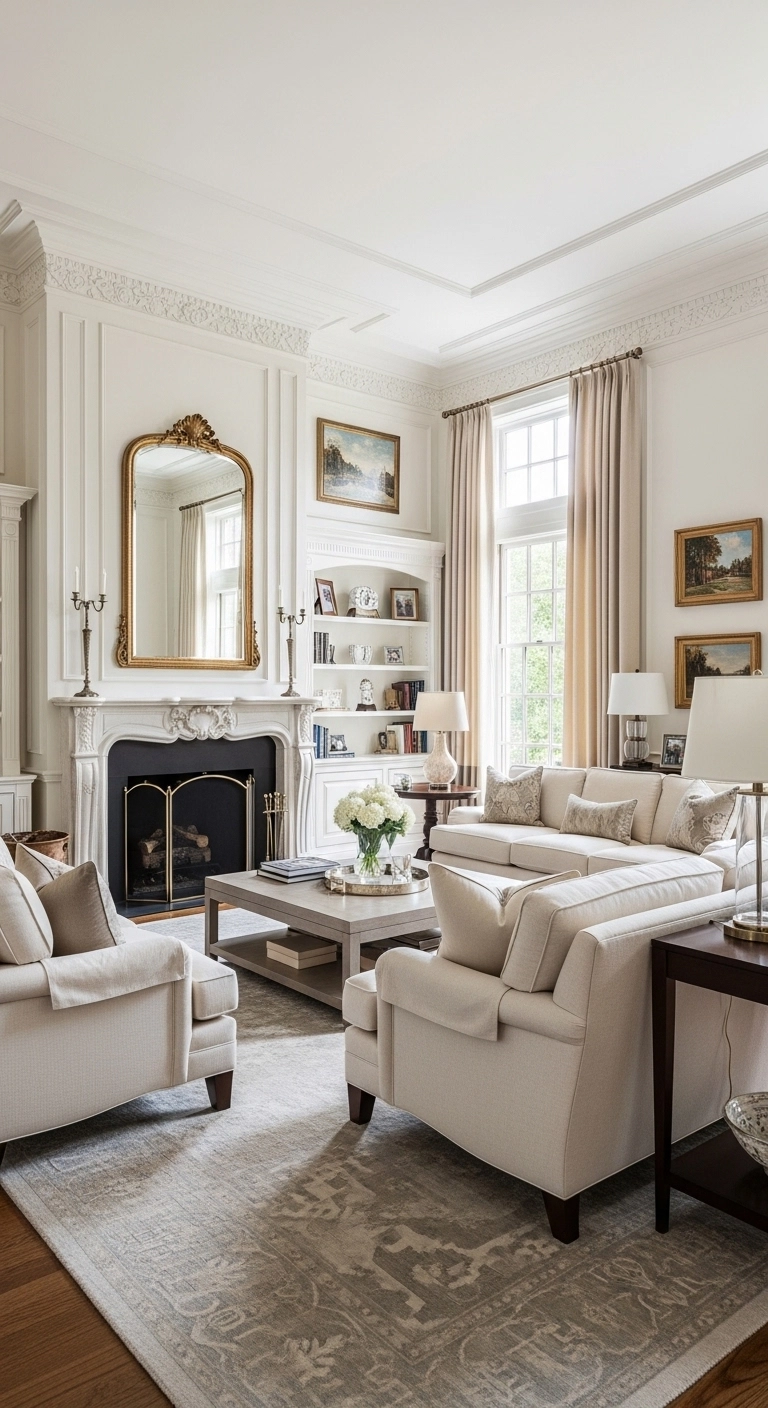
When a living room needs polish, pinch-pleat curtains are hard to beat. They make even simple fabric look more tailored because the pleat gives the panel shape and helps it fall in cleaner folds. That is why designers keep coming back to them. They look custom without shouting for attention.
This is a strong choice for formal living rooms, rooms with tall ceilings, fireplaces, wall molding, or larger windows that need a bit of presence. If your room already has clean furniture and quiet colors, pinch pleats add structure without making the space feel stiff.
For everyday living, they also hold up well visually. Flat curtains can start looking tired fast if the fabric is too light or the panels are too narrow. Pleated curtains keep their line better. Have them just kiss the floor or hover slightly above it unless you truly want a more dramatic, decorative puddle. Too-short curtains are one of the fastest ways to make the room feel smaller.
Layered Sheers and Drapes for Light Control That Actually Works
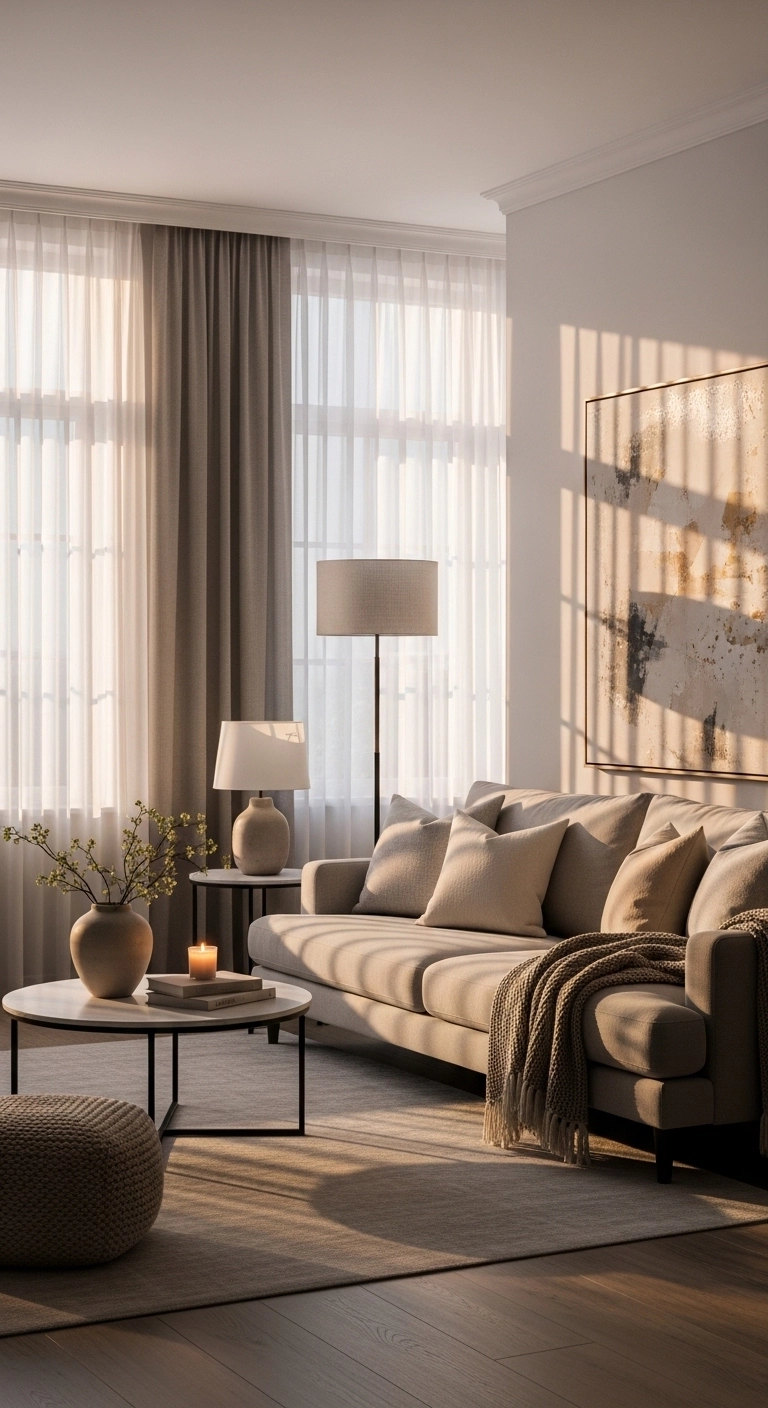
A lot of pretty curtain setups fail in real life because they do not solve the daily annoyances: glare on the TV, too much exposure at night, or a room that feels either too dark or too bright. Layering solves that.
A sheer inner layer with a fuller outer drape gives you the most control. During the day, the sheer softens sunlight and preserves a lighter feel. In the evening, the outer curtain adds privacy and weight. This is one of the clearest current trends because it gives both softness and function, which is exactly what most living rooms need.
Keep the combination simple. If the outer drape has texture, let the sheer stay plain. If the room already has a patterned rug and upholstered furniture, avoid adding another loud curtain pattern in both layers. Too many competing surfaces make a window wall feel busy instead of soft.
Ripple-Fold Curtains for a Cleaner, Modern Living Room
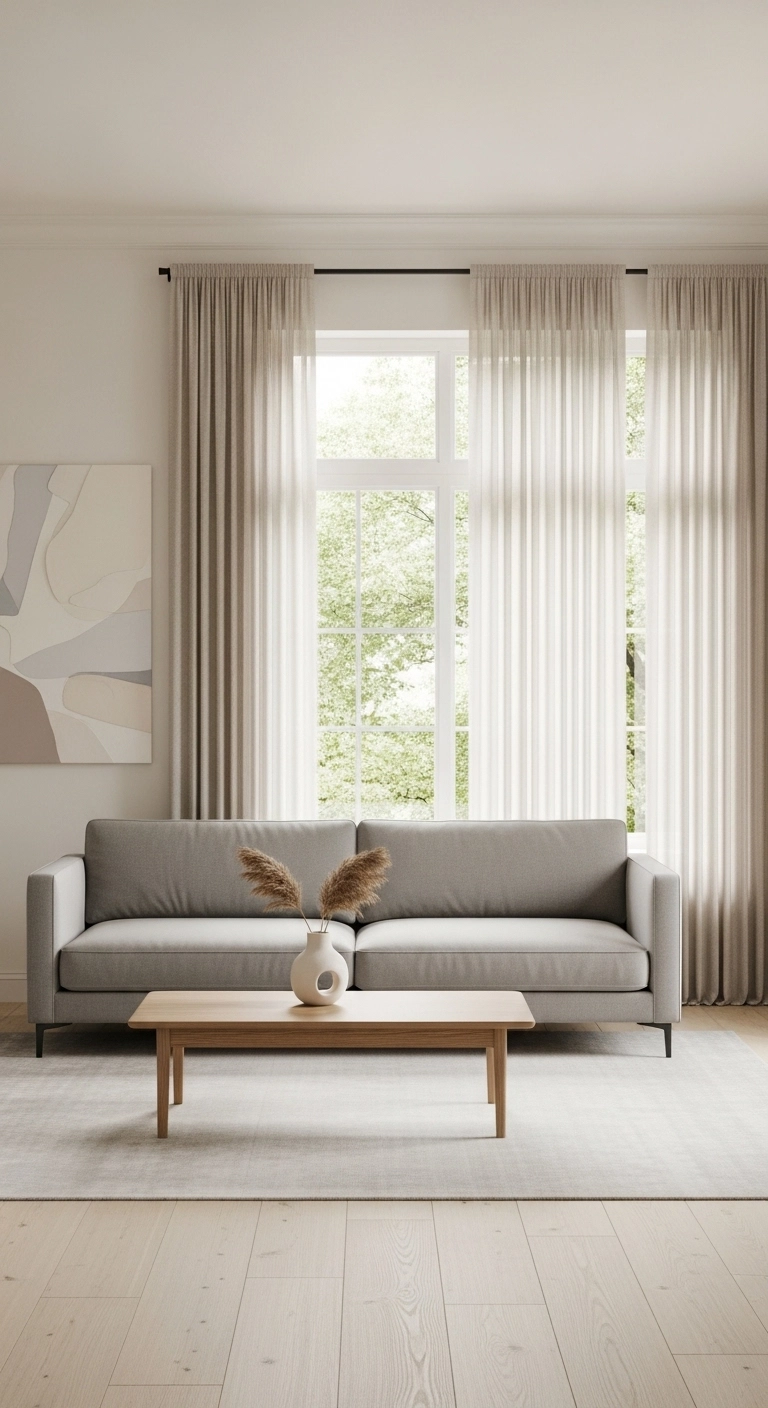
If your style leans modern, ripple-fold curtains are one of the best ways to soften the room without losing a clean line. They have a smooth, even wave that feels architectural but not harsh. The folds are consistent, so the window looks orderly whether the curtains are open or closed.
This works especially well in open-plan homes, apartments with large glass areas, or living rooms with low-profile furniture. A ripple-fold curtain in a matte fabric can soften a sharp, boxy room without adding fuss. It is a good answer for people who do not want ruffles, tiebacks, tassels, or anything traditional, but still want fabric at the windows.
Choose a fabric with enough body to hold the wave. Too limp, and the curtain looks tired. Too stiff, and it feels rigid. A soft linen blend, wool blend, or textured polyester-linen mix usually lands in the right spot.
Tone-on-Tone Curtains That Blend With the Wall
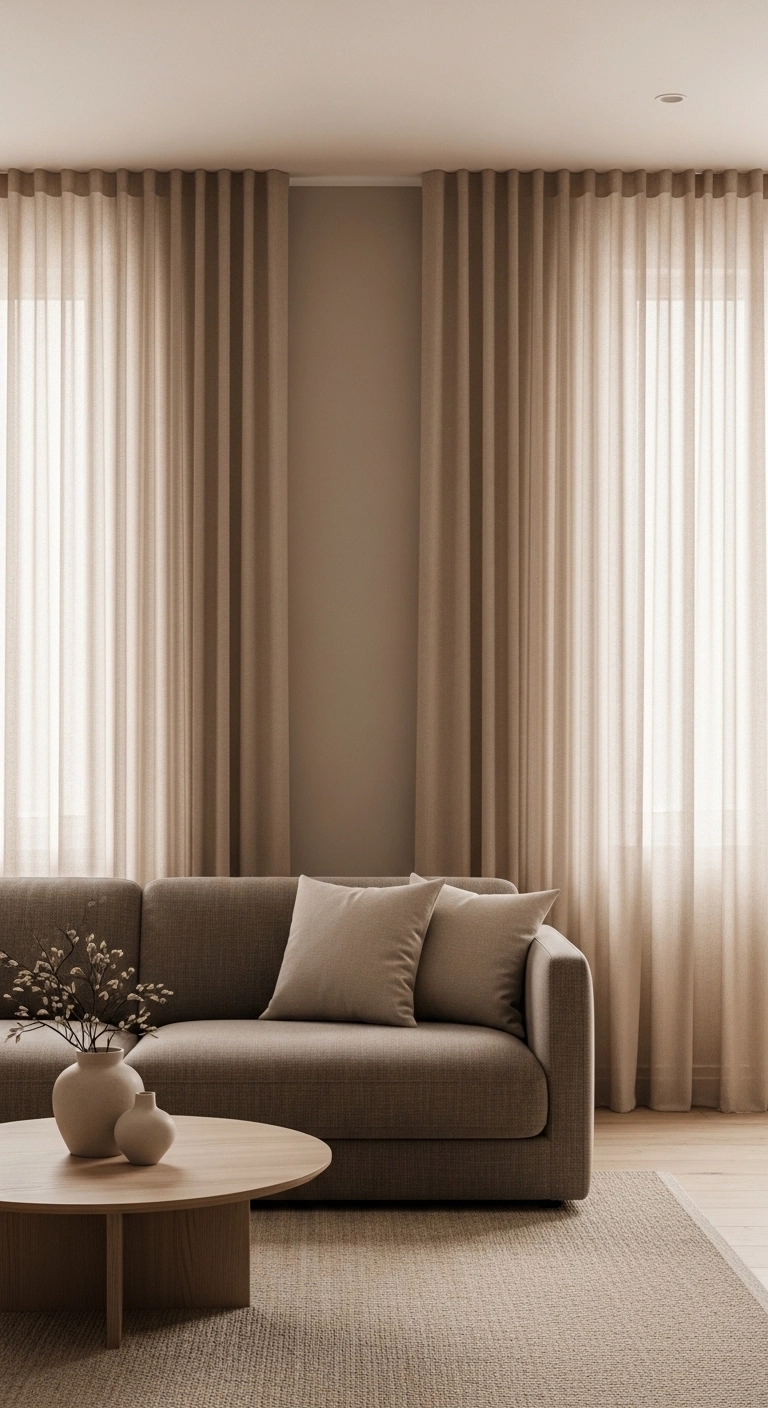
If you want the room to feel larger and calmer, match your curtains closely to the wall color instead of turning them into a contrast feature. Not exactly the same shade, but close enough that the eye reads the whole wall as one softer surface.
This is especially effective in smaller living rooms, narrow townhouses, or spaces with several openings competing for attention. Curtains in mushroom, taupe, soft gray-beige, clay, muted green, or warm greige can make the room feel settled and expensive without doing much at all.
Tone-on-tone is also helpful when the sofa, rug, and art already carry enough visual weight. In those rooms, the curtain should support the room, not argue with it.
Soft Patterned Curtains for Rooms That Need Quiet Personality
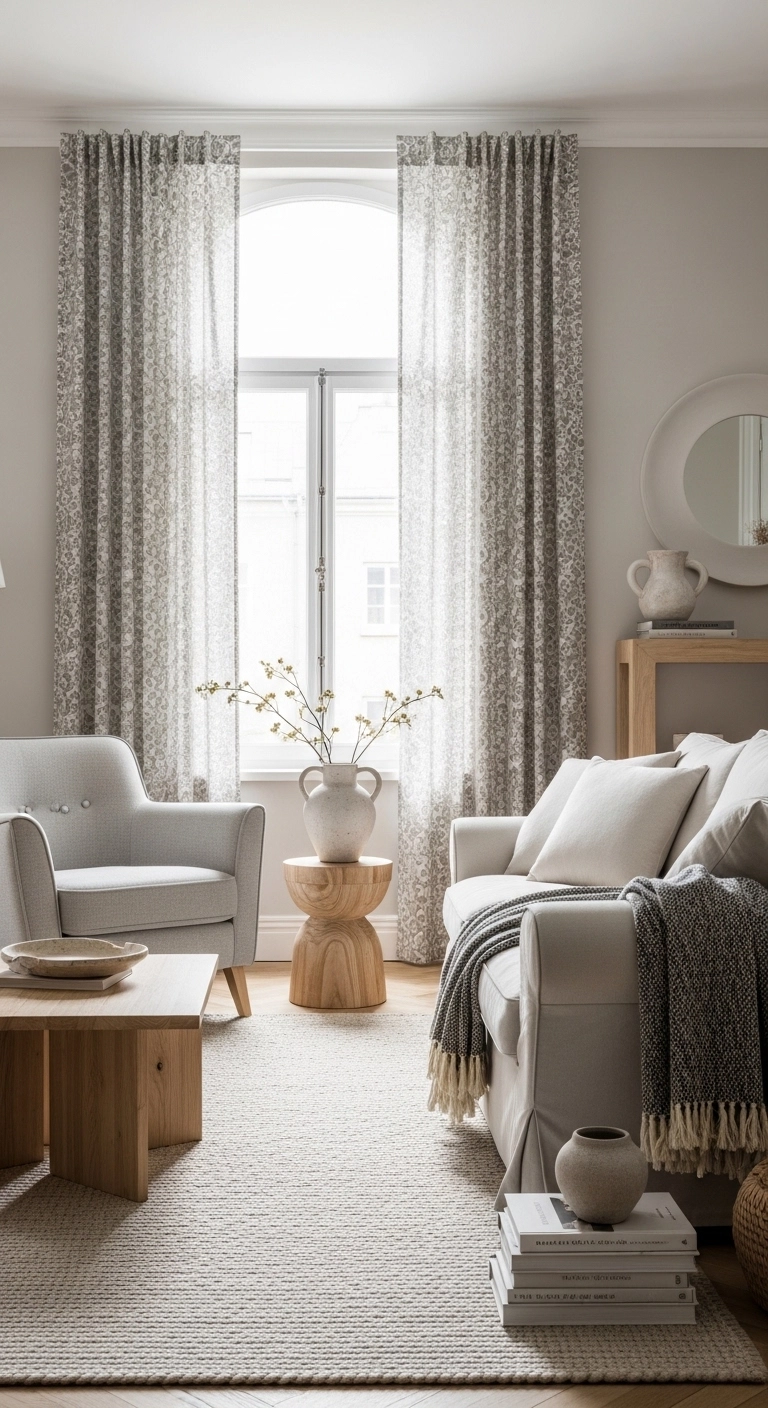
A living room does not always need solid curtains. Sometimes a subtle pattern is exactly what makes the space feel finished. The key is choosing a pattern that reads as texture from across the room rather than a loud print that hijacks everything.
Right now, quieter patterns are more in step with the way designers are using curtains: soft plaids, muted stripes, small florals, and understated woven patterns that add dimension without looking busy. Fuller drapery with subtle pattern also aligns better with the current shift away from flat, plain panels.
This idea works best when the rest of the room is fairly calm. If you already have a bold rug, patterned armchairs, or a busy gallery wall, go solid. If your room is mostly neutral and feels a bit blank, pattern can give it life.
A good practical test: step back from the sample. If the pattern still shouts from six feet away, it is probably too strong for a living room you want to feel soft.
Velvet or Brushed Curtains for Echoey, Cold Living Rooms
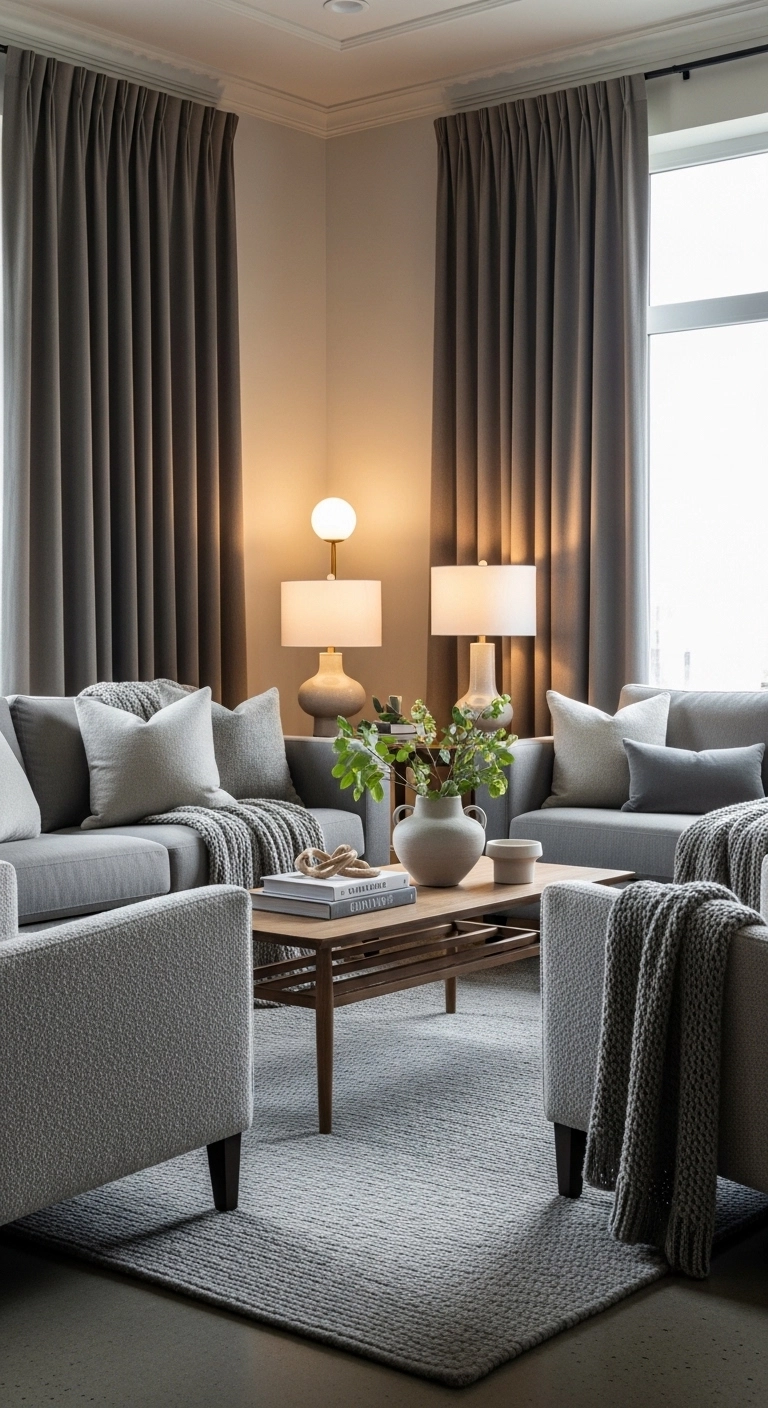
Some rooms look fine but feel uncomfortable. They echo. They feel drafty near the window. Sound bounces off hard floors and bare walls. This is where heavier fabric earns its keep.
Velvet, brushed cotton, wool-blend drapes, or lined textured curtains can make a living room feel quieter and more grounded. Soft furnishings like drapery help reduce that agitating echo in rooms with high ceilings, open layouts, or lots of hard surfaces. That is part of why tactile, sound-softening materials are getting more attention in current design thinking.
This is also a smart choice for media rooms, formal sitting rooms, and large living rooms with lots of glass. You do not need deep jewel tones unless you want drama. Even a dusty olive, camel, stone, warm gray, or muted blue velvet can look calm rather than formal.
The only caution is scale. In a very small room, very dark velvet can feel heavy unless the walls, upholstery, and lighting are balanced carefully.
Bronze Hardware With Soft Neutral Curtains
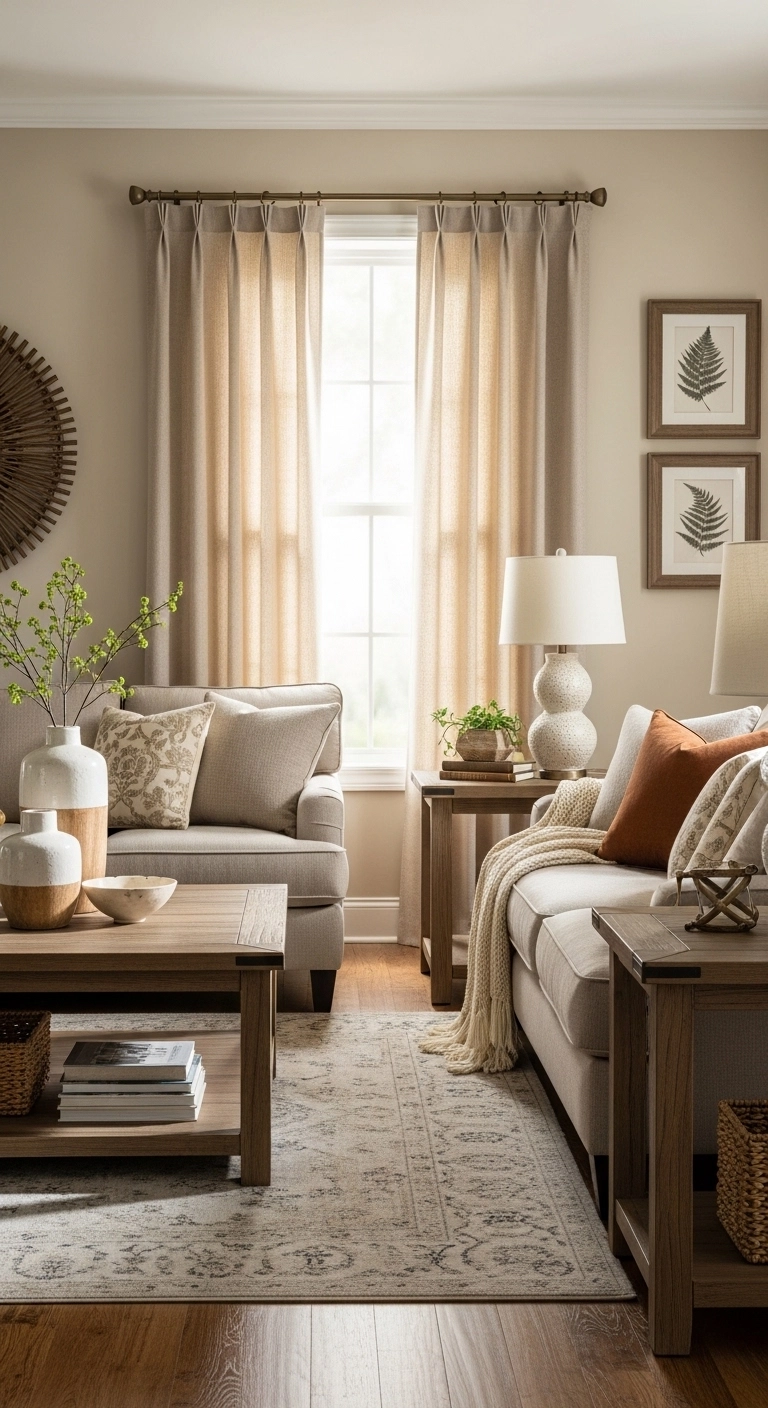
Curtain rods matter more than most people expect. When the hardware is right, the entire window looks intentional. When it is wrong, even expensive curtains can look off.
One of the clearest current shifts is away from cooler, harsher hardware toward bronze and other warmer finishes. Designers are treating hardware more like jewelry for the room: not flashy, just considered. Bronze works especially well with cream, flax, olive, tobacco, rust, mushroom, and warm gray curtains.
This is a small move, but it changes the mood. Black rods can look crisp and modern, but they also create more visual contrast. Bronze blends more gently into a soft living room and usually feels less severe.
If your room has warm wood tones, aged brass lighting, or earthy paint colors, bronze hardware tends to look more natural than chrome or bright nickel.
Natural Woven Shades Paired With Side Panels
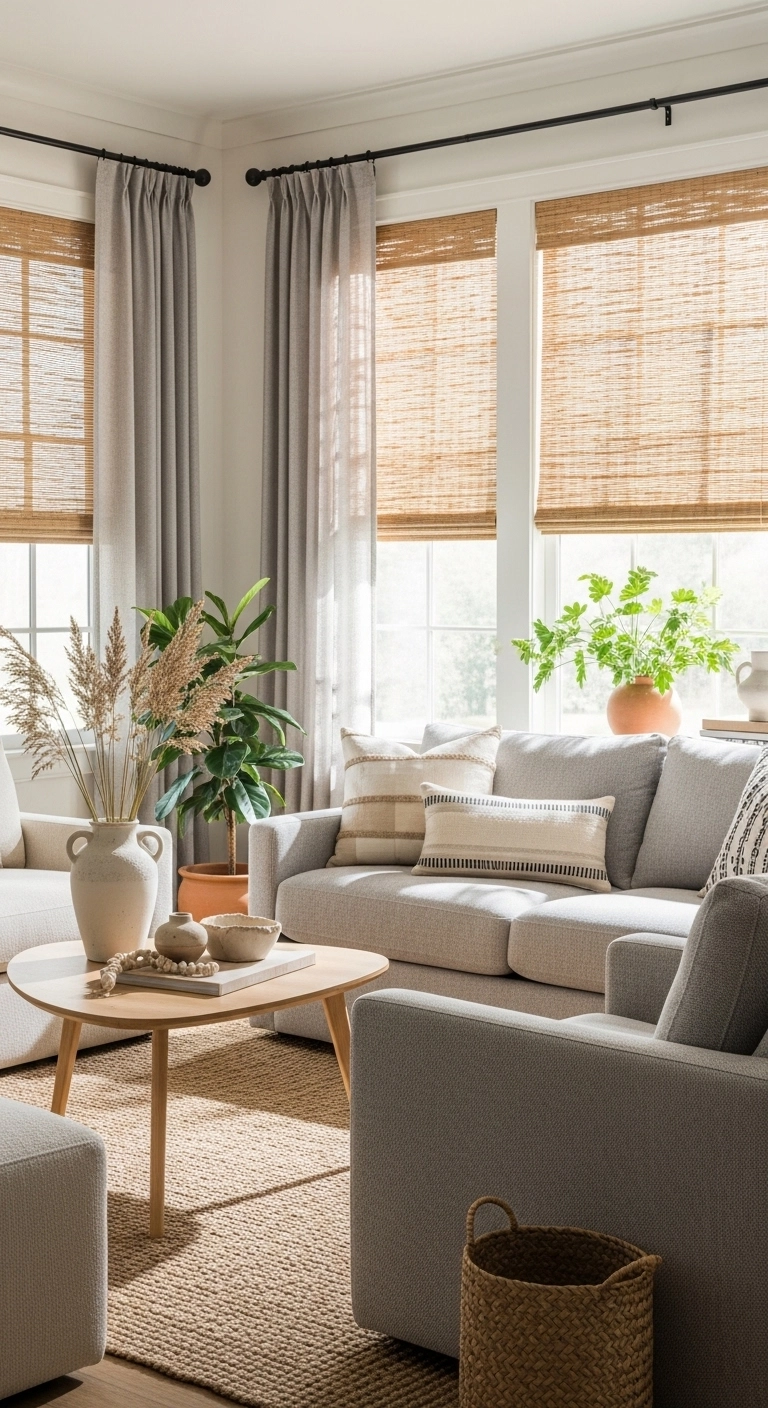
This is one of the best combinations for a living room that needs warmth without too much fabric. Natural woven shades bring texture and daytime privacy, while side panels soften the edges and make the room feel dressed.
Refined woven shades are still strong in 2026, but the look is moving toward more tailored, less chunky weaves. That is good news for living rooms because finer textures feel calmer and more versatile. Pair them with simple drapery panels in linen, cotton-linen, or a matte woven fabric and you get texture without heaviness.
This works beautifully in casual traditional rooms, coastal rooms, modern organic spaces, and family living rooms that need some durability. It is also useful when you want the curtains mostly for softness, not for constant opening and closing.
Café Curtains for a Ground-Floor Sitting Area or Street-Facing Window
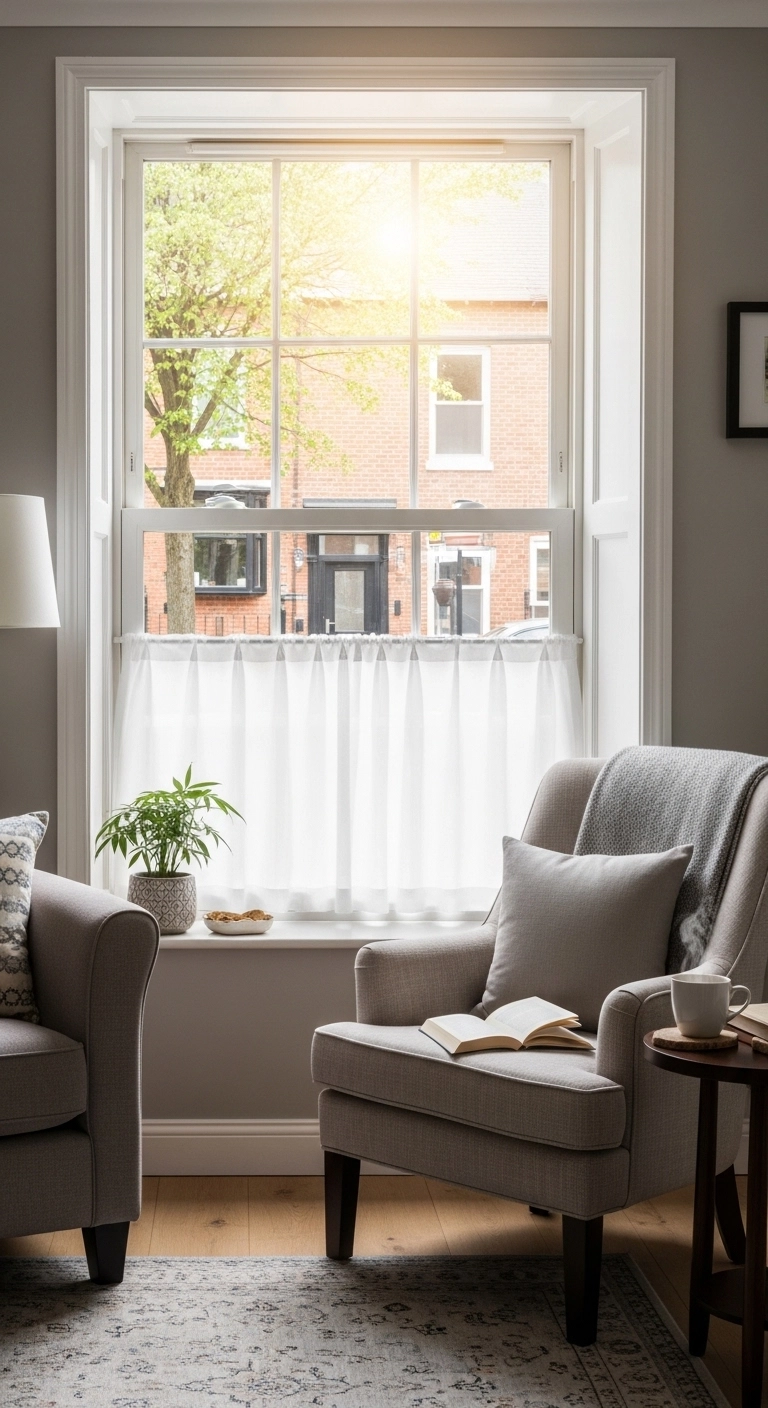
Café curtains are not only for kitchens. In the right living room, they are smart. If you have a ground-floor sitting area, a street-facing bay, or a reading corner that needs privacy without losing daylight, café curtains can do the job beautifully.
They cover the lower part of the window, leave the upper glass open, and keep the room from feeling shut in. Designers are still using them because they solve a very real problem: privacy without darkness. They also pair well with Roman shades when you want more control later in the day.
For a living room, skip anything too cute or fussy. Choose a simple stripe, a quiet print, or a soft solid with a tailored hem. That keeps the look grown-up.
Curtains With a Contrast Edge or Banded Trim
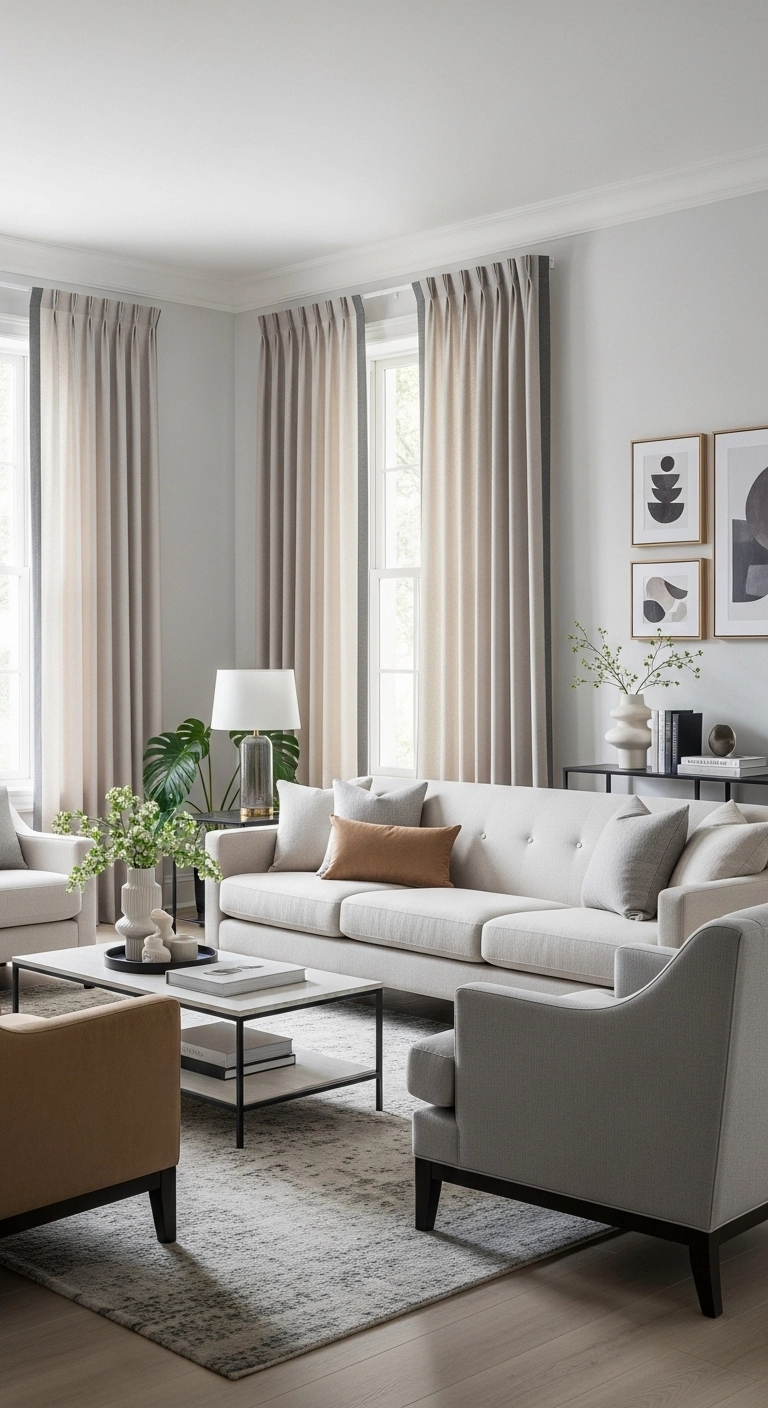
If plain curtains feel a little too safe, a narrow contrast band can make them feel custom without overwhelming the room. This is a good idea when your living room is simple and you want one detail that looks deliberate.
A banded edge works best when the contrast is controlled: ivory with flax, taupe with espresso, soft green with cream, or sand with black if the room is more modern. The trim gives the panel structure and helps the window read as a design feature, but it still feels quieter than a full pattern.
Use this when the architecture is simple and the room needs a touch of definition. Skip it if the space already has ornate molding, a patterned rug, and bold upholstery. The point is refinement, not more noise.
Ceiling-Mounted Curtains to Make the Room Feel Taller
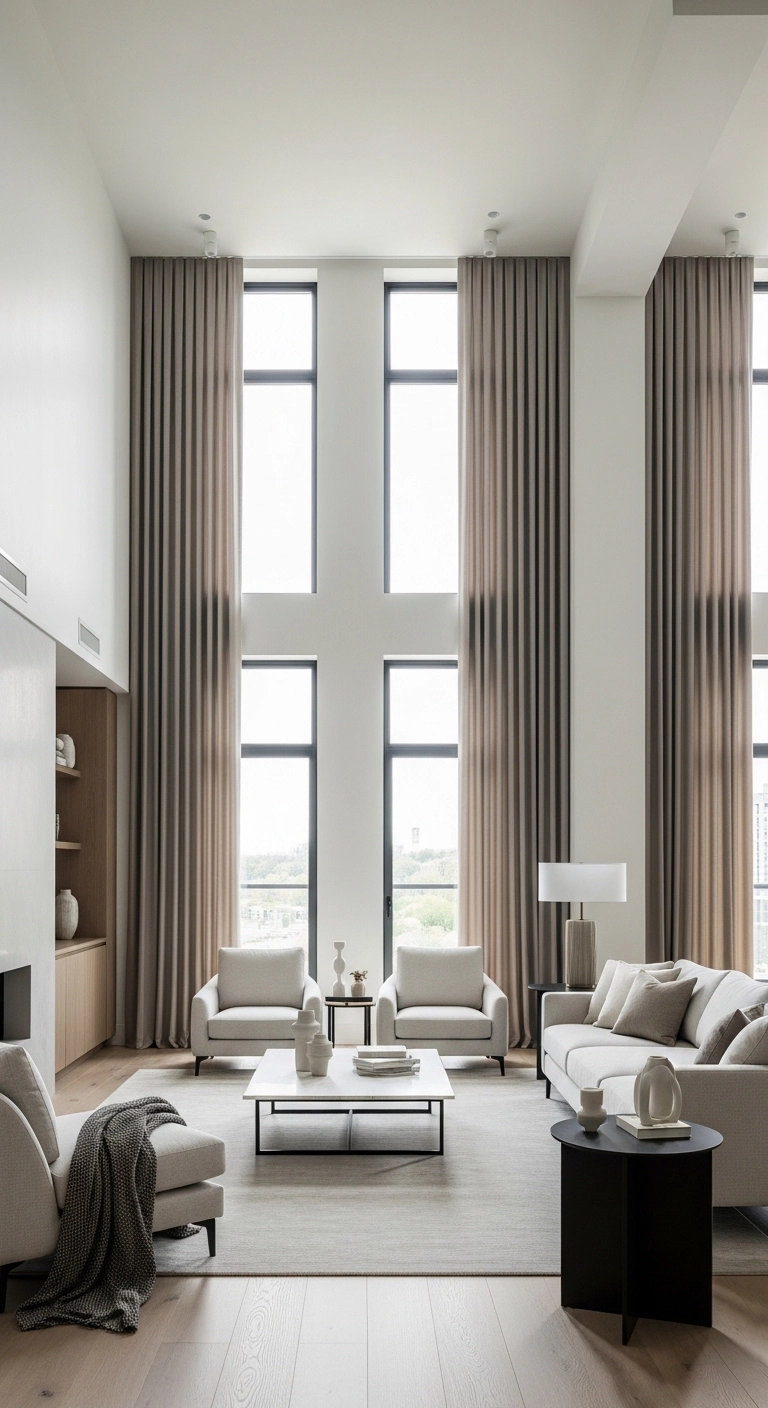
If your living room has average ceilings but you want it to feel more spacious, ceiling-mounted or near-ceiling curtains are one of the most effective moves you can make. Hanging drapery high creates a stronger vertical line and makes the room feel taller and more complete. Both design publications and interior experts note that high placement helps create the illusion of height and grandeur.
This is especially useful in apartments, builder-grade homes, and living rooms where the windows themselves are not particularly tall. Mount the rod or track high, use full-length panels, and make sure the curtains are wide enough that they can stack back cleanly when open. Skinny curtains ruin the effect fast.
Roman Shades With Side Drapes for a Layered, Tailored Window
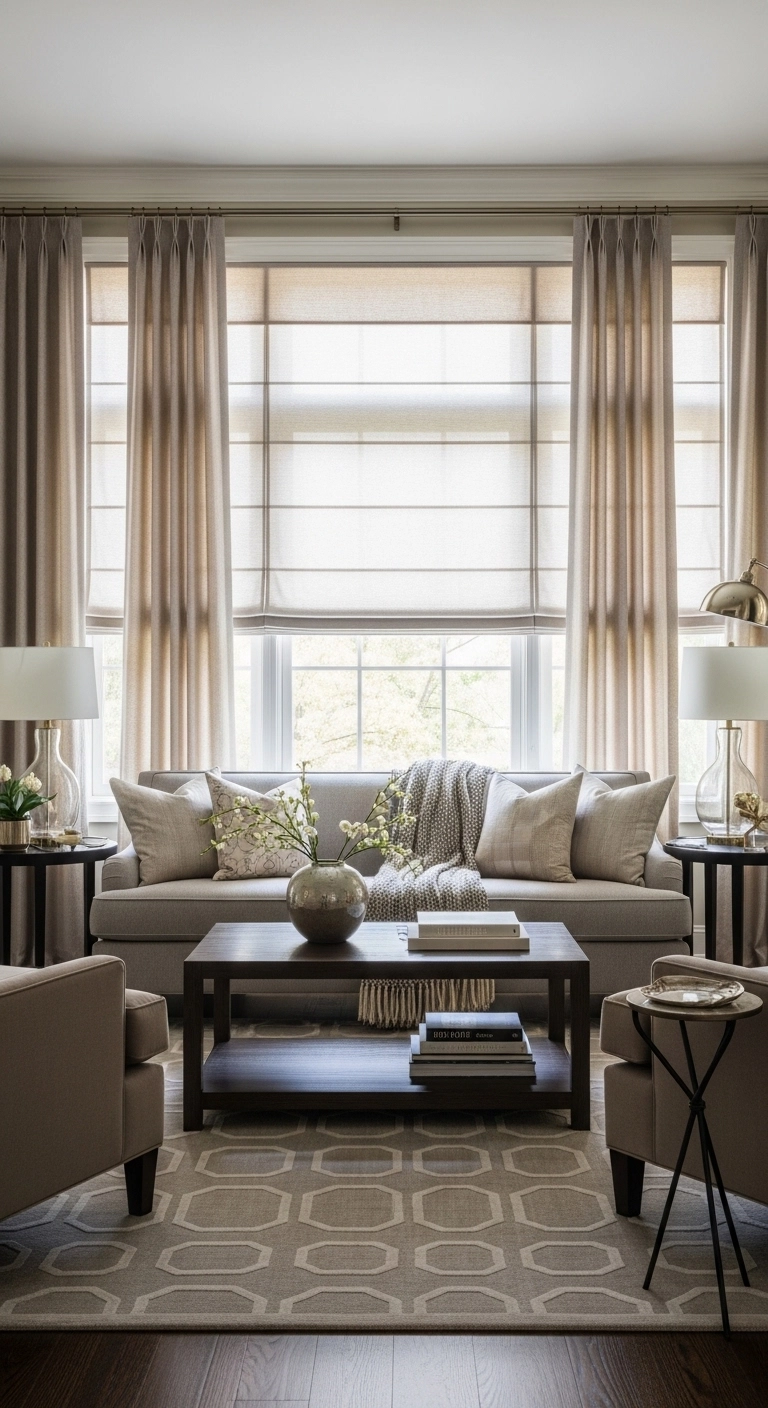
If you want a living room that feels both tailored and soft, this combination is hard to beat. A Roman shade gives structure and precise light control. Side drapes add warmth and movement.
This is especially helpful for west-facing rooms, TV rooms, or homes where the window needs to work harder through the day. Outside-mounted Roman shades are gaining attention because they look softer and can reduce light gaps around the trim. Pairing them with drapery gives you a window that looks finished from every angle.
You can make this look traditional or modern depending on fabric. Flat Roman shades with simple side panels feel clean. Relaxed Romans with pleated drapes feel more classic.
Soft Room-Divider Drapery for Open Living Spaces
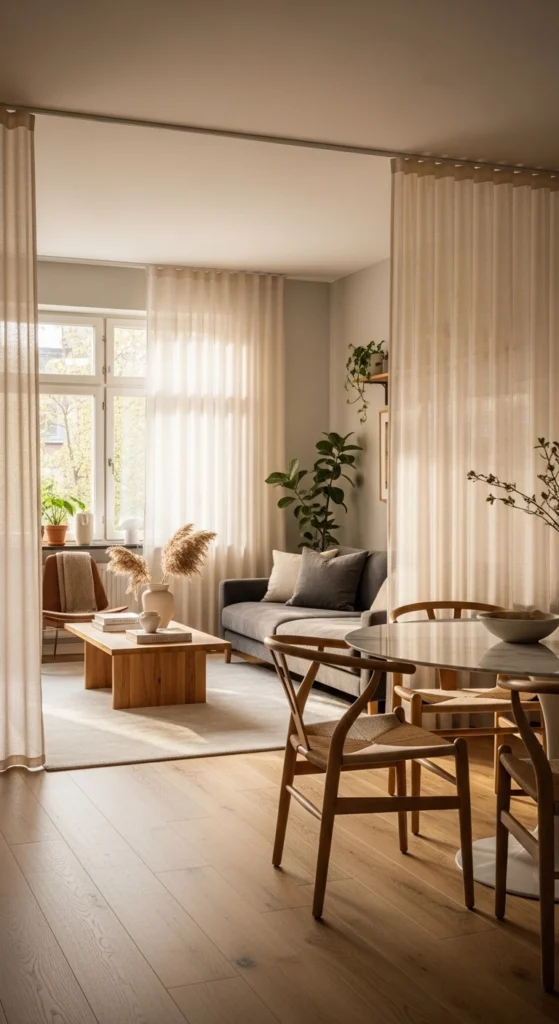
Sometimes the best curtain idea is not on the window at all. In open homes, lofts, and living rooms connected to dining areas or glass partitions, drapery can soften the transition between spaces. Designers are increasingly using curtains in doorways, as room dividers, and as backdrops because fabric adds warmth and flexibility without hard construction.
This is a smart solution if your living room feels exposed or acoustically harsh. A soft divider can make the room feel calmer, reduce visual clutter, and give you the option to close off part of the space when needed. Choose a fabric with some body so it hangs well, but keep the color quiet so it blends into the room instead of reading like a stage curtain.
It is one of those ideas that sounds decorative at first, but in real life it often improves how the room works.
FAQ
Which type of curtain is best for a living room?
For most living rooms, the best choice is full-length curtains in a light-filtering fabric, often layered with sheers or paired with a shade if you need better glare and privacy control. If the room gets harsh sun or faces the street, a lined drape or a Roman shade-and-drape combination usually works better than a single thin panel.
What is the curtain trend for 2026?
The curtain trend for 2026 is fuller, softer, more layered window treatments. Designers are leaning toward statement drapery, subtle pattern, tactile fabrics, café curtains, Roman shade pairings, refined woven materials, and warm bronze hardware rather than flat, minimal treatments that disappear.
What are the 20 types of curtains?
A useful working list includes: single-panel, double-panel, rod pocket, tab-top, hidden-tab, grommet, pleated panel, pinch-pleat, box-pleat, goblet-pleat, pencil-pleat, ripple-fold, sheer, blackout, thermal, café, half curtain, floor-length, sill-length, and valance-style curtains. The right one depends on how much light, privacy, softness, and formality your room needs.
What is the current trend for curtains?
Right now, the strongest direction is soft fullness with function. That means curtains that feel richer and more tactile, layered window treatments that manage light better, and hardware that supports the room instead of standing out harshly. In other words: less flat and skimpy, more warm and intentional.
Final Thoughts
The best living room curtain ideas are not just about style. They change how the room feels at 8 a.m., at sunset, during movie night, and when the lights are on after dark. If you want a softer space, look for curtains that do three jobs well: they should shape the light, add visual warmth, and fit the room’s daily use.
If you are unsure where to start, pick one of the most reliable options: full-length linen-blend curtains hung high and wide, or a layered combination of sheers and drapes. Those two choices solve the most problems and almost always make a living room feel calmer, taller, and more complete.