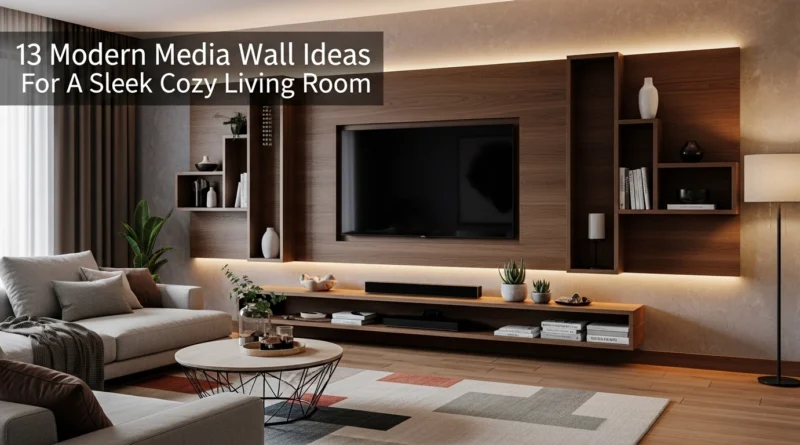
13 Modern Media Wall Ideas For A Sleek Cozy Living Room
A media wall can do more than hold a TV. Done well, it can make a living room feel calmer, more organized, and more intentional. Done poorly, it can make the room feel bulky, cluttered, or too cold. That is why choosing the right design matters.
The best media wall ideas balance clean lines with warmth. They give the room a bright focal point, but they still feel comfortable enough for everyday life. If you want a living room that looks modern without losing its cozy side, these ideas can help you build around both style and function.
Why Modern Media Wall Ideas Work
A modern media wall helps solve a few common problems at once. It gives the TV a proper place, improves storage, hides visual mess like wires and devices, and can make a blank wall feel more finished. It also helps a living room feel more balanced because the entertainment area no longer looks like an afterthought.
The key is restraint. A sleek cozy media wall usually works best when it combines simple shapes, useful storage, warm materials, and a layout that fits the size of the room instead of overpowering it.
Floor-to-Ceiling Built-In Media Wall
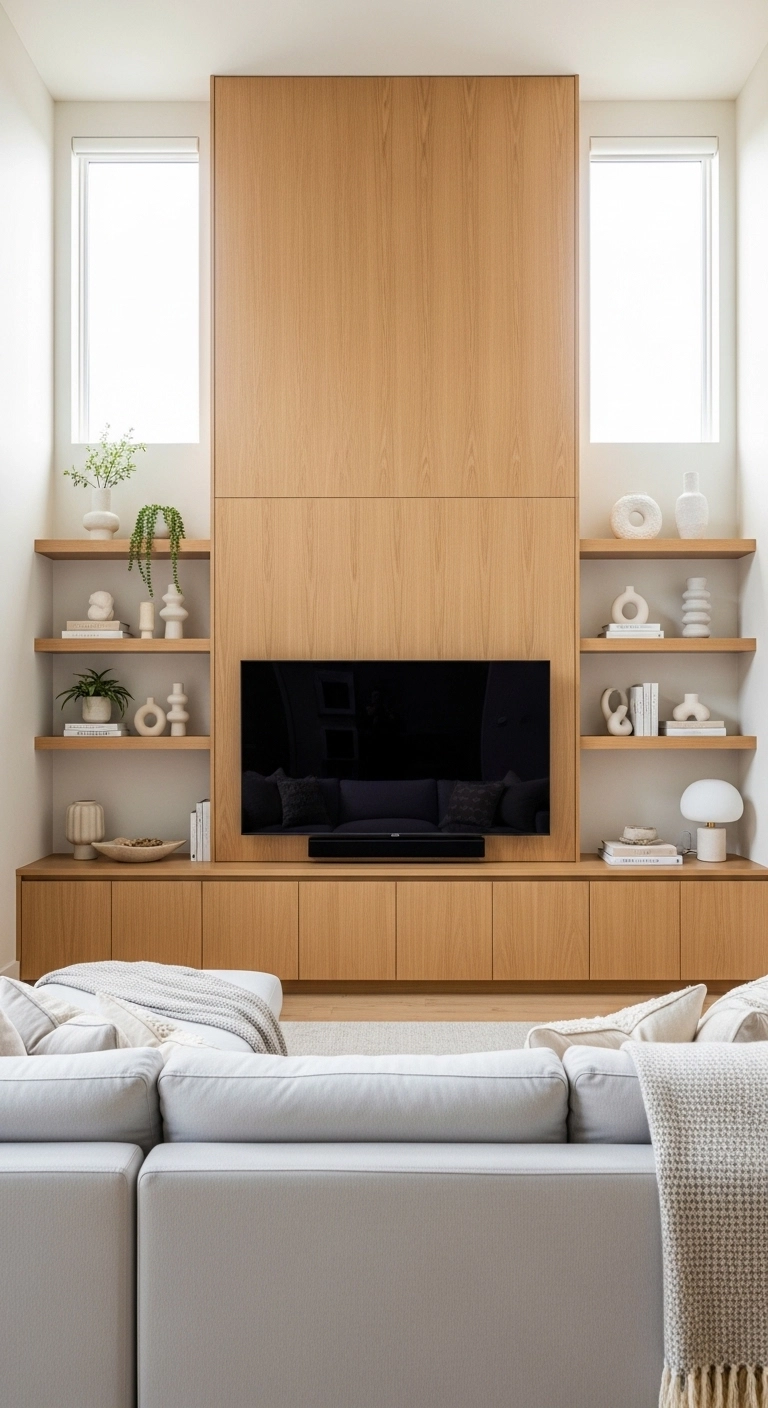
A floor-to-ceiling built-in media wall uses the full height of the room with storage, shelving, and a central TV zone. It often includes lower cabinets, a mounted screen, and open or closed sections around it.
This works because it makes the wall look deliberate rather than pieced together over time. It also uses vertical space well, which can make the whole room feel more tailored and less cluttered.
It suits living rooms that need extra storage or homes where the TV wall is a major focal point. It is especially useful in spaces without many closets or sideboards.
To apply it well, keep the cabinet lines simple and avoid overfilling every shelf. Closed storage on the lower half usually helps the wall feel calmer, while a few open shelves can keep it from looking too heavy.
One caution: if the design is too deep or too dark, it can dominate the room and make the living area feel smaller.
Floating Media Wall With a Minimal Console
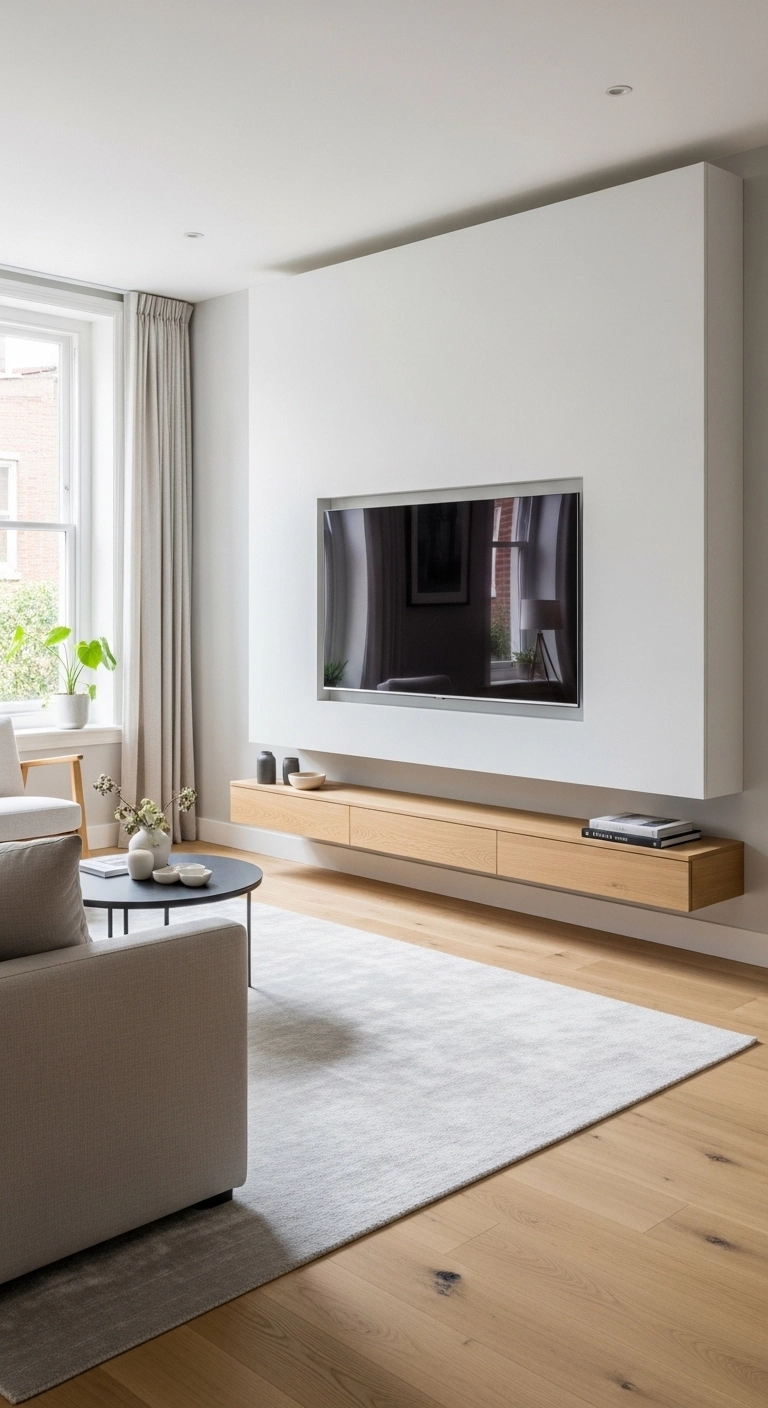
A floating media wall keeps the look light by pairing a mounted TV with a wall-mounted console or low cabinet underneath. The furniture does not touch the floor, which gives the whole setup a cleaner, airier feel.
This works because modern spaces often benefit from visual openness. Seeing more floor area can make a room feel larger and less crowded.
It works best in smaller living rooms, apartments, or homes where you want a sleek look without building out the whole wall.
To apply it well, choose a console wide enough to anchor the TV and hide practical items inside. Keep accessories simple so the floating effect stays clean.
A common mistake is choosing a console that is too small or too high, which can make the whole wall look disconnected.
Wood Slat Media Wall for Warm Texture
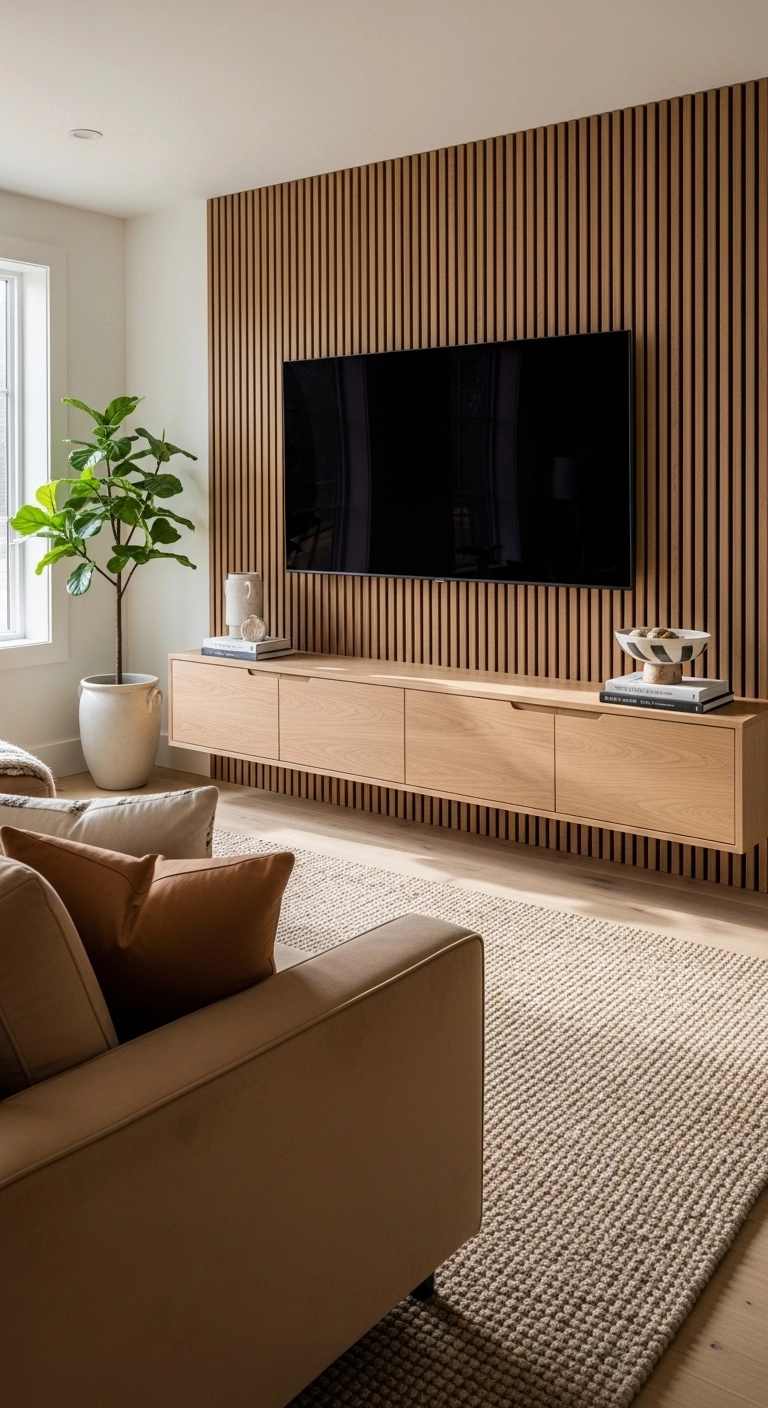
A wood slat media wall uses vertical timber-style slats behind or around the TV area to add texture without adding busy decoration. It often pairs well with a simple floating unit below.
This works because it brings warmth and rhythm to the wall while keeping the design modern. The slats soften the technology and help the room feel less flat.
It suits people who want a contemporary look with natural texture, especially in living rooms that feel a bit stark or too plain.
To apply it well, use it on the main TV section rather than across too many walls. A medium or warm wood tone usually makes the room feel cozier than a very dark finish.
One limitation is dust and detailing. Slatted surfaces can require a bit more cleaning than flat walls, especially if the grooves are pronounced.
Media Wall With Closed Storage Only
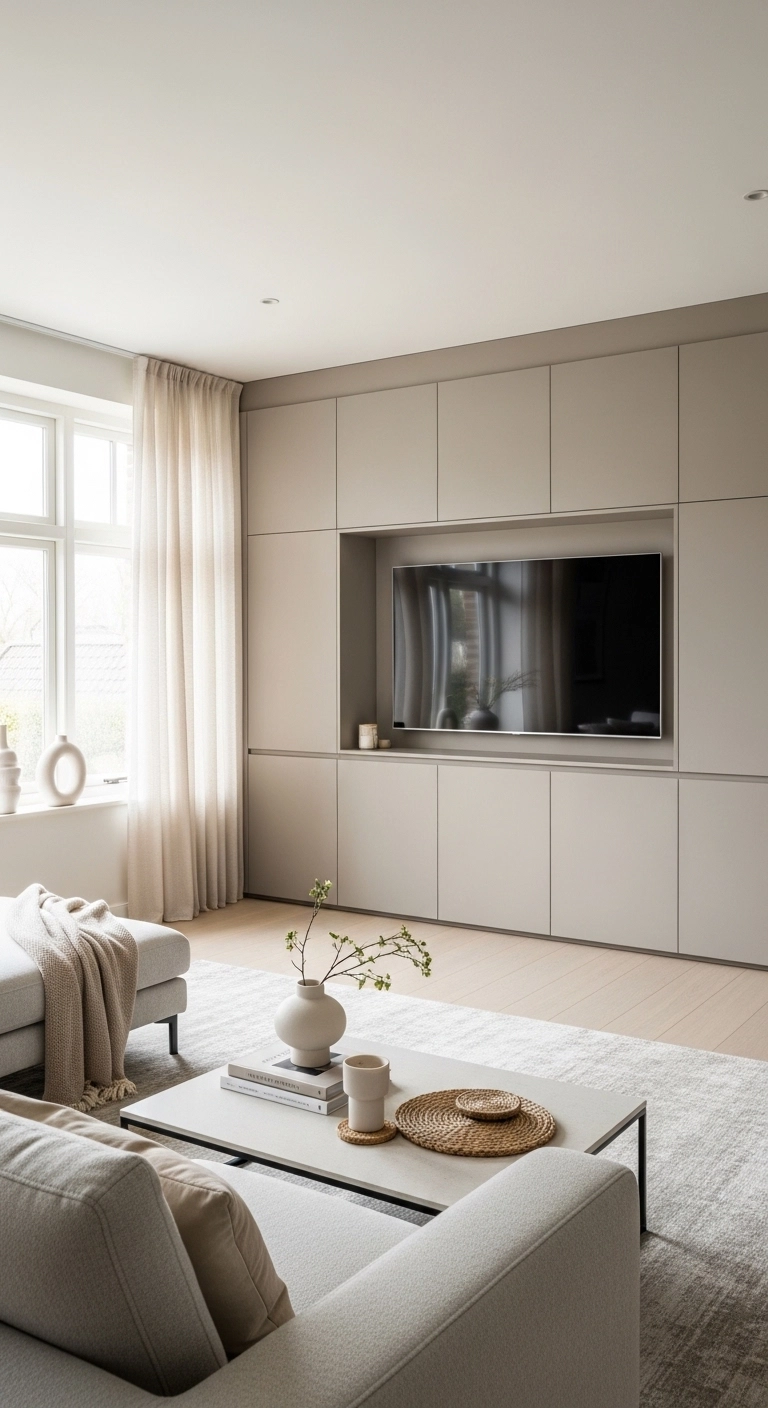
Some of the most useful media wall ideas skip open shelves entirely and rely on closed cabinets instead. The TV stays central, while everything else disappears behind smooth doors.
This works because it reduces visual noise. Games, remotes, routers, speakers, and general living room clutter all stay out of sight, which helps the room feel calmer.
This idea works best for busy households, family rooms, or anyone who prefers a neat, low-maintenance look.
To apply it well, plan storage around what you actually need to keep there. Deep cabinets are not always better if they become a place for random clutter. Clean fronts with push-open or simple hardware support the modern style best.
The caution is that a fully closed design can feel a little flat if there is no texture, contrast, or warmth elsewhere on the wall.
Media Wall With a Linear Fireplace Below
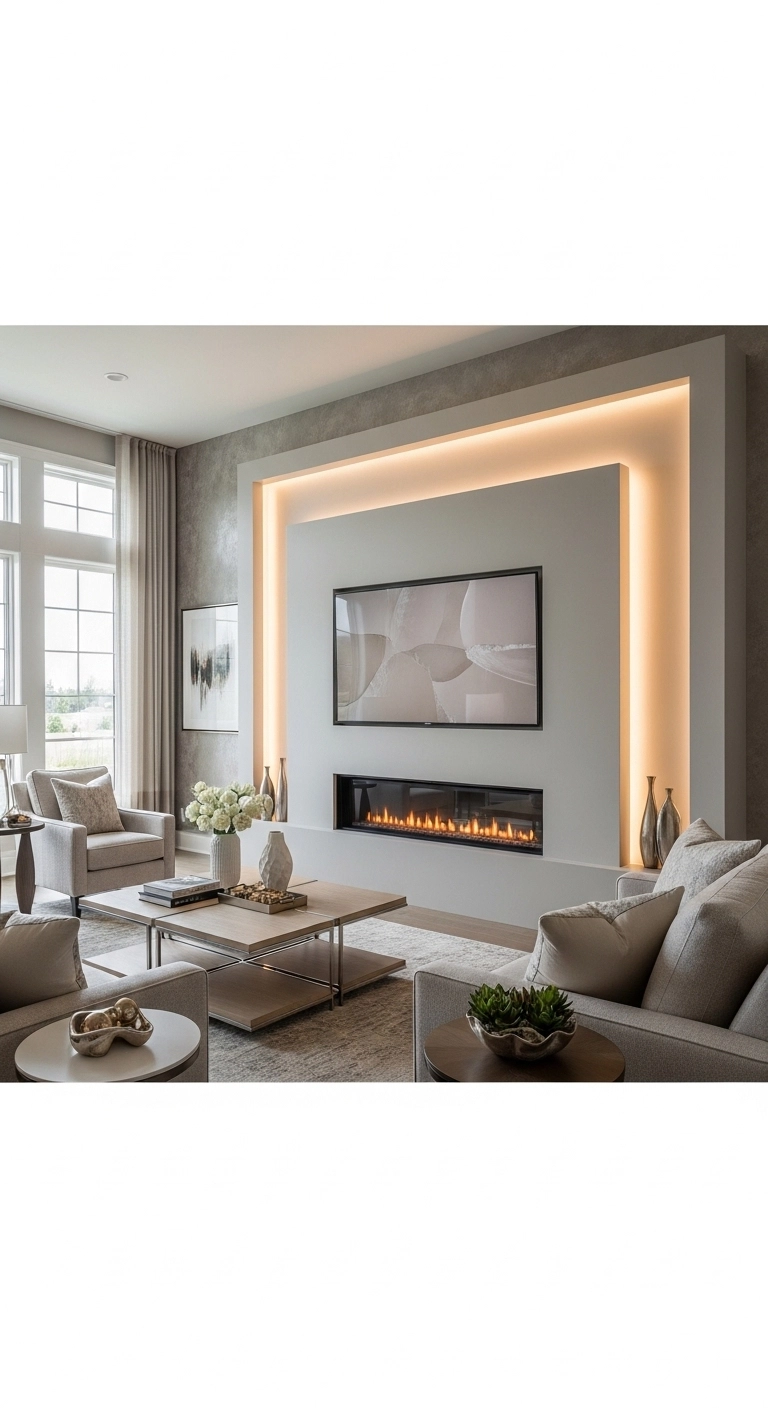
This setup places a long, narrow fireplace under the TV or within the same media wall composition. It creates a strong visual center while adding warmth in a literal and visual sense.
This works because it combines two focal points into one organized layout. It can make the living room feel both modern and inviting when the proportions are handled carefully.
It suits living rooms where the media wall is meant to be a statement and where the room size can support a stronger feature wall.
To apply it well, keep the overall design restrained. Clean lines, a calm material palette, and enough spacing between elements usually work better than adding too many competing details.
One caution is practicality. Depending on the fireplace type and wall design, heat, viewing height, and comfort all need thought. A setup that looks good in theory can feel awkward if the TV sits too high.
Painted Media Wall in a Soft Deep Tone
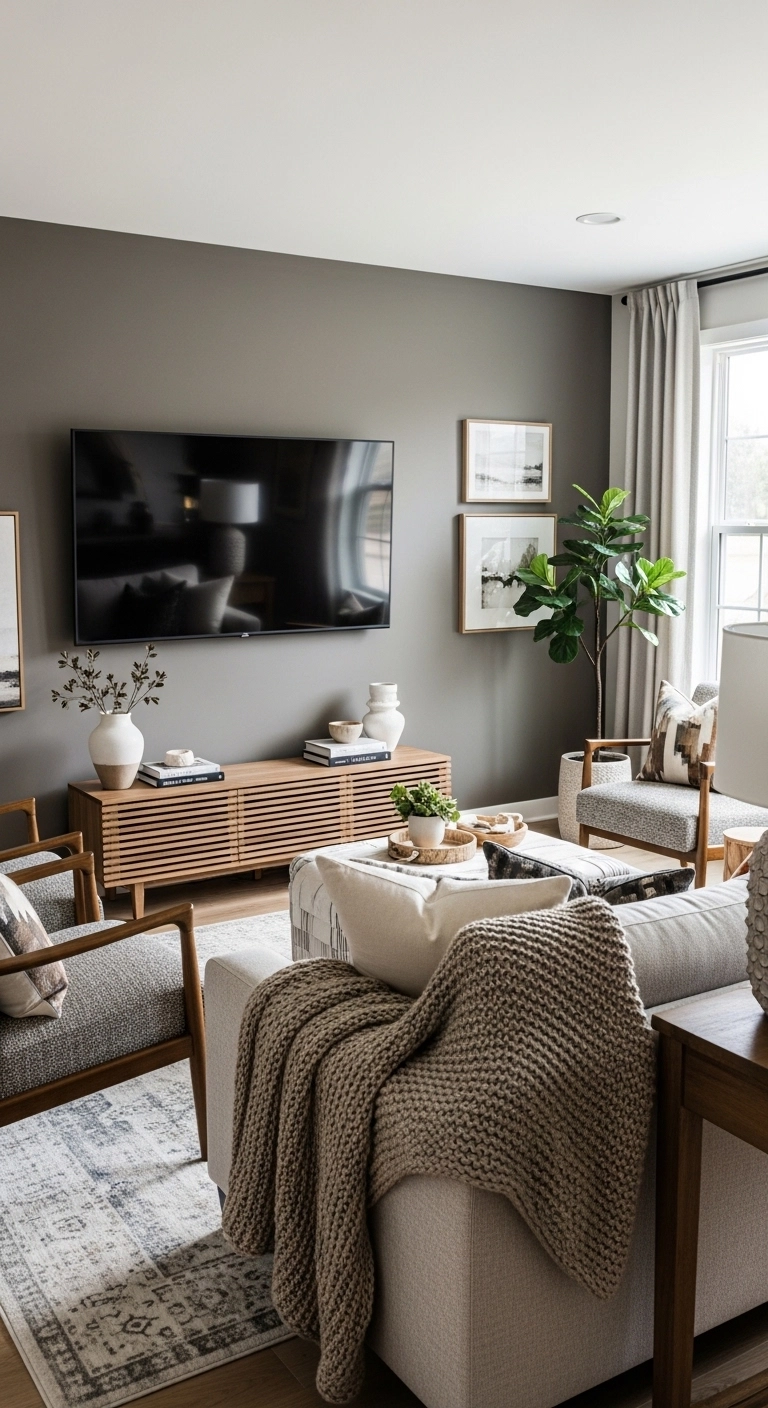
A painted media wall uses color rather than extra structure to define the TV area. Shades like warm charcoal, muted olive, deep taupe, or soft navy can make the screen blend in more naturally.
This works because darker or mid-tone walls reduce contrast around the TV, which can help it feel less visually harsh. It also adds depth without the cost or weight of a full built-in.
It suits renters, budget-conscious updates, or anyone who wants a modern media wall effect without major carpentry.
To apply it well, choose a tone that fits the room’s light and existing finishes. Keep the rest of the decor fairly balanced so the wall feels intentional, not random.
A mistake to avoid is choosing a color that is too cold or too dramatic for the rest of the room. The result can feel moodier than cozy.
Asymmetrical Shelving Around the TV
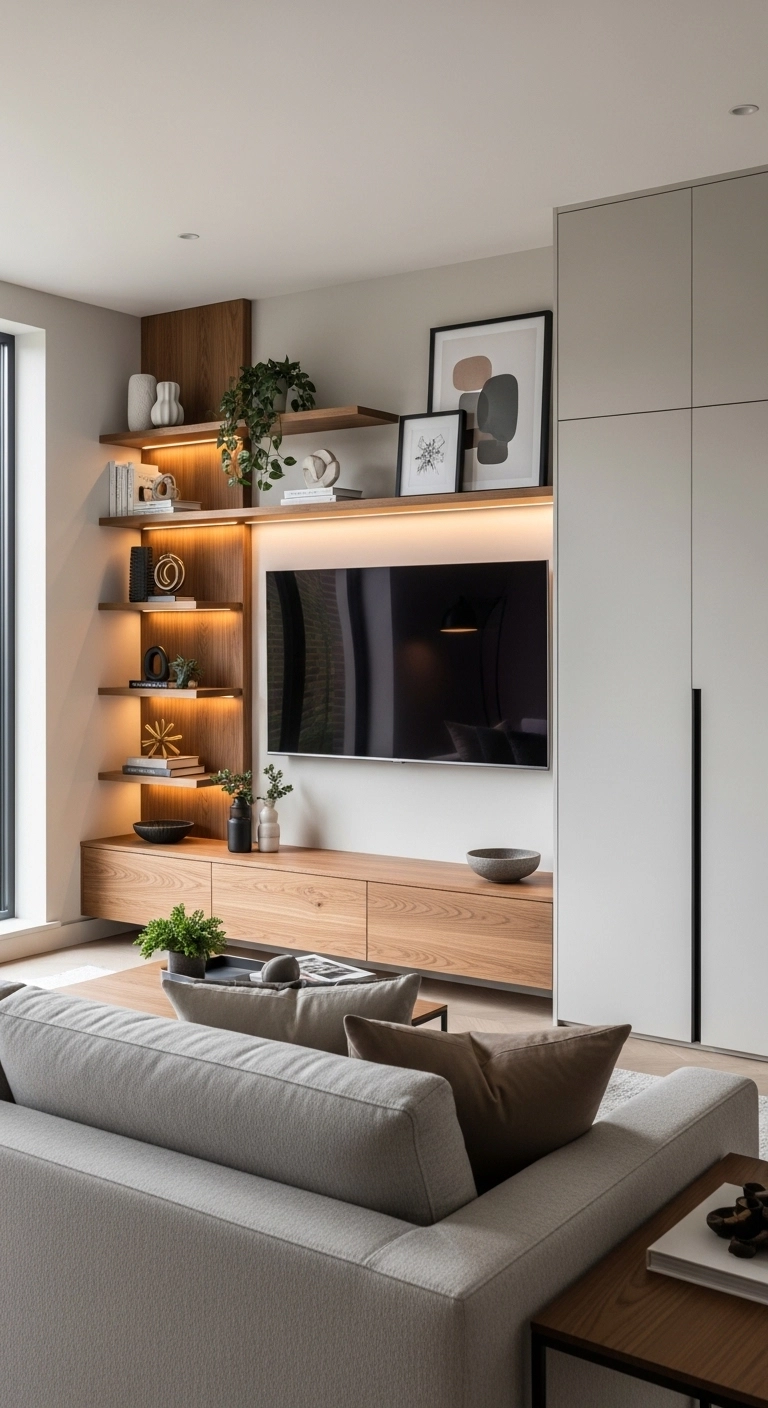
An asymmetrical media wall uses shelving or storage placed unevenly around the TV rather than making everything perfectly mirrored. For example, the screen may be centered while shelves sit more heavily on one side.
This works because it feels modern and relaxed. Perfect symmetry can sometimes feel formal, while asymmetry often looks more natural and easier to live with.
It suits people who want the wall to feel styled but not rigid, especially in rooms with an off-center sofa layout or architectural quirks.
To apply it well, balance visual weight rather than copying the same layout on both sides. One tall shelf can balance several smaller elements if the proportions feel right.
The caution is that asymmetry still needs discipline. Without clear balance, it can look accidental rather than designed.
Stone or Microcement Finish for a Clean Architectural Look
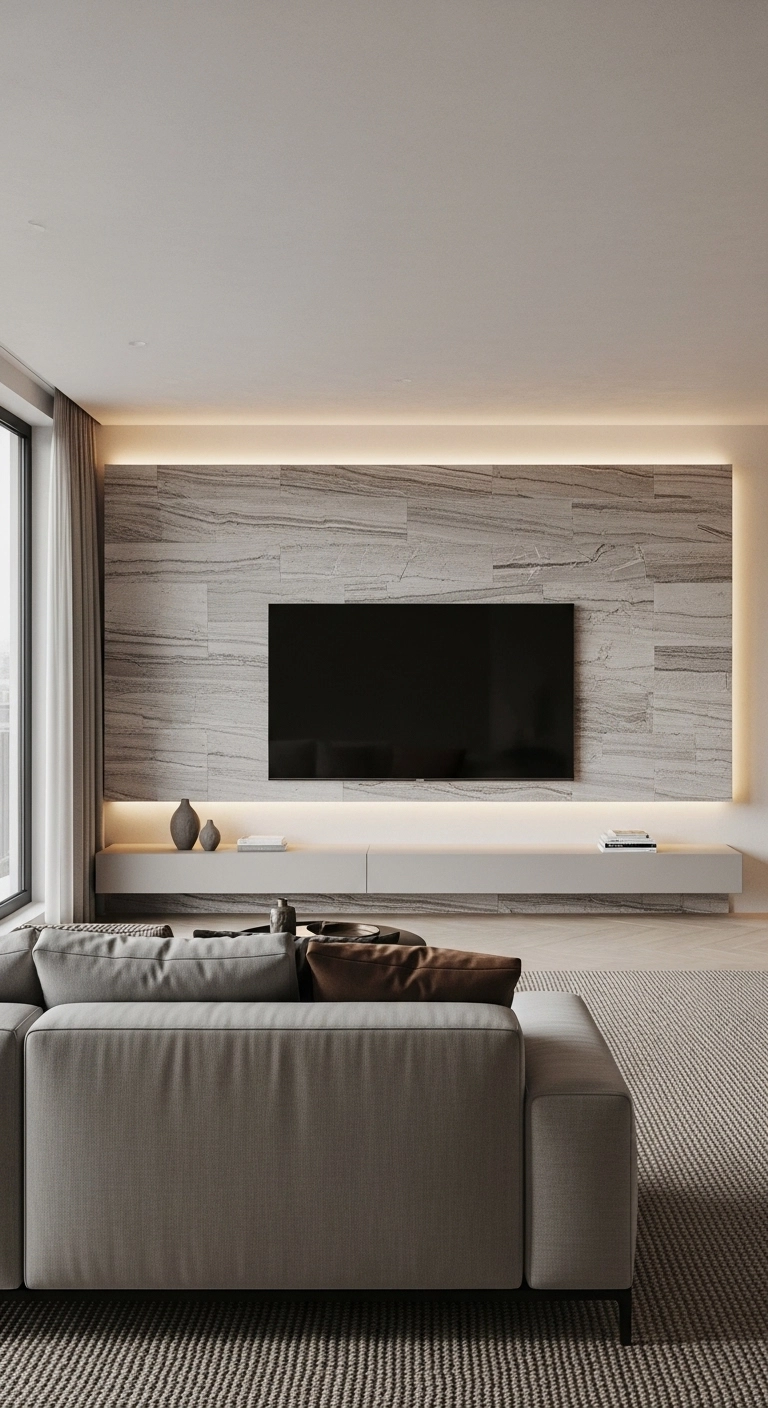
A stone-look or microcement-style media wall creates a smooth, understated backdrop with a more architectural feel. It often works well with a floating shelf, hidden wiring, and minimal decor.
This works because it adds subtle texture while keeping the wall visually muted. It can make a living room feel more sophisticated without relying on busy patterns or lots of decorative items.
It suits modern homes, minimal interiors, and anyone who wants a more built-in look without lots of cabinetry.
To apply it well, keep surrounding furniture soft enough to balance the harder finish. Upholstered seating, rugs, and warm lighting can help preserve the cozy side of the room.
One limitation is that this look can feel too stark if everything else in the room is also cool-toned or minimal.
Media Wall With Display Niches
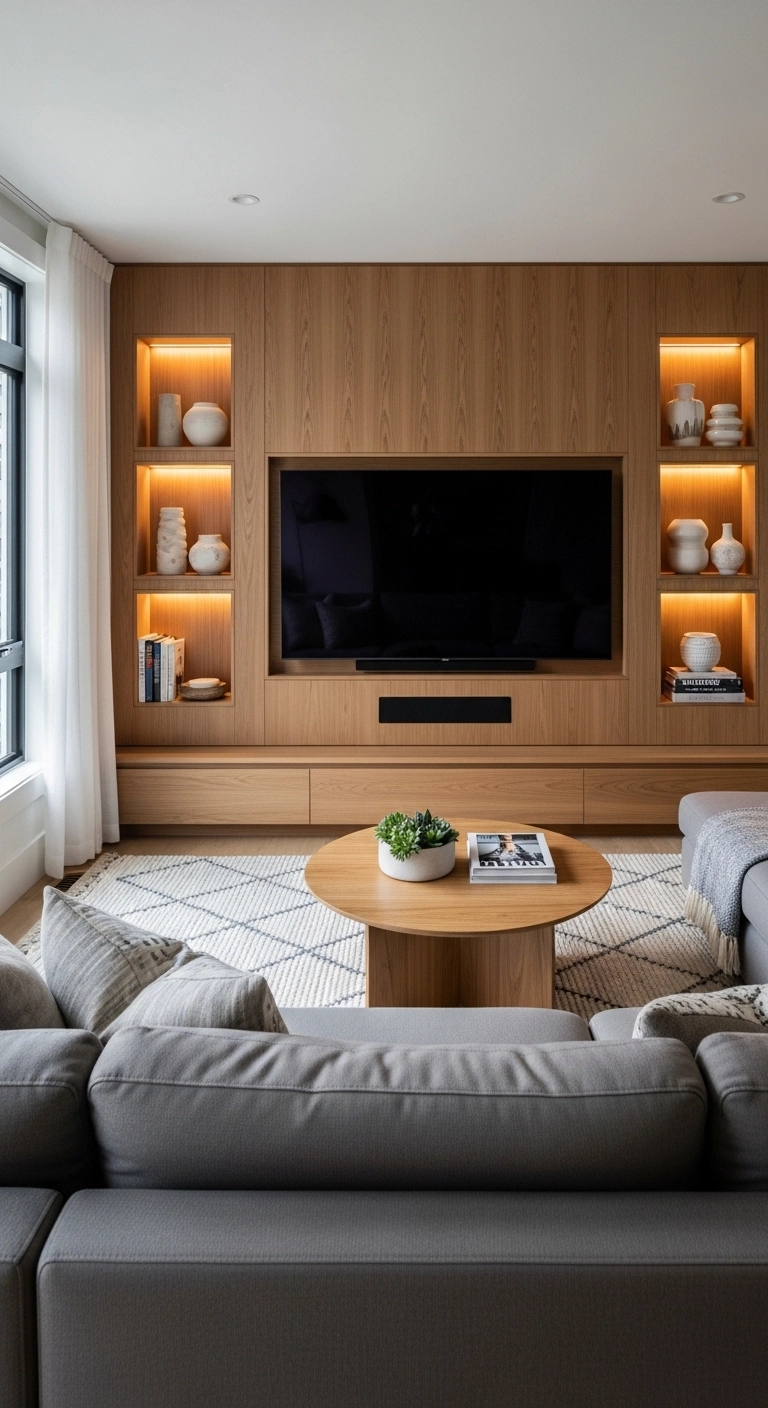
Display niches are recessed or framed sections built into the wall for a few decorative objects, books, or soft lighting. They can sit beside the TV or below it as part of the overall design.
This works because niches give the wall dimension without requiring bulky shelves that stick far into the room. They also allow a bit of personality without creating clutter.
This idea suits living rooms where you want the media wall to feel custom and slightly elevated without becoming ornate.
To apply it well, keep the styling very selective. A couple of books, a ceramic piece, or a small lamp can be enough. Negative space is part of what makes niches look good.
The mistake here is treating niches like storage cubbies. Once they are overfilled, the wall quickly loses its sleek look.
Low Wide Media Wall for a Relaxed Modern Feel
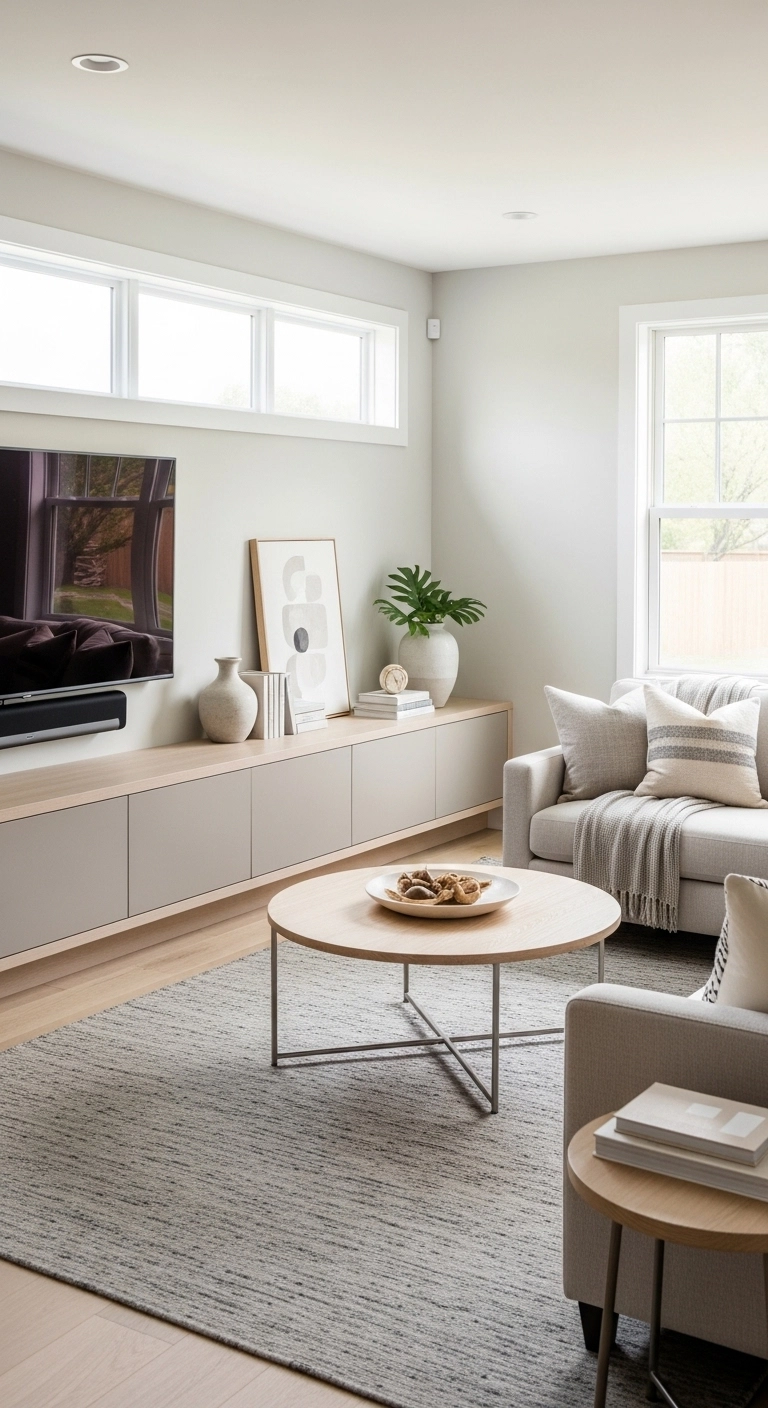
A low wide media wall stretches horizontally rather than vertically. It often uses a long console, a mounted TV, and just a little framing or shelving above.
This works because horizontal lines can make a room feel calmer and more spacious. It also keeps the wall from feeling top-heavy, which helps create a more relaxed atmosphere.
It works best in living rooms with wider walls, lower ceilings, or a preference for less visually dominant storage.
To apply it well, keep the TV and console proportions connected. A console that is wider than the screen usually helps ground the setup.
One caution: if the rest of the room lacks storage, a low-profile wall may look beautiful but fail to meet practical needs.
Hidden Lighting for a Soft Cozy Glow
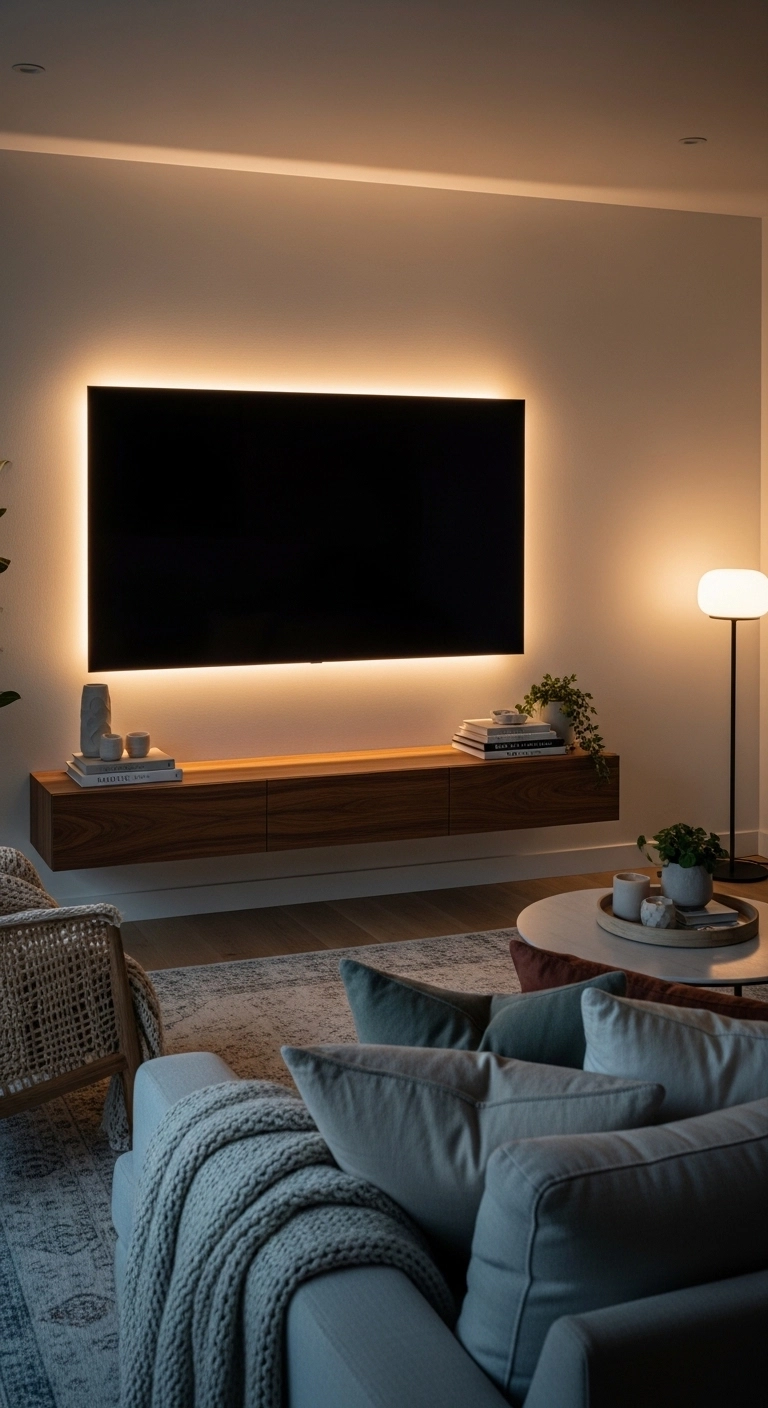
Hidden LED lighting behind panels, shelves, or the TV wall can add depth and warmth without making the space feel flashy. The light is usually indirect and meant to soften the overall mood.
This works because cozy living rooms rely heavily on layered lighting. A modern media wall can feel too flat or too harsh without some soft lighting around it.
It suits almost any style of media wall, especially rooms used heavily in the evening for movies or quiet downtime.
To apply it well, keep the glow subtle. Warm lighting usually feels more comfortable than bright cool light in a living room setting.
A common mistake is using overly strong LED strips that draw too much attention to themselves. The lighting should support the wall, not become the main event.
Mixed Materials With a Calm Neutral Palette
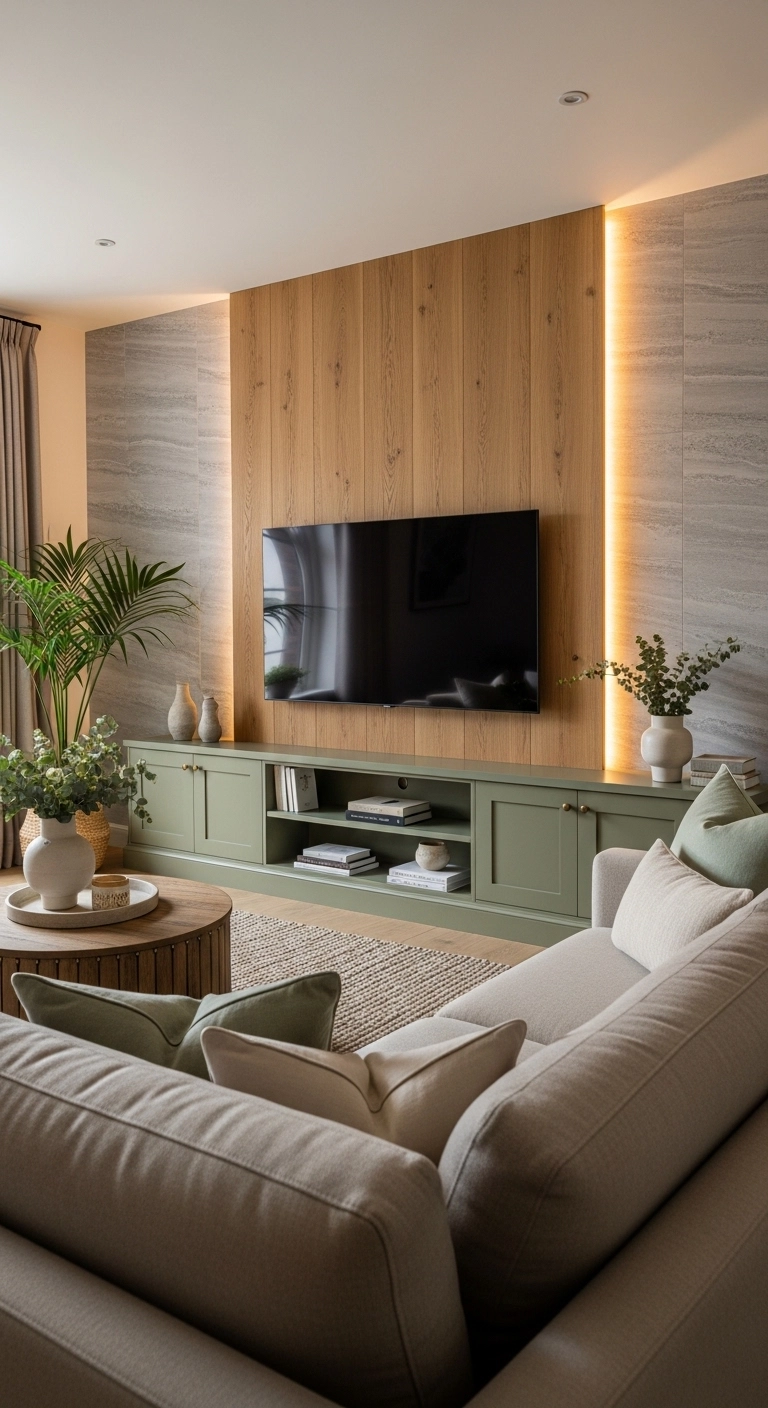
This idea combines two or three finishes—such as wood, painted cabinetry, stone-look panels, or metal accents—while keeping the colors restrained and cohesive.
This works because mixing materials adds depth, but the neutral palette keeps the wall from feeling chaotic. It creates interest in a quieter way.
It suits people who want a media wall with some richness and contrast without pushing into a busy or overly decorative look.
To apply it well, limit the number of materials and repeat them thoughtfully in the room. For example, if the wall includes warm wood and a stone finish, echo that warmth in the coffee table or side pieces.
The caution is overcomplication. Too many finishes on one wall can make even a large living room feel visually crowded.
Media Wall That Blends Into the Whole Room
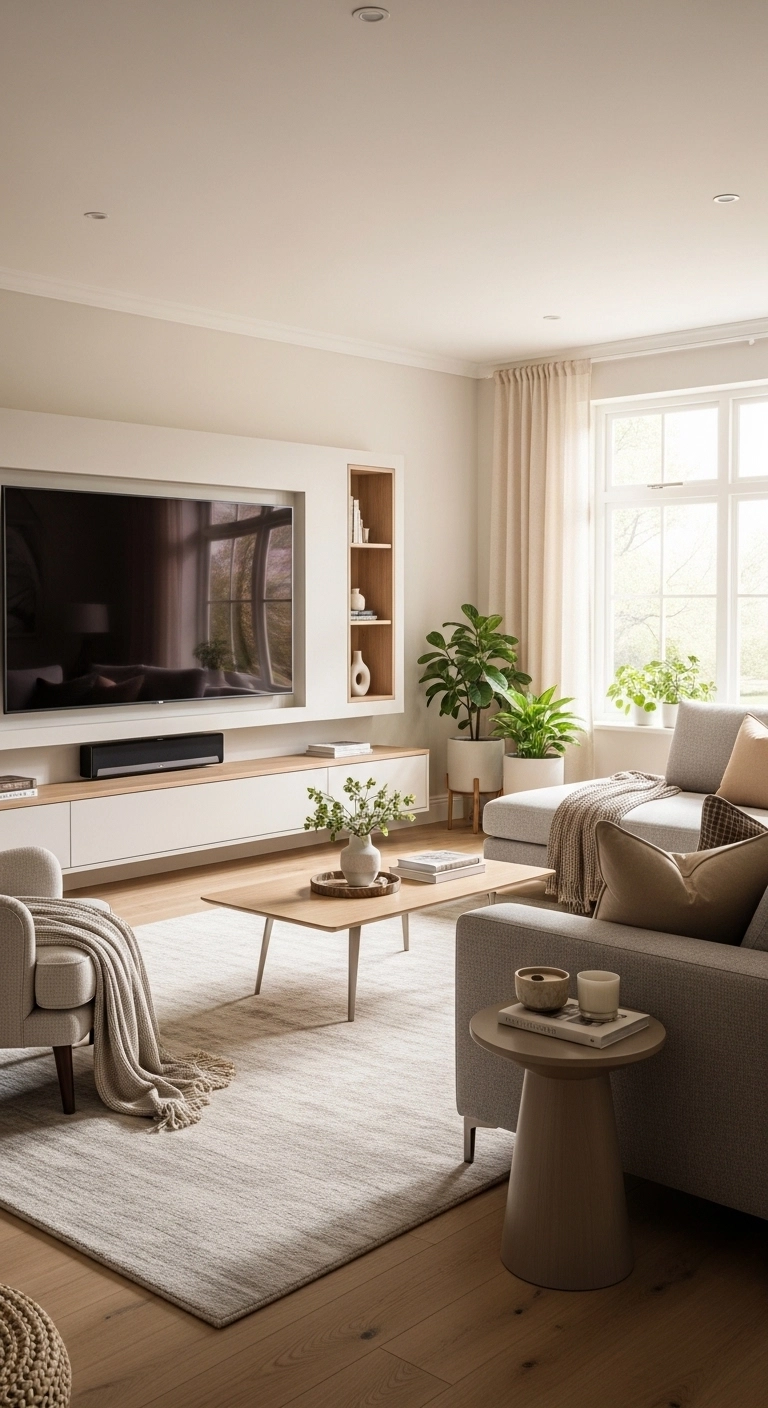
Some of the best media wall ideas do not try to stand apart too much. Instead, the wall continues the room’s overall palette, furniture lines, and mood so it feels integrated rather than separate.
This works because a cohesive room often feels more relaxing than one bold feature wall surrounded by unrelated pieces. The media wall still looks intentional, but it belongs to the space.
This suits anyone who wants a sleek cozy living room rather than a showpiece wall that steals all the attention.
To apply it well, match the wall’s tones and style to the furniture, rug, lighting, and surrounding storage. Think of the media wall as part of the room’s composition, not just a place to mount a screen.
One limitation is that subtle designs can feel underwhelming if you are hoping for a dramatic statement. This approach is quieter by nature.
Final Thoughts
The best media wall ideas aren’t just about improving the TV area. They’re about making the entire room feel more livable, useful, and comfortable. A good media wall can hide clutter, improve balance, and give the space a strong sense of purpose without making it feel stark or overly designed.
If you are deciding between options, start with what the room actually needs most. More storage, softer texture, a lighter footprint, or a stronger focal point will all lead you in different directions. Once that is clear, it becomes much easier to choose a media wall that feels both sleek and cozy in real life.