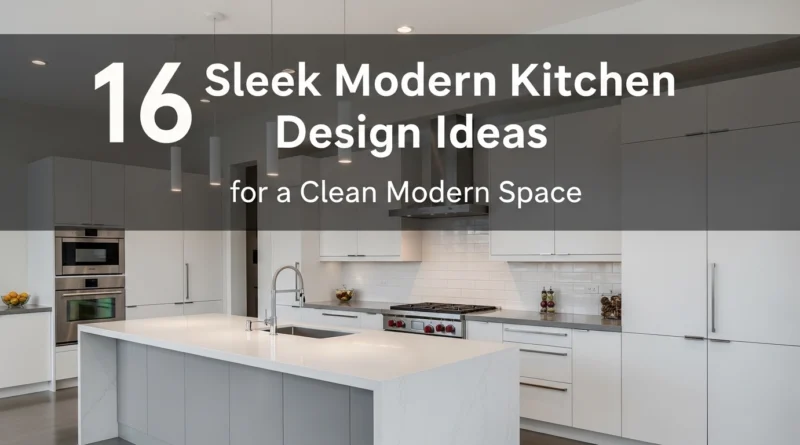
16 Sleek Modern Kitchen Design Ideas for a Clean Modern Space
A good modern kitchen design does not have to feel cold, expensive, or impossible to maintain. The best ones look clean, work hard, and make everyday life easier, whether you are cooking full dinners or just trying to keep the counters from turning into a storage zone.
The challenge is that “modern” can mean a lot of different things. Some kitchens lean soft and minimal. Others feel bold, architectural, and sharp. The common thread is simple: thoughtful lines, smart materials, and a layout that feels calm instead of cluttered.
Why modern kitchen design works so well
Modern kitchens age well because they focus on function as much as appearance. Clean lines are easy for the eye to read. Hidden storage helps daily clutter disappear quickly. Simple material palettes make the room feel intentional rather than busy.
That does not mean every modern kitchen has to look the same. A small apartment kitchen, an open-plan family kitchen, and a narrow galley kitchen can all use modern design in different ways. The key is choosing ideas that fit how the space is actually used, not just how it looks in a perfect photo.
Flat-Front Cabinets for a Cleaner Look
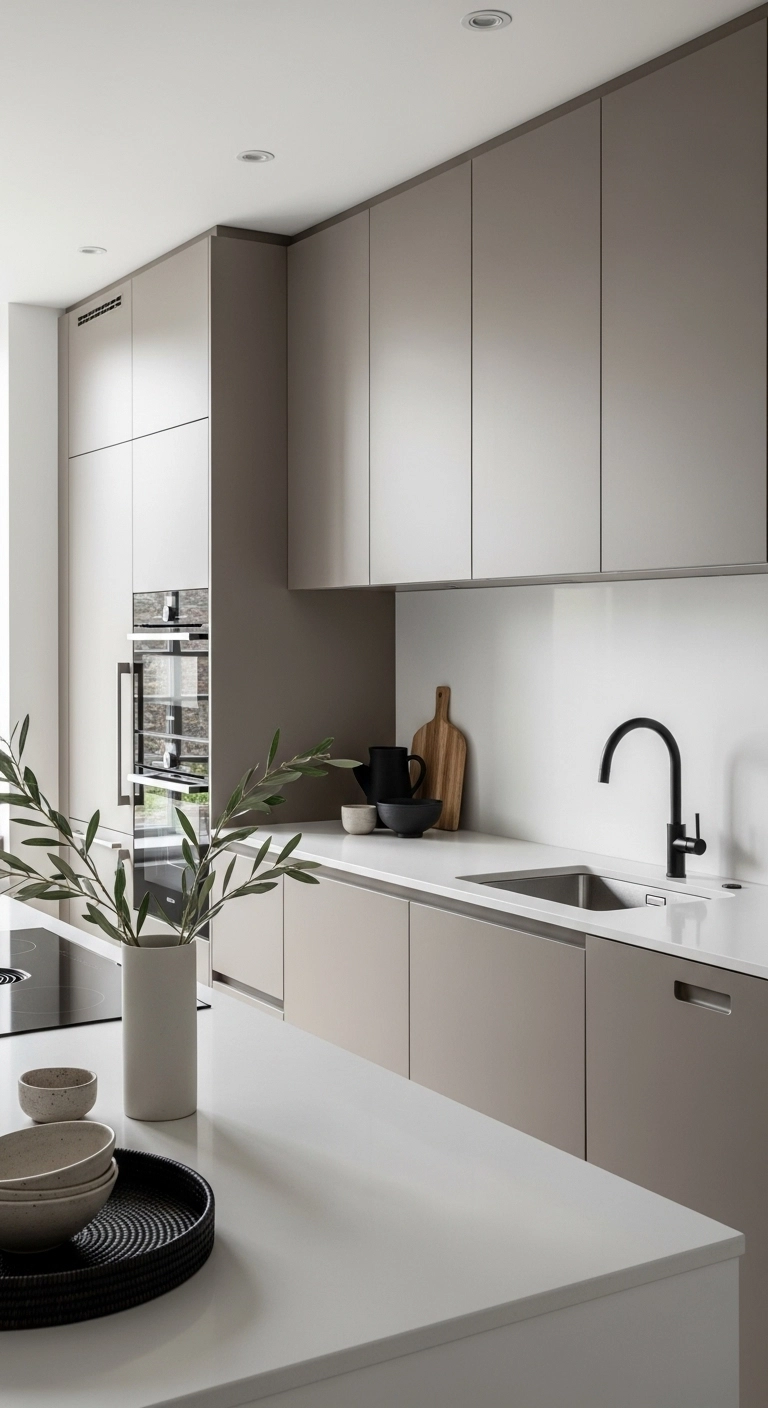
Flat-front cabinets are one of the easiest ways to create a sleek kitchen. Instead of raised panels, trim, or decorative detailing, the doors stay smooth and simple.
This works because it removes visual noise. The kitchen feels calmer right away, especially in smaller spaces where too many cabinet details can make the room feel crowded.
Flat-front cabinets are perfect for open-concept kitchens, small kitchens, and anyone who wants a more streamlined style. They pair especially well with painted cabinetry in matte finishes, wood tones, or soft neutrals.
To make them work well, pay attention to the finish and hardware. You can go handleless for a very clean look, or use slim bar pulls if you want a little definition. Just keep the lines consistent across the whole kitchen.
One thing to watch: ultra-glossy flat fronts can show fingerprints fast. If low maintenance matters, a matte or satin finish is usually more forgiving.
Handleless Cabinetry for a Seamless Modern Kitchen Design
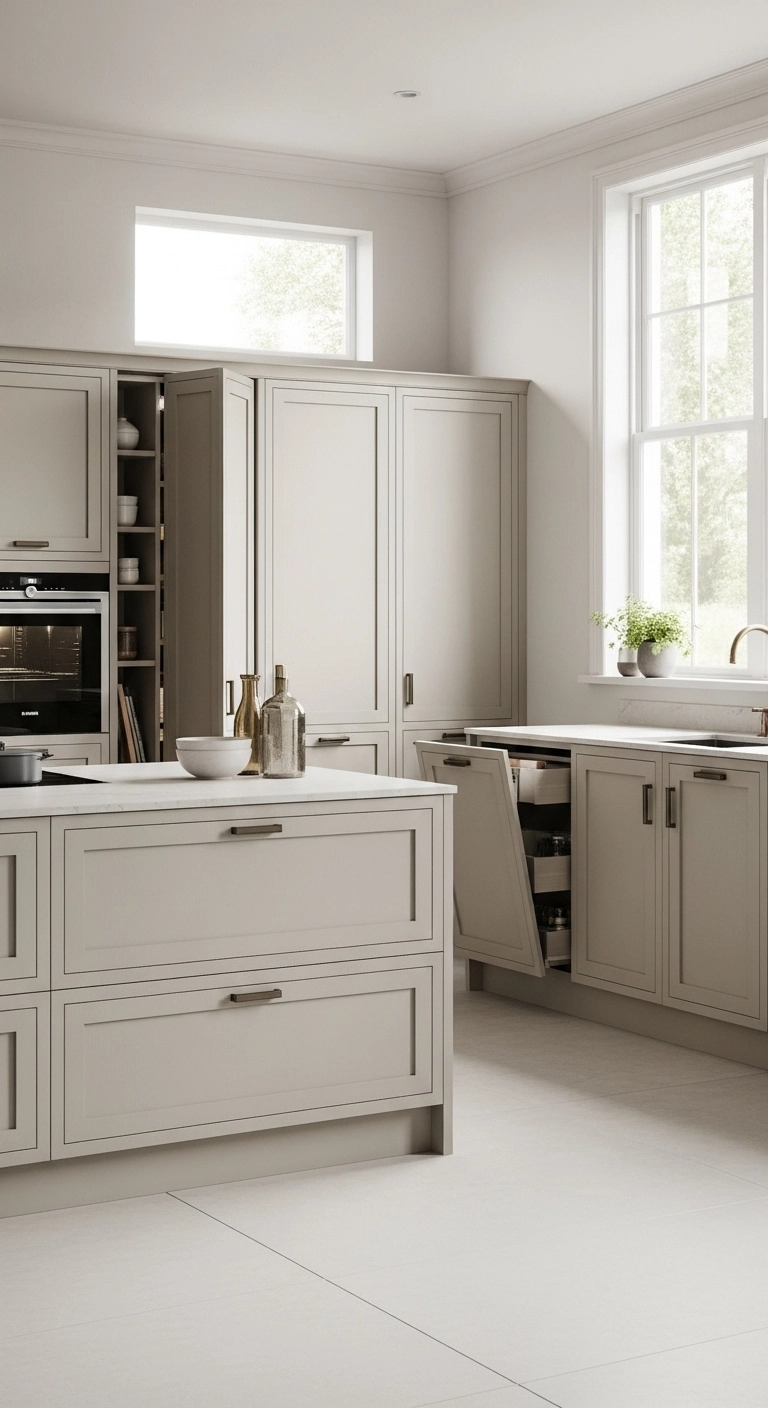
Handleless cabinetry takes flat-front cabinets one step further. The doors open with push-latches, integrated finger pulls, or recessed channels instead of visible hardware.
The reason this works is simple: uninterrupted surfaces make the whole kitchen feel more architectural. It is especially effective in kitchens where you want the cabinetry to blend into the room rather than stand out as separate pieces.
This idea works best in compact kitchens, high-end minimalist spaces, and open-plan layouts where the kitchen is visible from the living area. It helps the whole space feel smoother and less cluttered.
For a polished result, use it across most of the kitchen instead of mixing too many opening styles. A small amount of contrast is fine, but too much variety can make the design feel accidental.
The main caution is practicality. Push-to-open systems are sleek, but some people find them less convenient during busy cooking sessions. If you cook often, recessed channels may give you the clean look without the small annoyance.
A Soft Neutral Color Palette That Feels Calm, Not Bland
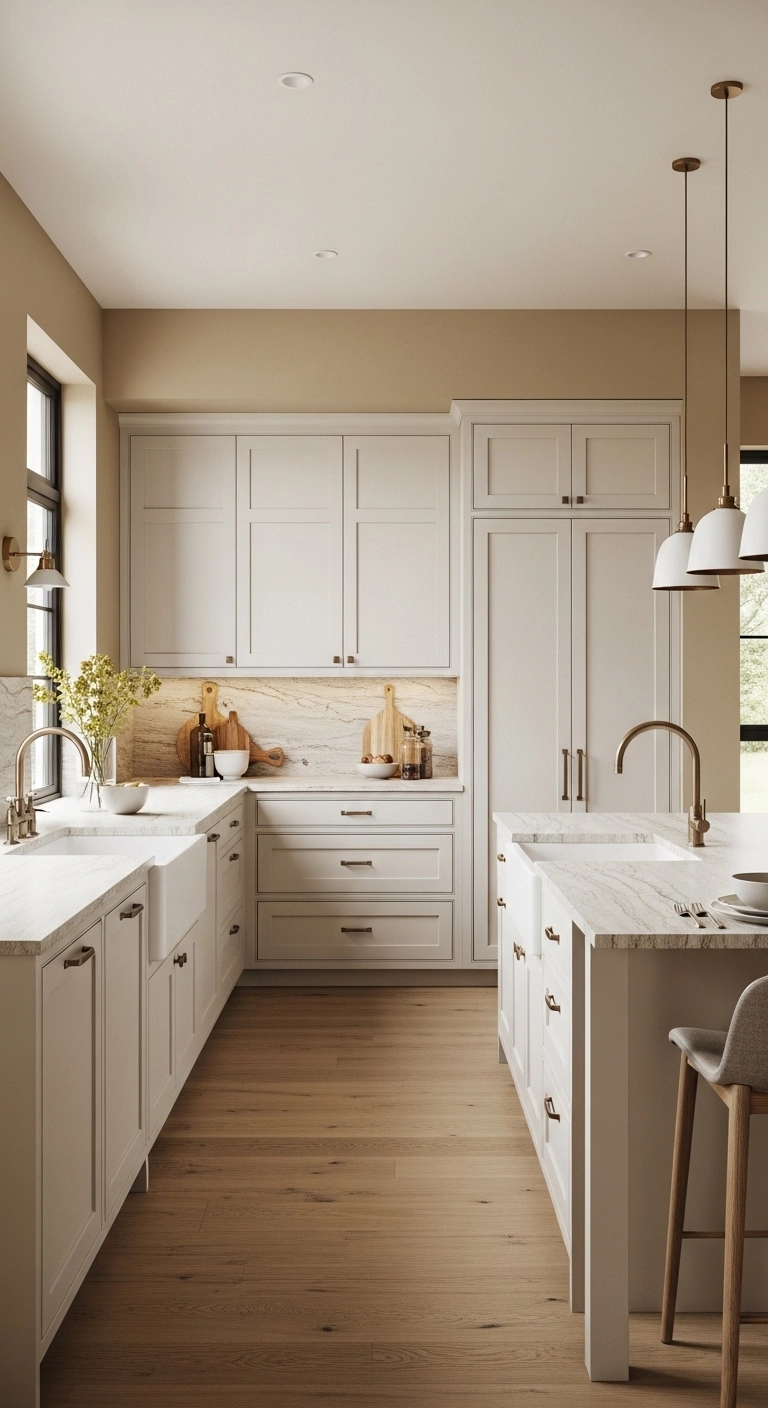
Modern kitchens often look best in a restrained color palette. Think warm white, greige, taupe, mushroom, soft gray, sand, charcoal, or muted wood tones.
This works because a limited palette creates visual order. It also gives the room a clean foundation, which is useful in a space already cluttered with appliances, cookware, and everyday activities.
Soft neutrals work almost anywhere, but they are especially helpful in kitchens with awkward layouts, limited light, or lots of competing finishes. They smooth things out without making the space feel flat.
To keep a neutral kitchen interesting, mix textures instead of adding too many colors. Pair smooth cabinetry with natural stone, brushed metal, wood grain, or subtly textured tile. That gives the room depth without chaos.
The common mistake is choosing neutrals that fight each other. A cool gray cabinet next to a warm beige floor can feel slightly off in a way that is hard to ignore. Check undertones before committing.
Warm Wood Accents to Keep the Space from Feeling Cold
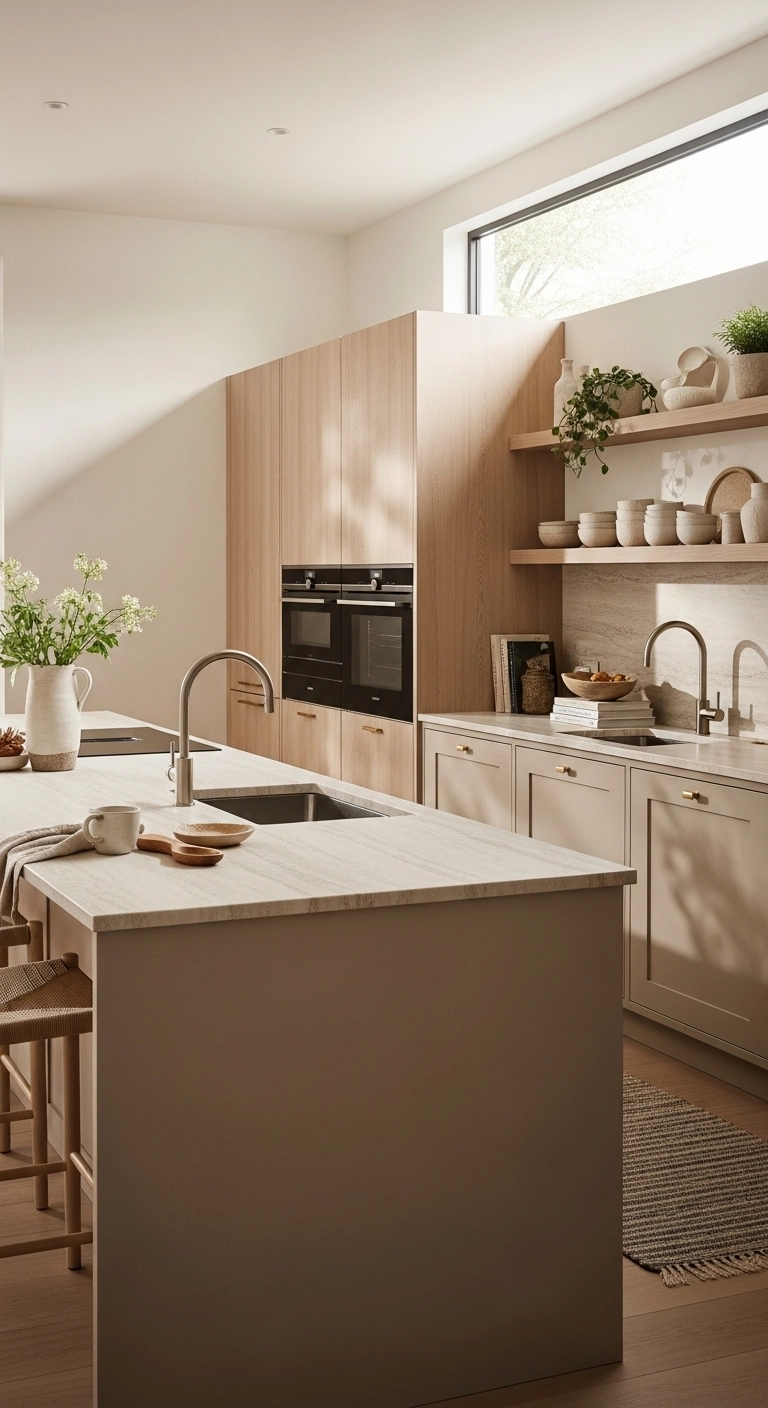
A modern kitchen does not need to be all white, black, and steel. Wood adds warmth, softness, and a lived-in balance that makes the room feel more welcoming.
It works because modern design can sometimes feel too sharp if every surface is hard and crisp. Wood brings in a natural element that cuts through that without ruining the clean look.
This idea fits almost any kitchen style, but it’s especially useful in all-white kitchens, black and white kitchens, or spaces with a lot of stone and metal. It can appear as a complement to lower cabinets, open shelving, bar stools, a vent hood detail, or a kitchen island.
Stick with wood tones that feel simple and natural rather than overly orange or glossy. White oak, walnut, and medium ash tones tend to pair well with modern materials.
The caution here is overdoing it. Too much wood in too many tones can shift the kitchen away from sleek and into visually confusing.
Waterfall Countertops for a More Sculptural Finish
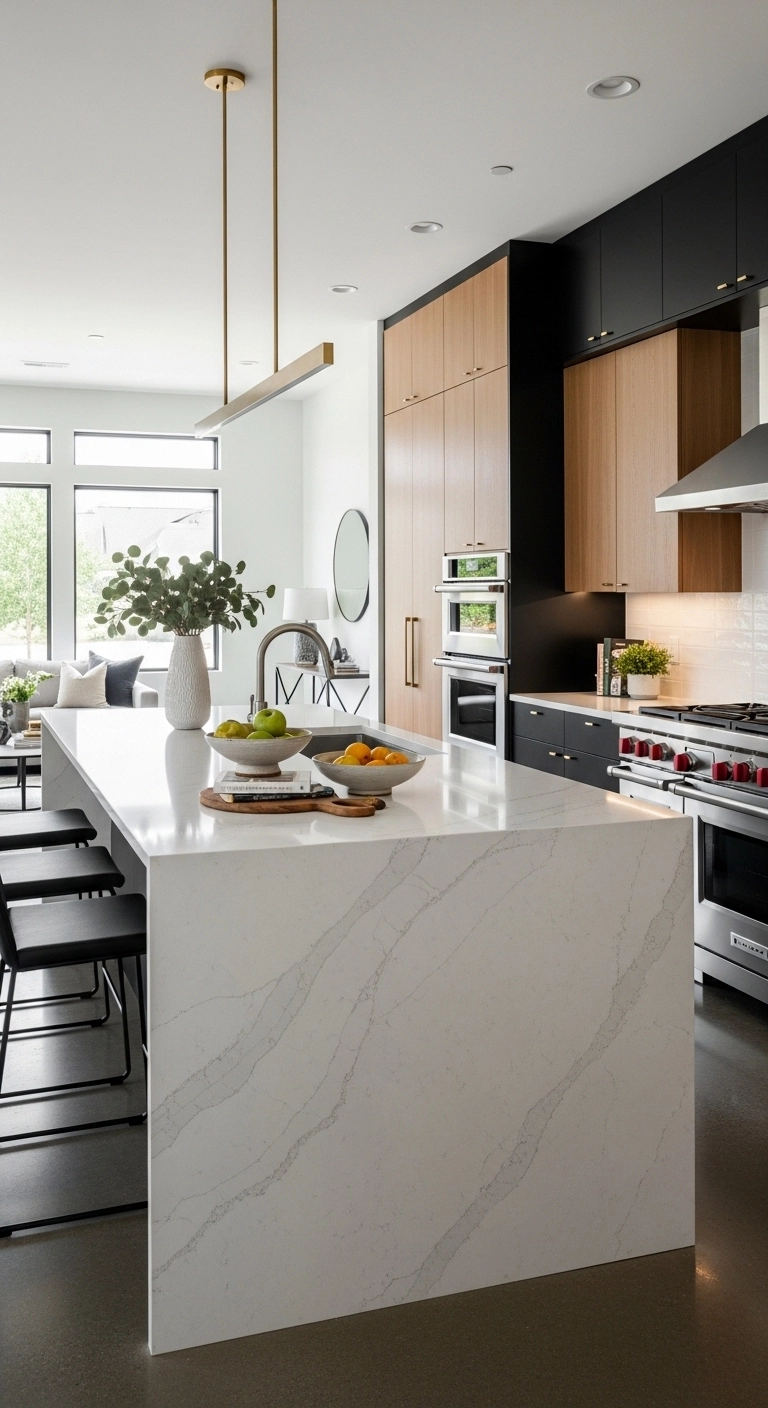
A waterfall countertop continues down the side of the island instead of stopping at the top. It creates a strong, clean edge that feels tailored and modern.
This works because it turns the island into more of a built-in design feature rather than just a work surface. It also makes beautiful materials like quartz or stone feel more intentional.
Waterfall edges work best in kitchens with islands, especially open kitchens where the island is a major focal point. They suit homes that lean modern, contemporary, or slightly luxe without feeling flashy.
For styling, keep the surrounding elements simple so the countertop can do its job. Slab-style backsplash, minimal pendants, and quiet cabinetry help the island stand out in the right way.
The limitation is cost. A waterfall edge uses more material and more fabrication, so it is not always the best use of budget if other kitchen basics still need attention.
Integrated Appliances for a Smoother Visual Flow
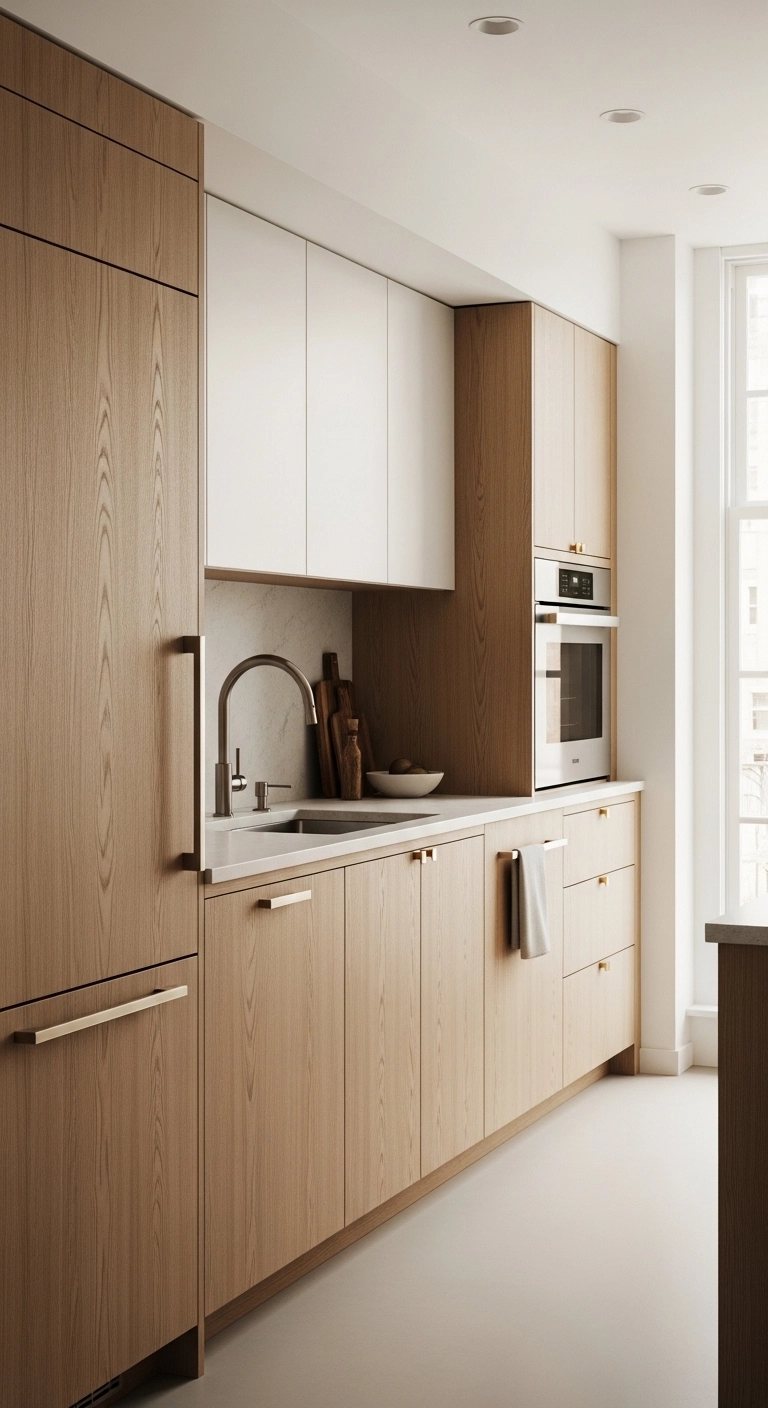
Integrated appliances are designed to blend into the cabinetry, either by hiding behind cabinet panels or by using cleaner front profiles.
The big advantage is that the kitchen looks less interrupted. Instead of every appliance calling attention to itself, the room feels more cohesive.
This works especially well in open-plan spaces, small kitchens, and homes where the kitchen connects directly to the dining or living areas. It helps the room feel more like part of the architecture and less like a collection of machines.
Use this idea where it counts most, such as the fridge or dishwasher, if doing every appliance is not realistic. Even partial integration can make a visible difference.
The caution is budget again. Panel-ready appliances usually cost more, and they may limit your options. It is a great feature, but not essential if it forces compromises elsewhere.
A Slab Backsplash Instead of Busy Tile
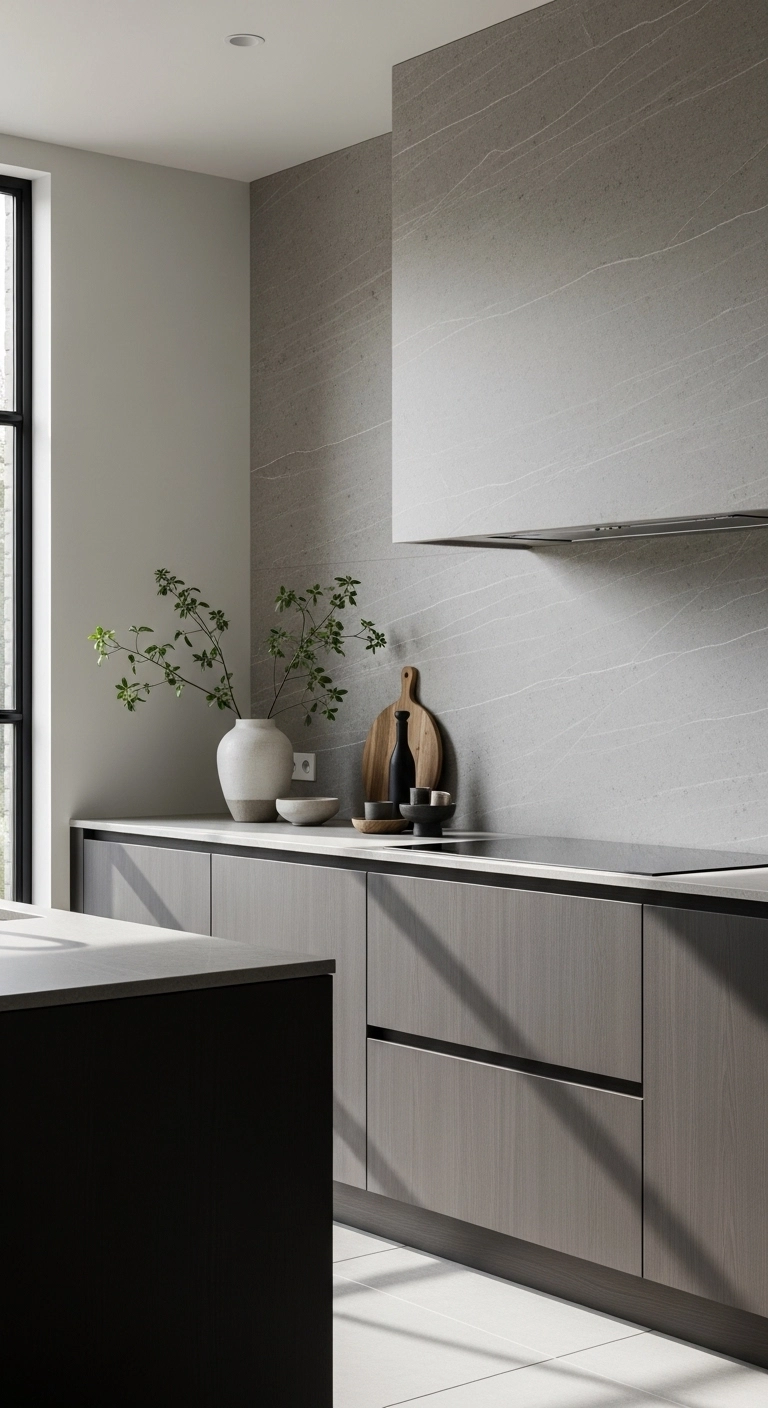
A slab backsplash uses one continuous piece of stone or quartz rather than many small tiles. The result is sleek, simple, and easy on the eyes.
It works because fewer lines mean less visual interruption. It also creates a very clean backdrop behind the counters, which is useful in a room already full of daily movement.
This idea works best in kitchens aiming for a refined modern look, especially when paired with simple cabinetry and a matching countertop. It is particularly effective in kitchens where the backsplash is highly visible from nearby rooms.
For the best result, let the material be the feature. A softly veined stone or subtle quartz pattern usually feels more timeless than something overly dramatic.
The downside is cost, and the look can feel too plain if the rest of the kitchen is also very flat. If you skip tile, make sure you still have enough texture elsewhere.
Under-Cabinet Lighting for a Cleaner, More Finished Feel
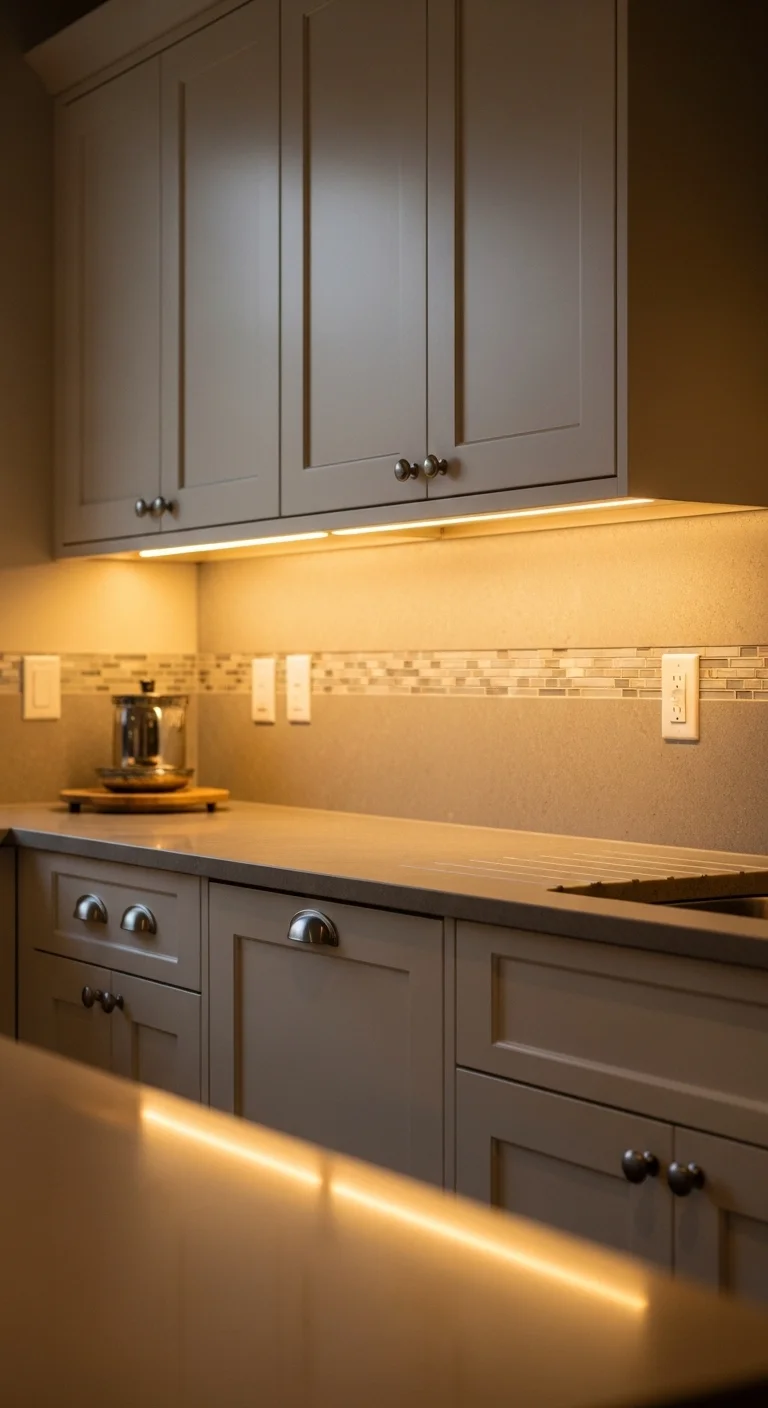
Undercabinet lighting is one of those features that quietly improves almost everything. It illuminates work surfaces, adds warmth in the evening, and makes a kitchen feel more complete.
This works because modern kitchens depend on clarity. Good lighting sharpens the lines, improves function, and helps even simple materials look better.
It is useful in nearly every kitchen, but especially in darker layouts, apartments, and kitchens with limited natural light. It is also helpful if you want the kitchen to feel softer at night without relying only on harsh ceiling lights.
Choose a warm white or neutral white light rather than something too blue. Keep the fixtures hidden so the glow feels subtle rather than obvious.
The main mistake is treating it like a decorative extra instead of a practical layer. Bad lighting can make even a beautiful kitchen feel disappointing.
Mixed Materials That Still Feel Controlled
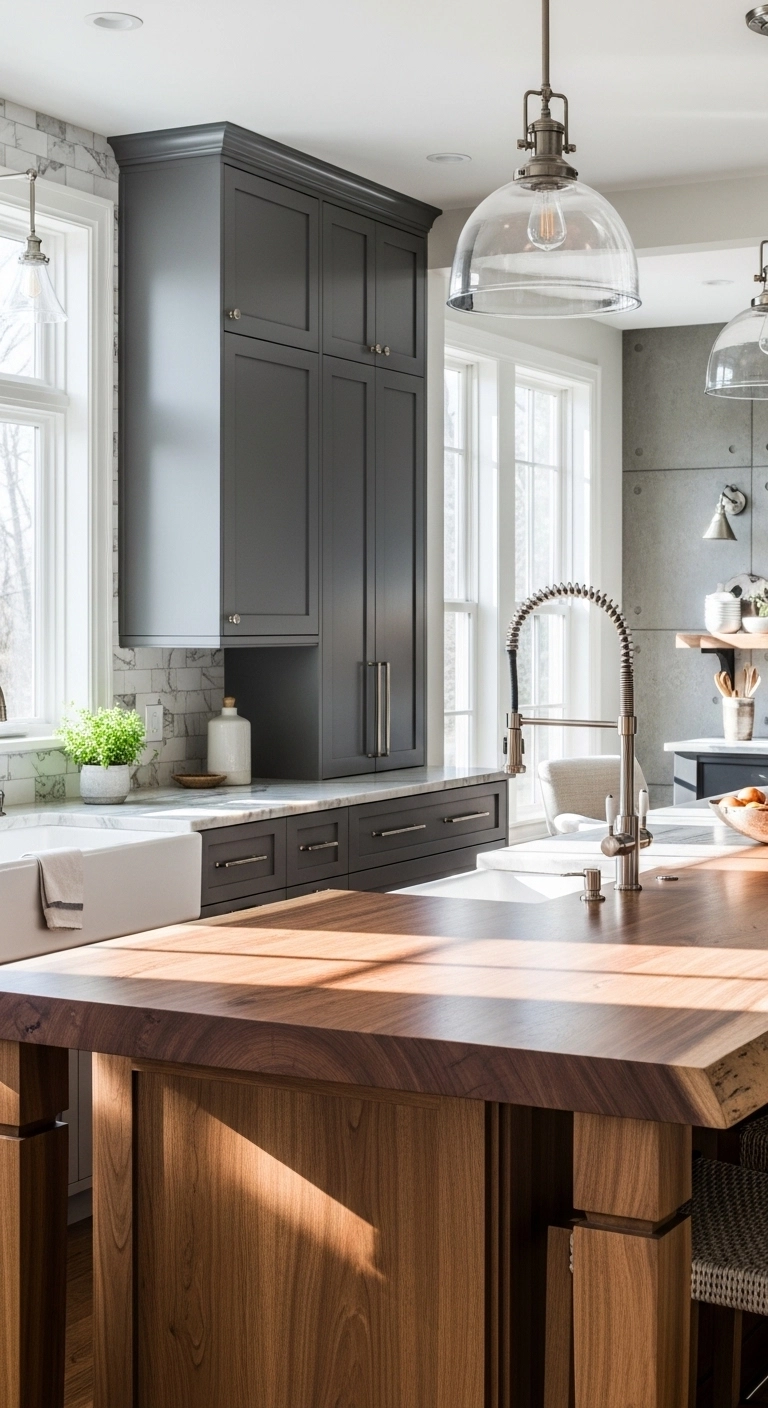
A sleek kitchen does not have to use one material everywhere. Mixing finishes can make the space more interesting, as long as the palette stays controlled.
This works because contrast gives the eye something to notice. Matte cabinets against polished stone, warm wood against black metal, or smooth quartz against textured plaster can make a modern kitchen feel rich instead of flat.
This idea suits larger kitchens especially well, since they can handle more variation without feeling cramped. It also works in custom kitchens where you want a more designed, less off-the-shelf look.
The best way is to choose two or three key materials and repeat them. This repetition is what gives the room a deliberate feel.
The caution is easy to guess: too many materials quickly turn sleek into scattered. If every surface is trying to be the star, none of them really are.
A Minimal Open Shelf Moment Instead of Too Many Upper Cabinets
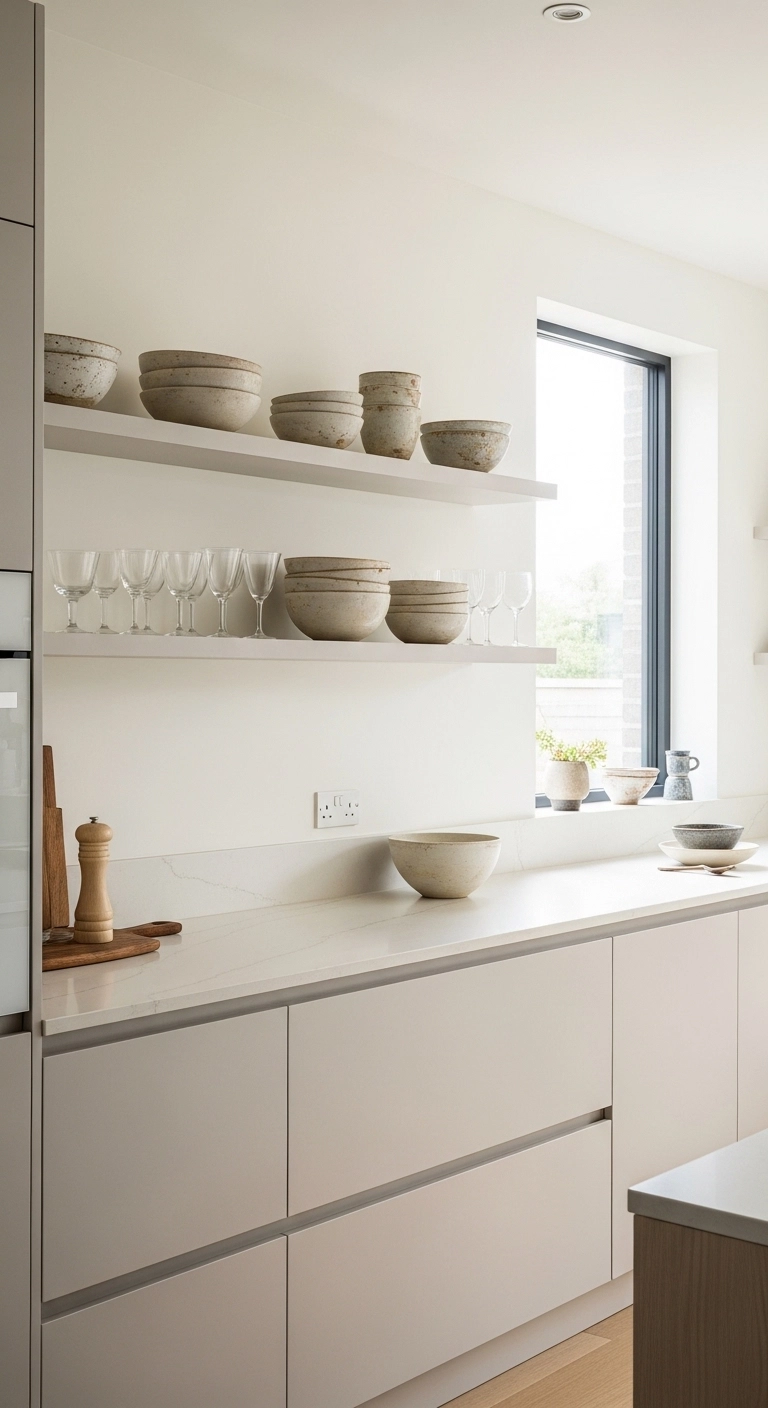
Open shelving can look fresh and airy in a modern kitchen when used sparingly. One or two shelves can break up a wall of cabinetry and create room for a few useful or beautiful items.
This works because it adds breathing room. It can also keep the kitchen from feeling too heavy, especially in smaller rooms or kitchens with low ceilings.
It suits people who like a slightly softer modern look and are willing to keep styling simple. Best uses include a coffee zone, a small section near a window, or one short run where upper cabinets would feel bulky.
Keep the shelf styling practical. A few everyday dishes, glassware, or simple ceramic pieces usually look better than a full display situation. This is a kitchen, not a gift shop.
The caution is maintenance. Open shelves collect dust and expose clutter fast, so they are best for people who will actually keep them edited.
Statement Island Lighting with Simple Shapes
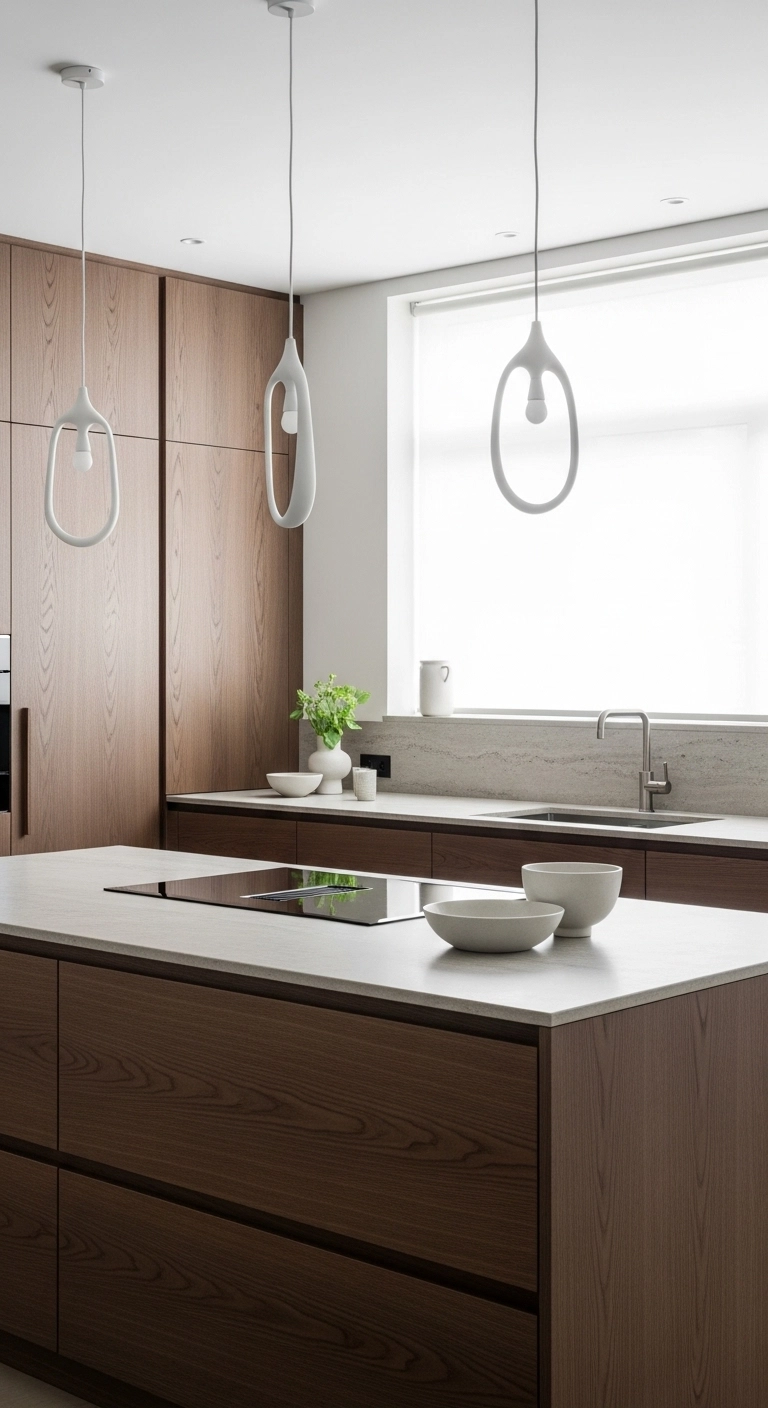
Modern kitchen lighting works best when it feels intentional rather than fussy. Clean-lined pendants or sculptural fixtures above the island can add personality without making the room feel overstyled.
This works because lighting sits right at eye level. It can help define the island, add warmth, and create a focal point in a kitchen that might otherwise be very restrained.
This idea fits kitchens with islands or peninsulas, especially open layouts where the lighting is visible from other rooms. It is a chance to bring in shape and rhythm without adding clutter to surfaces.
Choose fixtures with simple forms such as globes, cylinders, cones, or slim linear designs. Two or three matching pendants usually feel cleaner than a mix of unrelated styles.
The mistake to avoid is picking lights that are too tiny or too ornate. If they disappear, they do nothing. If they are too decorative, they can pull the kitchen out of balance.
Floor-to-Ceiling Cabinetry for a Built-In Look
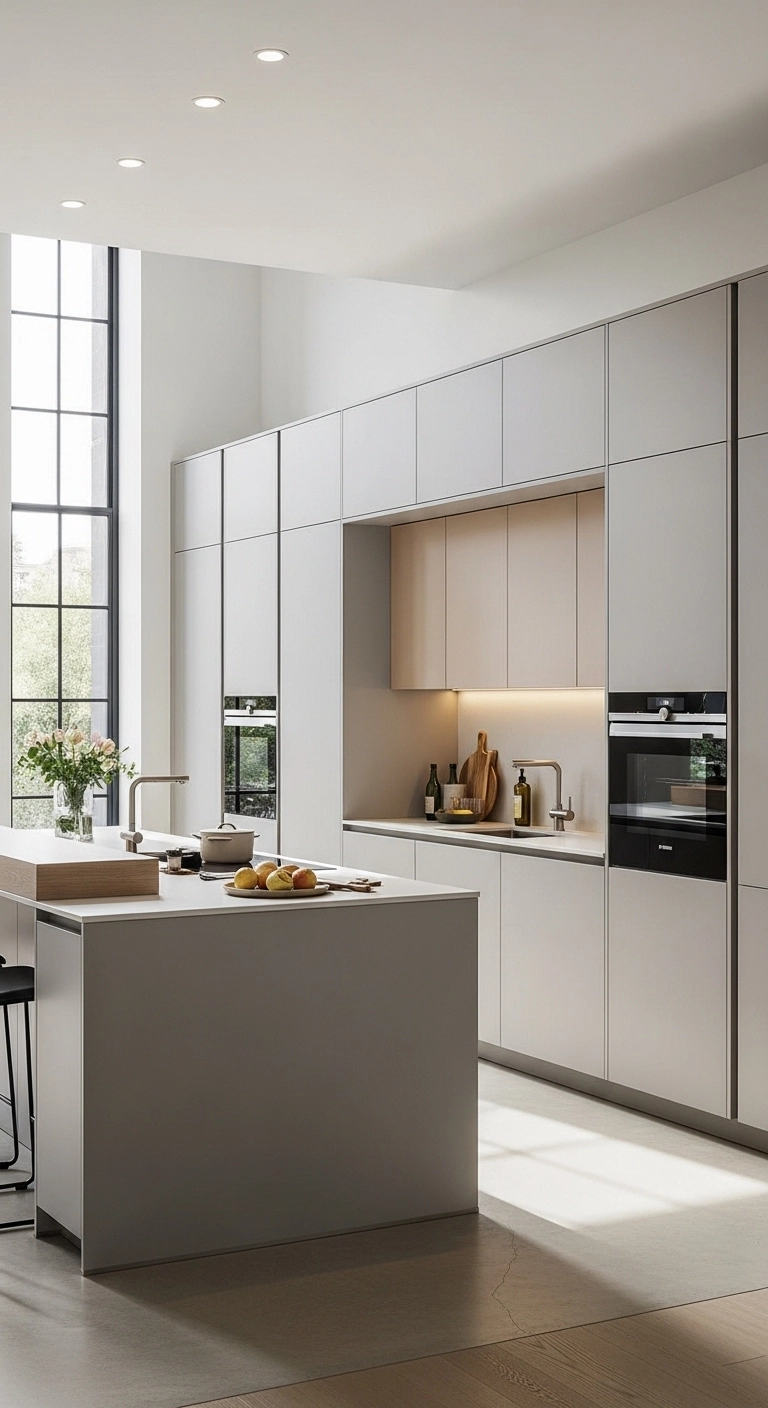
Taking cabinetry all the way to the ceiling can make a kitchen look taller, neater, and more custom.
This works because it removes the awkward dead zone above standard cabinets. That empty strip tends to collect dust and visually cut the room short. Full-height cabinetry feels more complete.
It works especially well in smaller kitchens, galley kitchens, and modern homes where built-in storage is part of the look. It is also a smart move if you need extra storage for less-used items.
To keep it from feeling too heavy, use lighter finishes, balanced proportions, or a mix of tall cabinets and open space. In some kitchens, using tall cabinets on one wall only can be enough.
The caution is scale. In a very small kitchen with dark cabinetry, floor-to-ceiling units can feel imposing unless the rest of the design stays light and simple.
A Monochrome Kitchen with Texture Instead of Extra Color
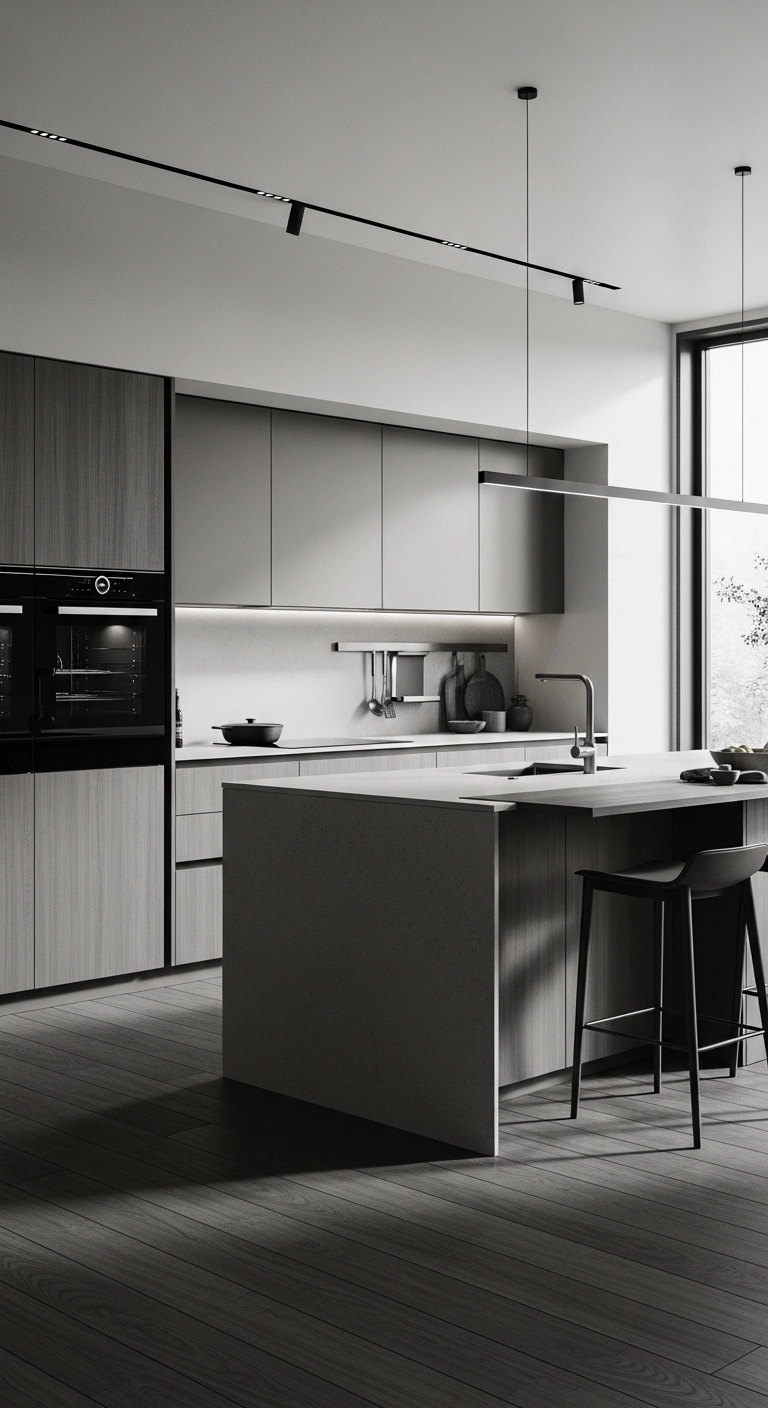
A monochrome kitchen uses shades from the same color family rather than several contrasting colors. Done well, it can feel very calm and very modern.
This works because the eye moves through the room more smoothly. There is less interruption, so the space feels cohesive and clean.
This idea suits readers who want a quiet, polished look and do not need the kitchen to feel playful or highly decorated. It works beautifully in white, beige, gray, charcoal, or earthy taupe palettes.
The secret is texture. Use ribbed glass, brushed metal, honed stone, wood grain, linen-look window treatments, or plaster-effect finishes to keep the space from feeling flat.
The obvious caution is that monochrome can become boring if every surface has the same finish and value. The room still needs variation, just in a quieter way.
Black Accents for Definition and Contrast
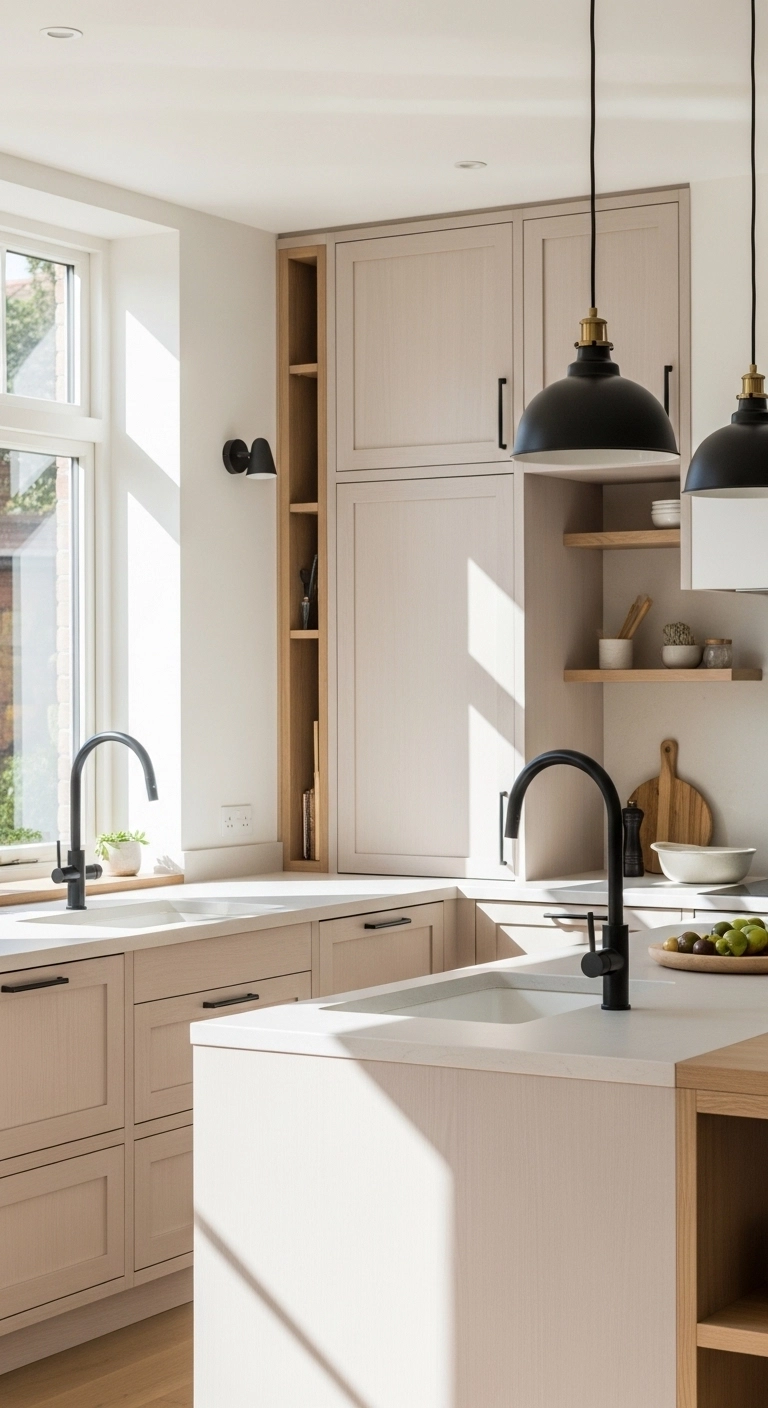
Black accents can sharpen a modern kitchen without taking over the whole room. Think faucet finishes, window frames, slim hardware, stools, or pendant lights.
This works because a little contrast helps define the space. In kitchens with light cabinetry or warm woods, black details add structure and keep everything from drifting into overly soft territory.
This idea works best in white kitchens, warm neutral kitchens, and natural wood kitchens. It is a good option for people who want modern style but still want some edge.
The trick is restraint. Repeat black in a few places so it feels intentional, but do not scatter it everywhere. A faucet, lights, and hardware may be enough.
One caution: strong black accents can feel harsh in very small or dim kitchens if there is not enough light or softness elsewhere.
A Hidden Pantry or Appliance Garage for Better Visual Order
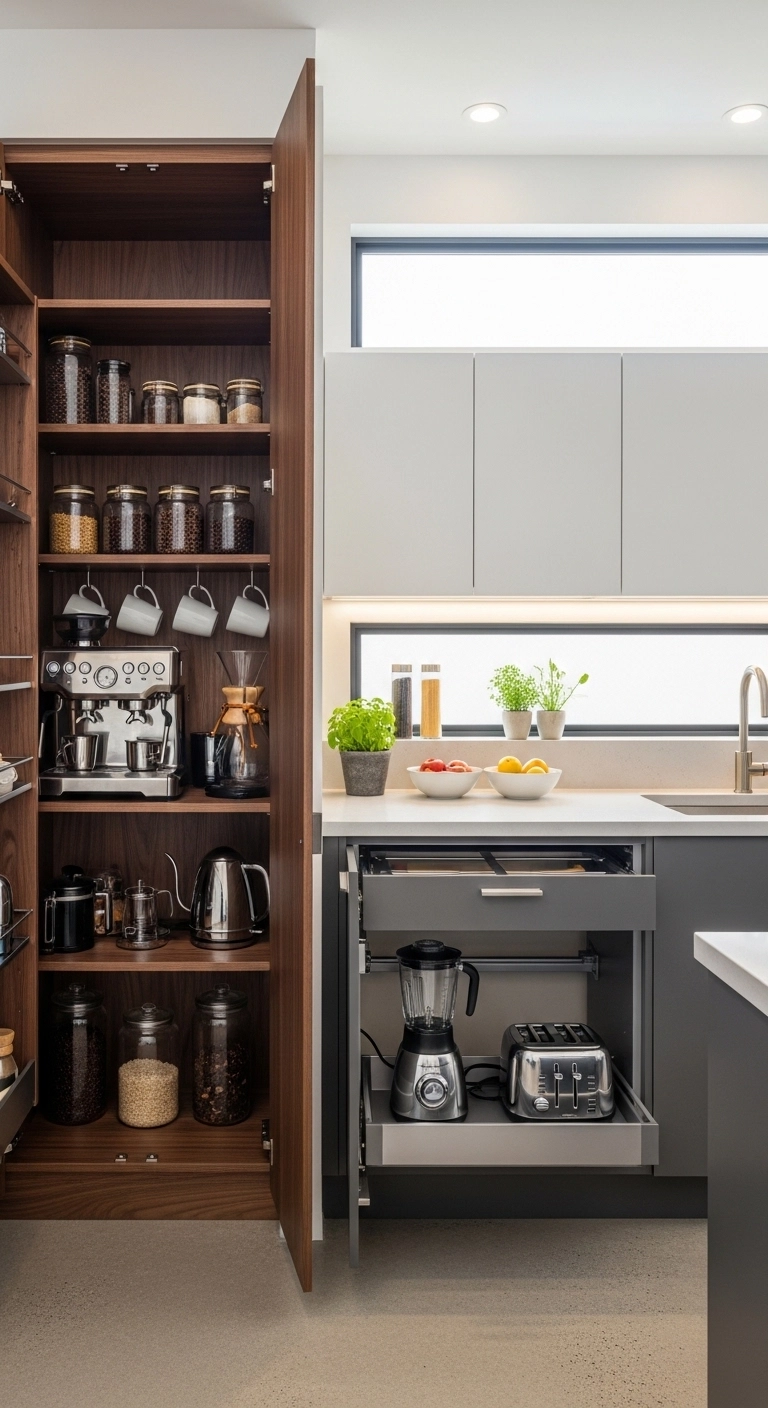
Modern kitchens look their best when the everyday mess has somewhere to go. A hidden pantry, appliance garage, or concealed storage zone helps keep counters clear without making the kitchen less practical.
This works because clutter is usually what breaks the clean look first. Even a beautiful kitchen starts feeling chaotic when the toaster, blender, snack baskets, and coffee pods all move in permanently.
This idea is ideal for busy households, smaller kitchens with limited prep space, and anyone who actually uses their kitchen a lot. It supports real life, which is always more helpful than designing for a fantasy version of Tuesday morning.
To make it useful, plan storage around habits. A breakfast station, coffee setup, baking cabinet, or charging drawer often works better than vague “extra storage.”
The mistake is creating hidden storage that is annoying to access. If it is awkward, people will stop using it and the counters will fill up again.
Large-Format Flooring for a More Streamlined Base
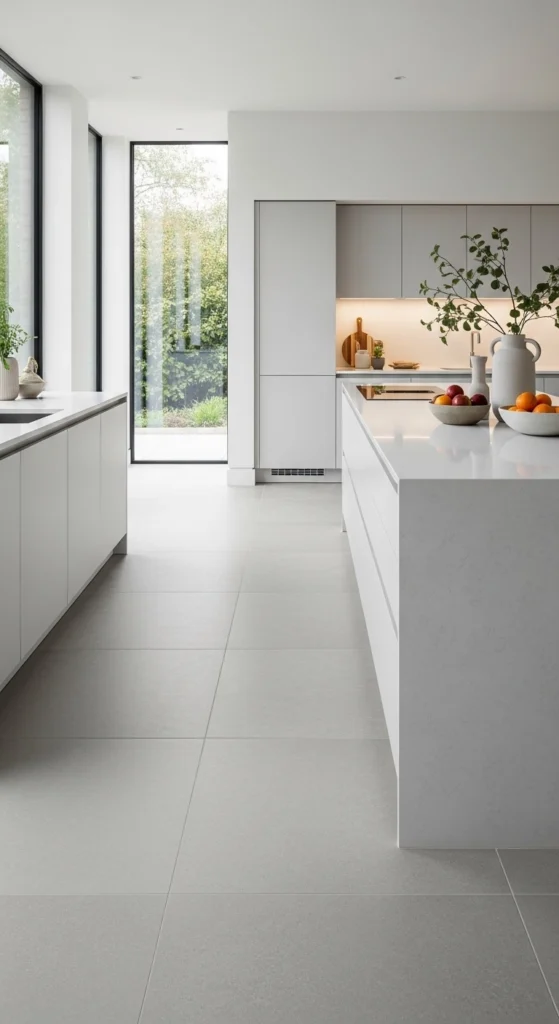
The floor covers a huge amount of visual space, so it has a major effect on how modern the kitchen feels. Large-format tile or wide-plank flooring can make the room feel more open and less busy.
This works because fewer grout lines or seams create a smoother visual field. That helps the entire kitchen feel cleaner and more spacious.
It suits almost any layout, but it is especially useful in smaller kitchens, narrow kitchens, and open-plan spaces where continuity matters. It can also help connect the kitchen to the rest of the home more naturally.
Choose flooring that supports the rest of the palette rather than competing with it. Soft stone looks, warm wood tones, and matte finishes work especially well in modern spaces.
The caution is practical: some trendy flooring looks great in photos but shows dirt, scratches, or streaks too easily. A kitchen floor has a job to do, so durability matters just as much as style.
Conclusion
A strong modern kitchen design isn’t about stripping down a room until it feels lifeless. It’s about making smart choices that create a sense of clarity, function, and comfort. The most beautiful kitchens usually get there through a mix of simple lines, thoughtful storage, restrained materials, and a few well-placed details that keep the space warm and usable.
You do not need every idea on this list to get the look. Even a few changes, like cleaner cabinetry, better lighting, warmer materials, or more hidden storage, can make a kitchen feel noticeably more modern without losing the comfort that makes it worth using every day.