17 Small Bathroom Ideas That Maximize Space
A small bathroom can feel cramped fast, especially when every surface ends up holding something. The good news is that you do not need a major renovation to make it work better. The right choices can make a tight bathroom feel more open, more organized, and much easier to use every day.
These small bathroom ideas focus on real-life improvements: smarter storage, better layout choices, and design details that help the room feel lighter instead of busier. Some are simple weekend upgrades. Others are bigger changes worth considering if you are remodeling. All of them aim to help a small bathroom do more without looking overstuffed.
Why small bathroom ideas matter so much
In a small bathroom, every inch pulls more weight. A bulky vanity, the wrong mirror, or too many visual breaks can make the room feel smaller than it really is. On the other hand, a few thoughtful choices can create better flow, open up sightlines, and give your storage a lot more structure.
That is why the best small bathroom ideas usually do two jobs at once. They save space, and they also make the room look calmer. When storage is built in, colors feel cohesive, and fixtures fit the room properly, even a compact bathroom can feel polished instead of cramped.
1. Use a floating vanity to free up floor space
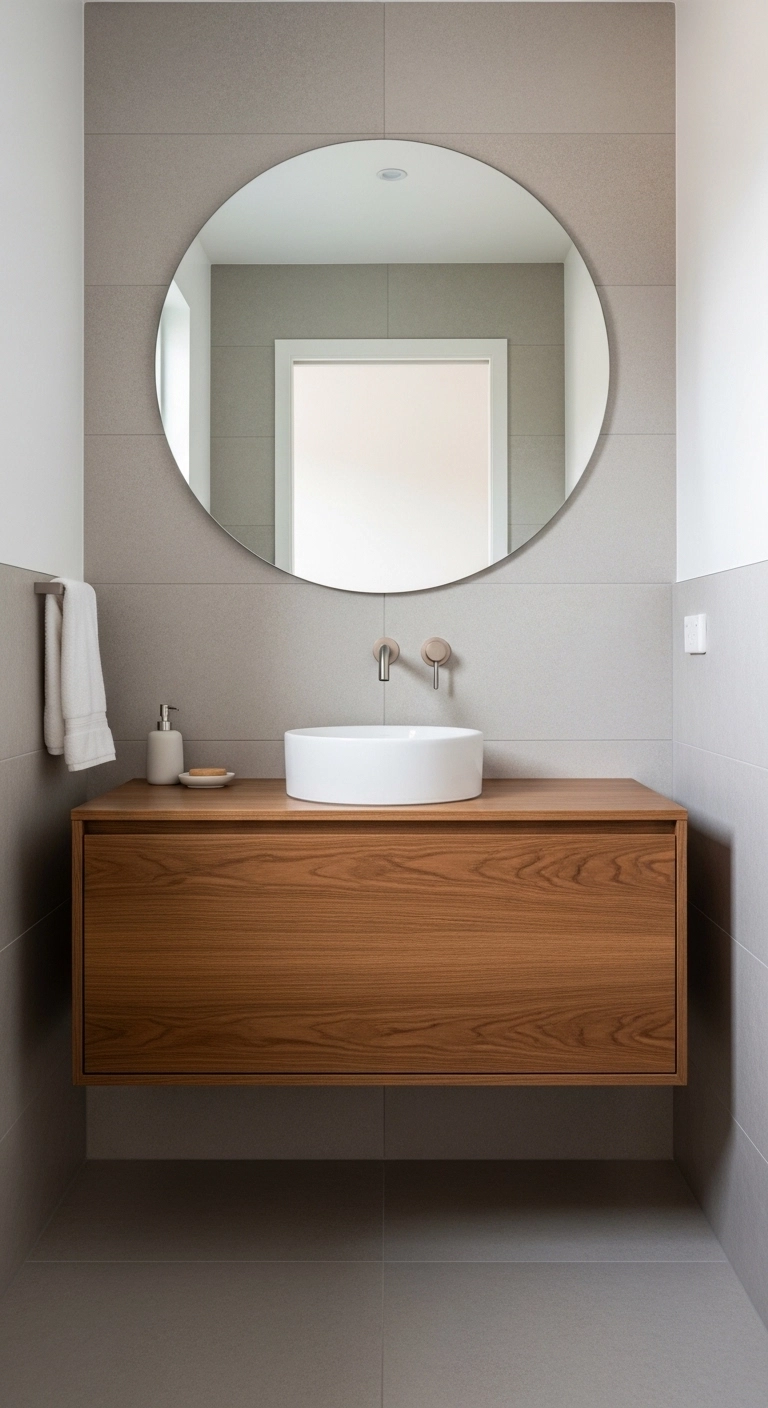
A floating vanity is mounted to the wall instead of sitting directly on the floor. That one change makes a small bathroom feel more open because you can see more of the floor underneath it.
This works because the visible floor area makes the room feel larger. It also makes cleaning easier, which is never a bad thing in a bathroom.
A floating vanity suits narrow bathrooms, powder rooms, and modern spaces especially well. It is also helpful when you need storage but do not want the room to feel visually heavy.
Style it with clean hardware, a simple countertop, and a mirror that lines up neatly above it. If you want warmth, wood tones work beautifully. If you want a crisp look, painted finishes in white, soft gray, or muted green are easy to live with.
One caution: do not choose a vanity that is too shallow to be useful. Space-saving is great, but not if the sink becomes awkward or the storage becomes basically decorative.
2. Go vertical with wall-mounted storage
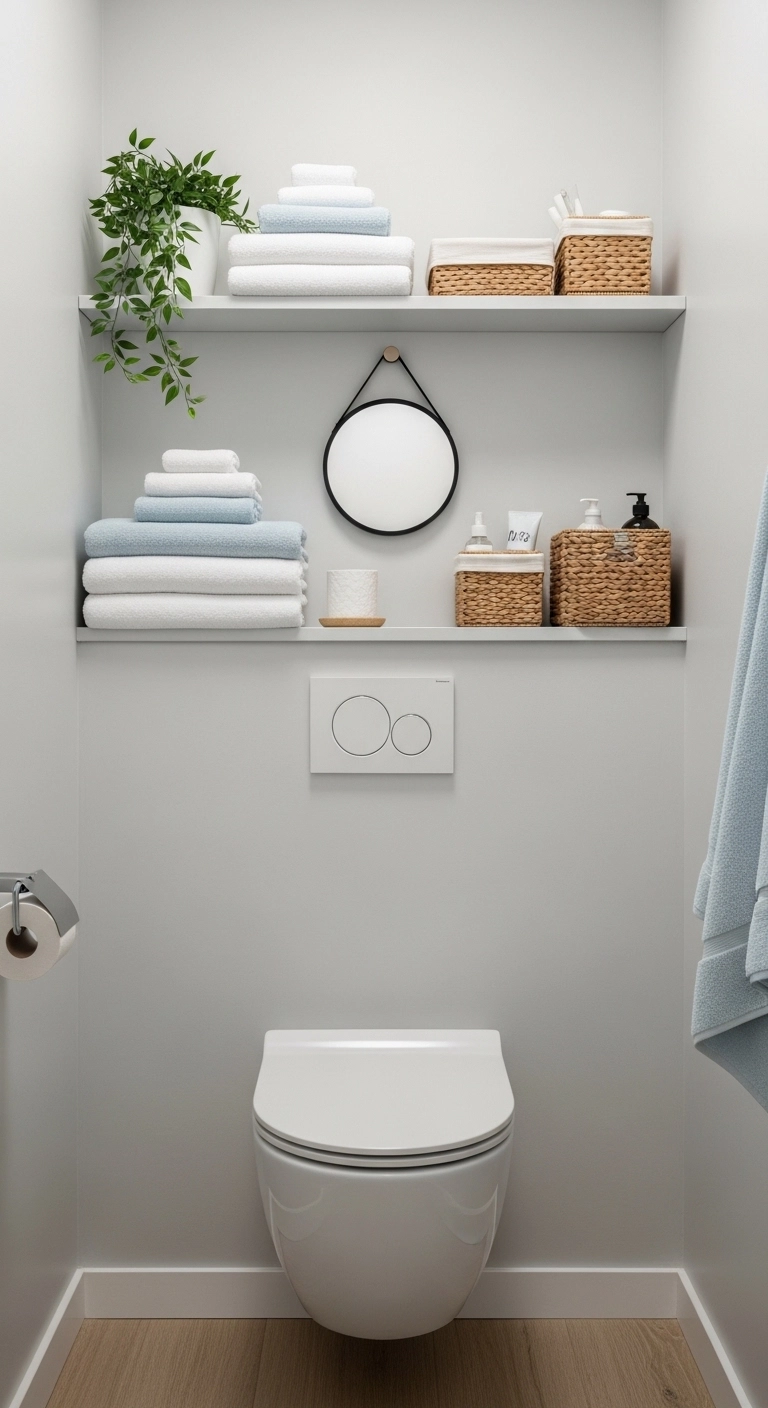
When floor space is limited, the walls need to do more. Wall-mounted cabinets, slim shelving, and tall storage units help you store everyday essentials without eating into the room’s footprint.
This works best because it takes advantage of vertical space that often goes unused. In a small bathroom, that empty space above the toilet, next to the mirror, or above the door can be surprisingly valuable.
This idea suits bathrooms with minimal vanity storage or shared bathrooms where toiletries multiply faster than anyone admits. It is especially useful if you want storage but do not have room for extra furniture.
Keep the look light by choosing shelves that are slim and proportionate. Open shelving works well for rolled towels, small baskets, and a few nice-looking items. Closed cabinets are better if you want less visual clutter.
The main mistake to avoid is overloading every inch of wall. Too many shelves can make a bathroom feel busy and boxed in. A few well-placed storage pieces work better than a whole wall of cramped cubbies.
3. Choose a mirror that feels generous, not tiny
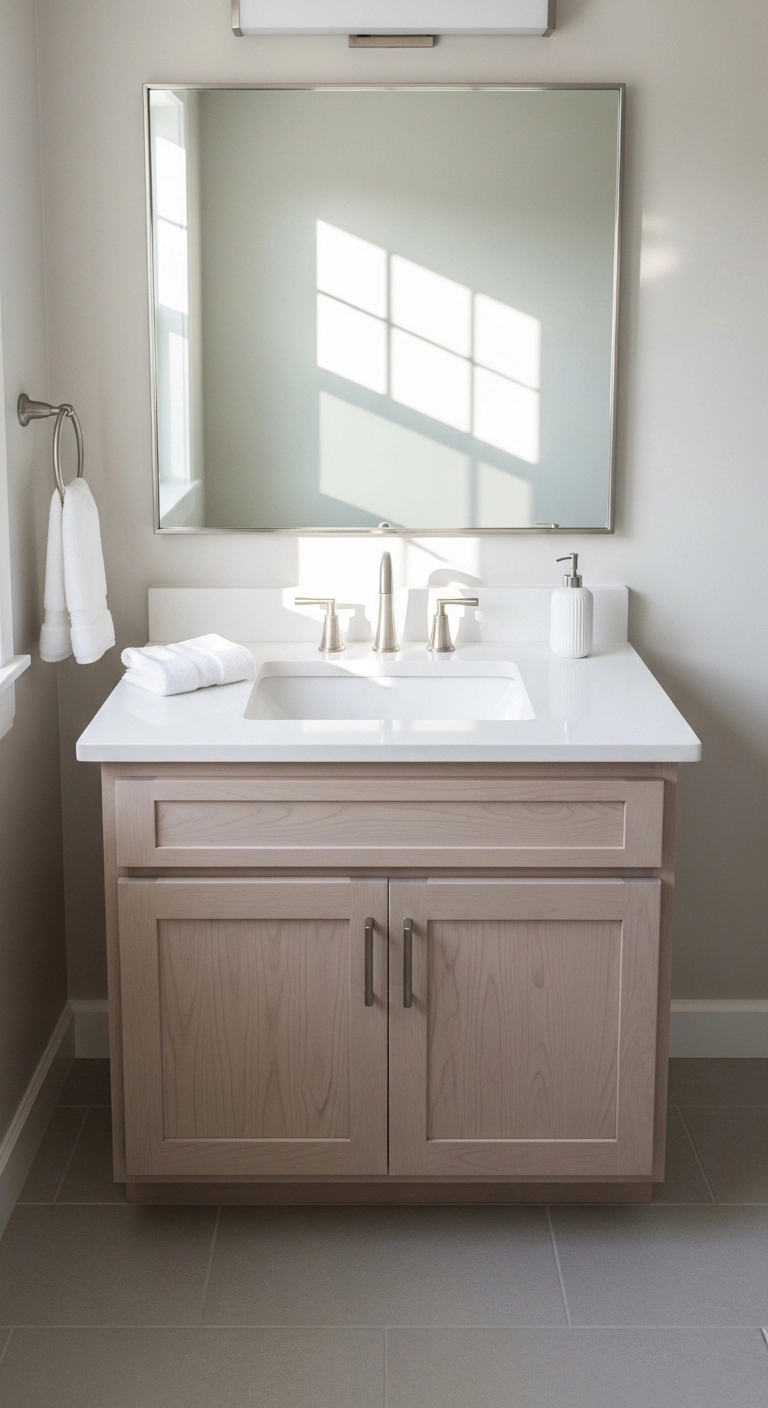
A larger mirror is one of the easiest ways to make a small bathroom feel bigger. It reflects light, opens up the room visually, and makes the whole vanity area feel more intentional.
This works because mirrors extend the visual field. In a compact room, that extra sense of depth matters more than people think.
This is a strong choice for almost any bathroom layout, especially those with limited natural light. A mirror that spans nearly the width of the vanity usually looks more balanced than a small one centered in a sea of blank wall.
For styling, keep the shape consistent with the room’s mood. Rounded mirrors soften sharp lines. Rectangular mirrors feel classic and practical. A thin frame keeps the look clean, while a wood or metal frame can add some character.
The usual mistake is choosing a mirror that is too small for the vanity below it. It can make the whole setup feel undersized and oddly disconnected.
4. Install a glass shower panel instead of a heavy curtain
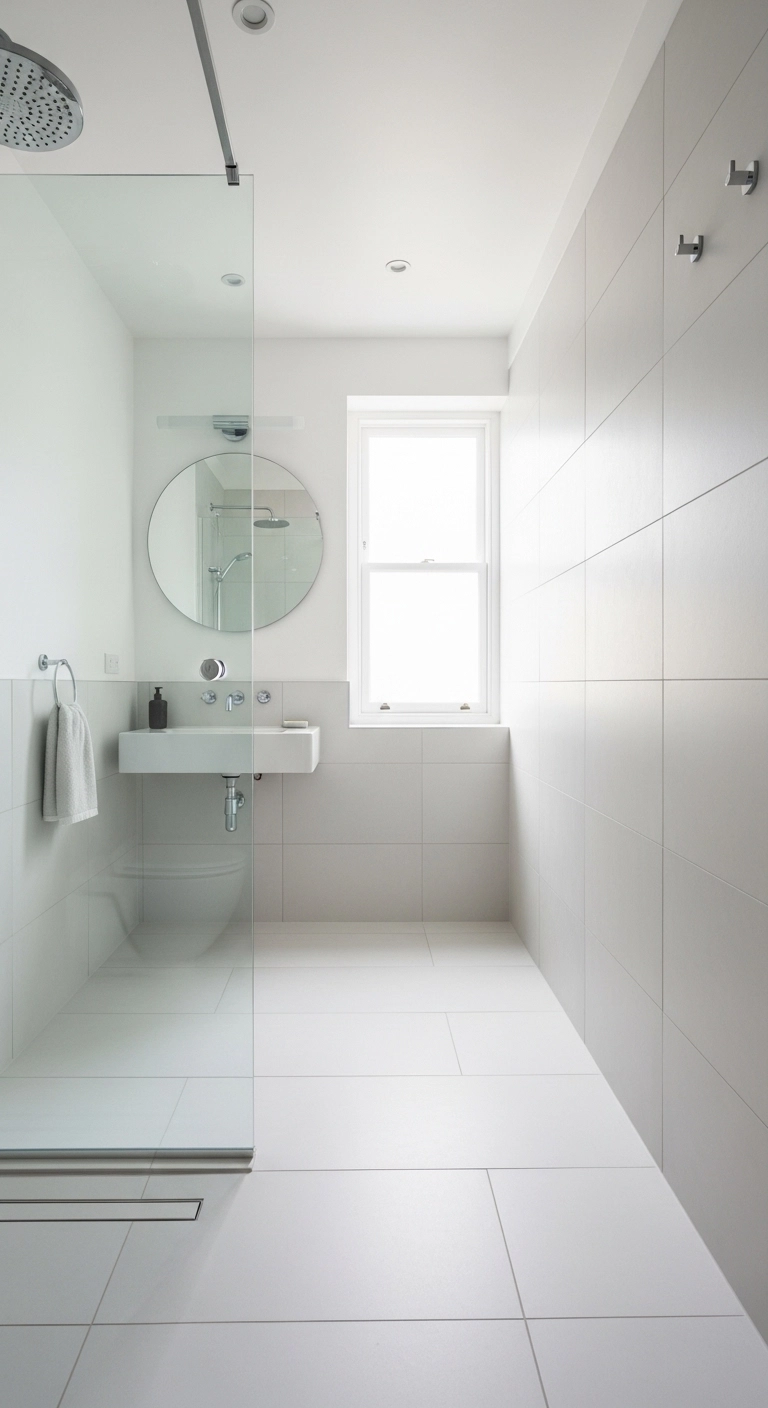
A clear glass shower panel or door keeps the eye moving through the room. Compared with an opaque shower curtain, it creates fewer visual stops, which helps the bathroom feel more open.
This works especially well in bathrooms where the shower or tub takes up a large portion of the room. If that area is visually blocked off, the bathroom can feel chopped in half.
It suits modern bathrooms, compact en suites, and any layout where openness matters more than maximum privacy. If you share the space and prefer a little softness, frosted or lightly textured glass can be a good middle ground.
Pair it with simple tiles and minimal hardware to keep the shower from visually crowding it. If you use a curtain, choose one in a light tone and hang it high to give the room more height.
The main limitation is maintenance. Clear glass looks great, but it does show water spots. If that is going to annoy you daily, be honest about it before committing.
5. Pick a light, cohesive color palette
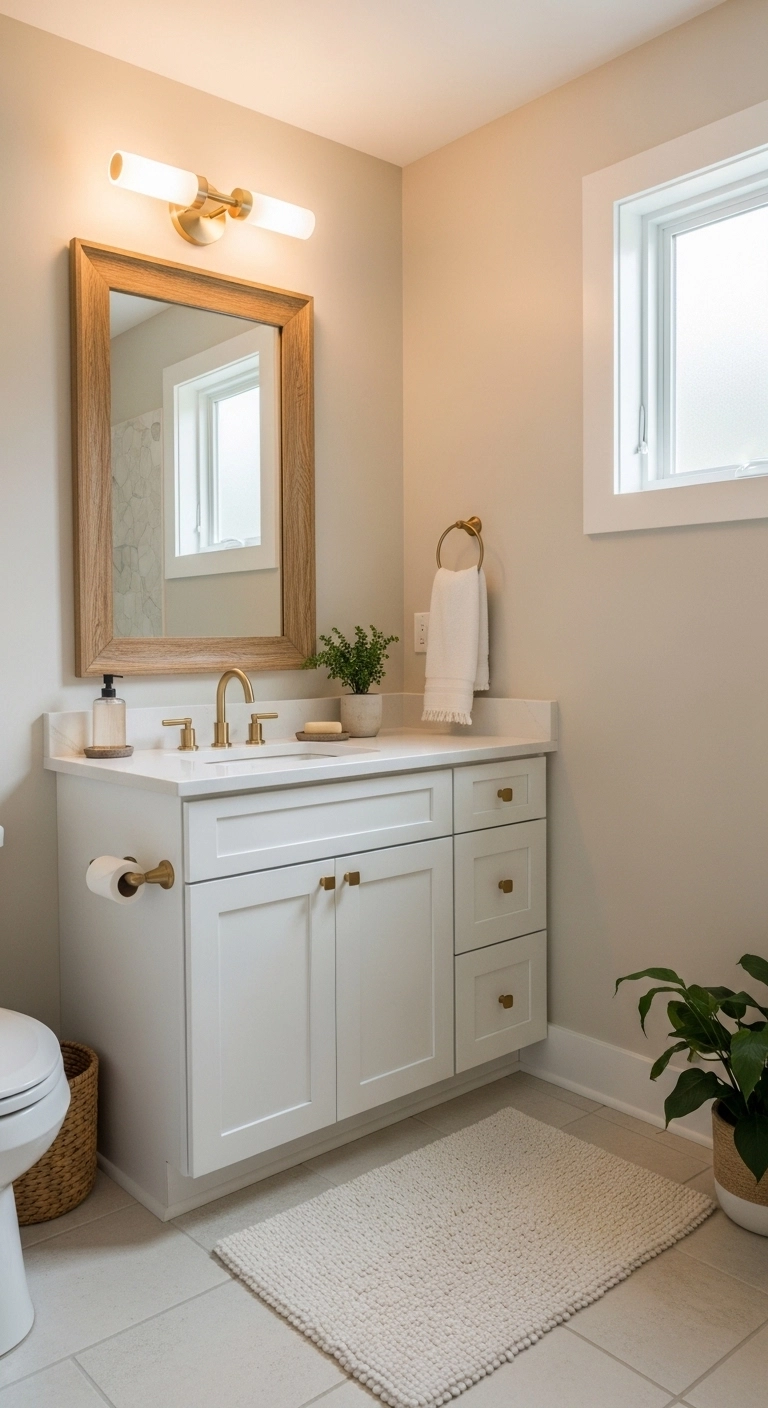
Color will not magically add square footage, but it can absolutely change how spacious a bathroom feels. Light, cohesive tones help surfaces blend together, which makes the room feel less broken up.
This works because strong contrast can emphasize edges and boundaries. In a small bathroom, too many abrupt changes can make the room feel busier and tighter.
This idea fits almost every small bathroom, whether your style is minimal, classic, coastal, or warm modern. Whites, soft greiges, pale taupes, muted greens, and gentle blue-grays all work well when used with intention.
The key is cohesion, not boredom. You can still bring in texture through tile, wood, metal finishes, or towels. A room with subtle variation usually feels richer than one that relies on lots of different colors.
A common mistake is making everything bright white with no contrast or warmth. That can feel flat and clinical. Add depth through texture, soft undertones, or a darker accent in the mirror frame or hardware.
6. Use large-format tile to reduce visual clutter
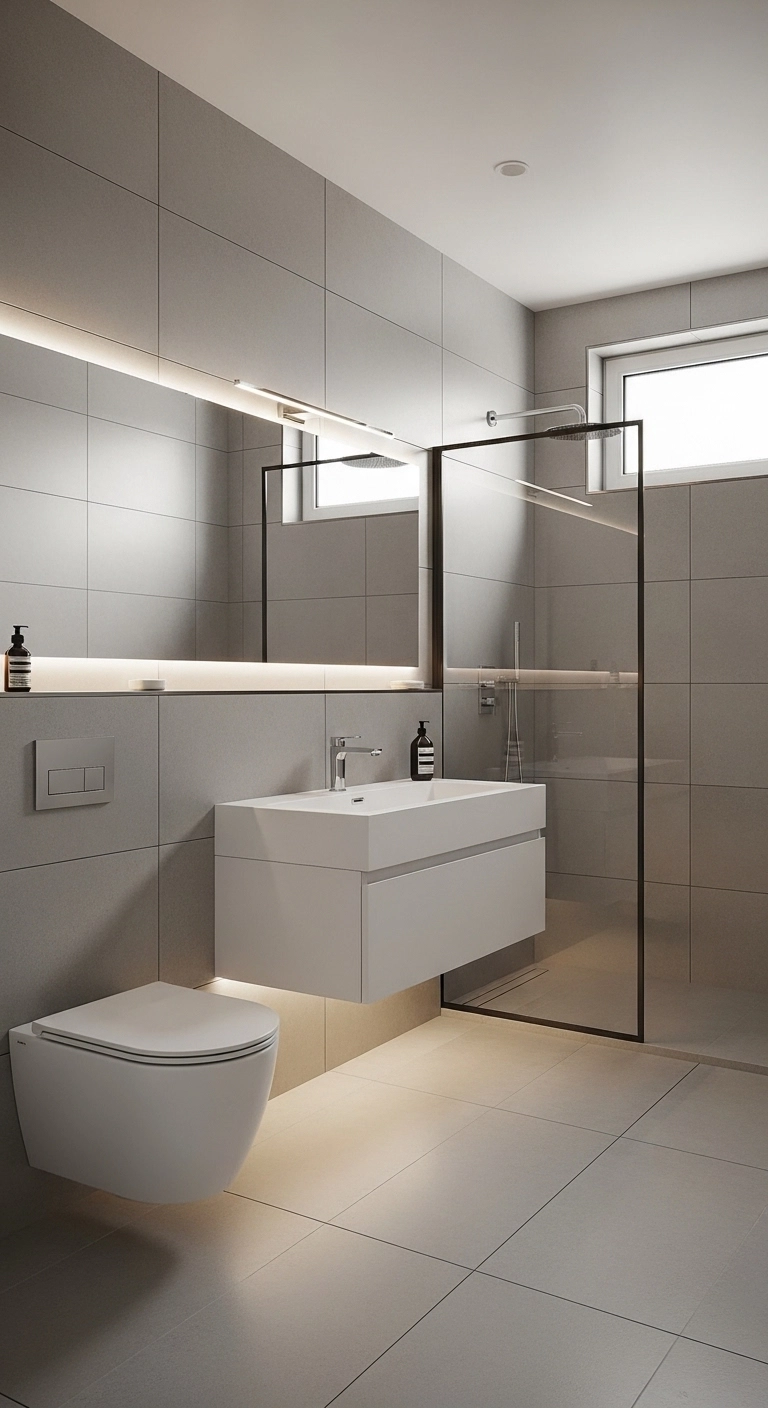
It sounds backward, but larger tiles often work better in a small bathroom than tiny ones. Fewer grout lines mean fewer visual interruptions, and that can make walls and floors feel calmer and more expansive.
This works best in bathrooms where the floor area is limited and every detail becomes noticeable. Too many grout lines can create a busy pattern that shrinks the room visually.
Large format tile is especially useful in modern spaces, walk-in showers, and bathrooms where you want a clean, simple feel. It also pairs well with minimalist fixtures and floating vanities.
Choose tile with some texture or tone variation if you want the room to feel interesting without feeling hectic. Stone-look porcelain and matte finishes are especially practical.
One caution: very large tile can be tricky in tiny or awkward rooms because of the cuts involved. If the layout is full of corners and angles, go large enough to reduce grout lines, but not so large that installation starts looking patchy.
7. Add a recessed niche in the shower
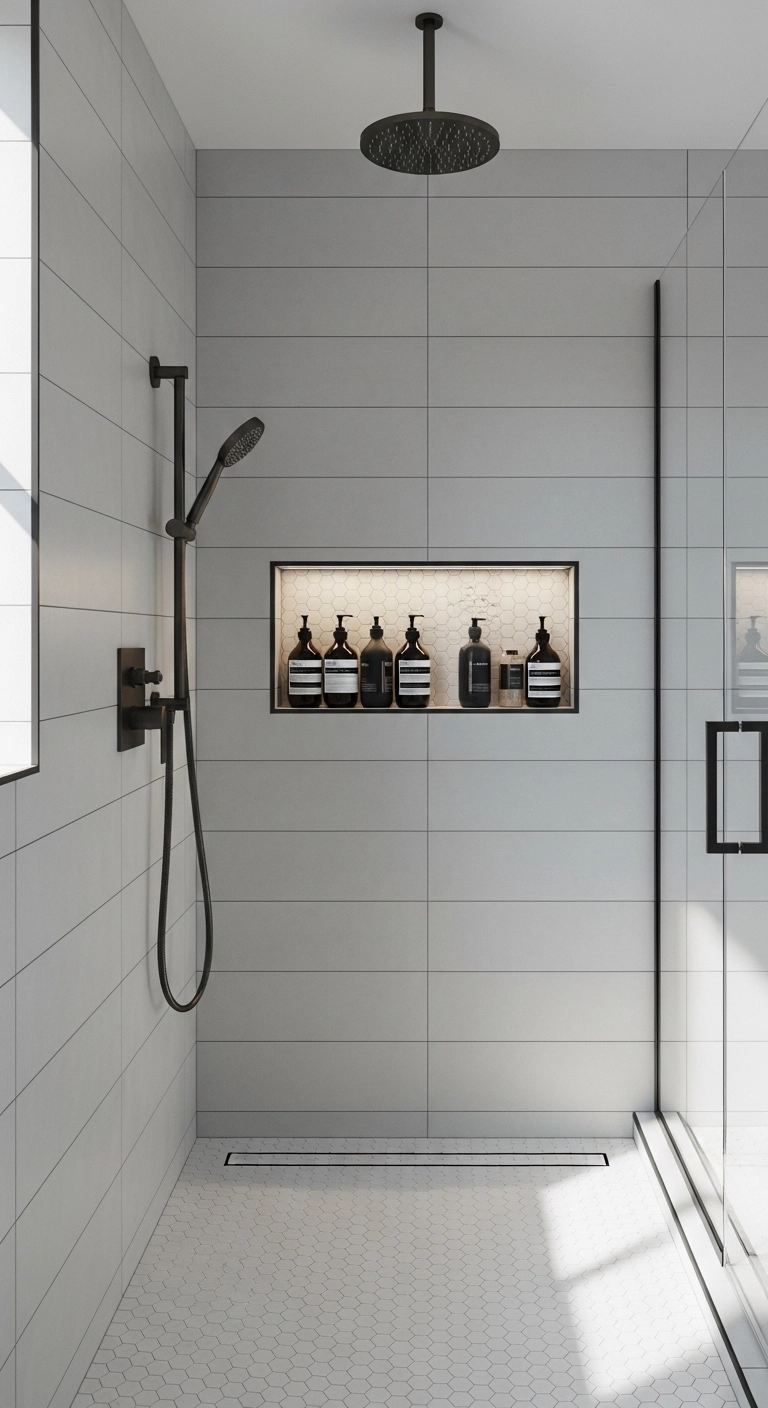
A shower niche gives you storage without using up extra space. Instead of hanging caddies or balancing bottles on corners, you build storage into the wall itself.
This works because it keeps necessities contained without making the shower feel tighter. In a small bathroom, even a little protruding storage can start to feel in the way.
It is best for bathroom remodels or new builds, but it can also be added during a shower update. It suits almost any style, from sleek and modern to classic and understated.
To make it look polished, line the niche up with your tile layout and keep the trim simple. You can match the tile for a seamless effect or use a contrasting tile for a subtle design feature.
The mistake to avoid is making the niche too small or placing it awkwardly. If full-size bottles do not fit, it stops being helpful fast.
8. Swap a swinging door for a pocket or sliding door
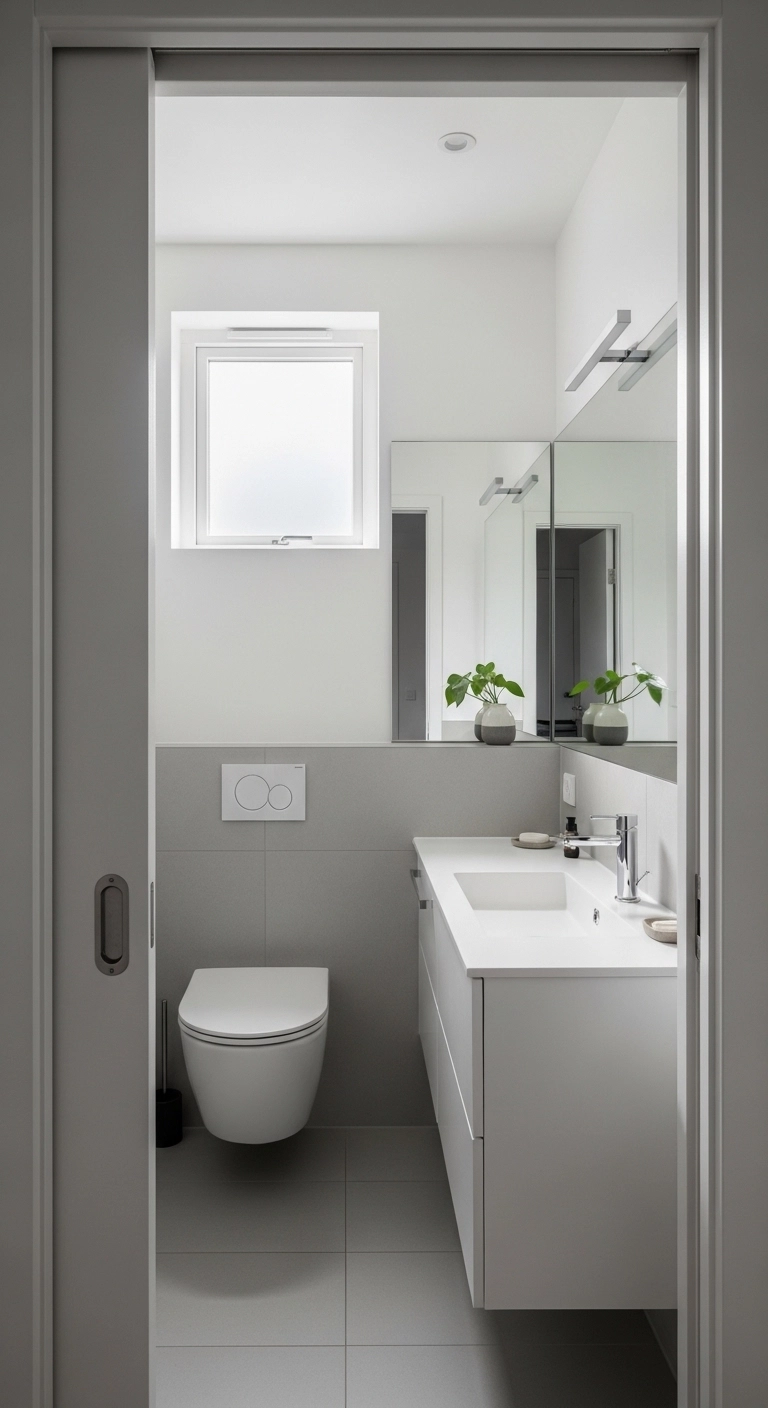
A standard bathroom door takes up more room than people realize. If you can replace it with a pocket door or a well-designed sliding door, you free up valuable wall and floor space.
This works because swing clearance disappears. That gives you more flexibility for towel hooks, storage, or just easier movement in a tight layout.
This is especially helpful in very small bathrooms, half baths, or en suites where the door competes with the vanity or toilet. It can also improve the flow in older homes with awkward floor plans.
Choose a door style that matches the rest of the home so it feels integrated, not like a last-minute problem-solver. Painted pocket doors disappear nicely. Wood sliding doors can add warmth, though they tend to make more of a visual statement.
A caution here: not every wall can take a pocket door without extra work. Sliding doors are easier to add, but they provide less sound privacy than standard doors.
9. Use hooks instead of bulky towel bars where space is tight
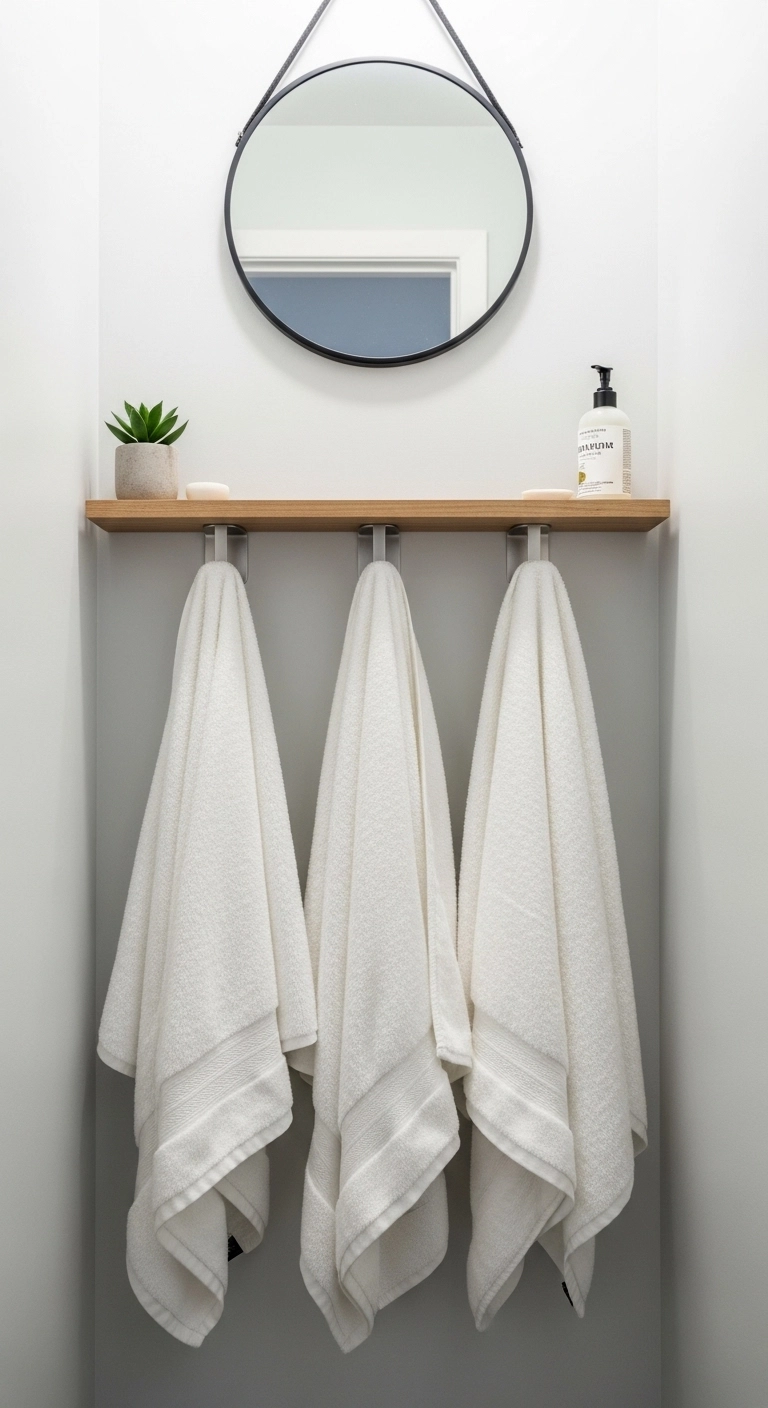
Towel bars are classic, but they are not always the smartest choice in a small bathroom. Hooks often fit more easily behind the door, on a narrow wall, or beside the shower.
This works because hooks need less horizontal space and are easier to place where a full bar would feel awkward. They also make everyday use simpler, especially in a shared bathroom.
This idea works well in family bathrooms, guest baths, and compact layouts where every wall matters. Multiple hooks can be more flexible than one bar, especially if more than one person uses the room.
Style them in a row for a neat look, or place one or two near the shower and another behind the door. Matching the finish to your faucet or cabinet hardware keeps the room feeling tied together.
The downside is that towels may not dry as evenly on hooks as they do on rods. If ventilation is poor, you may want to combine the two.
10. Choose a vanity with smart drawer storage
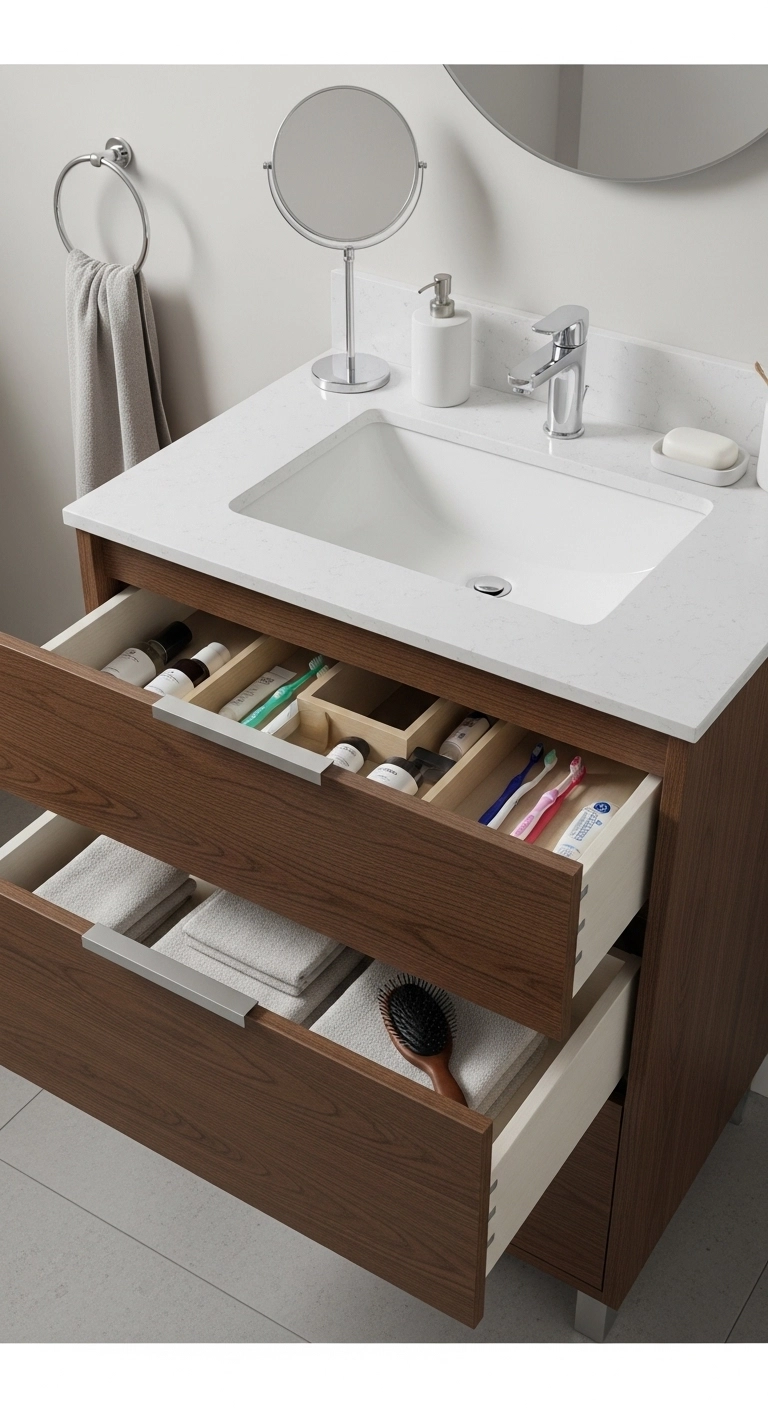
Not all bathroom storage is equal. Deep cabinets can become black holes, while well-designed drawers keep things much easier to find. In a small bathroom, that difference matters.
This works because drawers bring storage toward you instead of making you crouch and dig around the back of a cabinet. That makes the room feel less frustrating to use, which counts for a lot.
This is ideal for main bathrooms, shared bathrooms, or anyone tired of rooting around for a spare toothpaste tube like it is a treasure hunt. It suits both modern and classic vanities.
Look for drawer dividers, pull-out organizers, or a mix of shallow and deep storage. Even a small vanity can feel more functional when the layout inside actually makes sense.
One common mistake is prioritizing sink size or vanity style and barely thinking about how the storage works. Pretty matters, but in a small bathroom, function matters just as much.
11. Keep the floor as clear as possible
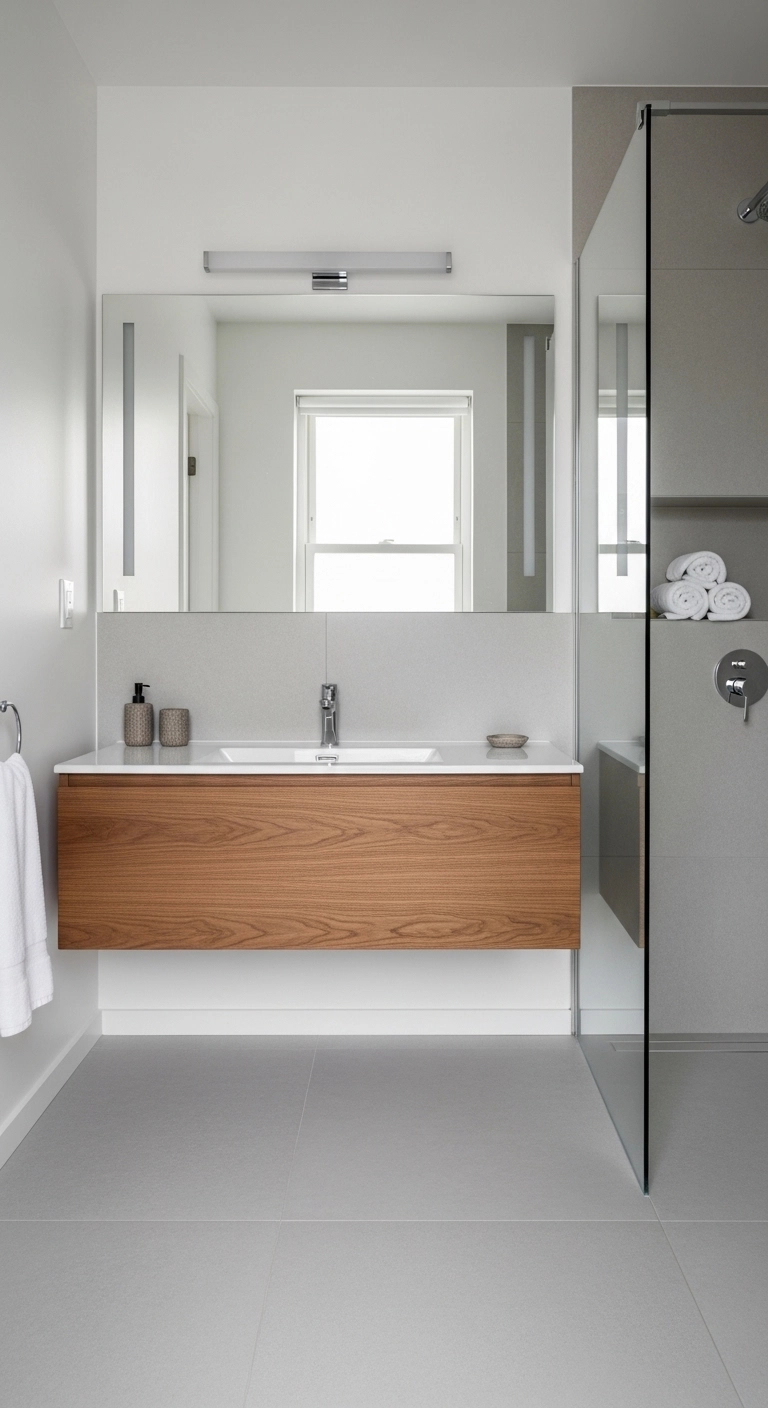
A bathroom feels bigger when the floor is visible and uncluttered. That means fewer freestanding items, fewer baskets sitting out, and less storage creeping into corners.
This works because open floor creates breathing room. The room may still be small, but it feels less crowded when your eye can move across the space without obstacles.
This idea works in every small bathroom, especially ones that already have enough built-in storage. It also helps visually if the bathroom has a nice floor tile you want to show off.
Use wall-mounted toilet paper holders, floating vanities, recessed storage, and more toilet shelving instead of floor cabinets whenever possible. Even a slim hamper that’s out of sight can make a difference.
The caution is practical: do not clear the floor so aggressively that you remove useful storage and end up with clutter on the counter instead. The goal is less visual noise, not less function.
12. Add corner-friendly fixtures or furniture
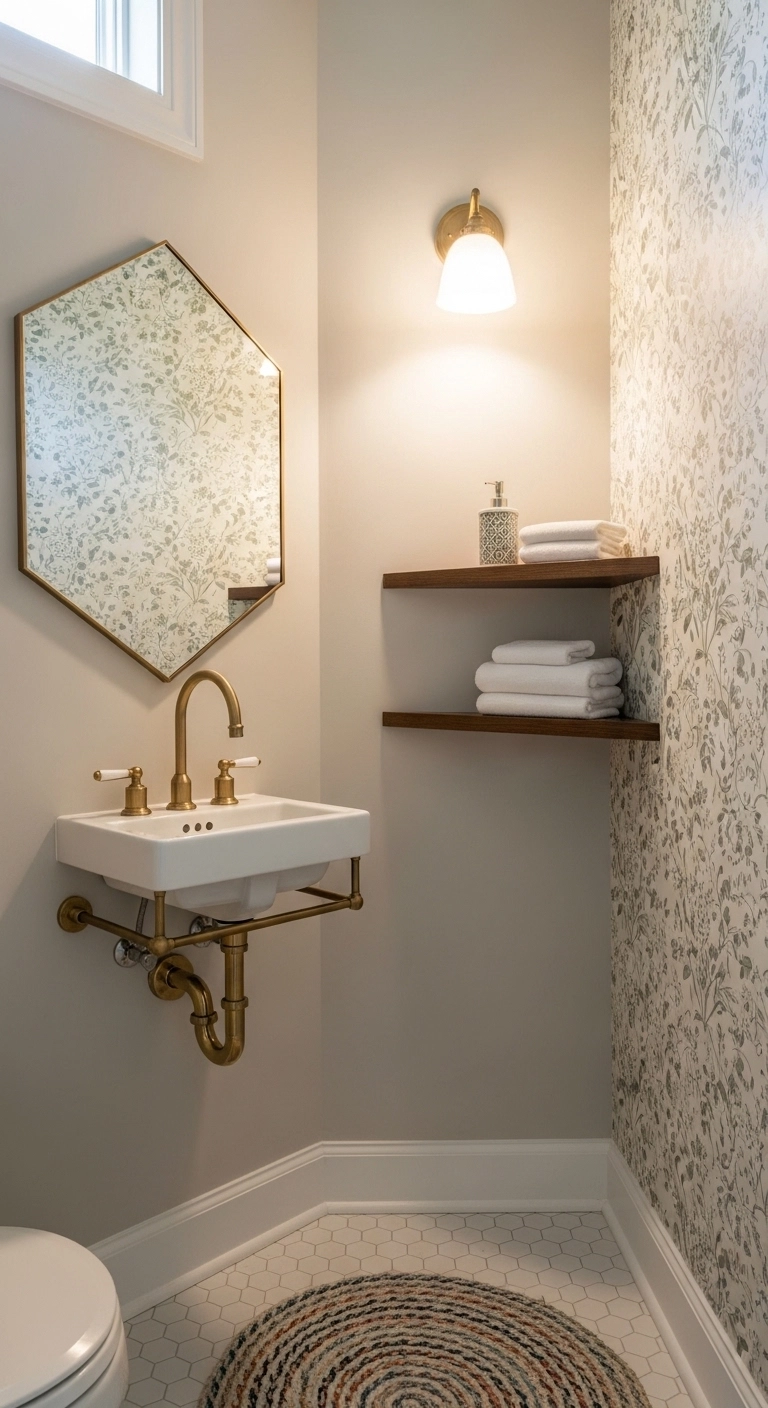
Corners are often wasted in small bathrooms, but they can be useful when you choose fixtures that fit them well. A corner sink, corner shelf, or even a small corner cabinet can help the room function better without blocking movement.
This works because corners often sit outside the main traffic flow. Using them wisely adds utility without making the room feel pinched.
It is most helpful in tiny powder rooms, narrow bathrooms, or awkward layouts where a standard vanity or shelf would stick out too far.
For styling, keep corner pieces streamlined. A compact wall-mounted corner sink can look surprisingly elegant. Corner shelves are best when they are slim and not overloaded.
One thing to watch: not every corner solution is automatically smart. If a corner fixture makes the room feel improvised or leaves you with too little usable counter space, it may not be worth the trade-off.
13. Use one standout feature instead of lots of small decor
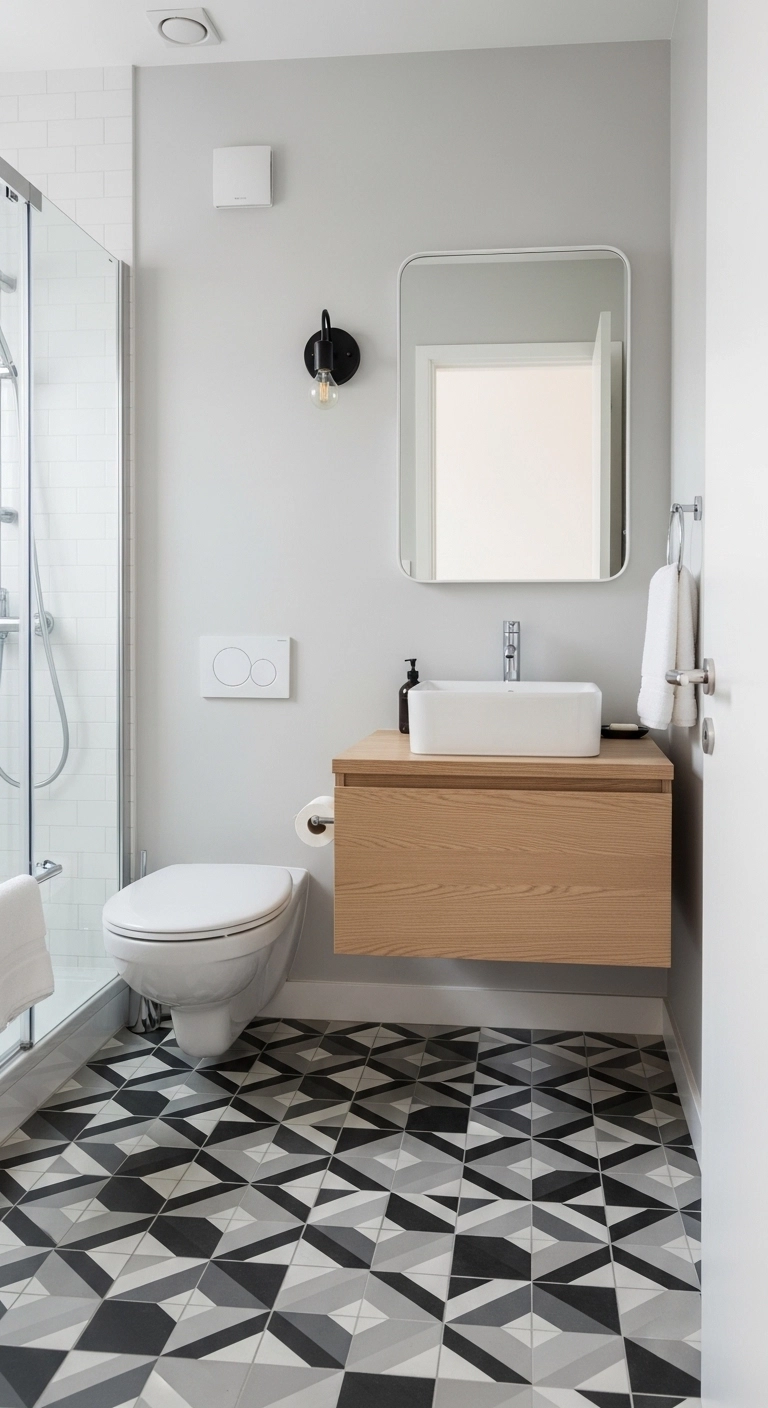
In a small bathroom, too many decorative elements can quickly feel cluttered. One strong feature, such as patterned floor tile, a beautiful mirror, or a striking light fixture, usually works better than a collection of smaller accents.
This works because it gives the room personality without filling every surface. The eye has one place to land, and the rest of the room can stay calm.
This suits almost any bathroom style. It is especially good for people who want a bathroom to feel thoughtful and styled, but not busy.
Choose one focal point and let supporting pieces stay quiet. If the tile is bold, keep the vanity simple. If the mirror is dramatic, let the wall color and lighting stay understated.
The mistake is trying to make every element special. In a small room, five statement pieces do not feel curated. They usually just feel crowded.
14. Bring in better lighting layers
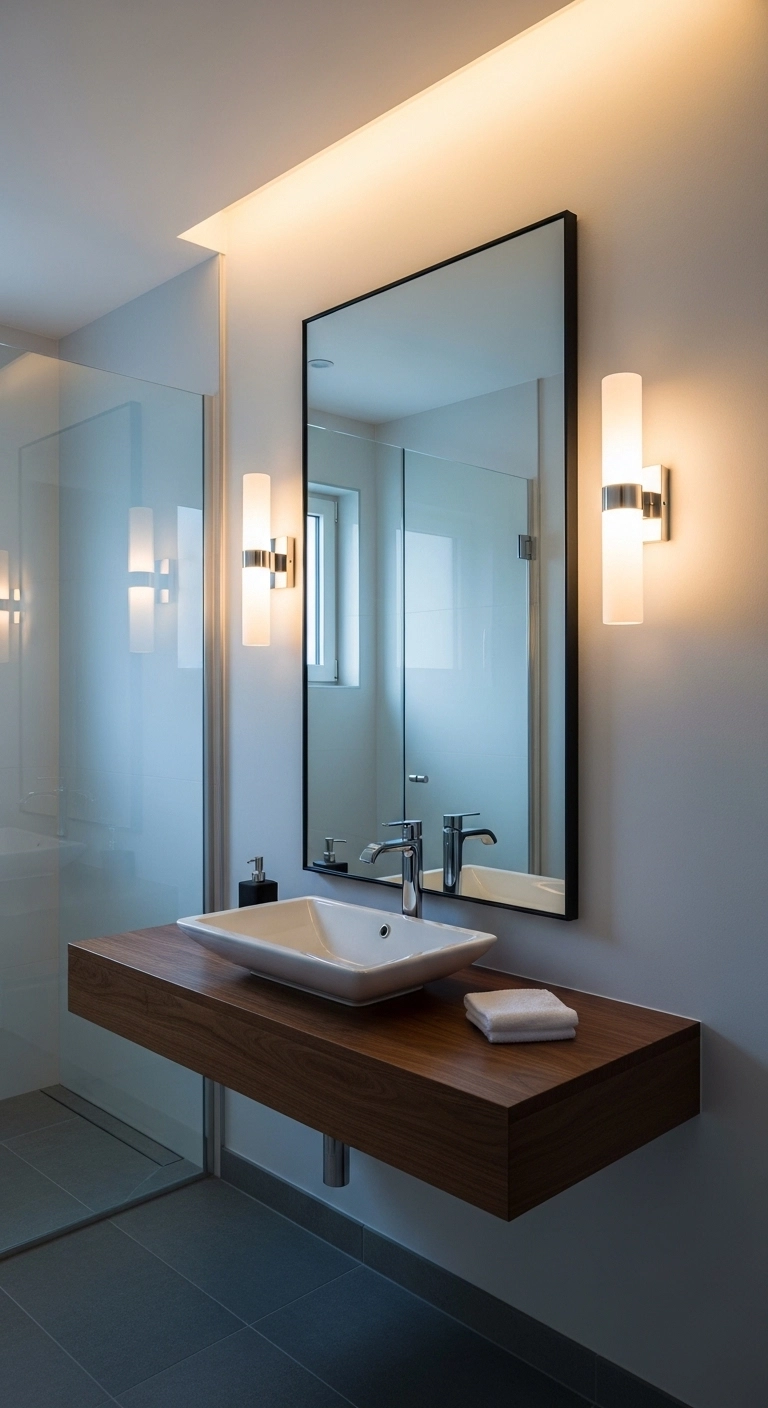
Poor lighting can make a small bathroom feel tighter and less inviting. Better lighting helps the room feel more open, more polished, and easier to use for actual daily routines.
This works because shadows can make corners feel cramped and gloomy. Balanced light makes the whole room feel clearer and more spacious.
This idea is useful in almost any small bathroom, especially those without windows. A good setup usually includes overhead lighting and task lighting around the mirror.
Wall sconces on either side of the mirror are often more flattering and functional than a single harsh fixture overhead. If that is not possible, a well-scaled light above the mirror can still work well.
A caution here: do not choose lighting that is oversized for the room. Small bathrooms still need proportion. A massive fixture can overpower the whole space.
15. Use baskets and trays to control countertop clutter
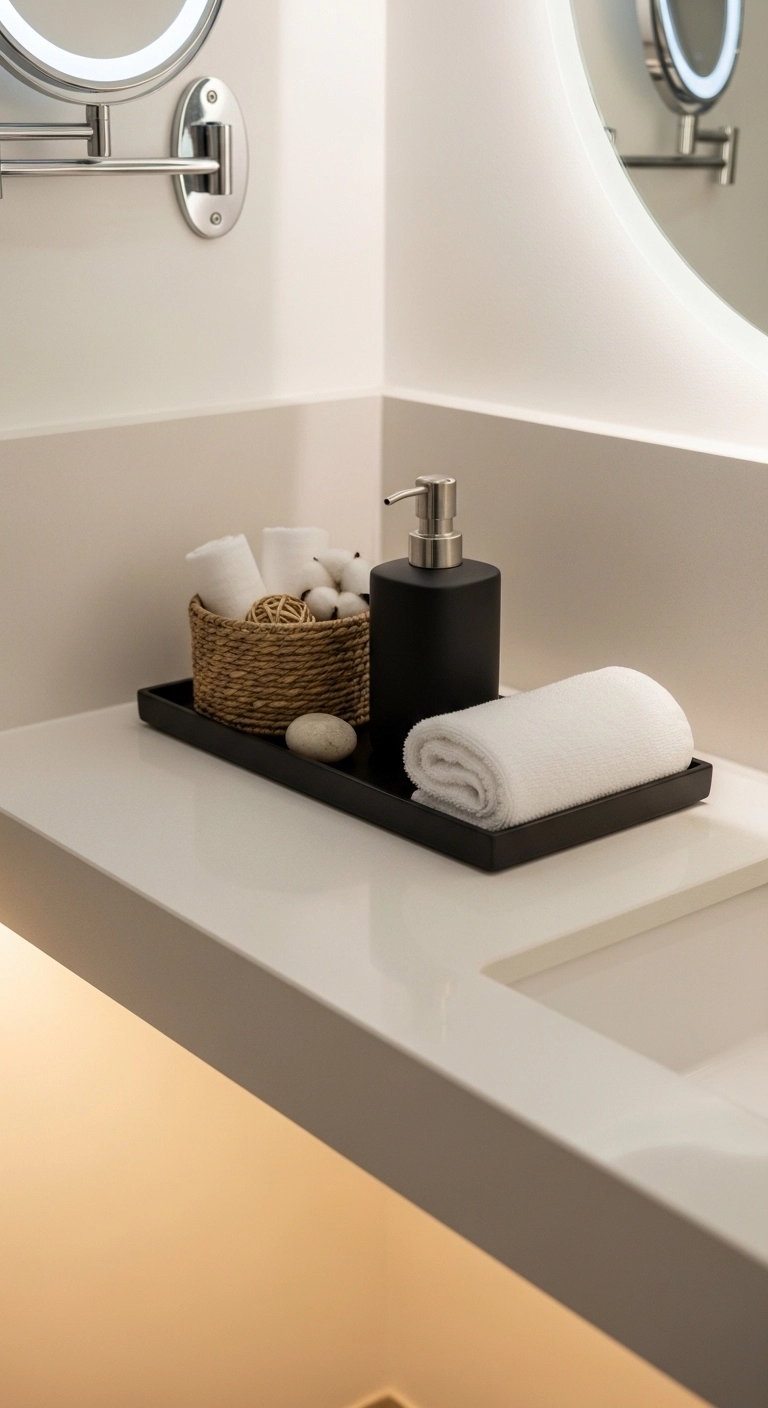
Even a beautiful bathroom looks smaller when the countertop is full of loose items. Baskets, trays, and small organizers help group essentials so the room feels tidier without becoming sterile.
This works because containment reduces visual mess. A few grouped items read as intentional. Ten separate items read as clutter.
It works especially well in bathrooms where daily products need to stay accessible, such as family bathrooms or bathrooms with limited drawer space.
Use a tray for soap, lotion, and one or two daily essentials. Store backups in baskets on a shelf or inside the vanity. Woven textures, ceramic containers, and simple glass jars can all work, depending on the look you want.
The main mistake is buying pretty organizers without editing what actually stays out. A tray full of too many products is still clutter, just more organized clutter.
16. Consider a wall-mounted faucet if you are remodeling
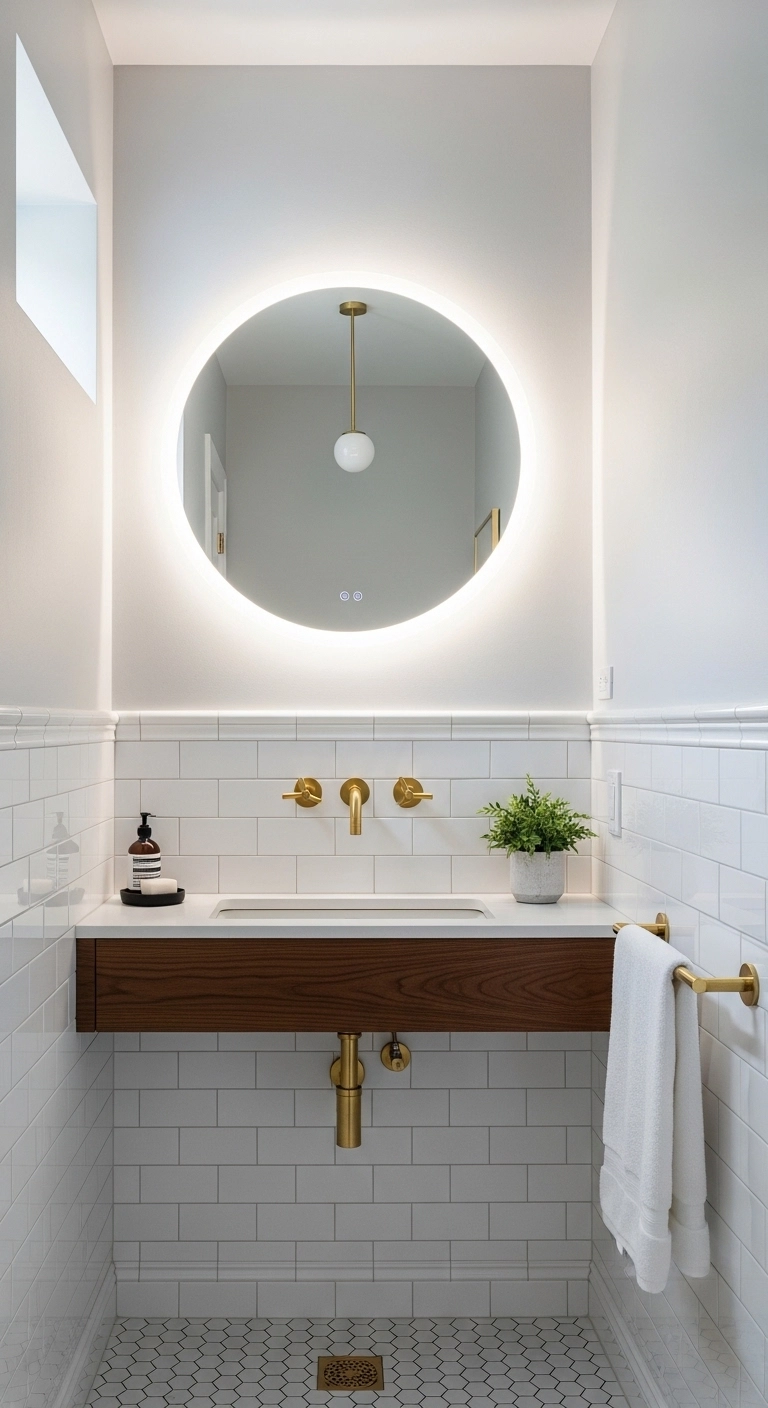
A wall-mounted faucet moves the plumbing off the countertop or vanity top and onto the wall. It is not necessary in every bathroom, but in the right setup, it can save a little space and make the vanity area feel cleaner.
This works because it frees up surface area around the sink and gives the vanity a lighter look. That can be especially useful with narrower vanities.
It’s perfect for modern bathrooms, custom vanities, and remodels where you’re already updating the plumbing. It’s less practical as a quick swap, as installation usually requires more planning.
Style-wise, it pairs beautifully with vessel sinks or slim integrated sinks, though it can also work with more classic designs depending on the finish and shape.
The caution is obvious: this is not the easiest upgrade. Placement needs to be precise, and repairs can be more involved than with a standard deck-mounted faucet.
17. Edit ruthlessly and keep only what the bathroom needs
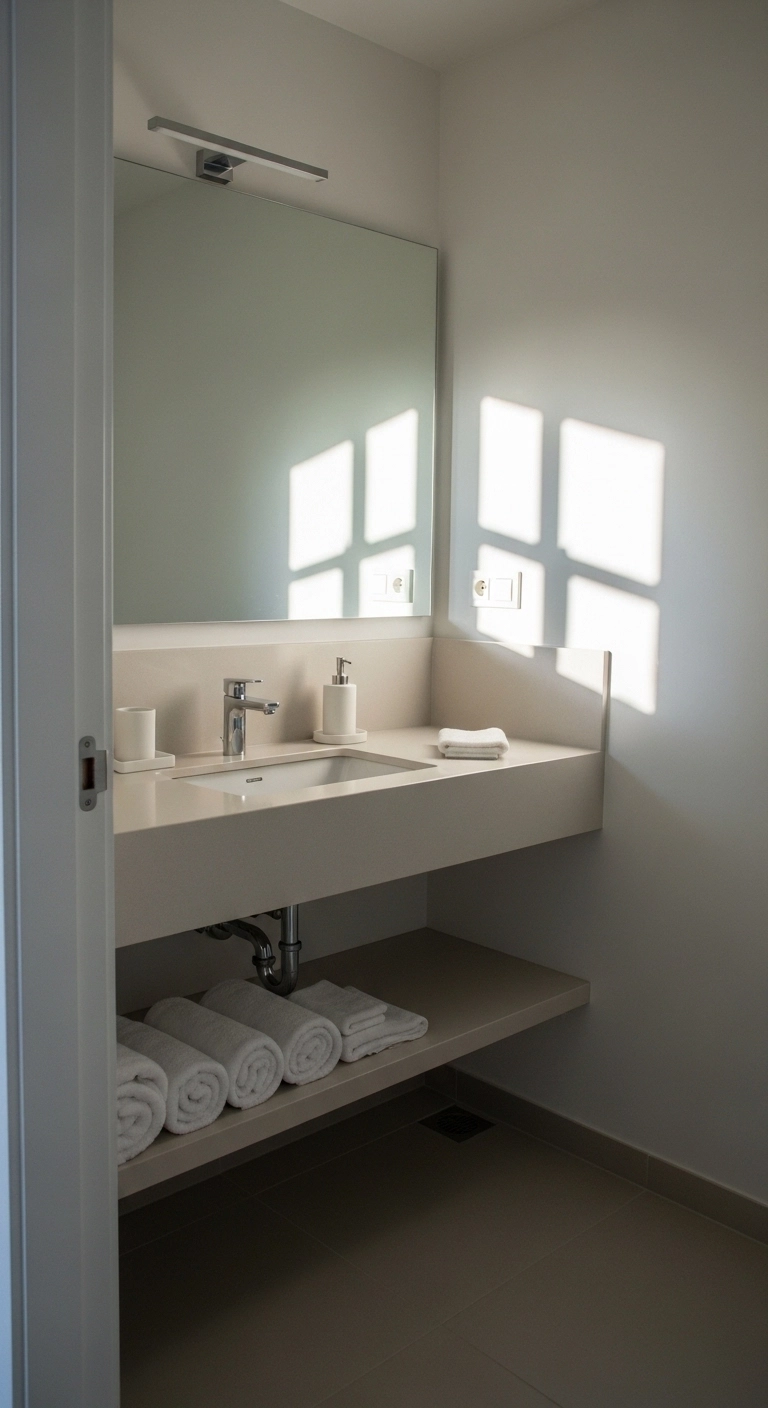
Sometimes the best space-saving idea is not adding something. It is removing what does not belong there. Extra products, duplicate storage, oversized decor, and furniture that looked useful but never really was can all make a small bathroom harder to enjoy.
This works because every item in a small room has a visual cost. The less unnecessary stuff you keep in sight, the more spacious and functional the room feels.
This idea suits absolutely every small bathroom, regardless of style or budget. It is also the easiest one to start with because it costs nothing but a bit of honesty.
Keep what you use regularly, store backups elsewhere if possible, and let the bathroom breathe. Leave some surfaces open. Let the mirror reflect something calm instead of a parade of bottles.
The mistake is decluttering once and then slowly letting the room fill back up. Small bathrooms need a little maintenance, but the payoff is immediate every time you walk in.
Final thoughts on small bathroom ideas
The best small bathroom ideas are those that simplify everyday life while helping the room feel calmer and more open. You don’t have to use all 17. Even two or three well-chosen changes can make a significant difference, especially if they improve storage, lighten the visual weight of the room, or clean up the floors and countertops.
Start with the biggest friction point in your bathroom. Maybe it is clutter, poor lighting, or a vanity that takes up too much space. Fix that first, then build from there. Small bathrooms rarely need more stuff. They usually just need smarter choices.