11 Fresh Living Room Decor Ideas For A Cozy Stylish Home
11 Fresh Living Room Decor Ideas For A Cozy Stylish Home
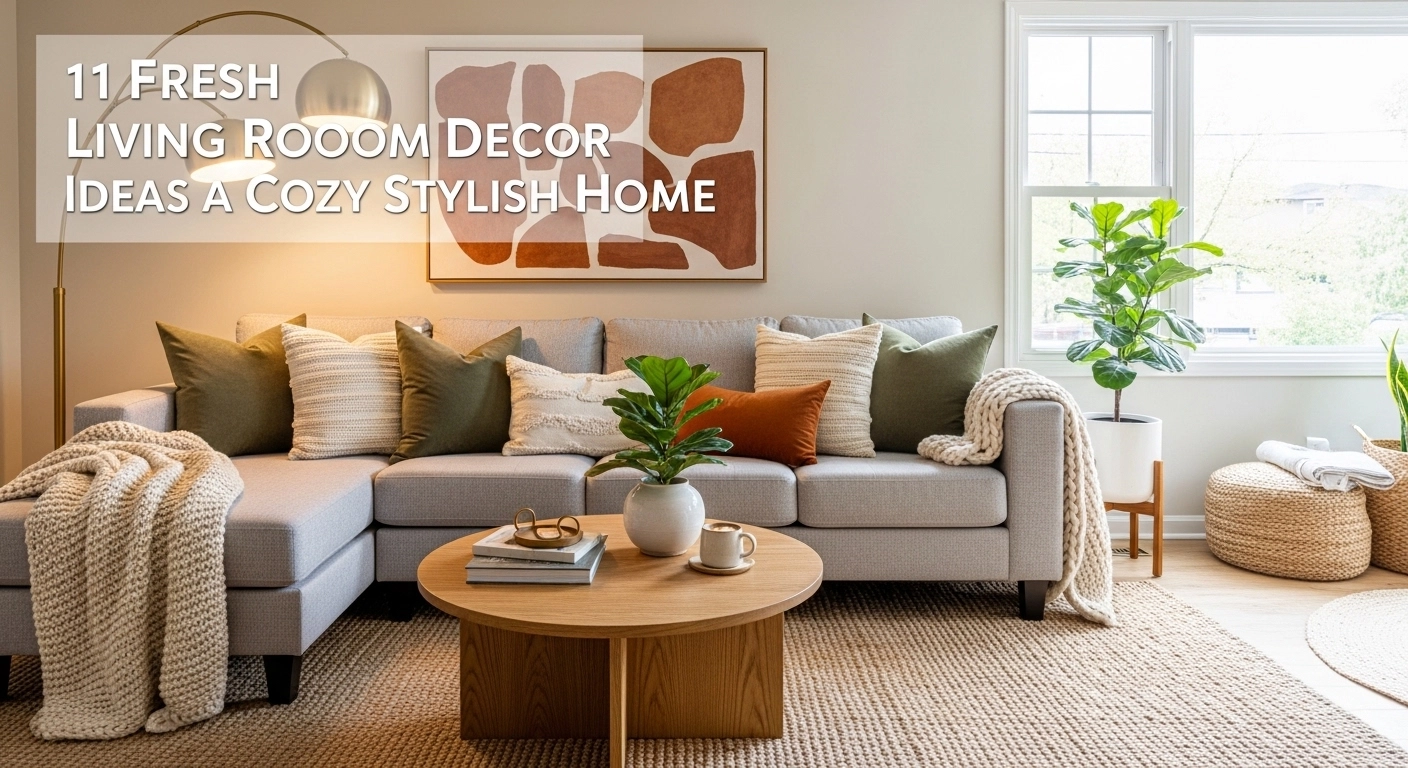
A living room should feel good before it looks impressive. That is usually what people are really after when they search for living room decor ideas. They want a space that feels welcoming at the end of the day, looks put together without seeming stiff, and works for real life instead of just photos.
The most successful living rooms aren’t always the most expensive or the most ornate. They’re the ones that feel balanced. Seating makes sense. Lighting is soft. Textures are comfortable. Details feel selective rather than scattered. If your living room feels close but not quite right, a few smart changes can make a real difference.
Here are 11 fresh ideas that can help you build a living room that feels cozy, stylish, and easy to live in.
Build the Room Around One Clear Focal Point
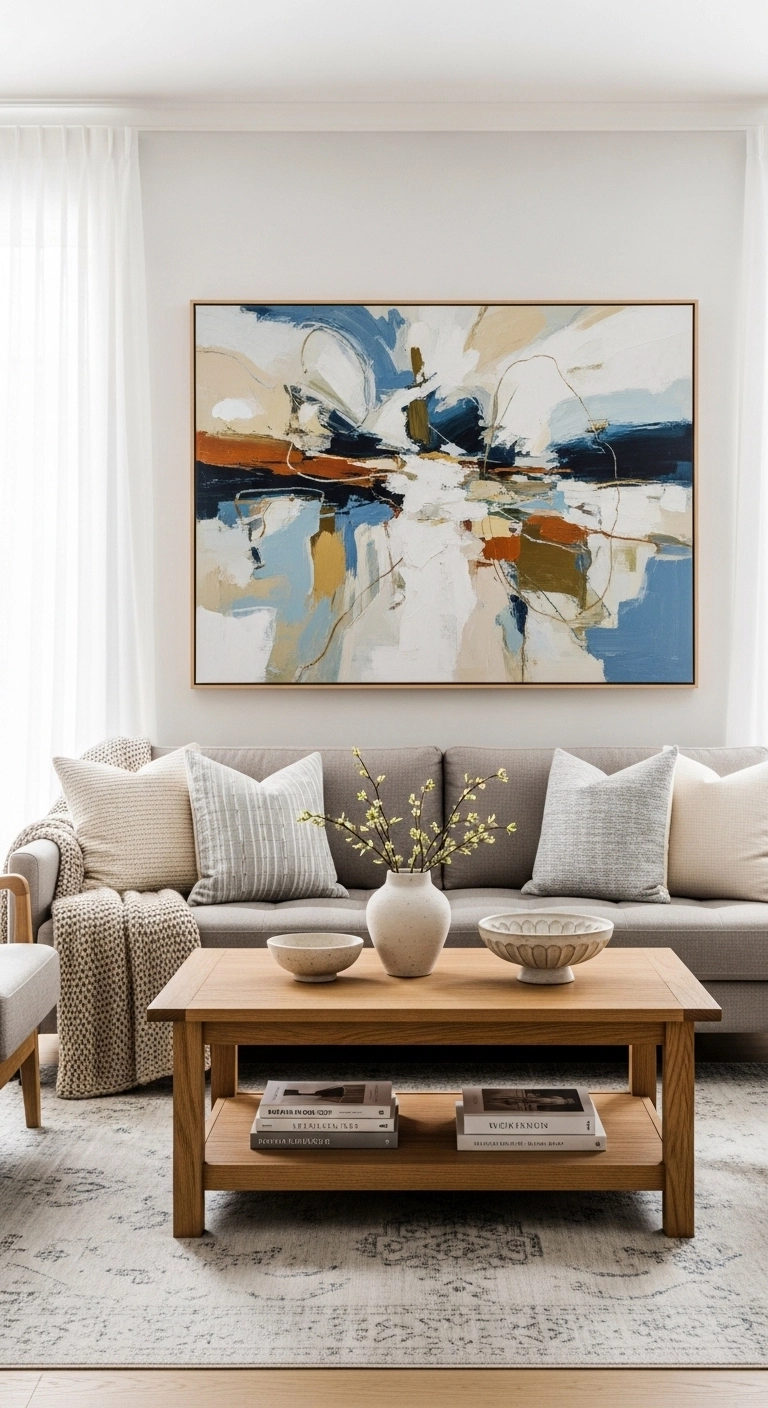
Every living room needs something that quietly takes the lead. Without a focal point, the room can feel uncertain, even if every item in it is nice on its own.
In some homes, that focal point is a fireplace. In others, it is a large window, a statement artwork piece, a media wall, or even a beautiful sofa. Once you know what the room should visually center around, the rest of the decor choices become easier. Furniture placement feels more natural, accessories stop competing with one another, and the room starts to feel settled.
This does not mean everything has to point aggressively toward one thing. It just means the room needs visual direction. When that is missing, people often overdecorate to compensate, and the space ends up feeling busy instead of comfortable.
Choose a Rug That Is Big Enough to Do Its Job
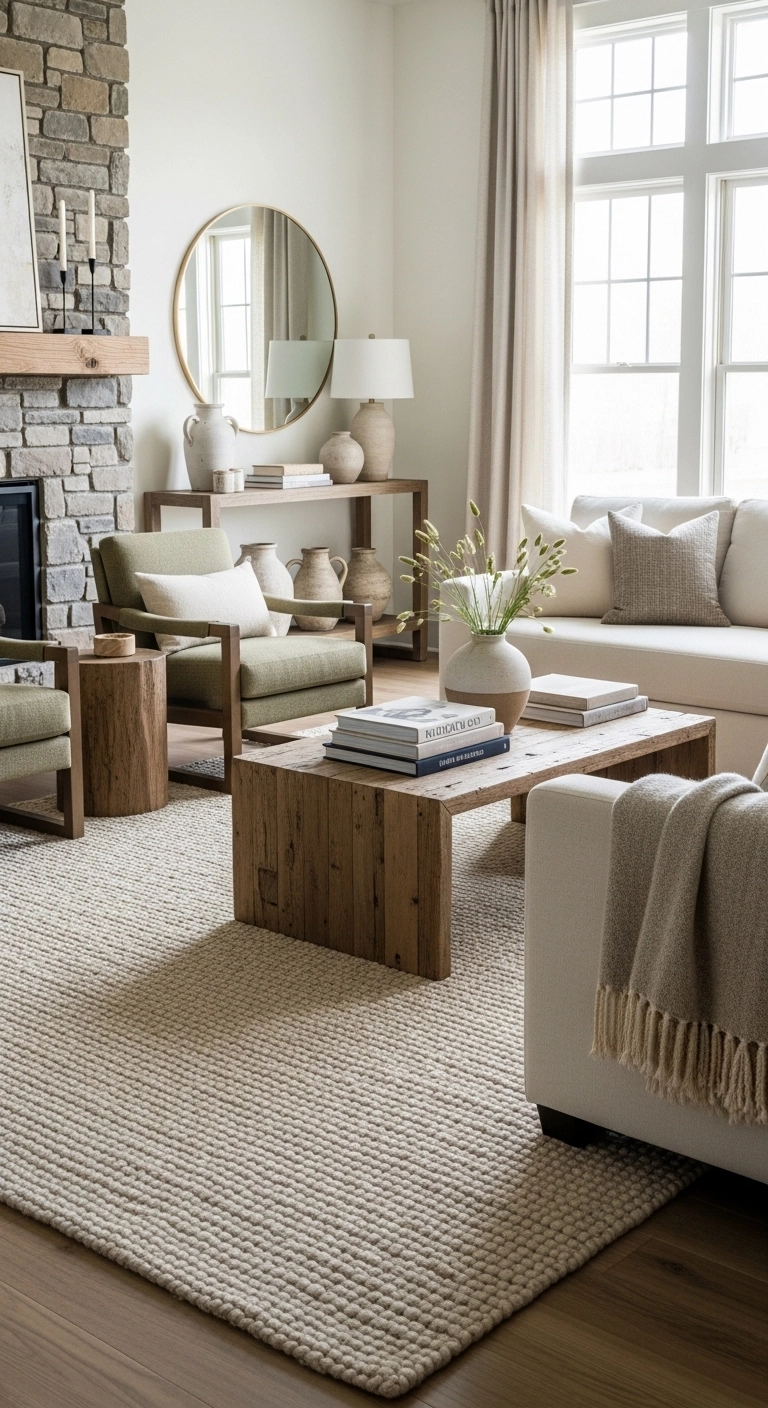
A rug can make a living room feel complete in a way that smaller decor pieces never will. It connects the furniture, softens the floor, and brings warmth into the room right away.
The mistake most people regret is buying one that is too small. A rug that floats in the middle of the room without touching the furniture often makes the space feel disconnected. A better approach is to choose a rug large enough for at least the front legs of the sofa and chairs to rest on it. That simple change makes the seating area feel intentional.
If your living room already has a lot of pattern, a quieter rug may give the eye a place to rest. If the room feels plain, a rug with subtle detail or a stronger weave can add character without overwhelming the space. Texture matters just as much as color here. A room with the right rug tends to feel calmer, warmer, and more grounded.
Layer Your Lighting So the Room Feels Softer at Night
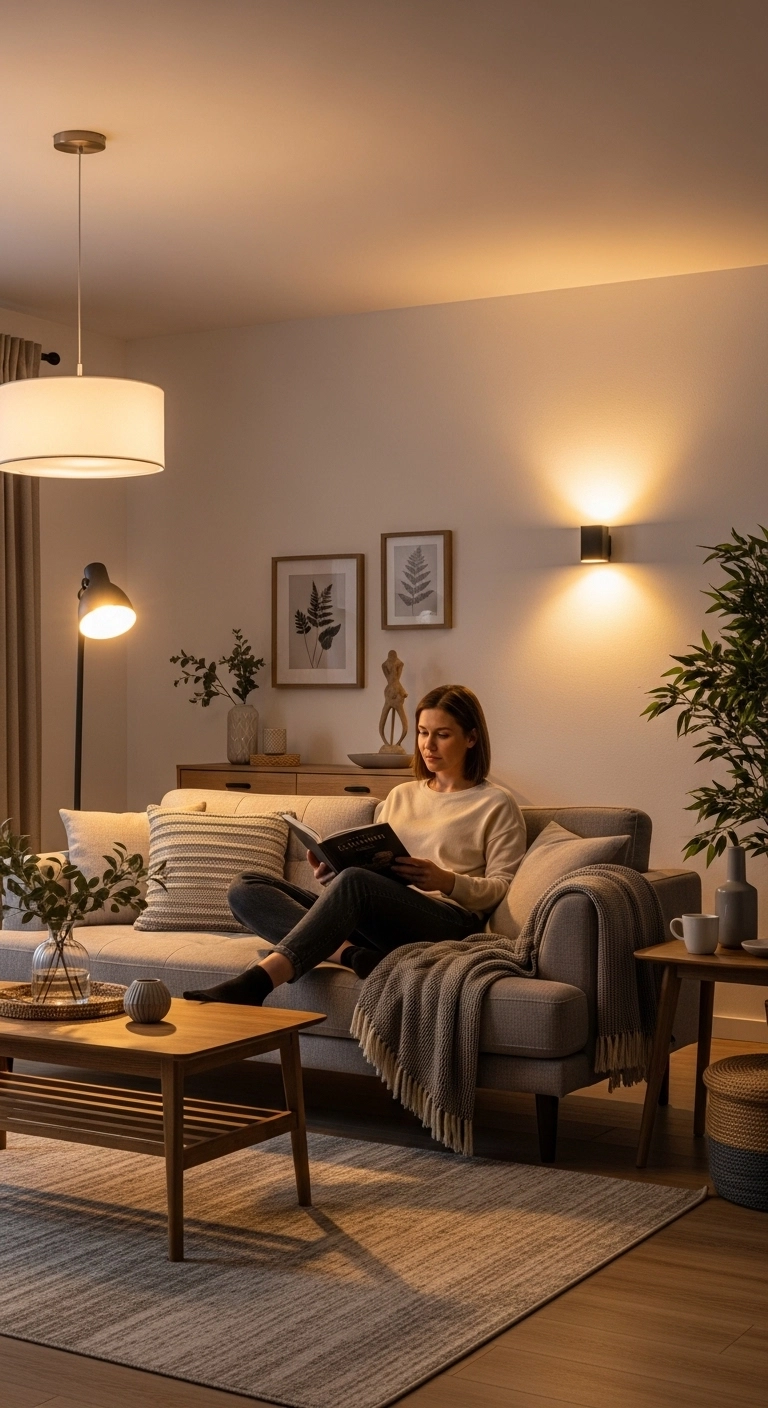
Lighting is one of the most overlooked parts of living room design, yet it changes everything. A room that looks fine during the day can feel flat or harsh at night if it depends on one overhead light.
The most comfortable living rooms use layers of light. A ceiling fixture may provide general brightness, but it should not carry the full burden. Floor lamps, table lamps, and wall sconces create softer pockets of light that make the room feel more relaxed and lived-in.
This is even more important in a room that is meant to be open. Good lighting makes reading easier, conversation more comfortable, and evenings feel less stuffy. It also helps highlight textures and shapes that would otherwise disappear under a strong light source.
If you want an easy upgrade, start with one lamp near the sofa and another on a console or side table. It is a small change, but it often makes the whole room feel more expensive and more inviting.
Mix Soft Textures So the Room Feels Comfortable, Not Flat
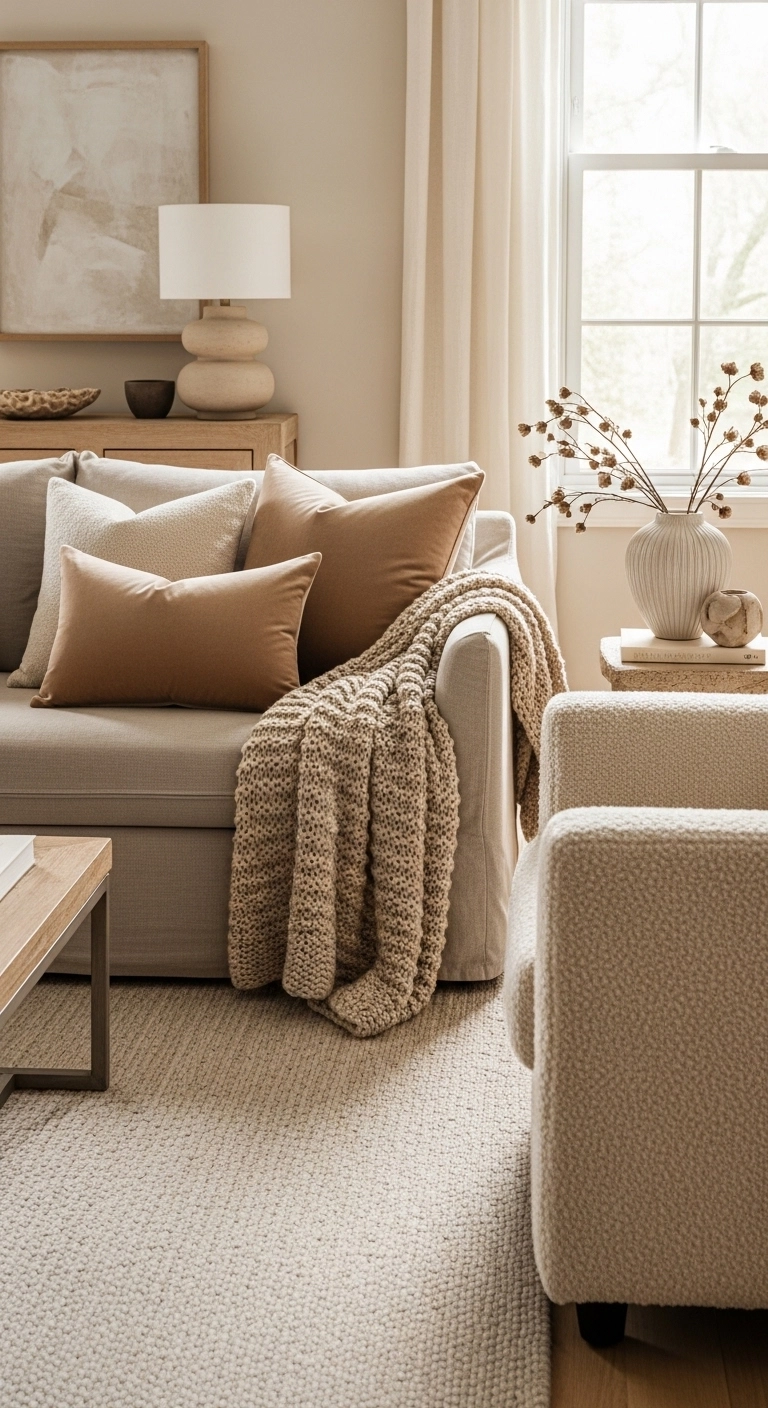
A cozy room almost always has layers of softness. That does not mean covering every surface with fabric. It means balancing hard materials with enough texture to make the space feel comfortable.
A living room with leather, wood, glass, and painted walls can look clean and stylish, but if every surface feels hard, the room may also feel a little cold. That is where throws, pillows, curtains, and textured upholstery help. They absorb sound, soften edges, and make the room more pleasant to spend time in.
The key is variation. If everything is the same fabric and finish, the room can feel dull. Try combining materials that play well together, such as cotton with linen, velvet with wood, or boucle with metal. You do not need a lot of each. Even a few carefully chosen layers can give the room more depth.
Bring in Wood and Natural Finishes to Warm Up the Space
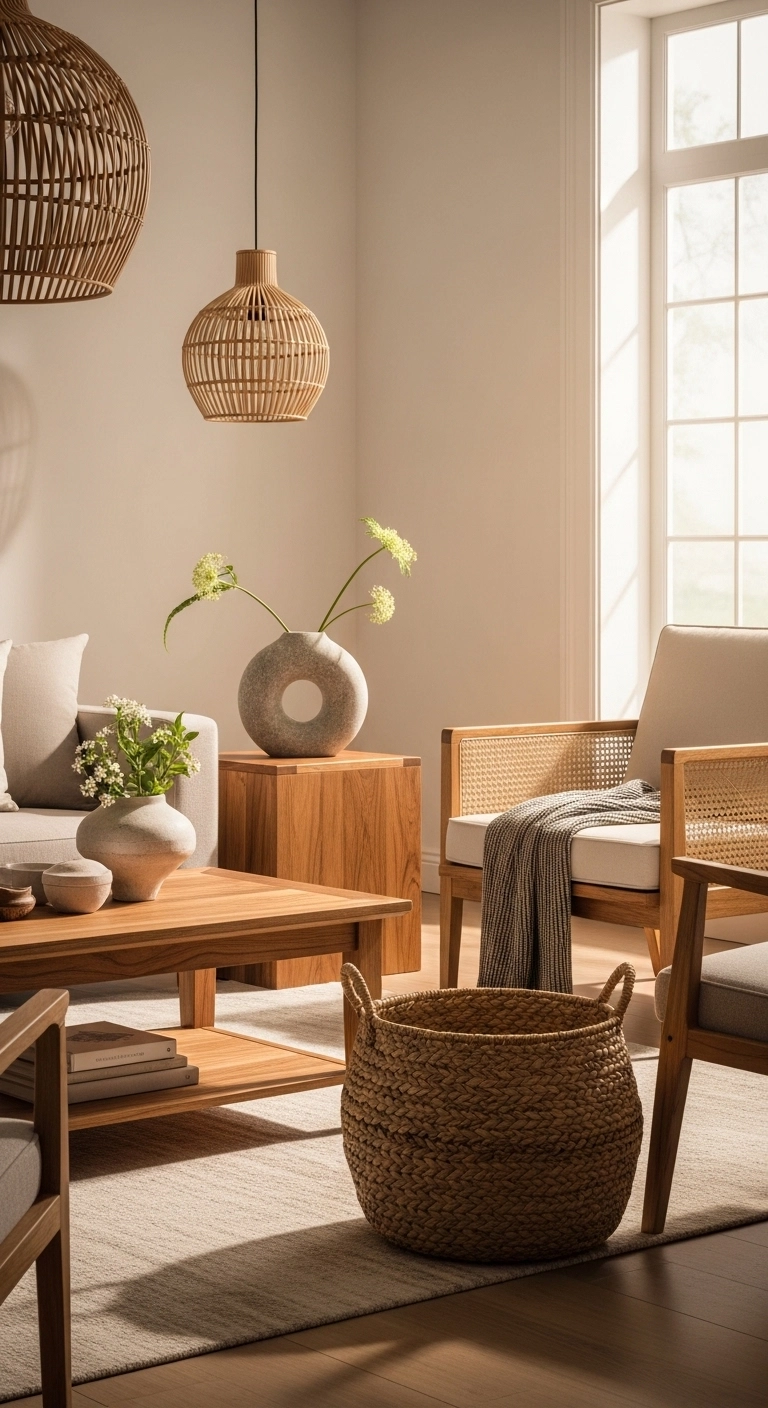
Some living rooms feel technically well-designed but still a little impersonal. Often that comes down to a lack of natural materials.
Wood is especially helpful because it adds warmth without demanding attention. A wood coffee table, side table, picture frame, bench, or shelving unit can soften a room full of painted surfaces and upholstered furniture. It makes the space feel more grounded and less manufactured.
Other natural materials work in the same way. Woven baskets, stone accessories, clay vases, rattan details, and linen shades all introduce quiet texture. They are useful when a room feels too smooth, too shiny, or too dependent on one finish.
This is one of the most practical living room decor ideas because natural materials work across many styles. They fit modern rooms, traditional spaces, relaxed homes, and more polished interiors without looking forced.
Style the Sofa With Restraint Instead of Overloading It
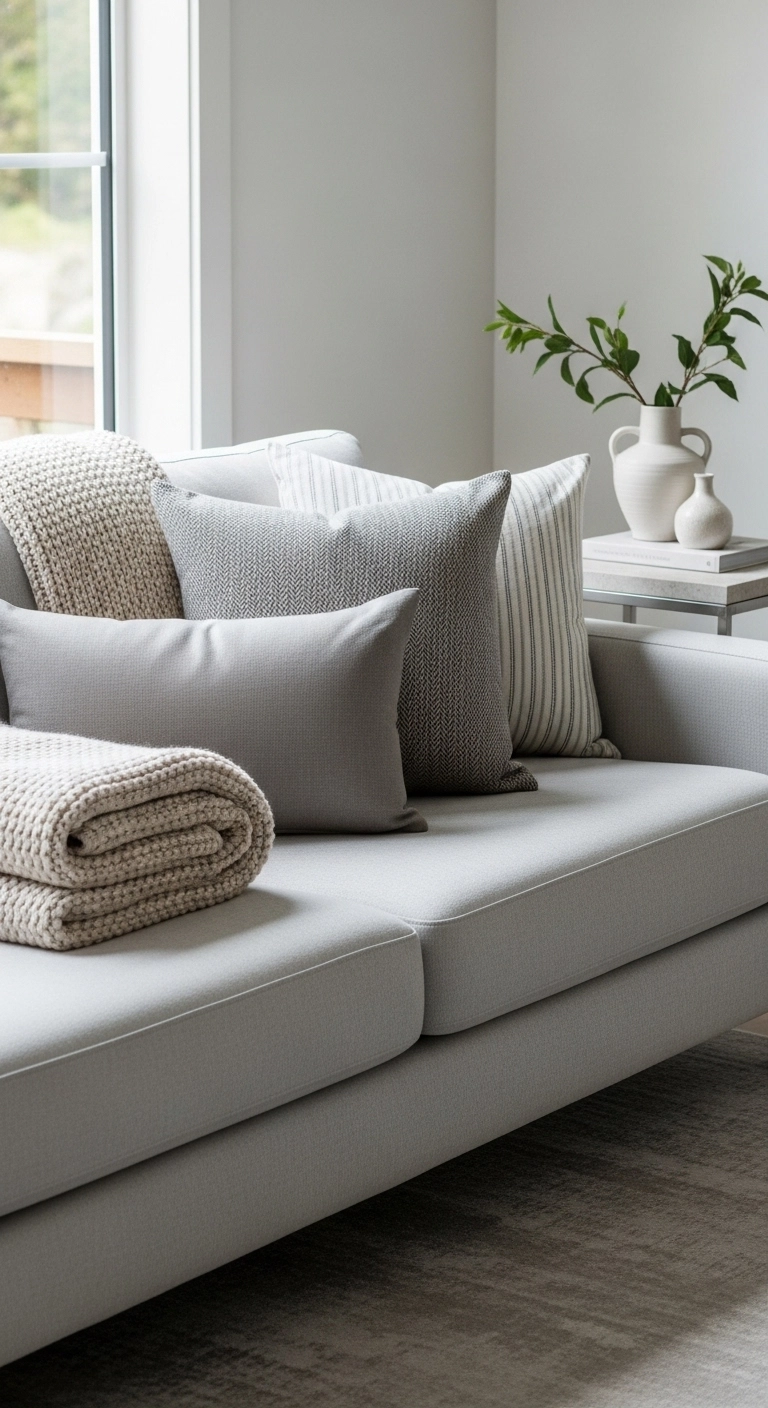
The sofa is often the largest piece in the room, so whatever happens there has a strong effect on the overall look. But styling a sofa well is usually about editing, not adding more.
A few pillows in different sizes or textures can make the sofa feel welcoming and finished. Too many, and the whole thing starts to look fussy. The best arrangement usually includes some contrast without chaos. You might pair a solid pillow with one subtle pattern and one textured fabric, all within a color family that makes sense with the room.
A throw blanket can also help, but it should look natural. Folded neatly over one corner or draped casually across an arm, it adds softness without becoming visual clutter. The goal is to make the sofa look inviting enough that people want to sit there, not like they need instructions before touching it.
Use Curtains to Add Height, Softness, and Quiet Structure
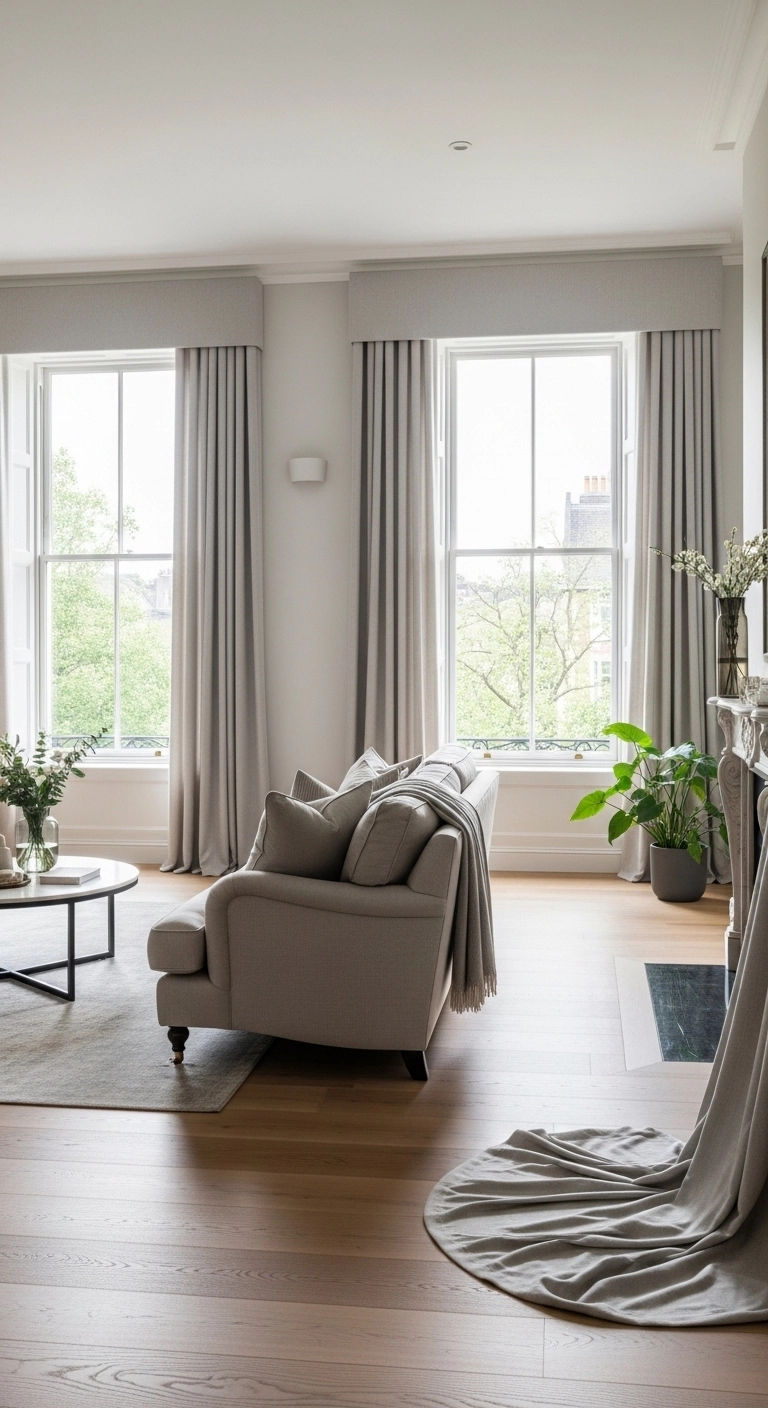
Curtains have a way of finishing a room even when the rest of the decor is simple. Bare windows can leave a living room looking incomplete, while the right curtains add softness and shape.
One of the smartest ways to use them is to hang them higher than the top of the window frame. This draws the eye upward and can make the room feel taller. Extending the rod slightly wider than the window also helps the wall feel larger and lets more natural light in when the curtains are open.
Fabric choice matters too. Heavy drapes can make a room feel formal or dark if the space does not need that weight. Light to medium fabrics usually work best for everyday living rooms because they soften the room without making it feel closed off.
If your space feels a little sharp or unfinished, curtains are often the missing layer.
Create a Coffee Table Setup That Looks Intentional
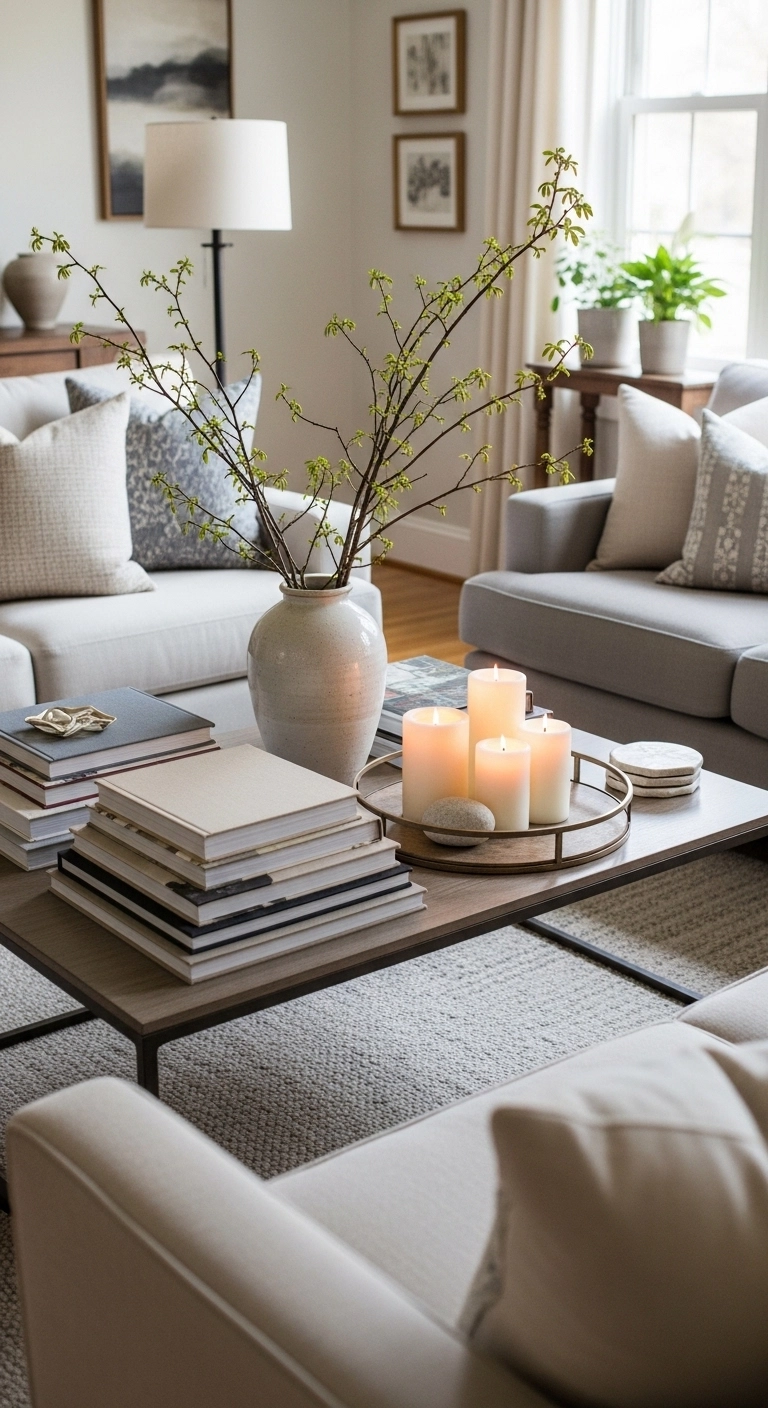
The coffee table sits at the center of the room, so it tends to collect everything from candles to mail to forgotten mugs. When it is styled well, though, it can make the whole room feel more orderly.
Good coffee table arrangements usually involve a mix of function and decoration. A tray can corral small items so the surface looks less cluttered. A small stack of books can add personality and a little height. A bowl, candle, or vase can bring shape and texture. The important part is to leave enough space for the table to remain usable.
This is where people often go wrong. They either leave the table completely bare, which can look unfinished, or they cover it in objects that make it hard to use. The best setup feels balanced. It gives the eye something to enjoy without turning the table into a display shelf.
Add Something Alive, Even if It Is Simple
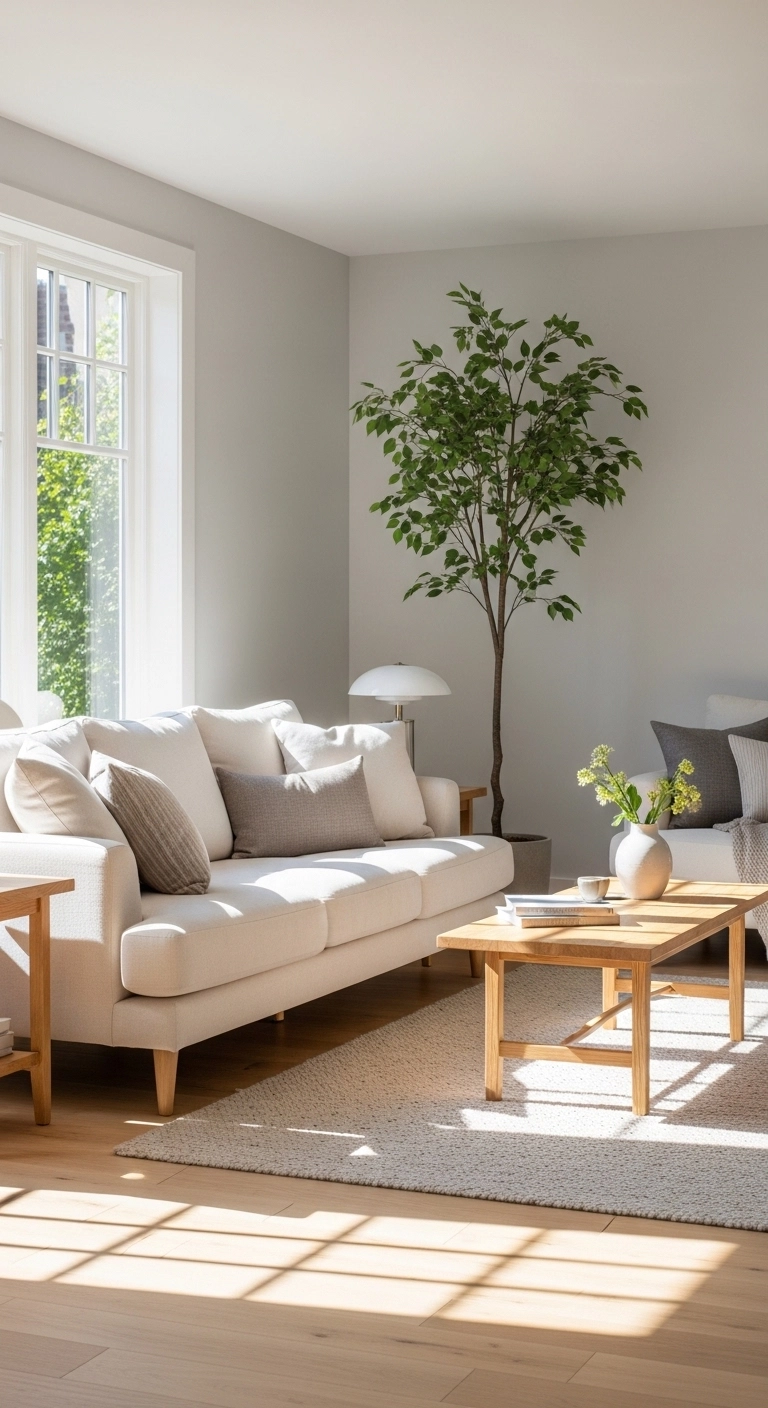
A room with no natural element can feel still in an unhelpful way. Plants, branches, greenery, or even a vase of fresh stems add movement and a sense of life that furniture alone cannot create.
This does not have to become a major plant project. One tall plant in a corner can soften sharp lines and fill empty space. A few clipped branches in a large vase can bring height to a console or coffee table. Even simple greenery can make the room feel fresher and more relaxed.
If you are worried about maintenance, choose forgiving options. There is no rule that says every room needs a dramatic indoor tree. The point is to break up the room with something organic. It keeps the space from feeling too controlled and makes it feel more like a home.
Let the Walls Tell a Story Without Covering Every Inch
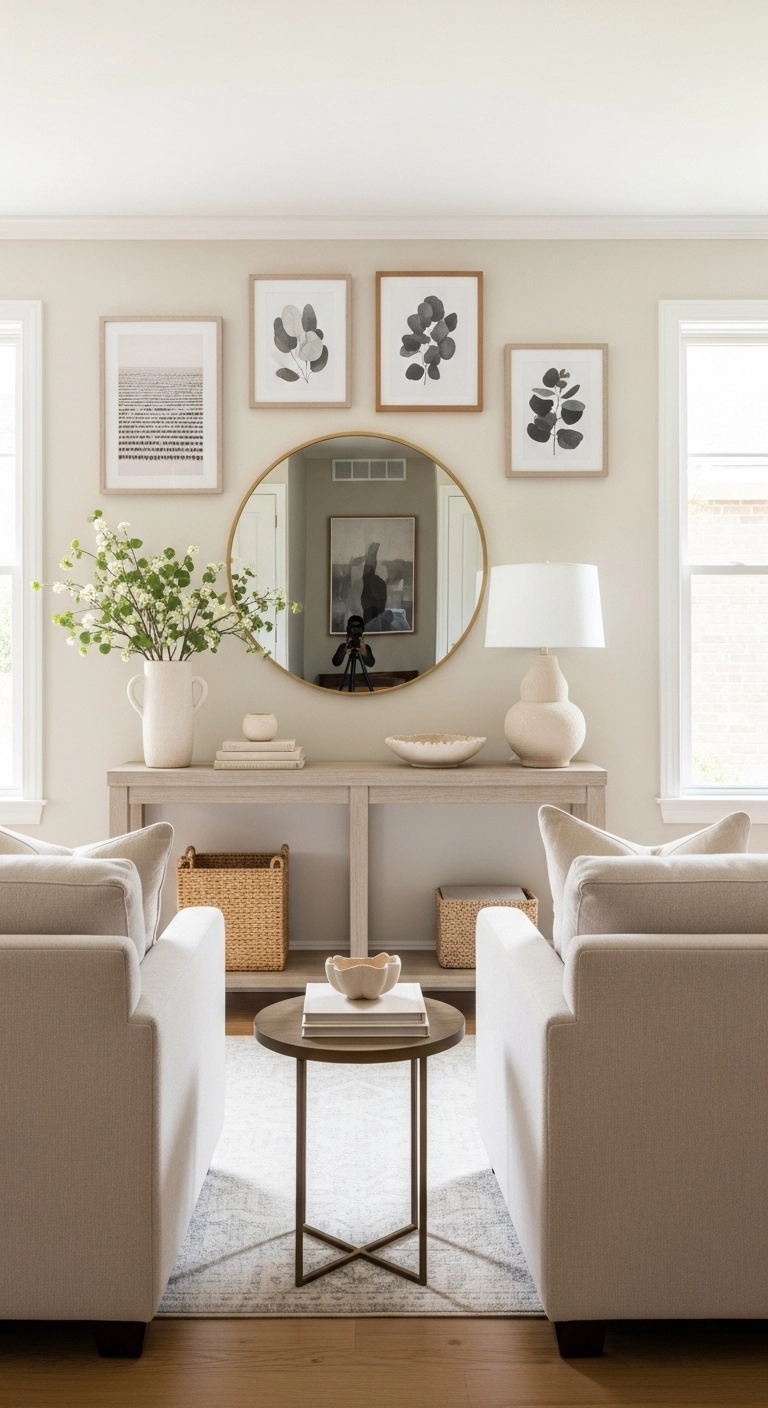
Empty walls can make a room feel unfinished, but covering every wall with decor usually creates the opposite problem. The best wall styling gives the room character while still allowing breathing room.
Large art can be especially effective because it adds presence without creating clutter. One generous piece over a sofa or console often has more impact than several small unrelated frames. If you prefer a gallery wall, keep some consistency between the pieces so the arrangement feels collected rather than random.
Mirrors are another smart choice, especially in smaller living rooms. They reflect light, open up the room visually, and add interest without introducing another color or pattern. Wall shelves can work too, but only if they are styled with restraint.
Good wall decor supports the room. It should not feel like it is trying to rescue the room.
Include Personal Pieces That Make the Room Feel Real
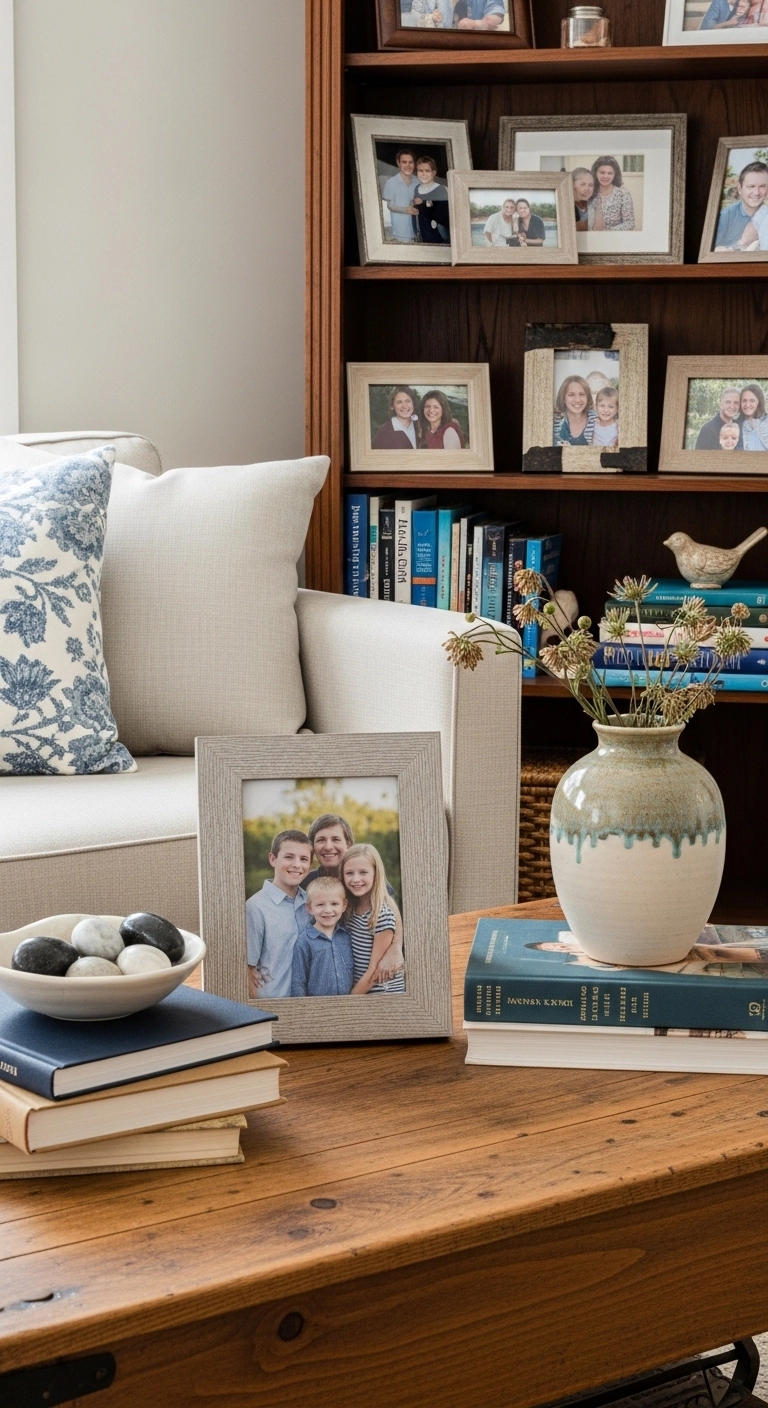
A stylish living room should still feel like it belongs to the people who live there. That is where personal detail matters.
This could mean favorite books on a shelf, framed family photos in the right spot, a travel piece you actually love, a vintage object with character, or handmade items that bring warmth to the room. These details make the space feel grounded and lived in. Without them, even a beautiful room can feel generic.
The secret is not showing off everything. A handful of meaningful pieces will do more than a bunch of clutter spread across every surface. Personal decor works best when it’s edited and carefully placed. It should add identity, not noise.
A room feels complete when it reflects both taste and life.
How to Make These Living Room Decor Ideas Work Together
The best rooms are rarely built from one big decorating move. They come together through layers that support one another. A larger rug helps the furniture feel connected. Better lighting makes the room feel softer. Curtains frame the windows. Textures add comfort. Personal pieces make the room feel real.
If your living room feels unfinished, do not assume you need to start over. Often, the room already has most of what it needs. It may just need stronger scale, better balance, or a little more warmth.
When you focus on comfort, layout, texture, and useful styling, the room usually starts to look better at the same time. That is why the most lasting living room decor ideas are the ones that improve daily life, not just appearance.
FAQs
What is the easiest way to update a living room without buying new furniture?
Start with the finishing layers. A larger rug, better lighting, fresh pillow covers, curtains, and a few edited accessories can change the room more than people expect. Rearranging the layout also helps and costs nothing.
How can I make my living room feel cozy without making it look dark?
Use warm lighting, soft textures, and natural materials instead of relying only on dark colors. A room can feel cozy with light walls if the fabrics, wood tones, and lighting feel warm and comfortable.
What colors work best in a living room?
That depends on the mood you want, but soft neutrals, earthy greens, warm whites, muted blues, and gentle browns tend to work well because they are easy to live with and pair nicely with natural textures.
How do I decorate a small living room without cluttering it?
The secret is not showing off everything. A handful of meaningful pieces will do more than a bunch of clutter spread across every surface. Personal decor works best when it’s edited and carefully placed. It should add identity, not noise.
Do living rooms need matching furniture?
No. A room usually feels more natural when the furniture relates without matching exactly. Similar tones, shapes, or materials can tie pieces together while keeping the room interesting.
How many decorative accessories should a living room have?
Only enough to make the room feel finished. If the room looks crowded or hard to use, there are probably too many. Focus on a few well-placed items rather than filling every shelf and table.
Final Thoughts
A comfortable, stylish living room isn’t about chasing the perfect look. It’s about building a room that’s comfortable, functional, and thoughtfully put together. The strongest living room decorating ideas are those that help the space function better while making it feel warmer and more personal.
When the lighting is soft, the layout makes sense, the textures feel inviting, and the details seem chosen rather than accidental, the room begins to come together. And that’s usually when it becomes the kind of place people actually want to spend time in.

Muskan Saleem
BukayHome shares practical home decorating ideas, room inspiration, and simple styling tips to help readers create a home they truly love.