16 Small Mudroom Ideas for an Organized Home Entry
16 Small Mudroom Ideas for an Organized Home Entry
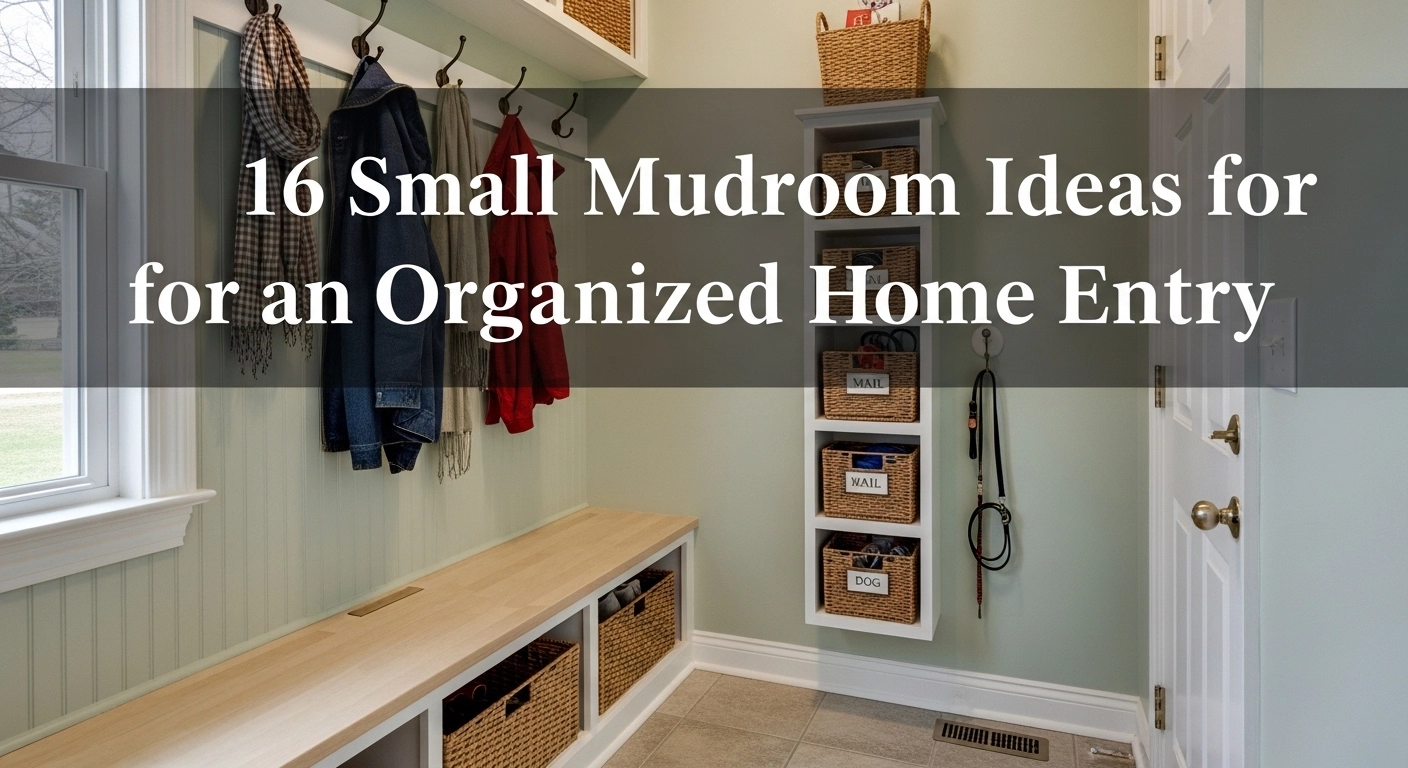
A small mudroom can change the whole mood of a home. When the entry works, shoes stop piling up by the door. Bags stop landing on chairs. Wet jackets stop moving from room to room. The house feels calmer because the mess gets stopped at the edge instead of spreading through the day.
Many people think they don’t have the space for a true mudroom. They picture a large built-in space with lockers, cabinets, and a long bench. This isn’t the case in most homes. They have a back door, a side door, a narrow hallway, a small wall, or a small strip of floor near the entry. This is enough to create a robust system if the setup fits the way the home is used.
After many years of helping families fix problem entryways, I can say this with confidence: a small mudroom does not need more stuff. It needs better structure. The best small mudroom ideas are the ones that make daily life easier in simple ways. They give wet shoes a place to land, keys a place to stay, and each family member a place to drop what they carry in.
This guide shares sixteen small mudroom ideas that help make the entryway clean, useful, and easy to live in. These aren’t just pretty upgrades. They’re practical choices that help make the home run better from the moment you walk in the door.
Start with the real mess instead of the dream setup
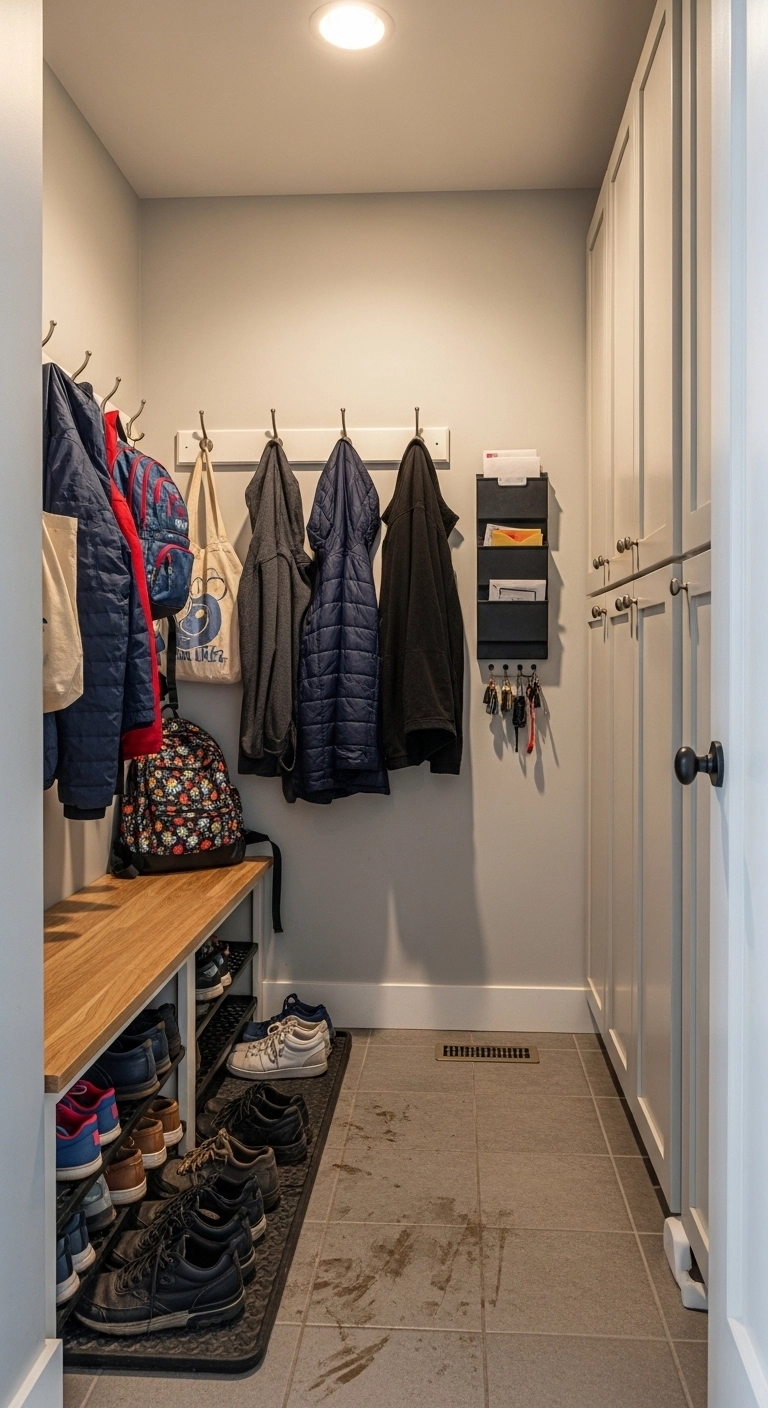
The smartest mudroom plan starts with the mess you already have. Now look at what lands by the door. It could be shoes, backpacks, dog leashes, sports equipment, lunch bags, mail, umbrellas, or coats. That pile tells you what the entryway really needs. Too many people skip this step and create a setup that looks nice but doesn’t solve the right problem.
When you start with the daily mess, the design becomes clearer. If shoes are the main issue, floor storage matters first. If coats are always draped over chairs, hooks matter most. If the house loses keys every morning, the entry needs a drop spot for small items. A small mudroom works best when every part answers a real habit. That is what makes it useful instead of just tidy for a day.
Use one wall well instead of trying to fill the whole area
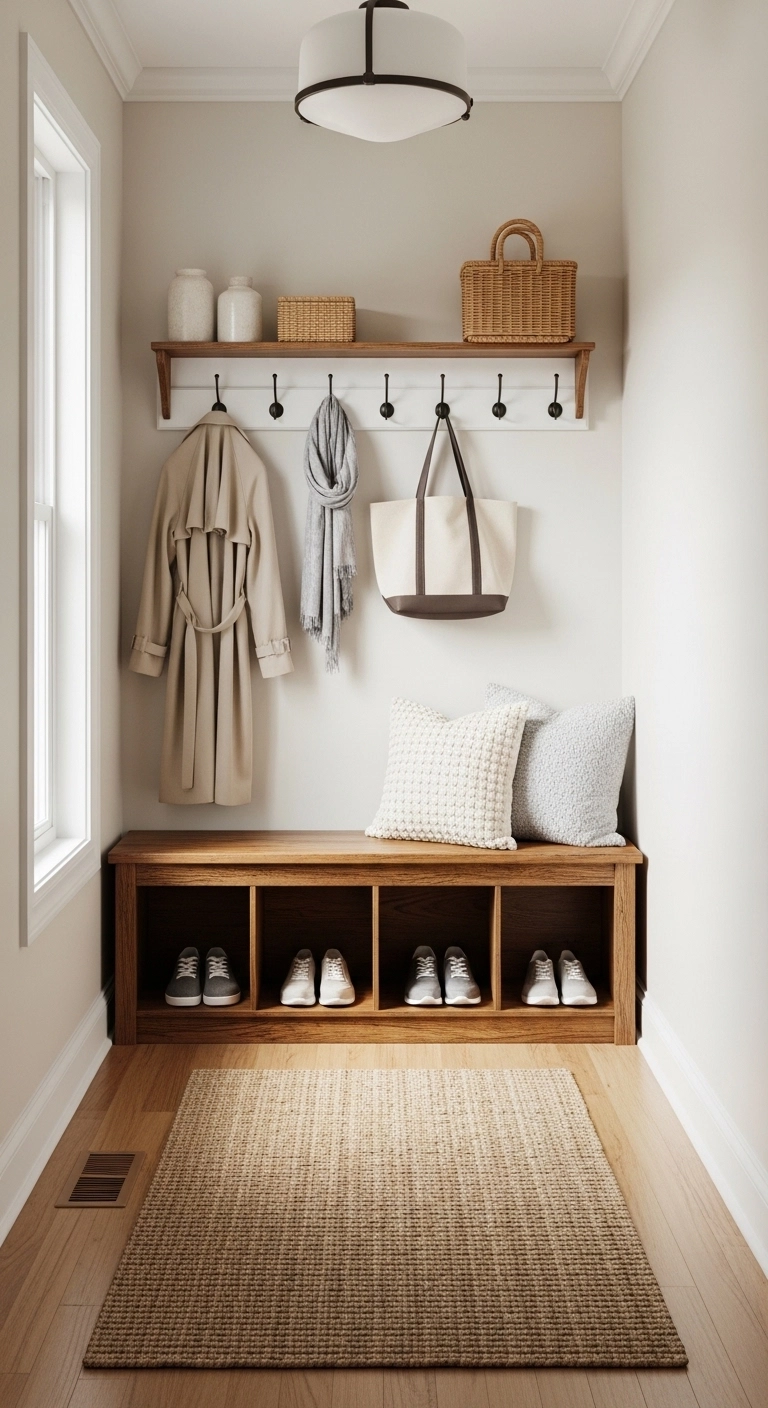
A small entry does not need storage on every side. In fact, that often makes it feel tighter. One well-planned wall can do more than a crowded setup spread across a narrow space. A bench, a row of hooks, and some shoe storage below can be enough to change the whole feel of the entry.
This is important because open floor space is part of what keeps a small mudroom functional. People need room to step, turn, take off their shoes, and pass each other. When the area is full, even good storage starts to feel like part of the problem. The best small mudrooms usually feel simple because they let one side do the hard work and leave the rest of the space clear.
Add a bench so the entry becomes easier to use
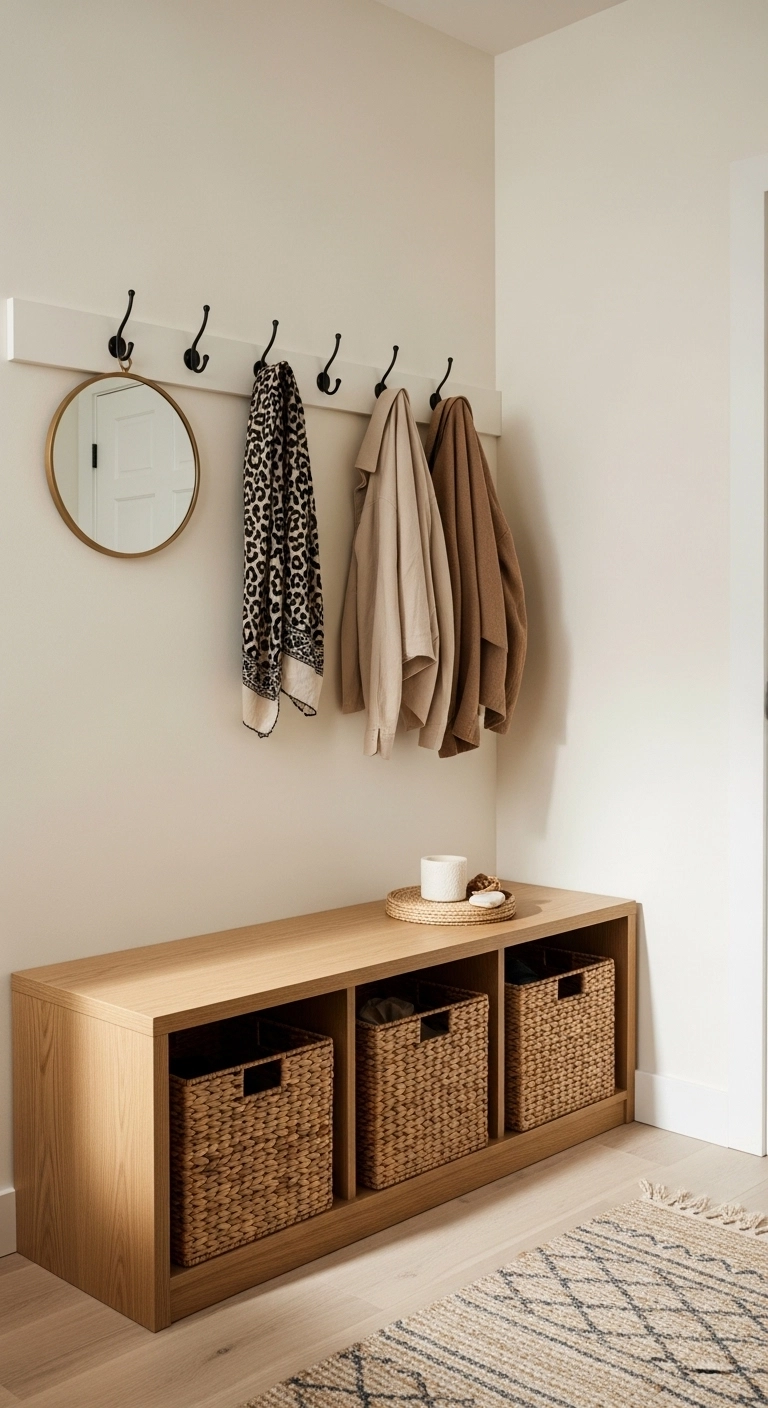
A bench changes how the entryway works. It gives people a place to sit while they take off their shoes. It gives kids a better chance to organize their own things. It also helps the mudroom feel like a real zone, rather than just a hallway with hooks. Even a narrow bench can make a big difference.
The best part of a bench is that it often does two jobs at once. It can hold baskets under it. It can open for storage inside. It can mark the place where shoes belong without needing a lot of extra pieces nearby. In a small mudroom, every item should do more than one thing when possible. A bench does that well, which is why it remains one of the strongest entry solutions in homes of every size.
Keep shoes low and easy to grab
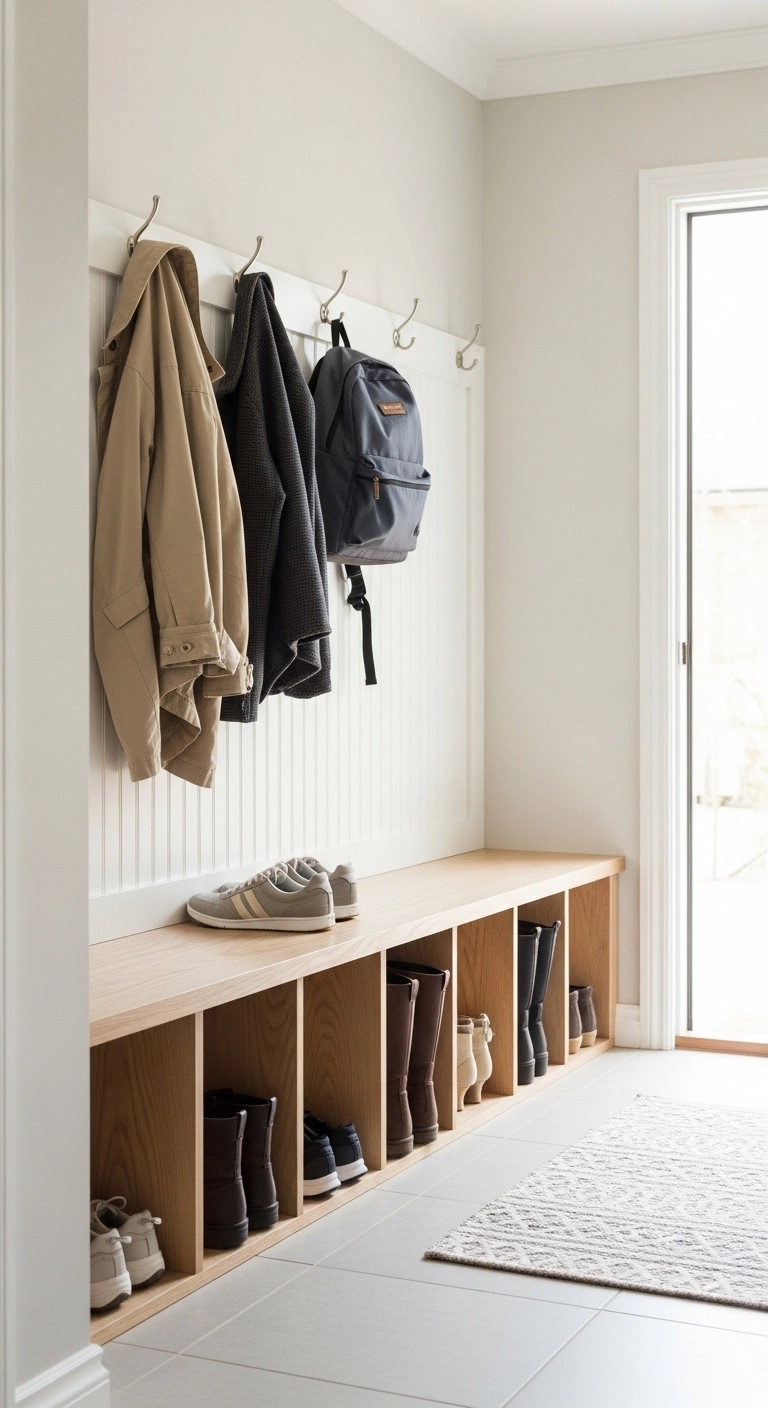
Shoes are often the biggest source of entry clutter. They spread fast, tip over, and seem to double by the door when there is no clear home for them. A small mudroom needs a shoe system that is simple enough to use every day, even when people are tired and in a rush.
Low shelves, cubes, trays, or baskets work better for this than complicated storage. Shoes should be easy to put in and easy to get out of. If the system is too demanding, people will stop using it. This is especially true in busy family homes. A clean entryway is rarely built from perfect habits. It is built from storage that is so simple that people actually follow it without thinking.
Use hooks instead of hangers for daily coats and bags
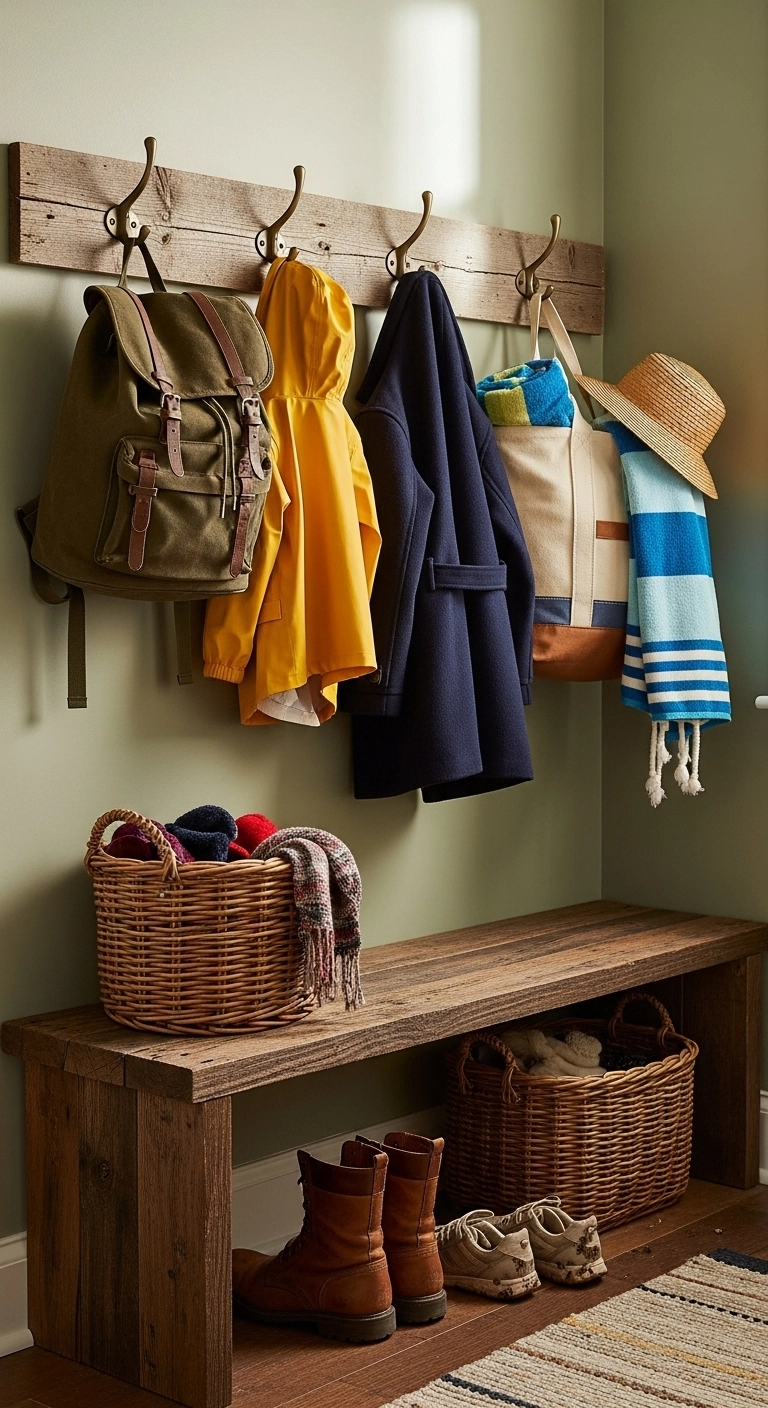
Closets have their place, but everyday items need quick access. Hooks are usually better than hangers in a mudroom because they look more like real life. People come in with their hands full. Kids don’t want to fight over hangers. Guests need a place to hang coats without having to open doors and move things around.
A row of strong hooks can hold jackets, backpacks, tote bags, and even hats. The key is giving them enough space so items do not all collapse into one heavy pile. Hooks placed at more than one height help a family even more. Adults can use the top row. Children can use a lower row. That simple detail makes the mudroom easier for everyone to manage, which helps the whole home feel more organized.
Give each person a clear landing spot
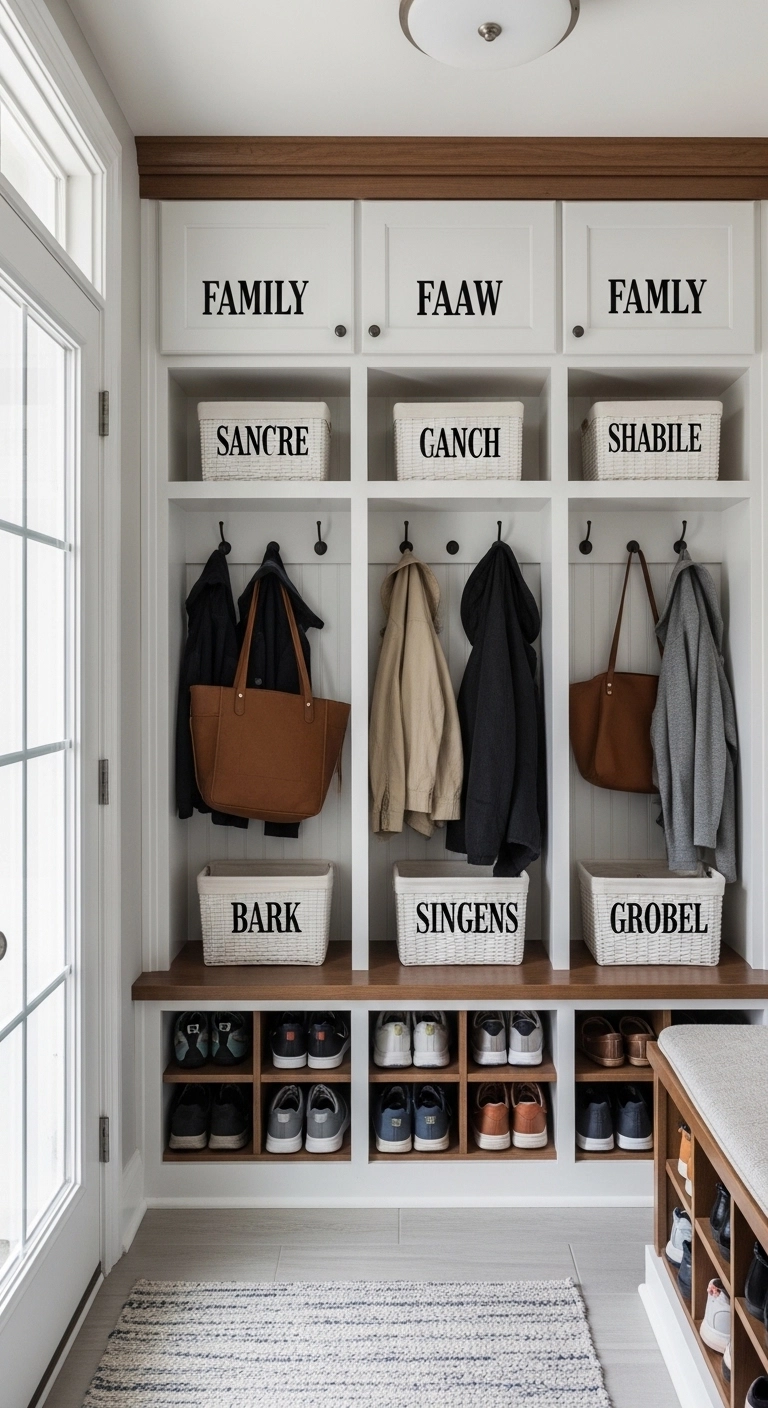
One of the fastest ways to calm an entry is to make it clear who owns what space. When all coats hang together and all shoes pile in one place, the entry becomes harder to read and harder to reset. A small mudroom can work much better when each family member has one spot for daily things.
It doesn’t have to be a full locker wall. It could be one hook, one basket, and one shoe slot for each person. What’s important is clarity. Kids do better when they know where their bags go. Adults waste less time when they’re not sorting through everything by the door every morning. In small spaces, clear zones reduce confusion, and less confusion usually means less clutter.
Add closed storage for the items you do not want to see
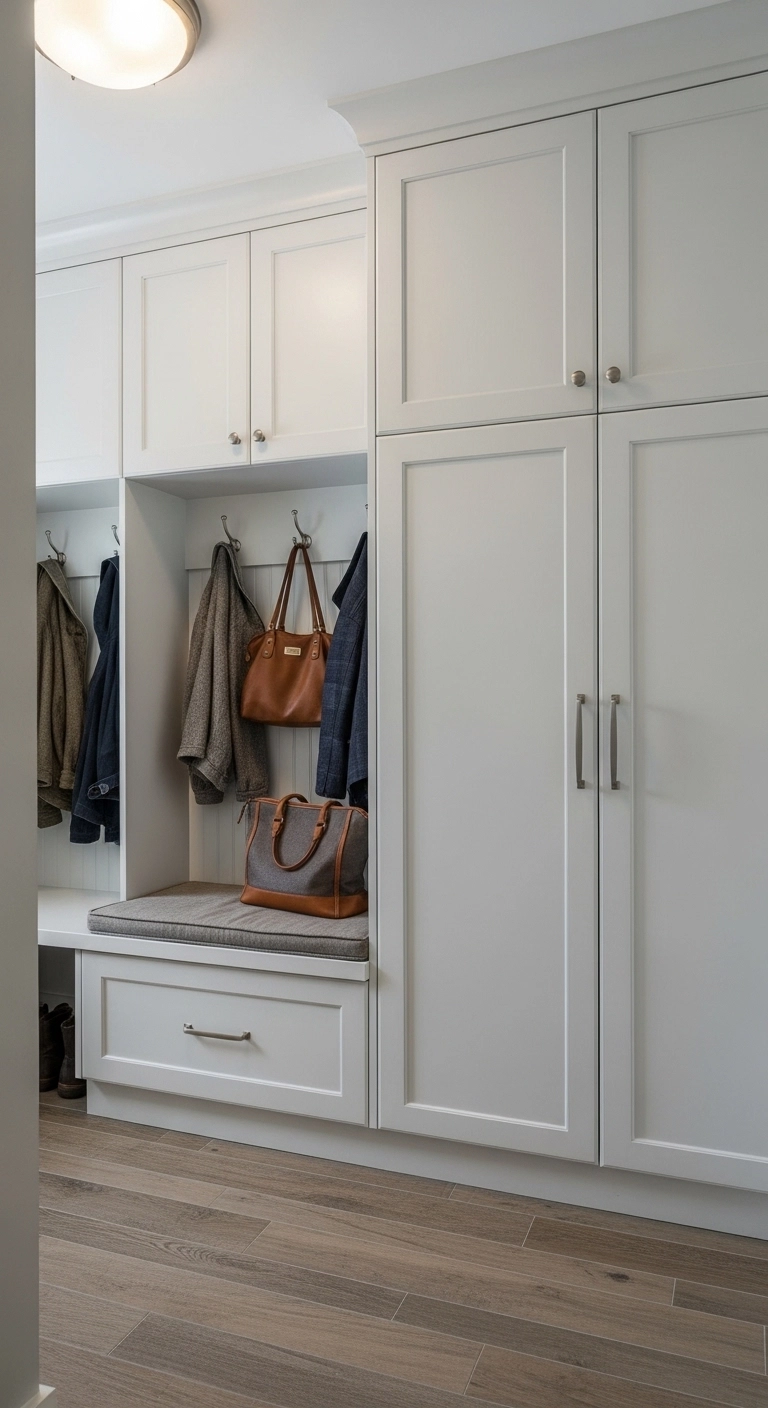
Open storage is useful, but not everything should stay in view. Some entry items make the space feel messy even when they are technically “put away.” Gloves, hats, dog supplies, sunscreen, shopping totes, and random seasonal gear can quickly make a mudroom look crowded if they all stay exposed.
That’s where closed storage comes in. A cabinet, a bench with a lid, or a drawer unit can hide small items that still need to be close to the door. This makes a small entry feel calmer because the visual noise is immediately reduced. The goal isn’t to hide everything. It’s to balance easy-to-reach everyday items with a few spaces that prevent the need to take up extra space.
Use baskets for soft items that do not stack well
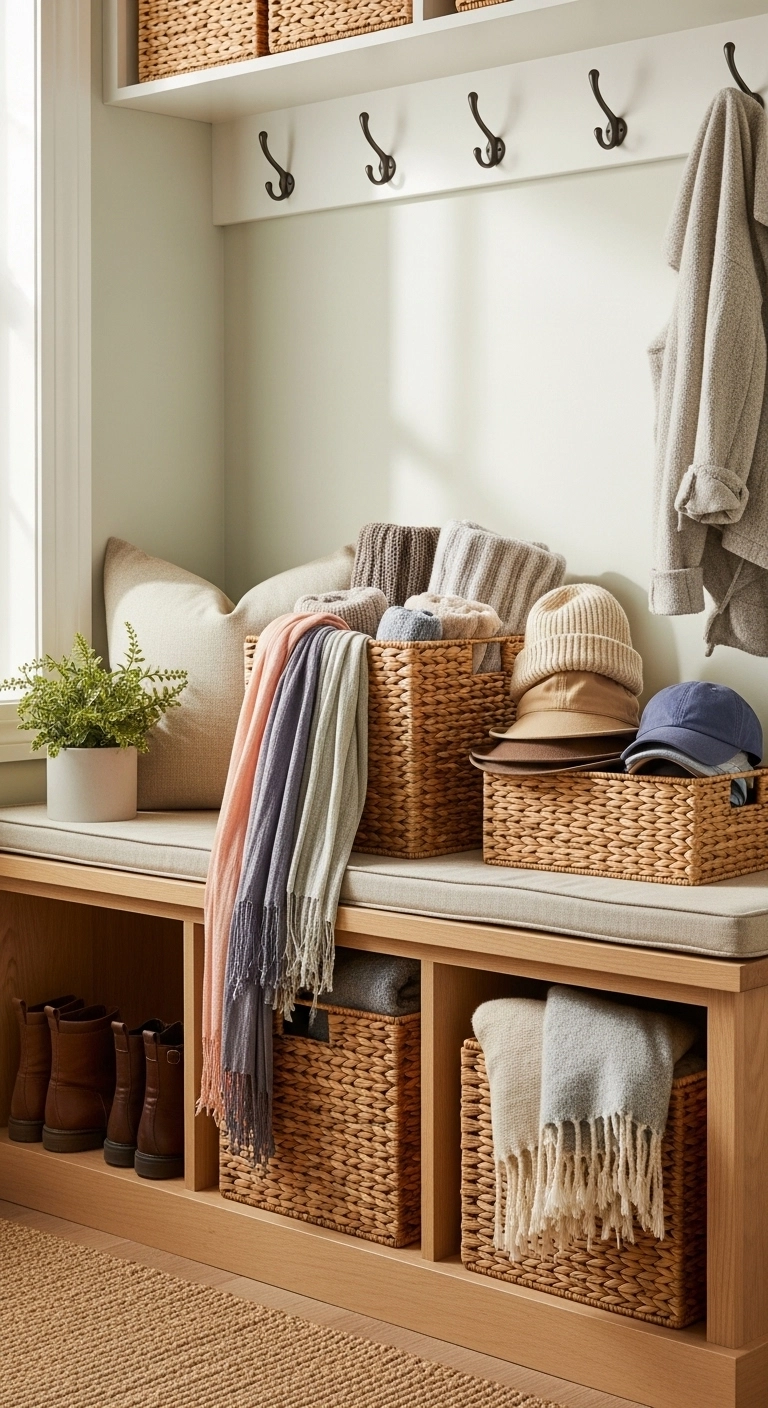
Some entry items do not fit shelves nicely. Scarves, hats, gloves, reusable bags, and small sports items tend to flop, slide, and fall into each other. Baskets work well here because they hold soft things without needing perfect order. They also make cleanup faster because things can be tossed in without much effort.
In a small mudroom, baskets work best when they are used for their intended purpose. One for winter supplies. One for pet supplies. One for grab-and-go extras. They shouldn’t become mysterious bins for everything without a home. A good basket helps organize. A cluttered basket hides a problem. When used carefully, baskets add both function and softness to an entryway that can otherwise feel cramped and busy.
Make room for wet and dirty items
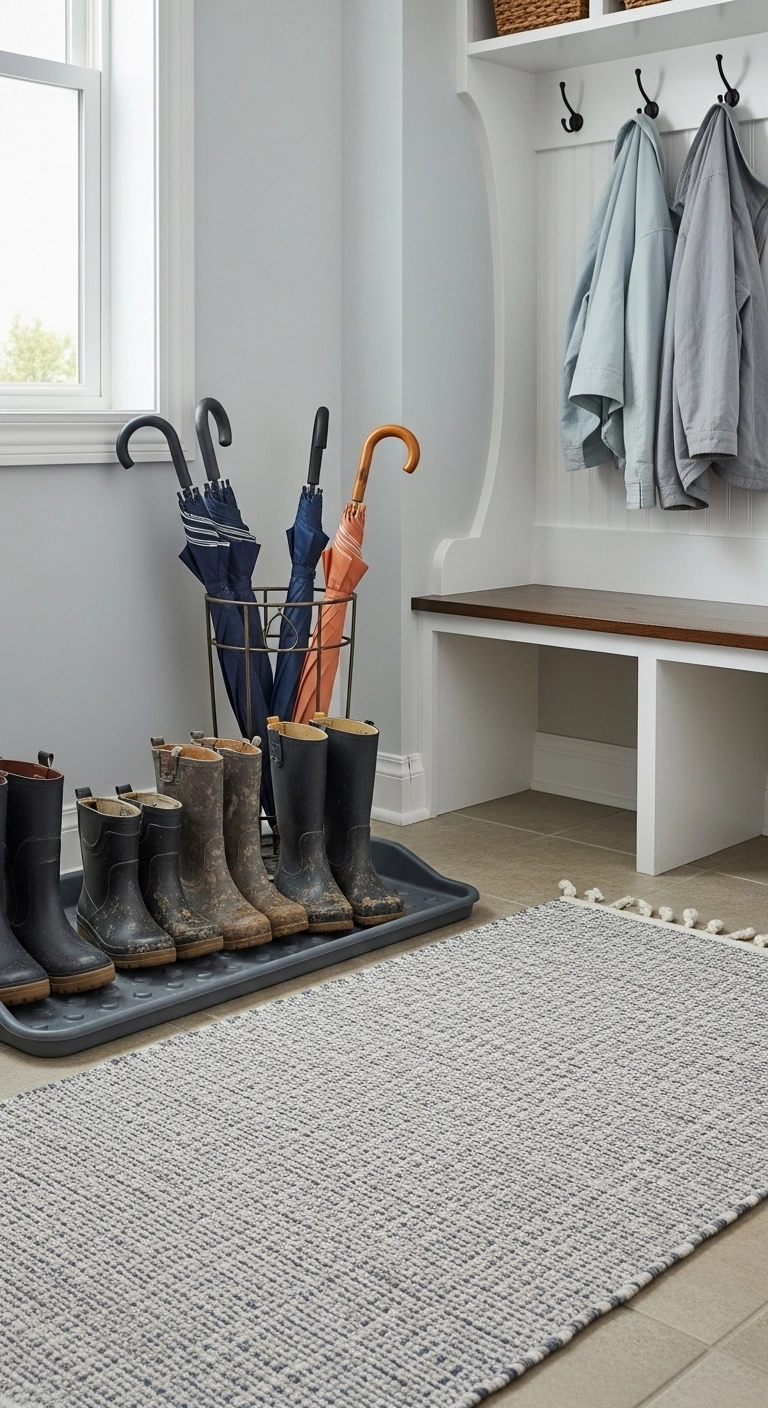
A mudroom’s entryway isn’t just a storage zone. It’s a stopping point for dirt coming in from outside. That means wet shoes, muddy boots, wet coats, and umbrellas need a place that can handle them without damaging the rest of the space. This area is often overlooked in small entries, and then the floor becomes the default catch zone.
A boot tray, easy-clean rug, or small waterproof mat can help a lot. These pieces give the mess a boundary. They also protect the floor and make cleaning easier. A small mudroom works better when it accepts real weather instead of pretending everyone walks in clean and dry. The right setup makes the entry more forgiving, and forgiving spaces usually stay tidier in the long run.
Add a small shelf for keys, mail, and daily pocket items
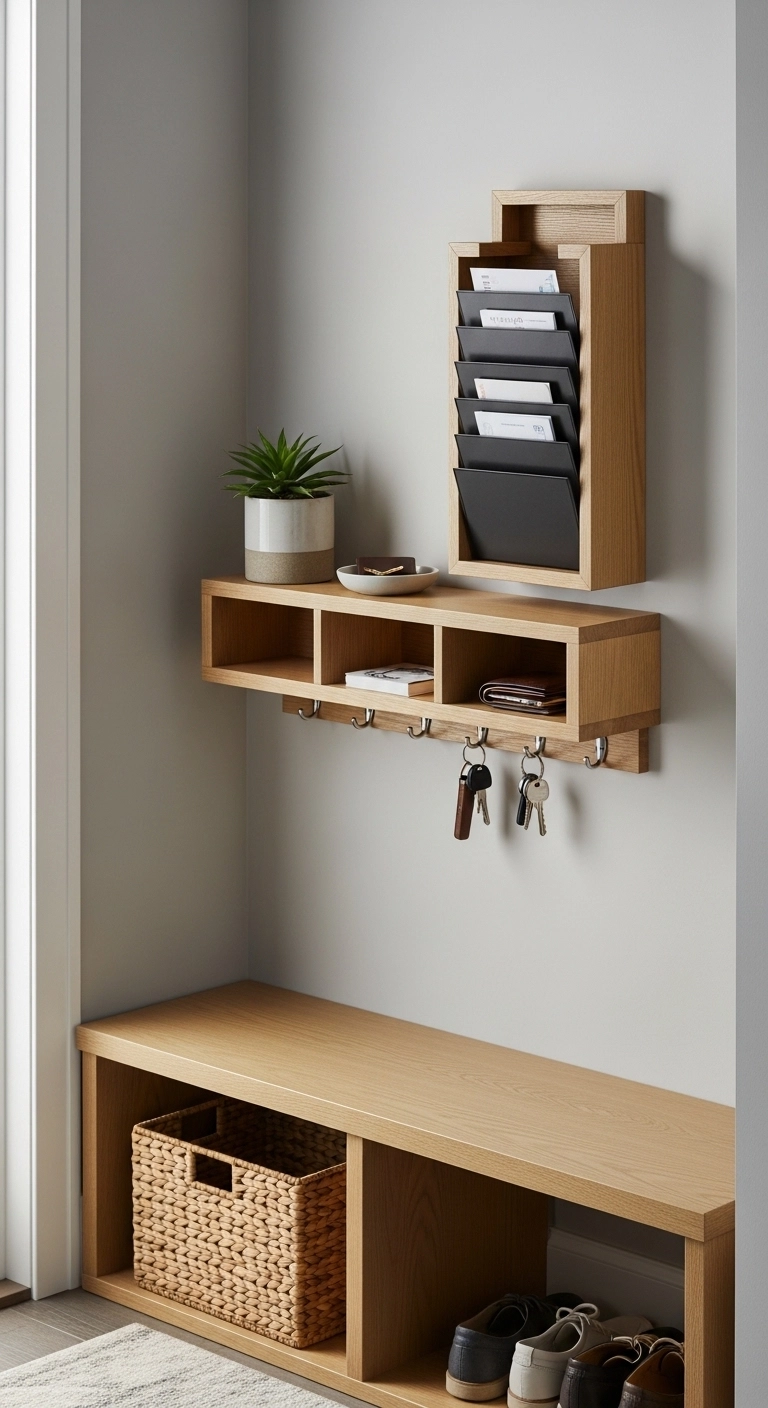
The home entry often becomes the place where keys vanish and paper piles begin. A mudroom does not need a big desk to fix that. It just needs one small surface that tells the hand where to put important things the moment someone walks in. A narrow shelf, shallow ledge, or slim console can handle that job well.
This kind of drop zone is important because small items create big frustration. Keys, wallets, sunglasses, and mail do not take much space, but they can cause daily stress when they do not have a home. One tray or bowl on a small shelf can solve that problem better than a bigger system elsewhere in the house. Good entry design often comes down to these simple, targeted fixes.
Use vertical space when floor space is tight
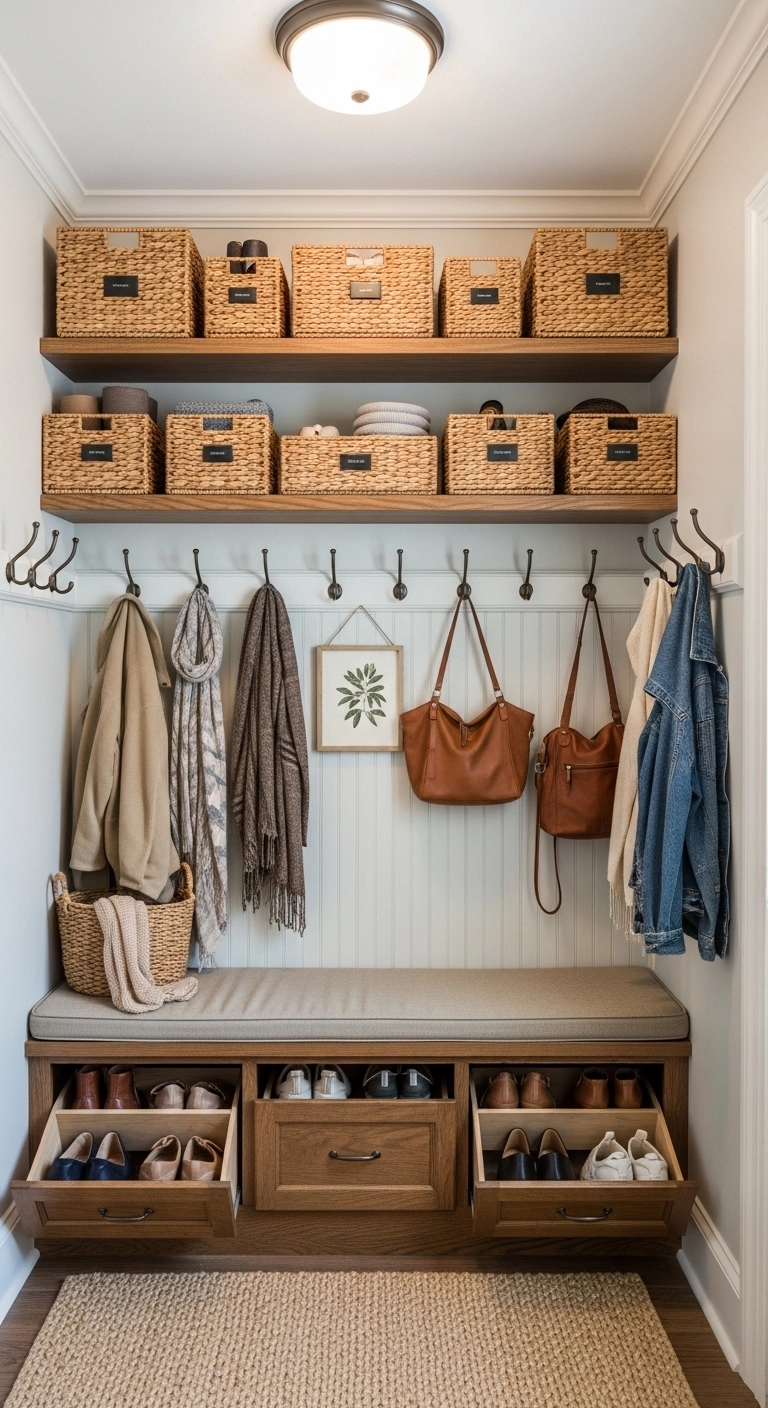
Small mudrooms often lack width, but they still have wall height. That is useful space, and many homes leave it empty. When the floor is limited, vertical storage can carry more of the load. Upper shelves, stacked cubbies, and high cabinets can hold the items that do not need to be reached every hour.
The trick is to keep the right things up high. Seasonal gear, rarely used bags, backup pet supplies, and spare hats can stay above eye level. Everyday items should be low and easy to reach. When vertical space is used well, an entryway can hold a lot without feeling heavy at foot level. This helps the mudroom stay functional while still allowing people to easily pass through it.
Create a family drop zone that can reset fast
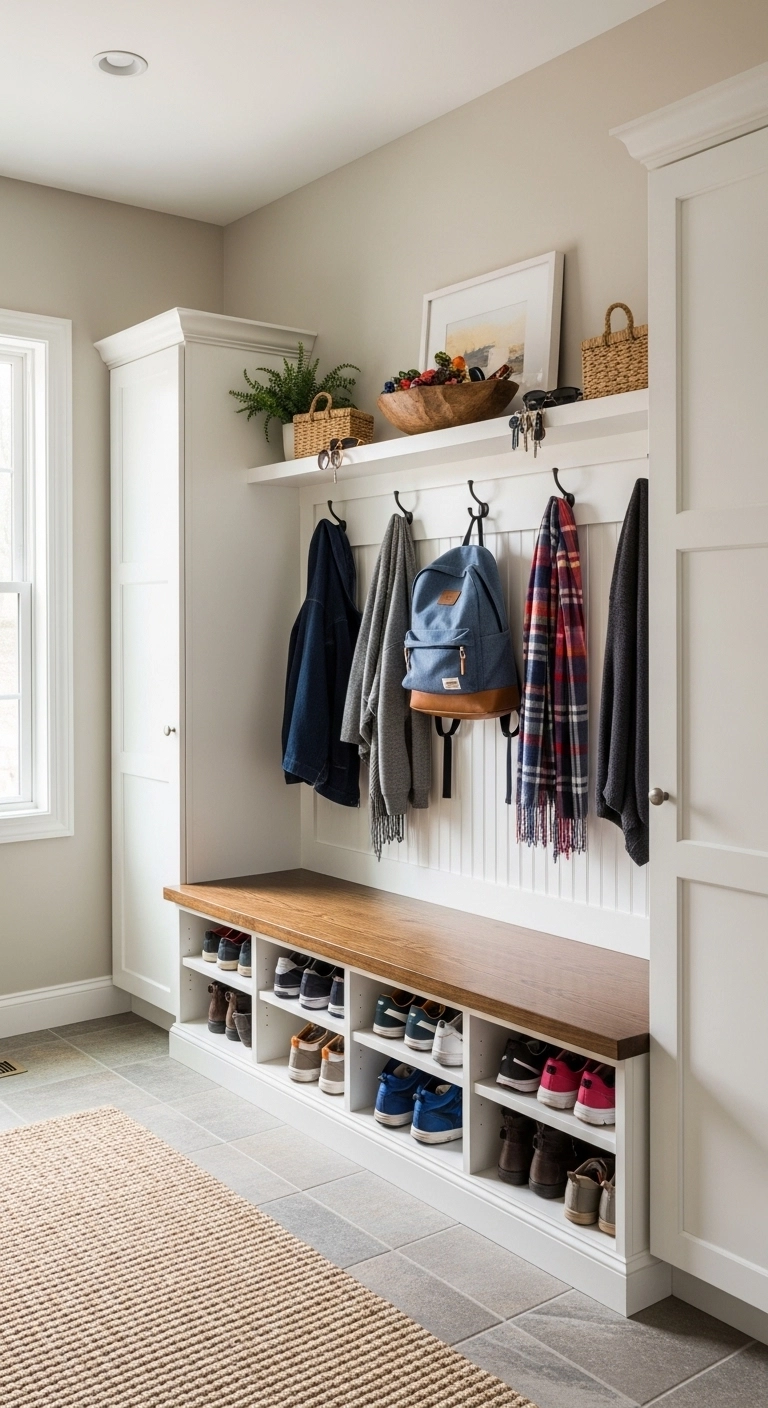
The best entry systems are not the ones that look perfect in a photo. They are the ones that can recover fast after a normal day. Children rush in, adults drop things, someone forgets to hang a coat, and mail lands on the wrong surface. That is real life. A strong small mudroom should be able to return to order in just a few minutes.
That’s why simple systems usually win. A hook for every coat. A place for every shoe. A tray for keys. A basket for hats. When every item is in the house fast, the room can get cluttered without a complete cleaning plan. A mudroom that demands too much from tired people won’t stay organized for long. A mudroom that makes it easy to reset has a much better chance.
Keep the floor as clear as possible
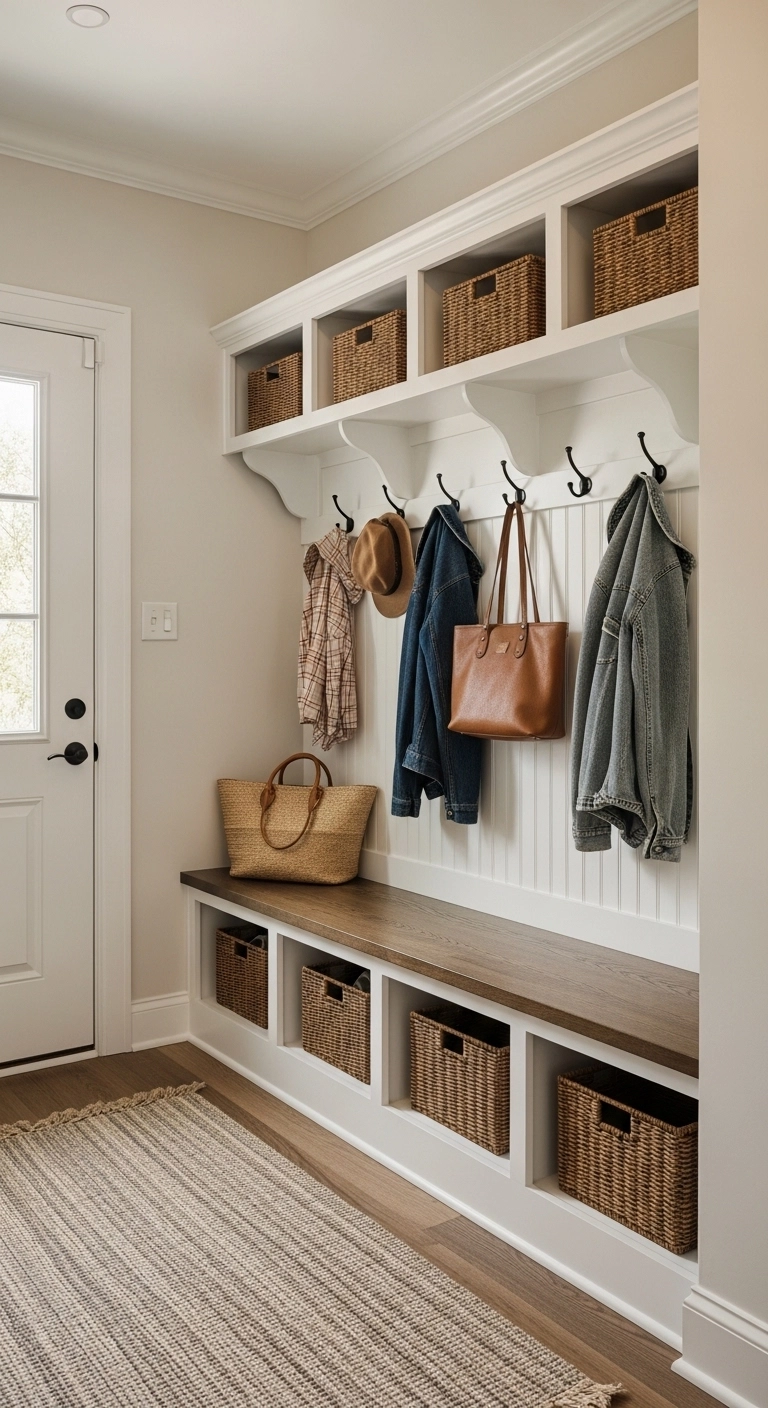
In a small entry, the floor matters more than people think. A few extra things on the ground can make the whole area feel blocked. This is one reason some mudrooms always feel messy even when the storage seems fine. The floor is doing too much. Shoes spill out, bags slump against the wall, and sports gear takes over the path.
A clean floor makes a mudroom easier to clean, easier to walk through, and easier to read at a glance. That’s why wall hooks, raised benches, and underbench storage help a lot. They take the load off and allow for breathing room. Even in a very small mudroom, preserving open floor space helps the entire area feel more organized and less crowded.
Choose surfaces that can handle real family use
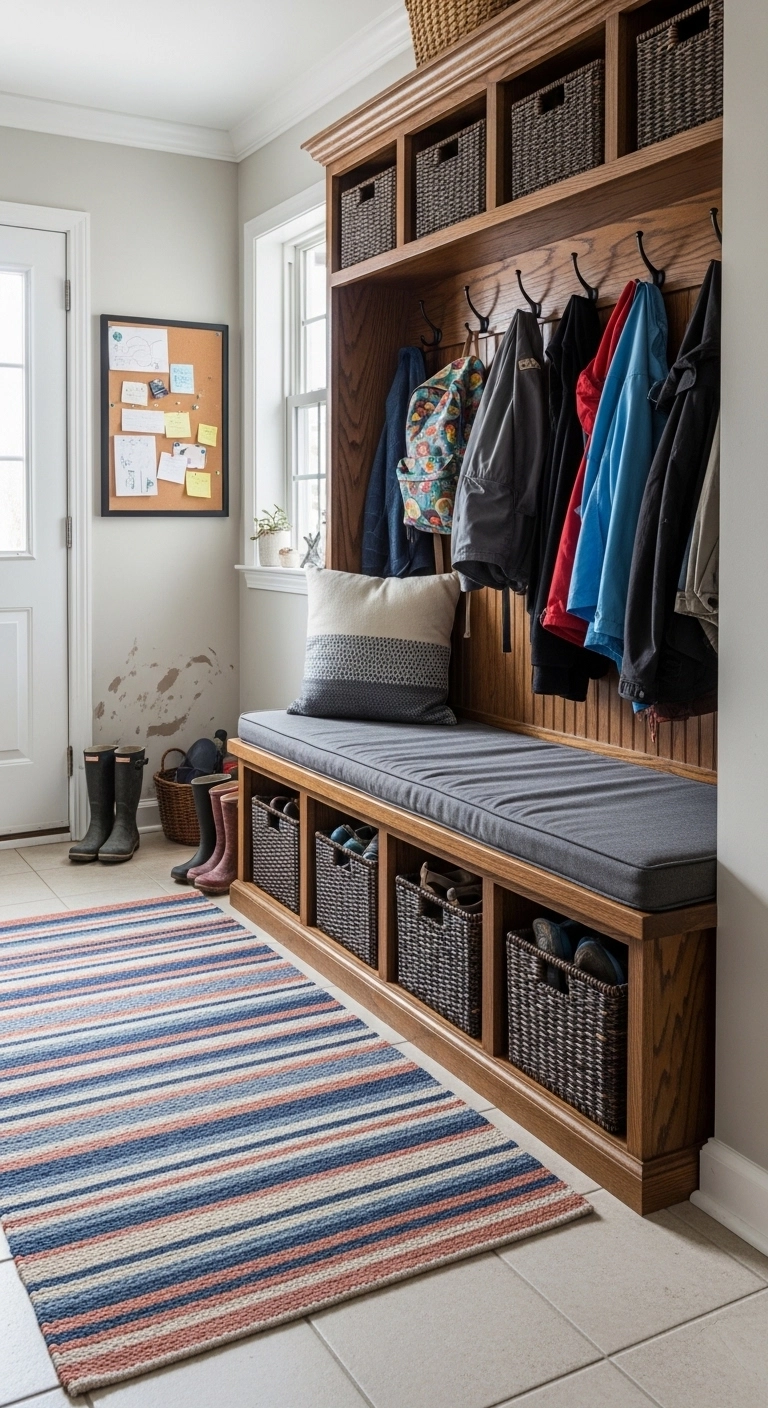
An entry works hard. It deals with dirt, water, dropped bags, rough shoes, and rushed mornings. That means the materials in a mudroom should be easy to clean and strong enough for daily life. This matters even more in a small space, because wear shows faster when everything is close and visible.
A washable rug, wipeable bench, sturdy hooks, and simple baskets often do better than delicate pieces. The entry should not make you nervous. It should support the mess of everyday life and still be easy to reset. When the surfaces fit the way the family really lives, the mudroom feels less fragile and more dependable. That makes it much easier to keep up over time.
Add one visual detail that makes the space feel finished
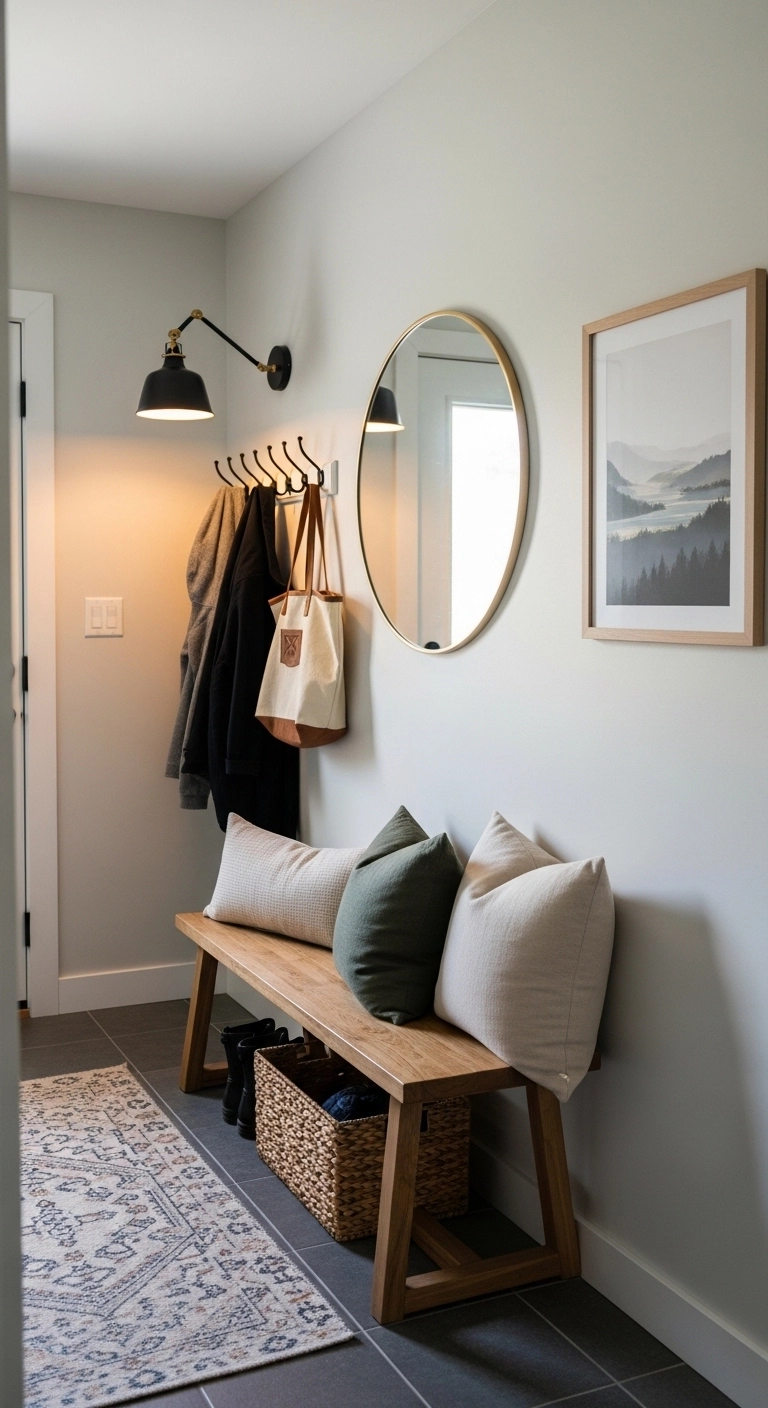
A mudroom is practical first and foremost, but that doesn’t mean it has to feel cold. In fact, small, laborious spaces often stay clean when they’re cared for. A mirror, a small lamp, a framed print, or a simple warm color on the wall can help make the entryway feel like part of the home rather than just a place to store shoes.
The key is restraint. One nice detail can go far in a small mudroom. Too many decorative items usually get in the way. But one thoughtful piece can make the space feel settled, and that feeling matters. People tend to care for spaces more when those spaces feel finished and welcoming rather than rushed and temporary.
Rework the setup as seasons and family needs change
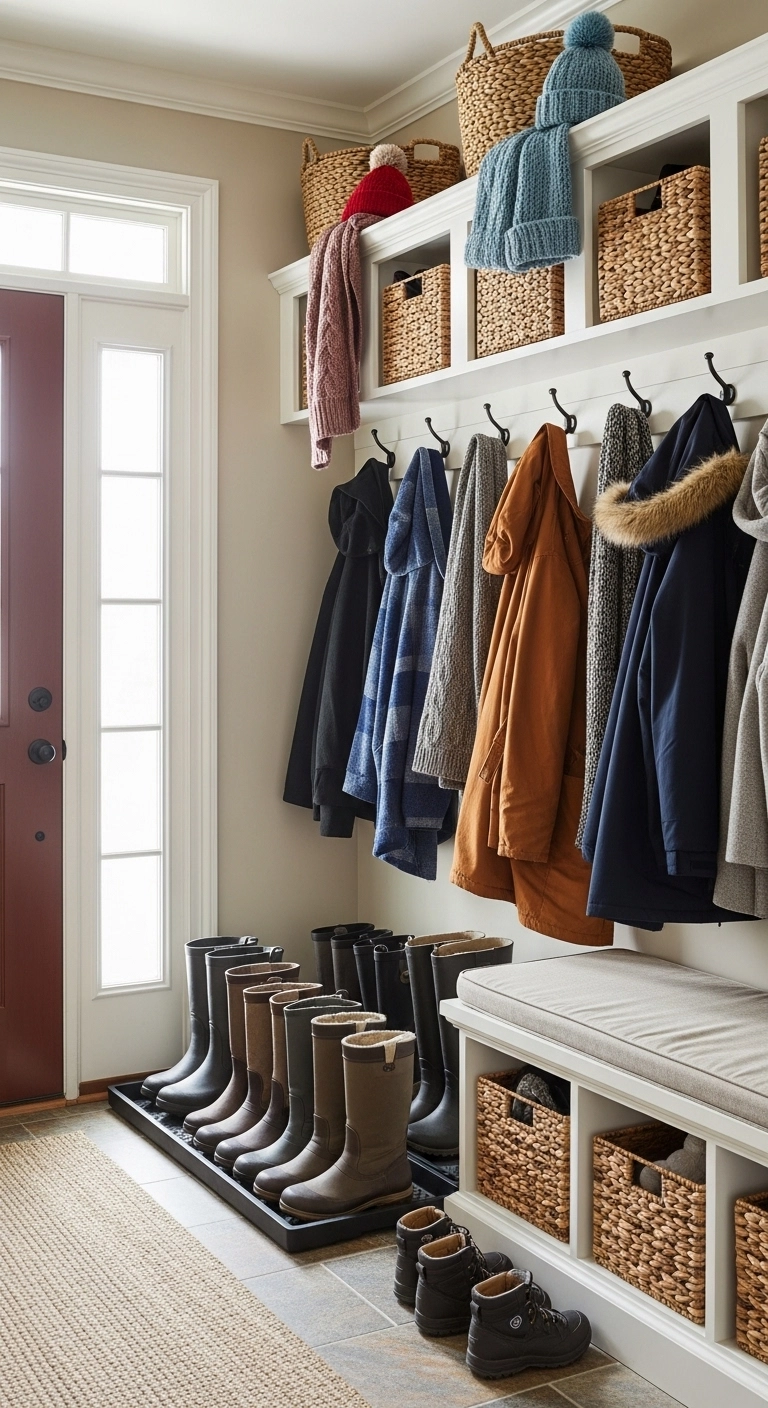
The final mudroom idea is knowing that the system should change. A setup that works in summer may fail in winter when boots, coats, gloves, and wet gear arrive all at once. A system that worked for toddlers may not fit school bags, sports gear, and bigger shoes a few years later. That is normal.
A good mudroom isn’t fixed forever. It’s evaluated and adjusted. Hooks may need to be moved up or down. A basket may need to become a cabinet. A boot tray may be needed in the winter where a sunscreen basket is needed in the summer. While the entryway changes with the family, it remains useful. That’s the real goal. Not perfection, but a setup that continues to work as life moves on.
Conclusion
A small mudroom does not need a lot of square footage to make a big difference. It needs a clear plan, a few hardworking pieces, and a layout that fits the way the home really functions. When the entry gives shoes, coats, bags, and daily items a proper home, the whole house feels easier to manage.
The best small mudroom ideas are often simple. A sturdy wall. A useful bench. Easy shoe storage. Good hooks. A clear drop zone. Some hidden storage for extra clutter. These things may seem small on their own, but together they change how a home starts and ends each day.
Start with the part of your entry that causes the most stress right now. Fix that first. Then build the rest around it. That is how a small mudroom becomes more than a narrow space by the door. It becomes one of the hardest-working spots in the home, and one of the most helpful.

Muskan Saleem
BukayHome shares practical home decorating ideas, room inspiration, and simple styling tips to help readers create a home they truly love.