17 Kitchen Vent Hood Ideas for a Stylish Finish
17 Kitchen Vent Hood Ideas for a Stylish Finish
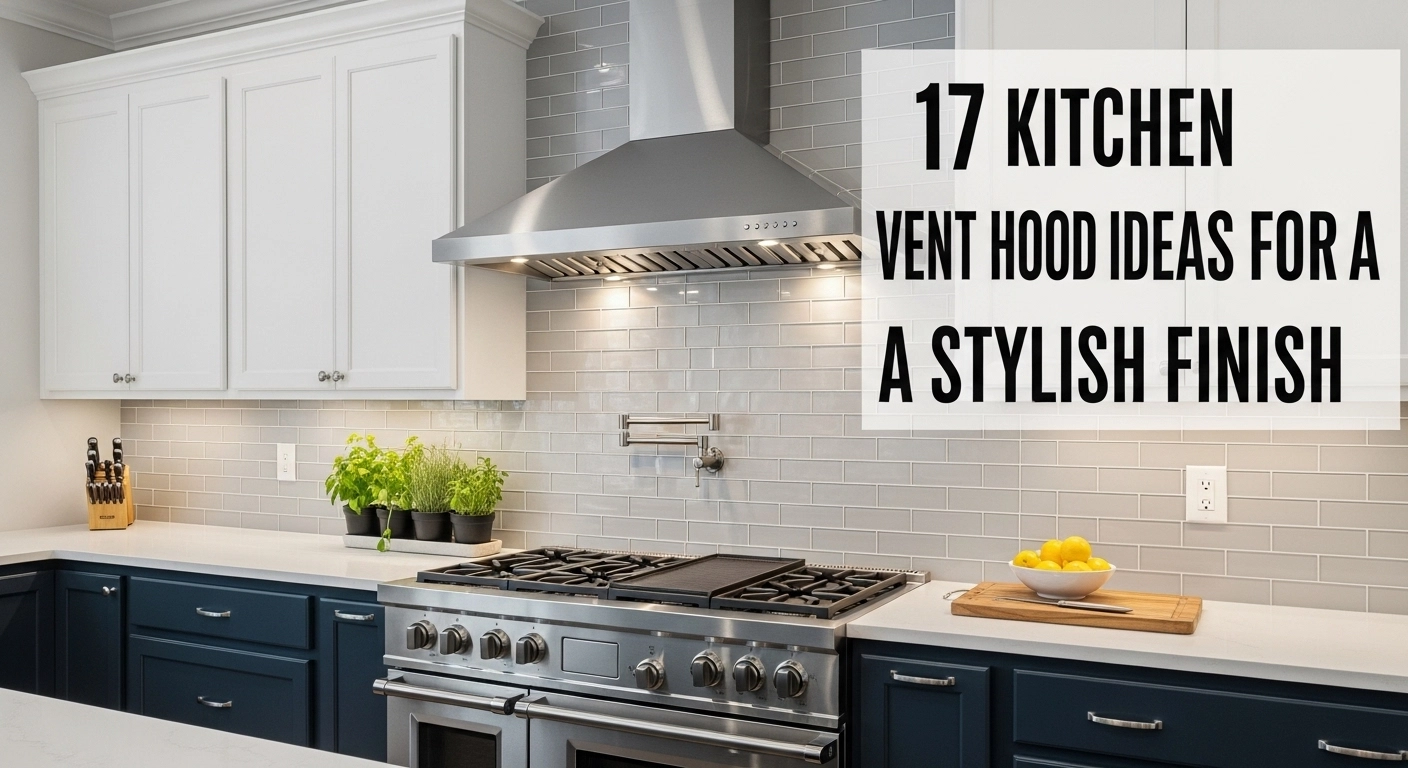
A kitchen vent hood serves an important function. It removes smoke, grease, heat, and cooking odors from the stove. But it does something else too. It helps shape the overall look of the kitchen. In many homes, the hood sits right in the middle of the cooking wall. That means people notice it quickly, even if they don’t mean to.
This is why a hood can help a kitchen look complete or make it feel a little off. A hood that is too small, too heavy, too shiny, or just wrong for the room can pull the whole wall out of balance. A hood that fits the kitchen well can make the space feel settled, calm, and more thought through.
After years of helping people improve their kitchens, I’ve seen one thing over and over again. The best hood isn’t always the boldest. It’s the one that fits the room best. Sometimes that means the hood stands out. Sometimes it means it blends in. Sometimes it adds texture. The point isn’t to copy a look. The point is to choose a hood that helps the kitchen feel finished.
This guide walks through seventeen kitchen vent hood ideas that can do that. Each one offers a different way to shape the cooking wall. Some ideas work better in small kitchens. Some help in larger open kitchens. Some add softness. Some add contrast. All of them can lead to a better result when used in the right room.
Keep the hood simple when the kitchen already has enough detail
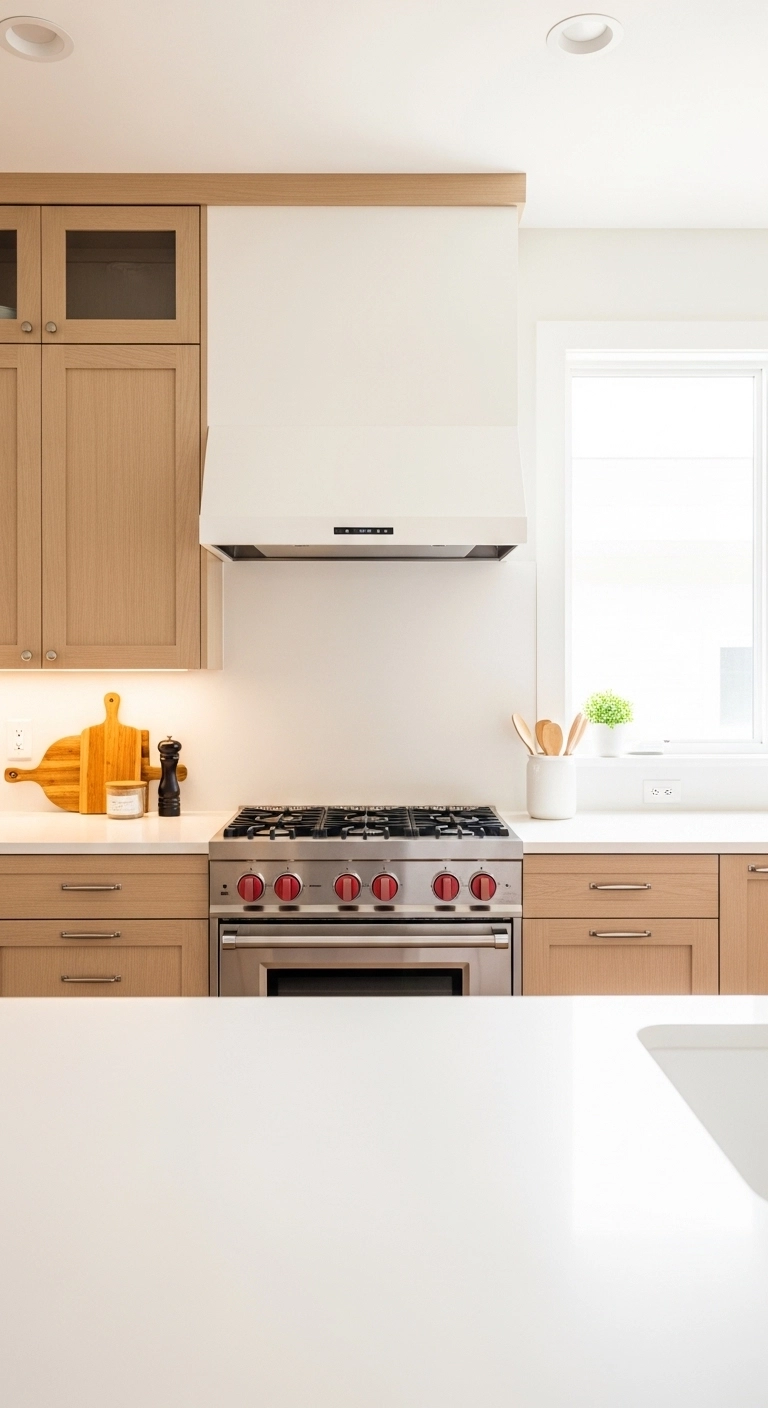
Some kitchens already have a lot for the eye to see. The backsplash pattern may be strong. The island color may be dark. There may be movement at the counter. The lights may already stand out. In this type of kitchen, the hood doesn’t have to fight for much attention. A simple hood may be the best choice.
A plain hood with clean lines gives the room a place to rest. That matters more than many people think. A kitchen starts to feel busy when too many parts try to be the star. A simple hood helps hold the wall together without making the room feel louder.
Simple doesn’t have to mean dull. A well-designed hood in the right size can look very solid. It just does its job without demanding all the attention. In many kitchens, it’s what makes the entire room feel brighter.
Match the hood to the cabinets for a built-in look
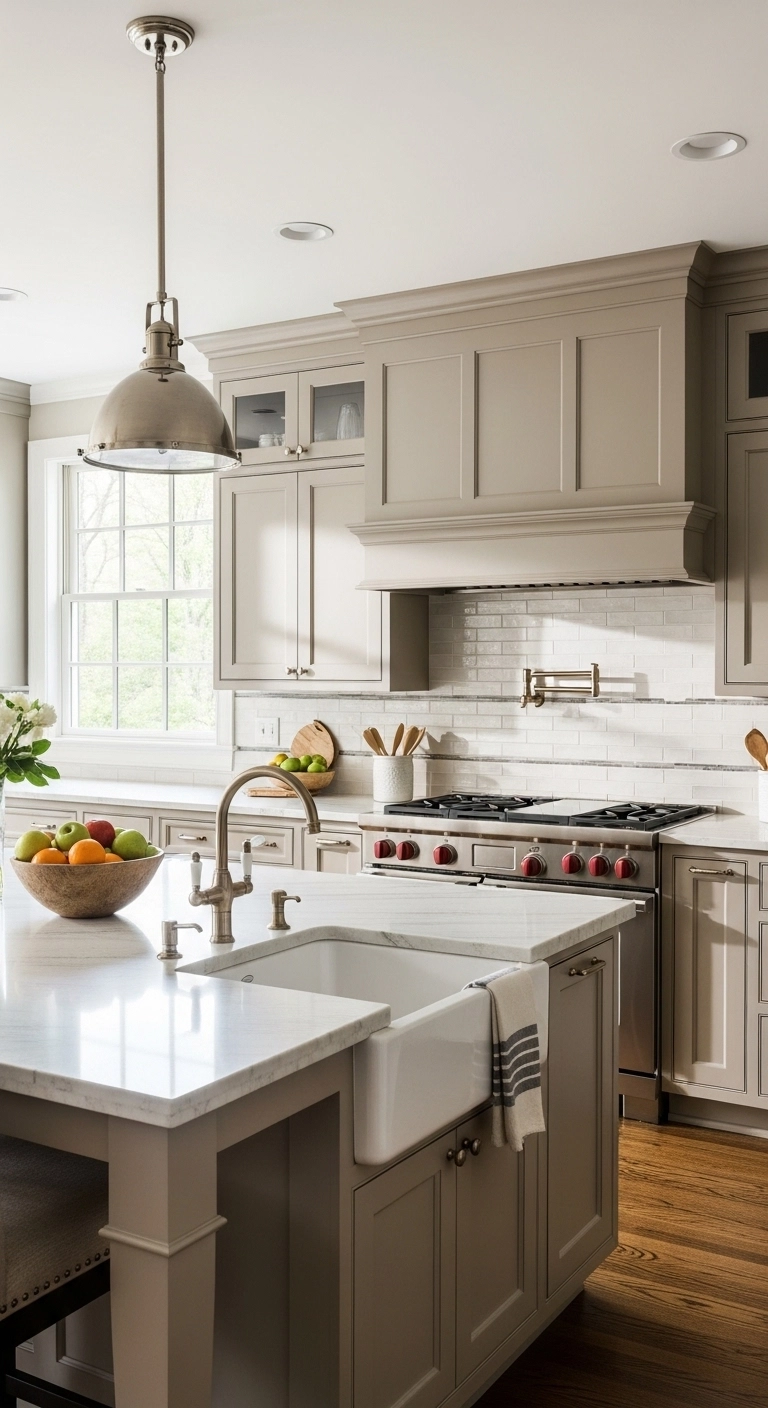
One of the easiest ways to make a vent hood feel natural in a kitchen is to tie it to the cabinets. When the hood shares the cabinet color, trim style, or finish, the whole wall starts to read as one unit. The hood feels built in instead of added later.
This idea works especially well in kitchens where the goal is calm and order. A matching hood can make a cooking wall feel seamless and complete. It can also help the kitchen look larger because the eye isn’t stopping at so many separate areas.
The match does not have to be exact in every little detail. What matters is that the hood feels like it belongs to the same design family. When the cabinets and hood speak the same design language, the kitchen usually feels more settled.
Use a wood hood to bring warmth into the room
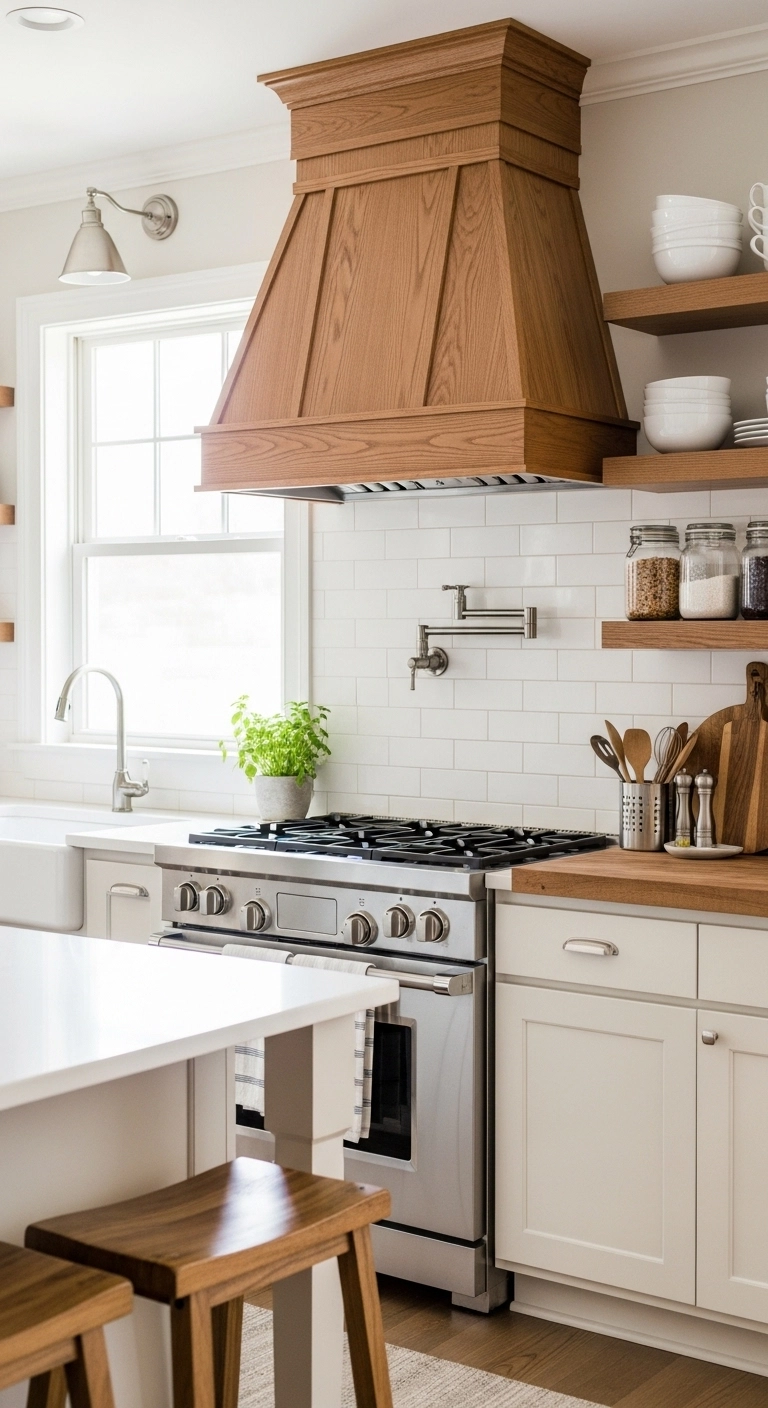
A kitchen can feel clean and still feel a little cold. This is often the case in rooms with painted cabinets, stone counters, tile backsplashes, and metal appliances. There’s nothing wrong with these finishes, but they can make the room feel a little harsh together. A wood vent hood can help soften that.
Wood adds warmth in a place where the eye naturally lands. It can also help connect other warm details in the room, such as bar stools, open shelves, beams, or flooring. That connection helps the kitchen feel more balanced.
A wood hood doesn’t have to be dark to work. Light oak, medium walnut, painted wood with visible grain, or even a soft weathered tone can work well. The main value is that the hood brings life and warmth to the cooking wall in a way that metal alone often can’t.
Paint the hood the wall color for a quiet finish
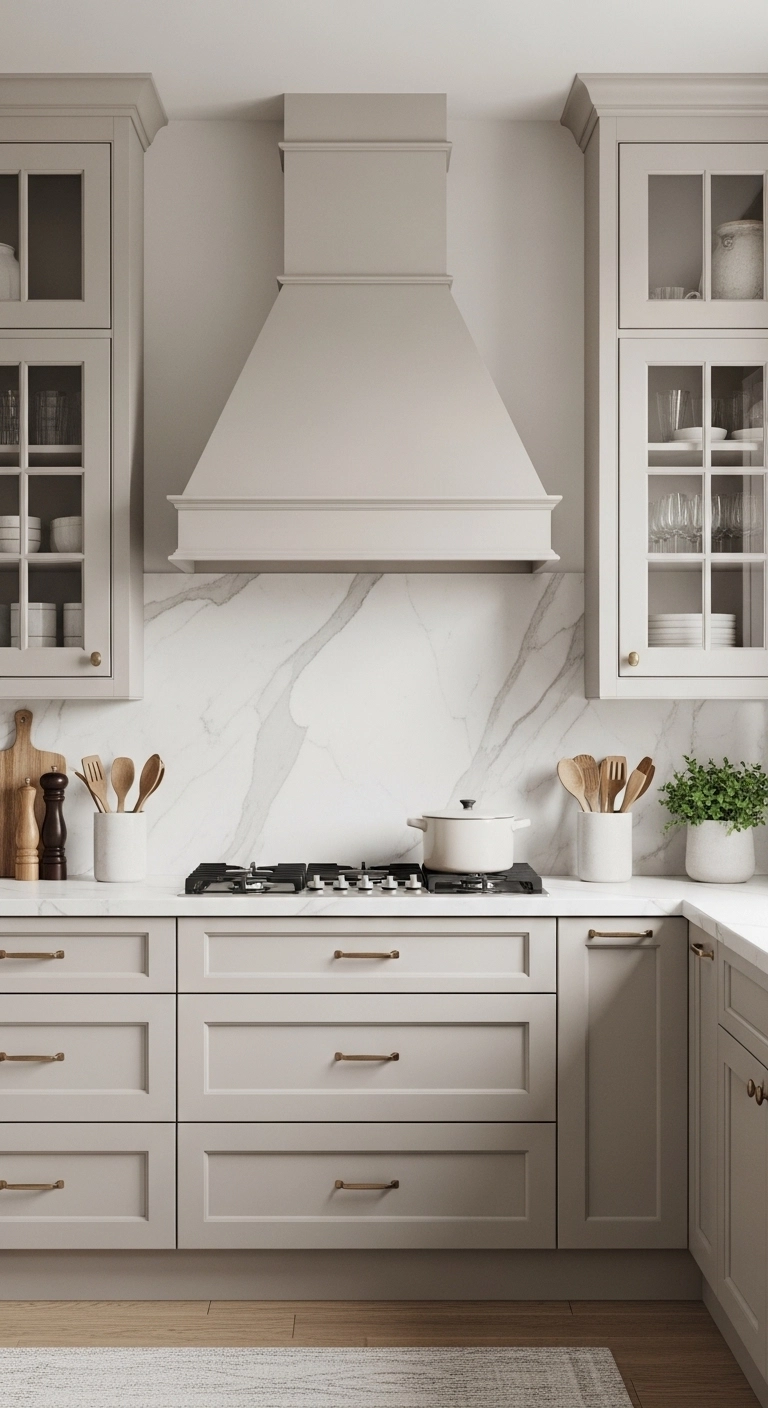
Not every hood needs to stand out. In some kitchens, the best move is to let the hood settle into the wall. Painting the hood the same color as the wall can do that very well. The hood still has shape, but it feels softer and less separate from the rest of the room.
This is a great choice in a kitchen that aims for a calm look. It also works well in small kitchens where too much contrast can make a wall feel crowded. When the hood shares the wall color, the room often feels easier on the eyes.
This approach works best when the hood shape itself is nice. Since the color is not doing the work, the form needs to carry the design. A quiet painted hood can look very thoughtful when the scale and shape are right.
Choose a plaster-style hood for softness and shape
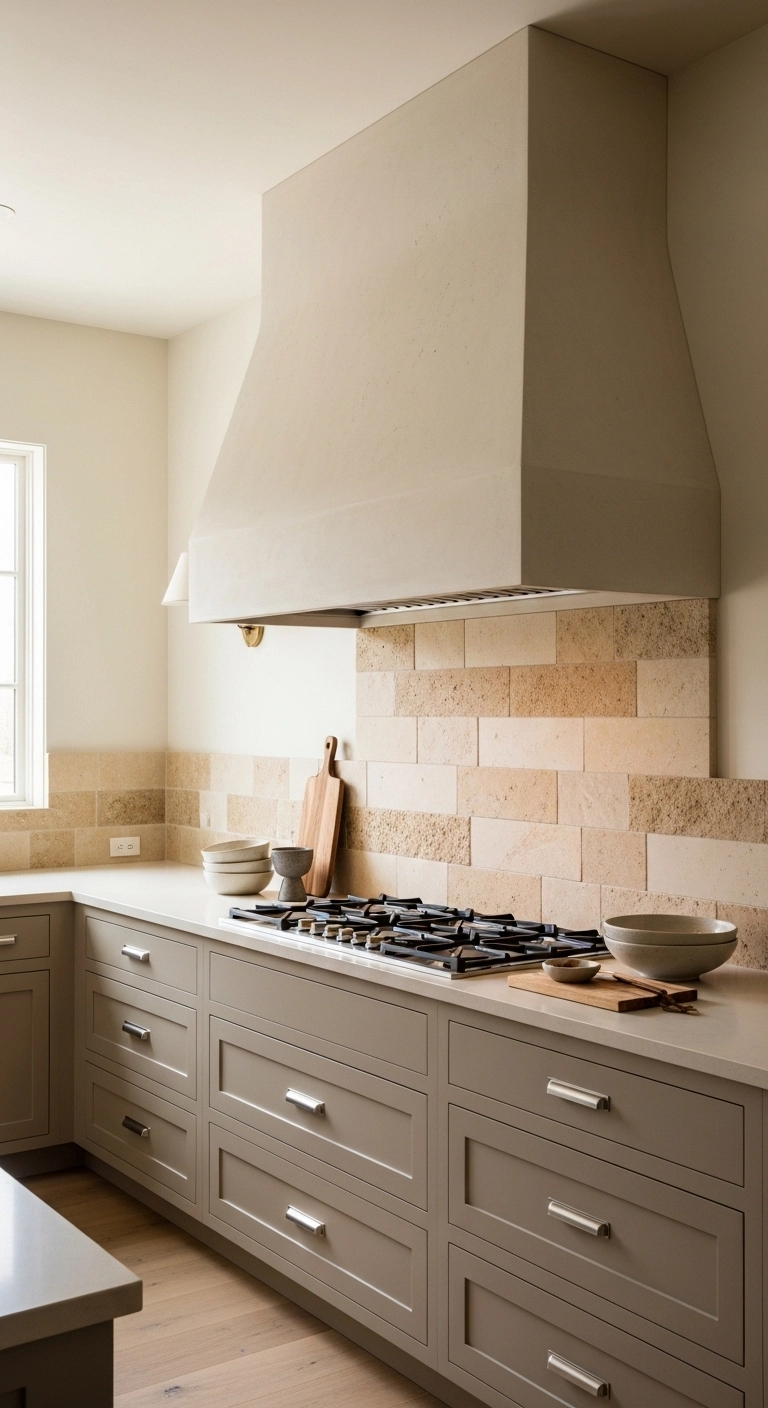
A plaster-style hood can change the feel of a kitchen in a special way. It gives the appearance of a wall without adding shine. It feels softer than metal and less formal than some wood hoods. In kitchens that need to be more calming than its counterpart, this can be a strong choice.
The beauty of this kind of hood is on the surface. It feels smooth but not glossy. It can help a kitchen feel more grounded because it does not reflect light in a sharp way. That makes it especially nice in rooms with natural wood, stone, clay tones, or soft paint colors.
A plaster-style hood works best when the rest of the room supports that mood. In a very sleek and shiny kitchen, it can feel out of place. But in the right place, it adds a quiet depth that’s hard to achieve with other finishes.
Go with a slim metal hood for a clean modern line
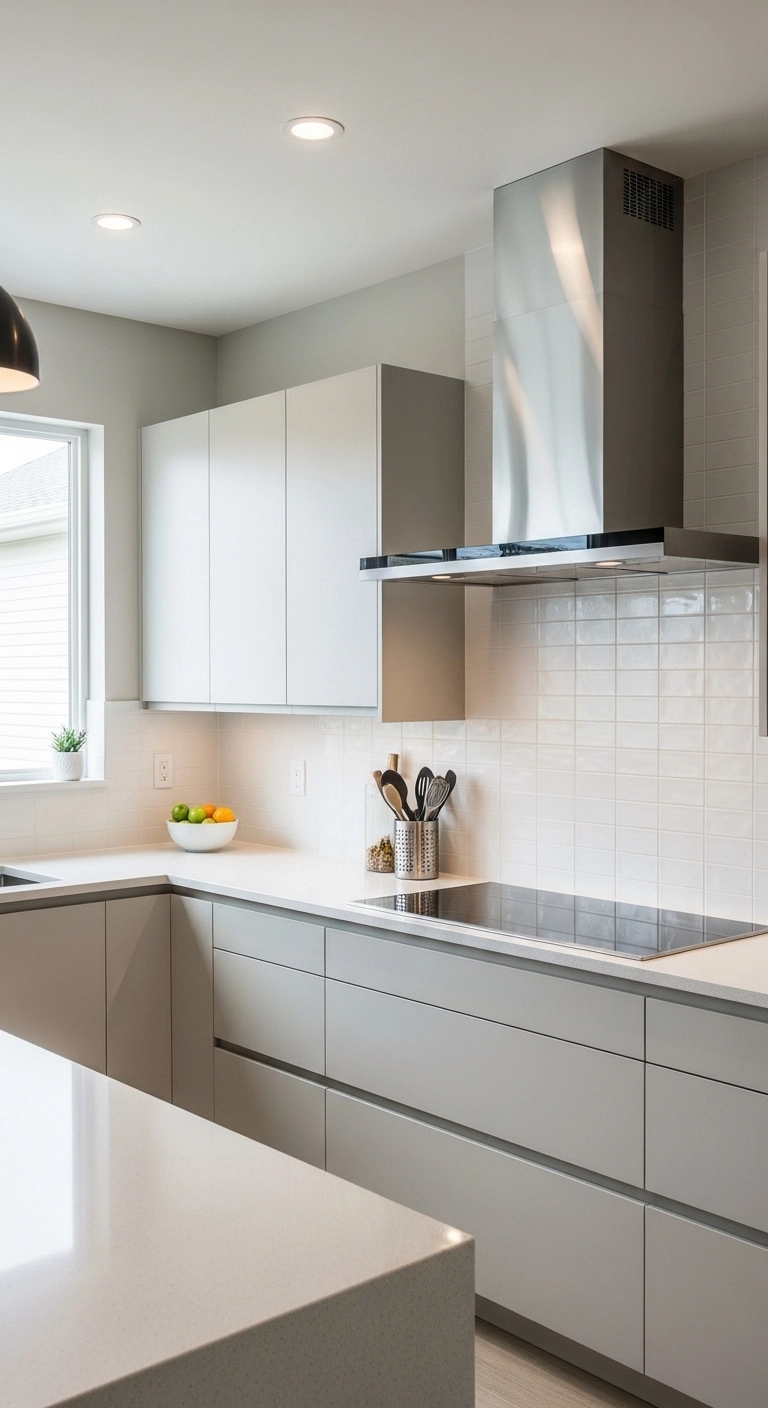
Some kitchens do not want a large feature over the stove. They want the cooking wall to stay light and open. A slim metal hood can do that. It gives function and style without adding too much weight to the room.
This idea works well in modern kitchens, smaller kitchens, and open layouts where the range wall is visible from other spaces. A slim hood keeps the sight line cleaner. It lets the cabinets, tile, or island take more of the focus if that makes more sense for the room.
The finish matters here. A brushed metal usually feels calmer than a shiny one. A darker metal can feel more grounded. A lighter one can feel cleaner and brighter. What makes this hood style work is its restraint.
Let the hood reach the ceiling for a taller look
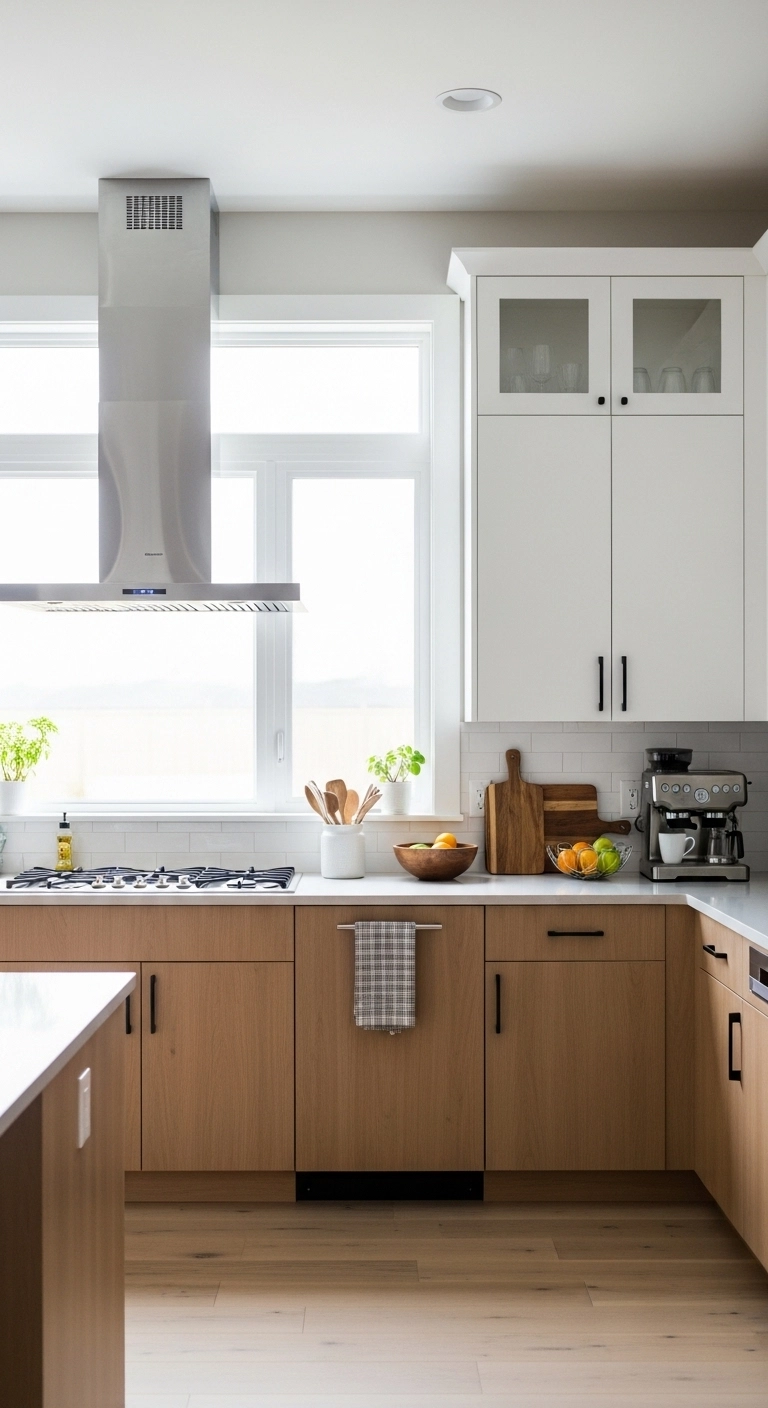
A vent hood that stops halfway up the wall can sometimes leave the area above it feeling empty. Taking the hood all the way to the ceiling can fix that. It gives the wall a finished top point and helps the kitchen look taller.
This is especially useful in kitchens with high ceilings or full-height cabinets. A hood that reaches all the way to the top can make the entire cooking wall feel more architectural. This turns the hood into part of the room’s structure, rather than just a cover for an appliance.
This idea works best when the width and height stay in good balance. A very tall hood still needs the right size below so it does not feel thin or stretched. But when the shape is right, this approach can make the whole room feel more complete.
Use a boxed hood for clear structure
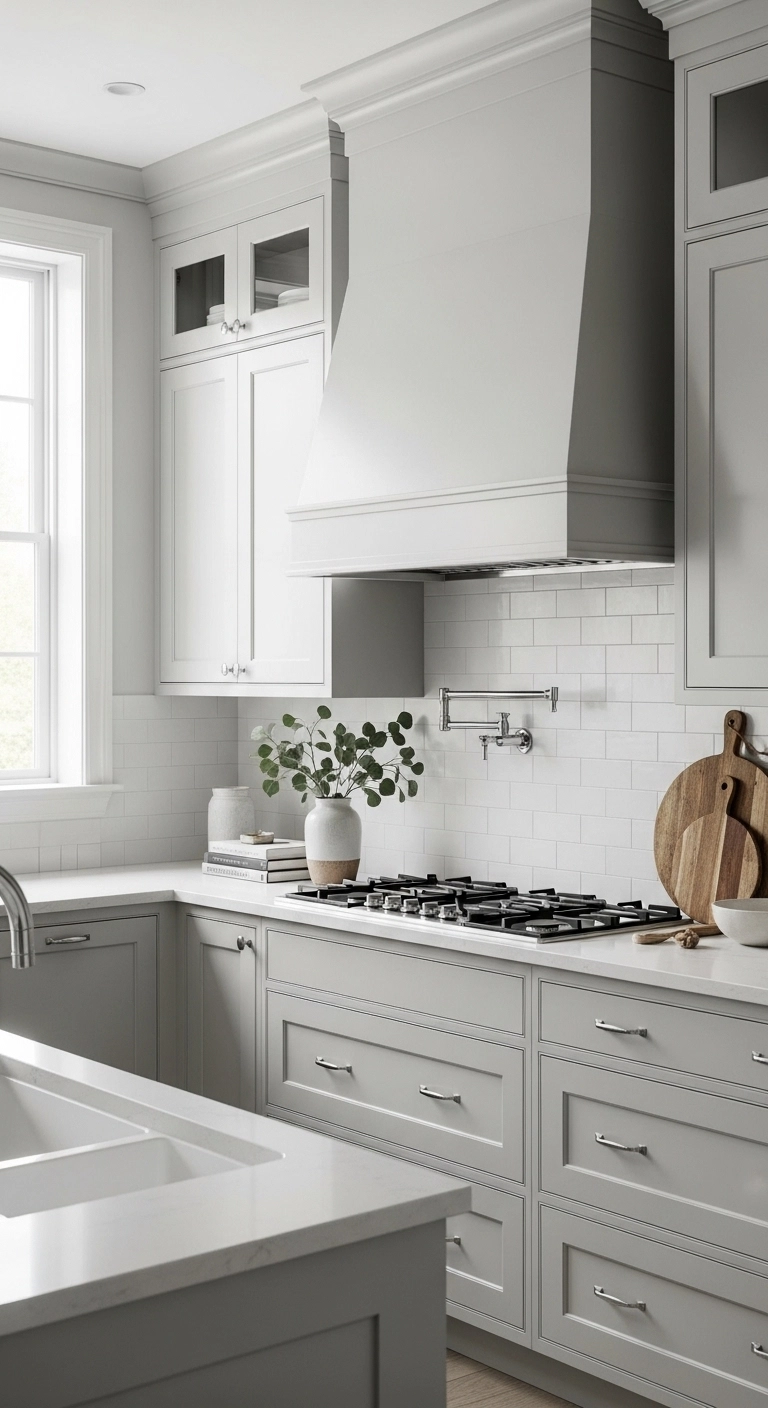
A boxed hood remains popular for a reason. It gives the range wall a strong, clear look. Straight lines are easy for the eye to read, and it often helps a kitchen feel more organized. A boxed hood can fit many styles, which is part of why it works in so many homes.
This shape is useful when the kitchen needs more structure. If the wall feels loose or the cabinets around the range do not feel strong enough, a boxed hood can bring order. It gives the cooking area a visual center without becoming too dramatic.
A boxed hood can also take a variety of finishes well. It can be painted, wrapped in wood, given trim detail, or left very plain. This flexibility makes it the safest and strongest choice for many kitchens.
Try a curved hood to soften a boxy kitchen
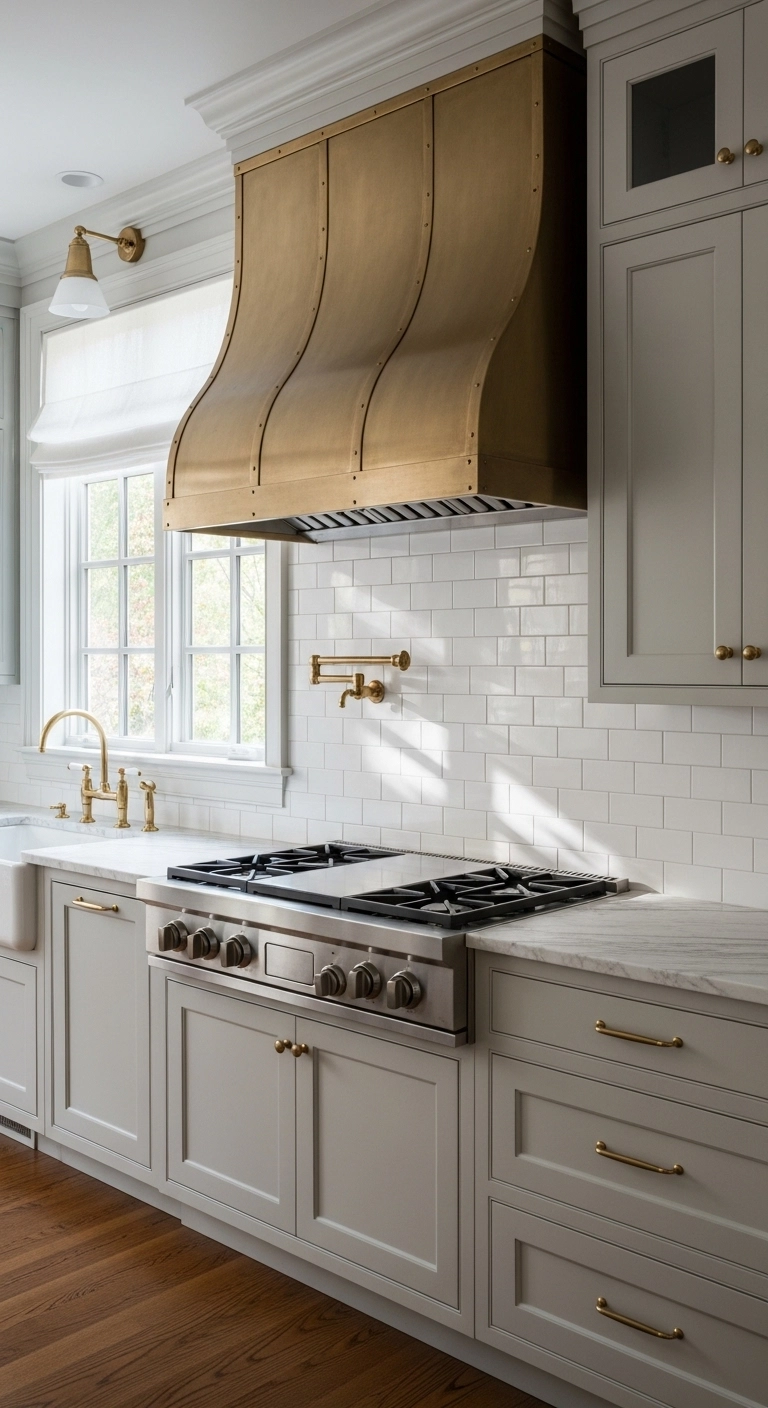
Kitchens often have many straight lines. Cabinet doors, counters, tile edges, shelves, windows, and islands all add to that. In some rooms, that works well. In others, the kitchen starts to feel too stiff. A curved hood can help soften that.
The curve does not have to be strong. Even a gentle arch or soft taper can change the feeling of the room. It gives the wall a little movement and helps break up the hard geometry that can build up in kitchen design.
This style works especially well in kitchens that want a softer or more classic feel. It can also help when the room needs one element that feels a little less strict. A curved hood can bring grace to the range wall without becoming too fancy.
Add subtle trim if the kitchen needs more character
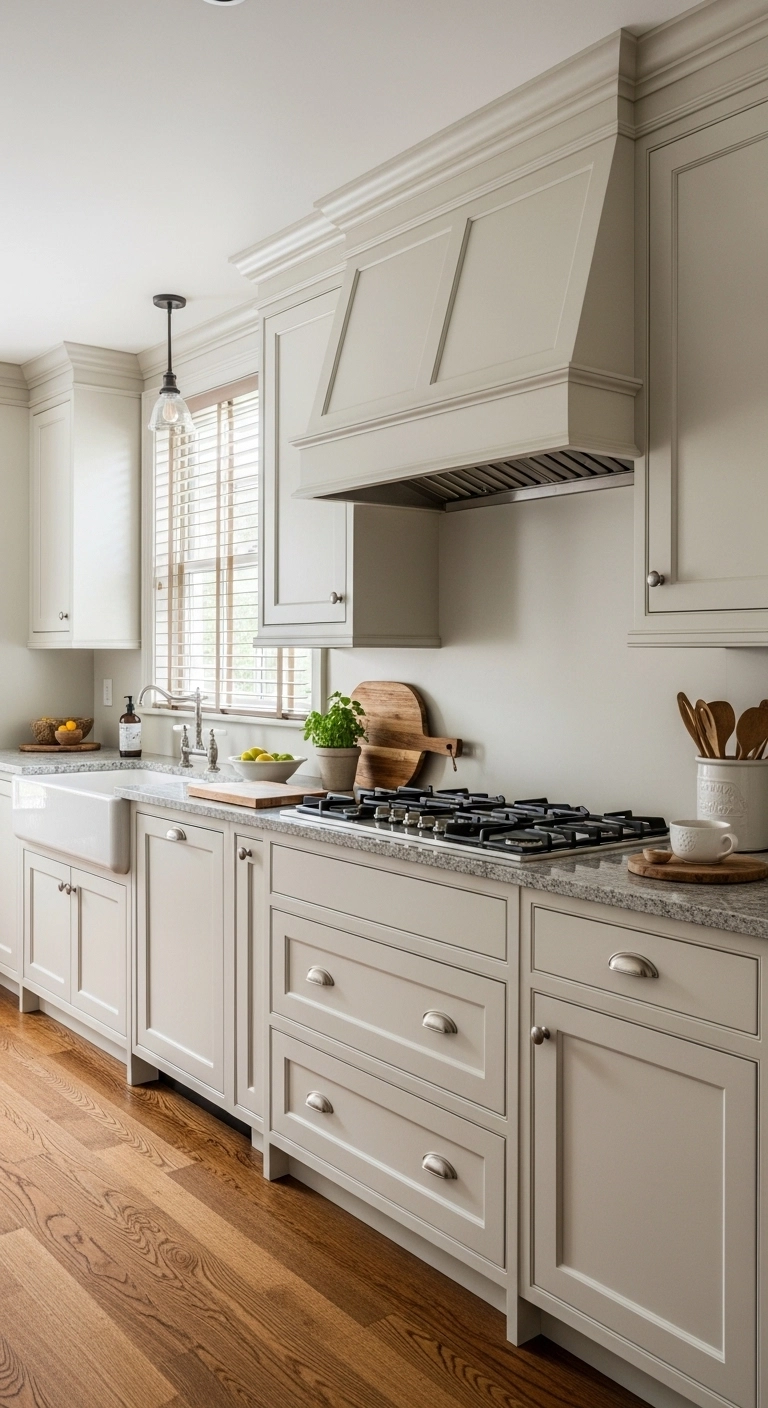
Some kitchens look flat not because the finishes are wrong, but because the shapes are too plain. A little trim on the hood can help. It gives the hood more depth and helps it connect with cabinets that already have panel detail or molding.
The key word here is subtle. Too much trim can make a hood feel busy. But a soft edge, a small band, or a trim line that repeats something from the cabinets can make the hood feel more complete. It’s a way to add character without changing the entire room.
This works best when the trim belongs to the rest of the kitchen. The hood should not look like it came from a different design story. When the detail repeats something already in the room, the effect is much stronger.
Pair the hood with a backsplash that knows when to stay quiet
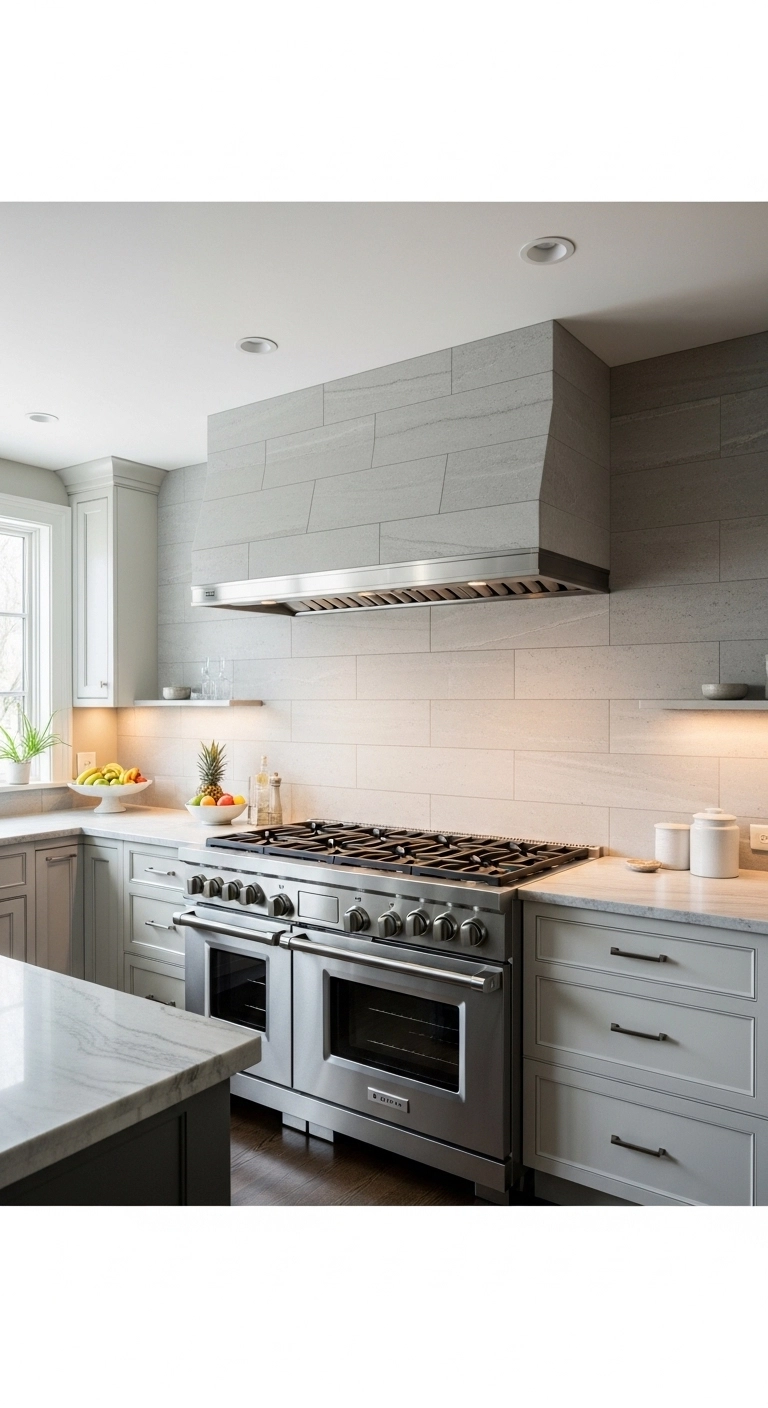
The hood isn’t the only thing that makes up the cooking wall. The backsplash is just as important. The two sit close together, so they should work as partners. The hood can look wrong simply because the backsplash around it is too busy or too weak.
If the hood has a strong shape or rich finish, the backsplash may need to stay simple. If the hood is very quiet, the backsplash may be able to carry a little more texture or movement. The goal is balance. When both the hood and backsplash push too hard, the wall gets noisy. When both pull back too far, the wall can feel flat.
A stylish finish often comes from knowing where to stop. The hood and backsplash shouldn’t compete. One should lead and the other should support.
Connect the hood to other materials in the kitchen
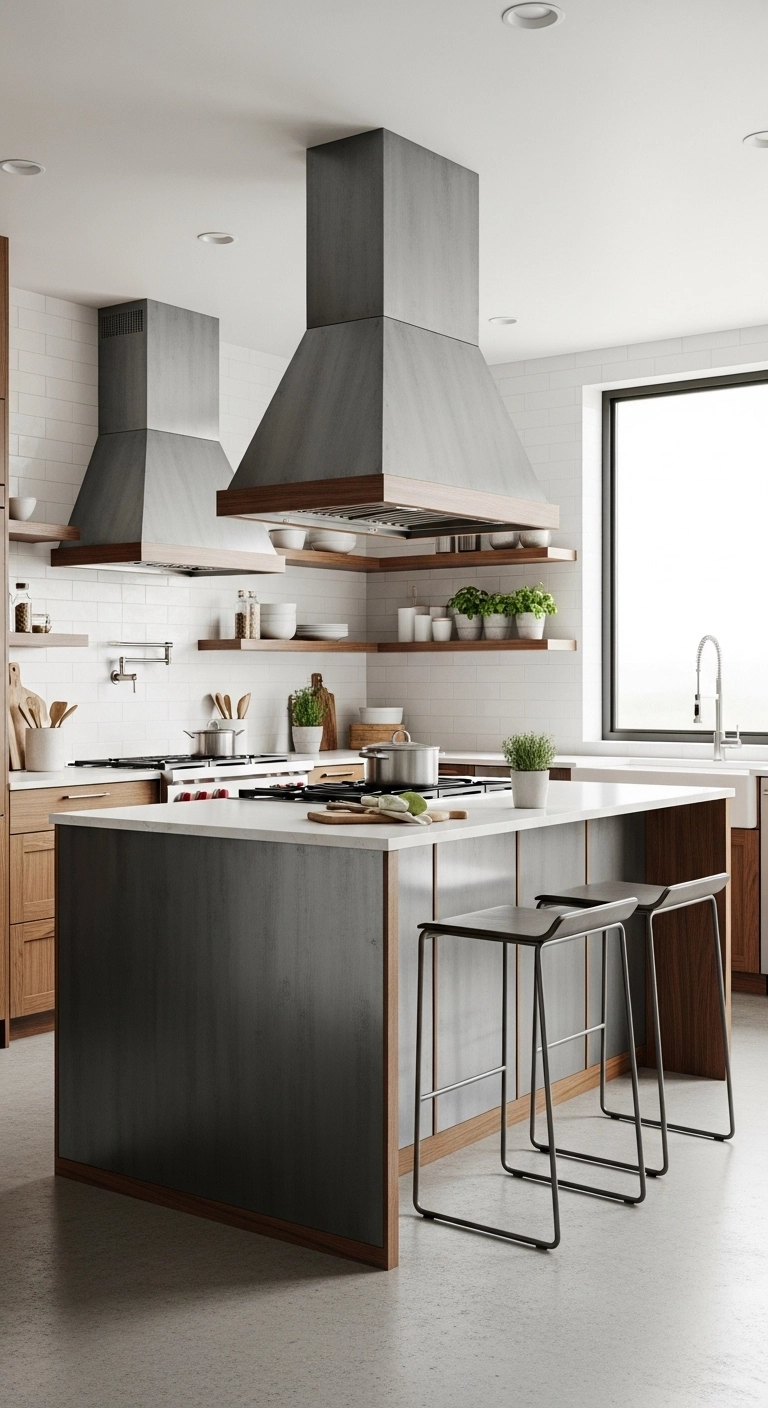
A vent hood looks strongest when it does not feel alone. One of the best ways to avoid that is to repeat something from the hood somewhere else in the room. That might be a wood tone repeated in shelves or stools. It might be a dark color repeated in hardware or lights. It might be a painted hood that ties into the island.
This repetition helps the kitchen feel more connected. The hood stops looking like a separate object and starts to feel like part of a larger plan. This change is often what makes the kitchen look more designed.
The match does not need to be exact. In fact, perfect matching can sometimes feel stiff. But a few quiet links across the room usually help the hood make more sense in the full space.
Let the hood disappear when the kitchen is small
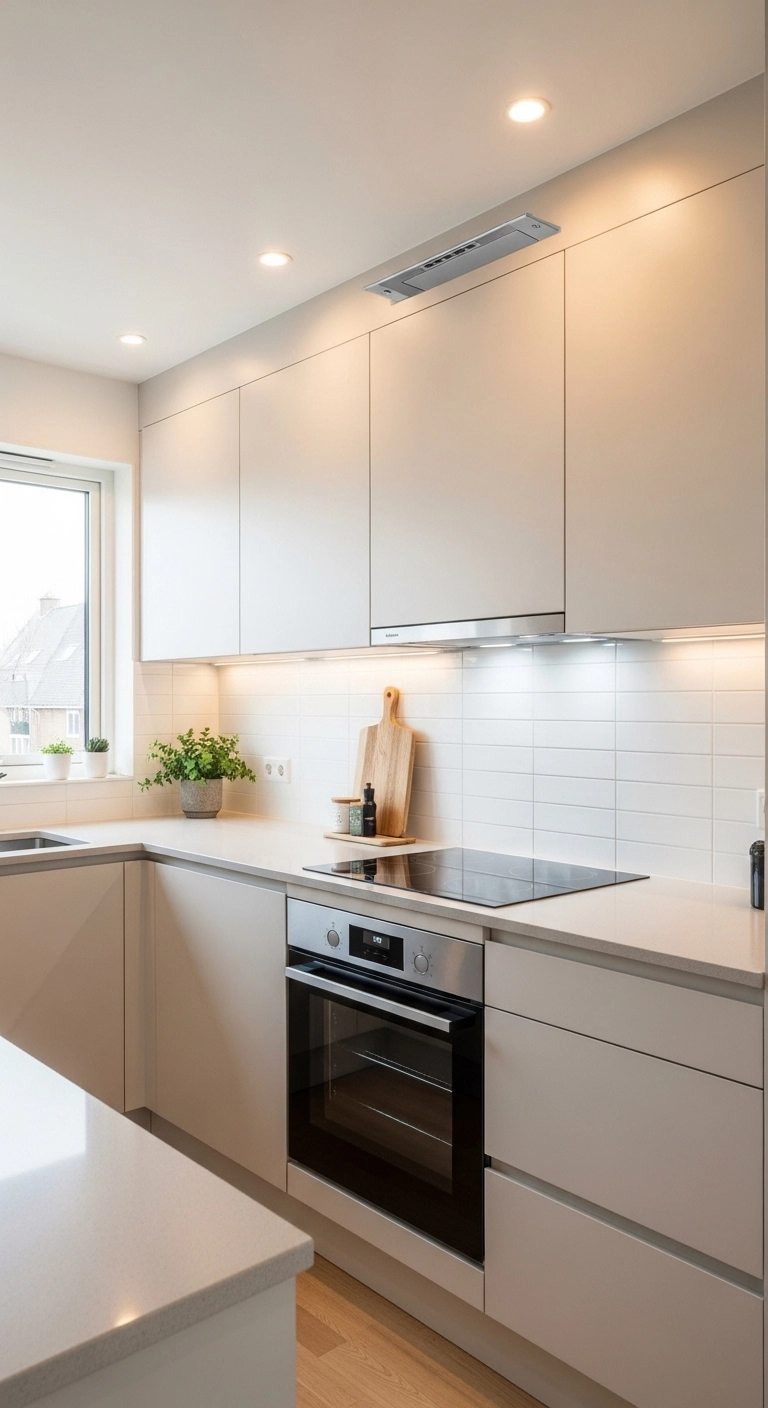
A small kitchen doesn’t always benefit from a large decorative hood. In many compact kitchens, a better choice is a hood that blends in and makes the wall feel open. This may mean matching it to the upper cabinets, choosing a slim under-cabinet style, or keeping the design very lean.
This works because small rooms feel every extra shape more strongly. A large bold hood can quickly make the space feel tight. A simpler hood helps the eye move more freely and lets the room breathe.
A quiet hood can still look great. In fact, in a small kitchen, restraint often feels more stylish than drama. The best finish may be one that makes the room feel larger and calmer, not one that demands all the attention.
Use a darker hood when the kitchen needs contrast
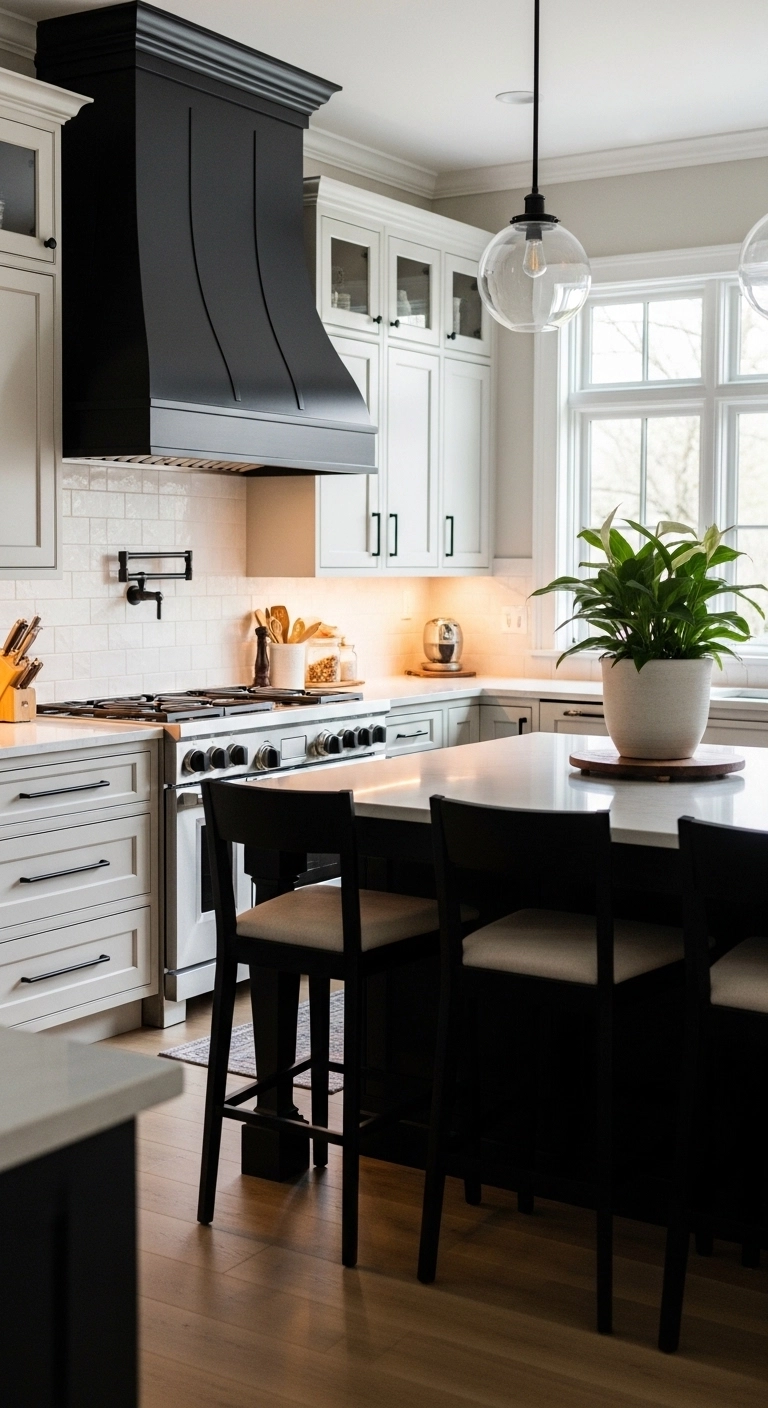
Some kitchens feel too soft and washed out because everything lives in the same light range. White cabinets, pale walls, light stone, and soft wood can all be beautiful, but the room may still need one stronger note. A darker hood can do that.
Black, dark bronze, charcoal, dark wood, or another rich tone can help anchor a kitchen wall. It gives the eye a focal point. It also helps bring shape to a kitchen that feels very light from top to bottom.
This idea works best when the darker tone appears somewhere else too. A hood should not be the only dark thing in the room. Repeating the note in the island, lighting, stools, or hardware helps the contrast feel planned.
Add side shelves only when they improve the wall
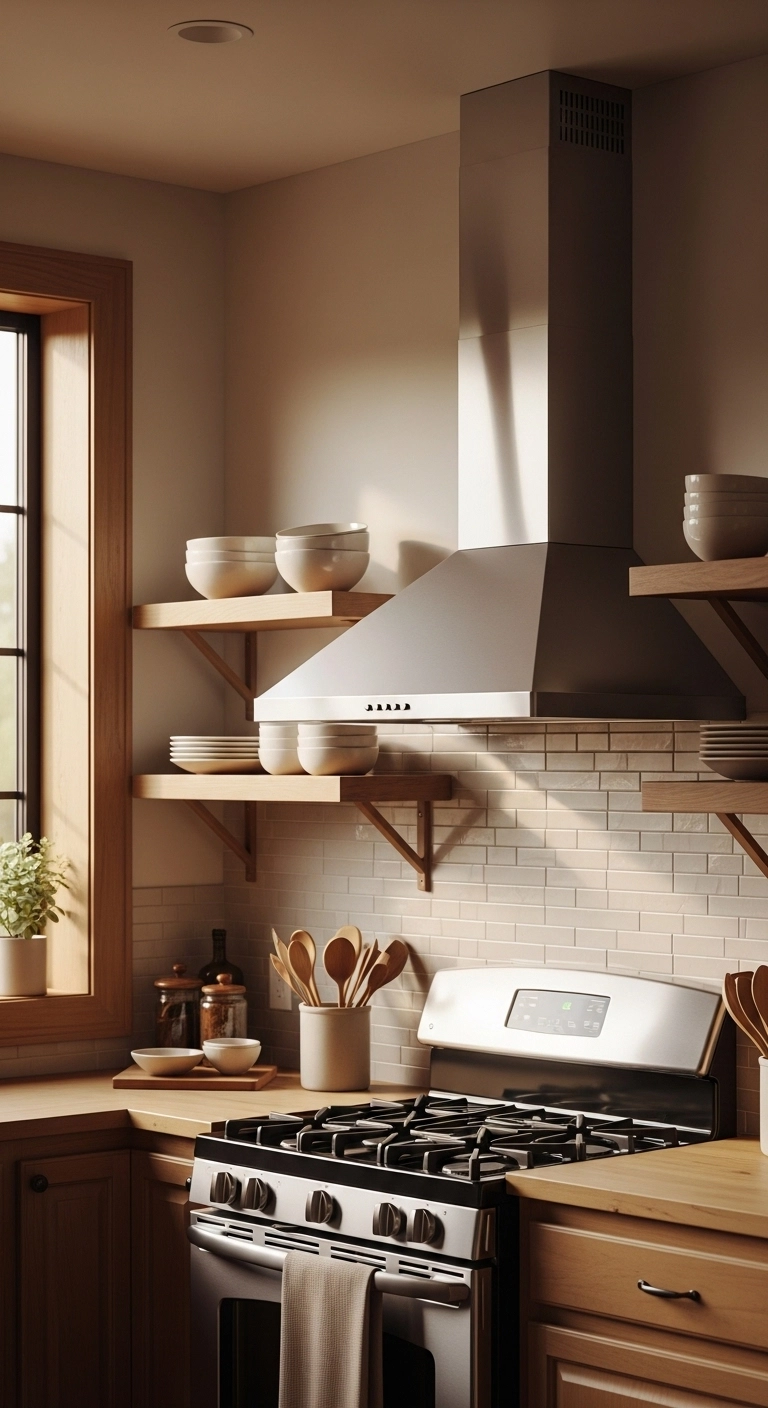
Shelves around a range hood may look pretty, but they’re not always the right answer. In some kitchens, they help fill in awkward wall space and soften the cooking area. In others, they just add more items and more clutter. The real question is, does the wall need them?
If the cooking wall feels too plain or too empty at the sides, shelves may help. They can give the hood more context and make the area feel less bare. But the shelves need to be styled with care. A few bowls, plates, or simple pieces often work better than a lot of small decor.
Shelves should support the hood, not compete with it. They work best when they solve a design problem, not when they are added just because they are popular.
Think about how the hood looks at night
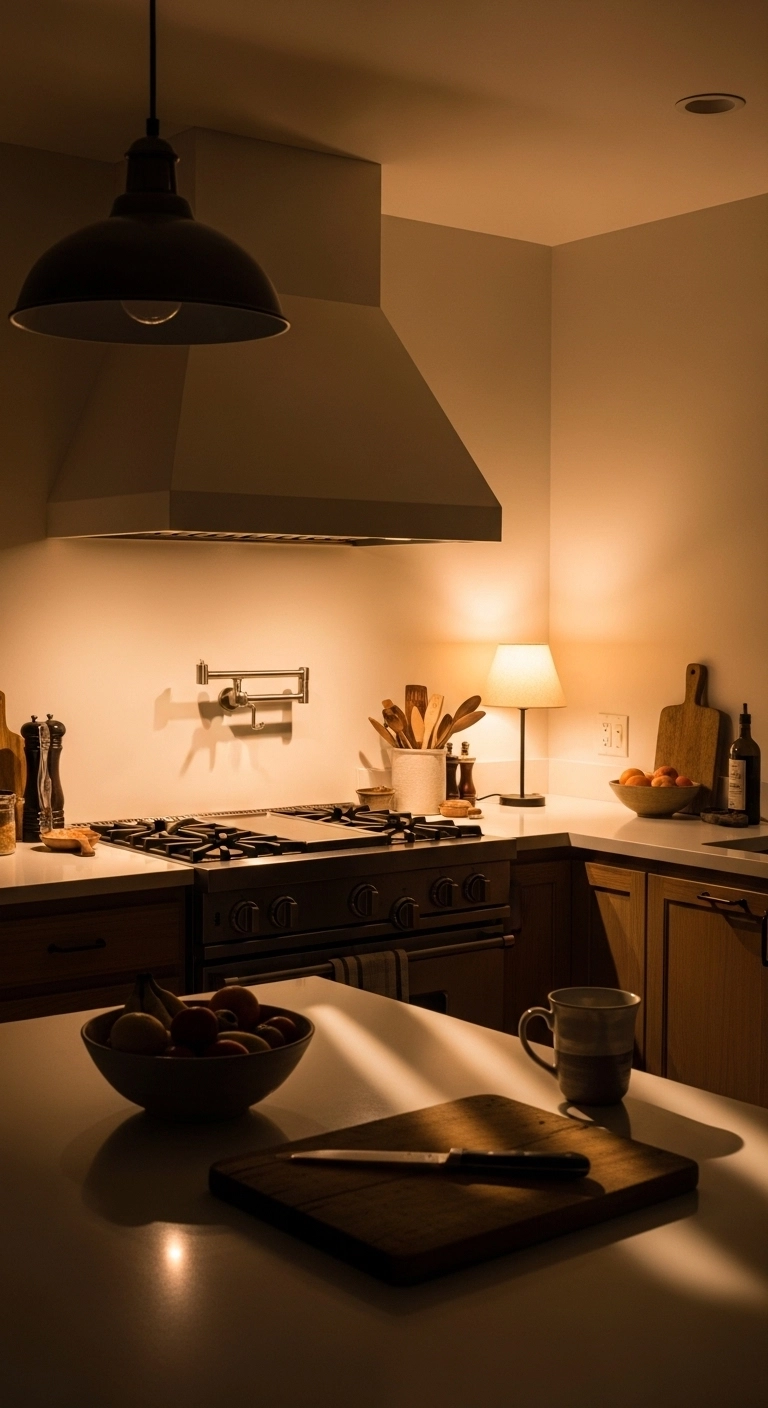
Many kitchen decisions are made during the day, but a kitchen lives through evening too. This matters for a vent hood because its finish, size, and color can feel different under warm light at night. A hood that looks clean in daylight may feel too sharp after sunset. A darker hood may feel richer. A painted hood may feel softer.
This is worth considering because the hood sits right where people gather to cook, clean, and talk at the end of the day. The range hood should still feel good when the room is lit by lamps, pendants, and under-cabinet lighting rather than sunlight.
A stylish finish is not only about what looks good in a bright photo. It is also about what feels right in real home light. The best hood choice often keeps looking good after the sun goes down.
Pick the hood that fits the whole kitchen, not the moment
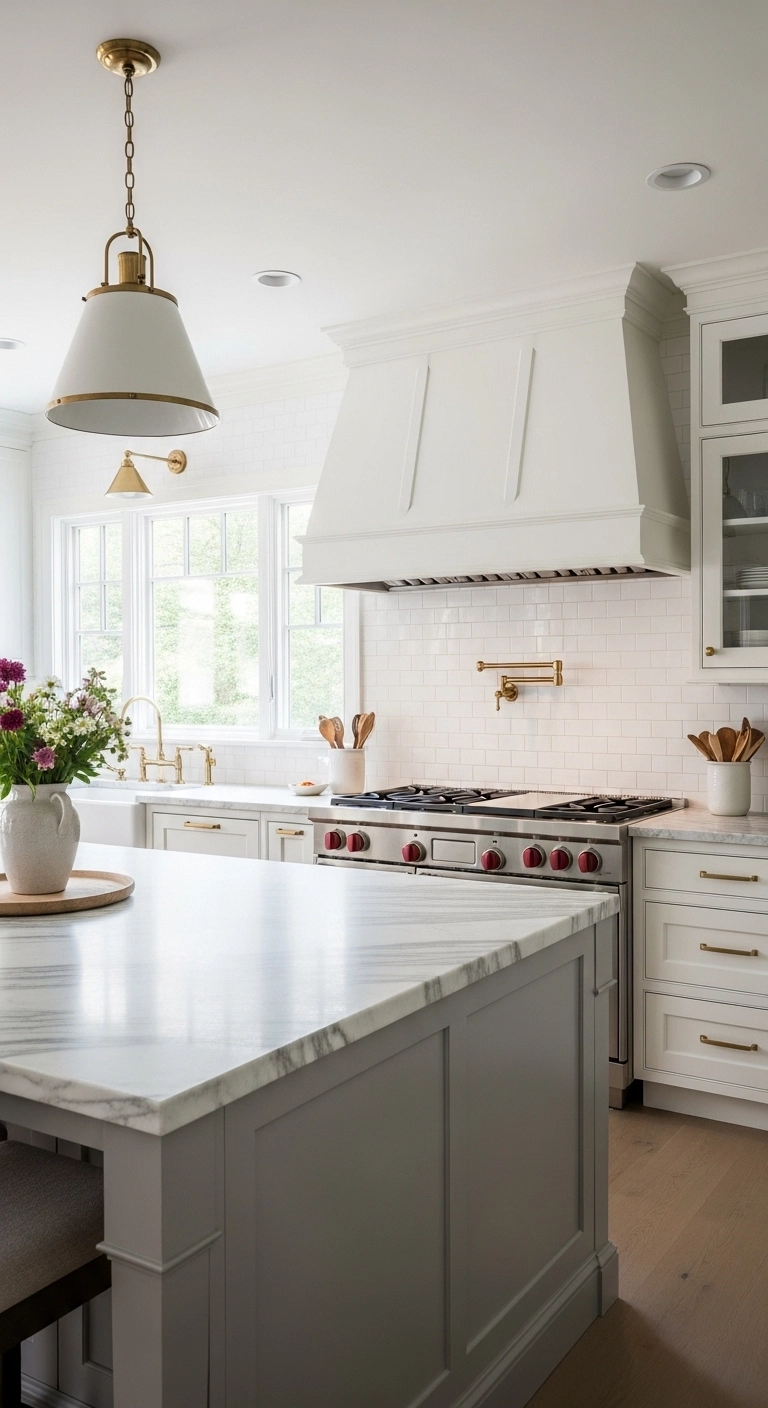
The strongest vent hood choice is usually not the one that feels the most modern. It’s the one that helps the entire kitchen feel more complete. Trends change quickly. Kitchens don’t. A hood sits in a very important space, so it should respond to the room first.
That means asking better questions. Does the kitchen need warmth? Softness? Contrast? Structure? Less visual noise? More height? A cleaner line? Once you know what the room is missing, the right hood idea becomes easier to find.
This is what leads to a stylish finish that lasts. The hood doesn’t need to chase attention. It needs to help the kitchen feel complete. When it does, the room usually looks much better.
Conclusion
A kitchen vent hood can do far more than cover a fan. It can bring shape, warmth, contrast, calm, height, or softness to the cooking wall. It can help a kitchen feel built, not just assembled. That is why it deserves more thought than people sometimes give it.
The best kitchen vent hood ideas aren’t always the loudest. Sometimes the right move is a wood hood that warms the room. Sometimes it’s a painted hood that blends in. Sometimes it’s a thin metal look that keeps a small kitchen open. Sometimes it’s a plaster-style hood that adds body without any shine. The right answer depends on what the kitchen needs most.
If you’re planning a kitchen update, don’t start by asking what hood is currently the most popular. Start by looking at your room. See what feels too heavy, too plain, too cold, too busy, or too flat. Then choose a hood that solves that problem. That way, you get a stylish finish that lasts long after the trend has moved on.

Muskan Saleem
BukayHome shares practical home decorating ideas, room inspiration, and simple styling tips to help readers create a home they truly love.