13 Small Pantry Ideas for Better Kitchen Storage
13 Small Pantry Ideas for Better Kitchen Storage
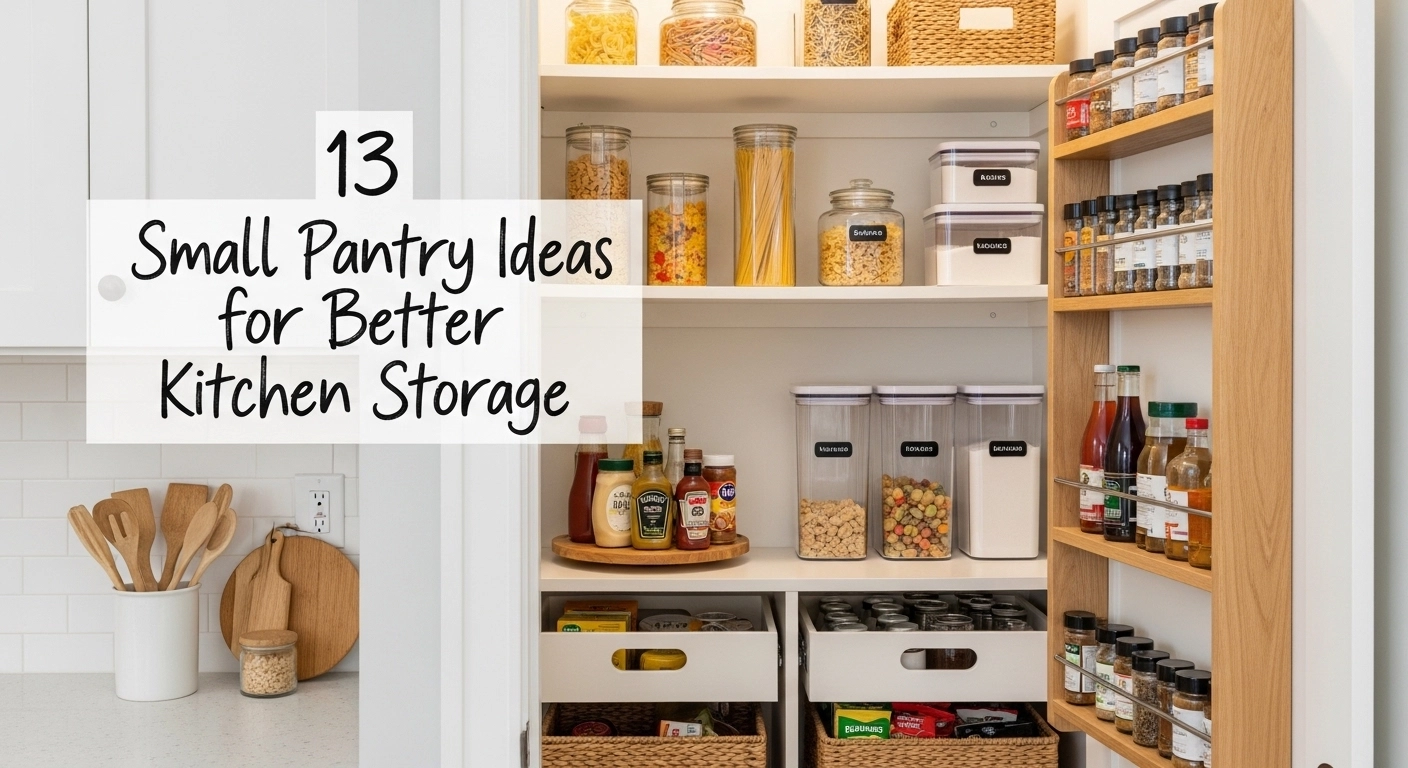
A small pantry can make the kitchen feel more daunting than it needs to be. You open the door, and snacks fall forward. Pasta gets pushed behind cereal. Spices run out. You buy the same thing twice because you couldn’t see it the first time. The pantry isn’t full because your family is doing something wrong. It’s full because small storage needs better planning.
That is the part many people miss. They think the answer is a bigger pantry. In real homes, the answer is usually a better one. A small pantry can work very well when the shelves are used with care, when food is grouped in a smart way, and when the daily items live in the easiest spots to reach.
After years of helping people fix their kitchen storage, I’ve seen the same pattern over and over again. Most small pantries don’t fail because they’re too small. They fail because the space is being used as a large holding zone rather than a true system. Once that changes, the whole kitchen starts to feel easier. Meal prep goes faster. Grocery shopping becomes easier. Waste goes down. Stress goes down.
This guide shares thirteen small pantry ideas that can give you better kitchen storage without needing a full remodel. These ideas are simple, realistic, and built for daily life. The goal is not just a pantry that looks neat for one day. The goal is a pantry that keeps working week after week.
Start by clearing the pantry so you can see the real problem
The first idea is interesting to say the least, but this one changes everything. Take the pantry outside before you try to fix it. Most people try to organize around the clutter that’s already there. This rarely works. You can’t create a good system if you don’t know what’s actually in the pantry.
Once the shelves are clear, the real issues become easy to spot. Maybe the shelves are too deep, so small items disappear in the back. Maybe tall bottles are sitting where snacks should go. Maybe too much space is being used by half-empty boxes that do not stack well. Maybe the pantry is holding things that do not belong there at all.
This step also helps you get a feel for what your kitchen really uses. You may notice that breakfast foods take up more space than canned goods. Or that lunch items take up more space than baking supplies. A good pantry starts with honesty. When you understand the real problem, the solution becomes much easier.
Group pantry items by how your kitchen actually works
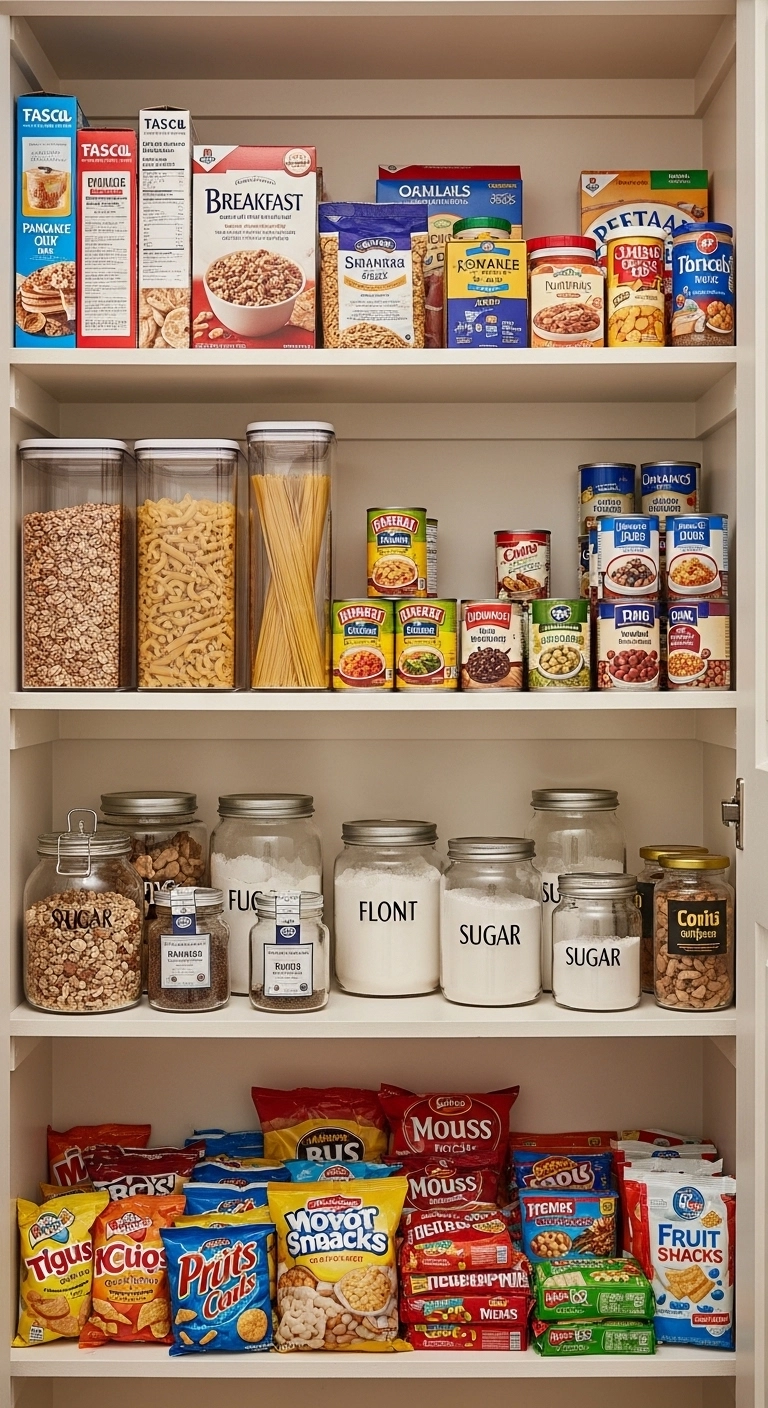
A small pantry feels much better when the food is grouped by use instead of by chance. Many people put groceries away wherever they fit at the moment. That saves time once, but it creates confusion later. A small pantry works better when similar items live together in a clear way.
Breakfast foods should sit next to breakfast foods. Pasta, rice, and sauces should be close together. Baking items should have a zone. Snacks should stay in one area. Lunch items should be easy to grab. Cans shouldn’t be divided across three shelves unless the pantry really leaves no other choice. When foods are grouped by daily use, the pantry becomes easier to read at a glance.
This matters because a pantry should save energy, not take it. If you have to hunt for three separate parts of one meal every night, the storage is not helping enough. Better grouping makes a pantry feel larger, even when the shelves stay exactly the same.
Put daily items at eye level and move extras up high or down low
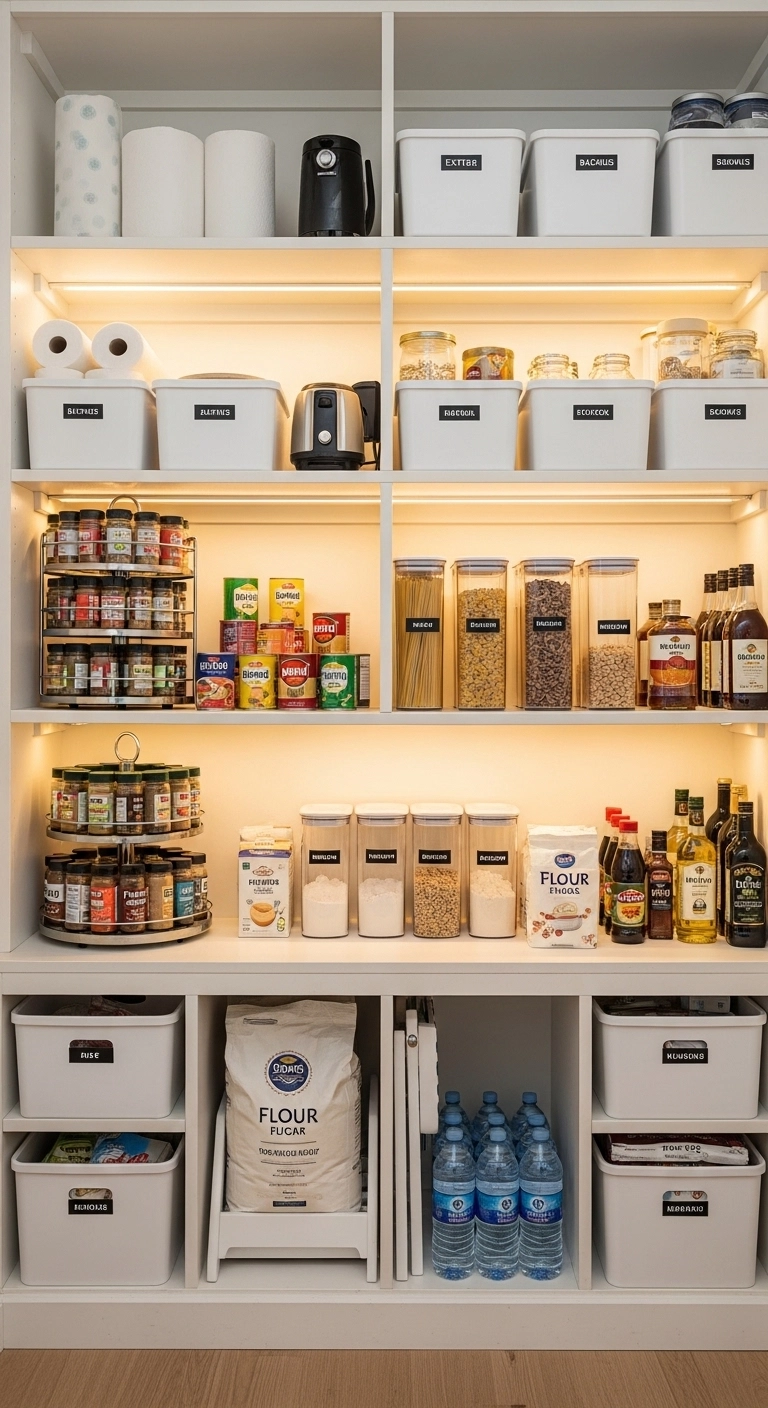
Not every shelf should carry the same kind of food. In a small pantry, shelf height matters a lot. The easiest-to-reach shelves should hold the foods your family uses most often. That usually means snacks, cereal, bread items, peanut butter, lunch foods, pasta, rice, and common canned goods.
Less frequently used items can stay high up or low down. Holiday baking items, extra paper goods, spare sauces, backup oils, or large drink packs don’t need prime space if they’re only used once. That valuable middle zone should serve the real life of your kitchen, not whatever was previously stored.
This one change makes a pantry feel more useful fast. You stop reaching past extra items to get what you need every day. Better shelf placement is not just about neatness. It helps the kitchen move with less effort.
Use clear containers for the foods that come in weak packaging
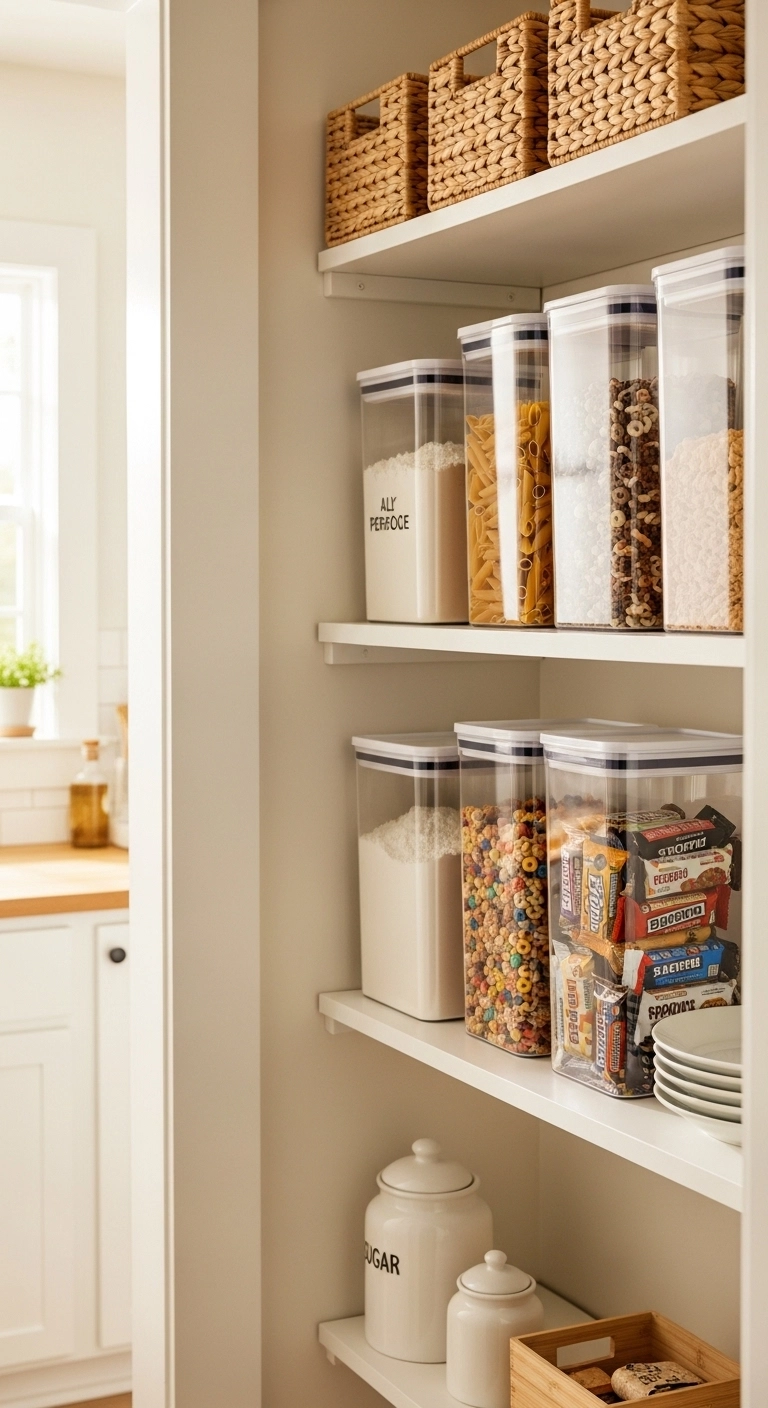
Some foods are easier to store in their original packaging. Cans, jars, and sealed boxes usually do the trick. But many pantry foods come in packaging that wastes space or gets dirty quickly. Flour bags pile up. Pasta boxes split. Crackers go stale. Opened snack bags fall into a pile.
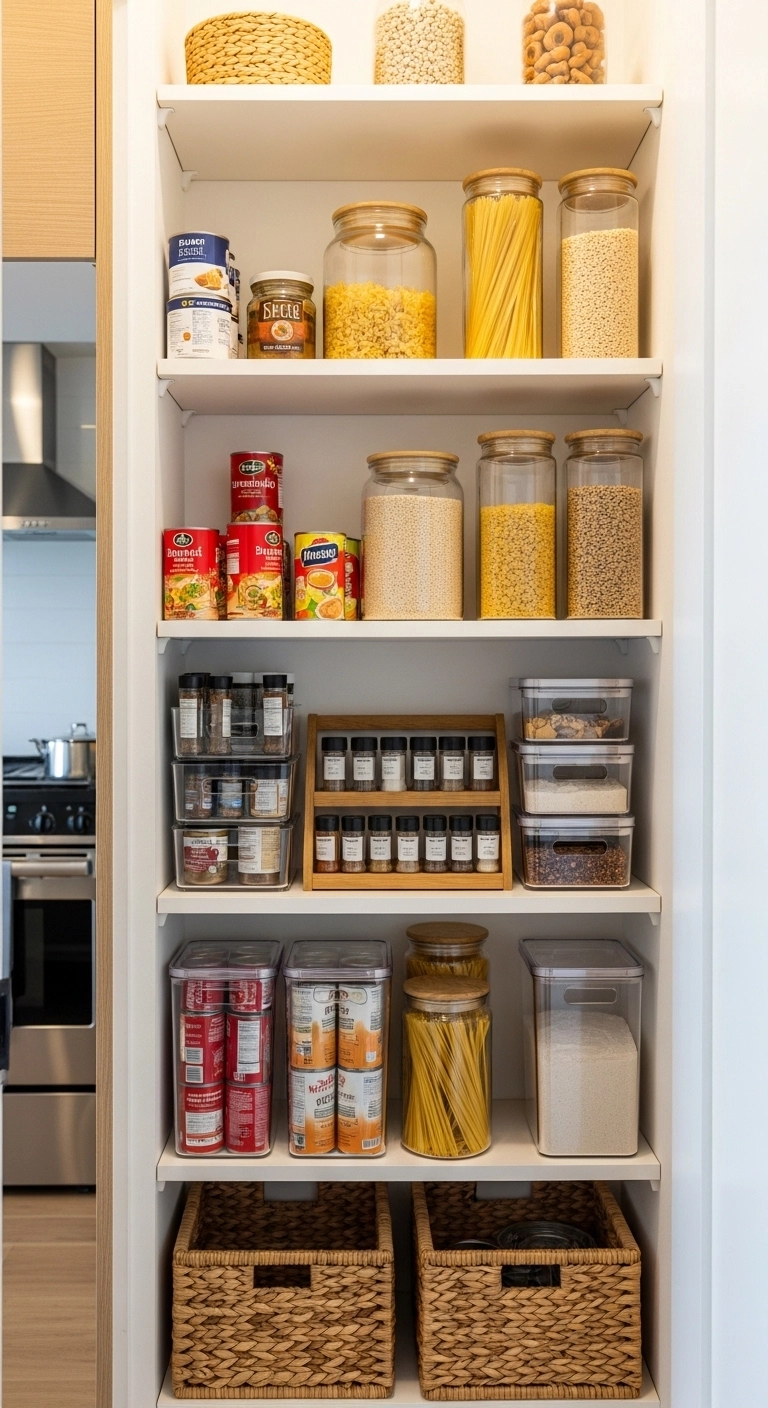
This is where clear containers help. They make the shelf look calmer, but more important, they make the food easier to store and easier to see. A square or rectangular container often uses shelf space better than a loose bag or odd-shaped package. It also helps you notice what is running low before you shop.
The best use of containers is selective, not extreme. You don’t have to repack every single item. Focus on items that spill, break, or disappear. In a small pantry, even a few good containers can help shelves feel more open and much easier to manage.
Add baskets to stop small items from spreading everywhere
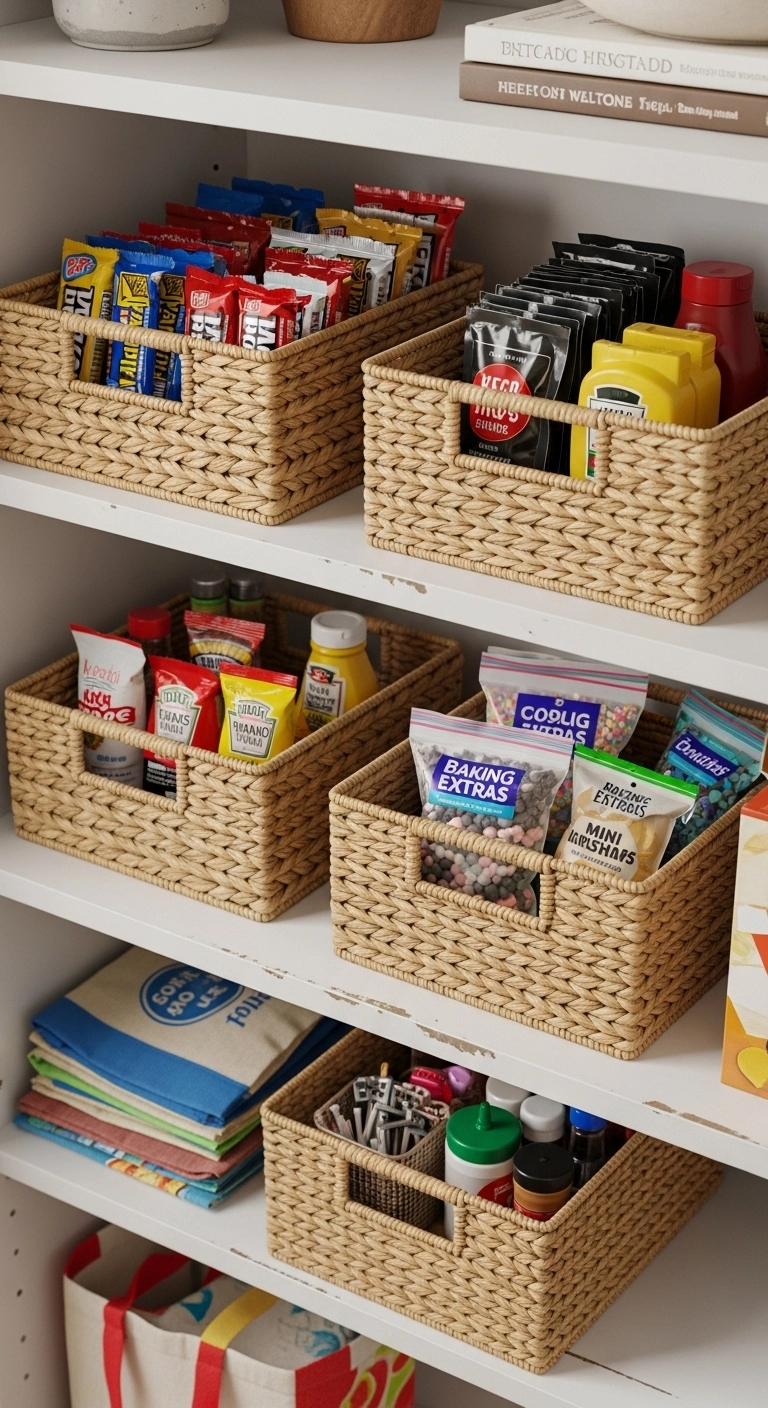
A small pantry often gets messy because little items do not stay put. Granola bars slide around. Sauce packets hide behind jars. Small snack bags tip over. Seasoning mixes get buried under cans. These items are hard to stack and easy to lose.
Baskets help because they create a clear home for a loose group of items. A basket for school snacks, a basket for extra baking, a basket for meal kits, or a basket for snack bars can make the pantry easier to use right away. Instead of chasing ten small items across a shelf, you pull out one basket.
The key is not to turn the pantry into a wall of mystery bins. Each basket should hold a real category that makes sense in your kitchen. Used well, baskets make small pantry storage feel less scattered and much more stable.
Use shelf risers so one shelf can do more work
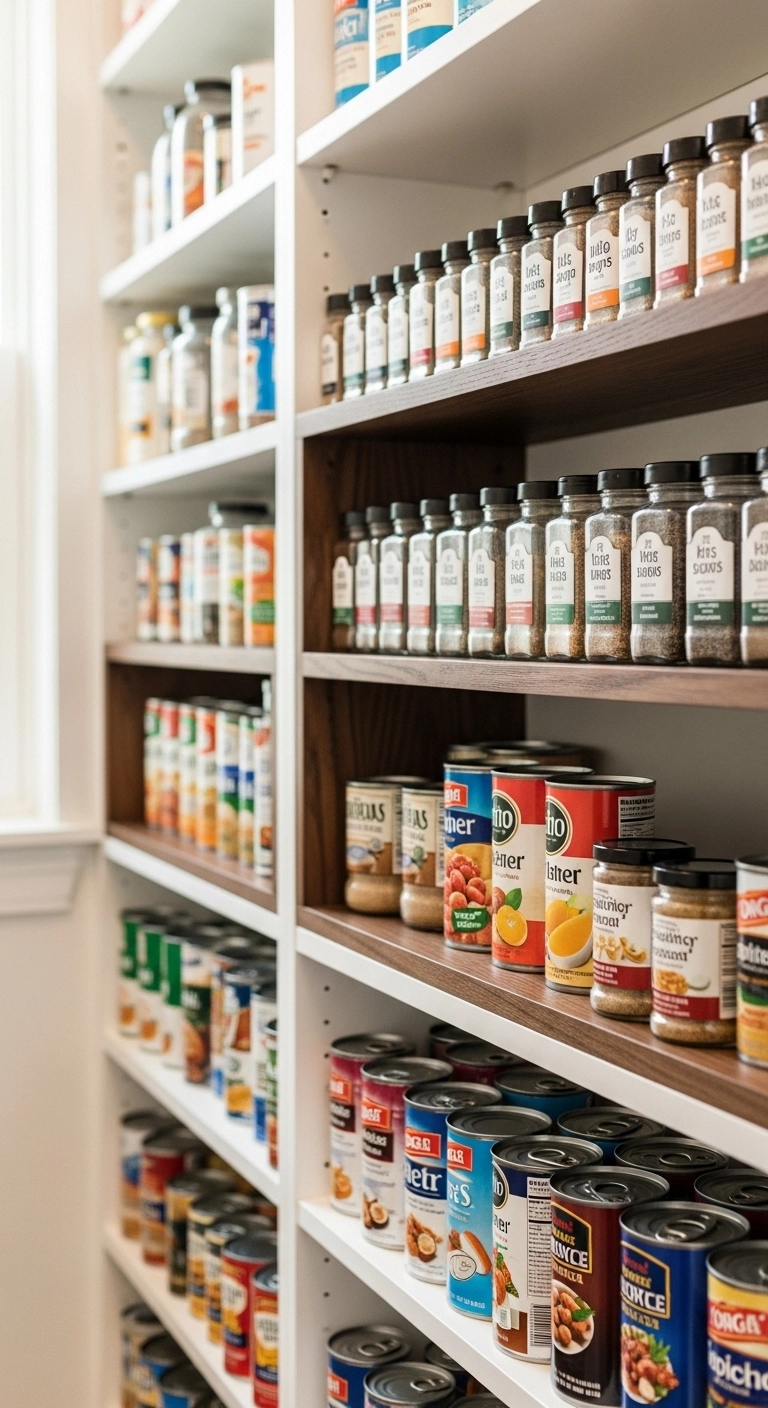
A lot of small pantries waste height. One shelf may have tall space, but short items sit low across it, leaving empty air above. This happens often with cans, spice jars, short sauces, and small boxes. Shelf risers help use that space better.
A riser creates a second level on a shelf without changing the pantry. This means cans can sit back and forth without being hidden from view. Short jars can be stacked in a way that still lets you see the labels. It’s a simple idea, but it makes a real difference in a small pantry where every inch counts.
This works because better storage is often about seeing more, not only fitting more. A pantry feels better when you can tell what you have without lifting and moving everything. Shelf risers make that easier and help one shelf carry more without becoming a pile.
Use the pantry door if you need more room
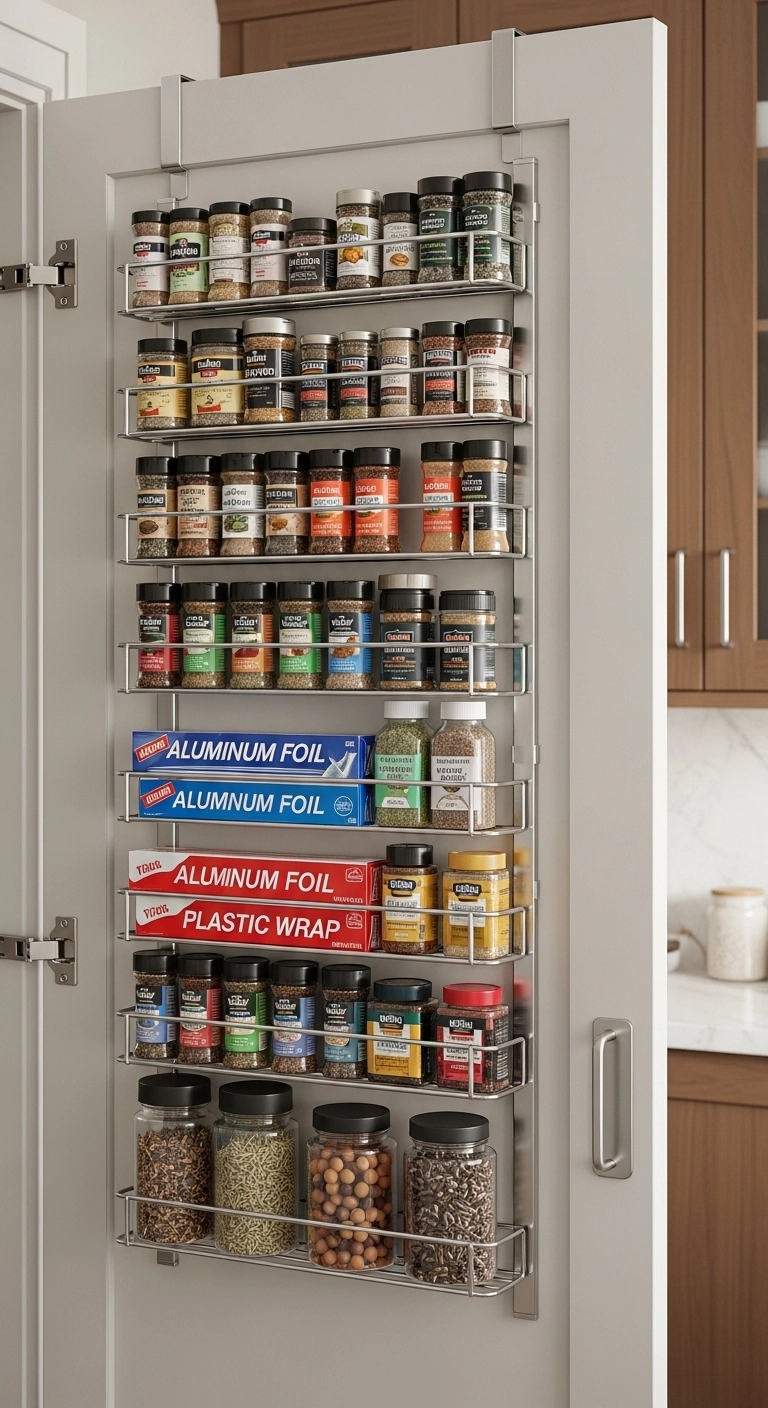
A small pantry often has a useful surface that people forget about: the back of the door. This can be very helpful for shallow items that don’t need the full depth of the shelf. Spices, foil, wraps, sauce packets, small jars, snack bars, and seasoning mixes can all work well there if the door allows.
The good thing about door storage is that it frees the main shelves for bulkier items. It also helps keep small things visible, which is often the biggest challenge in a compact pantry. When small items stay easy to spot, they are less likely to expire unused or get bought twice.
This idea works best when the door storage remains light and simple. The door should still close well, and items should not fall in. Used with care, a pantry door can give you extra storage without asking for more square footage.
Give snacks their own zone so they stop taking over the pantry
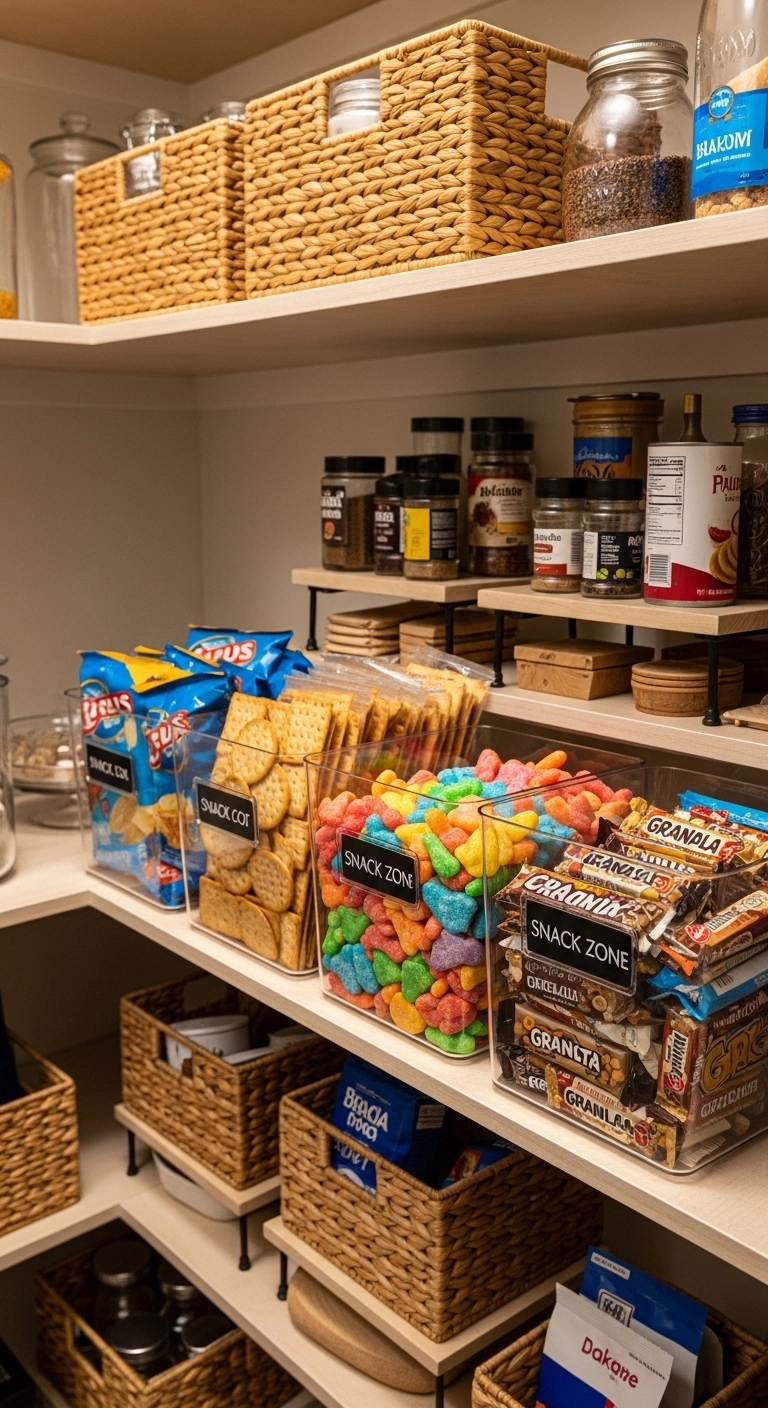
In many homes, snacks are the first to break into the pantry. There are so many shapes, so many packages, and so many hands reaching for them every day. When the snack house isn’t clean, they spill out onto every shelf and make the pantry feel much messier than it really is.
A snack zone fixes that. It can be one shelf, two baskets, or one part of the pantry where all grab-and-go foods live together. This helps children find what they need without pulling apart the whole pantry. It also helps adults see what is actually there before buying more.
A good snack zone isn’t just about cleanliness. It changes the way your pantry behaves during the busiest part of the day. After-school activities, lunch prep, and morning rushes are easier when snack items aren’t scattered around. In a small pantry, this kind of order is crucial.
Store backstock in a way that does not hide what is open
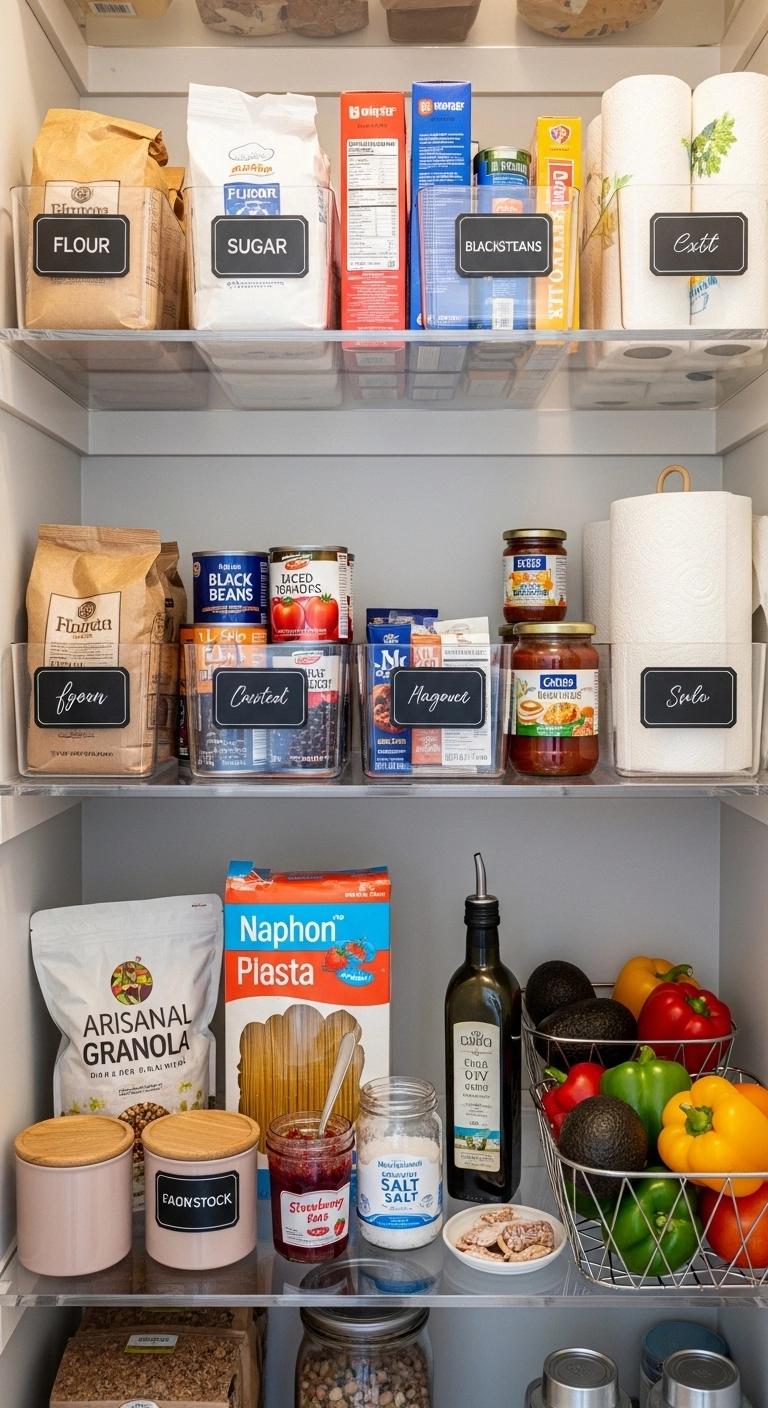
A common pantry problem is mixing backup food with open food. One open jar of pasta sauce sits in front of three full jars. Two cereal boxes are open while two more sit behind them. A new bag of rice gets used before the old one is finished. This is how waste grows in small kitchens.
A better plan is to separate the items that are in use from the extras. Open food should be easy to reach and easy to see. Backup food can live on a high shelf, a low shelf, or a clear backstock zone. The pantry works best when the current item moves on and the extra item waits.
This does not need a complicated system. It just needs a little thought. When open food and extra food stop fighting for the same spot, the pantry feels less crowded and more honest. That alone can cut down on waste and make grocery planning simpler.
Use labels so the system stays clear for everyone
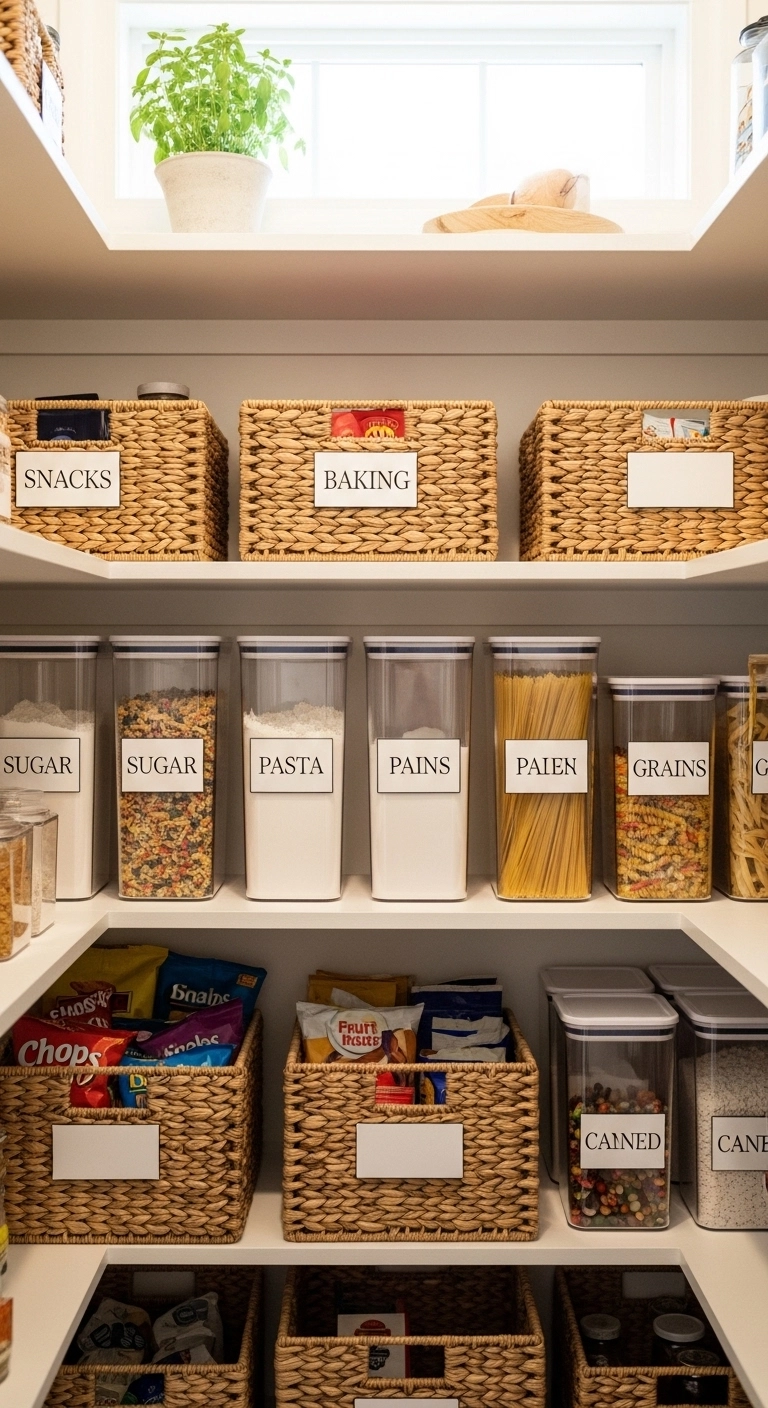
A pantry system only works well if the people in the house can follow it. That’s why labels help, even in a simple kitchen. They don’t have to be fancy. They just need to make it easier to rearrange the shelves after the groceries come home or after someone grabs a quick snack.
A label on a basket or container tells the pantry what belongs there. It also helps other adults, older children, or visitors keep the system going without guessing. That matters more than many people think. The stronger the system is for other people, the better it holds up over time.
Labels are especially useful in small pantries because categories need to stay tight. If one basket is for baking and one is for snacks, those groups shouldn’t gradually fade away. A little clarity keeps the pantry from slipping back into disarray.
Make the pantry fit your grocery habits, not an ideal picture
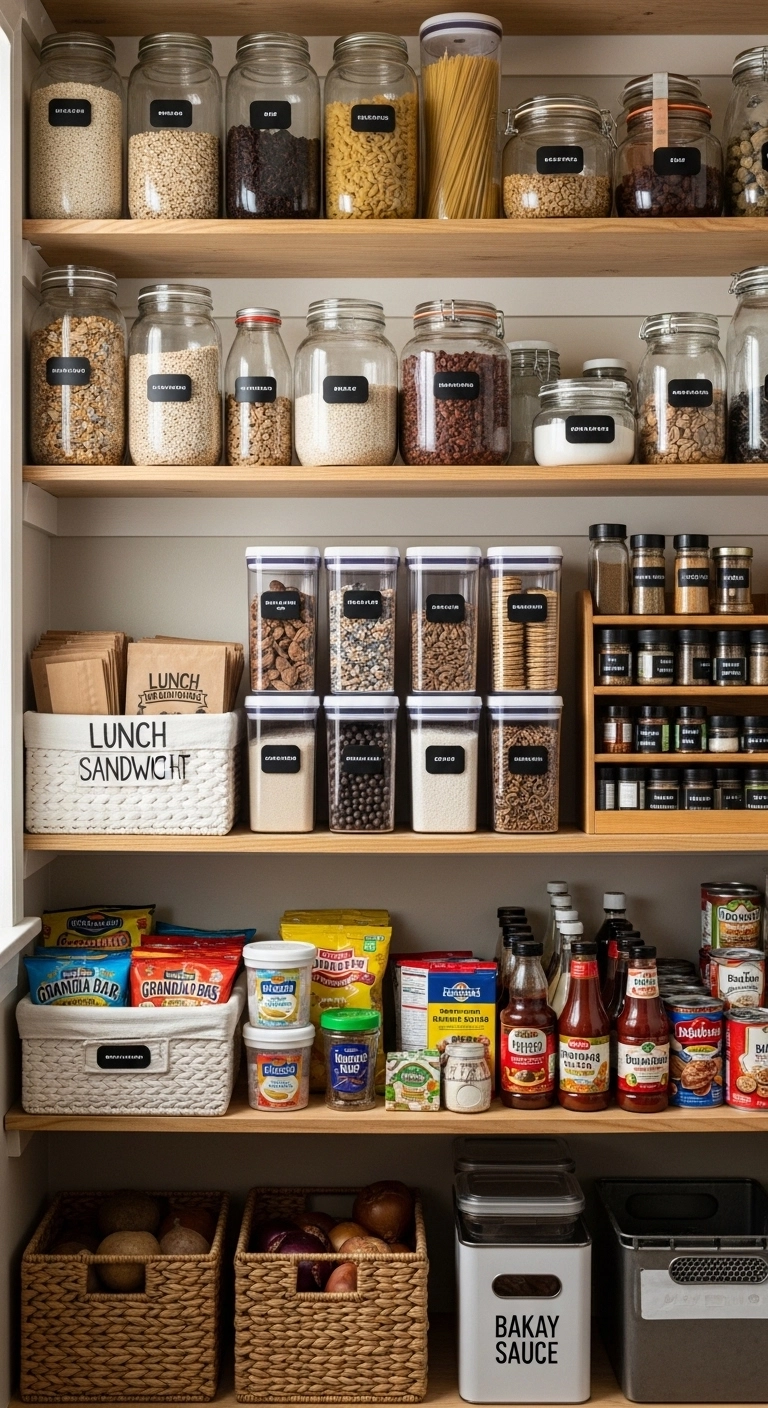
A pantry should match how your household shops and cooks. Some homes keep lots of dry goods. Some need more lunch items. Some buy in bulk. Some shop every few days. Some cook from scratch more often. A good pantry setup should follow those habits instead of trying to copy a picture from somewhere else.
This is where many pantry systems fail. They look great, but they don’t fit the food the family actually buys. Then the system starts to break down in the first week because there’s no good home for the actual groceries. A pantry with lots of pretty jars and not enough space for school snacks or canned beans won’t last long.
The smartest pantry is the one that works for your real kitchen. It does not need to look perfect. It needs to make daily cooking and shopping easier. That is what better kitchen storage really means.
Keep one small shelf or bin for overflow and odd items
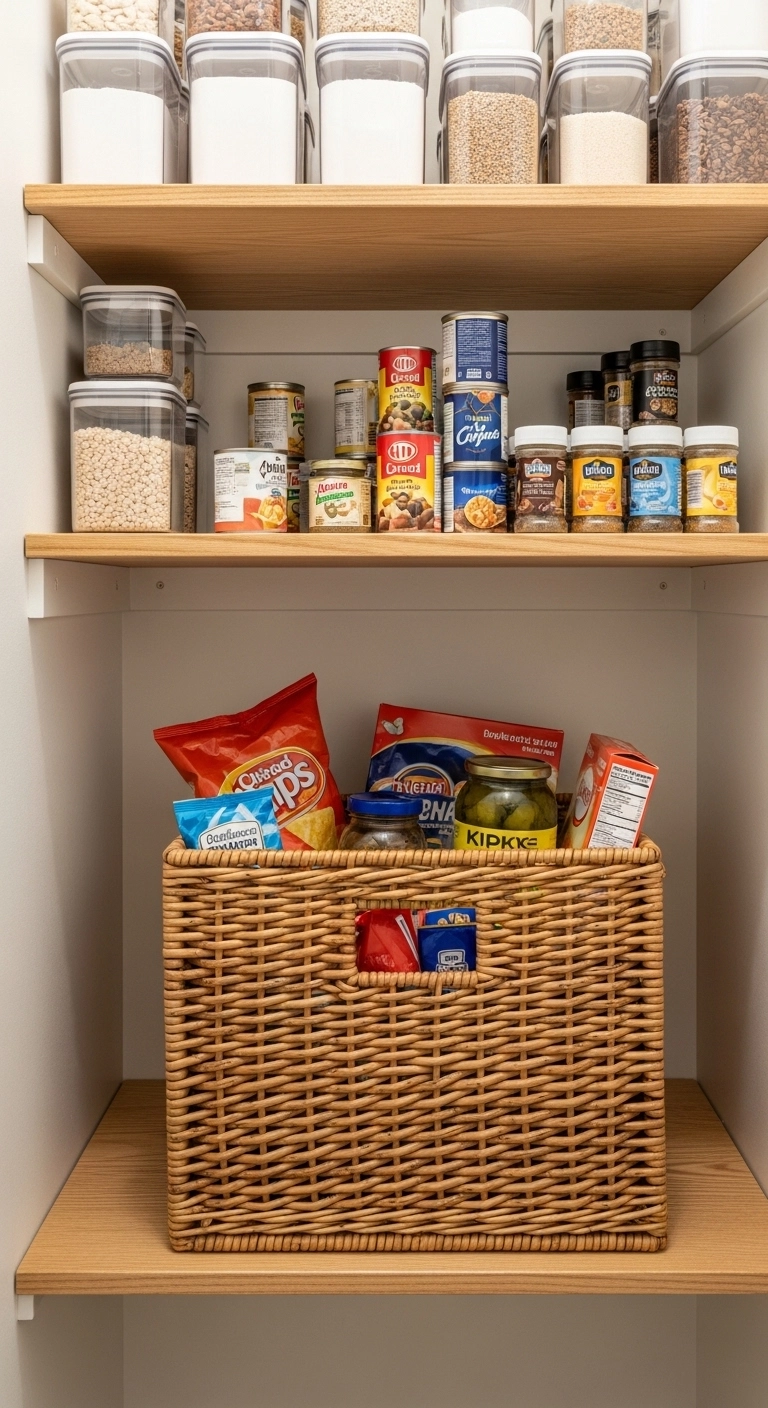
Even a good pantry has some foods that do not fit the main pattern. Maybe it is party supplies, a half-used bag of marshmallows, a holiday baking item, or an extra condiment bought for one recipe. These odd items can create clutter fast because they do not seem to belong anywhere.
An overflow shelf or a “use soon” bin can be a big help. It gives these items a short-term home so they don’t spread out all over the pantry. It also makes them easier to see, which means they’re more likely to be used rather than forgotten. This is especially helpful in a small pantry where random items can quickly create visual clutter.
The important part is keeping this space small. It should solve a problem, not become a hiding zone. A little room for odd items keeps the rest of the pantry much more stable.
Reset the pantry often enough that it never becomes a project
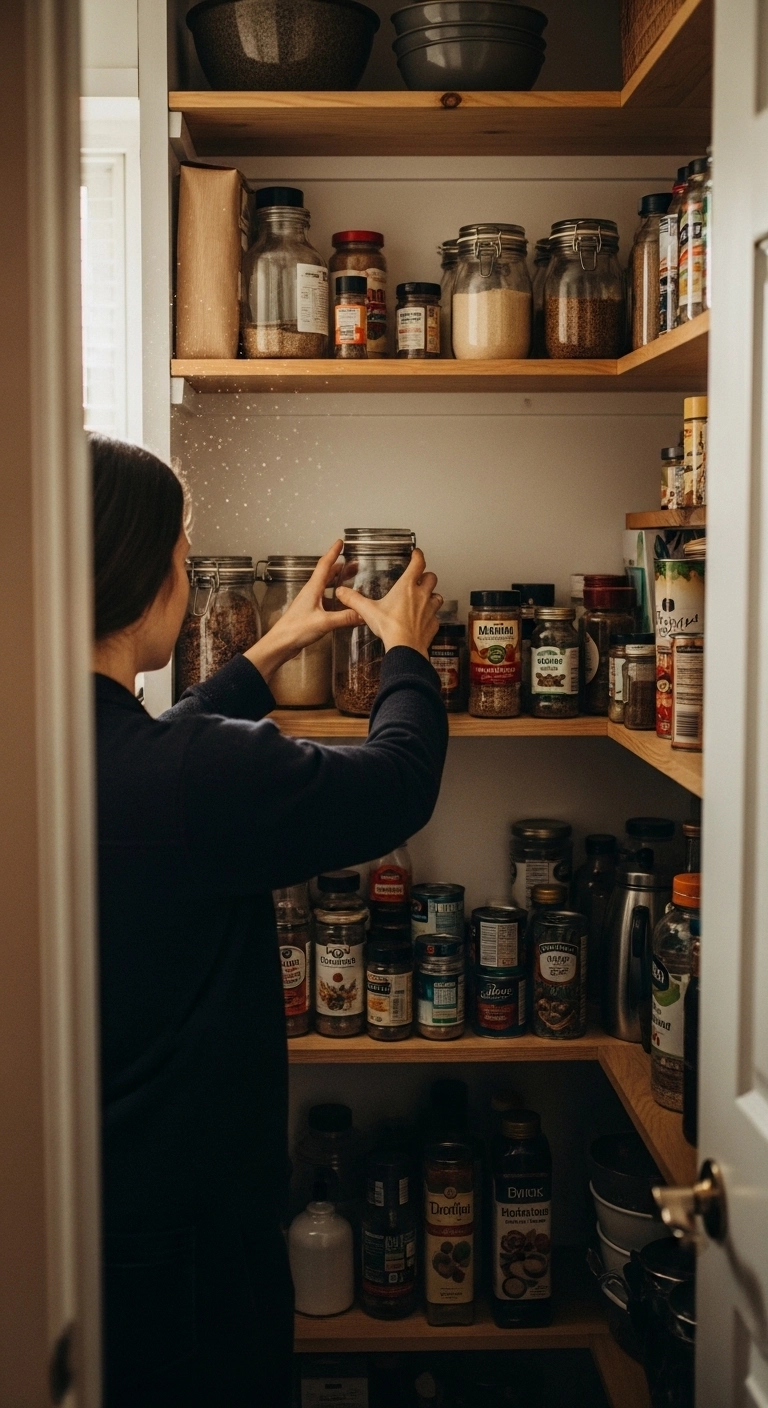
The last idea is simple but important. A small pantry works best when it is rearranged frequently in small ways. If you wait until it is a complete mess, the task feels overwhelming. If you take a few minutes now and then to straighten a shelf, consolidate open packages, toss expired food, and return items to their areas, the pantry will stay much more manageable.
This does not mean spending an hour every weekend organizing dry goods. It means noticing the pantry while you live with it. Put the box back where it belongs. Move the extra cans up high. Wipe one shelf when something spills. Refill one container before it gets too low. Small attention keeps the pantry from turning into a frustrating job later.
This is what makes a system last. A clean pantry isn’t built overnight and left alone forever. It stays effective because the system is easy enough to keep up with. In a small kitchen, this kind of consistent maintenance is more important than any single storage product.
Conclusion
A small pantry can hold a lot more than people expect when the storage is planned with care. The goal is not to force every item into matching jars or make the shelves look perfect for one afternoon. The goal is to build a pantry that supports real cooking, real grocery shopping, and real family life.
The best small pantry ideas are often simple. Better grouping. Clever shelf use. Clean up the house for snacks. Containers for messy foods. Door storage for small items. A shelf riser here, a basket there, and better use of accessible space. These changes may seem small, but together they can completely change how a pantry functions.
If your pantry feels stressful right now, start with one shelf. Clear it. Group it. Give the daily items the best spot. Once that works, move to the next area. Better kitchen storage does not always come from a bigger pantry. Very often, it comes from a smaller pantry used much better.

Muskan Saleem
BukayHome shares practical home decorating ideas, room inspiration, and simple styling tips to help readers create a home they truly love.