16 Kitchen Ideas Perfect For Modern Homes 2026
16 Kitchen Ideas Perfect For Modern Homes 2026
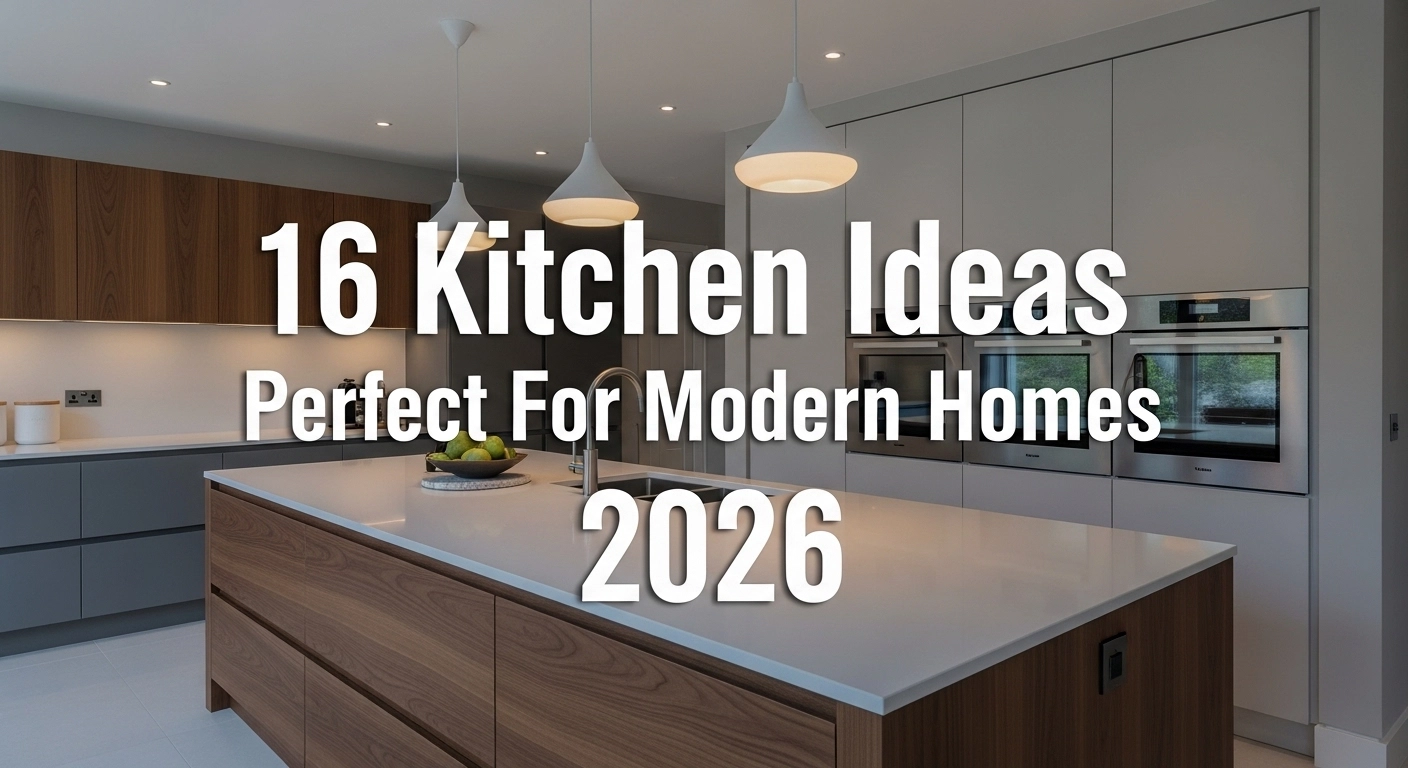
A modern kitchen in 2026 is not just about clean lines and expensive finishes. It needs to work hard, stay easy to live with, and still feel warm when the rest of the house is busy. The best kitchen ideas today are less about chasing trends and more about making thoughtful choices that improve daily life. That means better storage, smarter layouts, softer materials, and details that look good without creating extra work.
If you are planning a full remodel or just collecting ideas before making changes, these kitchen concepts are practical, stylish, and realistic enough to use in an actual home.
Build the room around a cleaner layout
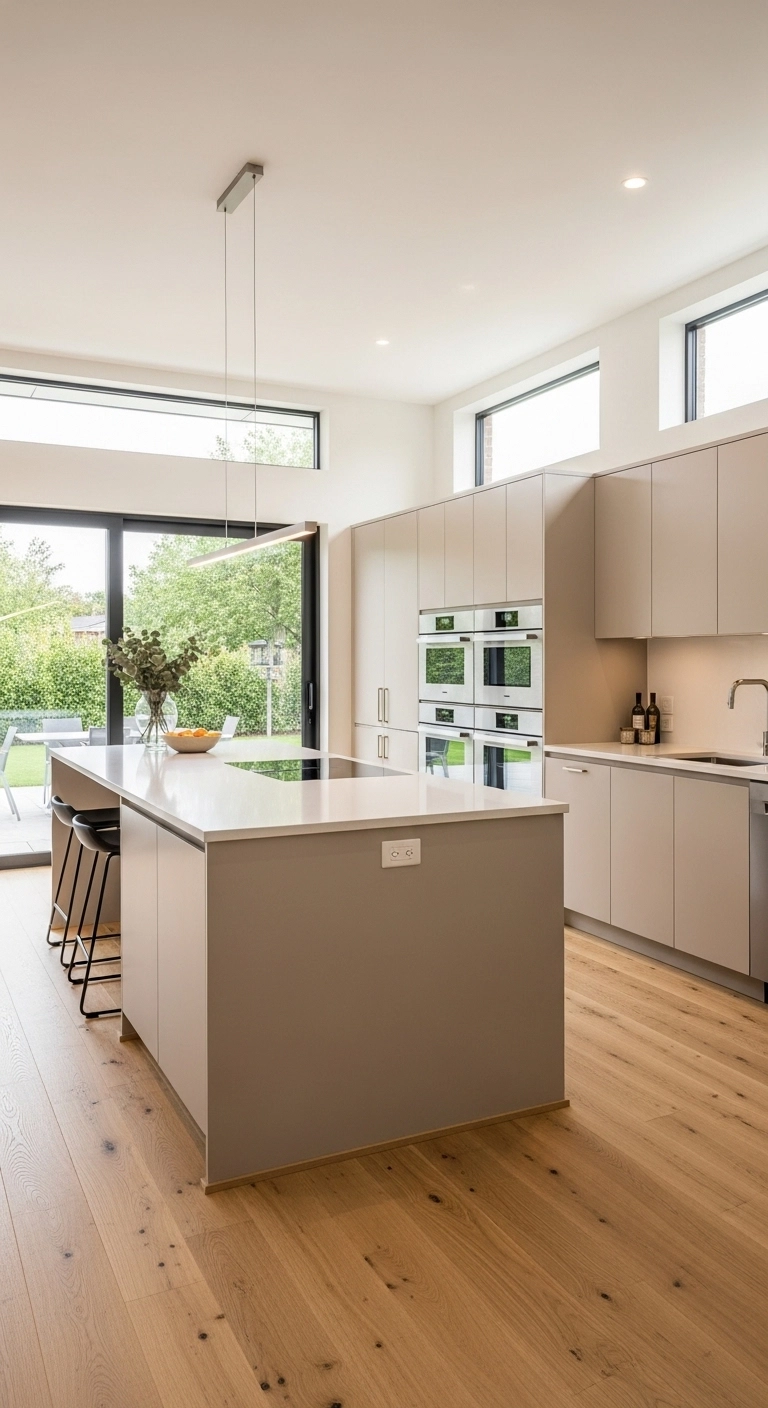
Before colors, tiles, or hardware, the layout matters most. A kitchen can have beautiful finishes and still feel annoying if movement through the room is awkward.
Modern homes benefit from kitchens that support clear movement between the sink, refrigerator, and cooking area. This doesn’t mean following a rigid triangle rule from decades ago. It means making sure the flow feels natural. You should be able to unload groceries, prep food, cook, and clean up without constantly stepping around chairs, the corners of the island, or anyone else.
For many homes, the most comfortable layouts are:
- A single-wall kitchen with a large island in open-plan spaces
- An L-shaped kitchen with one side reserved for tall storage
- A galley kitchen with one wall for cooking and the other for cleanup
- A U-shaped kitchen when you need serious storage and counter space
A modern kitchen feels calm when it is easy to move through. That calm starts with layout, not decoration.
Use two-tone cabinetry for a softer modern look
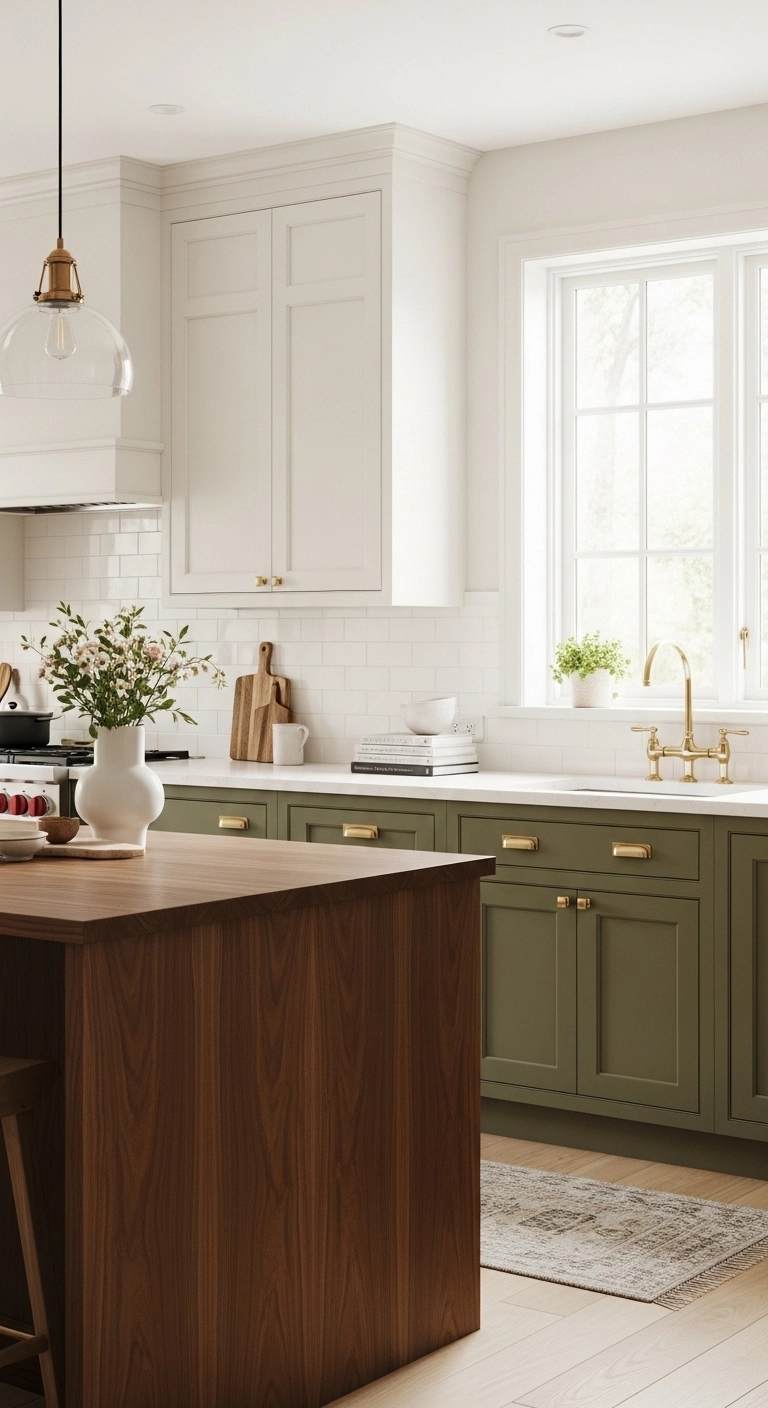
One of the easiest ways to make a kitchen feel current without making it feel cold is to use two cabinet tones instead of one flat color everywhere.
A simple version works well in most homes: lighter upper cabinets and deeper lower cabinets. This keeps the room from feeling heavy while also hiding more everyday wear where it matters most. Another strong approach is using a painted island in a different color from the perimeter cabinets.
Some combinations that feel fresh without trying too hard:
- Warm white uppers with muted olive lowers
- Soft greige cabinets with a walnut island
- Light oak lowers with painted pantry cabinets
- Mushroom-toned cabinetry with a charcoal island
The reason this works is balance. Modern kitchens often have a lot of hard surfaces. Two-tone cabinetry adds rhythm and gives the eye a place to rest.
Choose warm whites instead of stark white
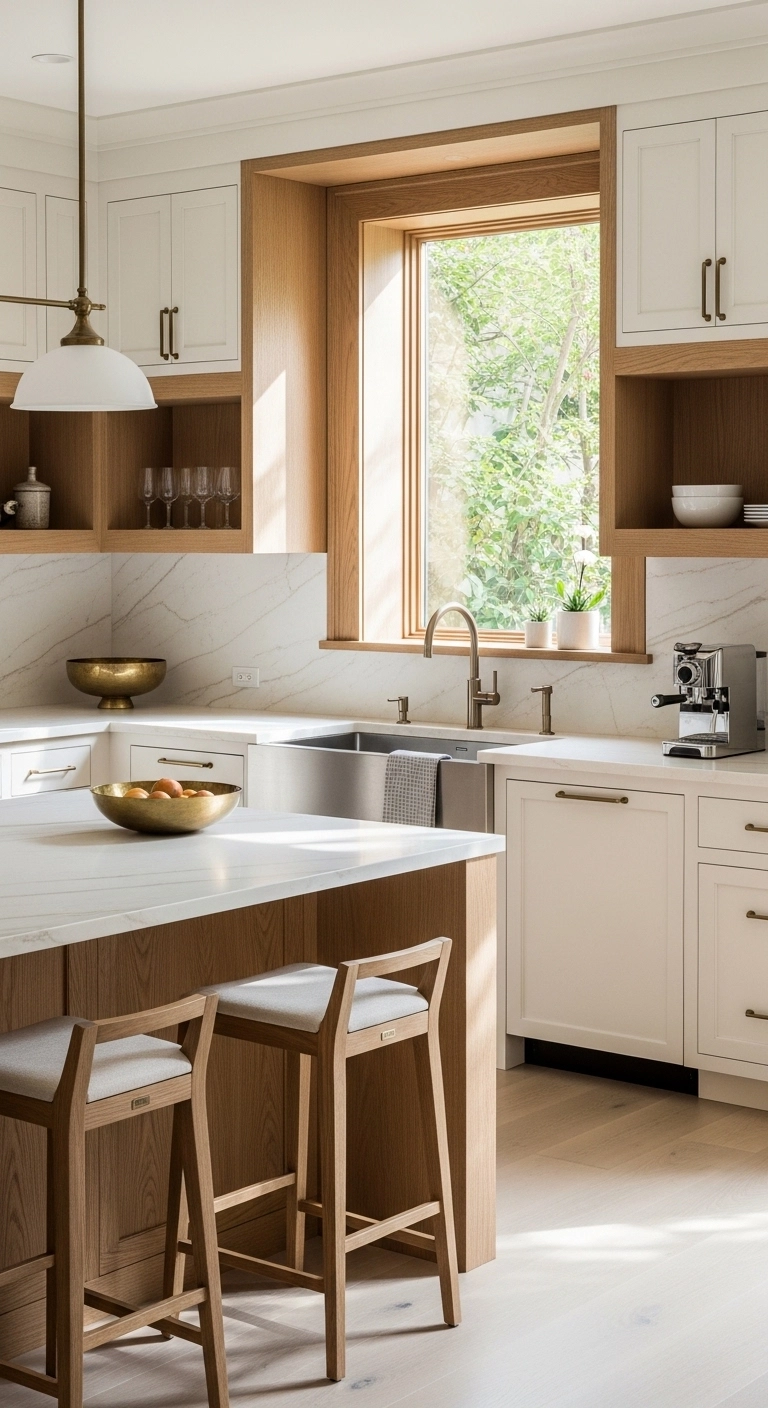
Bright white kitchens had a long run, but many of them ended up feeling flat, especially under cool lighting. In 2026, the smarter move is using whites with a little warmth.
Warm white does not mean yellow. It means whites with softer undertones that play better with wood, stone, and natural light. They make a kitchen feel more relaxed and more expensive at the same time.
This is especially useful if your kitchen opens into a living or dining area. A softer white helps the kitchen blend into the home instead of standing out like a separate zone. It also works better with mixed metals, textured tile, and natural oak.
If you want a clean look that still feels comfortable, warm white is a safer long-term choice than icy bright white.
Create a Dedicated Beverage Station Away from the Main Sink
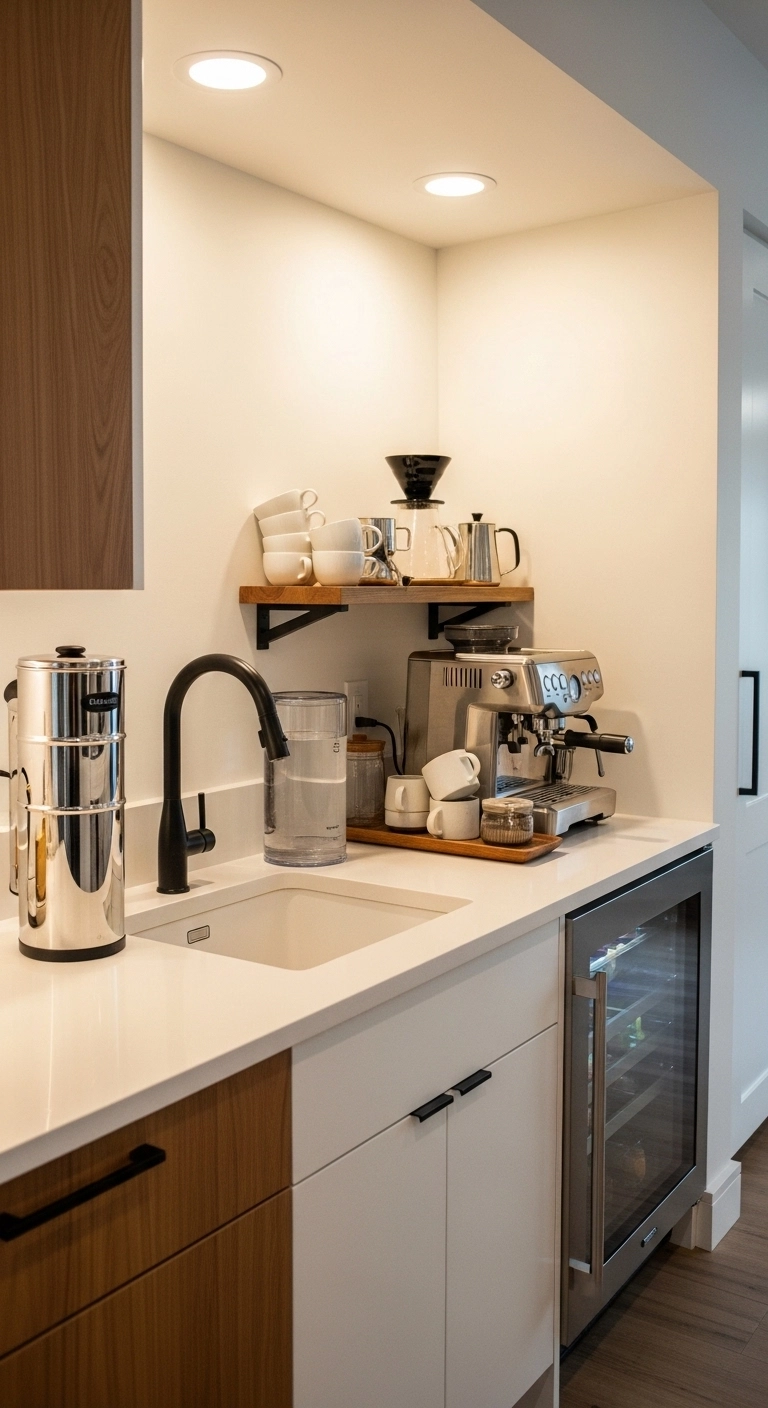
The modern family has many different drinks going at once: coffee in the morning, water bottles to fill before school, and maybe a cocktail at night. Putting all that traffic at the main sink creates a bottleneck. In 2026, the smartest floor plans feature a 24- to 30-inch secondary zone with a small bar sink or pot filler, an undercounter refrigerator drawer, and a drawer for mugs or glassware.
This keeps the kids out of the cook’s prep zone and makes hosting much smoother. If you lack the plumbing for a second sink, even a dedicated countertop area with a filtered water dispenser and a concealed charging port for an electric kettle changes the flow of the room.
Embrace Warm Minimalism with Mixed Wood Tones
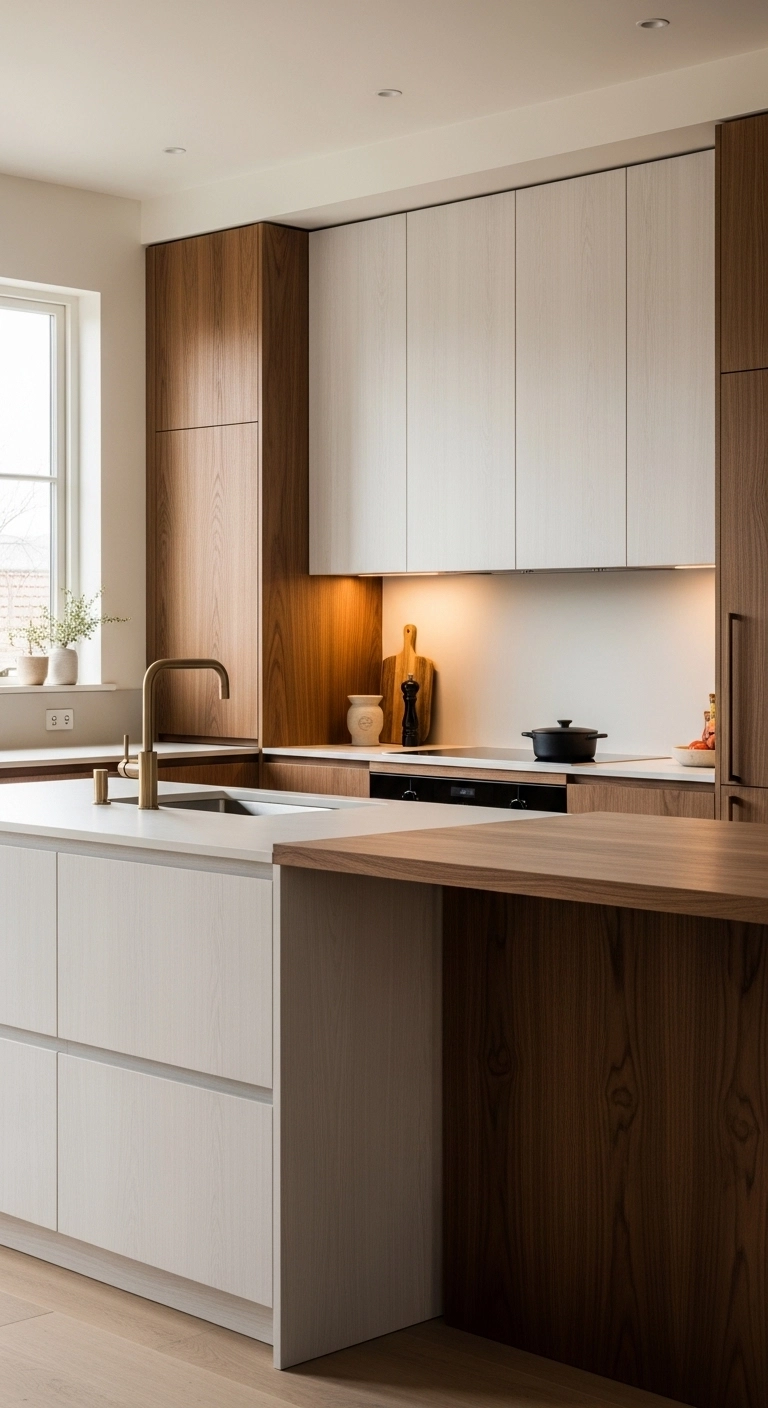
The all-white kitchen is fading in favor of something that feels less sterile. In 2026, the goal is warm minimal — spaces that are clutter-free but not cold. The most sustainable way to achieve this is by mixing two or three wood tones. You can use a light whitewashed oak on the perimeter cabinets and a more walnut stain on the base of the island. The key is to let the wood grain become the texture. Avoid high-gloss lacquer; instead, opt for a low-sheen or matte finish that hides fingerprints and feels soft to the touch. This approach pairs beautifully with simple, flat-front cabinetry because the material itself provides visual interest, not decorative trim.
Choose Recycled or Paper-Based Countertops for Lower Impact
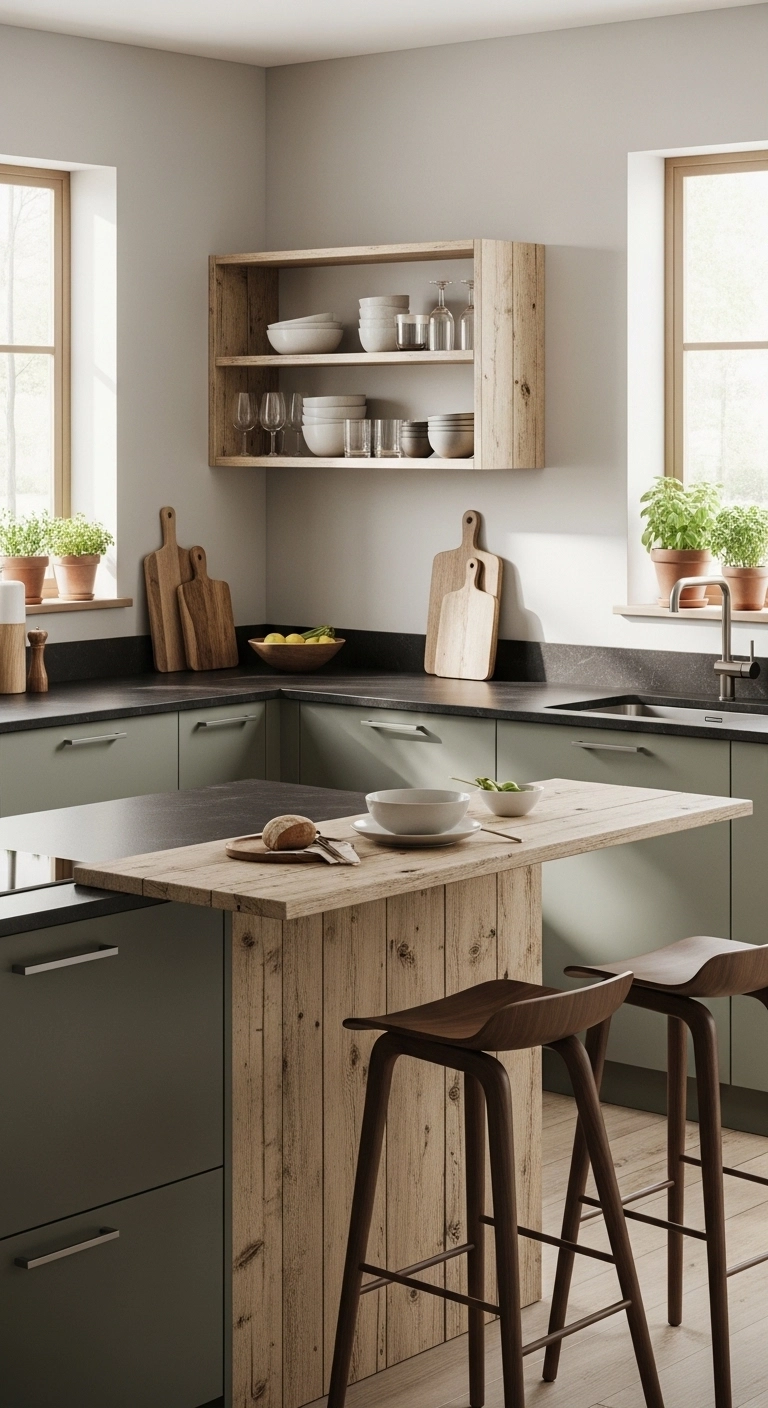
Quartz is still popular, but many homeowners are looking for surfaces with a smaller manufacturing footprint. One of the most practical alternatives for 2026 is recycled paper composite. It sounds strange, but these countertops are made from post-consumer recycled paper and a non-petroleum resin. The result is a material that feels warm like soapstone, is heat-resistant up to a point, and can be sanded out if it gets scratched. Another option is recycled glass terrazzo, which uses chips of waste glass suspended in cement. These materials age gracefully. They are not “perfect” like engineered quartz—they will show a patina over time, which suits the modern desire for a kitchen that looks lived in rather than showroom new.
Design the Island for Three Modes of Use
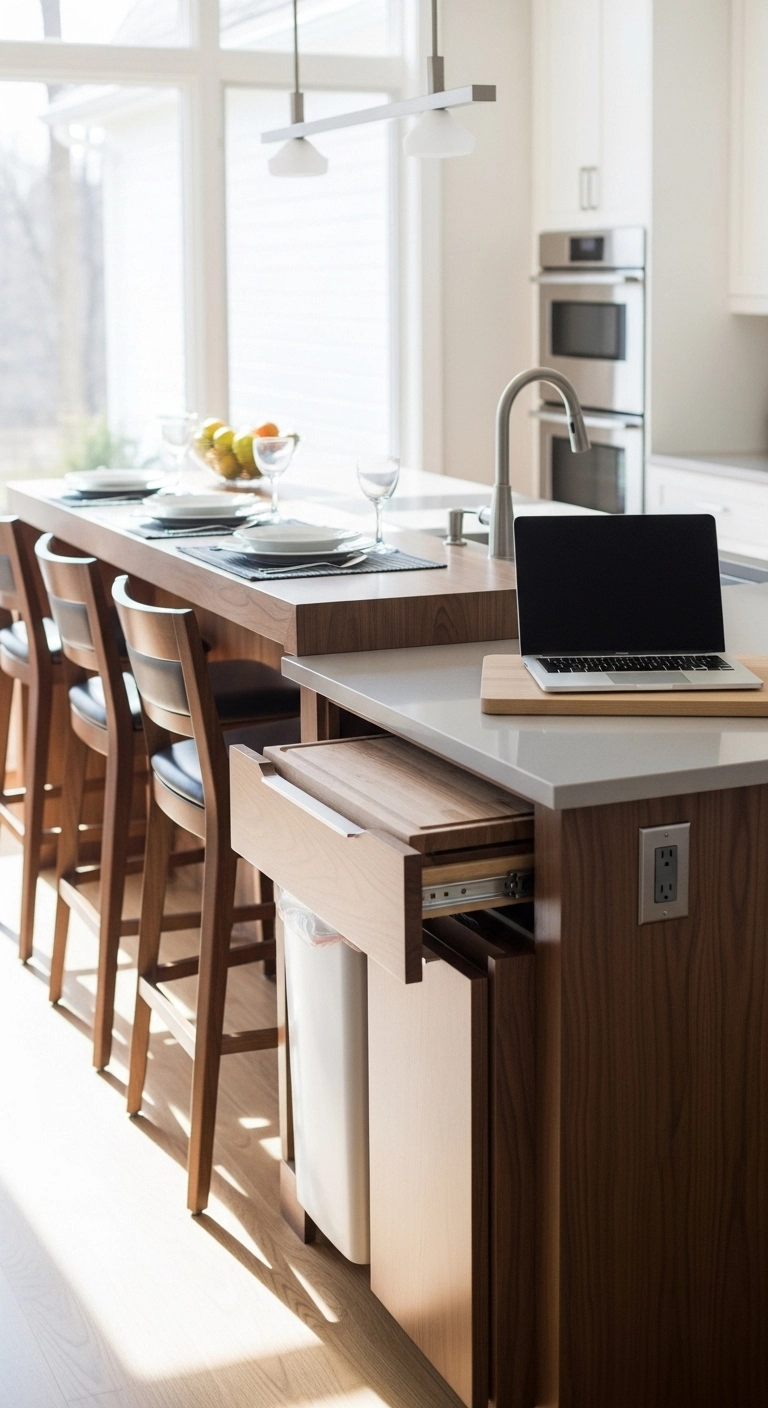
An island used to be just a big rectangle. In 2026, the most functional islands are designed for three distinct modes: prep, dining, and remote work. To achieve this, you need a slight change in surface height. Keep the majority of the island at standard counter height (36 inches) for baking and chopping. But extend one end with a lower section (30 inches) or a higher section (42 inches) for bar seating. This physical separation prevents laptop spills from mixing with flour dust. It also allows you to tuck stools completely under the lip so they aren’t tripping hazards when you’re cooking. Incorporate a small, recessed power strip on the seating side so charging cords don’t snake across the prep area.
Warm Neutral Colour Palettes
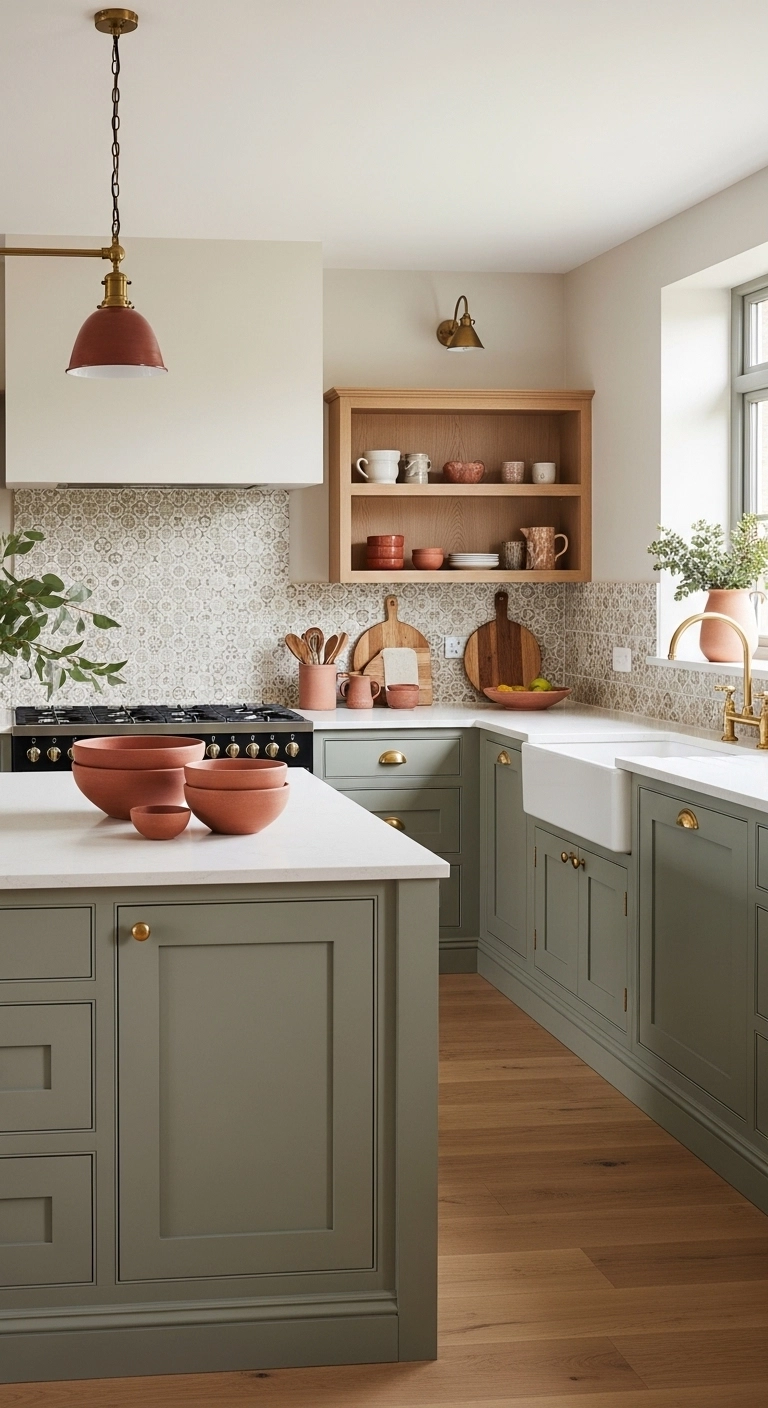
For many years, the dominant kitchen palette trend has been very cool: all white, concrete gray, and matte black. In 2026, the shift has shifted firmly toward warmth – soft earthy tones, warm whites with yellow or pink undertones, aged greens, and natural woods.
This is not a passing trend. Warm kitchens feel more comfortable to spend time in, and the kitchen is a room most people now occupy for longer stretches — working from home, entertaining casually, doing homework at the island. A cooler palette can start to feel clinical over time.
Warm greens — particularly dusty sage, olive, and deeper forest tones — pair beautifully with brass hardware and natural oak or walnut cabinetry. They work in both painted wood cabinetry and tile choices.
Terracotta as an accent—in a tiled splashback, in small decorative items, in a warm earthen wall—has moved from a passing trend to something that sits naturally in contemporary kitchens.
The important thing with warm palettes is to keep the tones at a similar warmth level throughout the kitchen. Mixing warm and cool tones in the same space creates visual confusion.
Underfloor Heating Beneath Hard Flooring
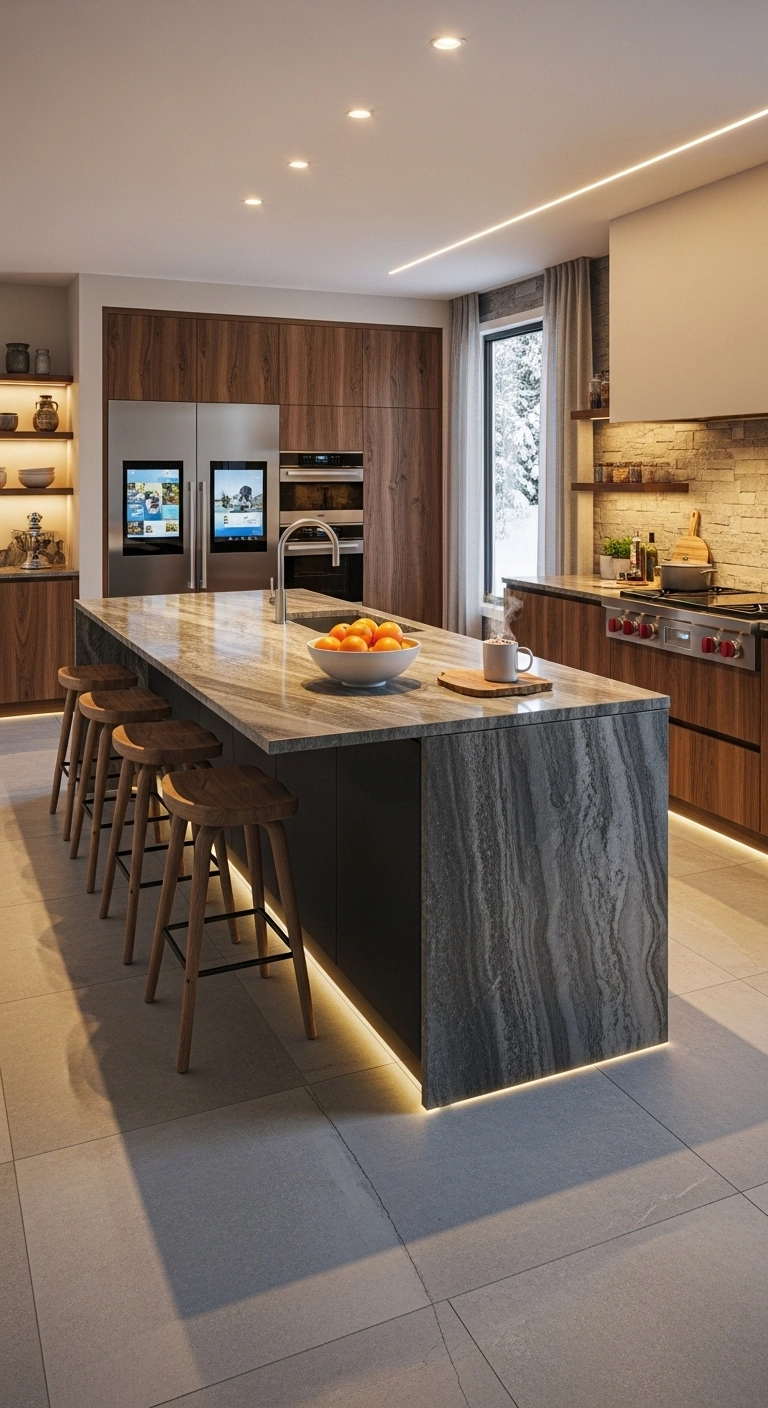
This is one of those additions that gets underappreciated during the planning stage and then never regretted once installed. A kitchen with a tiled or stone floor and underfloor heating is noticeably different to one without it — not just in comfort but in how the room actually feels to be in during autumn and winter.
Installing electric underfloor heating mats during a kitchen renovation is relatively inexpensive because the floor is already being raised. They cost more to install retrospectively. The cost of running an electric system is moderate if the space in the kitchen is small and the system is on a timer.
Water (hydronic) underfloor heating is more efficient for larger spaces and connects to the central heating system, but it requires a more involved installation process.
For flooring material, porcelain tile and natural stone work best with underfloor heating as they conduct and retain heat well. Engineered timber is also compatible with most underfloor heating systems if specified correctly at the time of purchase.
Maximising Natural Light with Thoughtful Window Placement
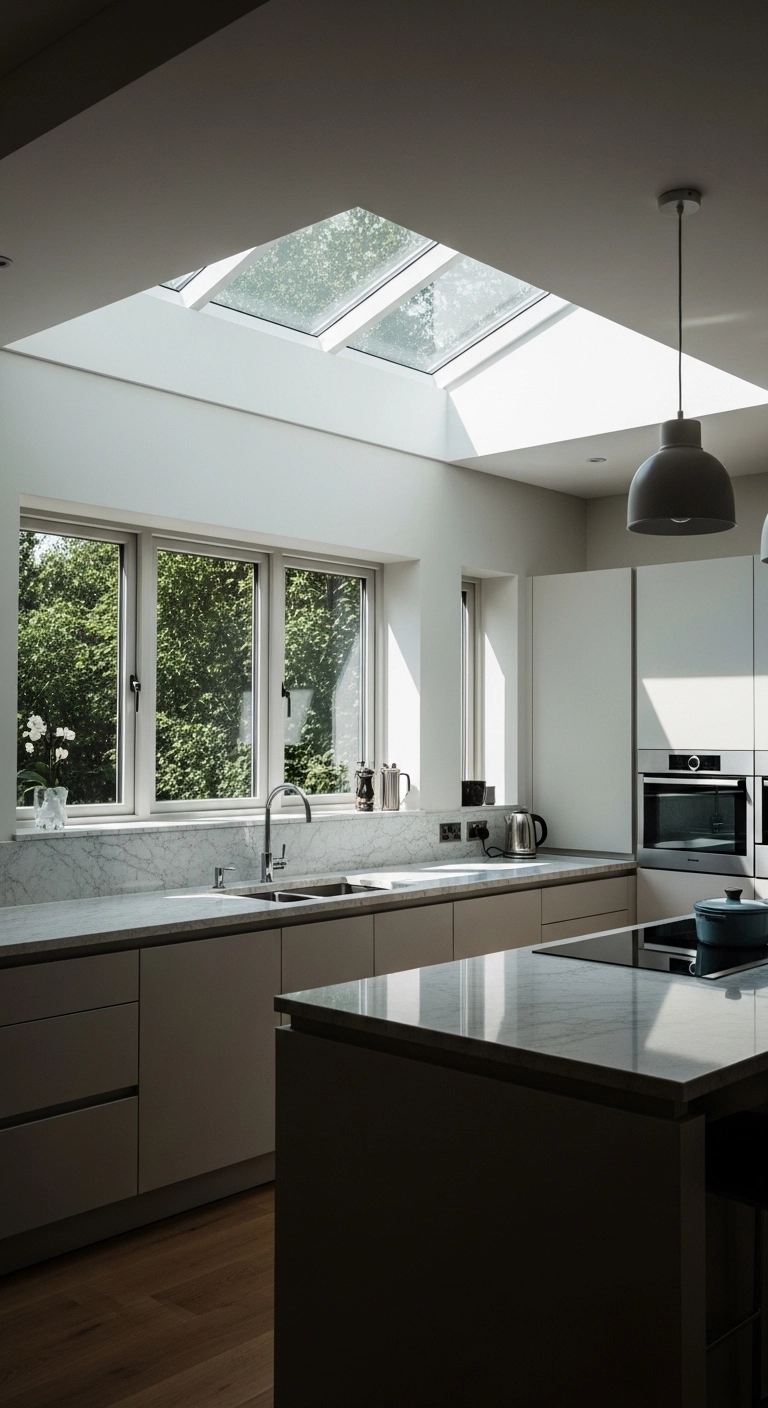
A kitchen with good natural light is a fundamentally different experience to one that relies on artificial lighting throughout the day. If you have the opportunity to alter the window configuration during a renovation, it is worth spending time on.
North-facing kitchens (in the Northern Hemisphere) receive relatively little direct sunlight but benefit from consistent, cool-toned natural light throughout the day. Adding a rooflight or enlarging an existing window on a brighter elevation can have a dramatic effect.
Rooflights above the cooking area are particularly effective. They bring light into a part of the kitchen that wall windows cannot reach and create a connection to the sky that makes the room feel less enclosed.
For splashback windows — a glazed panel between the counter and upper cabinets — a low-iron glass is worth specifying since standard glass has a slight green cast that becomes noticeable in a large panel.
Window placement also affects where you position your sink. A sink beneath a window is a genuinely pleasant place to wash up, and the task lighting from natural daylight reduces eye strain during prep work.
Layered Lighting That Works at Different Times of Day
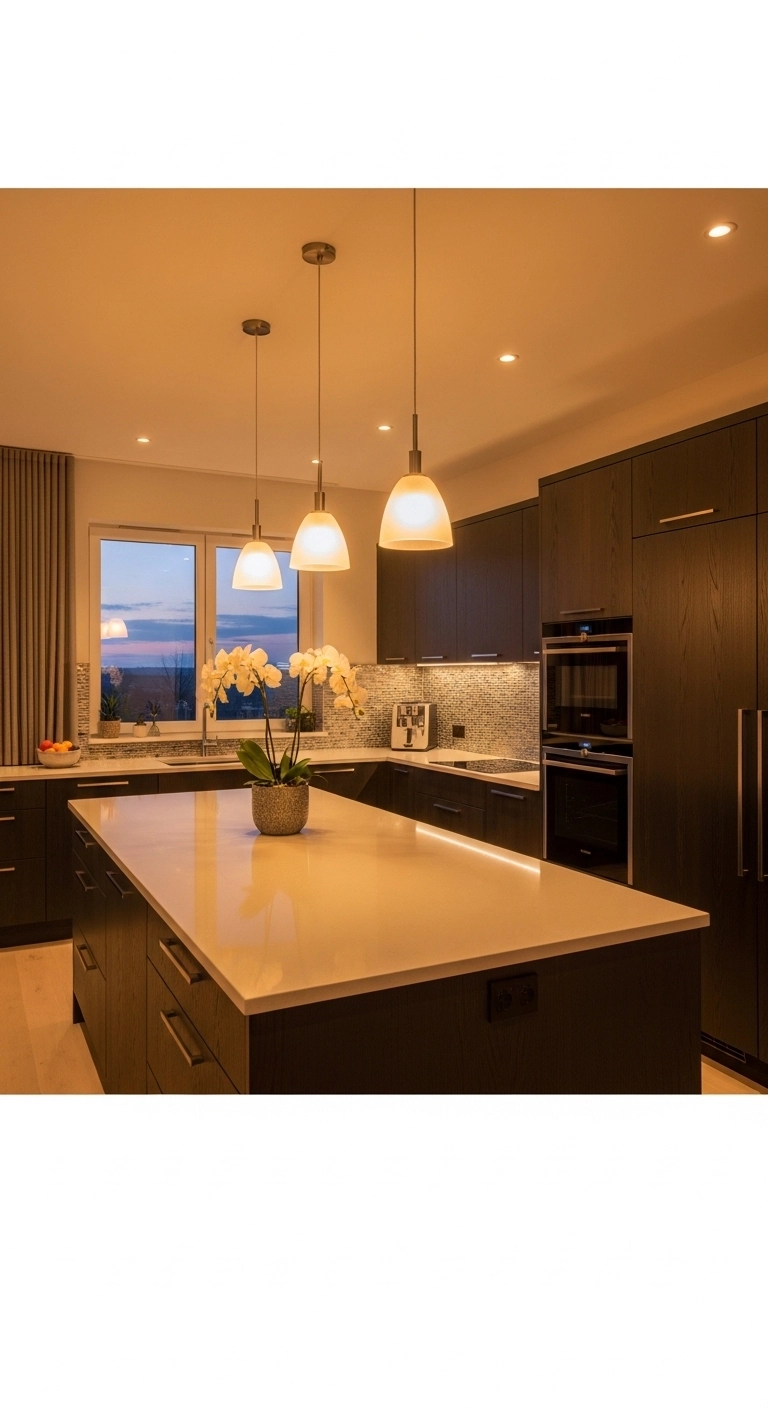
Kitchens are used for many different things — bright morning prep, focused cooking, relaxed evening meals, late-night snacks — and a single overhead light source cannot serve all of them well.
A well-lit kitchen in 2026 features at least three types of lighting working together. Task lighting directly illuminates work surfaces, usually from under-cabinet LED strips. Ambient lighting provides general fill light for the room when nothing in particular is happening. And accent or decorative lighting — pendant lights over the island, a subtle glow in the cabinets — contributes warmth and character.
Under-cabinet LED lighting is one of the highest-value additions to any kitchen because it makes chopping and prep much easier on your eyes and it does not require major works to install. Recessed LED strips behind a slim pelmet are the tidiest solution — the light source is hidden and the glow lands on the work surface rather than bouncing off the cabinet door.
Pendant lights over a kitchen island or dining table should be chosen with the ceiling height in mind. A typical guideline is to hang the bottom of the pendant 75–85 cm above the surface it is illuminating. In rooms with lower ceilings, flat ceiling flush fittings work better than pendants.
Dimmable circuits are worth wiring in for every circuit in the kitchen. The ability to take the island pendants down to 20% in the evening changes the feel of the room entirely.
Use open shelving in small doses
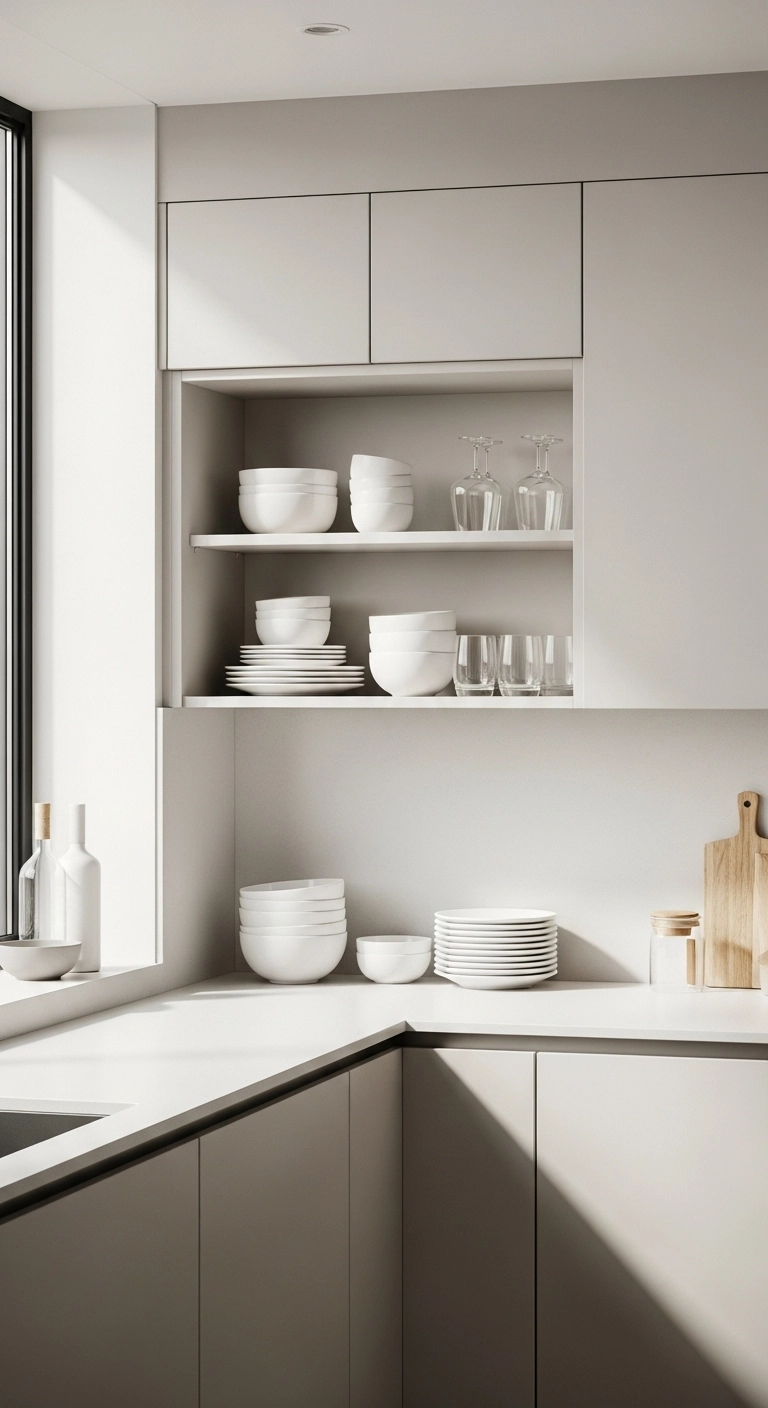
Open shelving can be useful and attractive, but it works best when treated as a design accent, not as the main storage system.
In a modern kitchen, a shelf or two can break up a wall of cabinets and make the room feel lighter. They’re great for a few everyday dishes, glassware, or well-chosen serving pieces. What they’re not good for is every single mug you have on hand plus random containers from the grocery store.
The trick is restraint. If you know you do not enjoy styling shelves or keeping them dust-free, use less of them. Closed storage is still the easier, more forgiving option for most homes.
Open shelving looks best when it adds breathing room, not when it creates pressure to keep everything photo-ready.
Let the range hood become part of the design
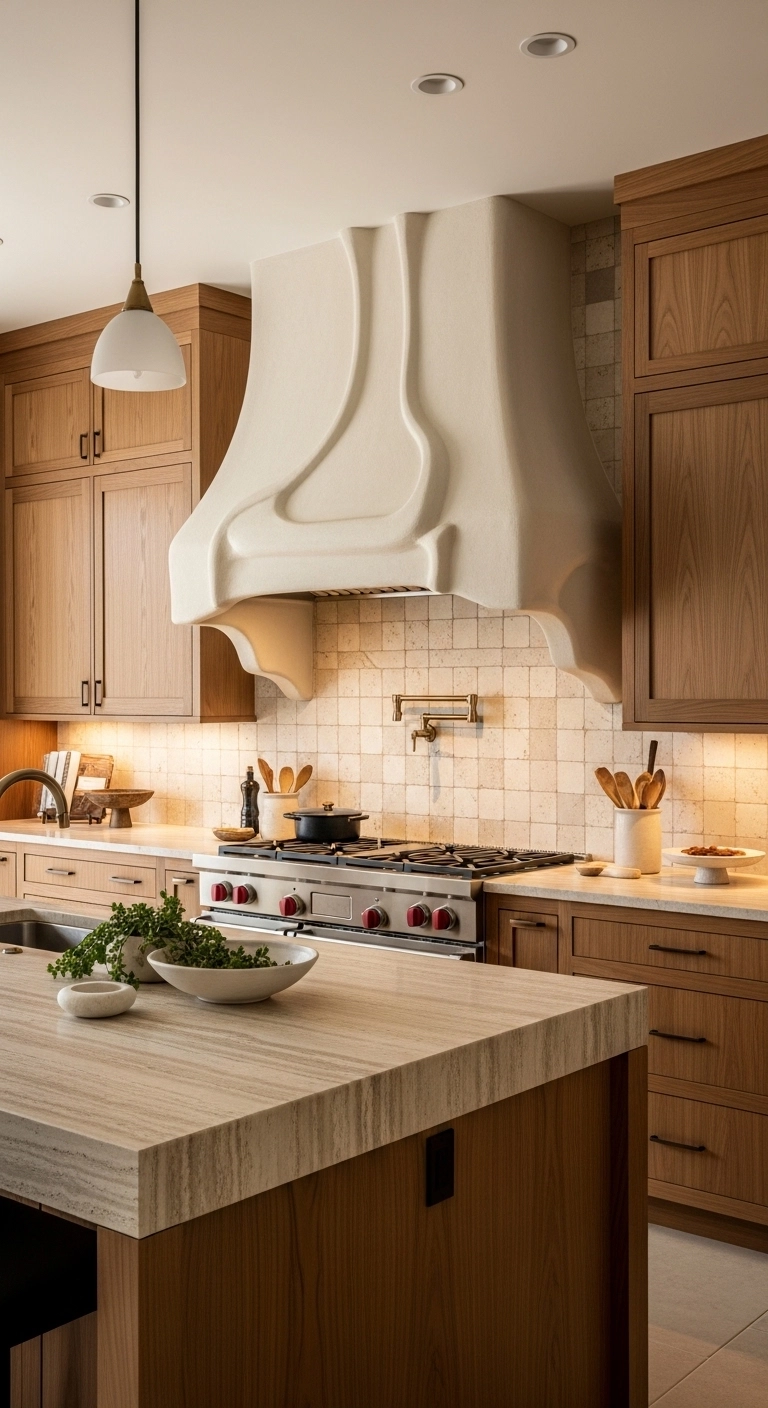
The hood is often treated as a technical necessity, but in a modern kitchen it can also be a visual anchor.
A plaster-style hood creates softness and works well in warmer contemporary kitchens. A wood-trimmed hood adds texture. A slim metal hood can suit a cleaner, more minimal room. Even a concealed built-in hood can look great when the cabinetry around it is thoughtfully detailed.
This area naturally draws attention because it sits above the cooking zone. When handled well, it gives the kitchen a focal point without relying on something loud or trendy.
If the hood is visible, make it feel intentional. If it is hidden, make sure the surrounding cabinetry still gives that wall enough character.
Build clear work zones for easier daily use
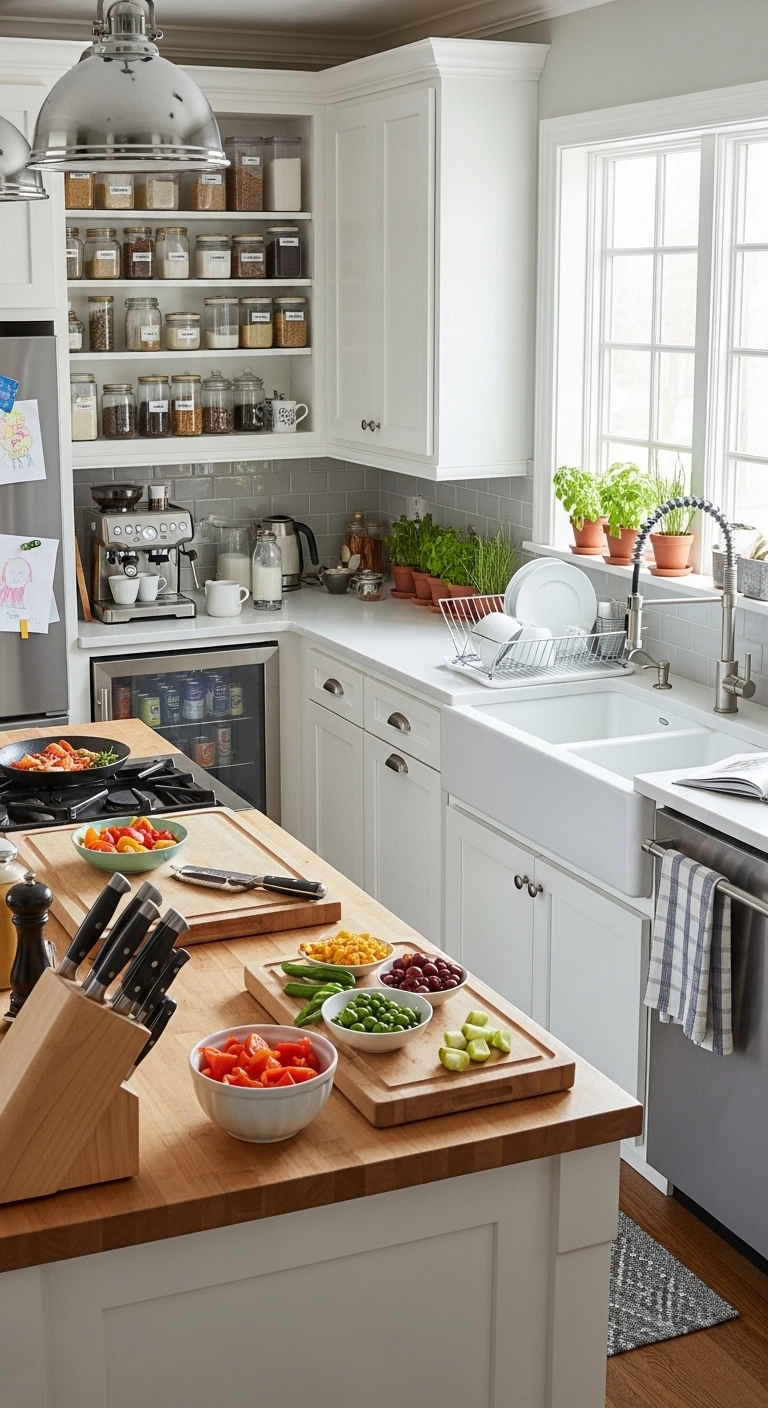
One of the smartest kitchen ideas for busy homes is organizing the room into work zones instead of treating the whole kitchen as one shared surface.
For example:
- A beverage zone near the fridge or dining area
- A prep zone between the sink and cooktop
- A cleanup zone around the sink and dishwasher
- A baking zone with mixers, bowls, and dry goods close together
- A lunch-packing zone near the pantry
This approach makes the kitchen feel easier to use, especially when more than one person is in it. It also helps with storage decisions. Instead of asking where a drawer fits, you ask where that function occurs.
That small shift usually leads to a better kitchen.
Incorporate a Small Indoor Herb Wall or Countertop Garden
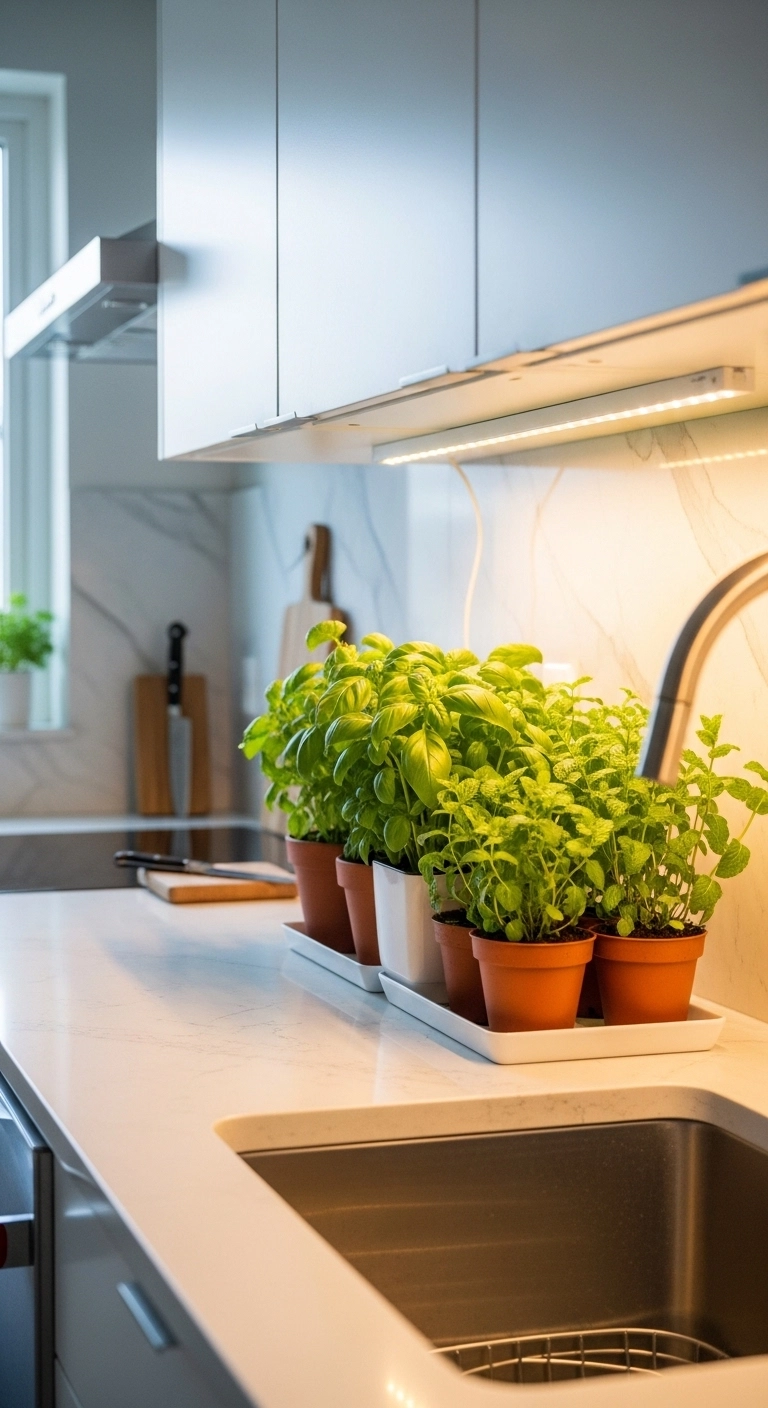
Fresh herbs are expensive at the store and often wilt in the refrigerator before use. A dedicated hydroponic growing system built into a wall niche or sitting on a dedicated counter is a true 2026 kitchen upgrade. These systems are now self-watering with full-spectrum LED lights that save energy.
You don’t need a window. Growing basil, mint, or lettuce year-round right where you cook changes how you approach a simple weeknight salad. You snip what you need, and the plant keeps growing. It adds a living, green texture to the room that offsets the hard surfaces of metal and stone.
Thoughtful Integration of Technology Without Overcomplicating Things
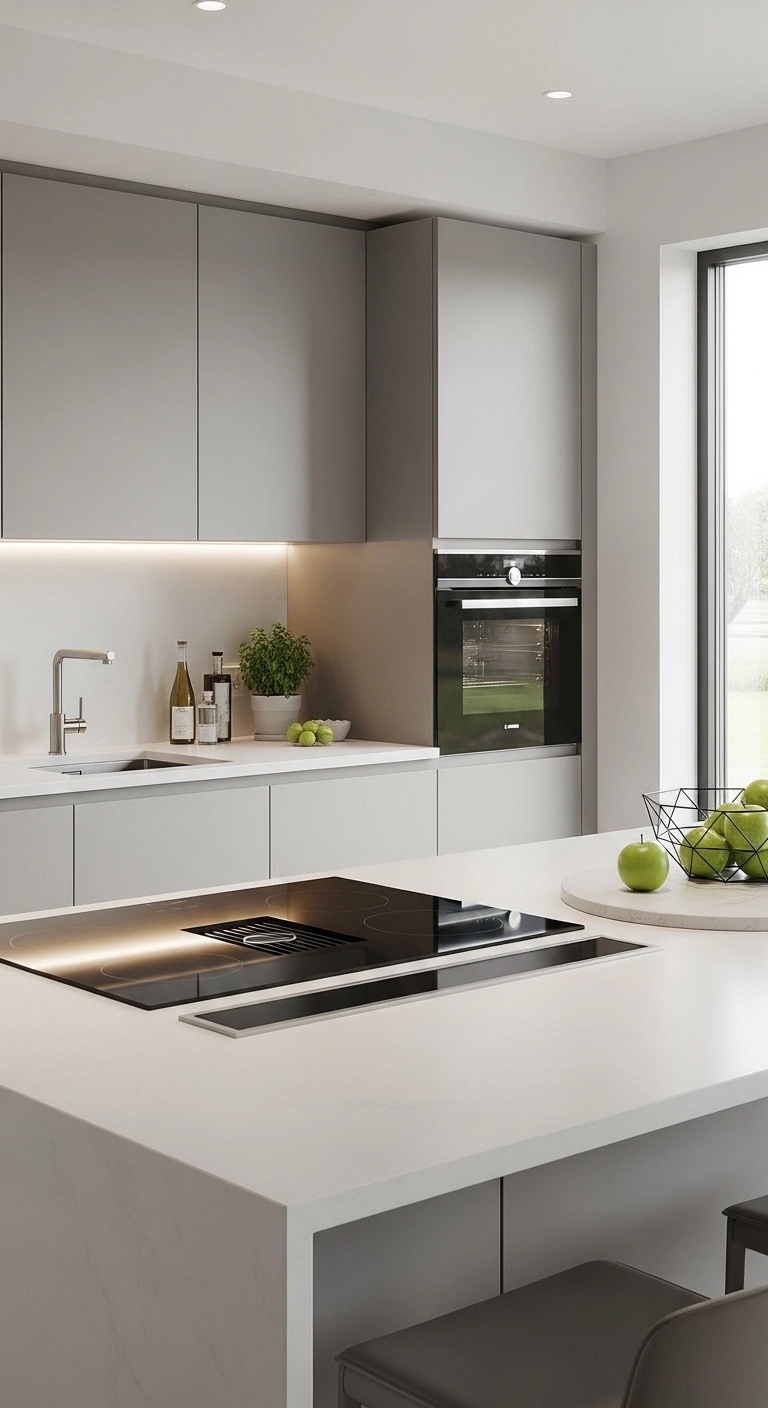
Smart technology in the kitchen has matured to a point where it offers real everyday value rather than novelty. The key is being selective: not every surface needs a screen, and not every appliance needs an app.
The most useful integrations in a 2026 kitchen are those that reduce friction in everyday tasks. A smart oven that preheats on command via a phone app before you arrive home is genuinely useful. An induction hob with flexible cooking zones that can accommodate any size pan anywhere on the surface is a functional improvement over a fixed four-zone layout.
Tap technology has improved significantly. Boiling water taps now appear in mid-range kitchen budgets and eliminate the need for a kettle on the countertop — one less appliance, one less thing to find space for, and instant hot water for cooking as well as drinks.
Under-counter water filtration systems that connect to a dedicated tap are another quiet upgrade that makes a daily difference, particularly in areas with heavily chlorinated or hard water.
The principle to keep in mind: any technology in a kitchen should make things easier, not require more management. If a feature needs a software update, a subscription, or a five-minute setup every time you want to use it, its value to a working kitchen is limited.
Frequently Asked Questions
What kitchen style is most popular for modern homes in 2026?
The most popular style is warm minimalism. It focuses on clean lines and uncluttered counters but uses natural materials like oak, walnut, and matte stone to keep the space feeling inviting rather than cold or clinical. The emphasis is on hidden storage and functional, beautiful appliances.
How can I make a small kitchen feel more modern without remodeling?
Start with the lighting and the hardware. Swap out a dated overhead fixture for a dimmable, warm LED and install under-cabinet task lights. Replace cabinet knobs with matte black or brushed brass pulls. If you have tile, consider a grout refresh pen to brighten the lines. These are weekend projects that instantly change the room’s age.
What is the best low-maintenance countertop material for a busy family?
Sintered stone or porcelain slabs are leading the pack in 2026. They are non-porous, so they resist stains from wine and coffee without needing annual sealing. They are also highly heat resistant, so you can place a hot pan directly on the surface without worry. The downside is that they require professional fabrication due to their hardness.
What makes a kitchen look modern without feeling cold?
Balance. Clean lines help, but warmth comes from wood, layered lighting, softer paint colors, textured backsplashes, and materials that do not all have the same finish. A modern kitchen should feel calm, not hard.
Is open shelving practical in a real kitchen?
It can be, but only in moderation. Open shelves work best for a few everyday items or decorative pieces you genuinely use. For most households, closed storage is still better for keeping the kitchen looking tidy.
What countertop is easiest to maintain?
Quartz is often the easiest choice for busy homes because it is durable, simple to clean, and does not require much upkeep. That said, the best material depends on how you cook and how much maintenance you are comfortable with.
How do I choose the right kitchen island size?
Measure your kitchen space carefully first and allow 90–100 cm of clear passage on every side of the island. For a standard kitchen, an island around 120 cm long by 80 cm deep is a practical starting size. If the space allows, 150–200 cm in length gives you meaningful prep area and comfortable seating for two or three people on one side.
Is underfloor heating worth the cost in a kitchen?
For a new kitchen or full renovation where the floor is already being lifted, yes — it is worth adding at that stage because the installation cost is relatively low when the subfloor is already exposed. Retrofitting it later is more disruptive and expensive. In a kitchen with cold stone or tile flooring, the improvement in daily comfort during colder months is significant.
Closing Thoughts
A genuinely useful kitchen does not come from following every trend or installing every available feature. It comes from thinking clearly about how your household actually uses the space — when, how often, for what tasks — and making decisions that serve those habits well.
The kitchen ideas in this list are not here because they are fashionable. They are here because they make real differences to how a kitchen feels to work in and live with. Start with the changes that address the specific frustrations you have with your current kitchen, and build from there.
The best version of any kitchen is one that fits the household using it — efficiently, comfortably, and without constant upkeep.

Muskan Saleem
BukayHome shares practical home decorating ideas, room inspiration, and simple styling tips to help readers create a home they truly love.