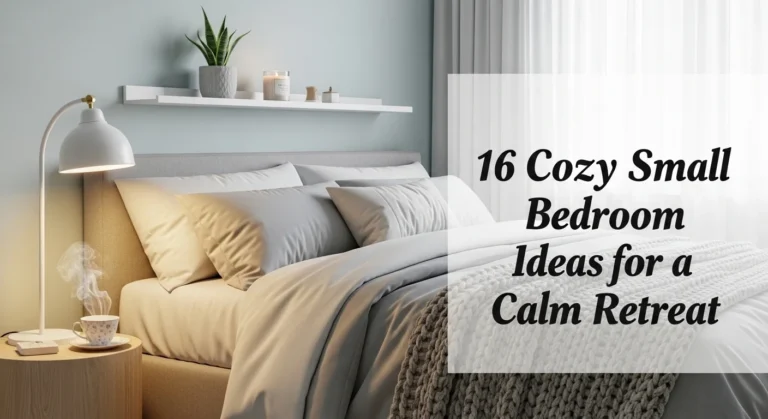
14 Affordable Bedroom Ideas For Stylish 2026 Homes
14 Affordable Bedroom Ideas For Stylish 2026 Homes

A stylish bedroom does not have to come with a big price tag. In fact, some of the best rooms feel thoughtful rather than expensive. They look calm, practical, and personal. That usually comes from making smart choices with layout, color, lighting, and texture instead of throwing money at every corner.
These affordable bedroom ideas are for real homes and real budgets. They’re easy to understand, realistic to copy, and flexible enough to work whether you live in a small apartment, a single-family home, or a rental where you can’t change everything. The goal is simple: make your bedroom look better, feel better, and work harder without turning it into an expensive project.
Start With Paint Before You Buy Anything Else
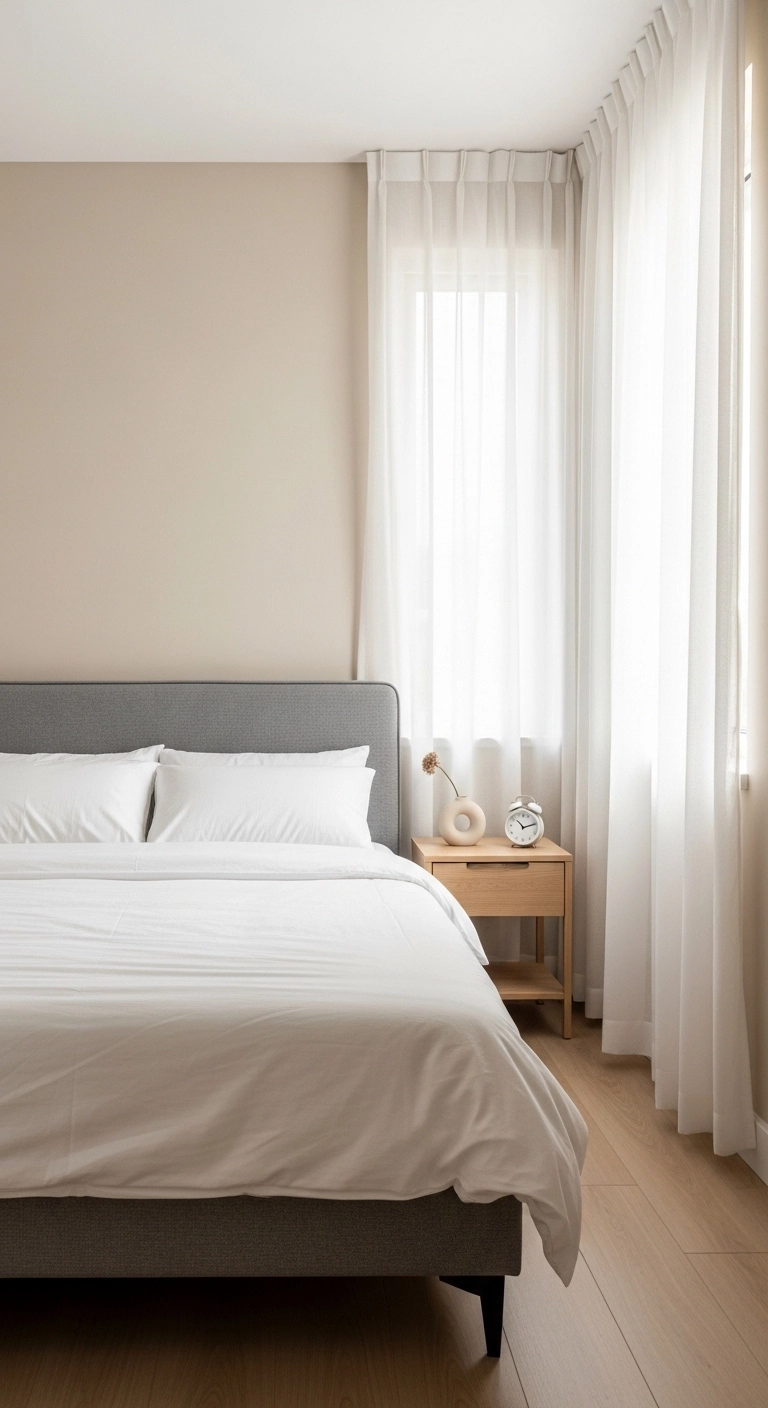
If your bedroom feels dull, crowded, or dated, paint is often the cheapest way to change the entire mood. A fresh wall color can make older furniture look more intentional and help the room feel cleaner right away.
For 2026, the most useful budget-friendly shades are soft warm neutrals, muted greens, dusty blues, clay tones, and off-whites with a little depth. These colors are easier to live with than stark white, and they make a bedroom feel finished without needing lots of decor.
Paint matters because it affects everything around it. A bed looks better against the right wall color. Natural light feels softer. Even a basic metal bed frame looks more polished when it has a backdrop to support it.
If your budget is tight, paint just one wall behind the bed as an accent. That alone can create a focal point and give the room more shape. A full-room paint job is better when possible, but one well-chosen wall can still make a real difference.
Upgrade Bedding, Even If the Rest of the Room Stays Simple
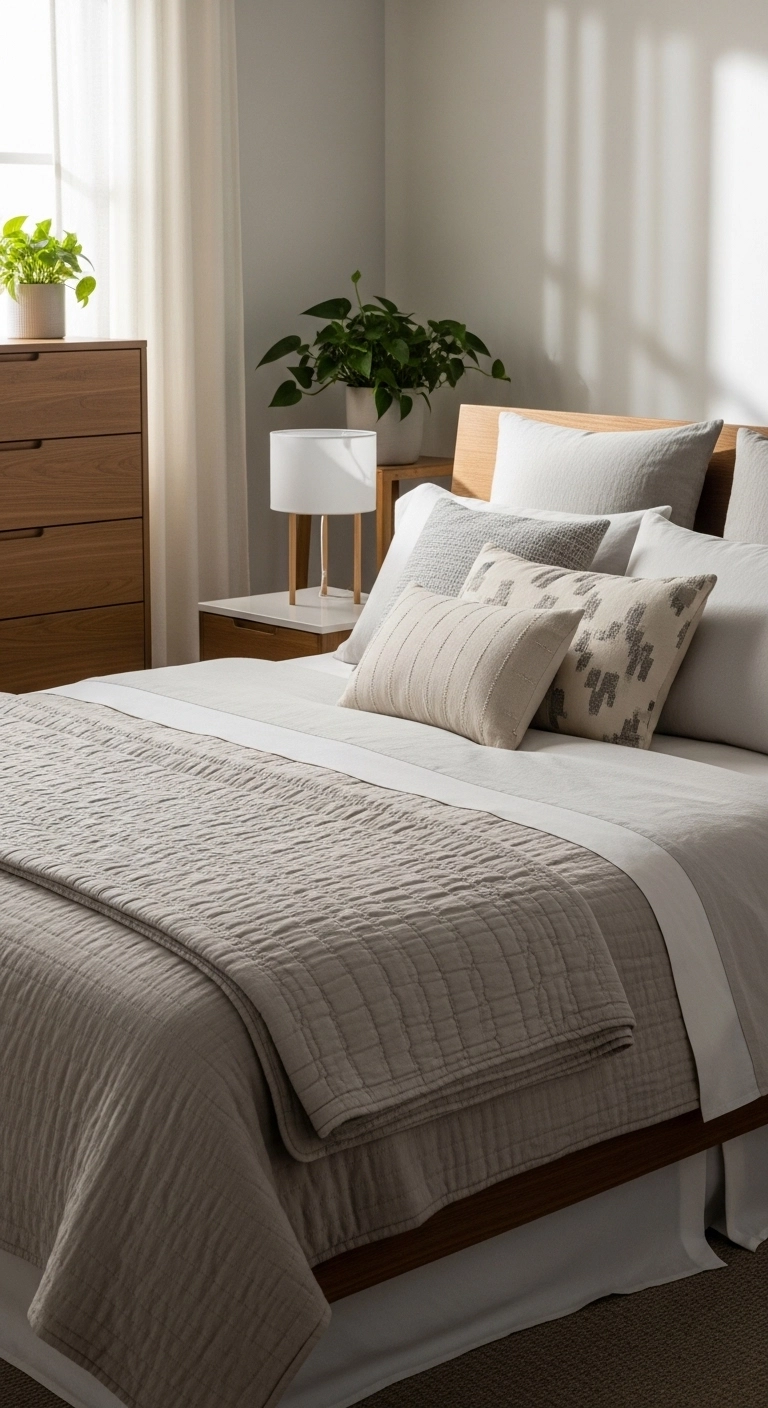
A bedroom can survive outdated nightstands for a while. Bad bedding is harder to hide. Since the bed is the main feature in the room, improving it gives you the biggest visual return for your money.
You do not need luxury hotel linens. What helps most is a layered setup that looks neat and intentional. Start with sheets in a solid color or subtle pattern. Add a duvet or quilt with some texture. Then finish with two or three pillows that bring contrast without creating clutter.
The trick is not buying more pieces than you need. It is choosing bedding that has some weight, texture, and structure. A simple cotton coverlet, a linen-look duvet, or a quilted blanket can make the room feel much more styled than a thin printed comforter ever will.
If your budget only allows one change, replace the top layer first. That is what people notice most.
Use Better Lighting Instead of Relying on One Ceiling Fixture
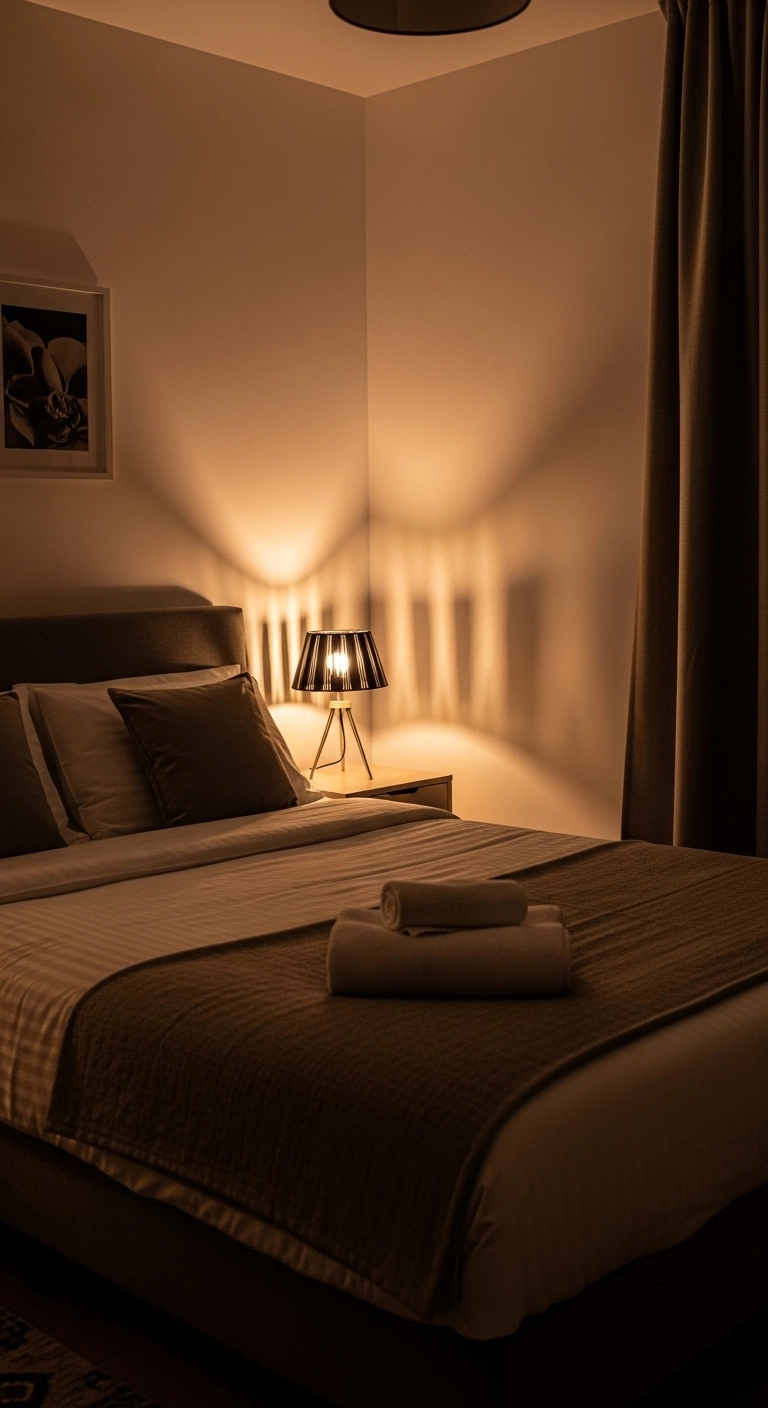
Many bedrooms look flat because the lighting is doing all the wrong work. One overhead light tends to make the room feel harsh and unfinished, especially at night.
A better setup is surprisingly affordable. Add two small bedside lamps, or use one lamp and one wall-mounted plug-in sconce if space is tight. This creates a softer glow and gives the room a more intentional look. It also makes the space more comfortable for reading, winding down, or getting ready in the morning.
Warm bulbs help too. They make neutral colors look richer and help the room feel relaxed. Cool bright bulbs often make a bedroom feel like a waiting room, which is not the mood most people want.
Good lighting is one of the most overlooked affordable bedroom ideas because it seems like a small detail. In practice, it changes how everything else looks.
Choose Curtains That Make the Room Look Taller
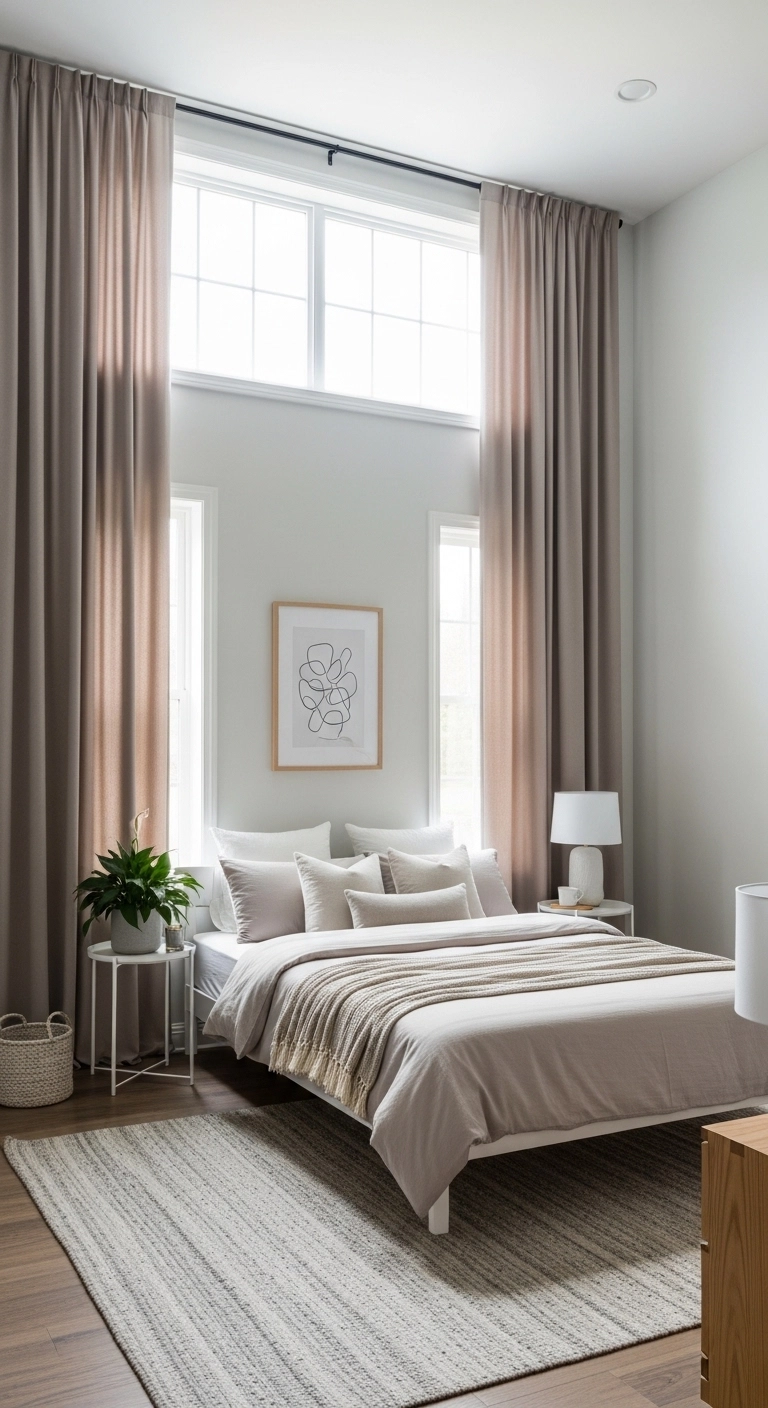
Window treatments can either make a bedroom feel finished or make it feel like something was forgotten. Cheap curtains are not a problem by themselves. Hanging them poorly is usually the real issue.
To make the room look taller, mount the curtain rod higher than the top of the window frame. Let the panels fall close to the floor. This draws the eye upward and makes the walls feel taller, even in a small room.
Stick with simple fabrics that hang well. Light-filtering panels work for most bedrooms because they soften the light without making the room feel dark all day. If privacy is a concern, pair them with blinds or blackout liners instead of buying heavy curtains.
This is one of those low-cost changes that makes the room feel more grown-up almost immediately.
Create a Headboard Look Without Buying a Traditional Headboard
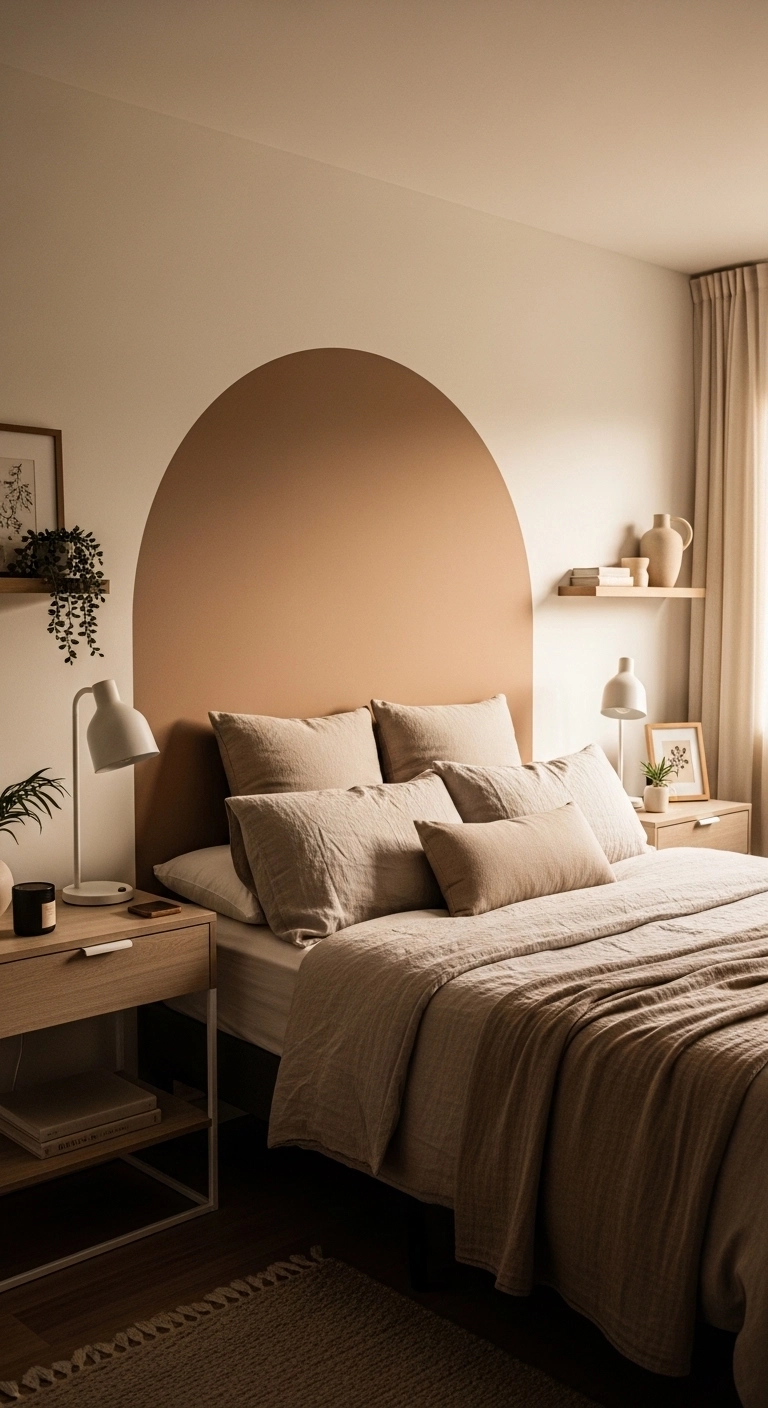
A proper headboard can be expensive, but the visual idea behind it does not have to be. What matters is giving the bed some presence so it feels grounded in the room.
There are several affordable ways to do that. You can use peel-and-stick panels, a painted arch or rectangle on the wall, a mounted curtain panel, or even a wide piece of wood finished in a soft stain or paint color. Some people also use a large upholstered cushion mounted behind the bed for a softer effect.
The reason this works so well is simple: the bed stops looking like a mattress pushed against a wall and starts looking like a designed feature. That shift makes the room feel more complete even if the rest of the furniture is basic.
Mix Old and New Furniture Instead of Replacing Everything
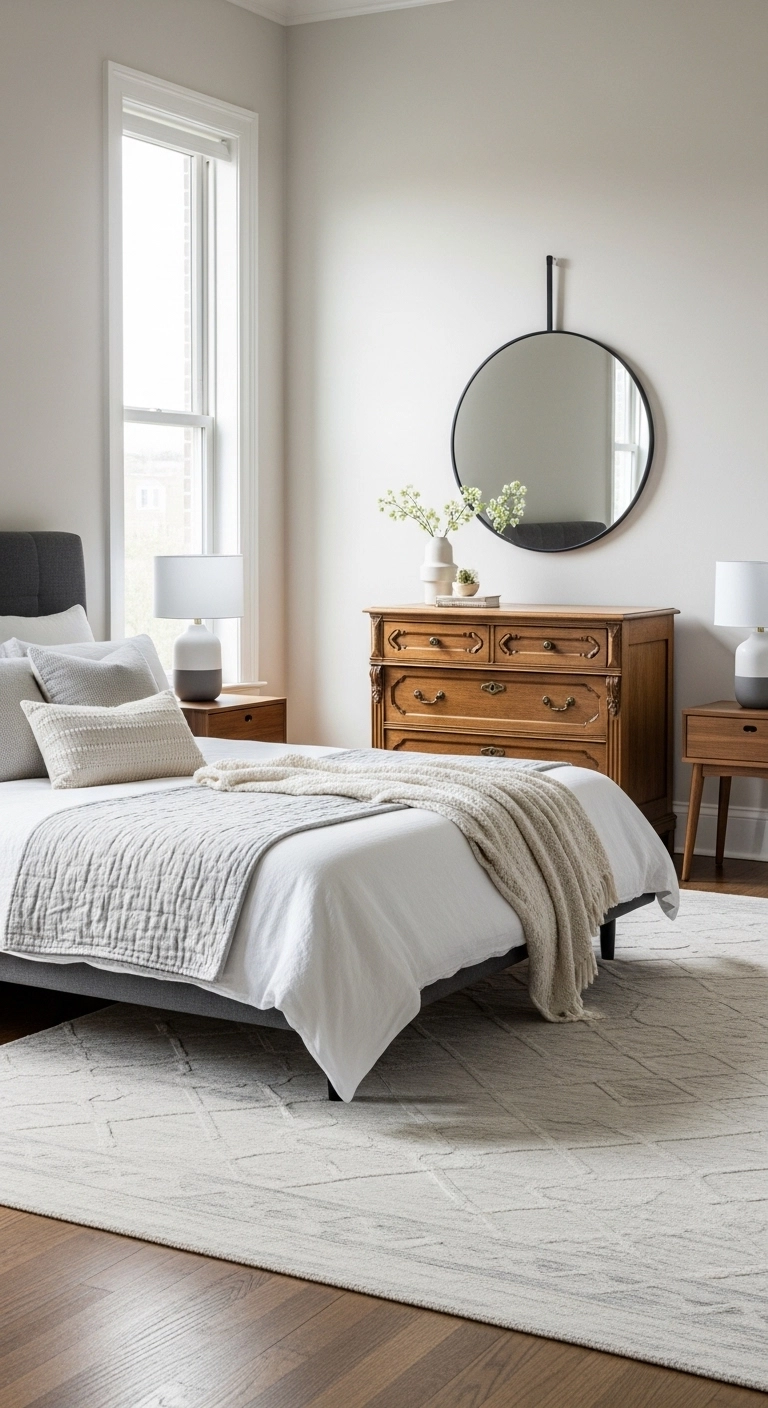
Trying to buy a matching bedroom set is one of the fastest ways to overspend. It can also make the room look less interesting. A better approach is to mix what you already own with one or two updated pieces.
For example, you might keep your dresser but swap the hardware. You might pair a simple modern lamp with an older wooden nightstand. You might repaint a worn chest and place it next to a cleaner, more streamlined bed frame. That kind of mix gives the room character without making it feel chaotic.
The key is to repeat one or two elements so the room still feels connected. That might be a common wood tone, black metal accents, or a consistent palette of soft neutrals and earthy colors.
This approach saves money because you stop chasing a full-room replacement and start improving what is already there.
Use Peel-and-Stick Details Where They Actually Matter
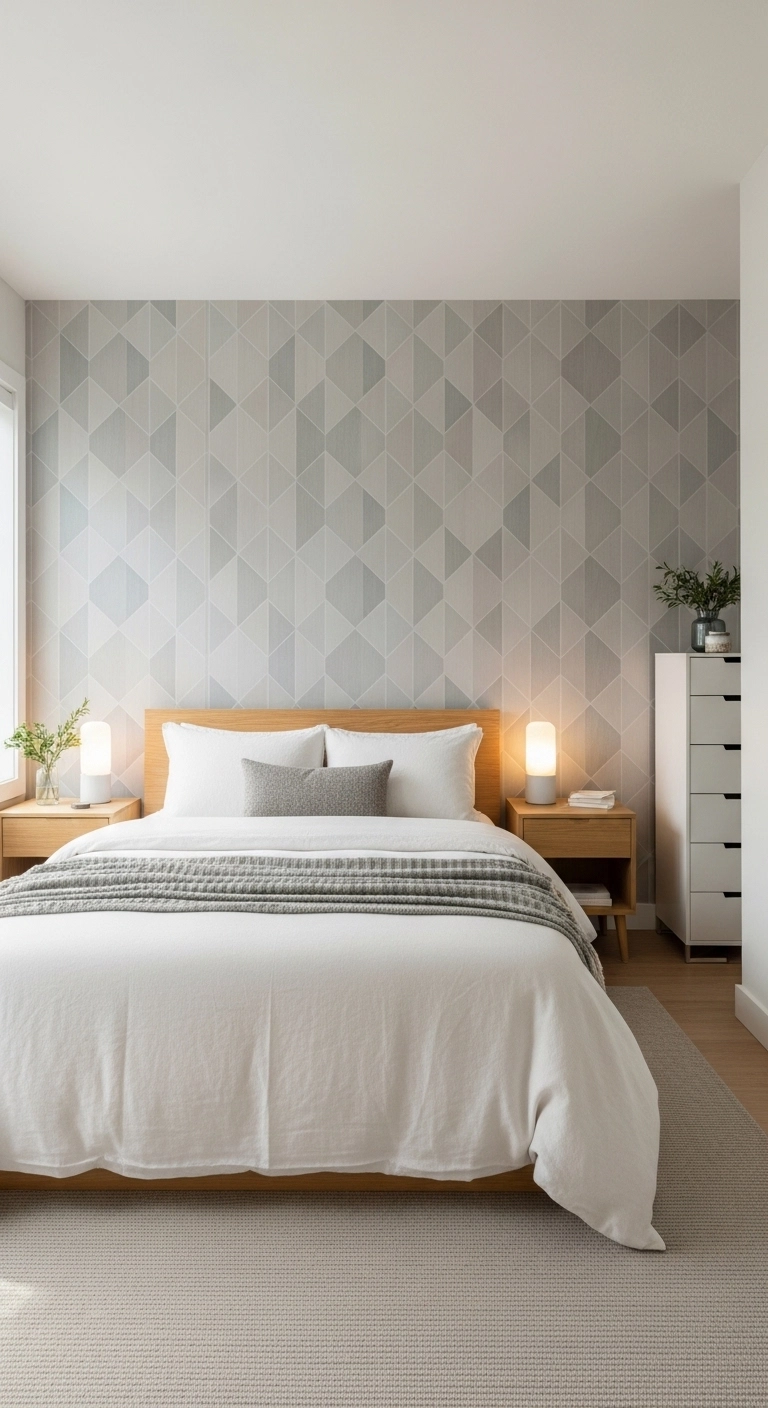
Peel-and-stick products can be helpful, but only when used with restraint. A full room covered in trendy patterns can look busy fast. Used in the right place, though, these products can give a plain bedroom some much-needed structure.
Good areas to use them include behind the bed, inside a small nook, on a plain dresser front, or as a subtle ceiling detail in a simple room. Stick to designs that feel calm and easy to live with. Soft stripes, textured neutrals, gentle botanicals, and understated geometric patterns tend to age better than loud prints.
The goal is not to make the room look dramatic for one photo. It is to add enough visual interest that the room feels designed without becoming tiring.
Renters especially benefit from this idea because it offers a temporary change with real visual payoff.
Add a Rug That Connects the Whole Room
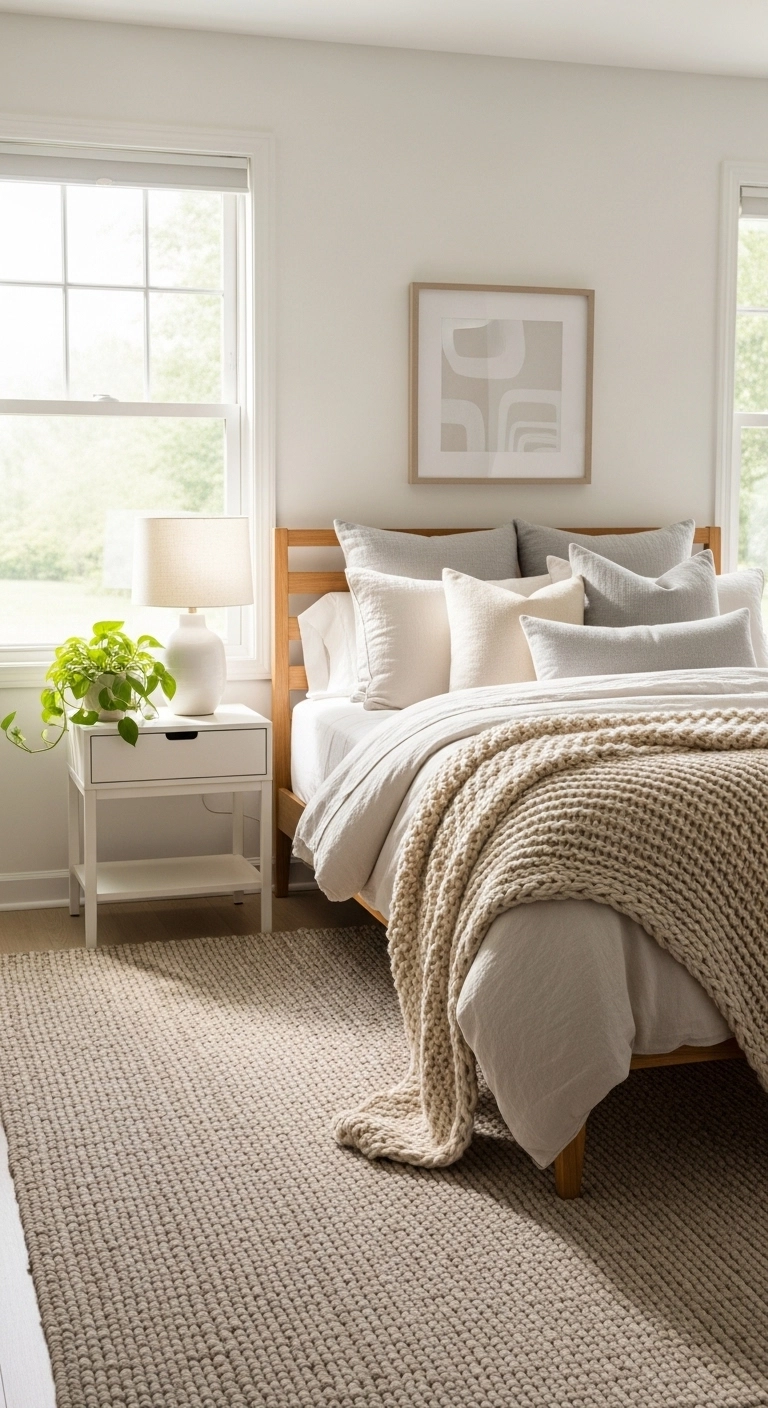
A bedroom rug does more than warm up the floor. It helps connect the bed, furniture, and open space into one room instead of a collection of separate items.
If the room feels disconnected, a rug can solve that faster than new furniture. The right size matters. A rug that is too small can make the room feel awkward. In many bedrooms, placing a larger rug partially under the bed works best because it anchors the biggest item in the room and softens the walking area around it.
You don’t need an expensive wool rug to get the effect. Flatweave, washable rugs, and low-pile synthetic styles can look good if the color and size are right. Go for patterns or tones that hide the clothing and support the rest of the palette.
This is one of the most practical affordable bedroom ideas because it adds comfort and visual structure at the same time.
Style the Nightstands Like They Belong in the Room
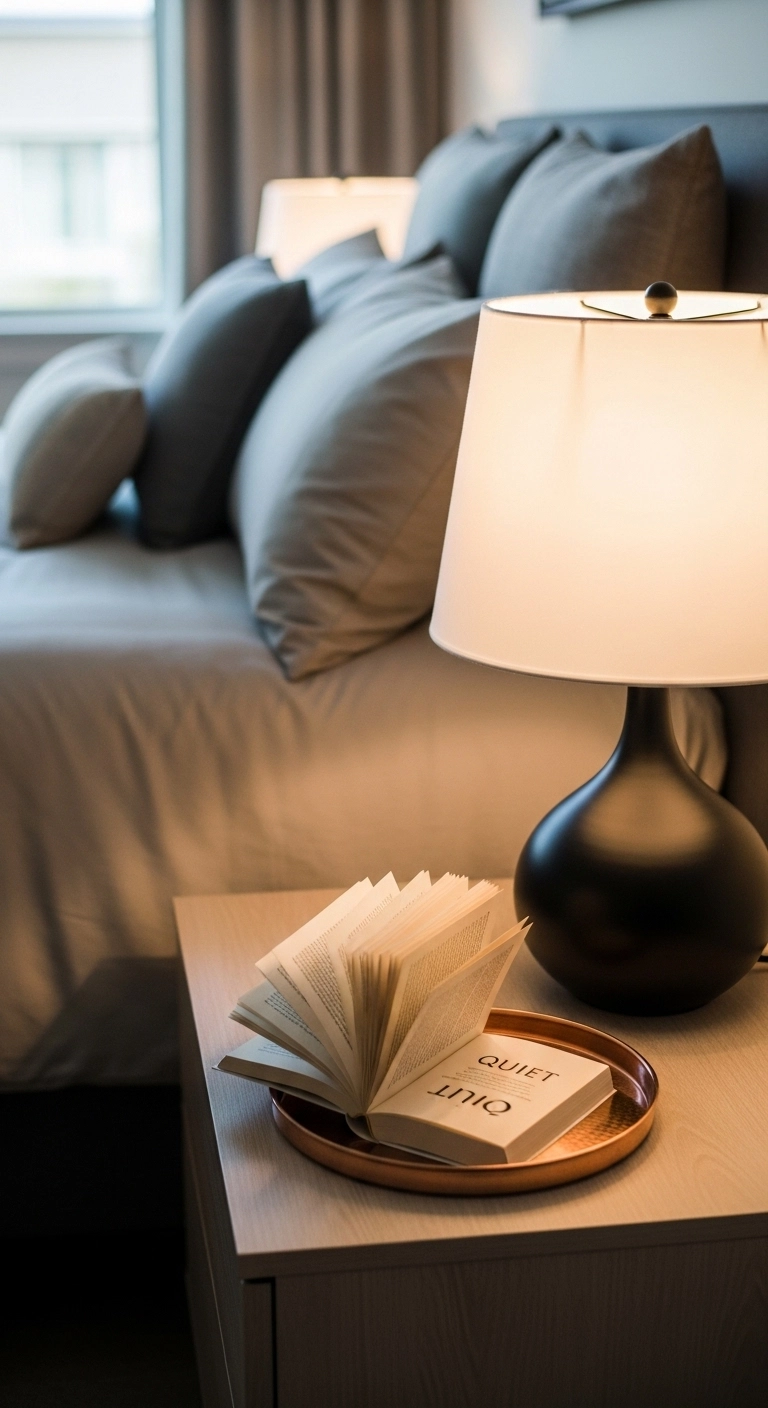
Nightstands often become dumping grounds for chargers, receipts, lip balm, water glasses, and whatever landed there last. Even a nice bedroom starts to look messy when these surfaces are out of control.
You do not need expensive styling objects. You just need a little discipline. A lamp, one book, a small tray, and maybe one decorative object is usually enough. If you need everyday items nearby, contain them in a box, basket, or drawer organizer.
The main idea is to make the surfaces feel calm. Bedrooms always look more stylish when the eye can rest. A small amount of order goes much further than a shelf full of decorative pieces.
If your existing nightstands look tired, paint them or change the knobs before replacing them. Small improvements often do enough.
Bring in Texture Through Soft, Inexpensive Layers
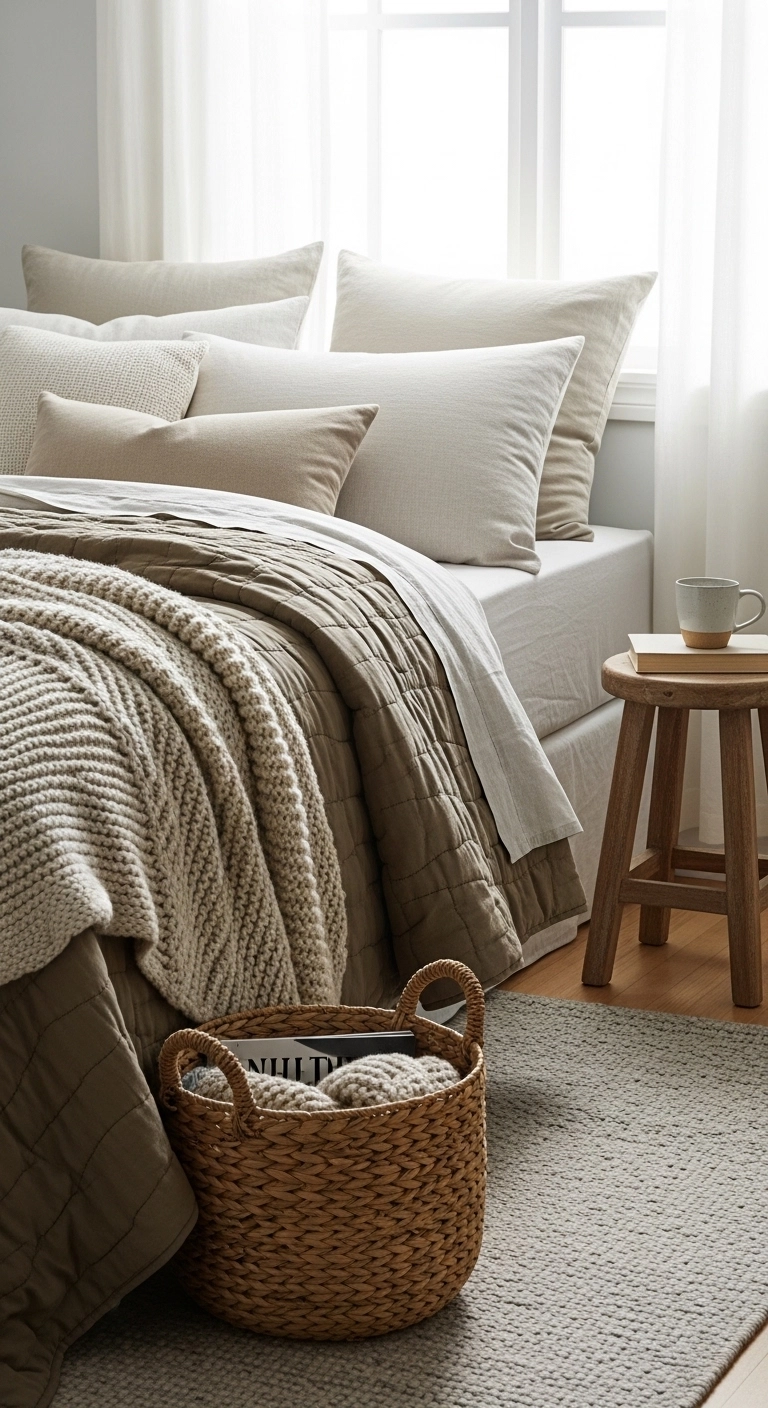
A bedroom without texture often feels unfinished even when the furniture is decent. Texture gives the room warmth and helps simple spaces feel more considered.
This does not mean adding random objects. It means using materials that make the room feel softer and more balanced. A knit throw, woven basket, quilted coverlet, linen-look pillow, wooden stool, or textured lampshade can all help.
The best budget rooms usually rely on this trick. They keep the base simple, then add depth with a few layers that look and feel good. This approach works better than filling the room with decorative clutter because texture adds comfort without demanding attention.
When shopping, look for contrast. If the bedding is smooth, add something woven. If the furniture is mostly wood, bring in softer fabrics. That balance is what makes the room feel complete.
Use Wall Art in a Bigger, Smarter Way
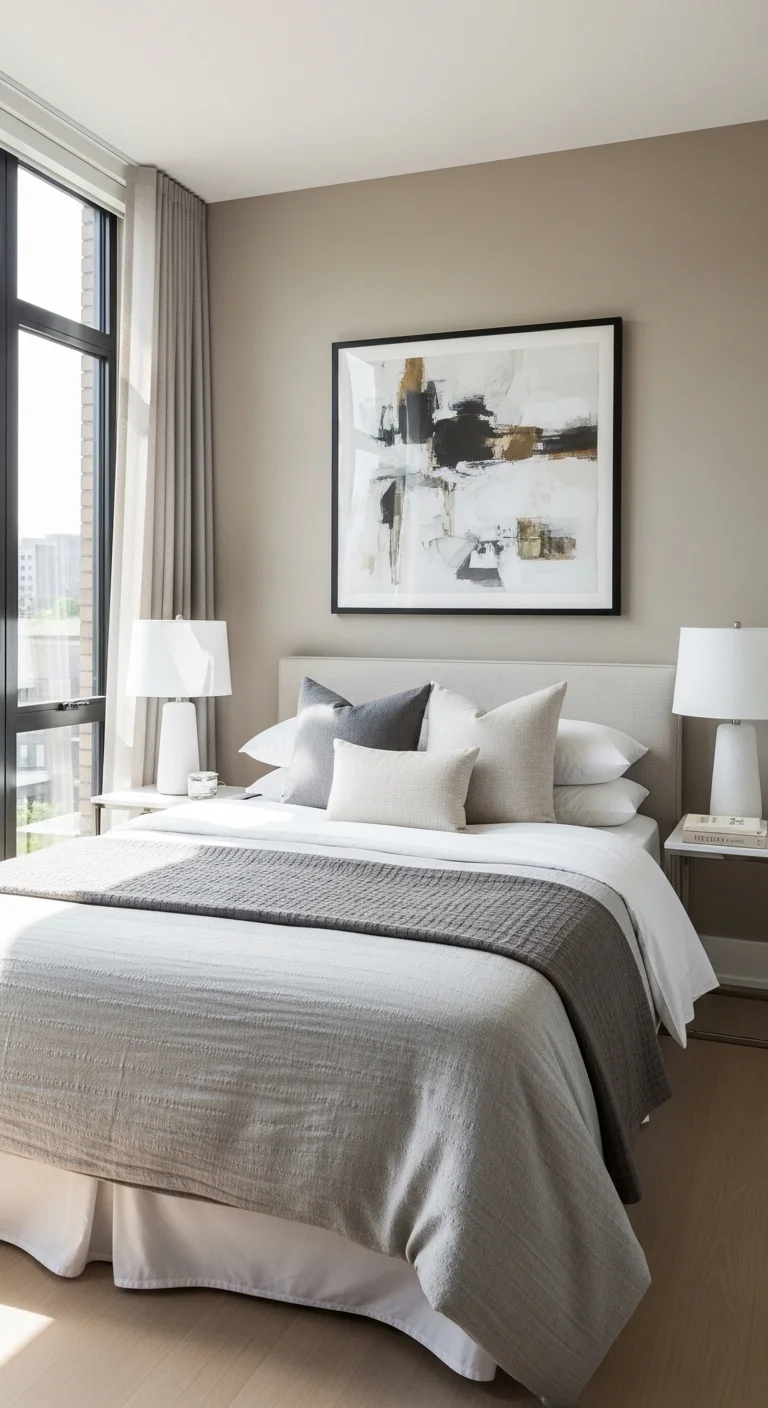
Small wall art scattered across a room can make a bedroom feel busy without really helping it. A better low-cost move is to use one larger piece, or group a few prints so they read as a single visual feature.
Art does not need to be expensive to work. Framed printable art, black-and-white photography, fabric panels, simple abstract prints, or even a well-mounted textile can add style without stretching the budget.
Keep scale in mind. A tiny frame above a queen bed usually looks lost. Something wider, taller, or grouped with intention will make more impact. The art should support the room, not just fill an empty patch of wall.
If you are not sure what style to choose, start with quieter pieces in colors already present in the bedding or curtains. That keeps the room feeling connected rather than random.
Improve Storage So the Room Stays Stylish
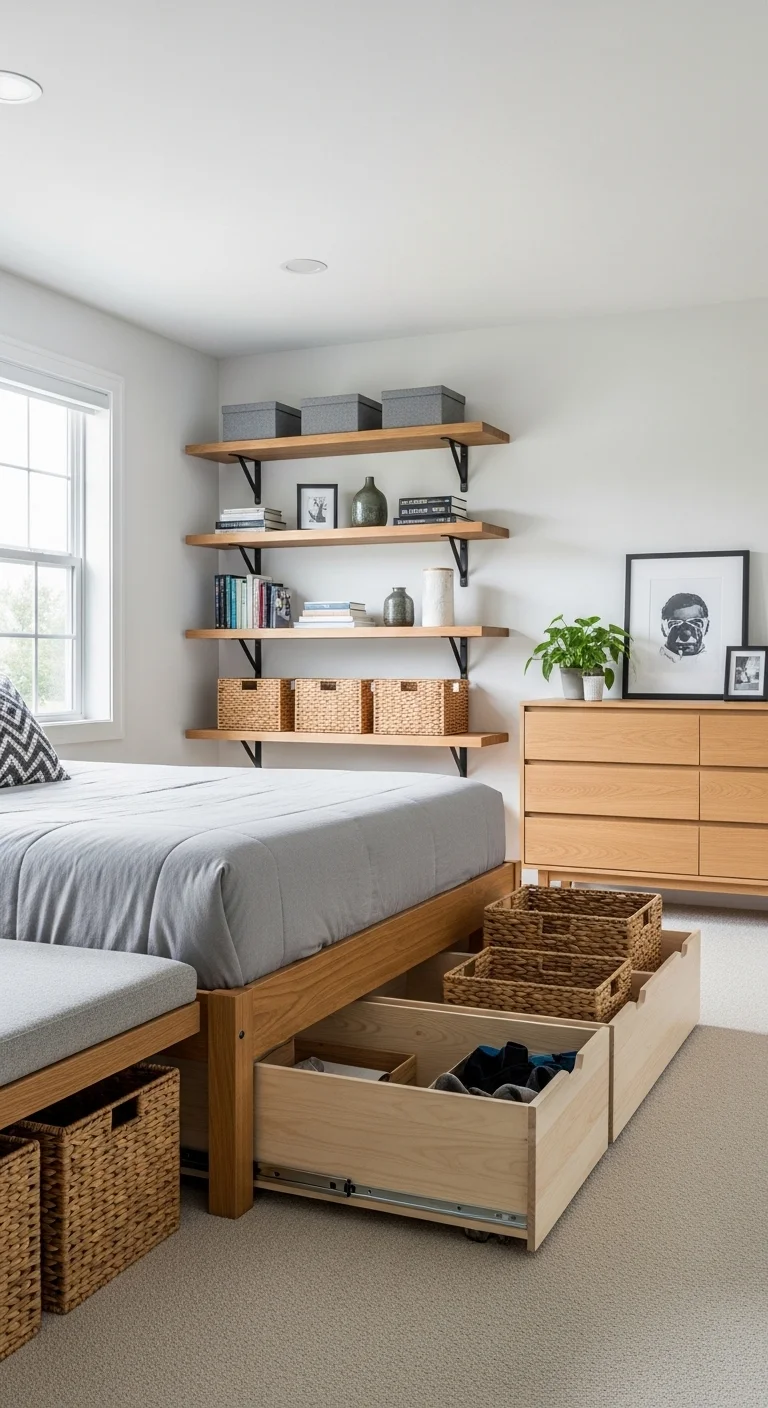
A stylish bedroom that never stays tidy is not really working. One of the cheapest ways to improve the look of your room is to improve where everyday items go.
Under-bed storage is useful for off-season clothes, spare bedding, and shoes. Matching baskets can hide loose items on shelves. Drawer dividers make dressers work better. A bench with storage at the foot of the bed can also earn its keep in a small space.
Storage matters because clutter changes how the whole room feels. Even well-designed bedrooms look less attractive when too many things are visible. Good storage does not have to be fancy. It just needs to be practical enough that you actually use it.
In many cases, the most affordable upgrade is not decorative at all. It is creating a place for the mess before it spreads.
Rearrange the Layout Before Buying More Furniture
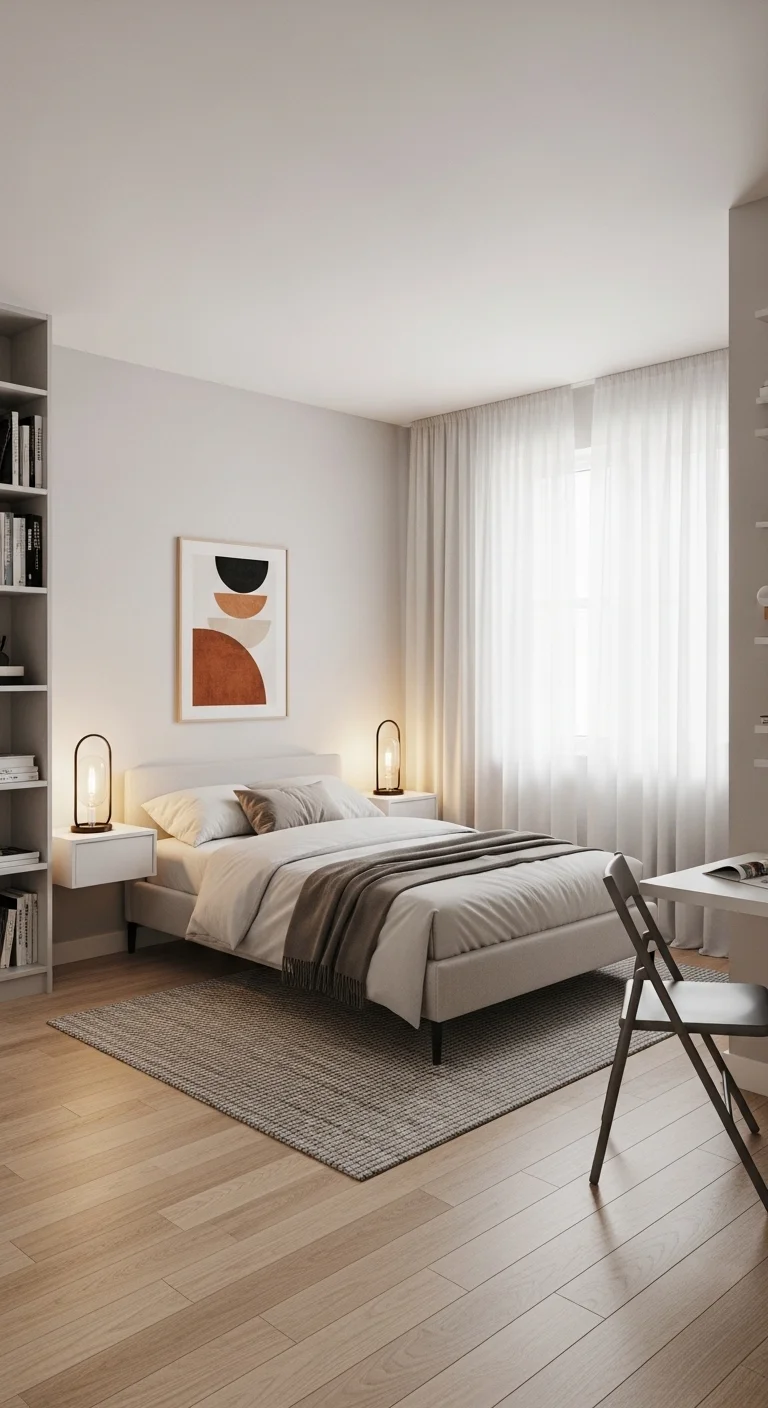
Sometimes a bedroom feels wrong because the layout is working against you. Before buying another item, step back and see whether the room is simply arranged poorly.
Start with the bed. This should usually be the obvious focal point. Then make sure there is adequate walking space on the central sides. Avoid pushing too many pieces against each wall if it makes the room feel crowded. In a small bedroom, well-placed, fewer pieces almost always look better than more squeezed-in pieces.
You may also find that one chair, bench, or extra table is making the room harder to use. Removing something can improve the room just as much as adding something.
This idea costs nothing, which is exactly why it gets ignored. But layout changes can be surprisingly powerful when a room feels cramped or visually messy.
Add Personal Details That Do Not Feel Like Clutter
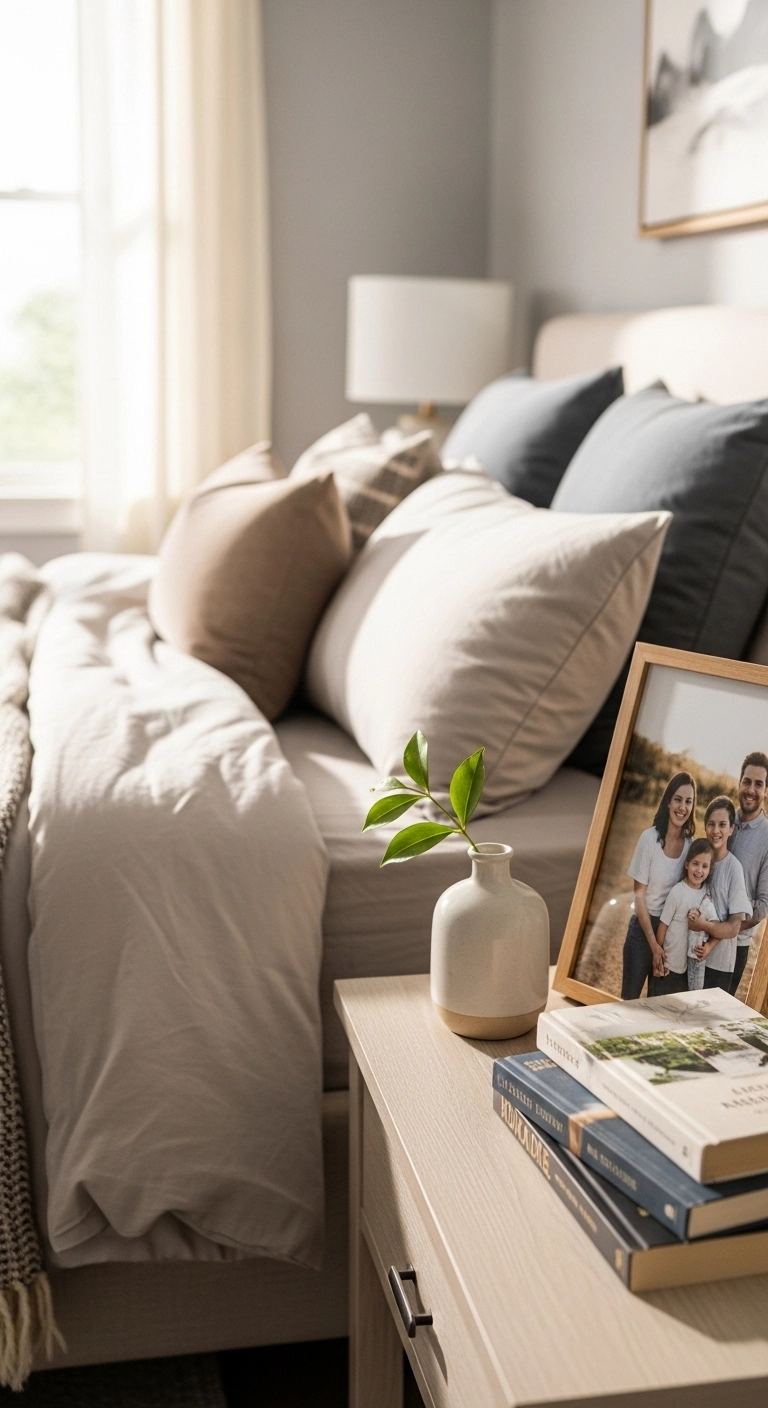
A stylish bedroom should still feel like it belongs to you. Budget decorating sometimes goes wrong when people copy a showroom look too closely and remove everything personal. The room ends up neat but flat.
The better option is to include a few details that mean something: a framed photo, a stack of favorite books, a handmade ceramic piece, a travel object, or a small vintage find. These touches give the room warmth and make it feel lived in without turning it into storage.
The key word is few. Personal does not mean crowded. A handful of meaningful items placed well will do more than shelves full of things you barely notice.
The best bedrooms usually have this balance. They feel calm and edited, but they still tell the truth about who lives there.
How to Make Affordable Bedroom Ideas Work Together
The biggest mistake people make is trying too many ideas at once without a clear plan. A better method is to build the room in layers.
Start with the biggest visual changes first: paint, bedding, curtains, and lighting. Then move to support pieces like rugs, art, and storage. After that, add texture and personal details.
This order matters because it keeps you from spending money on small decor items before the room itself is working. If the walls are tired, the lighting is harsh, and the bed looks flat, a decorative vase is not going to fix much.
A stylish budget bedroom usually comes from a handful of smart choices repeated consistently. The colors work together. The room has enough storage. The lighting feels soft. The bed looks inviting. The accessories support the room instead of competing with it.
FAQ: Affordable Bedroom Ideas
What is the cheapest way to update a bedroom?
The most inexpensive high-impact update is usually paint, followed by bedding and better lighting. These three changes affect the entire room and can make old furniture look more intentional.
How can I make my bedroom look expensive on a budget?
Focus on things that improve the overall feel of the room: layered bedding, warm lighting, full-length curtains, less clutter, and a limited color palette. A room looks more expensive when it feels calm and cohesive.
Are peel-and-stick products good for bedrooms?
Yes, especially for renters or anyone who wants a low-commitment update. They work best as accents rather than covering every surface. Use them where they add structure or interest without overwhelming the room.
What colors work best for affordable bedroom ideas in 2026?
Soft warm neutrals, muted greens, dusty blues, clay tones, and gentle off-whites work especially well. They are easy to pair with budget-friendly furniture and help the room feel current without chasing short-lived trends.
How do I decorate a small bedroom without making it feel crowded?
Keep furniture practical, use vertical space carefully, hang curtains high, choose a simple color palette, and avoid too many tiny decor pieces. A small room usually looks better with fewer items that serve a purpose.
Do I need matching furniture for a stylish bedroom?
No. In fact, mixed furniture often looks better when it is tied together with color, hardware, lighting, or repeated materials. Matching everything can feel flat, while a thoughtful mix adds personality.
Final Thoughts
The best affordable bedroom ideas aren’t about making your room look perfect. They’re about making it feel better to be in. A stylish bedroom helps you relax, think clearly, and start and end the day in a place that feels peaceful.
You do not need a full makeover to get there. Often, a fresh wall color, better bedding, softer lighting, smarter storage, and a few intentional details are enough to change the whole room. Start with the changes that fix the biggest problem, build slowly, and let the room improve in layers. That is usually how the best budget-friendly bedrooms come together.

Muskan Saleem
BukayHome shares practical home decorating ideas, room inspiration, and simple styling tips to help readers create a home they truly love.