15 Toy Storage Solutions for a Tidy Family Home
15 Toy Storage Solutions for a Tidy Family Home
A clean family home doesn’t mean a home without toys. It means a home where there is a place for toys, where there isn’t a fight about cleaning every night, and where parents don’t feel like the whole house turns into a playroom by noon. That’s a big difference.
Most toy clutter problems are not really about having too many toys. They are about having the wrong storage for the toys you already have. A big toy chest looks helpful, but it can turn into a deep mess. A shelf can look nice, but if the bins are too heavy for a child to lift, the toys end up on the floor instead. A family can work very hard and still feel behind if the system itself does not fit the way real life happens.
After years of helping families improve their homes, I’ve learned that toy storage has to do three things at once. It should make play easier, clean up easier, and make the room feel calm again when the day is done. When any one of these pieces is missing, the house never feels manageable.
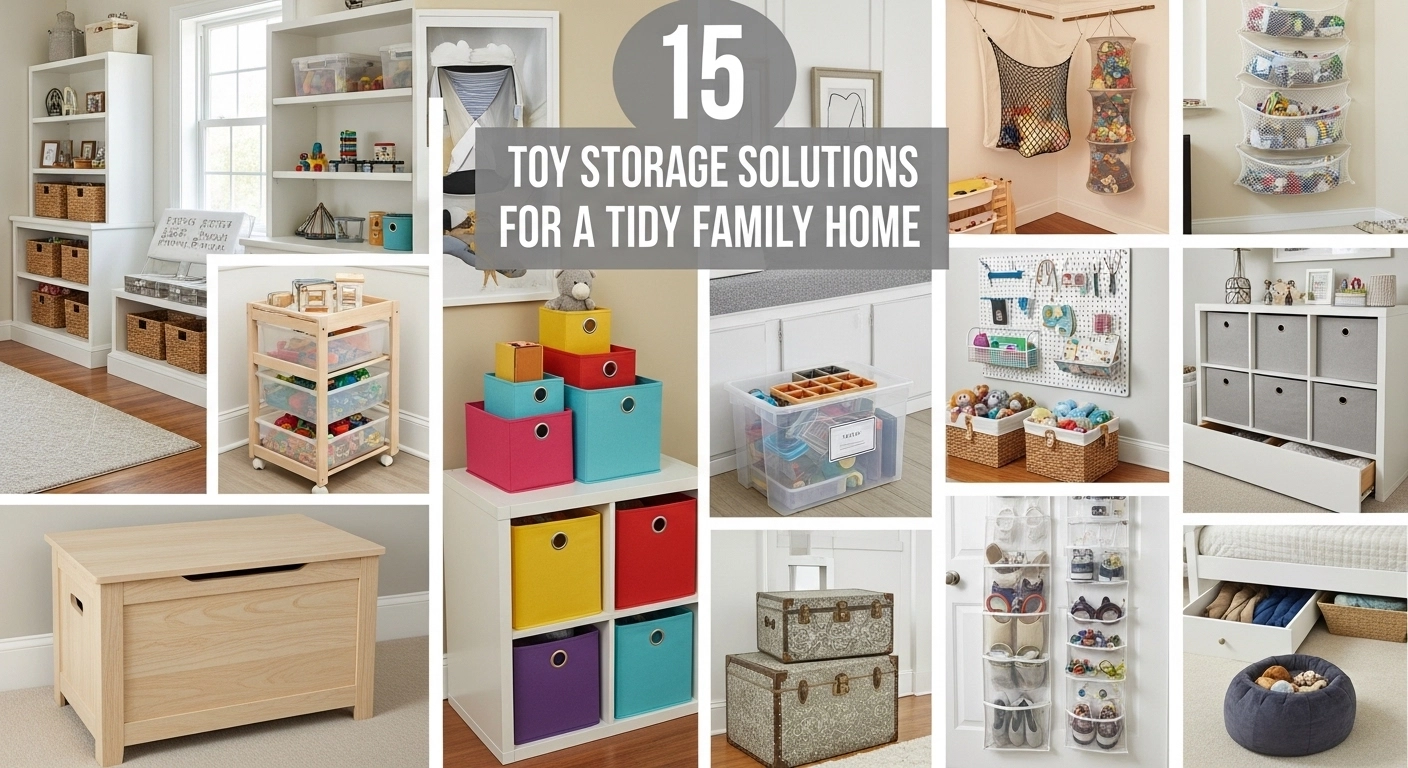
This guide shares fifteen toy storage solutions that actually help a busy family home stay tidier. These ideas work because they follow how children play, how parents clean up, and how family rooms really get used.
Start by sorting toys by how children really play
The first step is not buying bins. The first step is seeing the toys clearly. Many families store toys in ways that make sense to adults but not to children. One bin may hold random action figures, puzzle pieces, toy cars, and blocks all mixed together. That is not a storage system. That is delayed clutter.
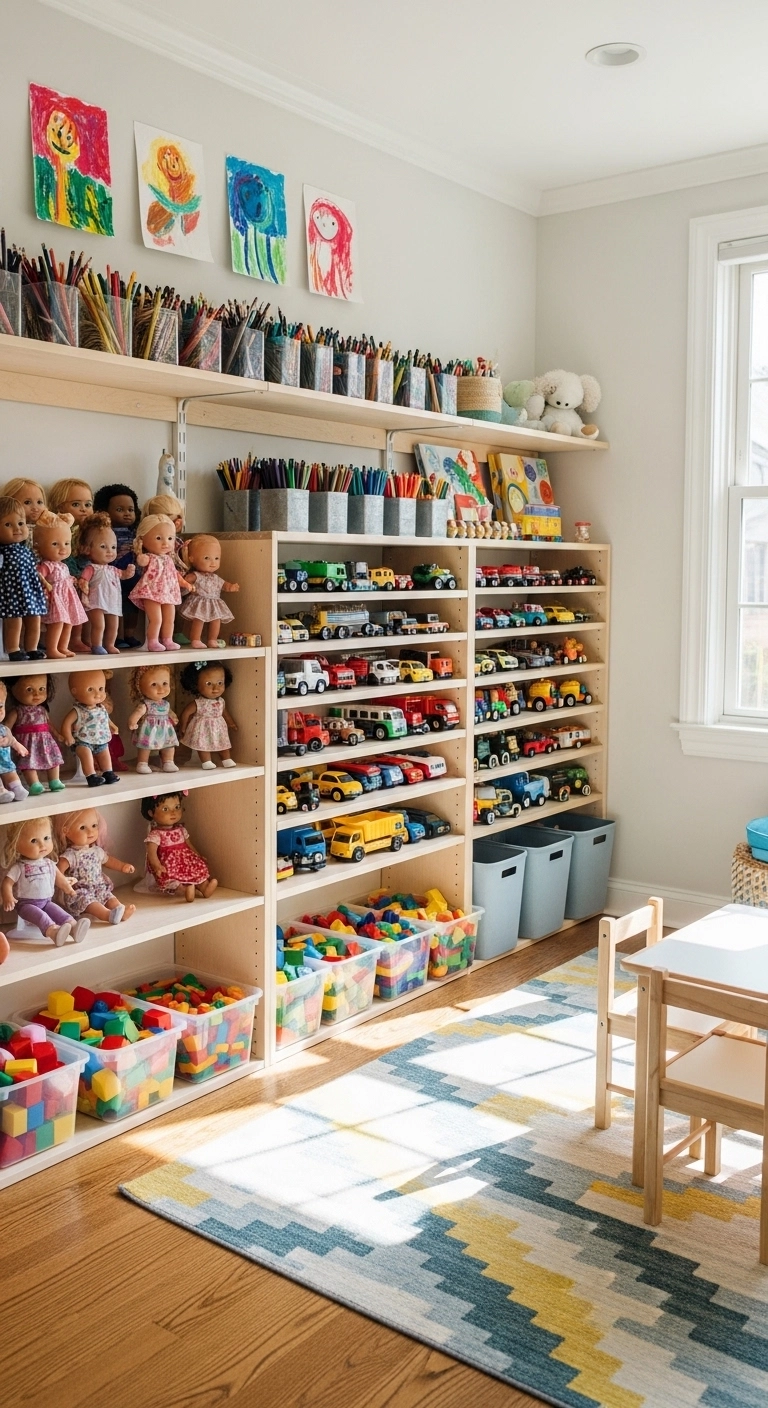
A better way is to organize toys according to how they are used. Building toys should stay together. Doll items should stay together. Art supplies should have their own area. Pretend food and kitchen play pieces should be close together. When toys are grouped by actual play, children can find what they need quickly and put it back with less help.
This matters because good storage starts with good categories. If the toy group is wrong, the storage will never work well for long. A tidy home begins with knowing what belongs together and what does not.
Keep everyday toys low enough for children to reach
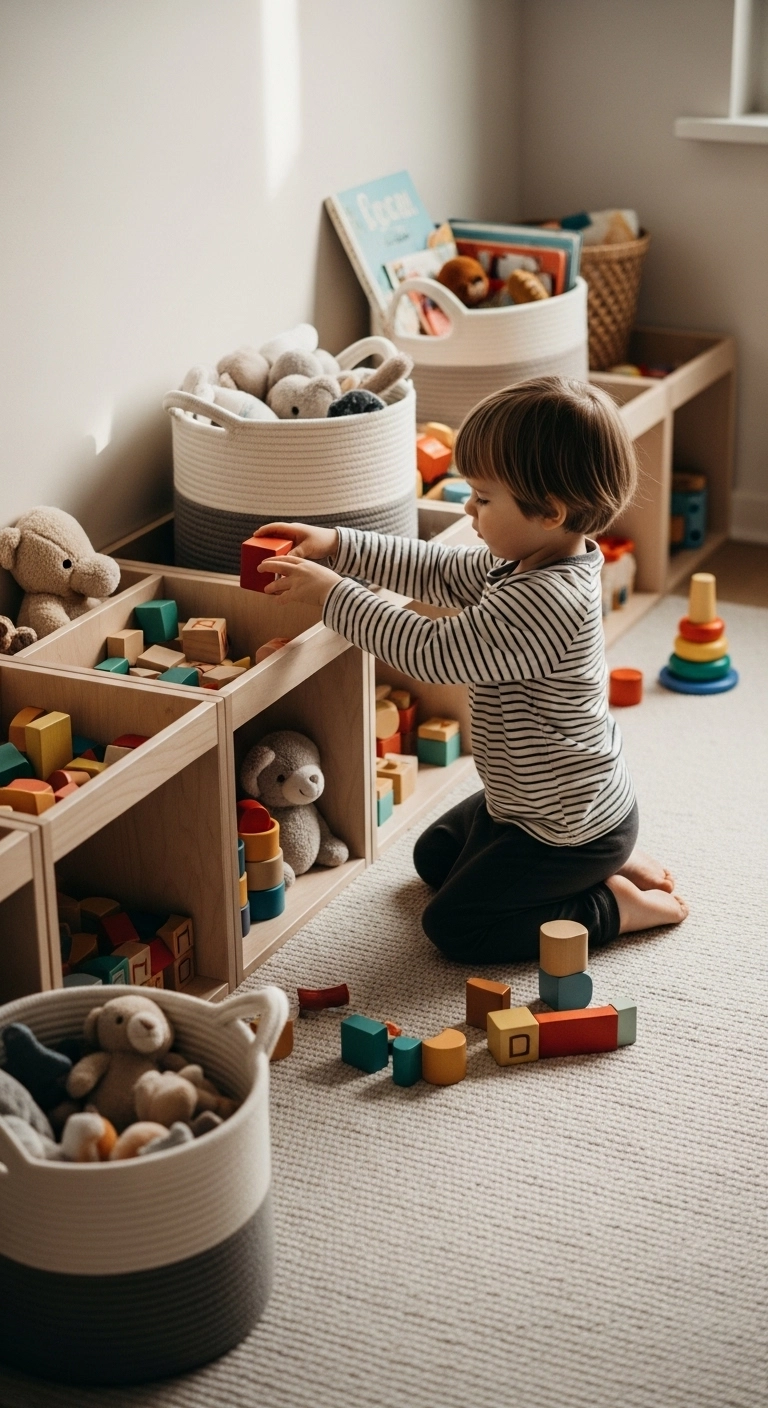
Storage should not only look neat. It should be easy for a child to use without asking for help every time. When the daily toys are stored too high, cleanup becomes an adult job. The child can pull things out, but putting them back feels hard, slow, or impossible.
Low shelves, open cubbies, and floor-level baskets work well because they match the way children walk. A child can see a toy, reach for it, and return it. This is more important than many parents think. The easier the return step is, the more likely it is to happen.
This is one of the biggest reasons some homes stay tidier than others. It is not always because there are fewer toys. It is because the children can help manage the toys they use most.
Use open bins instead of one deep toy chest
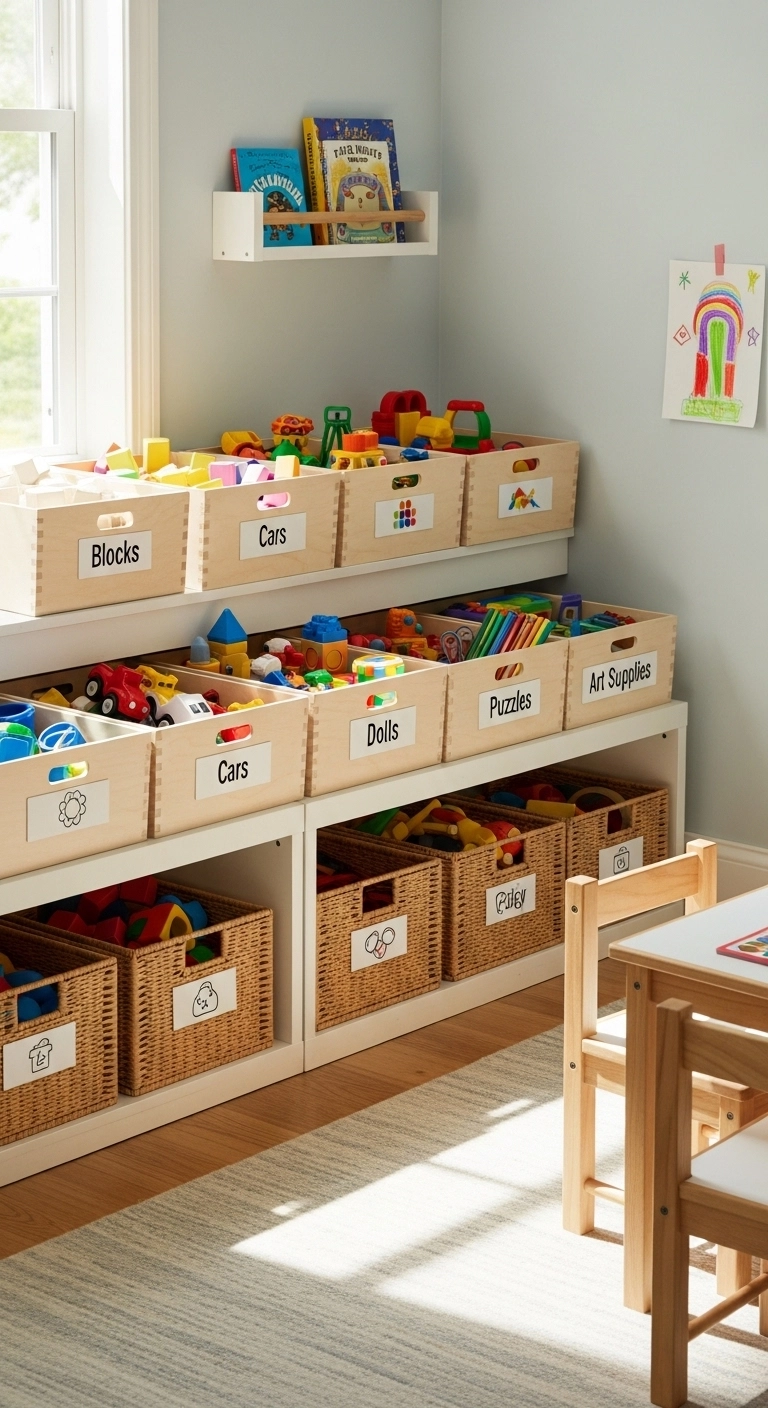
A deep toy chest may seem like a simple fix, but it often causes more mess than it solves. Small toys sink to the bottom. Kids throw the whole thing out in search of one thing. Broken toys remain hidden for weeks. By the end of the month, the chest may still look “safe,” but the room feels unmanageable.
Open bins work better because they show the limits of the space right away. You can tell when a bin is too full. Children can see what belongs there. Cleanup feels faster because the toy has a clear landing place. Shallow bins are especially useful because they keep toys from becoming one big pile.
This kind of storage may not hide everything, but it supports daily life better. In a family home, the best storage is often the kind that makes cleanup faster, not the kind that hides a problem until later.
Give small-piece toys their own simple containers
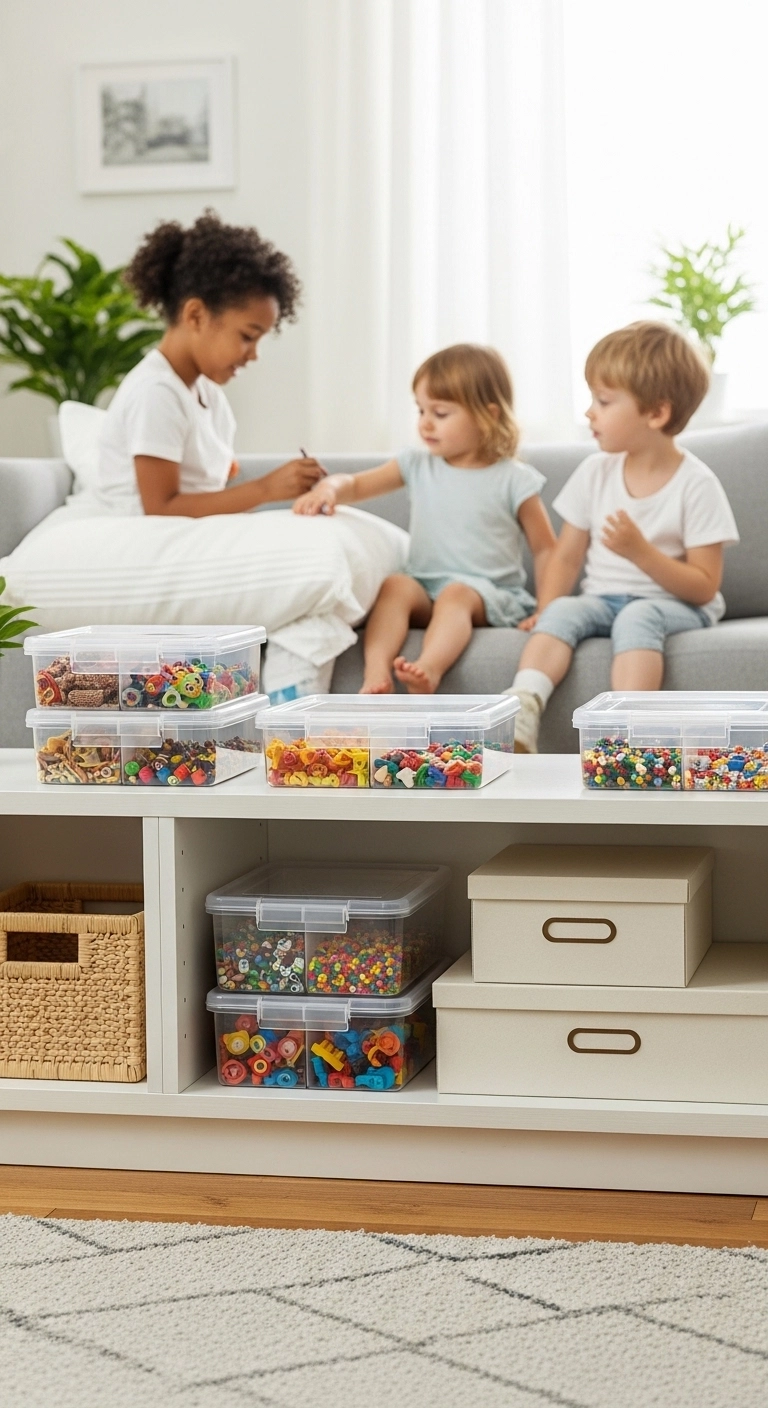
Small parts are where many tidy homes fall apart. Blocks, magnetic tiles, tiny figures, doll shoes, puzzle pieces, toy food, beads, and craft items travel fast and scatter even faster. These toys need more than a general storage basket. They need a home that keeps the set together.
Small lidded boxes, divided trays, or handled bins can work well for these toys. The goal is not to create a perfect label system for every piece. The goal is to stop tiny items from getting mixed into large toy piles. Once that happens, a family spends more time sorting than playing.
A system in place also helps children use the toy better. They can find the parts they need. They can take the complete set to a table or the floor. They can put it back when they’re done. When small toys stay complete, they’re easier to enjoy and much easier to clean.
Store toys near the place where they get used
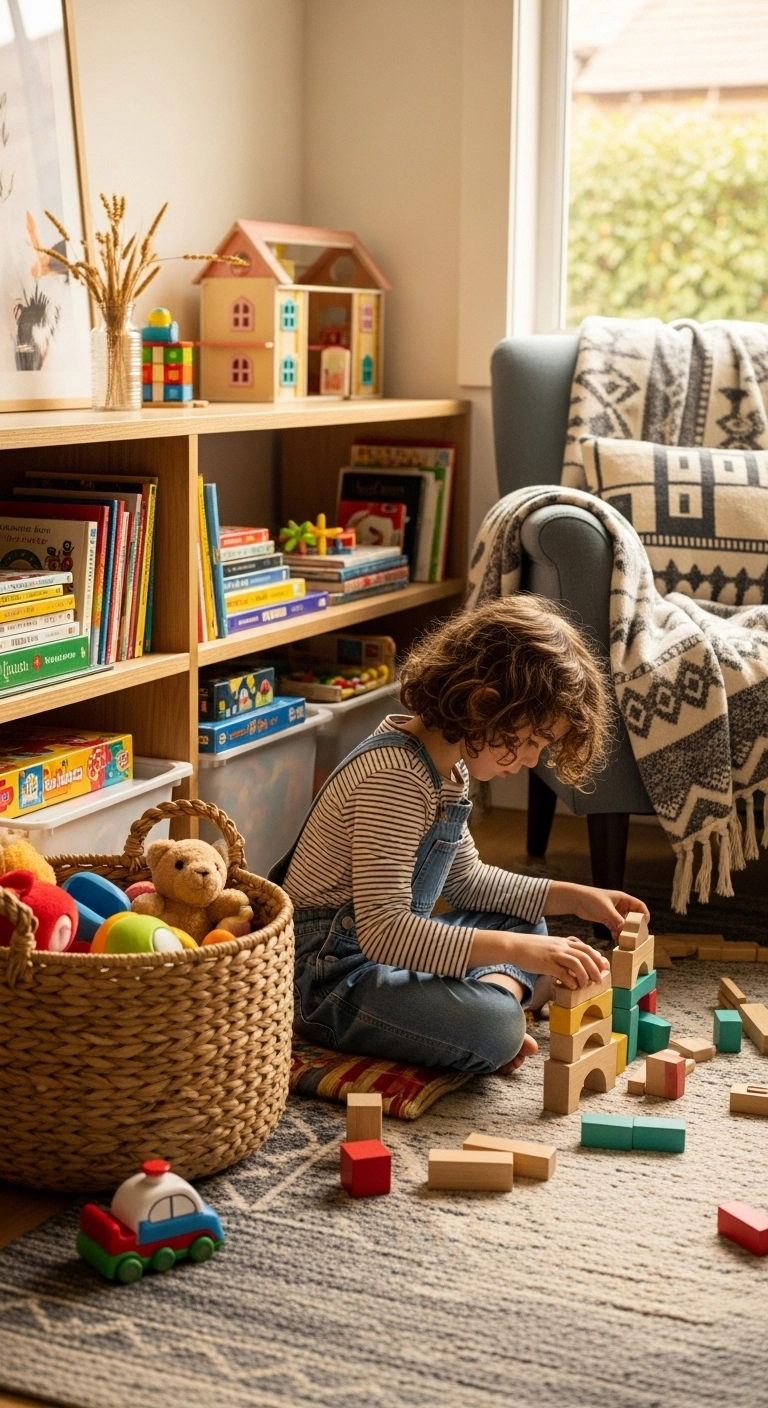
A toy can fit in a nice bin and still end up all over the house if the bin is in the wrong room. This is one of the most common problems in family homes. The child plays in the living room, but the toys are kept in the bedroom. Art is on the kitchen table, but the markers are kept in the back cupboard. Books are read on the couch, but the bookcase is upstairs.
Storage should follow use. If a child plays in the family room every day, at least some of the toys should live there. If coloring happens after school at the dining table, art supplies should be easy to grab from nearby. When storage matches the place of play, toys stop drifting so far.
This does not make the home messier. It often makes it cleaner because each area finally has its own small system. Toys are less likely to end up everywhere when they have a real home close to where they are used.
Use furniture that hides toys in shared rooms
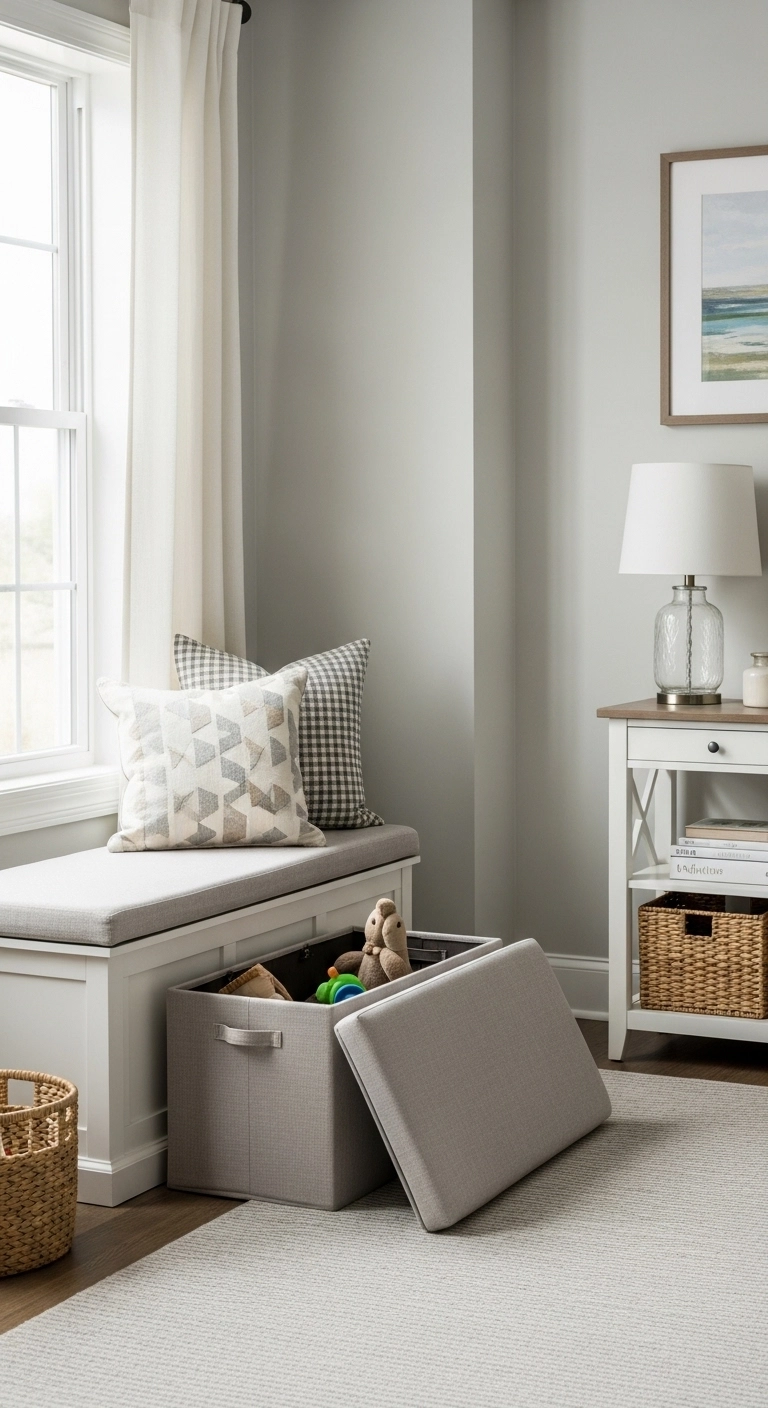
Not every family has a playroom. In many homes, toys live in the same rooms where adults relax, eat, and welcome guests. That means toy storage needs to work with the room instead of taking over the room.
Storage benches, lidded ottomans, sideboards, and low cabinets can be a great help in these spaces. They hide visual clutter while keeping toys close at hand. A few baskets under a console table can also work well when the room needs a lighter look. The point is to allow the room to return to a calm feeling at the end of the day without forcing all the toys to retreat to a distant room.
This kind of storage matters because shared rooms need a little visual quiet. A tidy family home is not one where children leave no trace. It is one where the traces can be reset without too much effort.
Create a small book zone instead of mixing books with toys
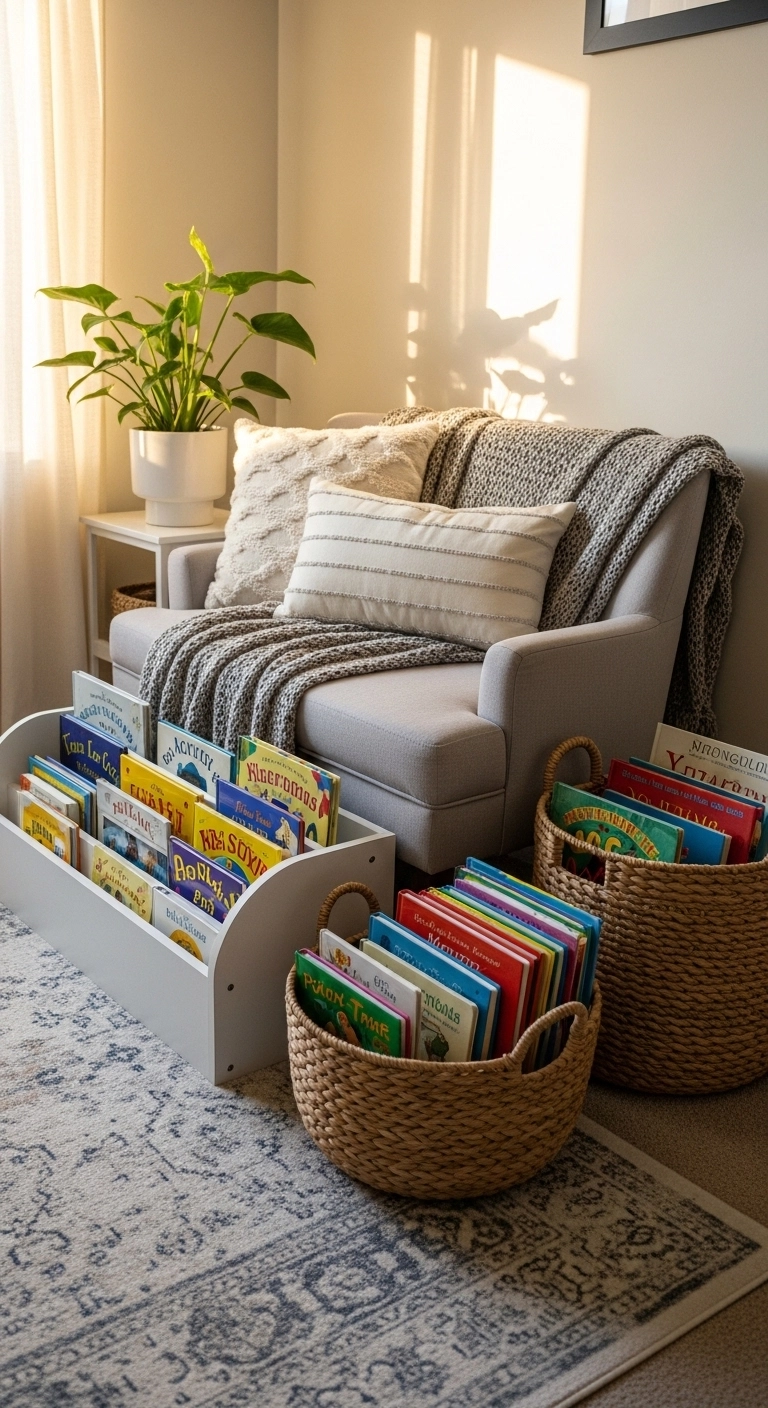
Books often get treated like toys and tossed into the same bins. That usually leads to bent covers, torn pages, and book piles under beds or sofas. Books need their own place. They are used differently and should be stored differently.
A front-facing bookshelf, low ledge, or simple basket just for books can make a big difference. Children are more likely to choose books when they can see the covers. Parents are more likely to return them when there is one clear place for them. A book zone also helps the room feel more settled because books stop drifting through every corner of the house.
This does not need to be fancy. A small basket beside the sofa or bed can be enough. What matters is giving books a separate home so they stop getting buried under louder toys.
Rotate toys instead of keeping everything out at once
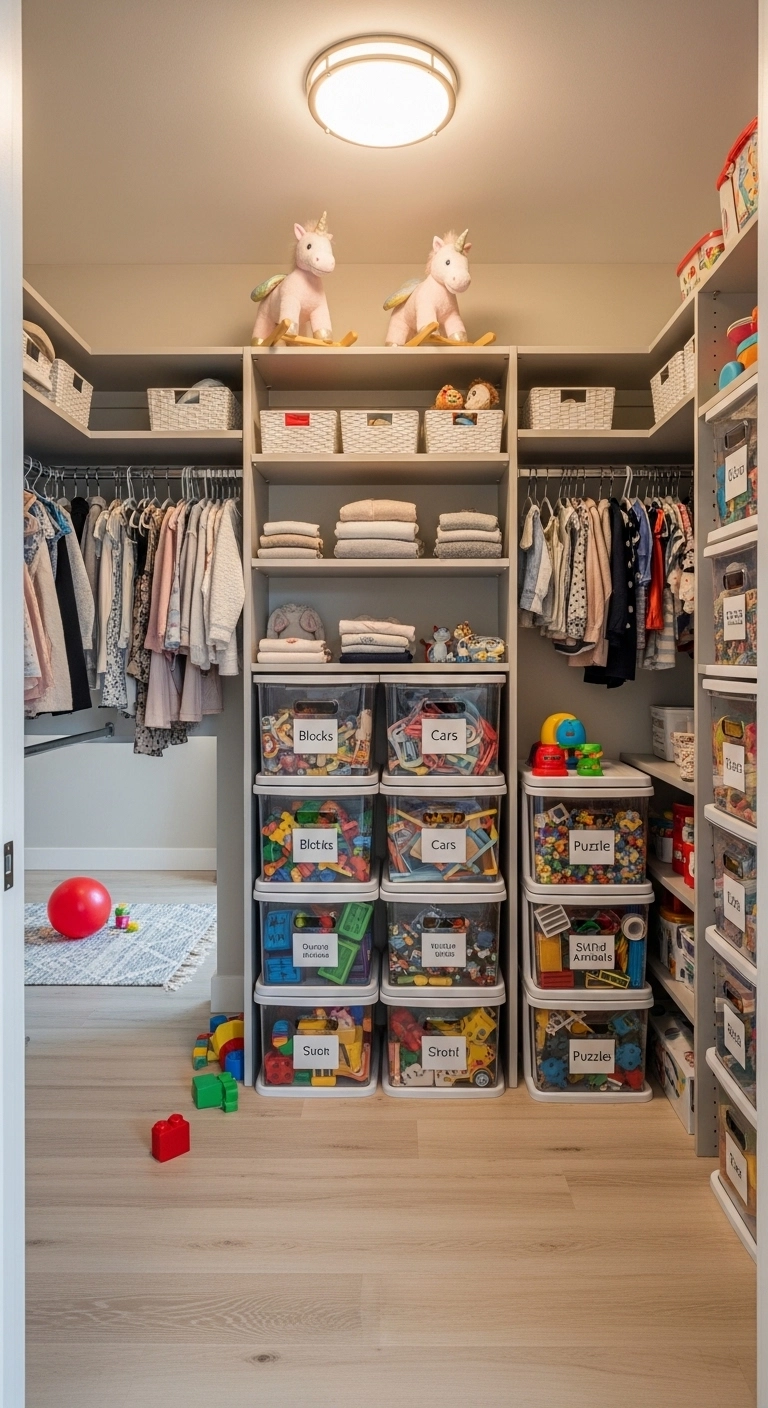
One of the best storage solutions isn’t really about storage. It’s about organization. When every toy is out there and available at all times, the house feels cluttered, shelves feel busier, and cleaning takes longer. Kids also tend to play less deeply when there are too many choices in front of them.
Toy rotation helps because only part of the collection stays out at one time. The rest can be stored in a closet, on a high shelf, or in labeled bins somewhere out of sight. After a week or two, some toys can be swapped. Suddenly the room feels lighter, and the “new” toy feels interesting again.
This solution works especially well in smaller homes. It reduces the amount of visible clutter without forcing families to get rid of toys they still want to keep. A tidy room is often not the room with the least amount of stuff. It’s the room with the right amount of stuff at one time.
Use labels that make sense for both adults and children
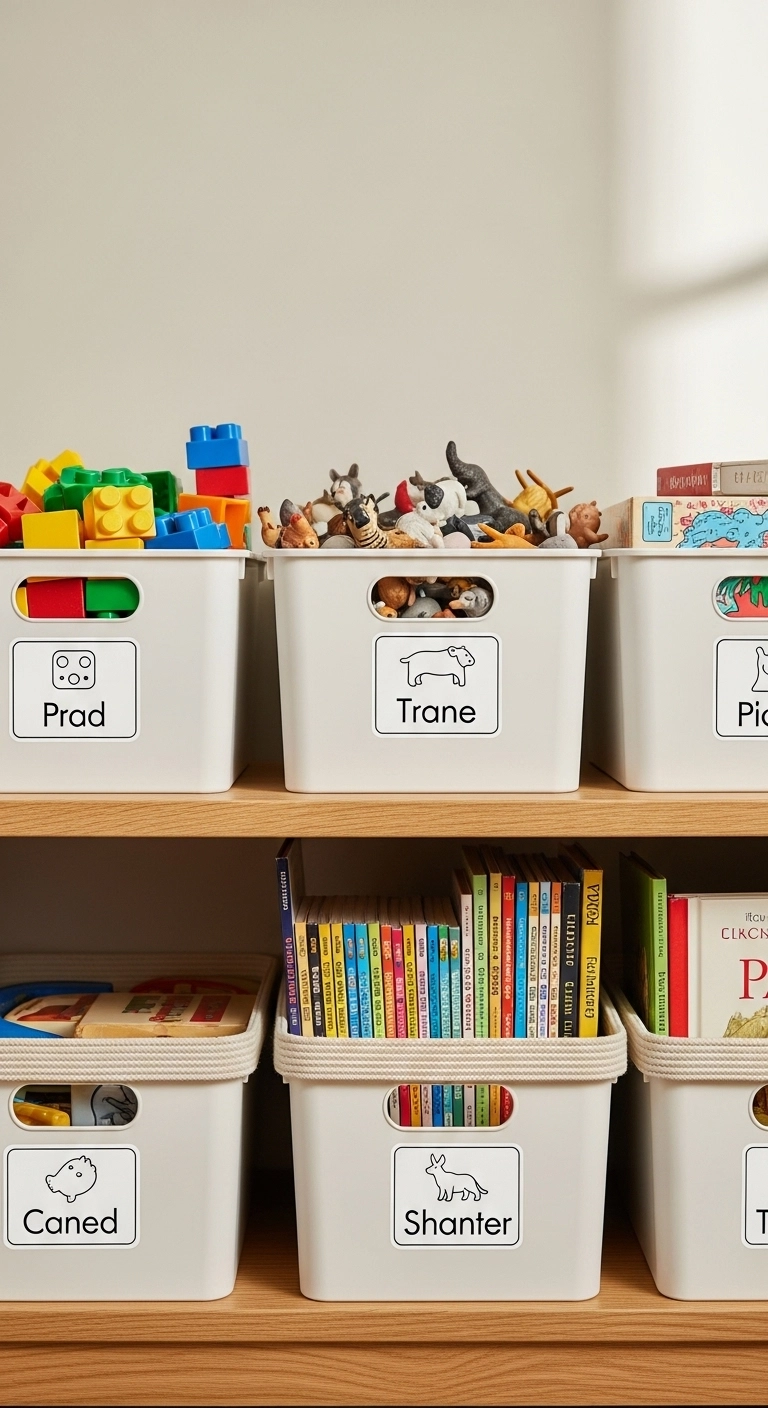
A storage system only works well if people can follow it when they are tired, rushed, or distracted. That is why labels matter. A label does not have to be fancy. It just needs to make the home easier to reset.
For younger children, picture labels can help. A picture or simple image on the box shows what’s in there. For older children, clear word labels can work well. For adults, labels take the guesswork out of it. When everyone knows where the blocks go and where the animal figures go, cleanup becomes less of an argument.
The best labels are easy to read and honest about what the bin holds. A tidy family home runs better when storage is clear enough that another adult, a grandparent, or a babysitter can help put things back without asking questions.
Make cleanup easier with “one move” storage
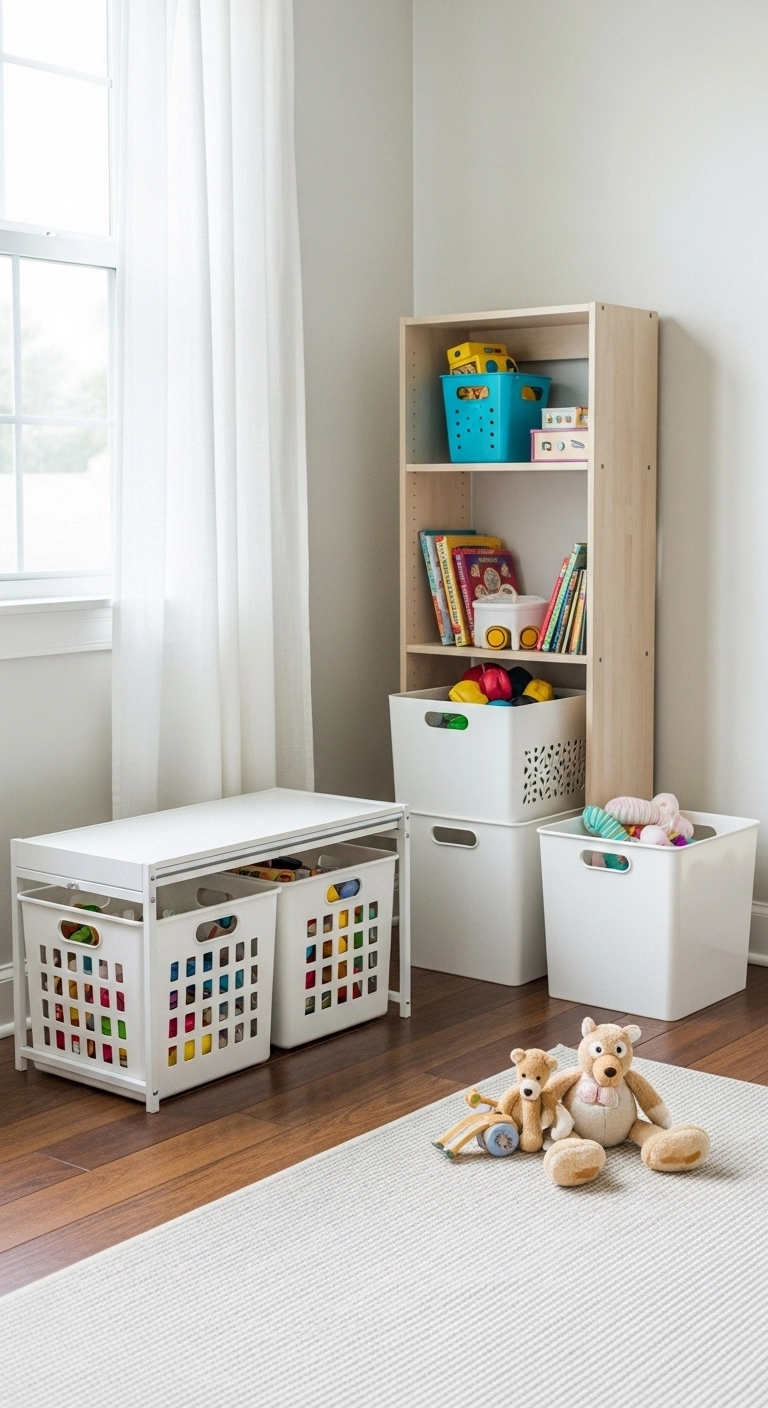
Some storage systems look great but require too many steps. A child has to open a lid, lift a tray, remove a basket, arrange the parts, and slide the unit back in. That’s too much for everyday cleaning. The more steps a system requires, the less likely it is to be used well.
One-move storage works better. A child should be able to scoop toys into a bin, slide a basket into a cubby, or place books in a basket with one easy action. Parents should be able to reset a room in a few minutes, not half an hour. This may sound obvious, but many beautiful storage systems fail because they are too slow for real life.
The right toy storage should respect the end of the day. Families are tired then. The best systems understand that and make the last cleanup feel as light as possible.
Give bulky toys a home that does not block the room
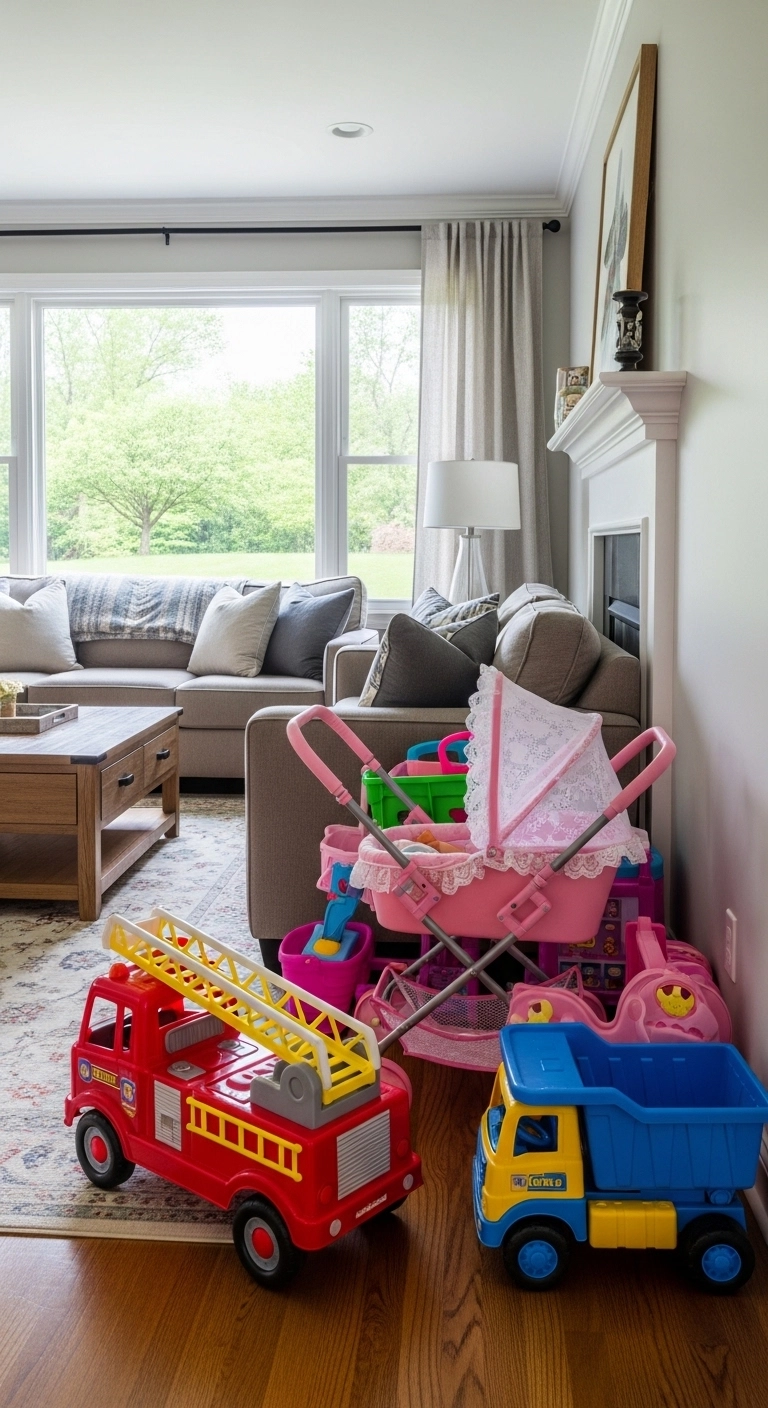
Large toys bring a different kind of clutter. Ride-on toys, doll strollers, play kitchens, large trucks, and floor puzzles can take over a room fast if they do not have a place to return to. They cannot be shoved into small baskets, so they need their own plan.
A wall area, an open corner, or a space behind a sofa can work as a parking zone for these items. The main idea is to stop bulky toys from floating in the center of the room. Even a tidy room will feel messy if large toys are left where people walk around them all day.
This is where room layout and storage come together. Some toys need a bin. Others need a parking space. When both types of storage are present, the room becomes easier to use and easier to clean.
Turn closets into working toy storage, not mystery zones
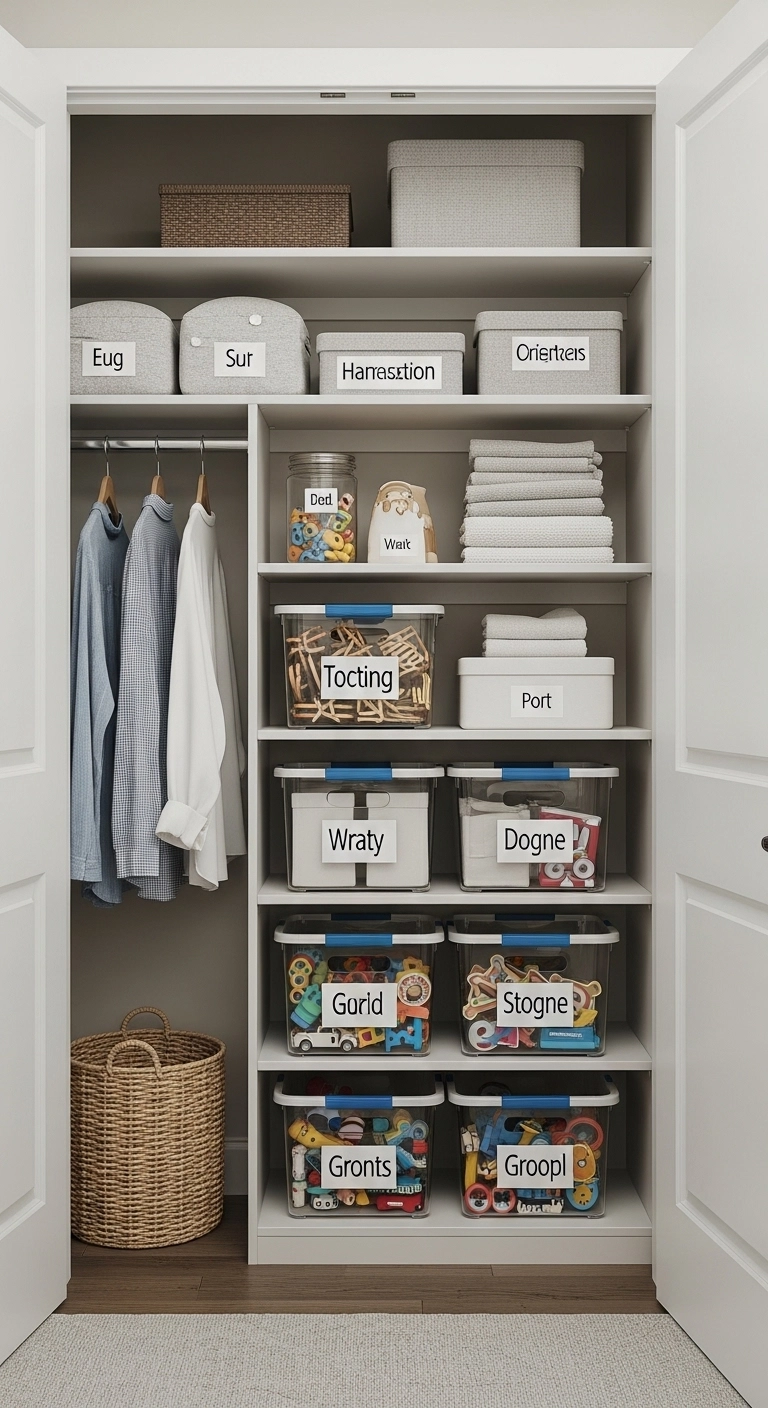
The closet often becomes a place where toy clutter hides. Bags pile up, boxes get pushed back, and within a few months no one knows what’s in there. A closet can be much more useful if it’s given a little structure.
A few shelves, clear bins, and grouped categories can turn a closet into very strong toy storage. This is a good place for rotated toys, games with small parts, special craft supplies, or noisy toys that do not need daily access. The key is to stop the closet from becoming a giant holding zone for everything that does not fit elsewhere.
A good closet setup helps the entire home because it supports the rest of the system. Everyday toys stay out and easy to reach. Extra toys stay safe but still visible and easy to find when needed.
Keep art and craft supplies separate from general toys
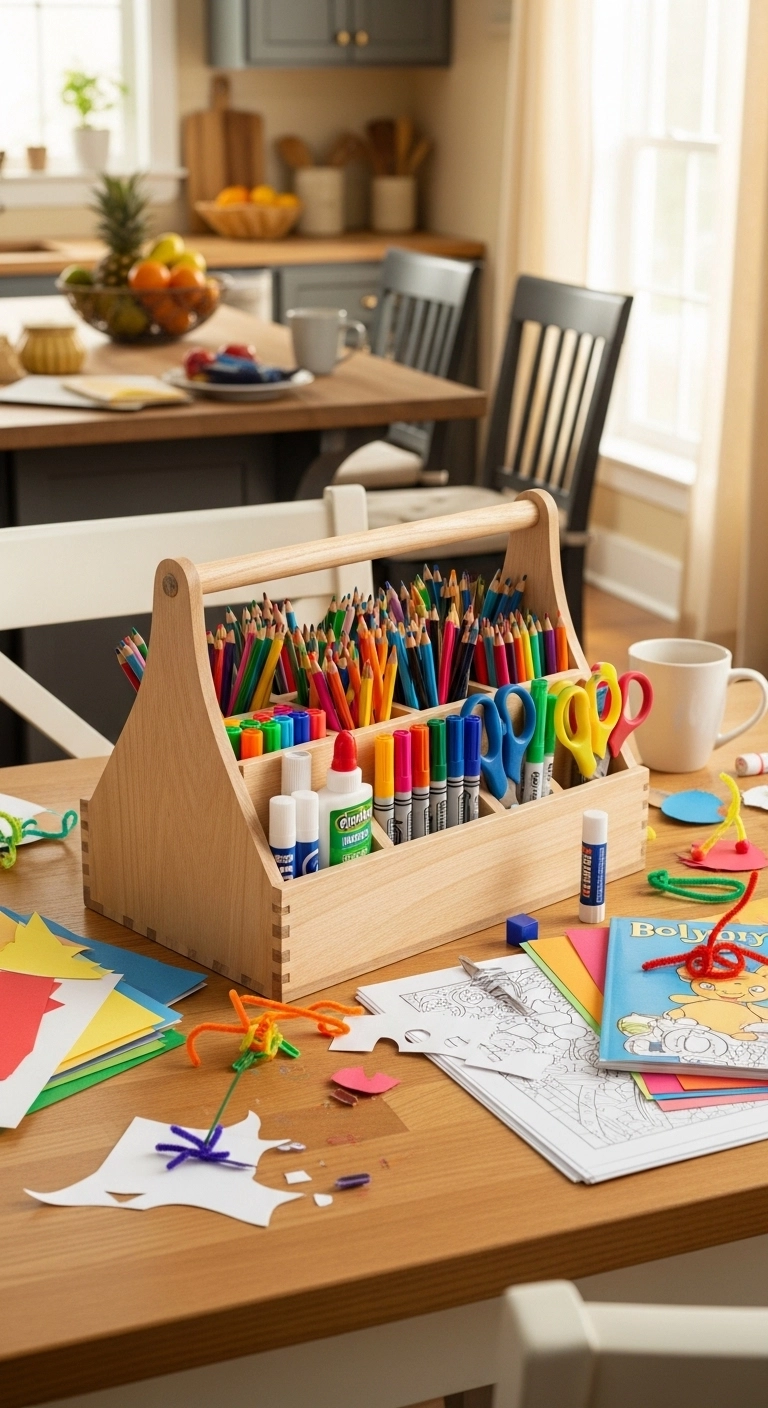
Art supplies create a different kind of mess than blocks or dolls. They spread quickly, dry out, roll, and stain tables if not stored properly. Therefore, craft supplies should have their own storage, not mixed in with general toys.
A handled caddy, drawer unit, or divided box can work well for crayons, glue, scissors, paper, stickers, and markers. It helps even more when these items are stored near the place they are used. If art time usually happens at the kitchen table, the art supplies should be easy to carry there and easy to return later.
This separate system protects both the toys and the supplies. It also helps parents say yes to art more often because setup and cleanup feel manageable instead of exhausting.
Use a simple reset basket for toys that wander
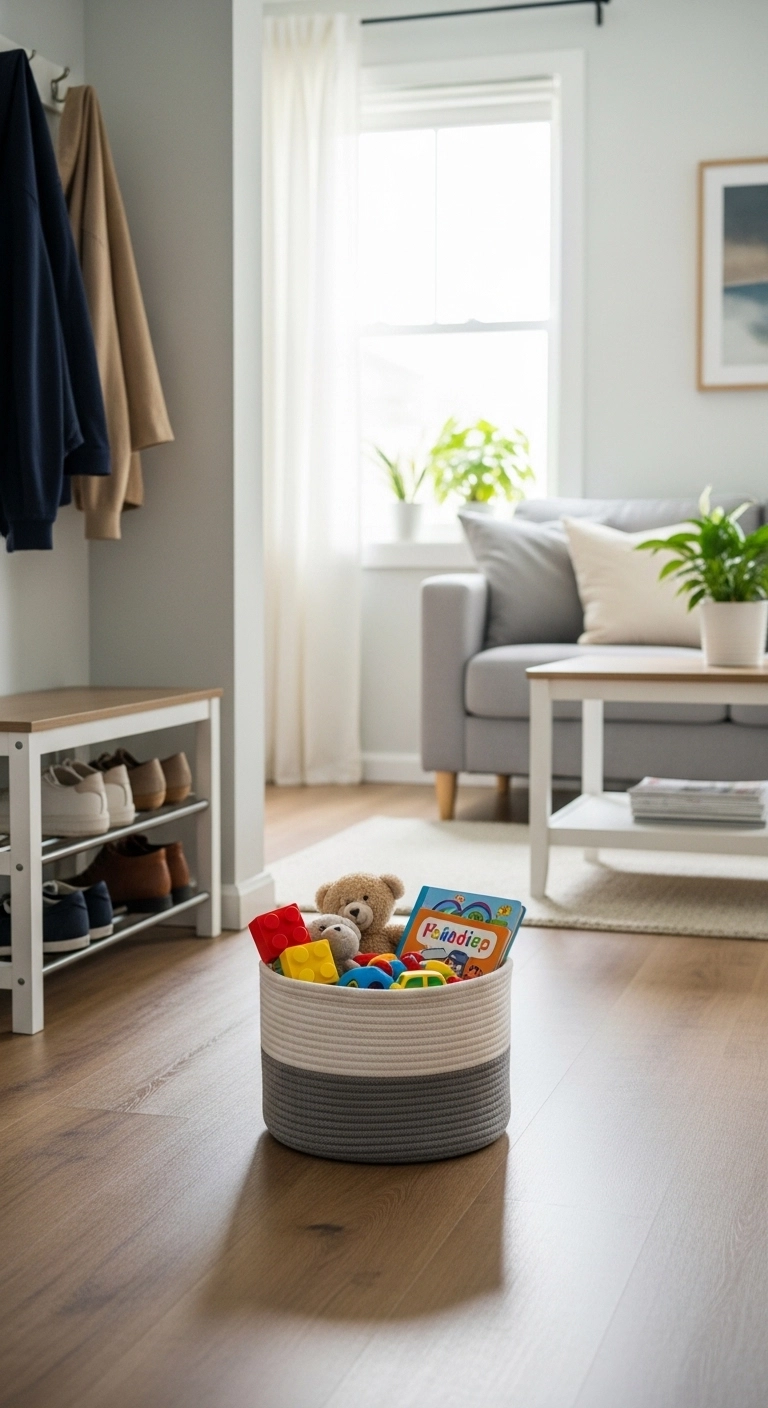
Even the best storage plan can’t stop all the toy flow. Small items still end up in the hallway, under the coffee table, or along the stairs. It’s common. What helps is having a reset basket to quickly pick up stray toys.
A reset basket works as a short-term catch spot. At the end of the day, toys from the wrong rooms can be gathered there first, then returned to their real homes once the main room is clear. This is especially helpful on busy days when a full reset feels too big. It lets the house look calmer fast without losing track of the items.
This basket shouldn’t become a permanent storage unit. That’s the important part. It’s a helper, not a dumping ground. Used well, it makes daily cleaning feel like little or nothing.
Recheck the system as children grow
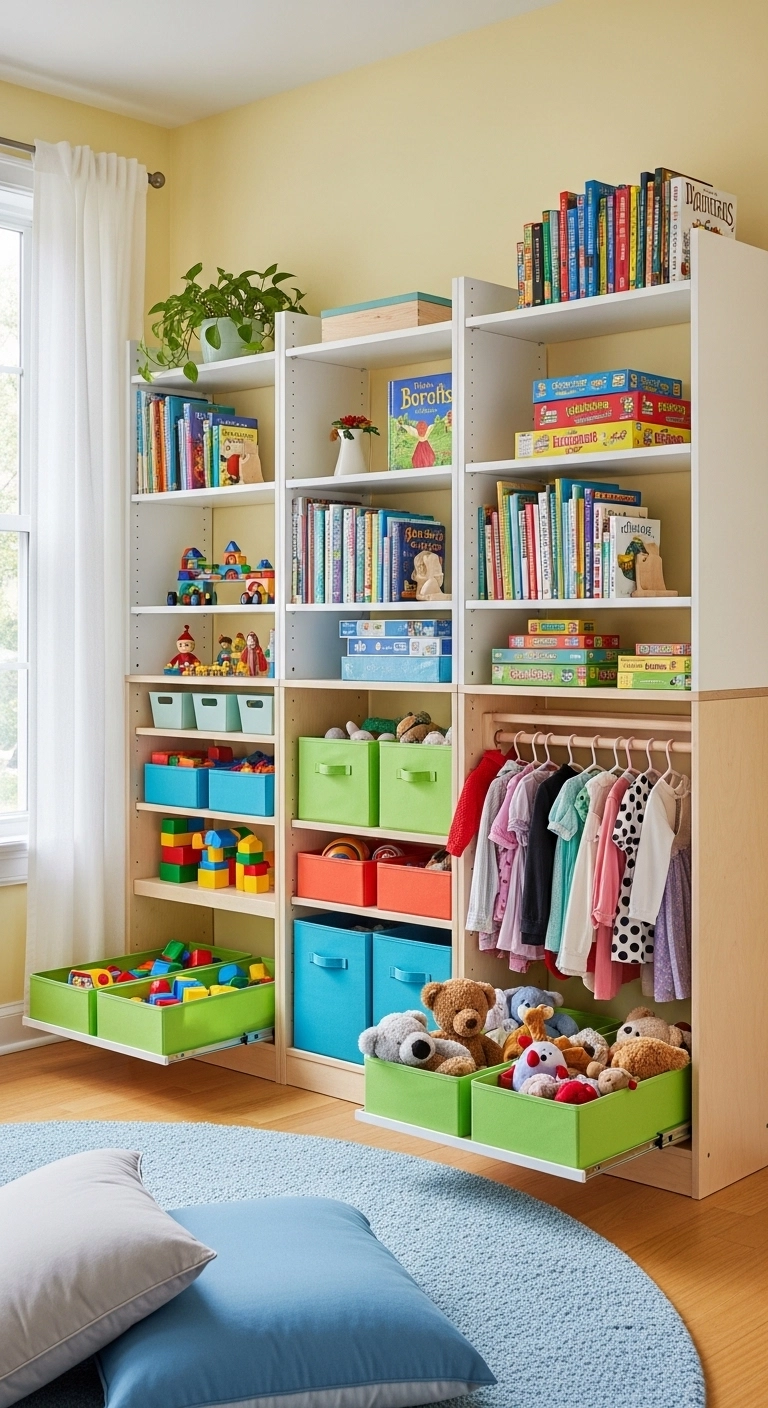
The ultimate storage solution is to know when toy storage needs to change. What works for a toddler often fails for a six-year-old. What works in the preschool years may not fit into the toys, games, and hobbies of school-age children. Families sometimes feel like they have failed when a system stops working, but often the child has simply outgrown it.
A good family home changes with the people living in it. Bins may need new labels. Shelves may need to hold more books and fewer stuffed animals. A play corner may turn into a craft area. A low basket may become a drawer unit. When parents review the storage now and then, clutter does not build up in the same old way.
This is what keeps a clean home realistic. The goal is not to create a perfect system that will last forever. The goal is to keep adjusting the system so that it still works for your family.
Conclusion
Toy storage works best when it supports the way children play and the way families live. That’s the real secret. A tidy family home isn’t built with matching boxes alone. It’s built with neat homes for toys, easy access for children, simple cleanup for adults, and enough structure to allow the home to recover after a full day of play.
The strongest toy storage solutions are often the simplest ones. Low bins for daily toys. Separate homes for books and craft supplies. Hidden storage in shared rooms. Small containers for tiny parts. A reset basket for the wandering pieces. These are the kinds of changes that make a real difference because they work in the middle of normal family life.
Start with one room. Fix the toys that cause the most stress every day. Make storage easy to access, easy to understand, and easy to rearrange. Once that part works, the rest of the house becomes easier. This is how a family home becomes tidy in a way that lasts.

Muskan Saleem
BukayHome shares practical home decorating ideas, room inspiration, and simple styling tips to help readers create a home they truly love.