14 Budget Small Backyard Ideas for a Stylish Look
14 Budget Small Backyard Ideas for a Stylish Look
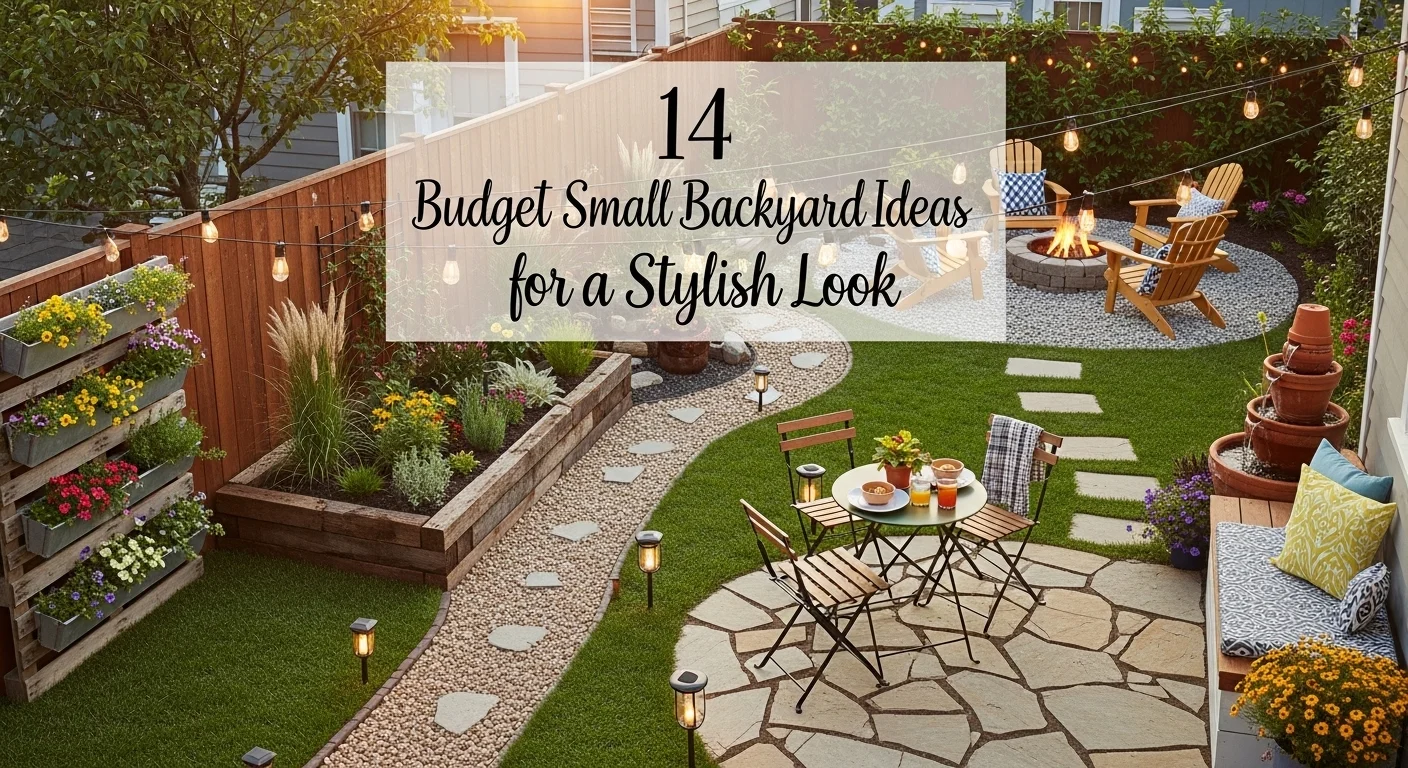
Small backyards get dismissed pretty quickly. People look at a compact outdoor space — maybe ten feet by twenty, maybe a narrow strip behind a terraced house, maybe a concrete patch that came with a rental — and they decide there’s not enough room to do anything. So the space gets neglected, or used as storage, or turned into a sad patch of lawn that no one sits on.
That thinking is wrong, and I have seen it disproven hundreds of times over more than two decades of working with outdoor spaces of every size and condition. Some of the most functional, most enjoyable outdoor spaces I have ever designed or consulted on were under three hundred square feet. The key is understanding that small outdoor spaces have a completely different set of rules than large ones — and that working within those rules, rather than fighting them, is what makes a small backyard actually work.
This guide walks you through fourteen budget-friendly backyard ideas that are practical, proven, and especially well-suited for small spaces. None of them require a landscaping contractor. Most can be done in a weekend. They’re all based on the same principle: In a small space, every decision counts more than in a larger space, so making good decisions—not expensive ones—is how you get a livable result.
Define a Clear Seating Zone First — Everything Else Builds Around It
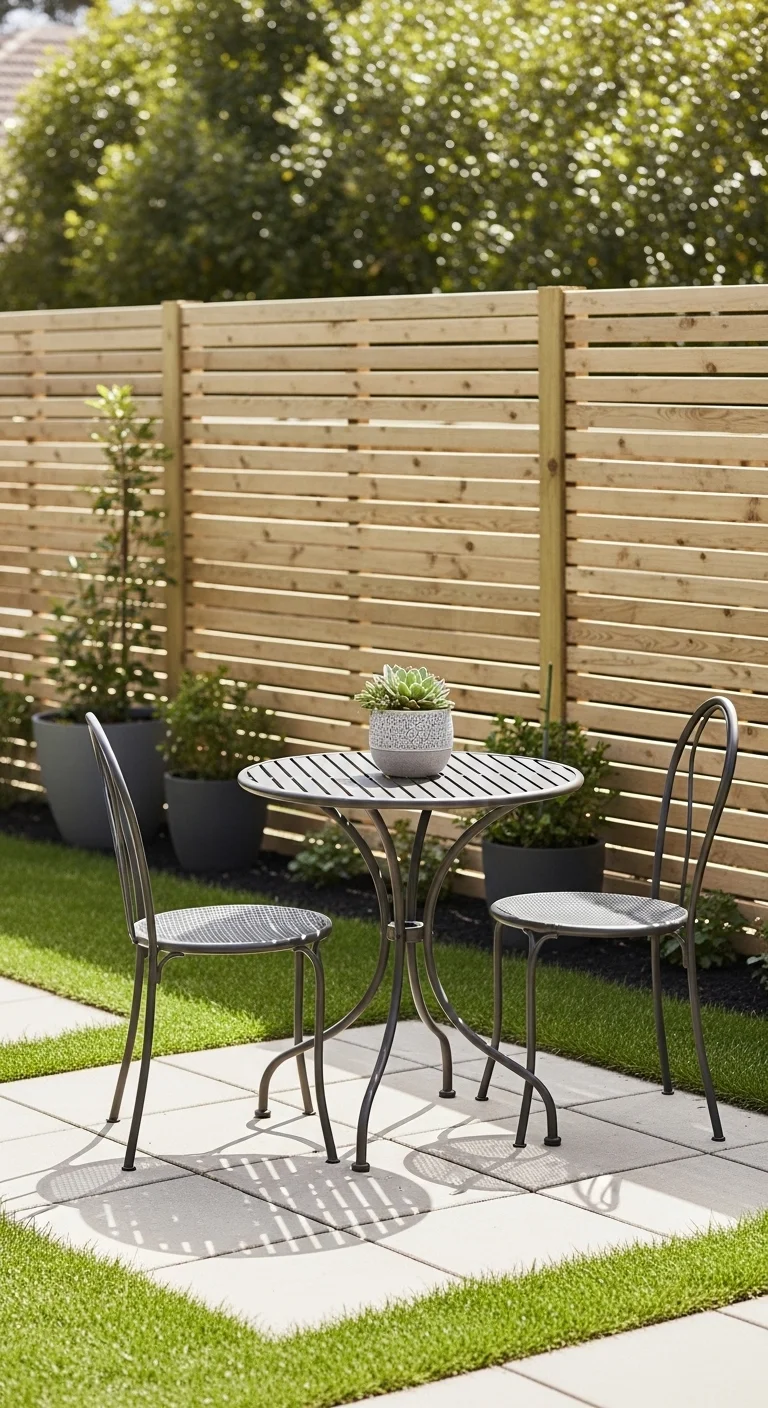
The most common mistake in small backyard design is trying to do everything at once without deciding what the space is primarily for. Is it for eating outside? For sitting with your morning coffee? For the kids to play? For growing food? The answer shapes every other decision. But in most small backyards, the primary need is a place to sit — a place where you can actually sit comfortably outside without feeling like you’re sitting on the edge of something temporary.
Start by identifying the best spot for a seating area — usually the area that gets the most usable shade or sun, depending on your climate, and the area that is most protected from wind or overlooked by neighbors. Mark it out with string or chalk before you buy anything. For most small backyards, a seating area of about eight feet by eight feet is sufficient for a small table with four chairs, or a low set with two side chairs. That footprint is your anchor — the thing that every other element ties to.
Once the seating zone is established, the rest of the backyard becomes easier to plan. You know where the path needs to go, where a plant border makes sense, where lighting should focus. Without this anchor, people tend to scatter furniture around the space and end up with a yard that looks full but does not function well for anything specific.
Lay Affordable Gravel or Stepping Stones to Replace Dead Grass
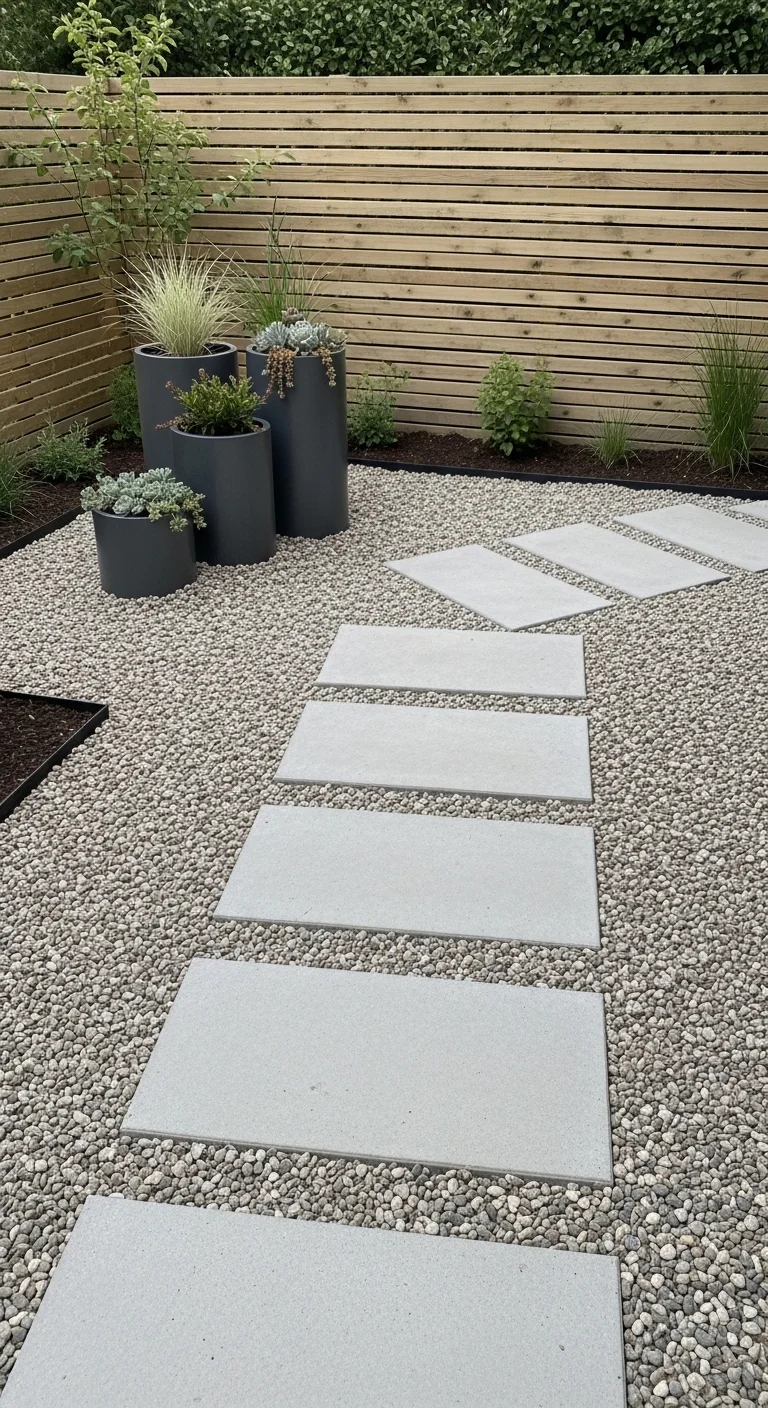
The lawn in a small backyard is often more trouble than it is worth. In a compact space, a lawn patch needs edging, mowing, and regular attention to look presentable — and in many small backyards, particularly those with tree cover or shade from surrounding buildings, the grass is perpetually thin, patchy, or brown. The lawn ends up being the most high-maintenance part of the yard for the least return.
Replacing dead or struggling grass with gravel, decomposed granite, or a grid of stepping stones is one of the highest-impact budget changes you can make. Pea gravel and decomposed granite are among the cheapest ground cover materials available — typically between thirty and sixty dollars per cubic yard when bought in bulk from a landscape supply yard, which is far cheaper per square foot than purchasing bags from a garden center. For a small backyard, you usually need between one and three cubic yards depending on the size and how deep you go (two to three inches of depth is standard).
Stepping stones — either natural flagstone, concrete pavers, or reclaimed brick — can often be found secondhand through Facebook Marketplace, Craigslist, or local salvage yards for very little money. Laying them yourself requires no special skills, just a level, some sand or gravel base material, and patience to get them flat. The result is a surface that looks considered and requires essentially zero maintenance once it is down.
Build a Raised Garden Bed From Reclaimed Timber for Cheap
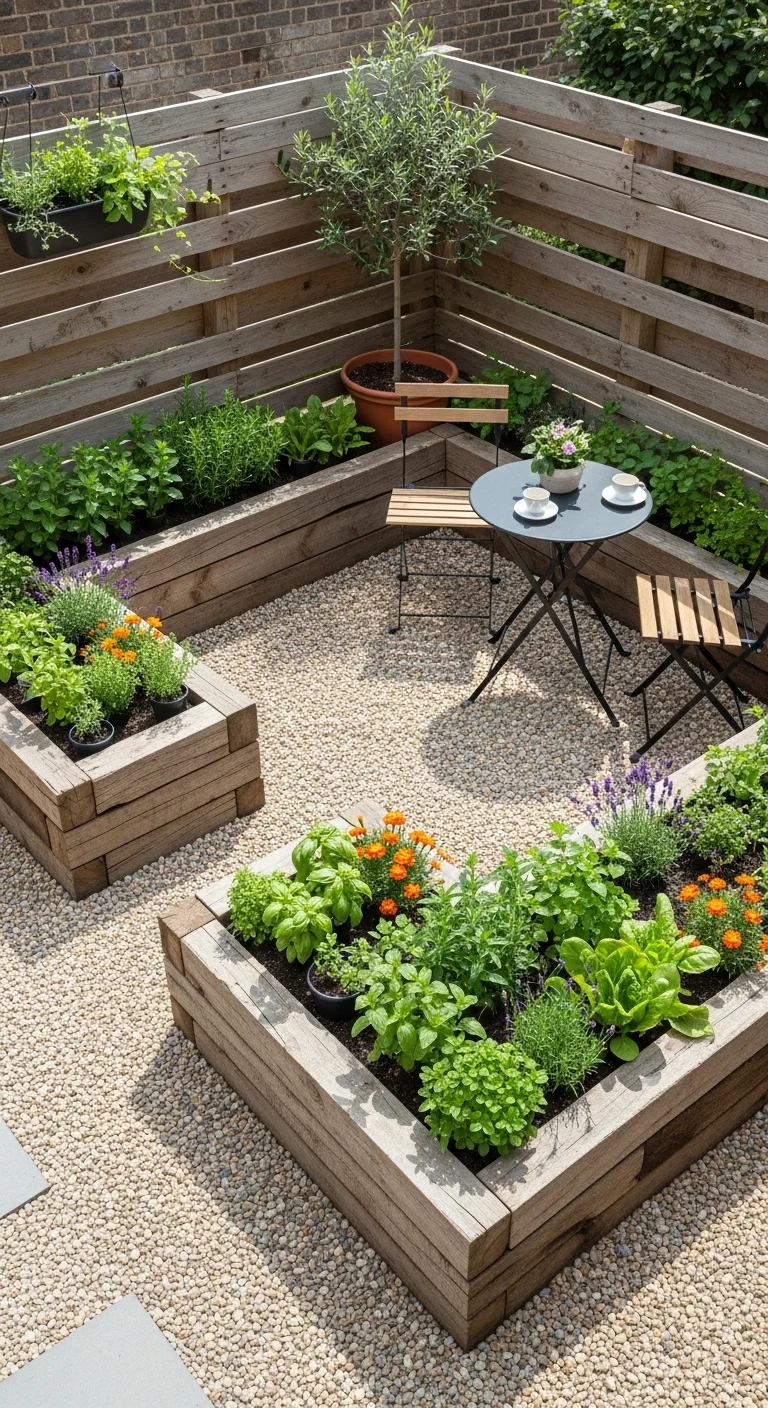
A raised garden bed does several things at once in a small backyard. It introduces a vertical element that draws the eye upward. It defines the edge of the planting zone in a clean, organized way. It makes it easier to grow vegetables, herbs, or flowers because the quality of the soil is completely under your control. And when made from reclaimed wood or inexpensive treated pine boards, it costs a little less than a ready-made kit.
A simple rectangular raised bed — four feet wide by eight feet long by twelve inches tall — requires eight boards and about twenty screws. Reclaimed wood from a demolition site, a salvage yard, or a neighbor’s fence project can bring the material cost to nearly zero. New treated pine boards from a hardware store cost between forty and eighty dollars for the same structure. Either way, the build takes about two hours and requires only a saw and a drill.
In a small backyard, a well-built bed with productive plants planted within it—herbs, cherry tomatoes, salad greens, or flowers that cut well—adds more visual interest and real utility than almost any purely decorative purchase. Plant it along the longest boundary wall to leave the central space open for seating and movement.
Use Vertical Space With Wall-Mounted Planters or a Trellis
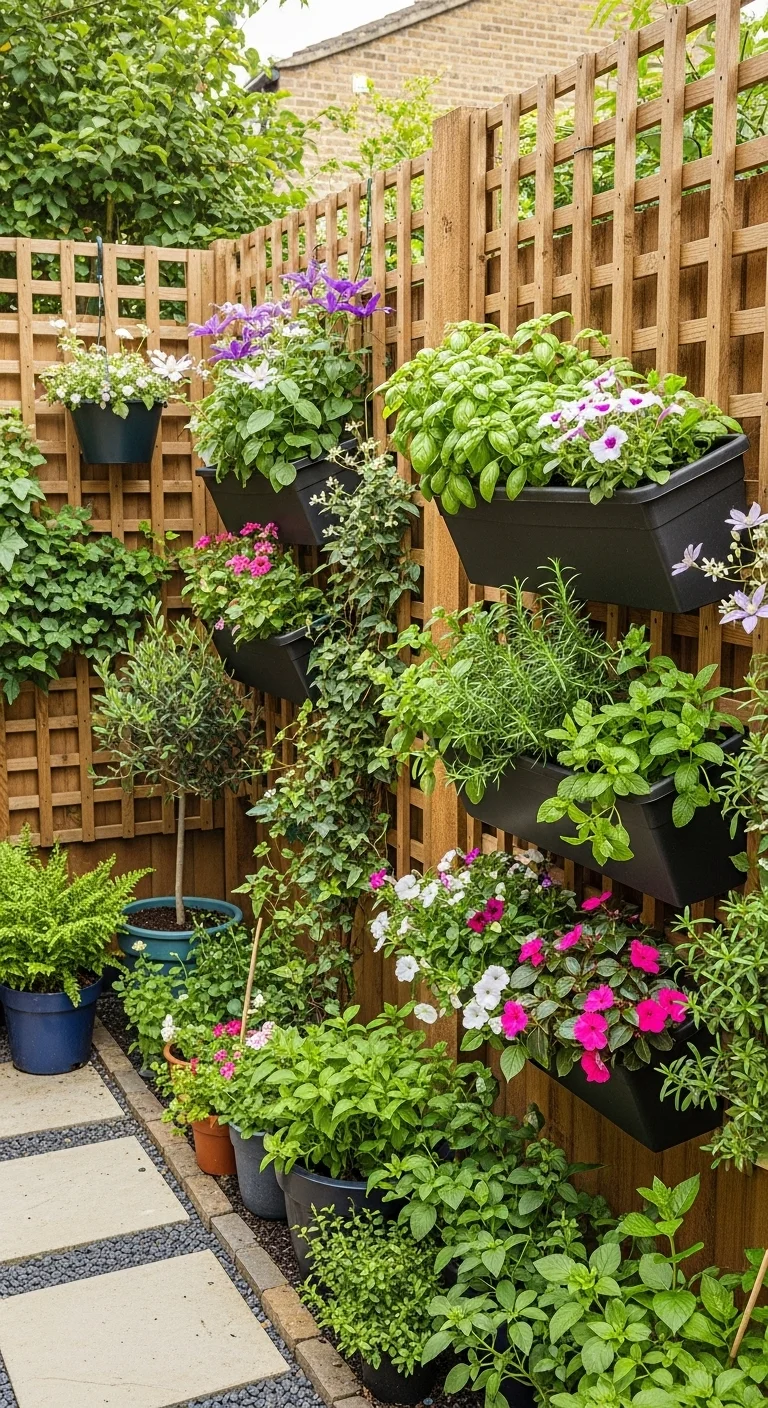
In a small backyard, the ground space is limited but the vertical space is often completely unused. Walls, fences, and even the back of a house or shed offer planting and display opportunities that have no footprint at all. Taking advantage of this vertical real estate is one of the main strategies that separates a small backyard that feels cramped from one that feels full and layered without being cluttered.
A timber trellis fixed to a fence or wall and planted with a climbing rose, jasmine, or clematis costs between twenty and fifty dollars for the trellis and a similar amount for a plant from a local garden center. Within one growing season, the wall will be substantially covered, which adds greenery, sometimes fragrance, and a sense of enclosure that makes the seating area below it feel more private and sheltered.
Wall-mounted planters — powder-coated metal, terracotta pocket planters, or simple timber boxes fixed with brackets — can be arranged in a vertical grouping on a fence to create a living wall effect. Herbs work particularly well in this application: basil, parsley, thyme, and mint all grow reasonably well in small wall-mounted containers and are actually useful in the kitchen, which gives the planting a purpose beyond aesthetics. A full set of wall planters in a group of six to eight can be assembled for under sixty dollars using basic materials.
Paint old furniture instead of replacing it
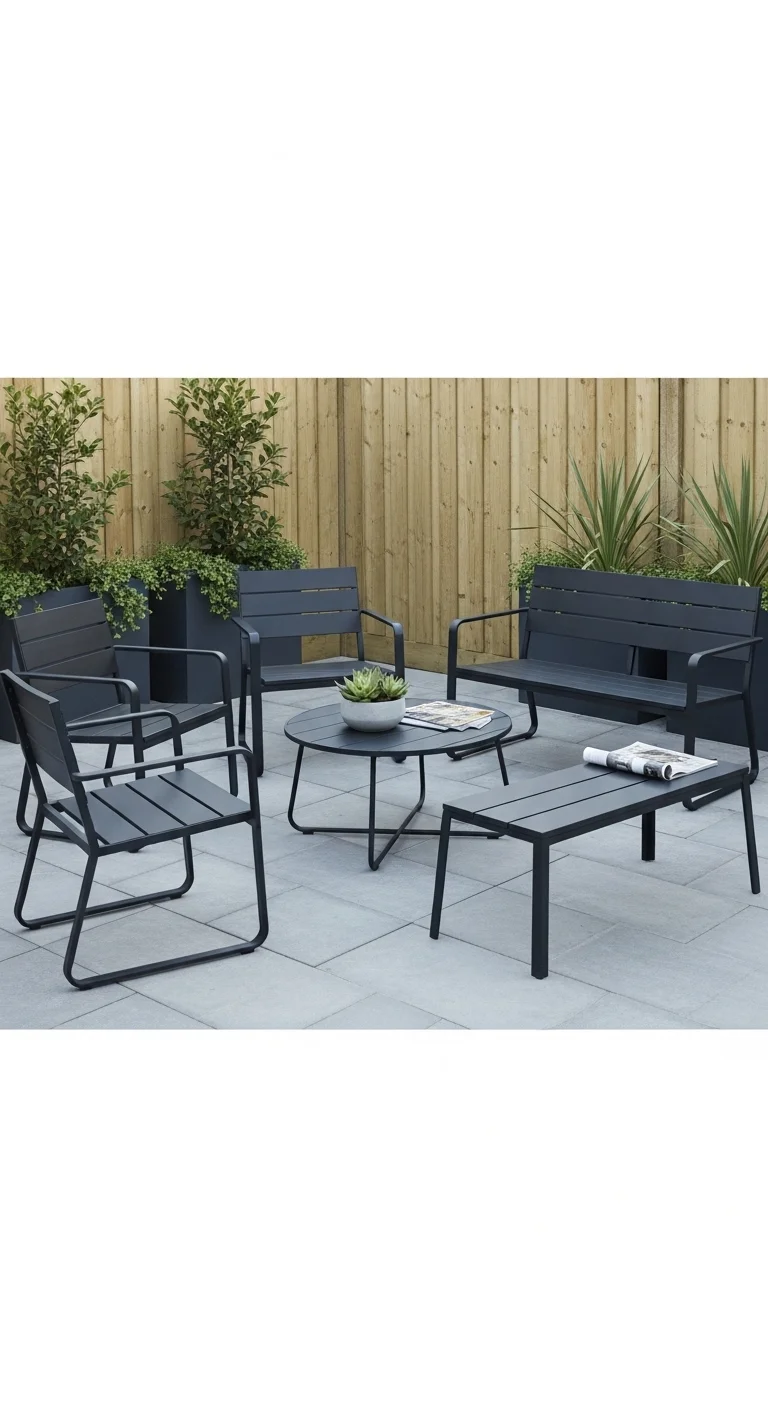
Outdoor furniture gets tired fast. The color fades. The metal rusts. The finish starts to look worn. Most people assume that means it is time to replace it. Often it is not. A good cleaning and fresh paint can bring old pieces back in a way that changes the whole yard.
It works best when you keep the color simple. Black, soft white, muted green, dark gray, or warm brown generally sit well outdoors. Loud colors can be fun, but in a small yard they can make the space feel too busy. If you want a stylish look on a budget, using one calming color will usually do more than several bold colors.
Paint helps because it makes the pieces feel like they belong together. A chair from one year and a bench from another can suddenly look like part of the same story. When the furniture looks more unified, the whole backyard feels more thought through.
Add one outdoor rug to make the seating area feel complete
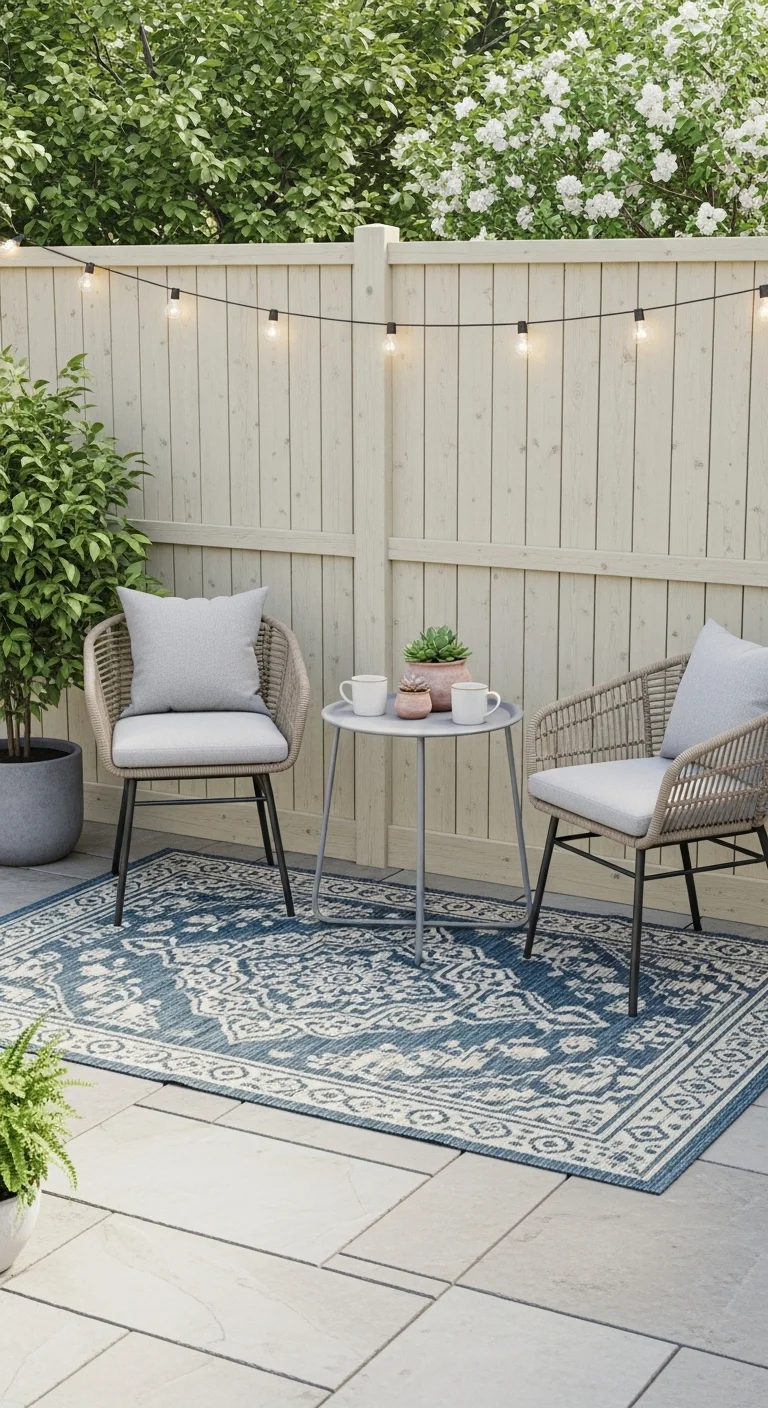
A small yard can still feel like an outdoor room, and a rug helps create that feeling quickly. It tells the eye where the seating area begins. It softens the look of gravel, concrete, or wood decking. It also helps a few simple pieces of furniture feel grouped rather than scattered.
The best outdoor rugs for small spaces are usually simple. A quiet stripe, soft pattern, or solid tone often works better than something busy. In a tight yard, the rug should support the space, not take it over. It should also be large enough to feel connected to the chairs or table near it.
This kind of update is useful because it brings comfort without building anything. Even a basic patio can look far more stylish once the floor area feels anchored. It is one of the easiest ways to make a backyard feel planned instead of leftover.
Create height with planters instead of using only the ground
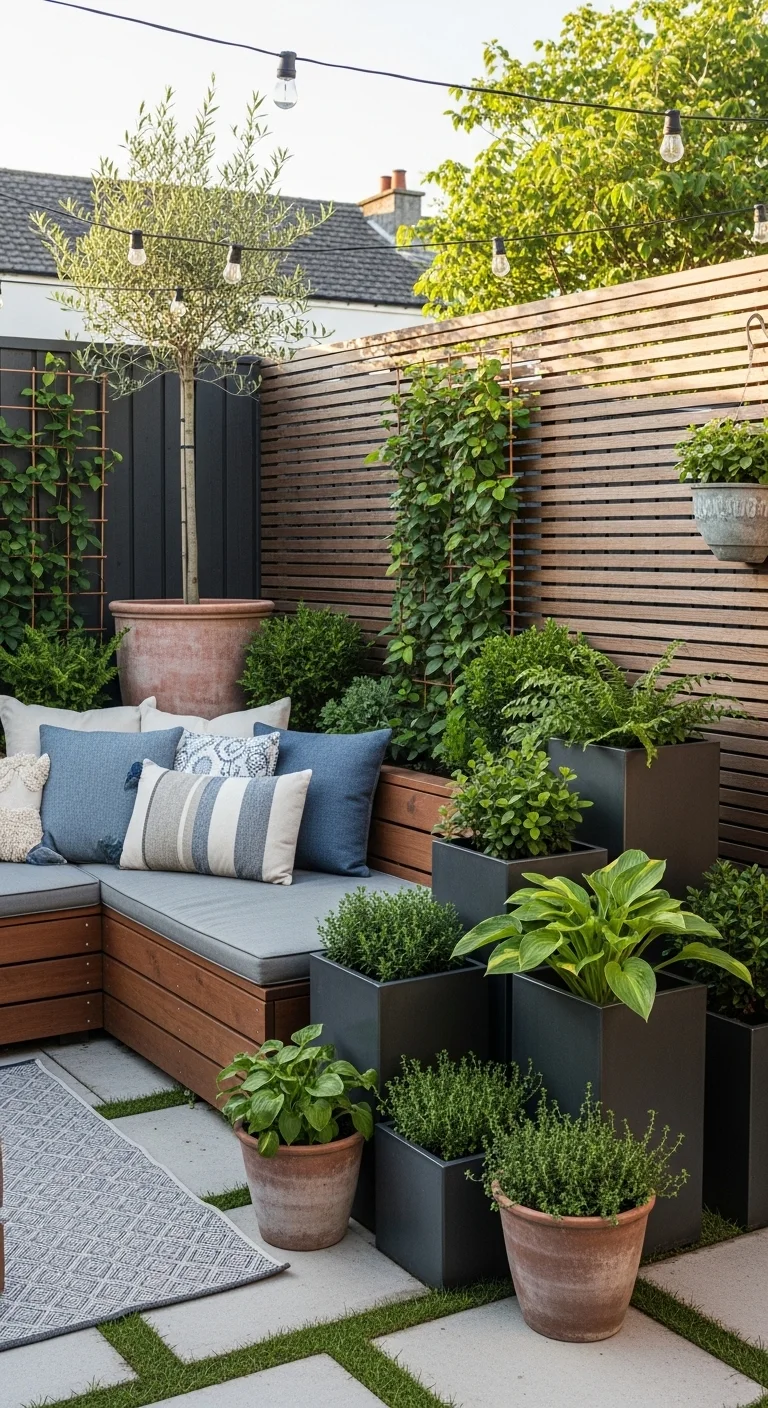
Small yards often feel flat because everything sits on one level. Grass, paving, chairs, and low planters can quickly block the eye. When you add height, the yard starts to feel properly filled in. It feels more layered, which helps it feel more design-oriented.
Planters are one of the easiest ways to do this on a budget. Use a mix of heights, but keep the style connected. A taller pot near a chair, a medium one by the fence, and a smaller one near the step can help move the eye through the space. Grouping a few pots together often looks better than placing one lonely pot in each corner.
This also works well because planters are flexible. You can move them, swap them, and refresh them by season without changing the bones of the yard. In a small backyard, flexible pieces are valuable because they let you improve the look without getting locked into one layout.
Grow upward with a trellis or wall planter
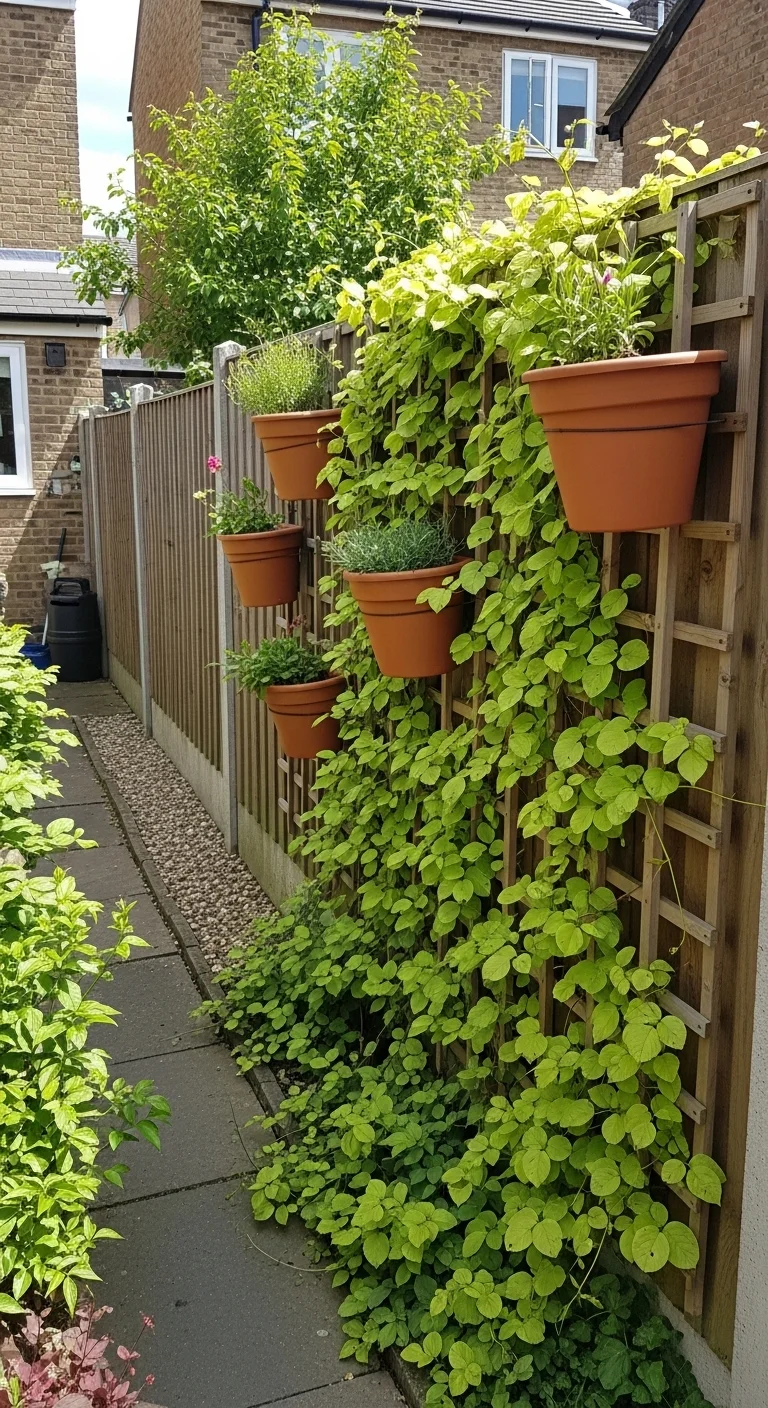
Ground space is limited in a small backyard, so it makes sense to use the fence or wall as part of the design. A trellis, wall planter, or climbing vine can turn a plain vertical surface into one of the best parts of the yard. It adds softness, color, and shape without taking up much floor space.
This is especially helpful when the fence feels harsh or empty. A small climbing plant or a neat row of mounted pots can make the whole yard feel warmer. It also helps shift the eye upward, which is useful in compact spaces. When the eye travels up, the yard feels less boxed in.
The smart move here is not to overdo it. One section done well can be more stylish than trying to cover every fence panel. In small outdoor spaces, a strong detail is often better than a lot of weak ones.
Use string lights to make the yard look better at night
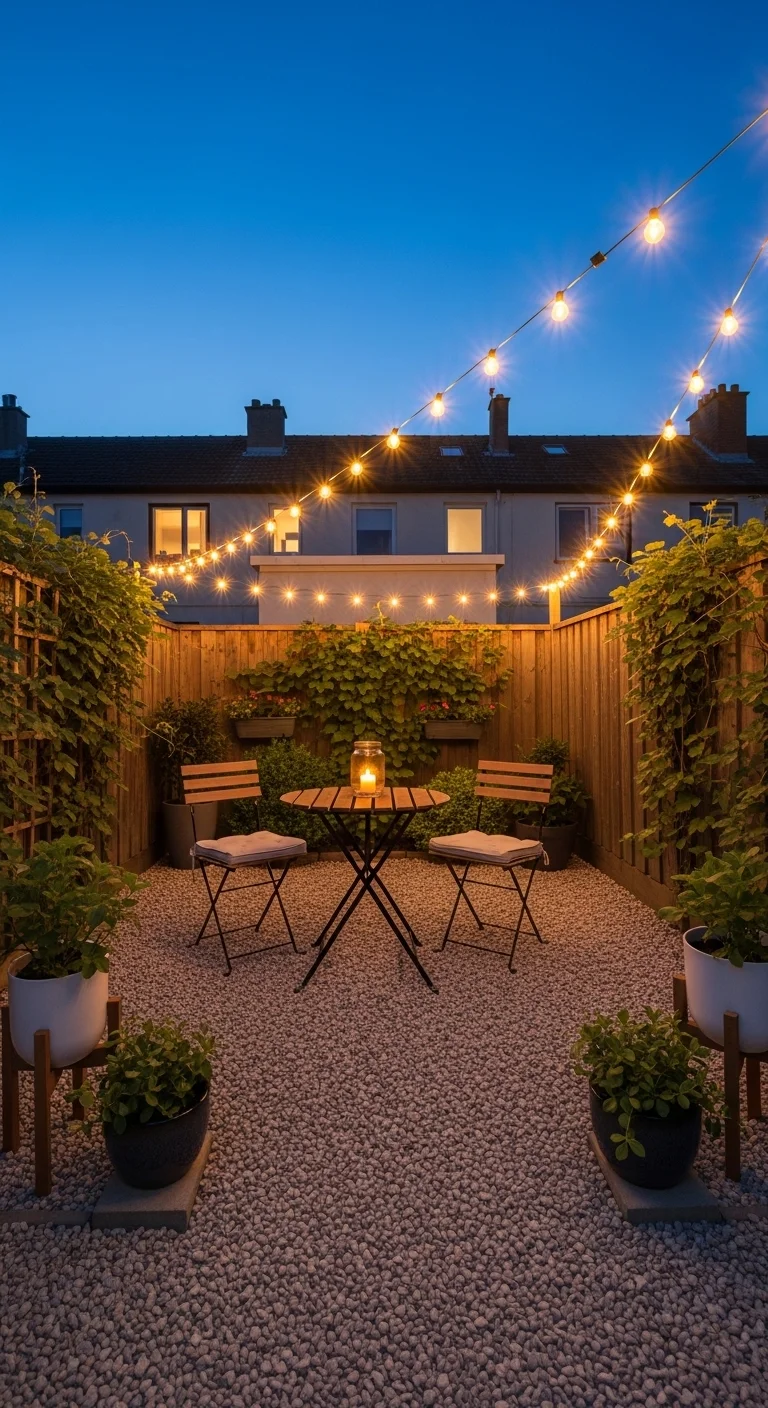
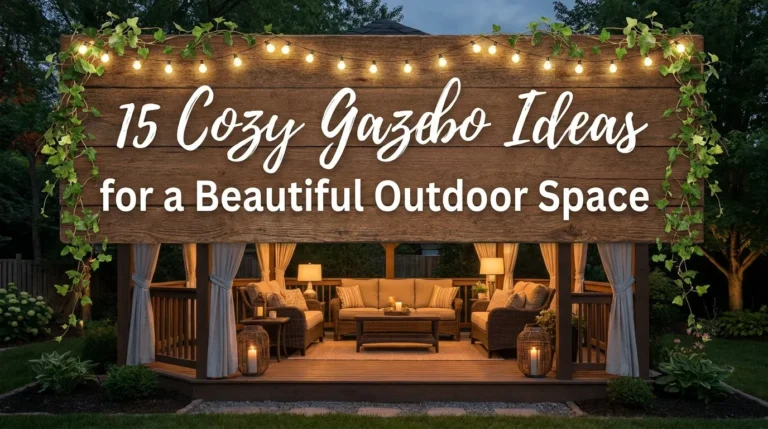
Many small backyards only work during the day because they don’t have enough light after the sun goes down. A stylish yard should feel good in the evening, even if it’s easy to set up. String lights are one of the easiest ways to do this without a big bill or a difficult installation.
The reason they work so well is that they change their mood fast. A plain fence, simple chairs, and a gravel patch can look much better once there is a warm glow over the space. The yard feels softer and more inviting. It also feels more finished, which is important when the setup itself is basic.
Keep the pattern clean. Lights should support the shape of the yard, not interfere with it. A soft edge along a line or fence along the dining area can be enough. In a small space, good lighting doesn’t have to be dramatic. It just needs to make the yard feel easy to walk into.
Plant a Container Garden Using Budget-Friendly Seasonal Plants
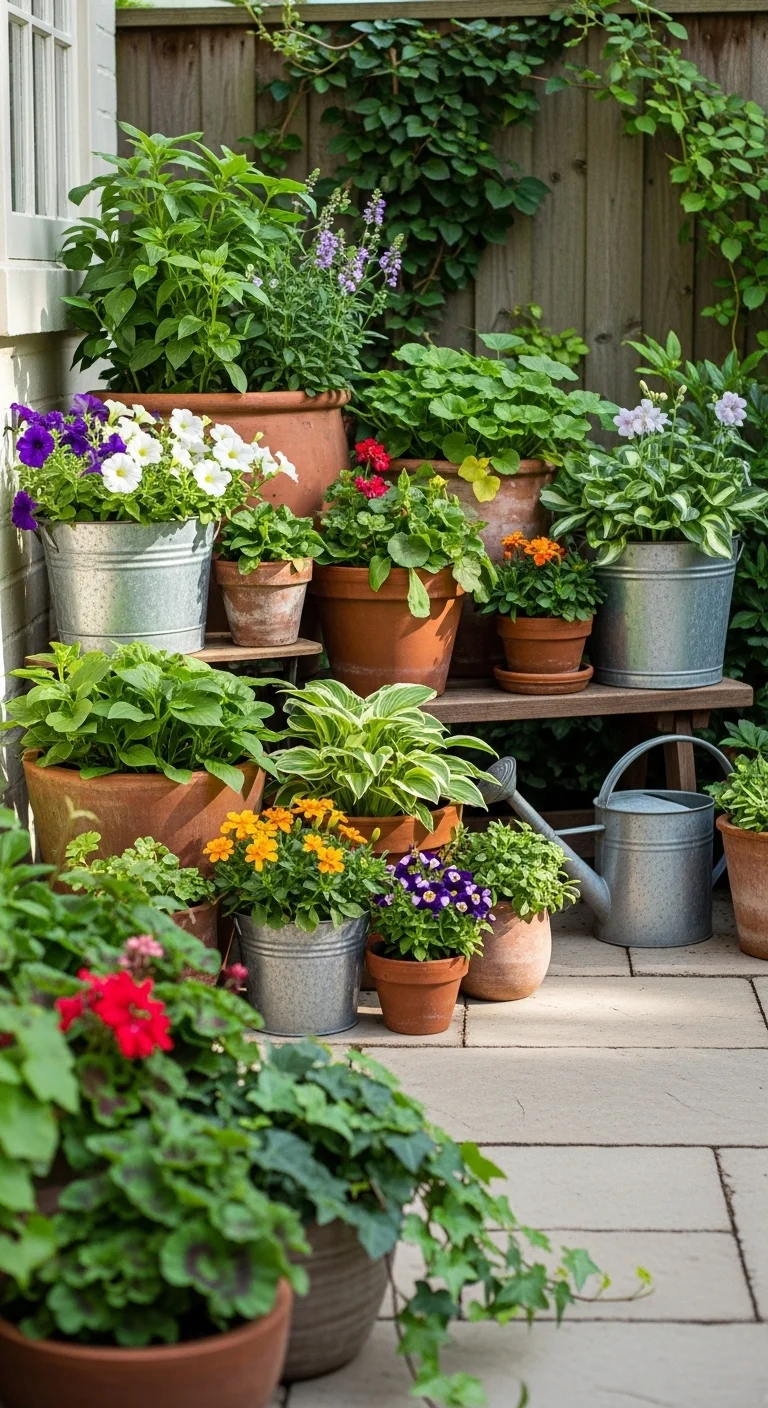
Container gardening is how you add serious, high-impact planting to your backyard without digging a single hole or spending a fortune on specimen plants. The concept is simple: Large pots with a good-quality potting mix, planted with a combination of a tall structural plant, a medium-sized filler, and a trailing plant at the edge—a formula sometimes called “thriller, filler, spiller”—create containers that look full, layered, and intentional from the moment you place them.
For budget planting, annual flowers bought in trays from a garden center in spring and summer are among the cheapest planting materials available. A tray of petunias, verbena, or calibrachoa costs around five to eight dollars and contains enough plants to fill two or three containers. Foliage plants — coleus, sweet potato vine, or ornamental grasses — provide season-long structure and are similarly inexpensive. The container itself is the longer-term investment: a large terracotta pot or a galvanised metal tub in a good size (at least 14 inches in diameter) typically costs between fifteen and thirty-five dollars and lasts for years.
Instead of placing one pot in isolation, group an odd number of containers—three or five together. A cluster of three diverse containers in the corner of a seating area or on either side of a doorway reads as a deliberate design choice rather than a collection of objects. This grouping approach has more visual impact than the same containers individually scattered around the space.
Add a Water Feature Using a Simple Self-Contained Fountain
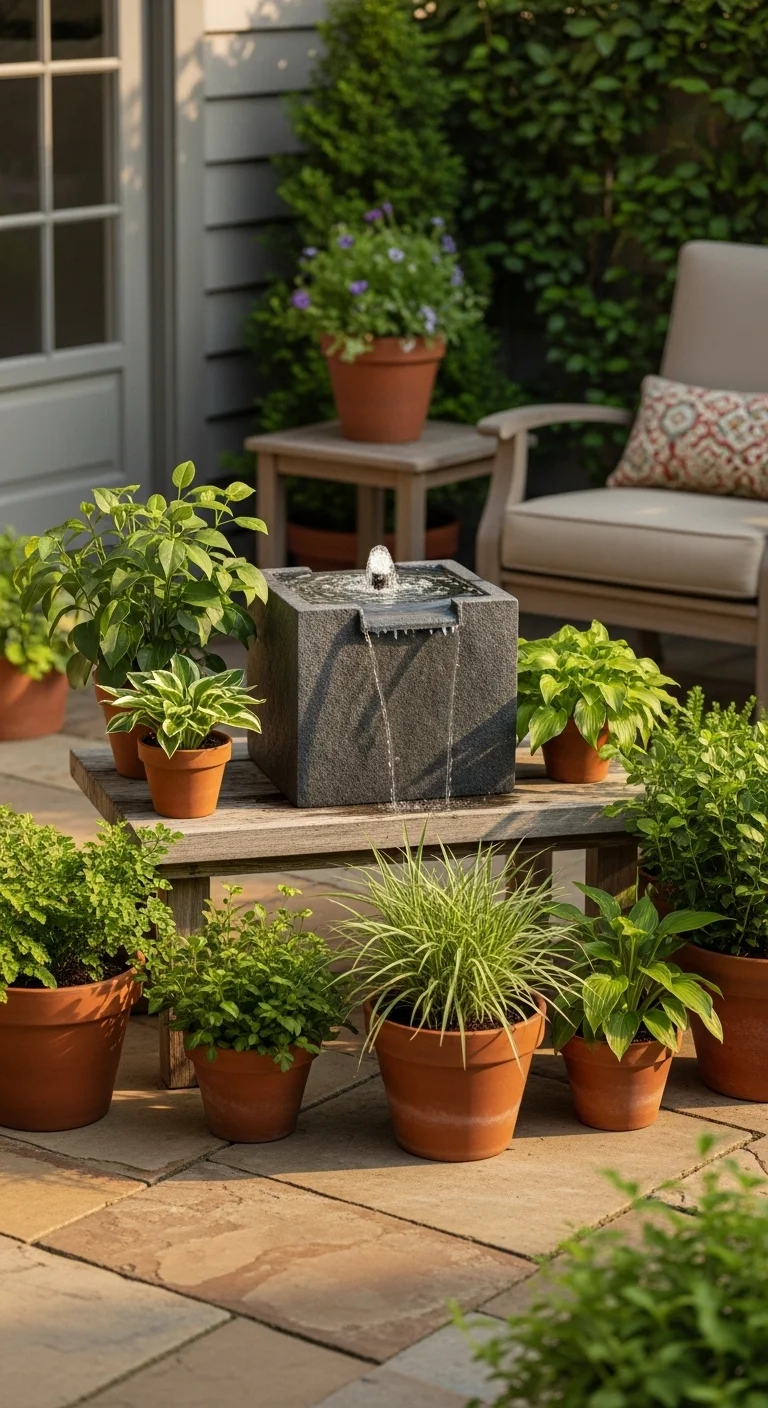
The sound of water does something to an outdoor space that is disproportionate to the size of the feature producing it. In a small urban backyard, where ambient noise from traffic, neighbors, and the street is constant, a small water feature introduces a sound that competes with that background noise — not by being louder, but by being closer and more pleasant to focus on.
Do-it-yourself fountain kits—which include a pump, a reservoir, and either a pre-made stone, ceramic, or resin pot—are available from garden centers and online retailers for between thirty and a hundred dollars. All they require is a nearby outdoor power outlet and a weekly or so watering. Setup takes less than an hour. Once up and running, they require almost no maintenance other than occasional cleaning of the pump filter.
For a small backyard, a tabletop fountain placed on a garden table or a low wall works just as well as a ground-mounted one. The sound is what matters, not the scale. A fountain producing a gentle trickle at head height while you are seated is actually more effective than a large ground feature whose sound is further away. Choose a style that fits the overall aesthetic of the space — glazed ceramic for a more contemporary look, rough stone or slate for a more natural one.
Build a Simple DIY Fire Pit for Evening Warmth and Atmosphere
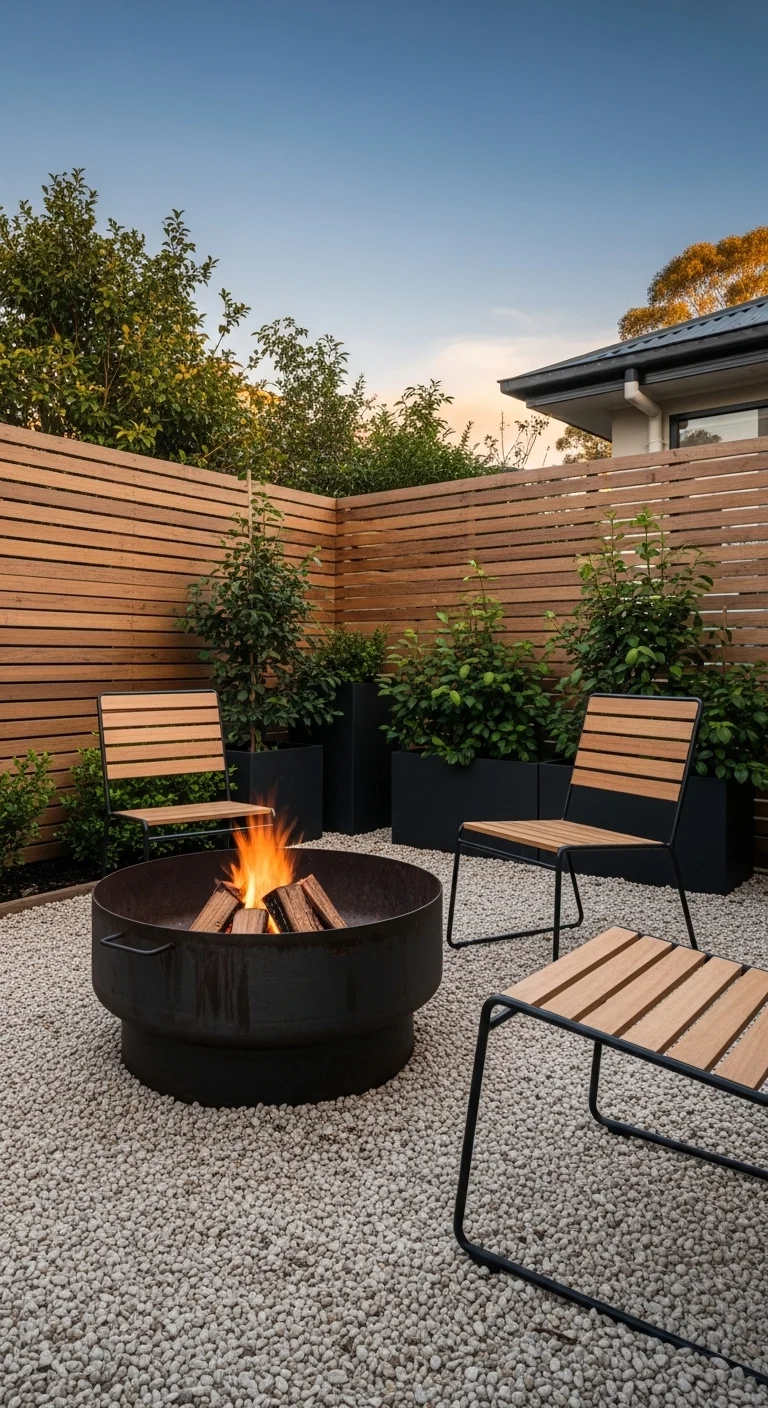
A fire pit extends the use of a small backyard into the cooler evenings and cooler months. It also creates a focal point for the seating area — for people to sit around, watch, and gather close. And having a clear focal point for a seating area in a small space is key to making it feel like a destination rather than just a default outdoor area.
The most budget-friendly fire pit options are either a ready-made steel bowl fire pit — widely available at hardware stores and garden centers for between twenty-five and sixty dollars — or a simple DIY version built from retaining wall blocks or bricks arranged in a circle, which costs even less. Steel bowl pits are portable, which is useful in rented properties, and can be stored out of the way when not in use.
Check local regulations before lighting an open fire in a residential area. Many city councils have restrictions on open burning, and some ban it altogether. Where these restrictions apply, a bioethanol tabletop fire bowl—which burns cleanly and is classified as a decorative appliance rather than an open fire in most jurisdictions—produces a real flame with heat at close range and costs between thirty and seventy dollars for a basic unit.
Grow a Herb Garden in the Ground or in a Dedicated Bed
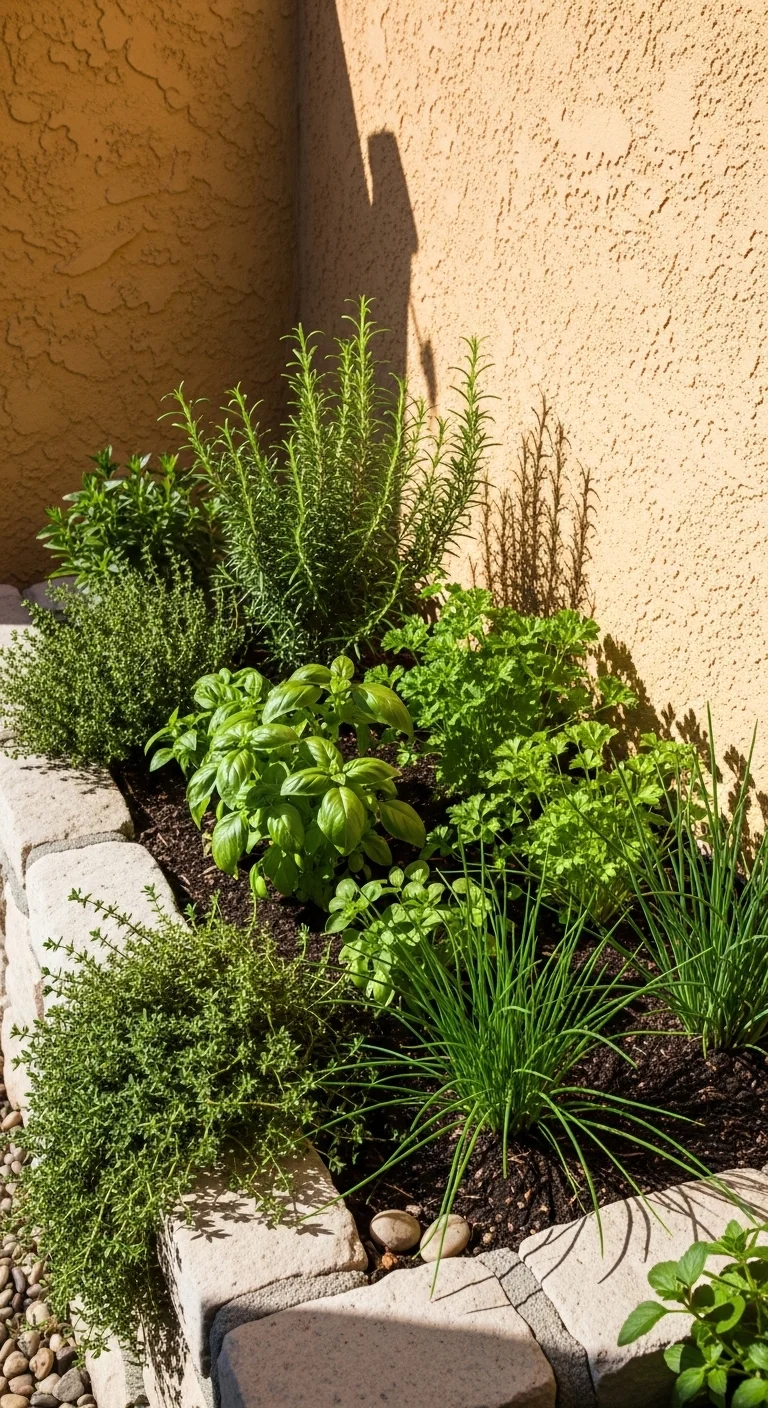
A herb garden is one of the highest-return plantings you can do in a small backyard, because it serves two purposes at once: it looks good as a planted area, and it produces something you actually use in the kitchen on a regular basis. Once established, a basic herb planting — rosemary, thyme, sage, chives, parsley, and mint — takes almost no maintenance, costs nearly nothing after the initial plants are in, and looks substantially better than bare soil or patchy grass.
For a very small space, a dedicated herb bed along a sunny wall – even just a meter long and thirty centimeters wide – is enough for four to six plants that will provide a kitchen home for most of the year. A wide bed or a small raised box specifically for herbs provides better access for harvesting and keeps the plant safe and manageable. Herb seeds from a supermarket or garden center usually cost one to two dollars and establish quickly in good soil with adequate sunlight.
Mint should always be planted in its own container or in a section of bed blocked by a physical barrier like a buried pot or a piece of edging board — it spreads underground aggressively and will overtake neighbouring plants within a single season if not controlled. Everything else in a standard herb collection can coexist quite happily in a shared bed.
Leave some empty space so the yard can feel stylish
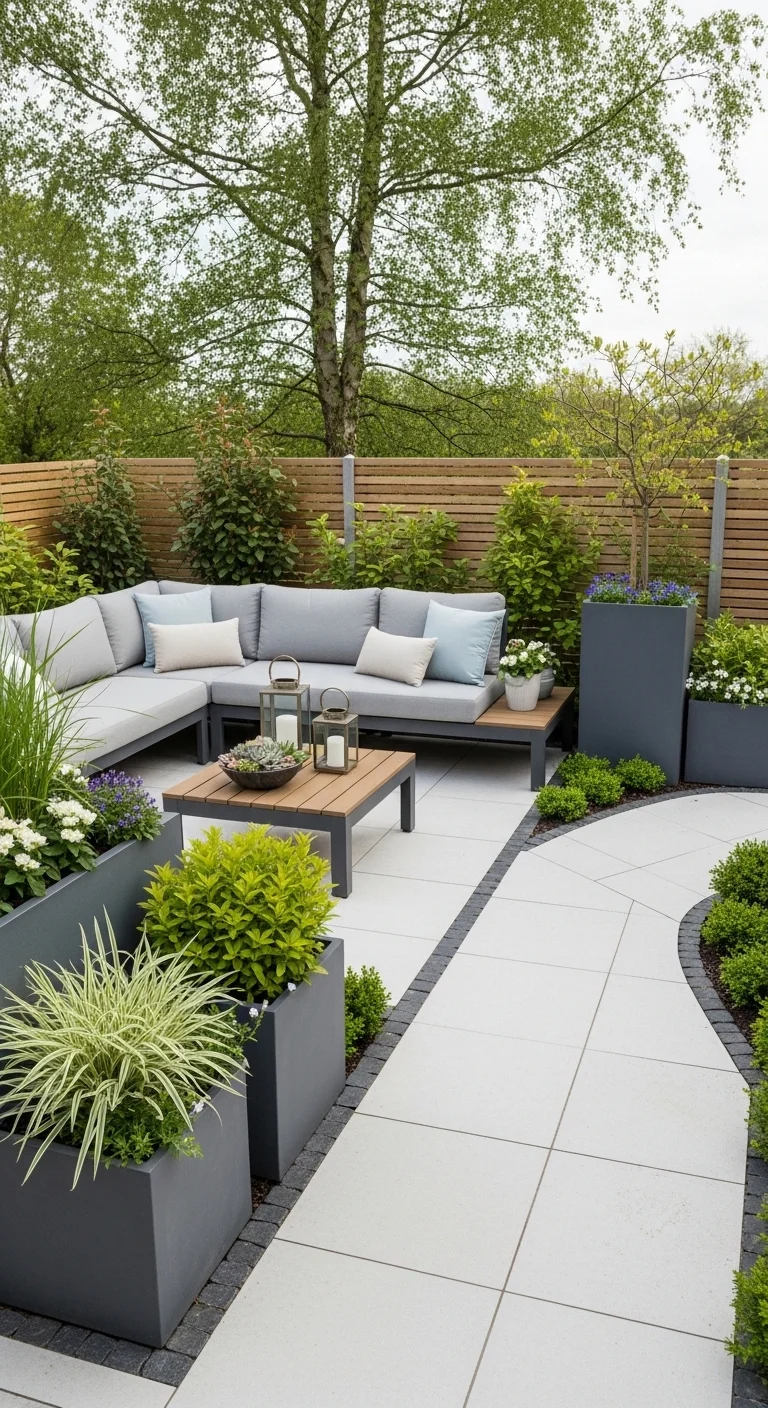
The final idea is one that most people skip. Leave some space open. Not every fence needs decoration. Not every corner needs a planter. Not every strip of ground needs to be covered. A small backyard can only breathe if you let it.
Open space is not wasted space. It is what helps the seating area stand out. It is what makes the path easy to walk. It is what keeps the yard from feeling packed. When there is a little room around the main features, the whole backyard looks cleaner and more relaxed.
This is what separates a stylish small yard from a crowded one. The stylish yard knows when to stop. It uses just enough. It lets the best parts be seen. On a budget, this matters even more, because careful restraint often looks better than trying to force a full makeover before the space is ready.
Conclusion
A small backyard doesn’t need a big structure to look good. All it takes is a clear plan, a few strong choices, and discipline to keep it from getting too crowded. Clear ground, right-sized furniture, simple planting, soft lighting, and one or two finished zones can change the entire feel of the space.
The best budget small backyard ideas are the ones that solve real problems. They make the yard feel less cluttered, more useful, and easier on the eyes. They help the space work during the day and still feel inviting at night. They give shape to the yard without eating up the little room you have.
Start with what the yard needs most. Maybe that is cleaning. Maybe it is better seating. Maybe it is one gravel area, one rug, or one line of lights. Do that first, and let the next step come after. That is how small backyards become stylish in real life. Not through one big spend, but through smart, steady choices that make the space feel better every time you step outside.

Muskan Saleem
BukayHome shares practical home decorating ideas, room inspiration, and simple styling tips to help readers create a home they truly love.