13 Easy Home Decor Updates for a Fresh New Feel
13 Easy Home Decor Updates for a Fresh New Feel

Most people think that refreshing a home means spending thousands of dollars on new furniture or hiring someone to redo the kitchen. This assumption prevents many good changes from happening. The truth is that the home updates with the greatest impact are almost never the largest in scale or cost. They are the ones that change how the room feels when you walk in — the quality of the lighting, the color of the walls, what your eye lands on first, how surfaces feel when you touch them.
I have been doing this work for over two decades. I have walked through hundreds of homes that people had stopped really seeing — spaces that had slowly accumulated clutter, outdated choices, and small problems that never got fixed. And in almost every case, the changes that made the rooms feel genuinely new again were targeted, practical, and affordable.
This guide gives you thirteen of the most effective home decor updates I have ever recommended. They are ranked not by cost or difficulty but by how much they change the experience of a room. Every single one of them can be done in a weekend, most can be done in an afternoon, and none of them require a contractor.
Paint One Room a New Color — The Return Is Always Worth the Effort
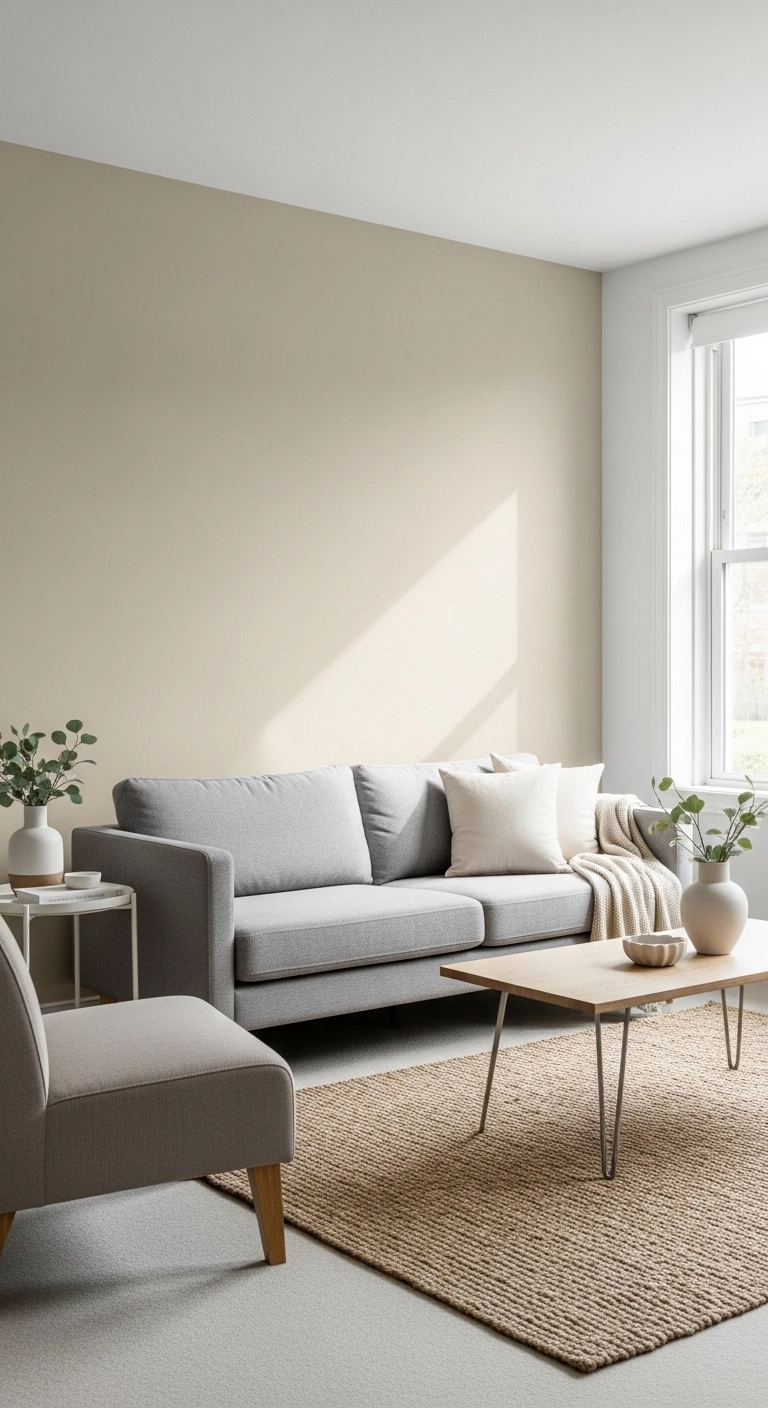
Nothing changes a room faster or more completely than paint. It is the most cost-effective home update that exists. A gallon of quality interior paint costs between thirty and sixty dollars. The labor is your own afternoon. And the result is a room that looks so different people sometimes assume you bought new furniture, replaced the flooring, or did something far more expensive.
The most important decision is not the specific color, but the undertone. Every paint color has a warm or cool undertone beneath the main hue. White can lean yellow or pink (warm) or blue or green (cool). A gray can feel almost lavender or almost brown. Getting the undertone wrong for your lighting conditions and existing furniture is the main reason why paint colors look different on the wall than they do on the chip. Before committing, buy a sample pot and paint a twelve-inch square directly on the wall—not on paper, because paper changes how the color reads. Live with it for a couple of days in morning light, afternoon light, and lamplight before making a decision.
If an entire room feels like too much, just do the wall your sofa or bed sits against. A single well-chosen wall color behind the main furniture arrangement changes the whole room’s character and takes less than two hours to complete.
Swap Out Cabinet and Door Hardware Across the Whole House
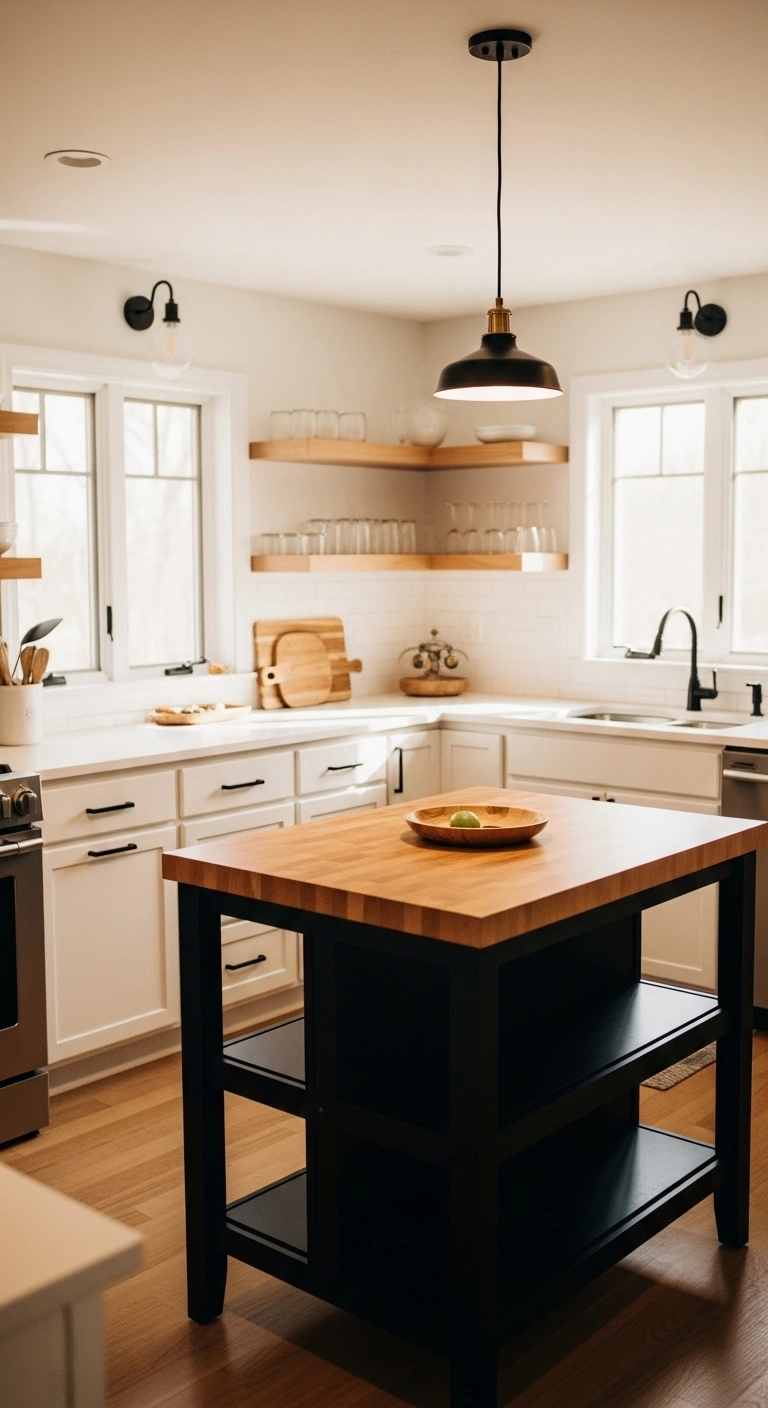
Hardware is one of the most overlooked surfaces in a home. People notice it only when it is wrong — when it is tarnished, mismatched, broken, or so generic it disappears into the background entirely. But when hardware is right, it reads as a deliberate design choice and elevates everything around it.
Kitchen cabinet pulls and handles are the highest-impact swap because there are so many of them. Changing twenty cabinet handles from dated brushed nickel knobs to matte black bar pulls takes about forty minutes with a screwdriver and costs somewhere between sixty and a hundred and twenty dollars for the whole kitchen, depending on what you buy. The kitchen will look noticeably different — not renovated, but updated and intentional.
Do not stop at the kitchen. Interior door handles throughout the house, bathroom cabinet hardware, and even the hardware on furniture like dressers and sideboards can all be updated the same way. When all the hardware in a home shares a finish — matte black, brushed brass, satin nickel — the whole house reads as more cohesive, even if nothing else has changed. Mismatched finishes across rooms are one of the main reasons a home feels unsettled and unfinished without the owner being able to identify exactly why.
Replace Every Light Bulb With Warm White Versions
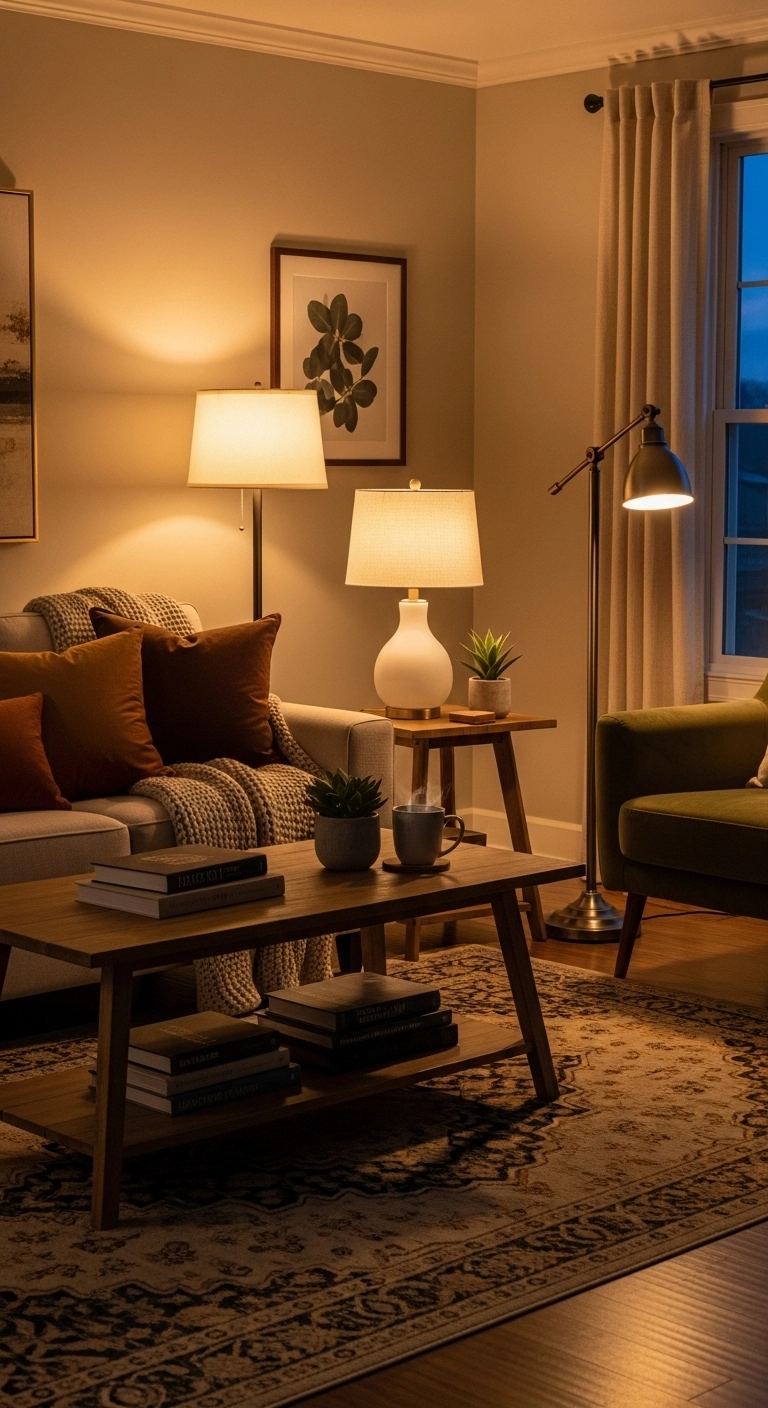
This update costs next to nothing and changes how every room in your home feels by evening. Most homes are filled with bulbs in different color temperatures — some warm, some cool, some daylight — because people change them one at a time as they light up rather than as a decision for the entire house. The result is a mixed, slightly disjointed quality of light that makes rooms feel neither bright nor comfortable.
Color temperature in light bulbs is measured in Kelvins. Bulbs between 2700K and 3000K produce warm white light — the amber-toned glow that feels settled and relaxed. Bulbs above 4000K produce cool white or daylight light that feels more alert and clinical. For living rooms, bedrooms, and dining areas, 2700K is almost always the right choice. For home offices or workshops where task accuracy matters more than atmosphere, slightly cooler bulbs are appropriate.
Go through every lamp and overhead fixture in your home and replace the bulbs with a consistent warm white. Buy a single brand and a single temperature so all the light sources across the house match. Do this one afternoon and notice how different the house feels that same evening. It is one of the most effective single-afternoon updates you can make, and the total cost for a whole house is usually under fifty dollars.
Edit Your Surfaces — Remove Half of What Is Currently on Display
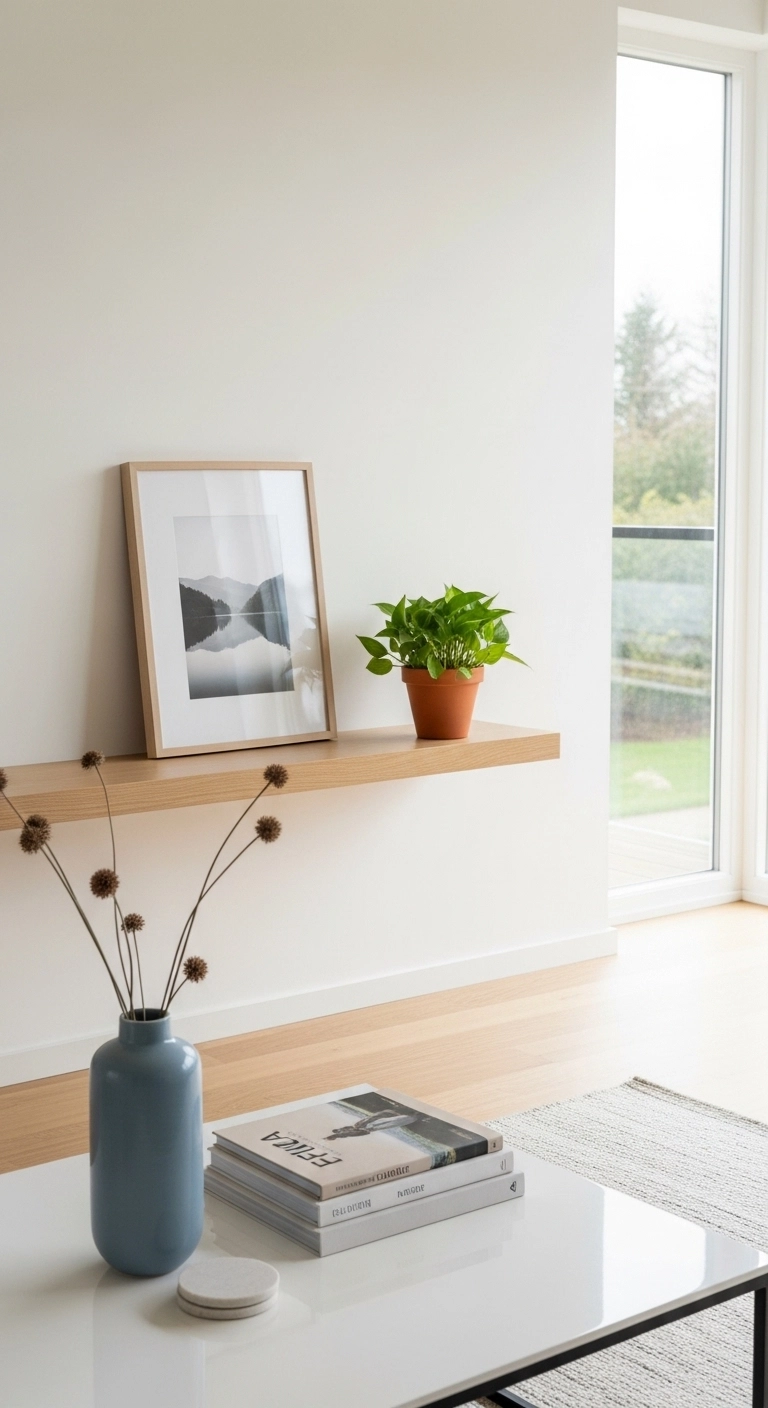
This is the update that sounds like the opposite of decorating, but it is often the most transformative thing you can do. Most homes accumulate things on surfaces — shelves, mantels, countertops, windowsills, coffee tables — until the surfaces are covered with so many items that nothing stands out. The result is visual noise that makes rooms feel chaotic, smaller, and harder to relax in.
Editing is simple in concept. Strip everything down to the surface. Get it all out of sight. Then add only the things that either have real meaning to you or that you find genuinely attractive to look at. For most people, this is half of what was there before. The rest of the objects, with the space around them, suddenly look as if they were never crowded together.
On a bookshelf, this means books spine-out as a background, with a few specific objects placed in front of or beside them — a small plant, a framed photo, a ceramic piece. On a kitchen counter, it means keeping out only what you use daily and clearing everything else to a cabinet. On a mantel, it means one to three objects with breathing room rather than ten crammed together. Empty space is not wasted space. It is what makes the things you choose to display worth looking at.
Bring in new throw pillows and one good blanket
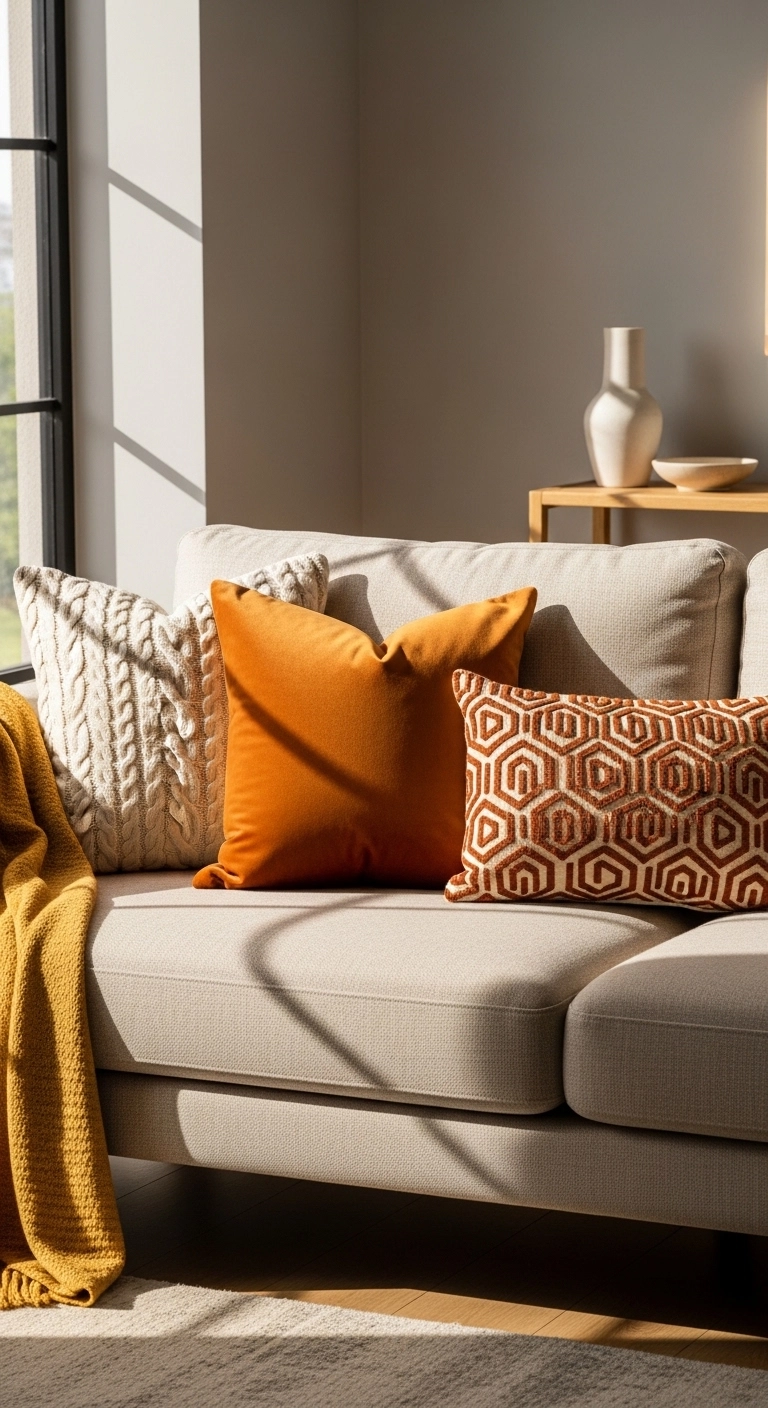
Soft goods are one of the easiest ways to shift the look of a room. A sofa can feel the same for years, but new pillows and a throw can make it feel updated in one afternoon. This works because fabric adds color, texture, and softness without changing the bigger pieces.
The key is restraint. Too many pillows make a room feel fussy. The better move is to choose a few that support the room’s colors and materials. If the room is mostly smooth and plain, bring in texture. If the room is very neutral, add a deeper tone that gives the eye something to hold onto. A blanket folded over the arm of a chair or laid across the end of a bed can do the same work in a quiet way.
This kind of update is small, but it affects the whole room because these are the items people see and touch every day. A home starts to feel fresh when it feels softer and more cared for, not when it looks crowded with new stuff.
Replace tired curtains or raise the ones you have
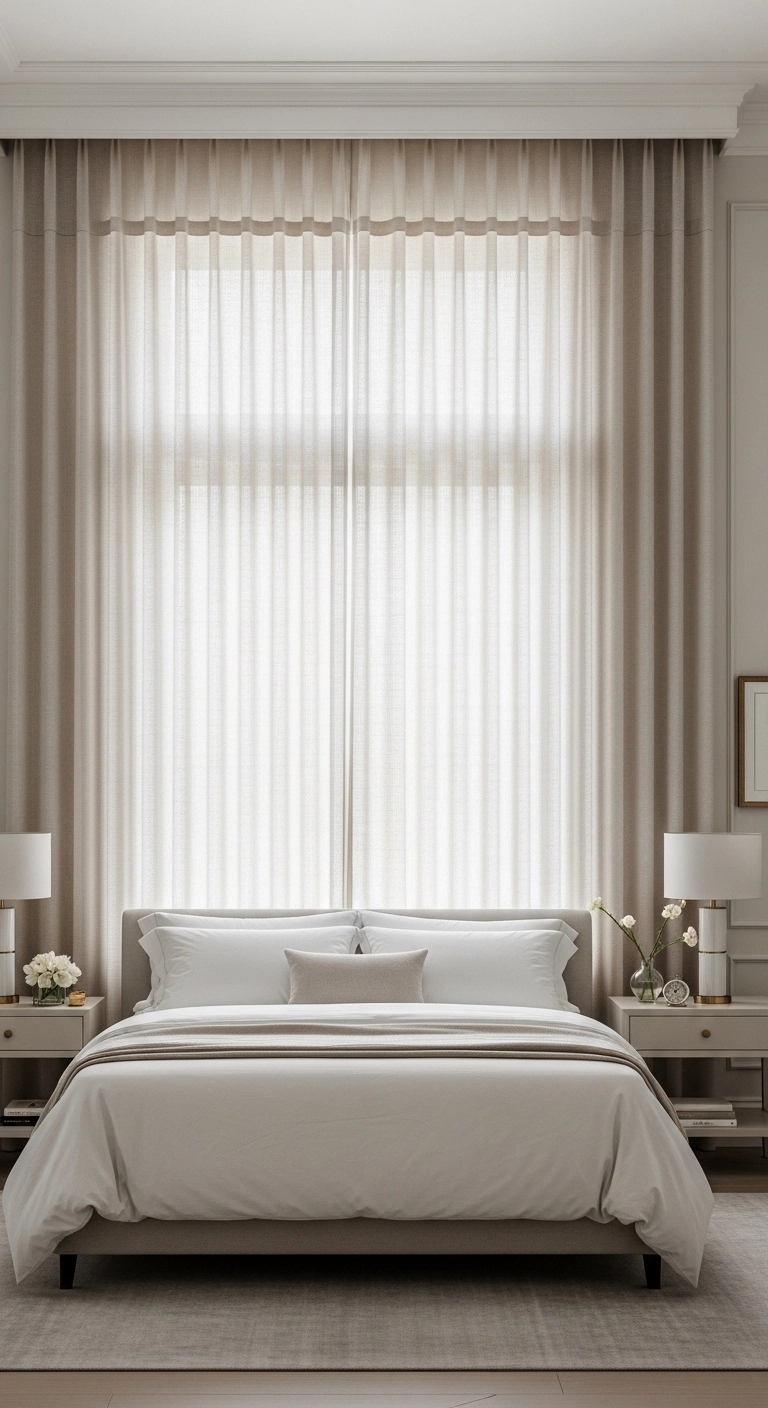
Windows do a lot of work in a room. When they look bare or poorly dressed, the room often feels unfinished. Old curtains, short panels, or thin blinds can make an otherwise nice room feel temporary. Updating the window area can shift that right away.
If your curtains are old, heavy, or too short, replacing them can help make a room look cleaner and longer. If the curtains are fine but hanging too low, raising the rod can make a big difference. Curtains hung high above the window frame often make the walls feel taller and the entire room feel fuller.
Fabric matters here as well. A soft woven panel can make the room feel easy and light. A fuller curtain can add softness and help with echo. This update works because windows pull attention. When they look right, the room feels more polished without needing much else.
Use mirrors to open up dark or tight areas
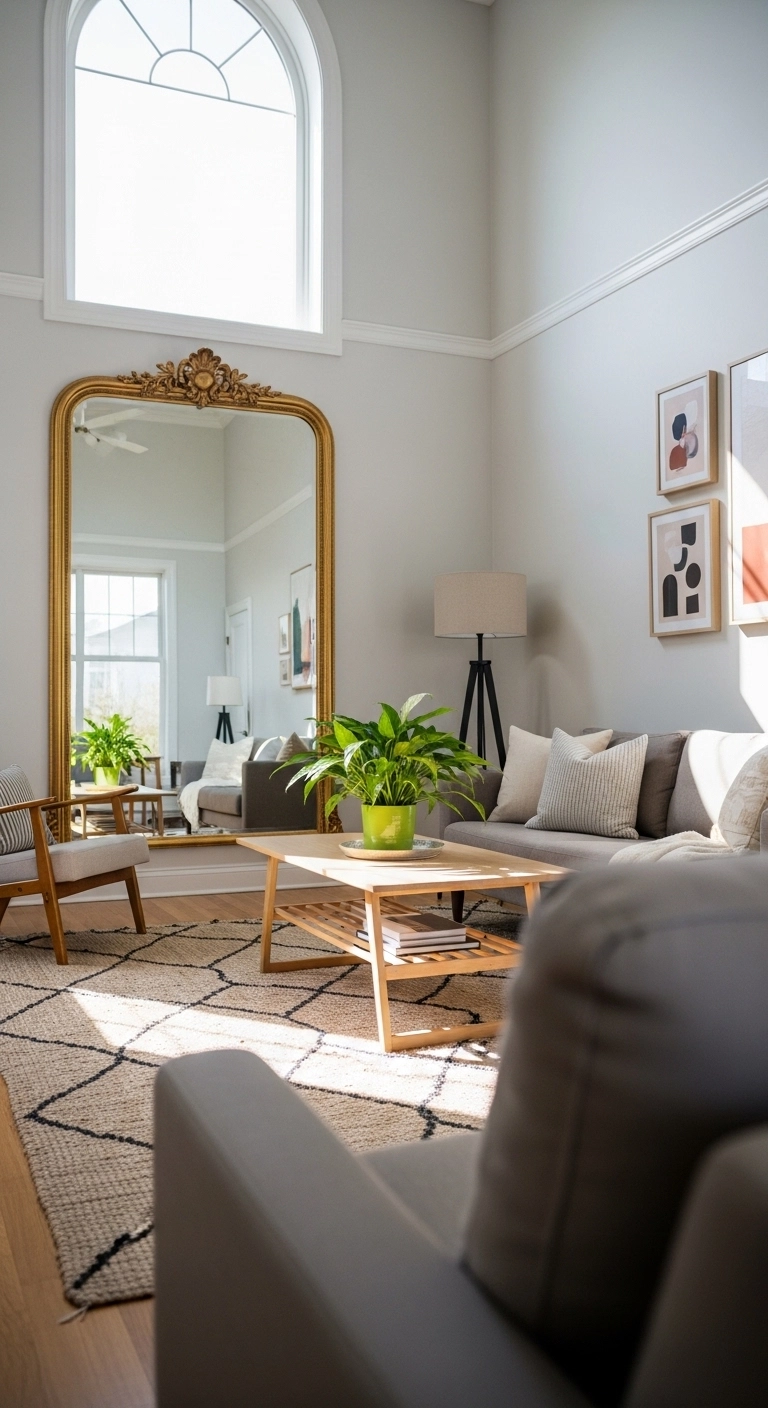
Mirrors are not just decorative pieces. They change how a room works. A mirror reflects light, which can make a dim room feel brighter. It also adds visual depth, which helps smaller rooms feel less boxed in. That is why mirrors have stayed useful for so long. They solve real problems.
A mirror across a window can spread daylight deeper into a room. A mirror in a narrow hallway can make the space feel less closed in. A large tilted mirror in a bedroom can make the room feel longer and more open even when the footprint remains the same.
The frame matters too. Wood adds warmth. Black metal gives contrast. A simple frame keeps the room calm. The best mirror placement feels natural, not forced. When used well, a mirror can make a space feel fresher simply because the room feels lighter and less heavy.
Refresh the room with a tighter color story
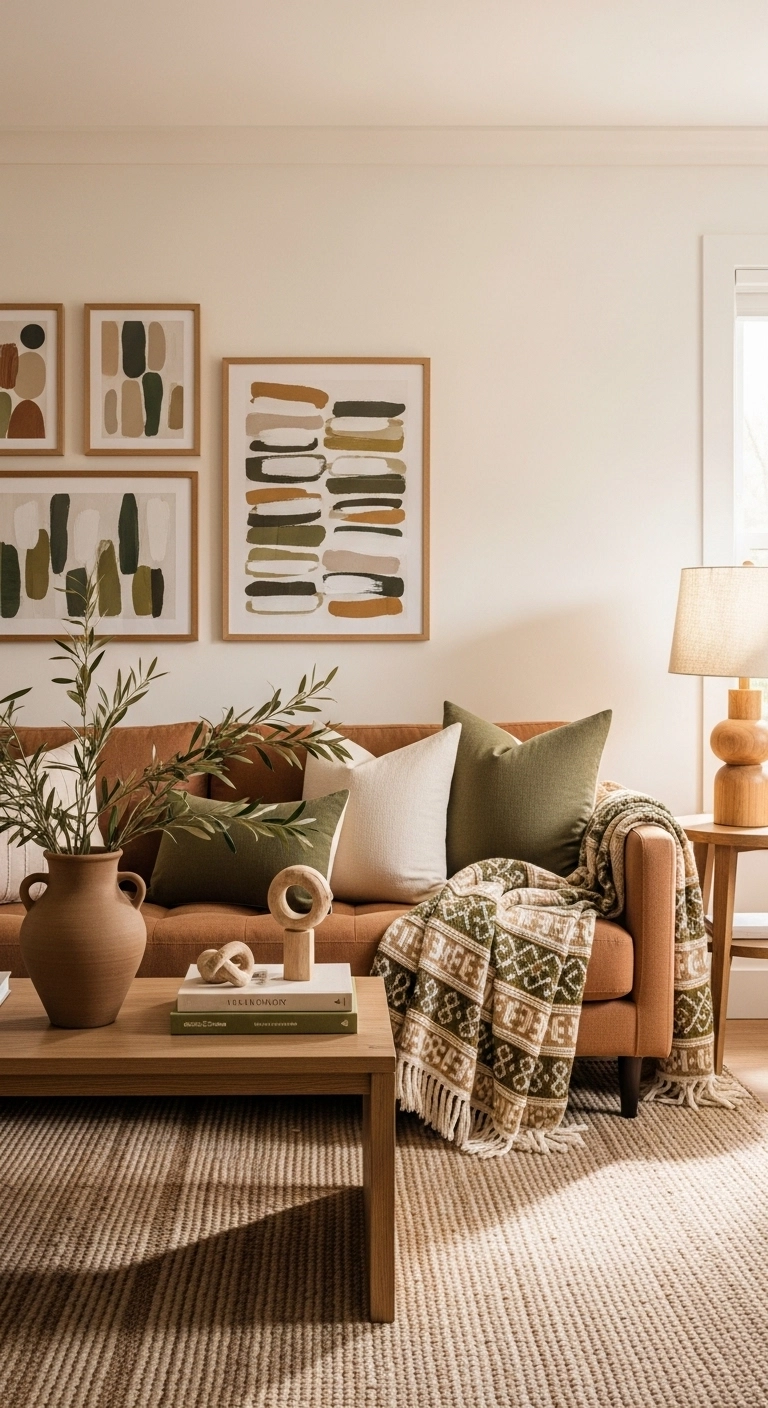
A room can have nice pieces and still feel off when the colors do not relate to each other. This happens often over time. People buy one item here, another there, and the room slowly loses any clear thread. A fresh room usually has a more settled color story.
This doesn’t mean everything has to match. It means the room should feel like the pieces belong together. If you choose a few tones and repeat them in simple ways, the whole space will start to feel calm. This could mean carrying warm whites, wood, olive, and earth through pillows, art, ceramics, and bedding. Or it could be cream, blue, tan, and black carried in small touches.
This update can happen without a full makeover. Sometimes it means removing the colors that do not belong. Sometimes it means adding one or two small items that help bridge what is already there. A room feels fresh when the eye can move through it without getting pulled in too many directions.
Style the coffee table, console, or shelf with less
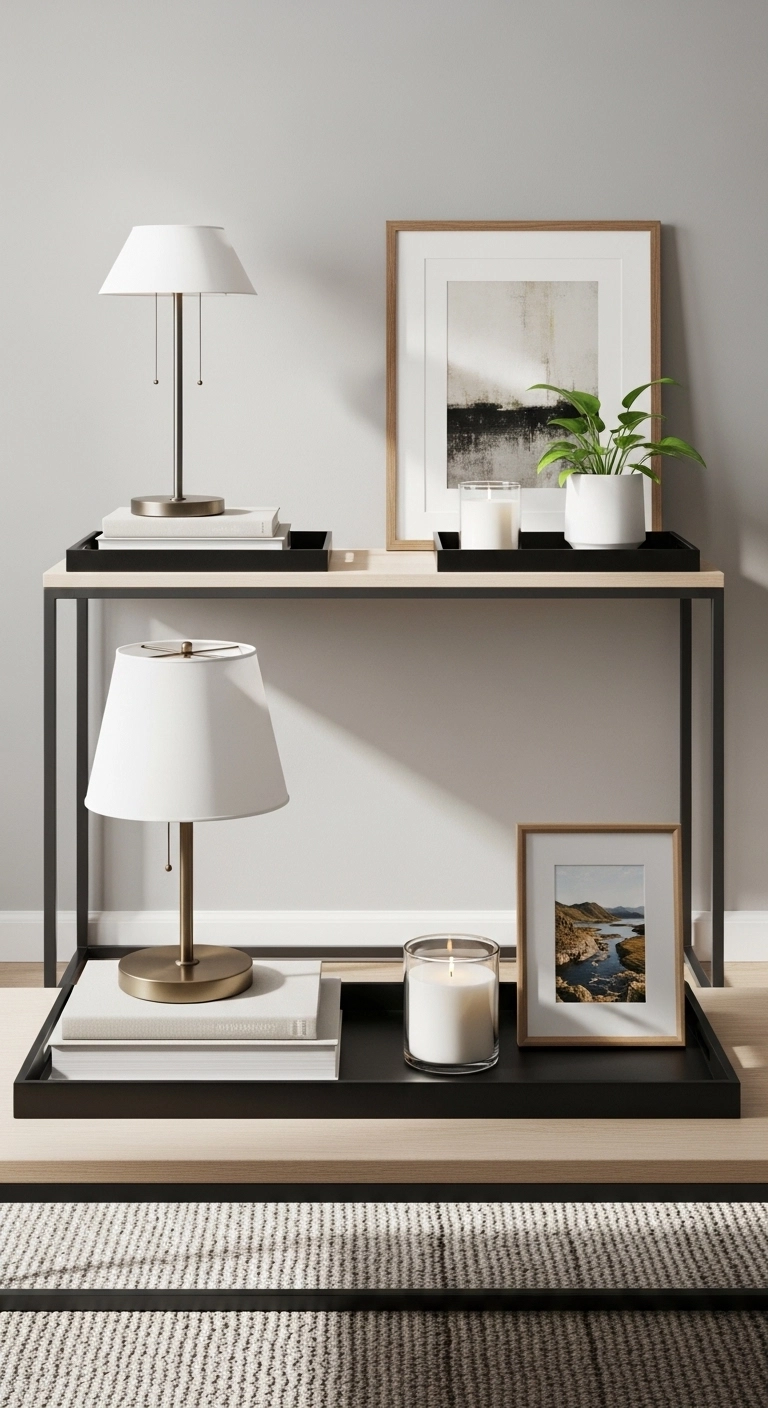
When people want a room to look better, they often add more. In most cases, the space actually needs less. Surfaces full of small scattered items make a room feel busy. They also make it hard for the decor that matters to stand out. One of the easiest updates is to restyle key surfaces with fewer, better pieces.
A coffee table doesn’t need ten things. It needs just enough to feel useful and calming. A tray, a book, a candle, or a small bowl can be enough. A console can feel complete with a lamp, a framed picture, and a simple dish for keys. Shelves look better when there is space around the items.
Fresh rooms do not usually feel stuffed. They feel edited. When you remove clutter and let the better pieces breathe, the room looks newer because it looks more intentional. This is one of the simplest decor changes you can make, and it often has one of the biggest visual effects.
Add natural materials to soften hard surfaces
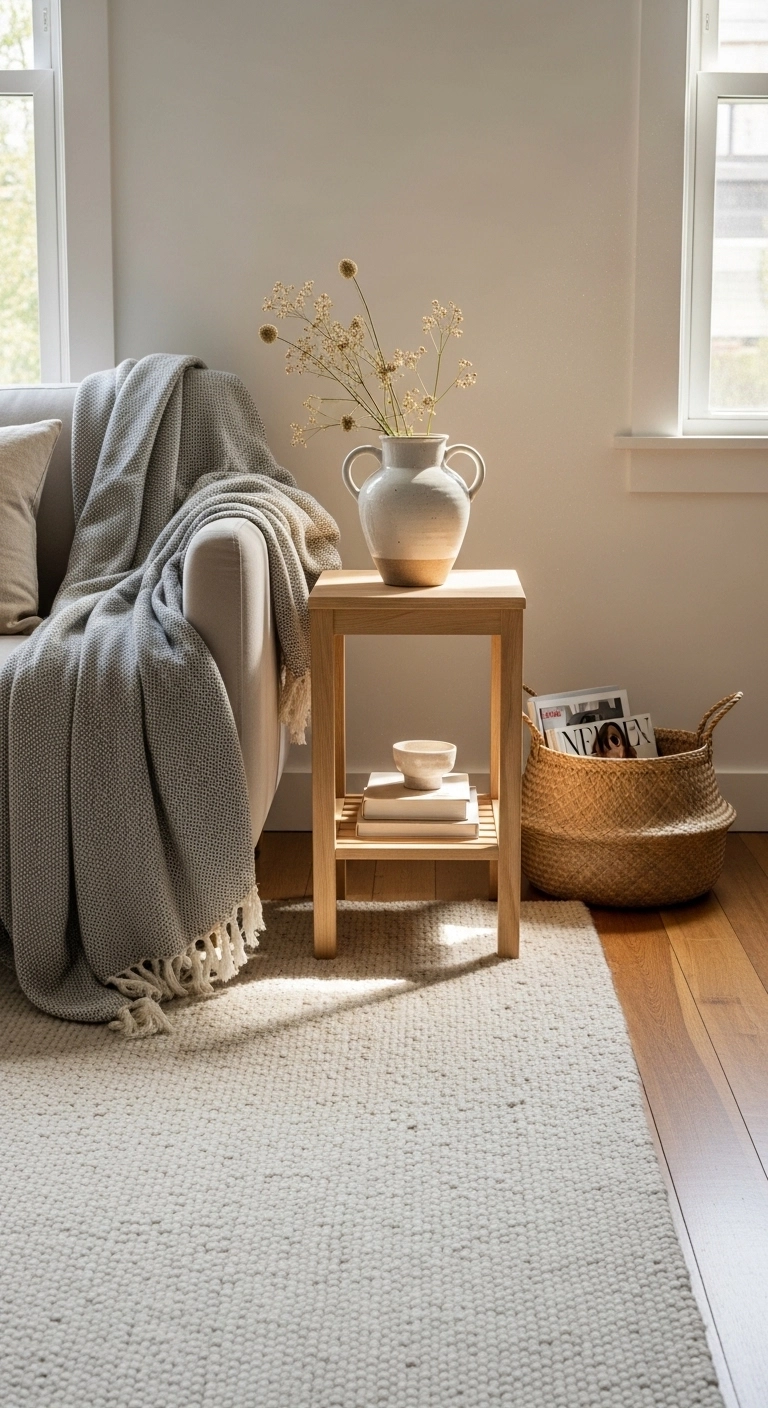
Many homes have too many hard finishes in one space. Painted walls, smooth floors, shiny counters, straight-lined furniture, and metal fixtures can make a room feel stark. Natural materials help break up this pattern and make the space feel warmer.
Wood is one of the easiest ways to do this. A wood bowl, wood frame, stool, or side table can bring warmth into a room quickly. Woven baskets, linen fabric, ceramic pieces, and stone also help. These materials give a room body. They make it feel lived in and grounded rather than flat.
A fresh room isn’t just about what’s new. It’s also about what feels real. Natural textures do this well. They help a home feel easy on the eyes because they add calming variation. Even one or two pieces can change how a room reads.
Add a New Rug or Reposition the One You Have
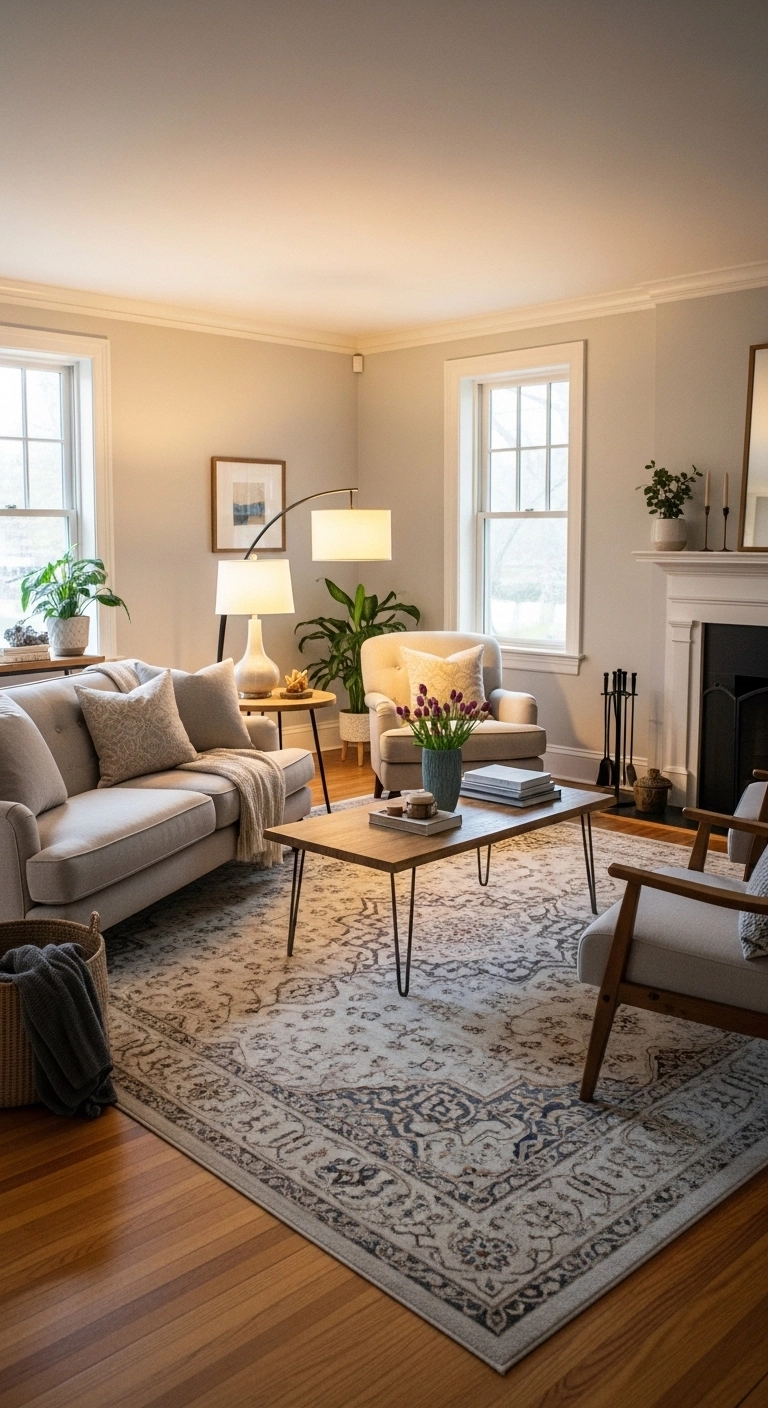
A rug defines the activity zone in a room and ties the furniture together into a cohesive grouping. Without one, furniture tends to feel like it is floating — arranged in the room but not belonging to it. With the right rug in the right position, the same furniture looks placed and purposeful.
The size rule that works for most living rooms is straightforward: The rug should be large enough to accommodate at least the front two legs of each sofa and chair in the seating arrangement. Better still, a rug is large enough to fit all four legs of each piece. This scale makes the grouping feel unified and makes the room feel larger. An 8×10 rug works best in most medium-sized living rooms. A 9×12 works better in a larger space.
If you already have a rug but the room still feels unsettled, reposition it before you replace it. Rugs are often placed too close to one wall, or centered on the room rather than on the furniture arrangement, or not centered correctly under a dining table. A rug that is off-center by even six inches can make a room feel subtly wrong in a way that is hard to diagnose. Repositioning costs nothing and takes ten minutes.
Clean and Repair Before You Decorate — It Changes More Than You Think
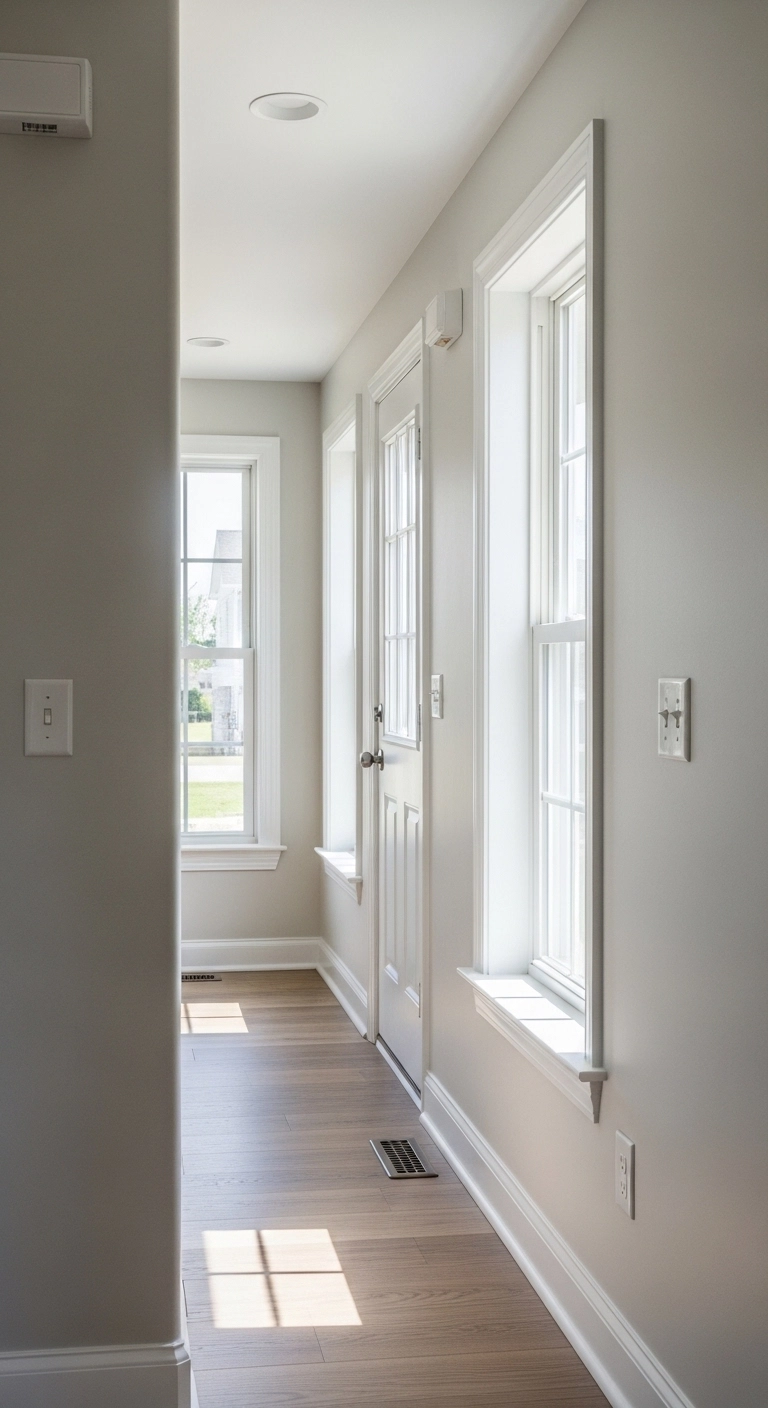
This one is not glamorous, but it is honest. Dirty windows reduce natural light by a measurable amount. Scuffed baseboards and trim make walls look dingy even when they are freshly painted. A carpet with visible stains makes a room feel neglected regardless of what else is in it. A door hinge that squeaks, a cabinet that does not close properly, or a light switch plate that is cracked — these small broken things communicate something about a space that all the nice textiles in the world do not fully counteract.
Before any decorating update, do a thorough cleaning and minor repairs. Wash windows inside and out. Wipe down baseboards and door frames with a damp cloth. Touch up paint chips on walls and trim. Tighten loose cabinet hinges. Replace cracked outlet covers and replace plates, which cost less than two dollars. Steam clean or shampoo a carpet that’s past its best.
The reason this matters is that decorating works by directing the eye toward what is good in a room. But if there are unresolved maintenance issues competing for attention, the overall impression suffers no matter how good the decor choices are. A clean, repaired room with basic furniture feels more like a well-cared-for home than a decorated room that has not been properly maintained.
Create One Intentional Focal Point in Each Room
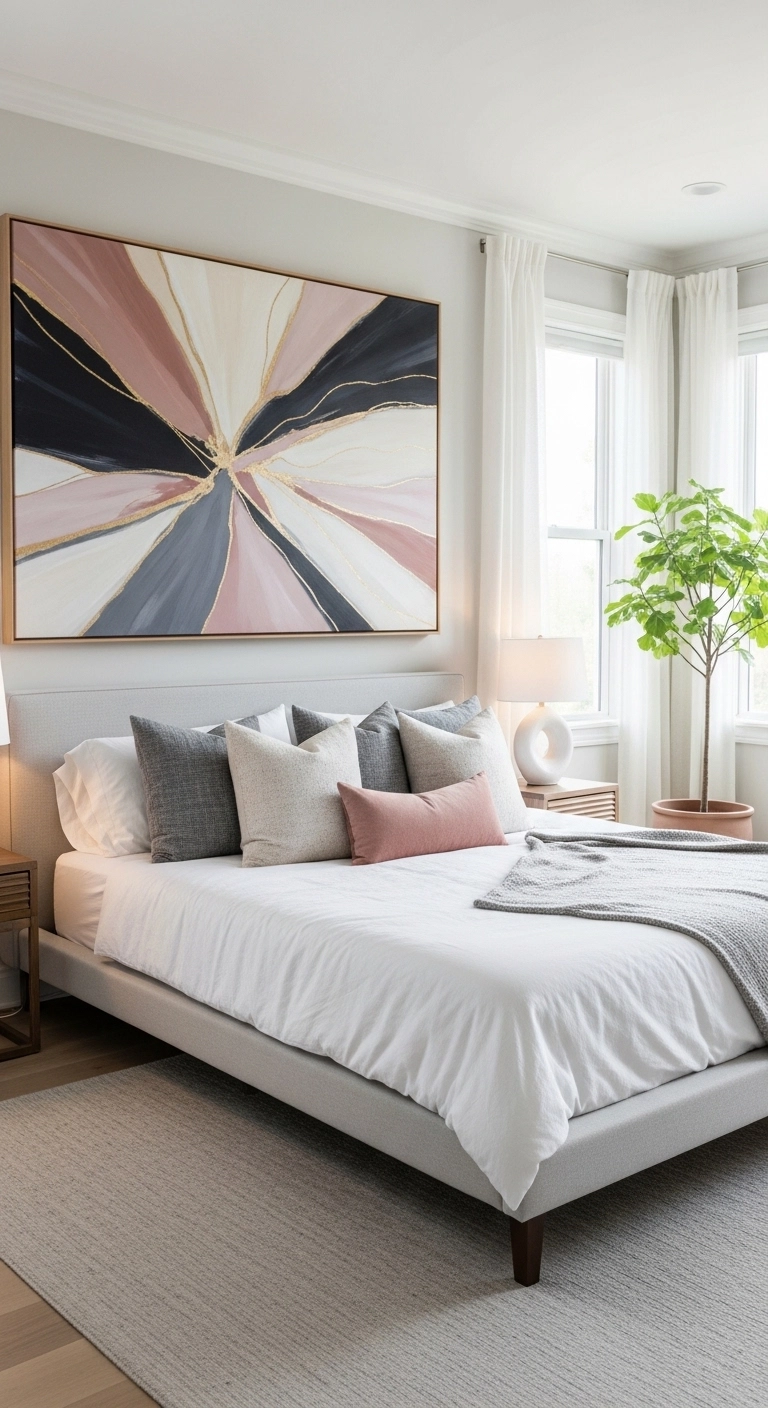
A focal point is the first thing your eye catches when you enter a room. Every well-designed room has one, whether it’s a fireplace, a large piece of art, a feature wall, a statement piece of furniture, or a window with a special view. In rooms where there is no focal point, the eye wanders without landing anywhere, creating a restless, unresolved feeling that’s hard to name but easy to understand.
If your room does not have a natural focal point — no fireplace, no view, no built-in architectural feature — you can create one deliberately. A large piece of art hung on the main wall is the most direct route. It does not need to be expensive. A print from Society6 or Desenio, printed at a large format and framed simply, costs under sixty dollars and functions exactly as original art would in terms of visual anchoring.
Other ways to create a focal point include a gallery wall mounted on a room’s main wall, a boldly painted or wallpapered accent wall behind a bed or sofa, or a large piece of furniture—a bookcase, a sideboard, a headboard—that commands the room’s main wall by its sheer scale. Once a focal point is established, the rest of the room’s decor can be arranged to support it rather than compete with it, making every other decorating decision easier and more cohesive.
Final Thoughts
None of these updates require renovations, a big budget, or a professional. What they do require is a willingness to look at your home honestly — to see what’s dated, what’s cluttered, what’s broken, what’s damaged — and to address those things with intention one thing at a time.
The homes that feel the best to live in are not the ones with the most expensive contents. They are the ones where thought has been applied to the details: the light quality, the furniture layout, the surfaces, the things on display. Those details are all within reach, regardless of budget, ownership status, or how long you have lived somewhere.
Pick two or three updates from this list that feel most relevant to your home right now. Start this weekend. The change in how a place feels is usually noticeable the same day you make the change—and that immediate return is what makes this kind of work truly satisfying, rather than productive.

Muskan Saleem
BukayHome shares practical home decorating ideas, room inspiration, and simple styling tips to help readers create a home they truly love.