14 Small Entryway Ideas for a Clean First Impression
14 Small Entryway Ideas for a Clean First Impression
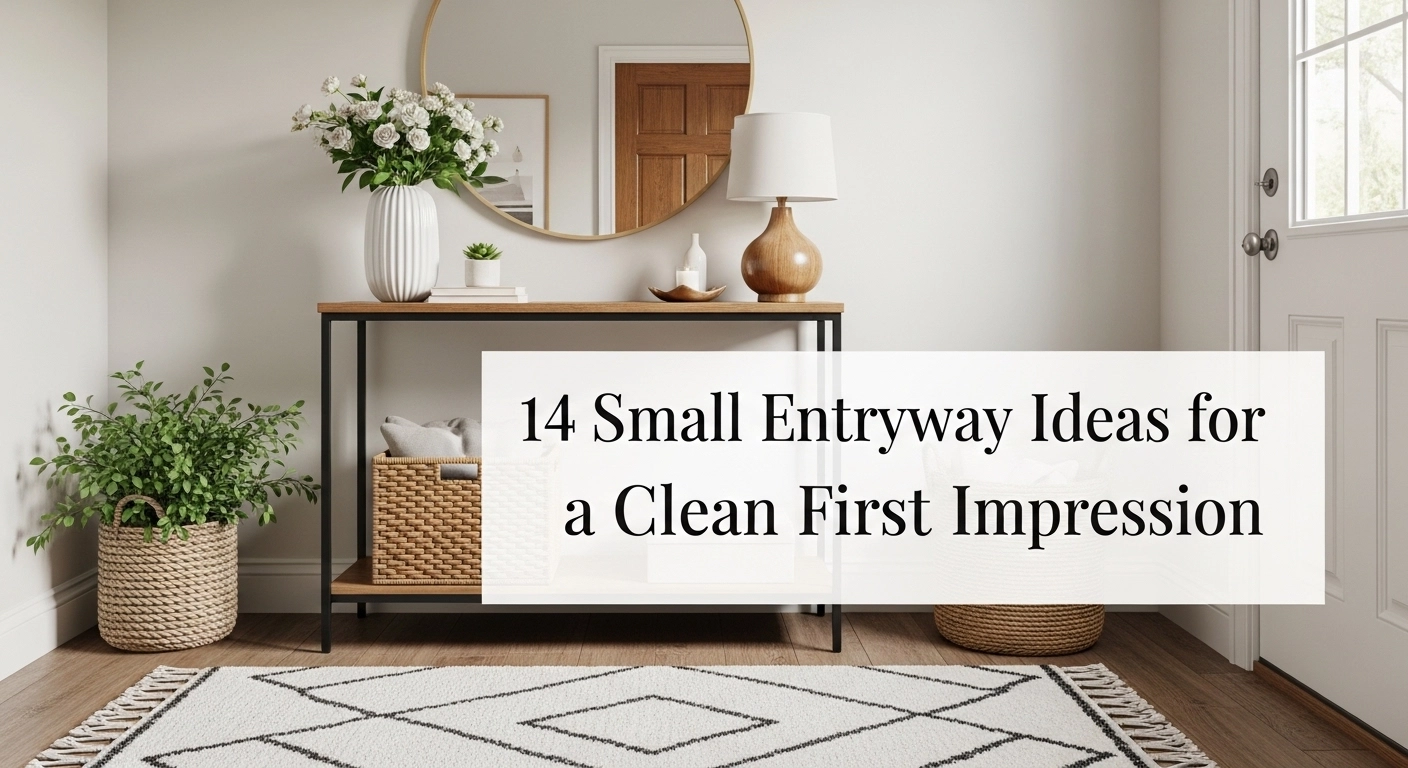
A small entryway has a bigger job than most people think. It is the first thing people see when they walk into the home. It is also where shoes land, keys disappear, bags drop, coats pile up, and mail begins to spread. When the entry works well, the whole house feels calmer. When it does not, the mess starts at the door and moves through the day.
So a small entryway shouldn’t be considered a no-brainer. It doesn’t need an entire built-in wall or a large front hall to feel functional. It needs to be well-chosen. A narrow wall, a few feet of floor space, or even a small corner near the door can become a strong entry zone when the layout is suited to everyday life.
After many years of helping people improve tight spaces, I have seen the same pattern again and again. The best small entryways are not the ones with the most decor. They are the ones that solve real problems in simple ways. They give shoes a place to go. They stop keys from wandering. They make room for coats without making the doorway feel blocked. They look clean because they support real habits.
This guide shares fourteen small entryway ideas that can help create a cleaner first impression without making the space feel crowded. These are not only styling ideas. They are practical ways to make the area by the door work better every day.
Start with the mess that happens there every day
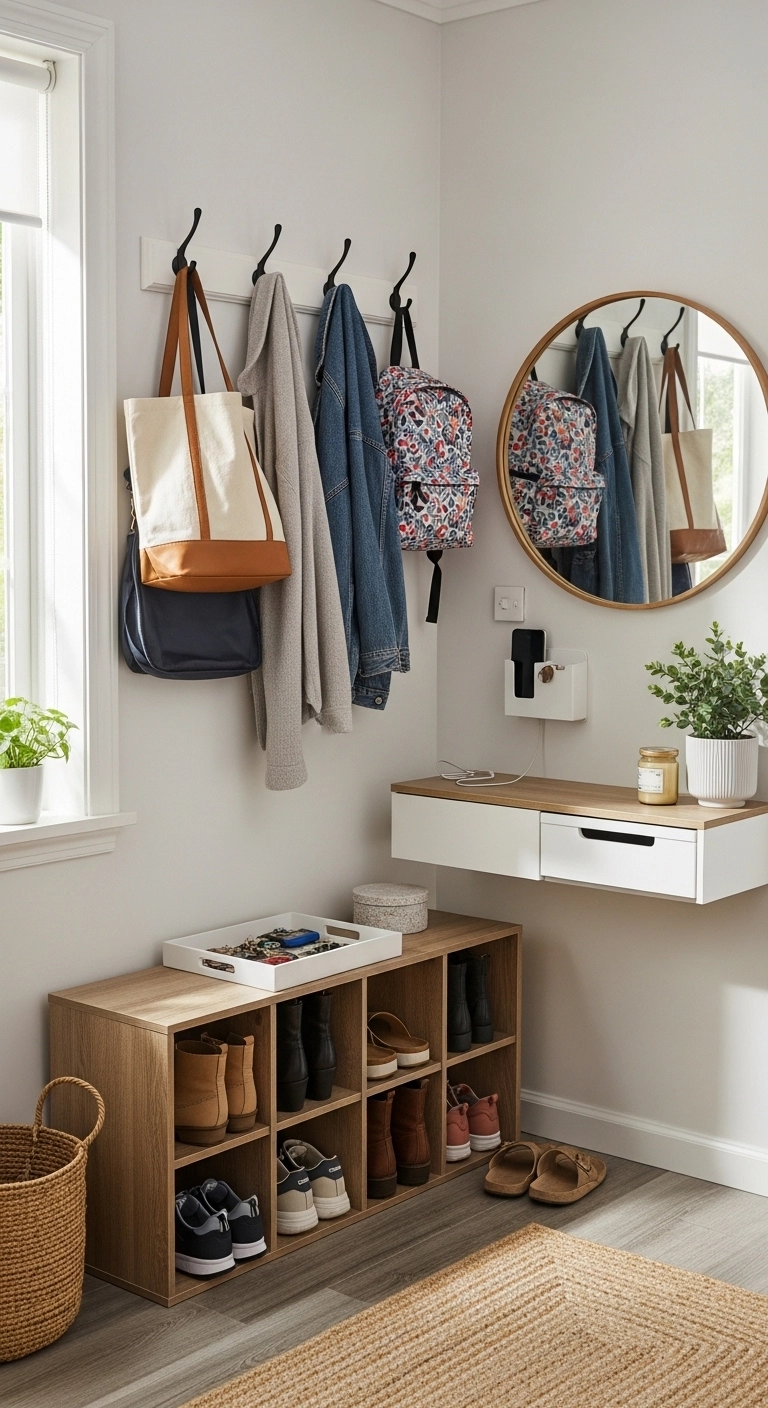
The best entryway design begins with honesty. Look at what lands by the door now. Maybe it is shoes, bags, coats, umbrellas, dog leashes, lunch boxes, backpacks, or junk mail. That pile tells you exactly what the entry needs. Too many people try to decorate the area before they solve the daily mess, and then the entry still looks cluttered no matter how pretty the mirror or table may be.
A small entryway works best when it responds to the real habits of the homeowner. If shoes are a major problem, floor storage is the first thing to consider. If the family loses keys every morning, a clear drop spot is the first thing to consider. If bags are always thrown over a chair, hooks are more important than a bench. It sounds simple, but that’s why some small entryways stay tidy while others keep falling apart. Strong people solve the right problem first.
This idea matters because a clean first impression is not created by styling alone. It comes from stopping the clutter at the door before it spreads through the rest of the house.
Use one wall well instead of spreading storage everywhere
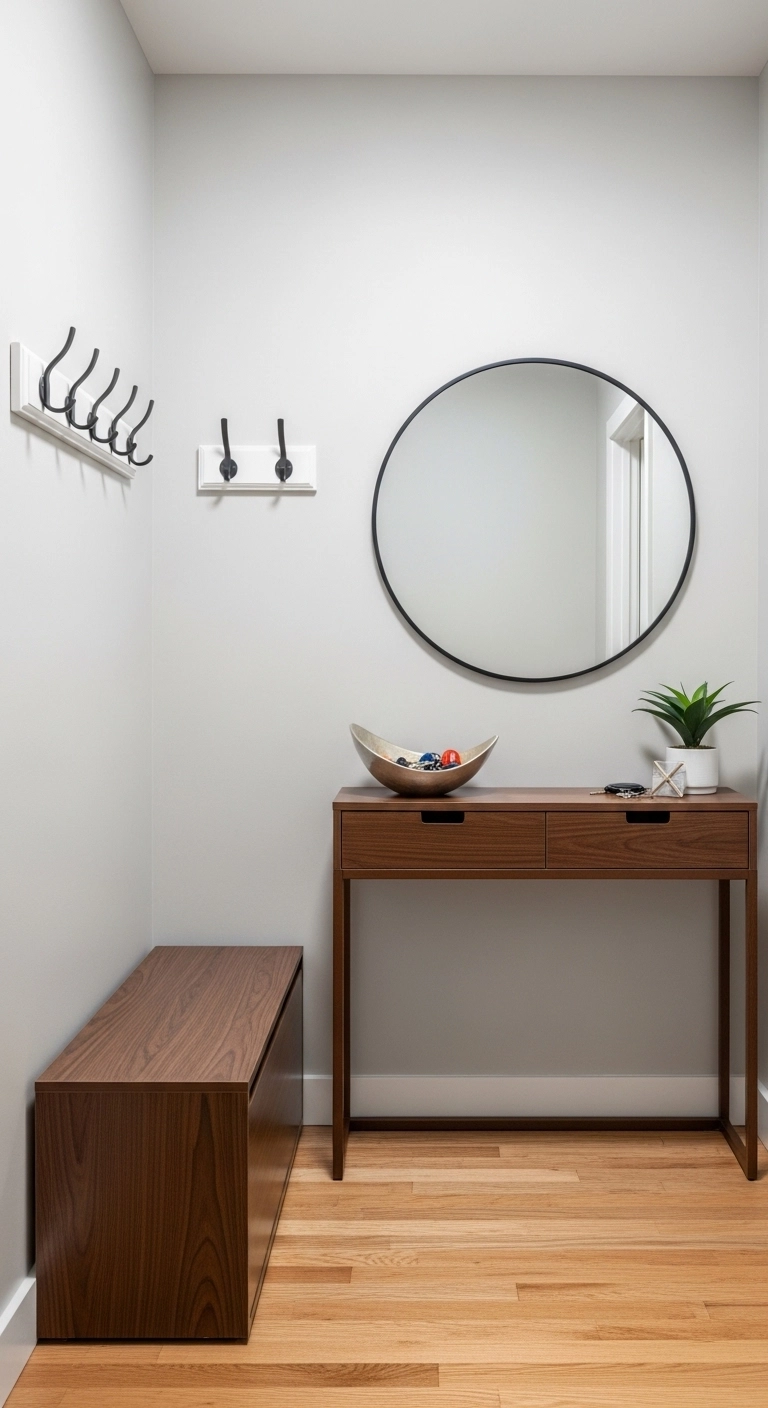
A small entryway often feels worse when storage is scattered around it. A hook near the door, a basket under the table, a tray on a sideboard across the room, and a shoe rack pushed into a corner can all seem helpful. In practice, this type of setup can make the entryway more cluttered and difficult to rearrange.
A stronger move is to use one wall or one clear section as the main entry zone. This might include hooks, a narrow console, a bench, a mirror, or shoe storage all working together in one place. When the storage is grouped, the area feels more intentional. It also becomes easier to use because people know where to stop and unload.
This is especially important in a small space because the eye needs order. One strong wall usually feels calmer than several small storage gestures spread all over the doorway. A clean first impression often depends on that kind of visual control.
Add a narrow console if the entry needs a real landing spot
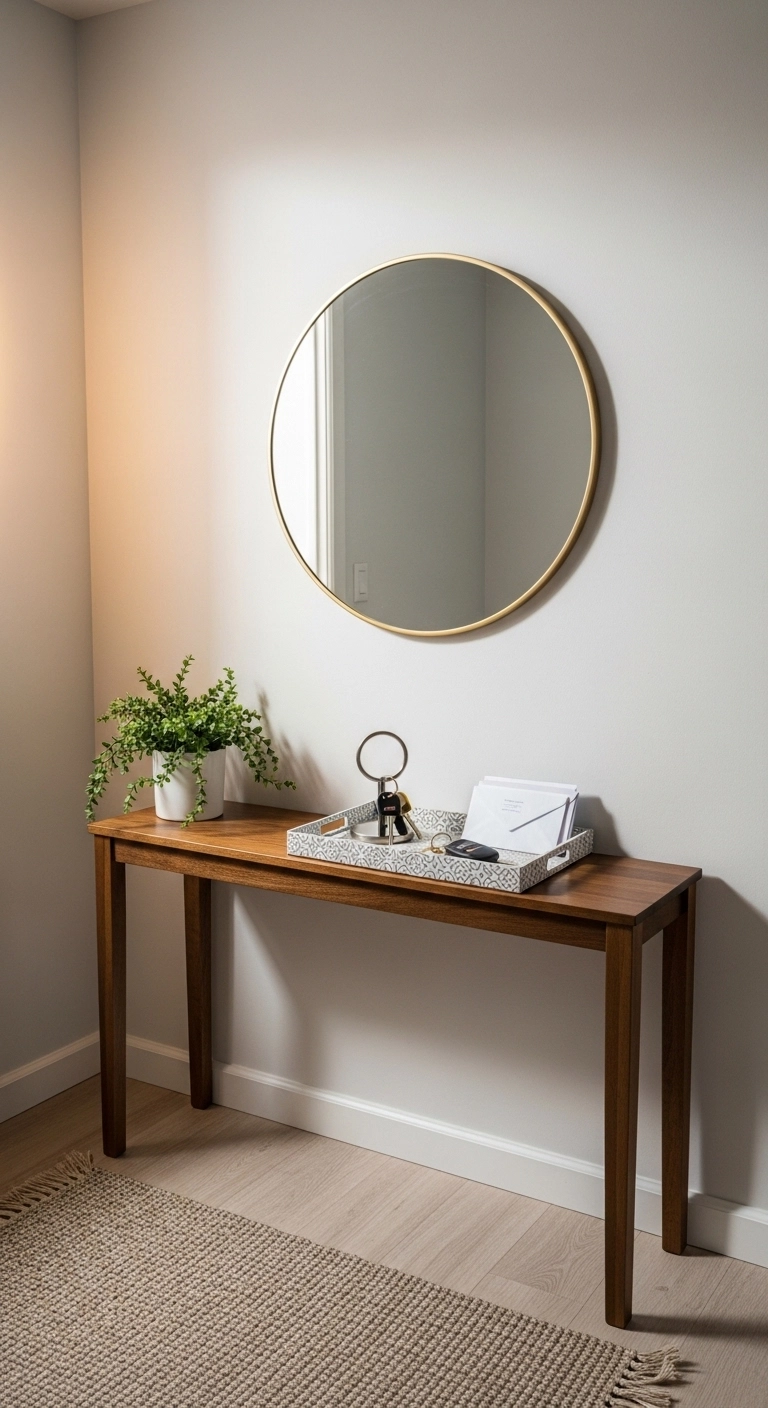
Keys, wallets, sunglasses, and mail need somewhere to land. Without that, a small entryway quickly becomes a collection of random drops. A narrow console can solve that if the space allows it. It gives the entry one useful surface without taking too much room from the walking path.
The best console for a small entry stays slim. It should hold a tray, a bowl, or a few basic items, but it should not become a heavy table that blocks movement. Open-leg consoles often help because they feel lighter than solid ones. Some homes may do better with a wall-mounted shelf instead, but the purpose stays the same. The entry needs a clear landing zone for small daily items.
This makes the whole place feel more controlled as the hand starts to know where to put the important things. This kind of ease is more important than many people think. It turns the entry from a drop-off point into a system.
Use hooks instead of hangers for the things people grab most
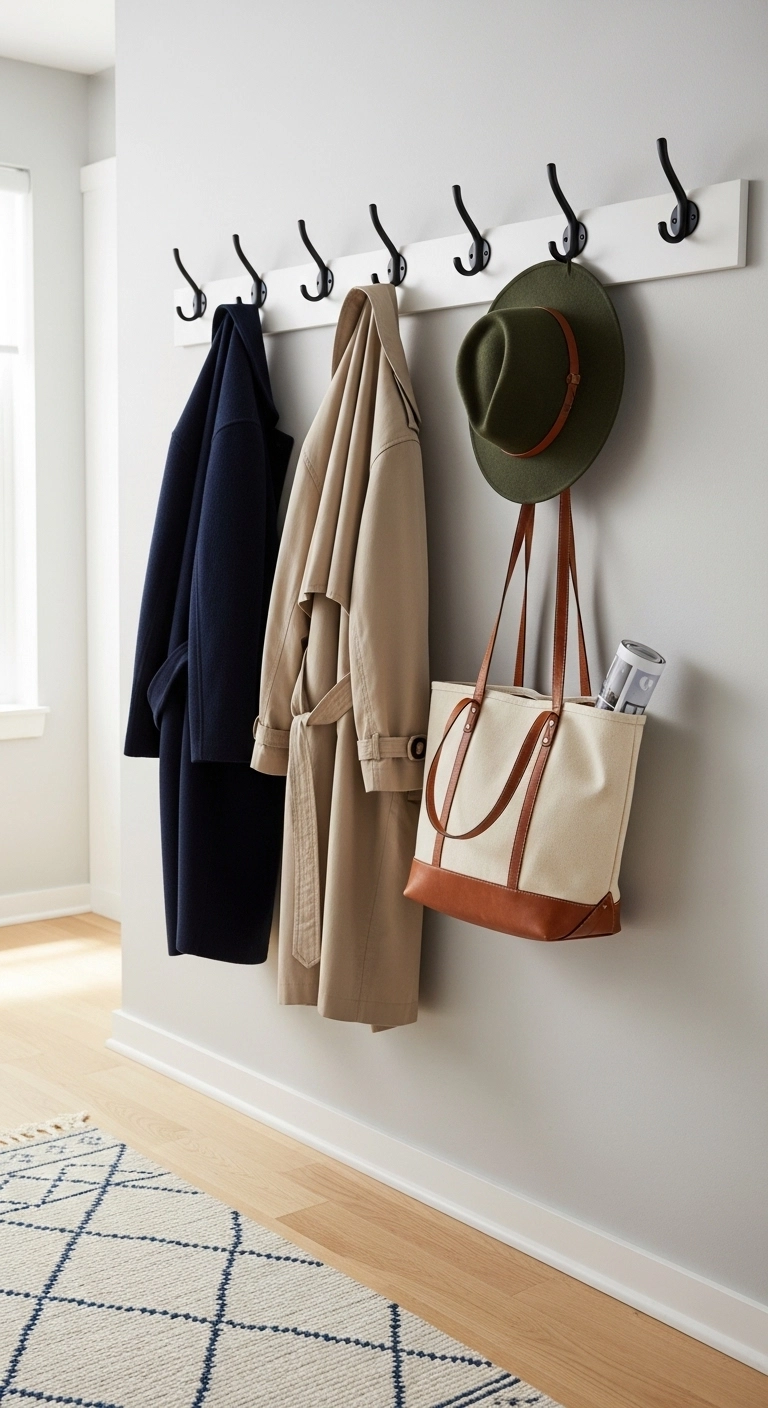
Many homes treat the entry like a closet, but daily life moves faster than that. People come in with groceries, backpacks, shoes, and full hands. They do not want to open doors, find hangers, and make everything perfect. That is why hooks work so well in small entryways. They match real behavior.
A few sturdy hooks can hold coats, bags, hats, and even umbrellas in a way that feels comfortable. The key is to avoid placing them too close together. Each hook needs enough room so that the coats don’t merge into one heavy pile. If the entryway is shared by a family, giving each person a clear hook or section can help even more.
This works because a small entry stays clean when the storage is easy enough to use in tired moments. Hooks support that. They ask very little, and that is why people actually use them.
Keep shoes low and contained so the floor stays calm
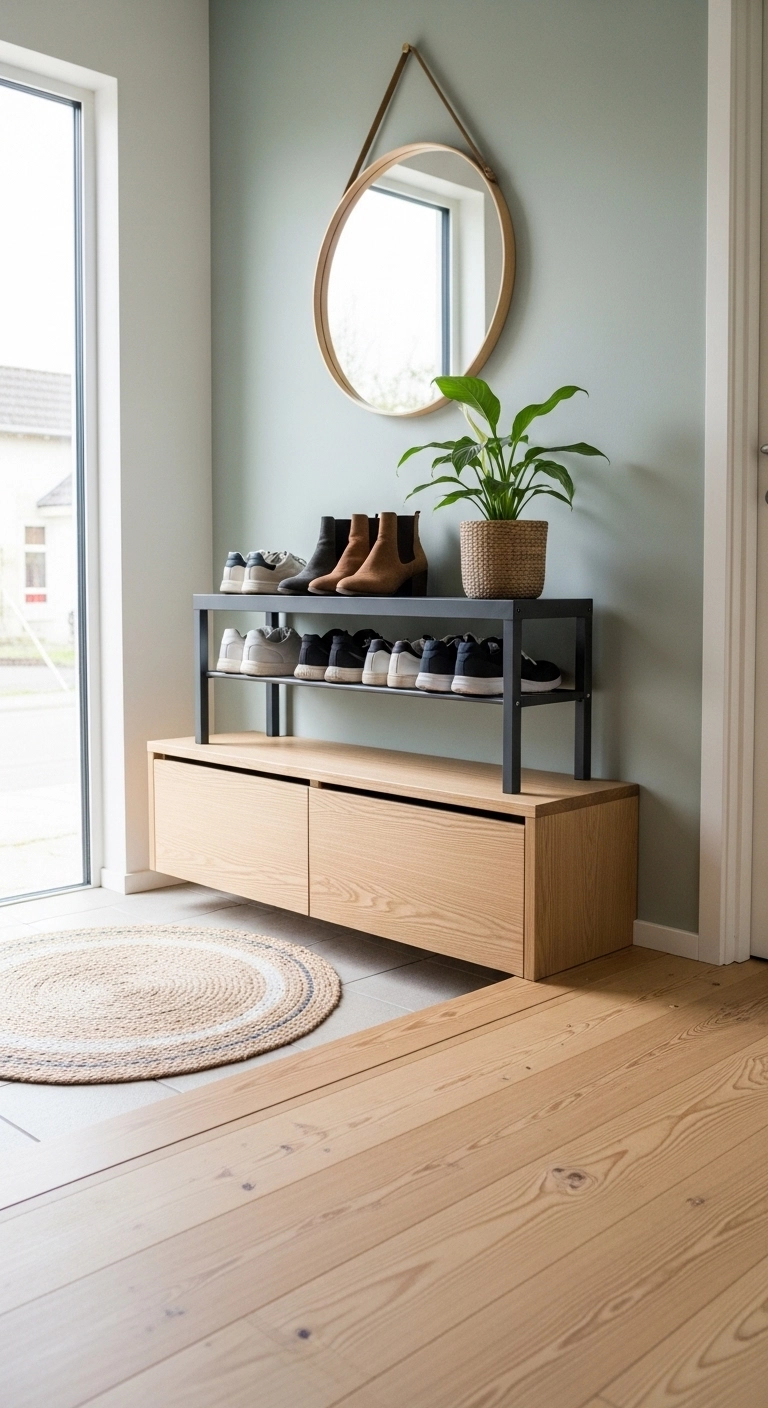
Shoes are often the first thing that makes an entryway look messy. They spread quickly, they tip toe, and they take up floor space. In a small entryway, the floor is very important. If it looks cluttered, the whole area feels crowded, even if the walls are clean.
A better shoe setup usually keeps shoes low and gathered. That may mean a narrow rack, a shallow tray, a bench with cubbies below, or one basket for soft shoes and sandals. The goal is not to hide every shoe completely. The goal is to stop them from drifting into the walking path and breaking up the look of the space.
This matters because a clean first impression depends on open floor space. The more visible floor you protect, the bigger and calmer the entry will feel.
Add a bench if putting on shoes is part of daily life
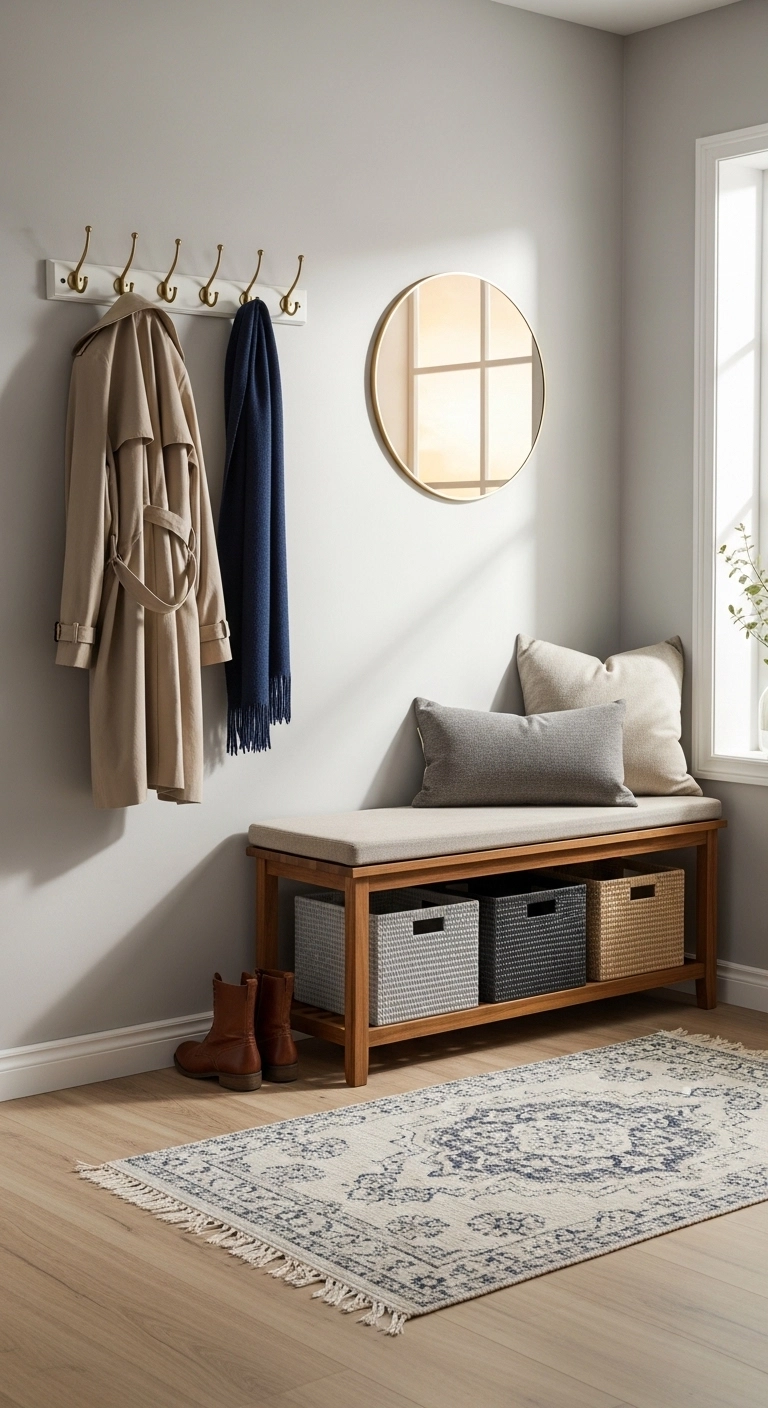
A bench can make a small entryway feel much more useful, especially in homes where people remove shoes at the door. It gives the body somewhere to pause. That small moment of sitting down changes how the entry works. The room feels more intentional and less like a hallway with clutter.
The smartest benches in tight spaces often do more than one job. They may include storage inside, shelves below, or just enough room for a basket underneath. Even a narrow bench can make a difference if it fits the scale of the entry. The key is to keep it from blocking the path. A bench should support movement, not interrupt it.
This is one of the strongest entryway ideas because it adds both comfort and order. It says that the space is meant to be used, not just passed through.
Hang a mirror to brighten and open the space
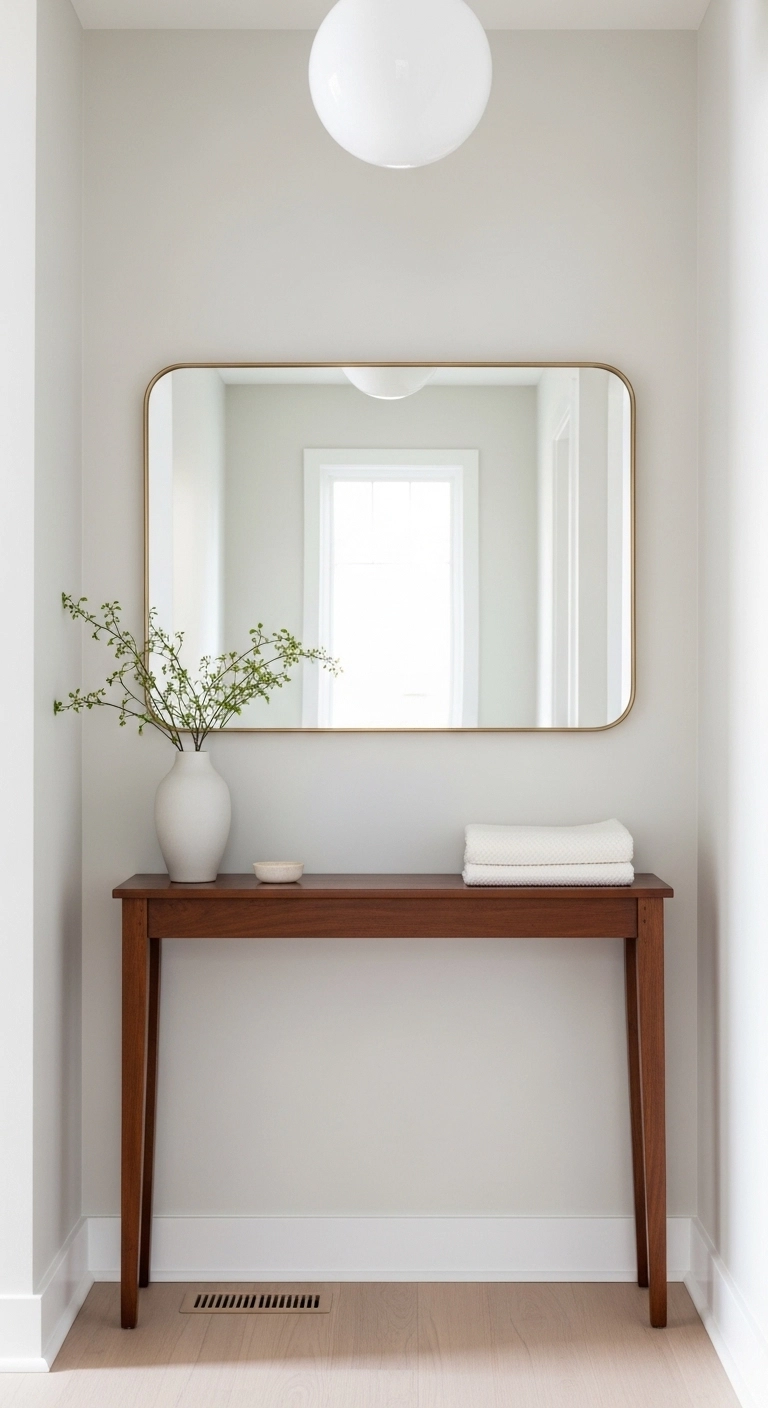
A mirror can do a lot in a small entryway. It reflects light, makes the area feel less boxed in, and gives the eye a larger shape to land on. It also helps with the practical side of coming and going. A quick look before leaving the house is always useful.
This is one of the strongest entryway ideas because it adds both comfort and order. It says that the space is meant to be used, not just passed through.
This idea works because small entryways often need more light and more openness than they naturally have. A mirror can bring both without adding visual clutter.
Use baskets for the loose things that do not stack well
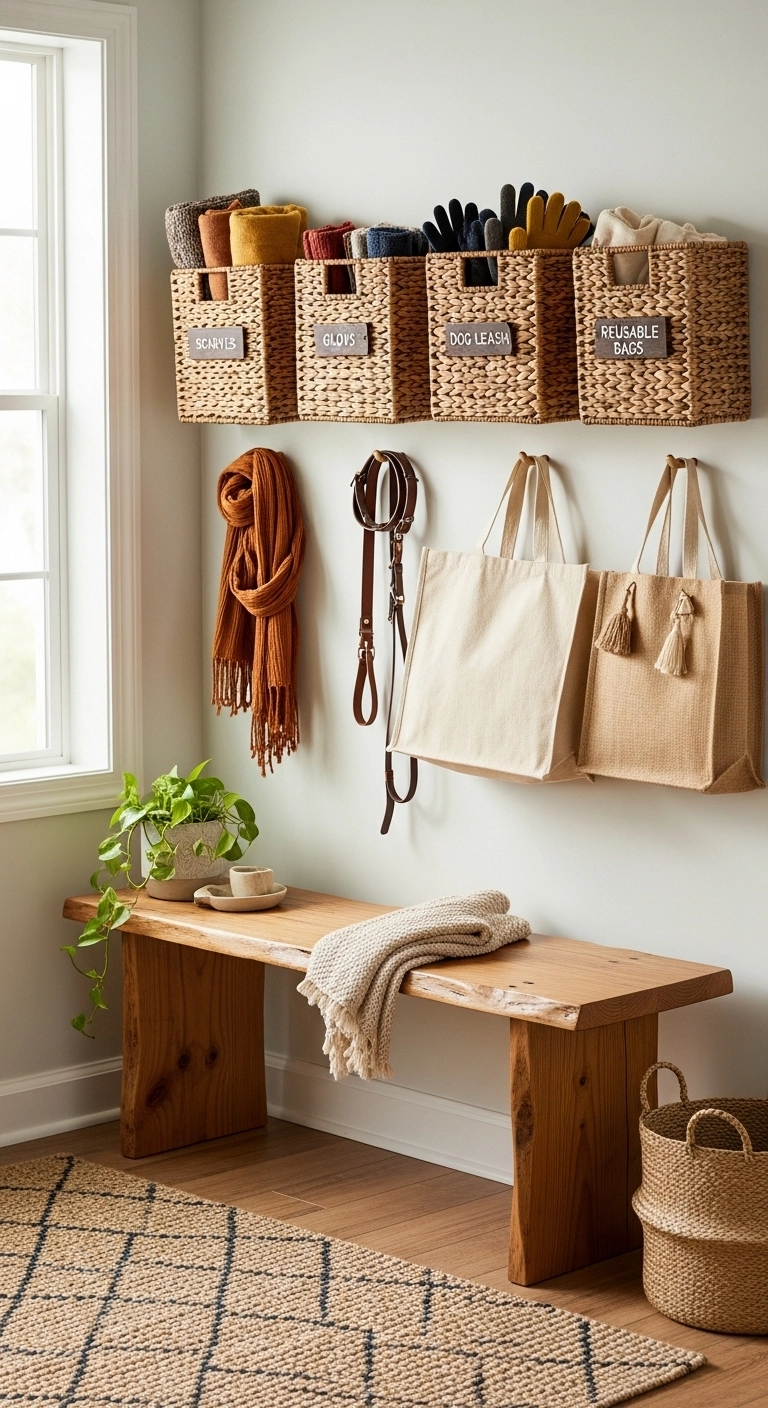
Every home has interior items that don’t fit well on shelves. Gloves, scarves, dog leashes, reusable bags, hats, shoe polish, kids’ outerwear, and random everyday extras can quickly create visual clutter if left exposed. Baskets help because they gather these soft or oddly shaped items in one clear place.
The key is to use baskets with purpose. One for pet items. One for winter gear. One for school extras. They should not become mystery bins that hold everything nobody wants to deal with. A well-used basket supports the system. A random basket hides the problem for a week and then starts overflowing.
In a small entryway, baskets help keep the area looking softer and less scattered. They also make quick cleanup easier, which is important in a high-traffic part of the house.
Give mail and paper a place before they spread
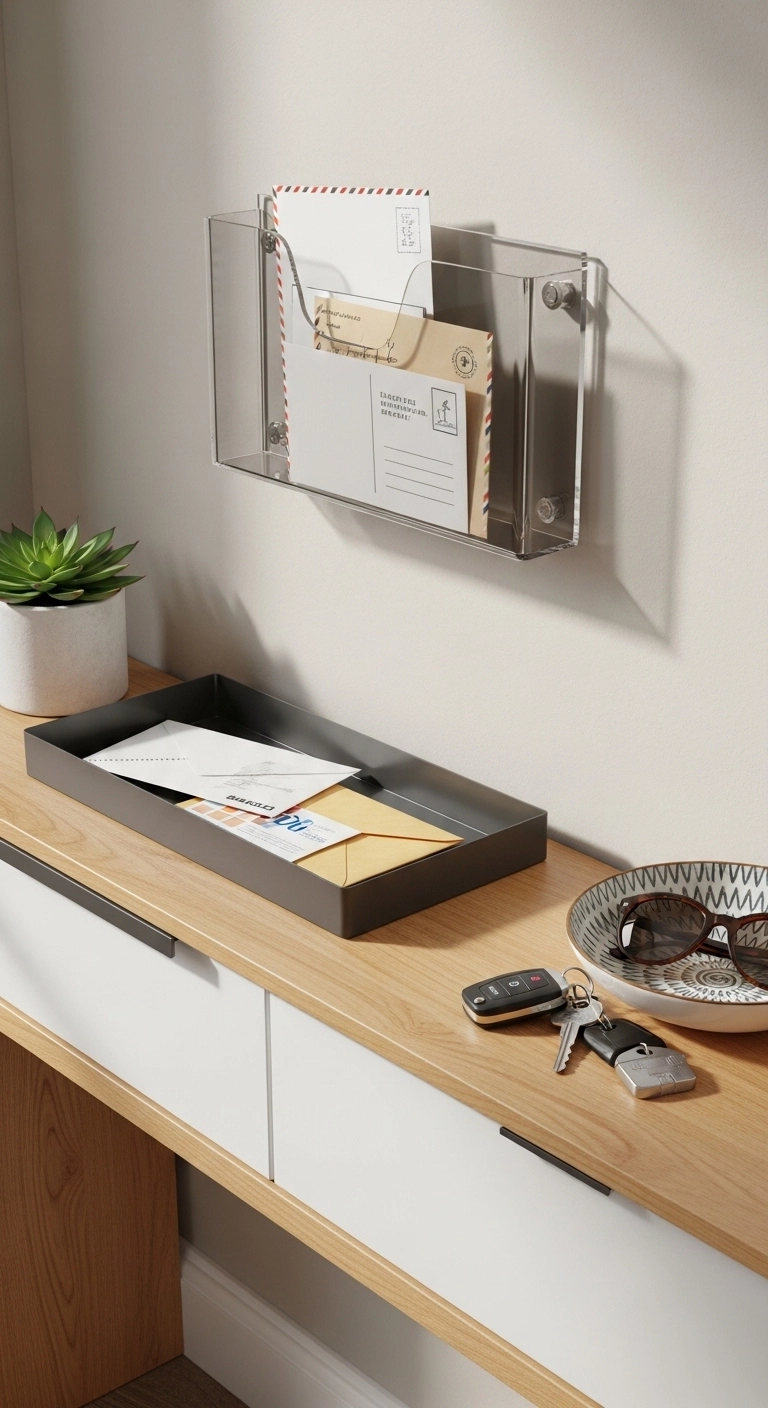
Mail can quietly ruin an entryway. A few letters on the console turn into school papers, receipts, flyers, and shopping lists. Then the entry feels messy even when shoes and coats are in order. This is why paper needs its own plan.
A simple tray, vertical sorter, shallow drawer, or wall pocket can help a lot. The point is not to build a full office at the front door. It is to stop paper from taking over the first surface it finds. Once paper has a real home, the entry begins to feel more controlled right away.
It’s one of those small details that changes the mood of a space. A clean entry feels calmer when flat surfaces aren’t always collecting fresh clutter.
Use vertical space when the floor is too tight
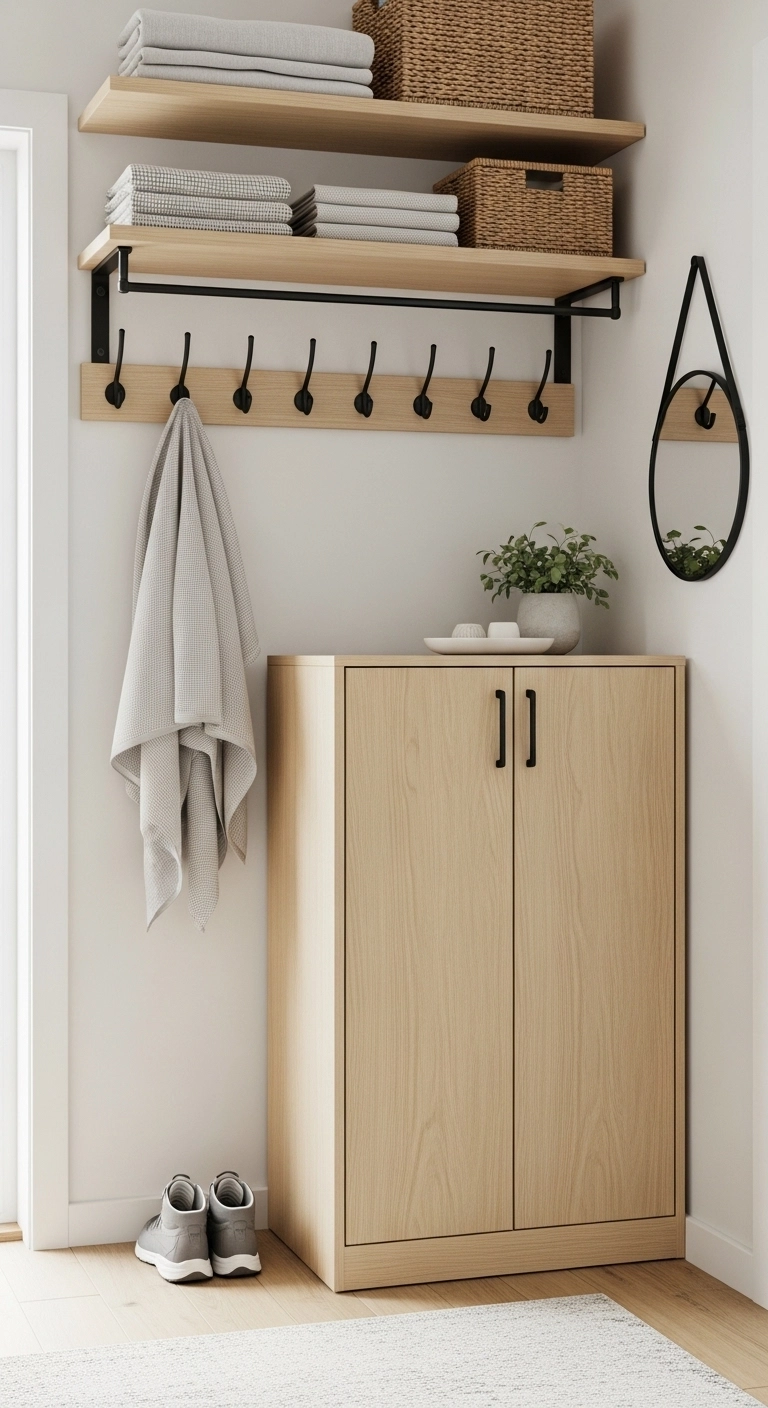
A small entryway often lacks width, but it still has wall height. That height can do real work. A shelf above hooks, a tall narrow cabinet, or a few wall-mounted pieces can add storage without eating up precious walking room.
The key is to choose the right items for high storage. Less-used items, seasonal extras, spare tote bags, and backup household items can stay above eye level. Everyday items should stay lower and be easily accessible. This balance keeps the entryway functional without making the main zone feel crowded.
Using vertical space well is one of the clearest ways to improve a small entryway. It lets the area hold more while still looking lighter at ground level.
Keep the decor edited so the room still feels clean
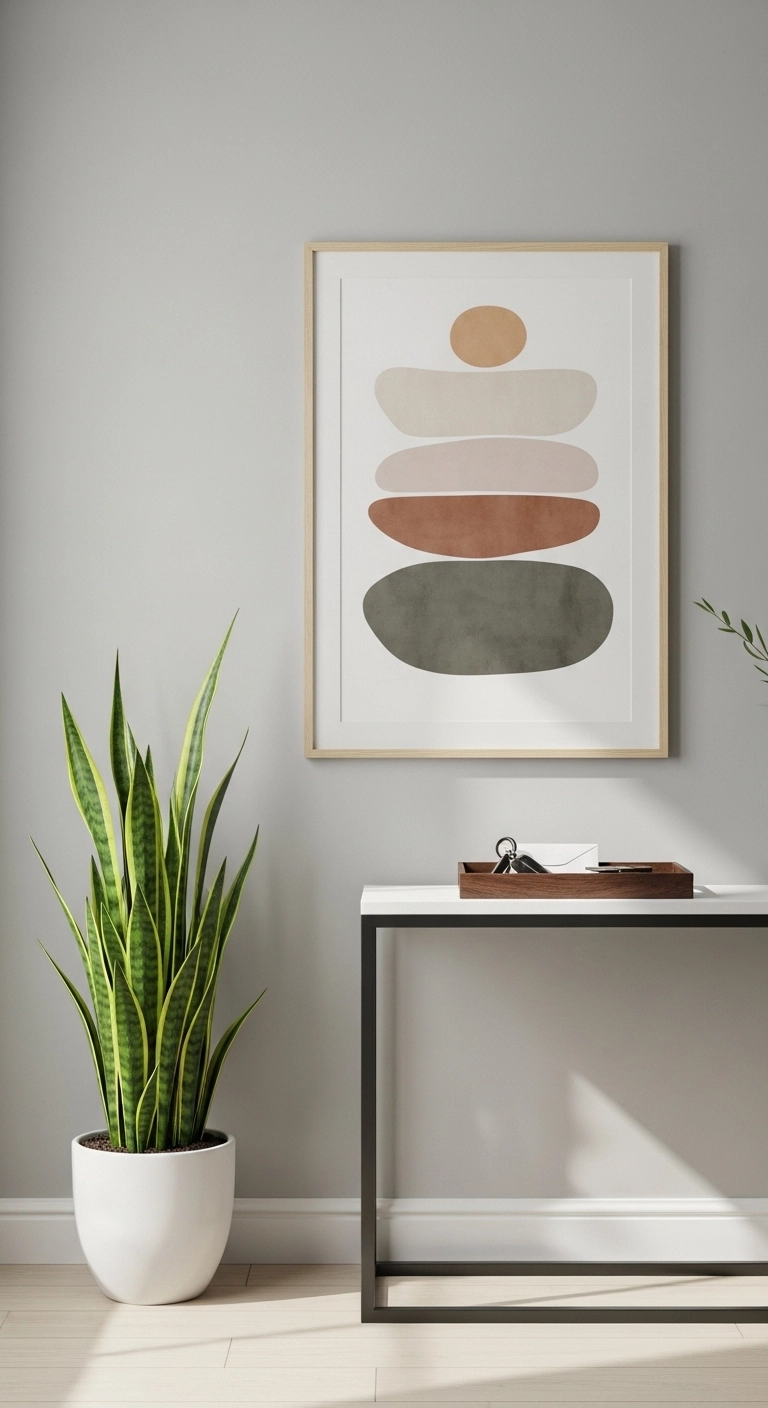
A small entryway needs some warmth, but it doesn’t need much. This is a place where many people go too far. A table, mirror, plant, lamp, stacked books, picture frames, candles, bowls, and additional decorative items may each seem small, but together they can quickly make the space feel crowded.
A better approach is to let one or two things carry the look. Maybe a mirror and a plant. Maybe a tray and one framed print. Maybe a lamp and a bowl. When the decor is edited, the entry still feels welcoming, but it also feels easier to breathe in.
This matters because the entry is already handling shoes, coats, and movement. It does not need extra visual noise. A clean first impression often depends on knowing when to stop adding.
Choose materials that handle real traffic well
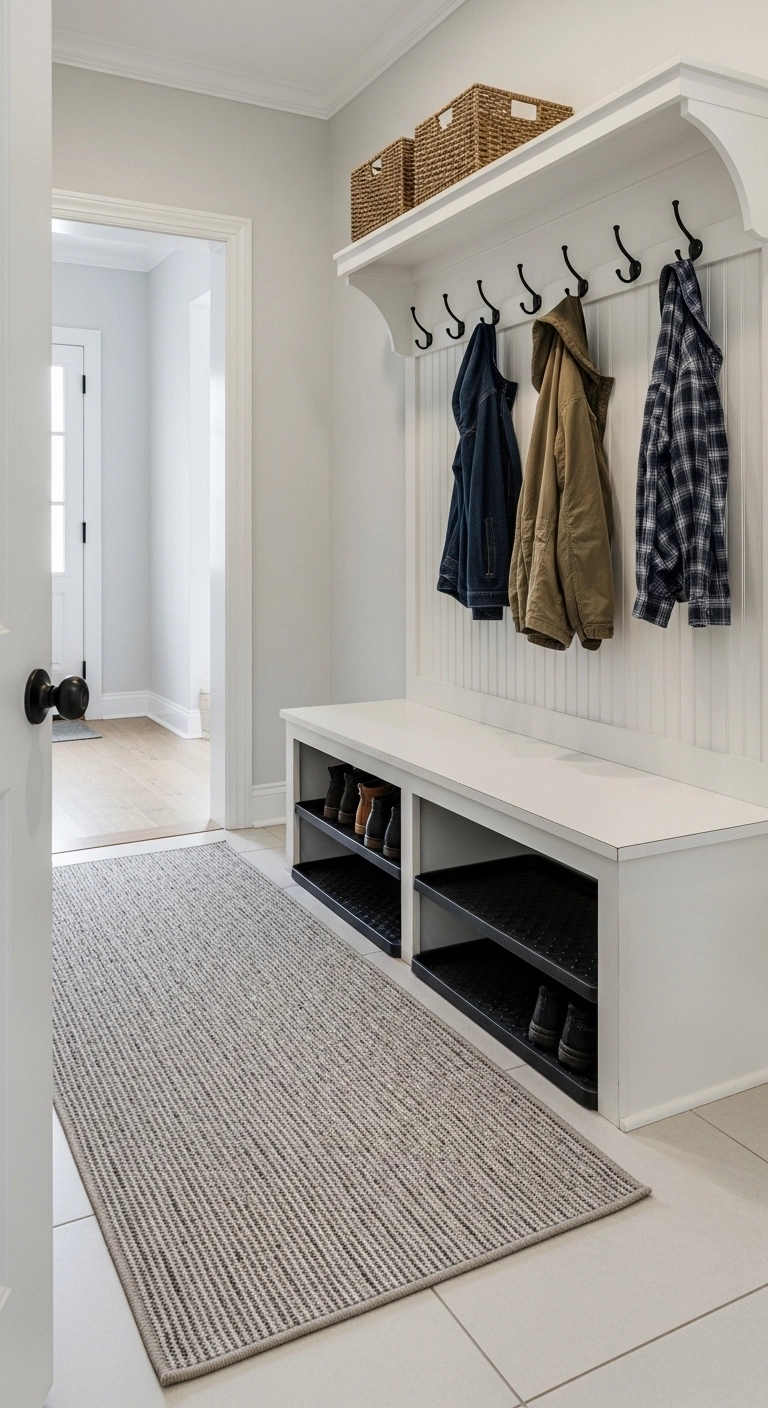
The entry is a hard-working part of the home. It sees dirty shoes, wet umbrellas, dropped bags, pet paws, and quick daily movement. Because of that, the surfaces and storage there should be able to handle real use. This is not the place for delicate pieces that make people nervous.
Washable rugs, sturdy hooks, easy-to-clean benches, and wipe-clean storage pieces usually work better than flimsy ones. The entryway should support the life that happens there, not fight it. A rug that can take the dirt, a tray that can catch wet shoes, and a surface that wipes clean all make the room easier to live in.
This is part of what makes an entry stay cleaner over time. When the materials fit the use, upkeep feels lighter. That makes it much easier to keep the first impression strong.
Add one warm detail so the space feels like part of the home
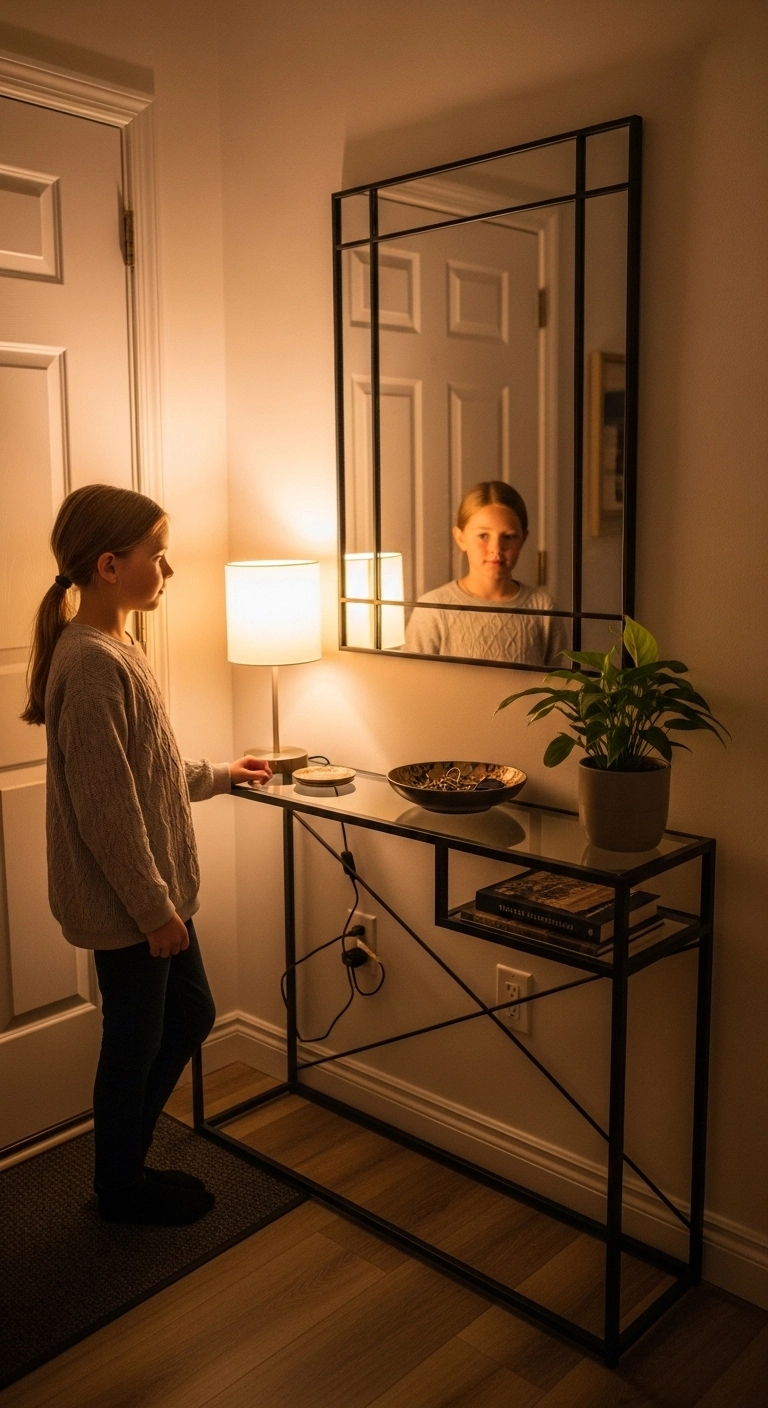
An entryway works hard, but it should not feel cold. One warm detail can help turn it from a drop zone into a real part of the home. This might be a small lamp, a simple plant, a framed print, a soft runner, or a bowl with a little shape and color. It does not need to be dramatic.
The point is to make the area feel cared for. People respond to that, even in small ways. A warm light near the door, a nice texture on the wall, or one thoughtful object can make the entry feel less temporary. That helps the space feel calmer and more intentional.
This is worth doing because the entry sets the mood of the home. A little warmth there carries farther than many people expect.
Build one easy reset into the entry so it stays neat
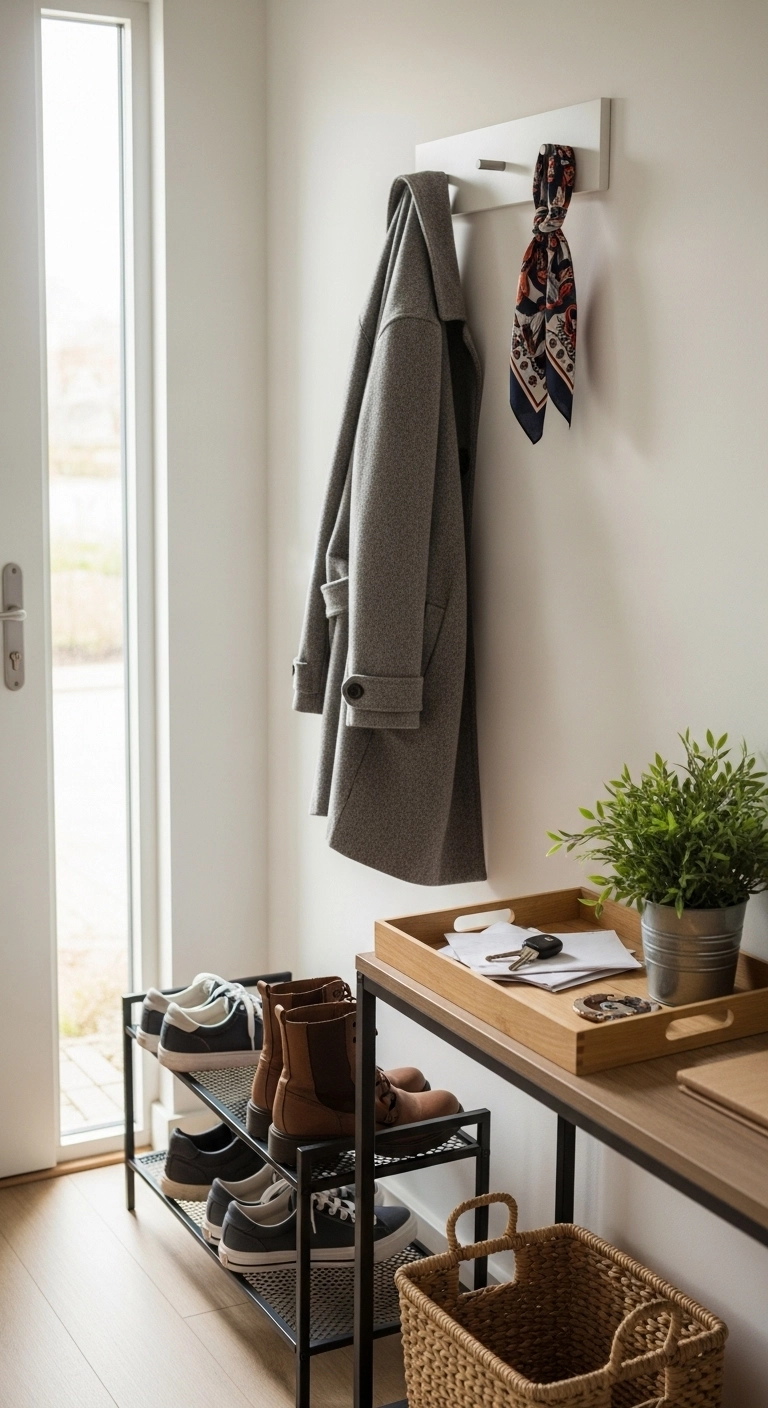
The best entryways are not the ones that never get messy. They are the ones that recover quickly. This is where a reset matters. The space needs to be easy enough to put back in order at the end of the day or before guests arrive.
This could mean a basket for quick grabs, a hook for each person, a tray for keys, and a clear shoe space that takes less than a minute to straighten up. These small resets keep the entryway from descending into chaos. If the setup is too complicated, people will stop following it. If it’s easy to reset, the space will stay clean more often.
This is what turns good decor into a room that really works. A clean first impression lasts longer when the entry knows how to recover from normal life.
Conclusion
A small entryway doesn’t have to be big to make a strong first impression. It just takes good planning. When the house is clean of daily clutter, the floor is quiet, the walls are more polished, and the decor is updated, the entire entryway feels more functional and much more welcoming.
The best small entryway ideas are usually the ones that solve real problems in simple ways. A narrow console for keys. Hooks for coats and bags. Shoe storage that protects the floor. A bench if the room needs one. A mirror for light. A basket for the odd things. These choices may seem small, but together they change how the home begins and ends each day.
If your entryway feels frustrating right now, start with the part that causes the most stress every day. Maybe it’s shoes. Maybe it’s paper. Maybe it’s a coat or missing keys. Fix that first. Once the entryway is easy, the rest of the house often feels easy too. That’s the power of a small space used well.

Muskan Saleem
BukayHome shares practical home decorating ideas, room inspiration, and simple styling tips to help readers create a home they truly love.