13 Small Living Room Decor Ideas for Cozy Comfort
13 Small Living Room Decor Ideas for Cozy Comfort
A small living room can feel warm and inviting, or it can feel cramped and difficult to use. Size is only part of the story. What’s more important is how the room is arranged, how the light falls, what the eye notices first, and how much the room is being asked to hold at one time.
Many people think a small living room needs less personality so it does not feel crowded. Others try to make it feel cozy by adding more pillows, more decor, more baskets, more tables, and more shelves. Both moves can backfire. A room starts to feel comfortable when it has enough softness, enough function, and enough open space to breathe.
After years of helping people improve their small homes, I’ve seen the same truth time and time again. Small living rooms respond very quickly to smart changes. A better rug, lighter layout, calmer colors, warmer lamps, or cleaner storage can transform an entire room. You don’t need a complete makeover to make a space feel better. You need strong decisions.
This guide shares thirteen small living room decor ideas for cozy comfort. These ideas are not only about how the room looks in a photo. They are about how it feels at the end of a long day, how easily people move through it, and how well it supports real life. A good living room should help you rest, talk, read, watch, gather, and reset. Even a small one can do that beautifully.
Start by deciding what the room needs to do most
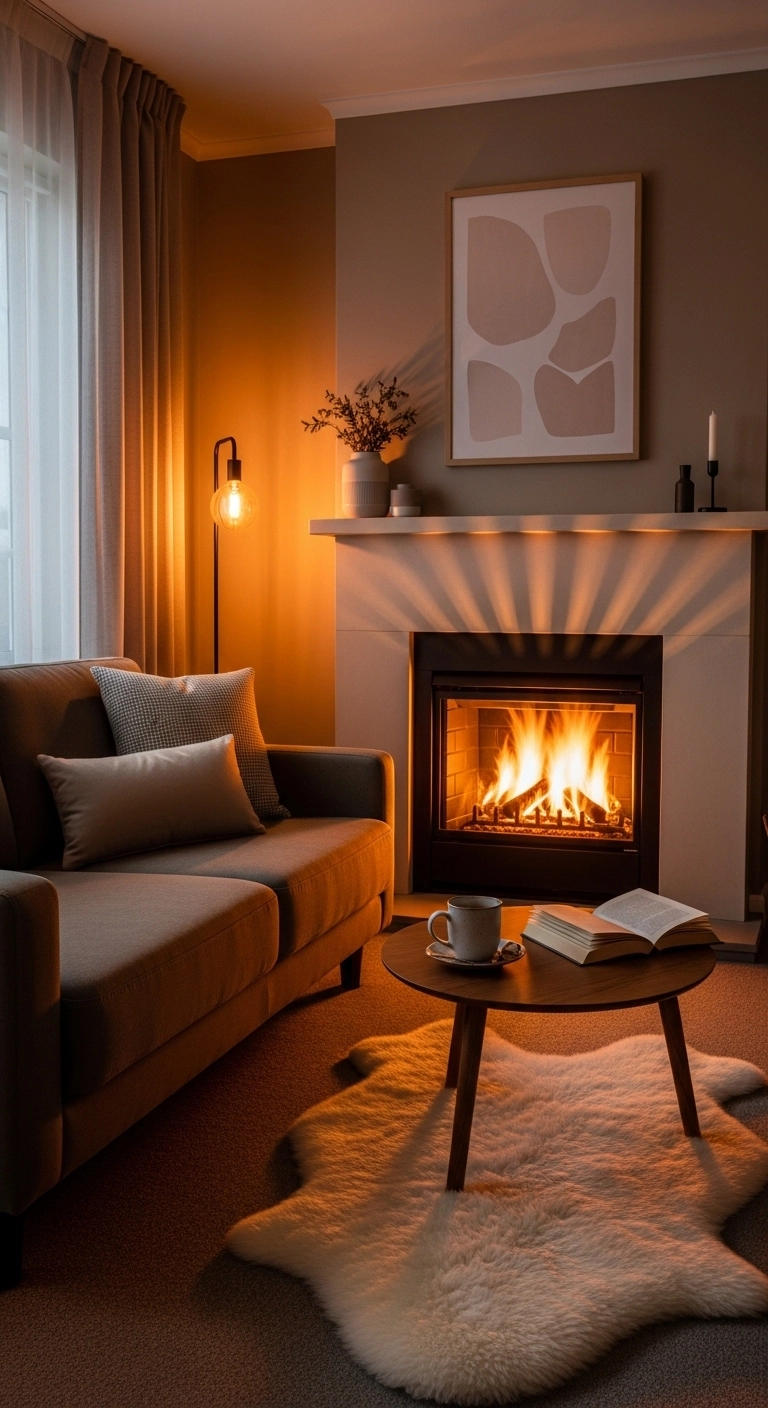
The first decor choice should not be the color of the pillows or the shape of the coffee table. It should be the job of the room. A small living room cannot do everything equally well unless the layout is very thoughtful. If you try to make it a TV room, reading room, toy room, office, guest room, and entertaining room all at once, it may end up feeling crowded and unclear.
A better approach is to ask a simple question. What does this room need to do most of the time? Maybe it’s a place to relax in the evening. Maybe it’s where the family watches movies. Maybe it’s where they sit when guests come over. Maybe it includes a place for the kids to play. Once the primary use is clear, the rest of the decor becomes easier. You stop adding random pieces and start choosing things that support the room’s main purpose.
This matters because cozy comfort comes from clarity. When the room knows what it is for, the layout feels more settled and the decor starts making sense.
Use a sofa that fits the room instead of overpowering it
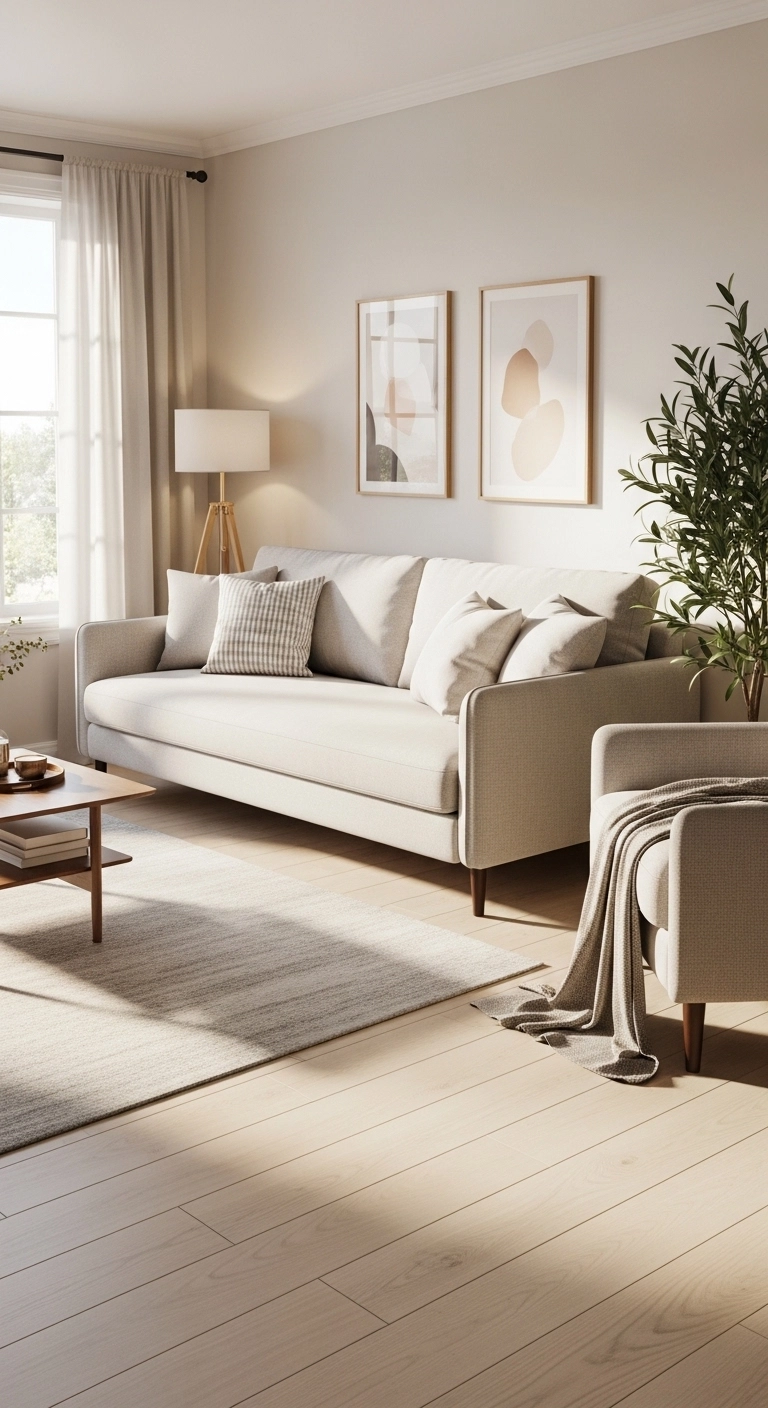
A small living room often struggles because the sofa is too heavy for the space. It can be too deep, too long, too deep, or too wide. Even if it technically fits, it can still make the room feel cramped. Then everything else has to fight around it.
The best sofa for a small room is not always the tiniest one. It is the one with the right visual weight. Sofas with slimmer arms, cleaner lines, and a little space under them often help the room feel lighter. A low profile can also help if the room already feels crowded. If the sofa is large but simple in shape, it may still work better than a smaller sofa with thick rolled arms and bulky cushions.
Comfort still matters. A small room should not feel like a waiting area just because you were trying to save space. The goal is to choose a sofa that supports real sitting and still lets the room breathe. That balance is a big part of cozy comfort.
Ground the seating area with one rug that is large enough
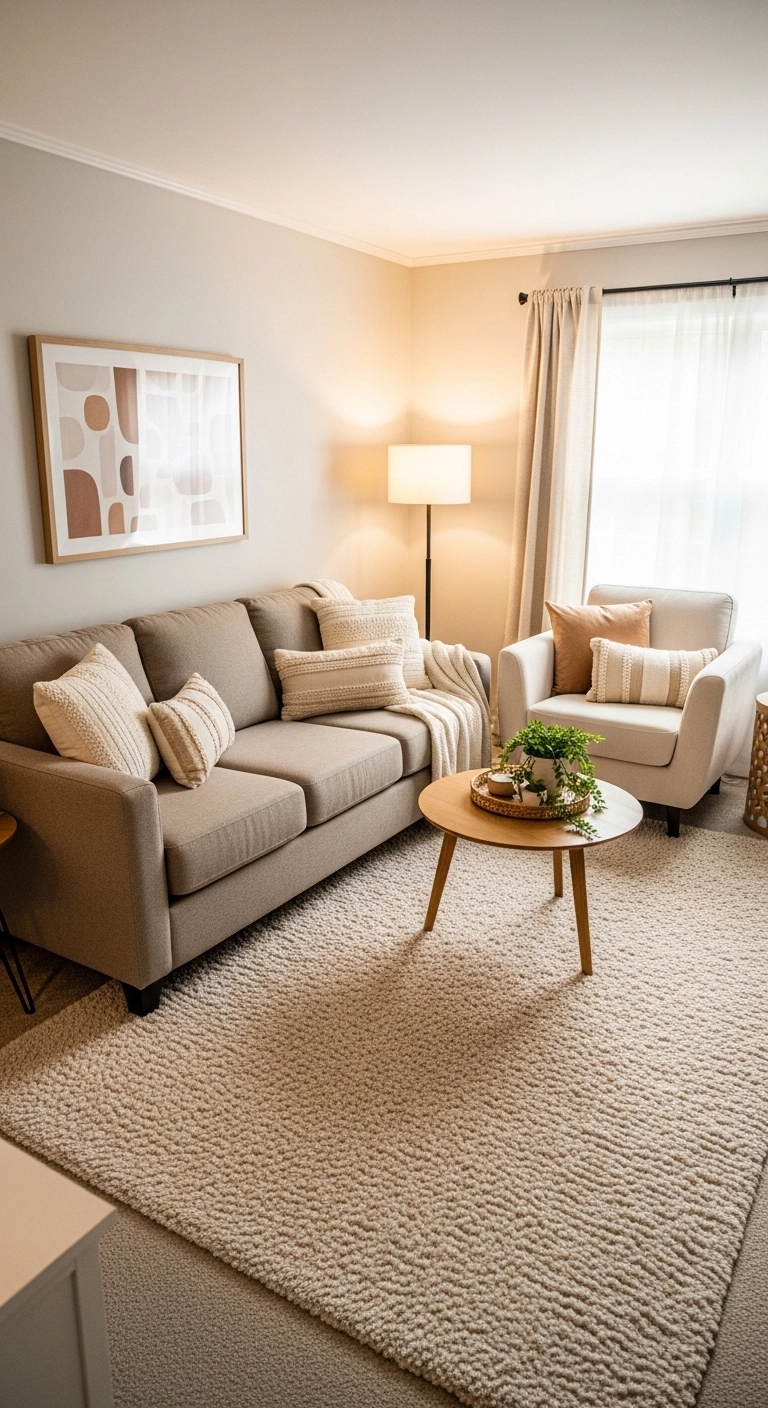
A rug does a great deal of hidden work in a living room. It softens the floor, quiets sound, adds texture, and helps the furniture feel connected. Without a rug, a small living room can feel scattered, as if each piece is standing on its own without a shared base.
The most common mistake is using a rug that is too small. A small rug often makes the room feel chopped up. A larger rug helps the space feel calmer because the seating area reads as one group. In many rooms, the front legs of the sofa and chairs should sit on the rug. That helps anchor the layout.
A rug also helps with comfort in a very direct way. It changes how a room sounds and how the floor feels. In a small space, those small changes matter. A good rug can make an entire room feel warm without adding clutter.
Bring in more than one source of light
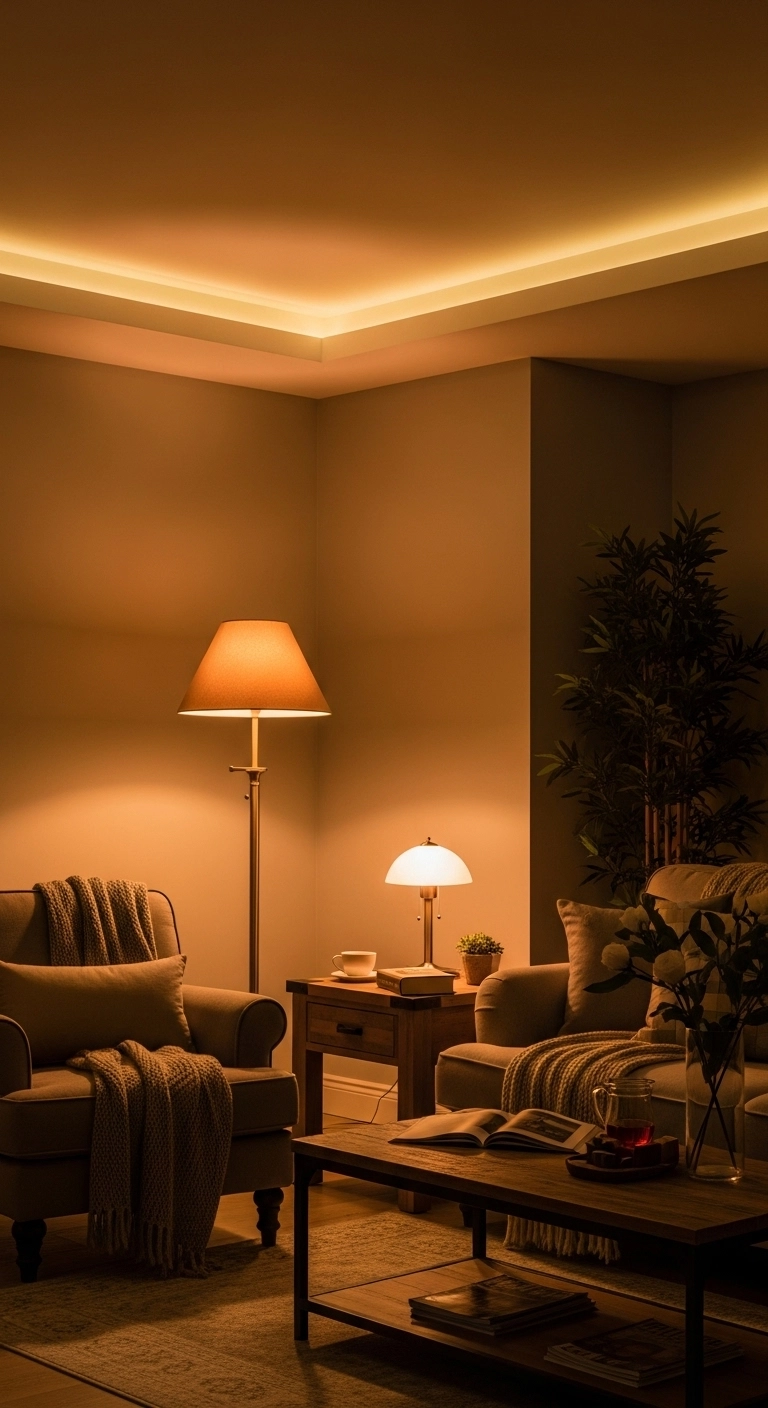
A single ceiling light rarely makes a living room feel cozy. It may make the room bright enough, but that is not the same as making it feel good. Small living rooms need layered light. That means light coming from different spots and at different heights.
A table lamp on a side table, a floor lamp by a chair, or a small lamp on a shelf can all help. The idea is to create soft pools of light rather than relying on a harsh glow from above. In the evening, this makes the room feel much more relaxed. It also gives the room more shape, which helps it feel deeper.
Light is one of the fastest ways to shift mood. A small living room with warm lamps feels more welcoming right away. It tells the body to slow down. That is a big part of what cozy comfort really is.
Keep the color palette calm so the room feels restful
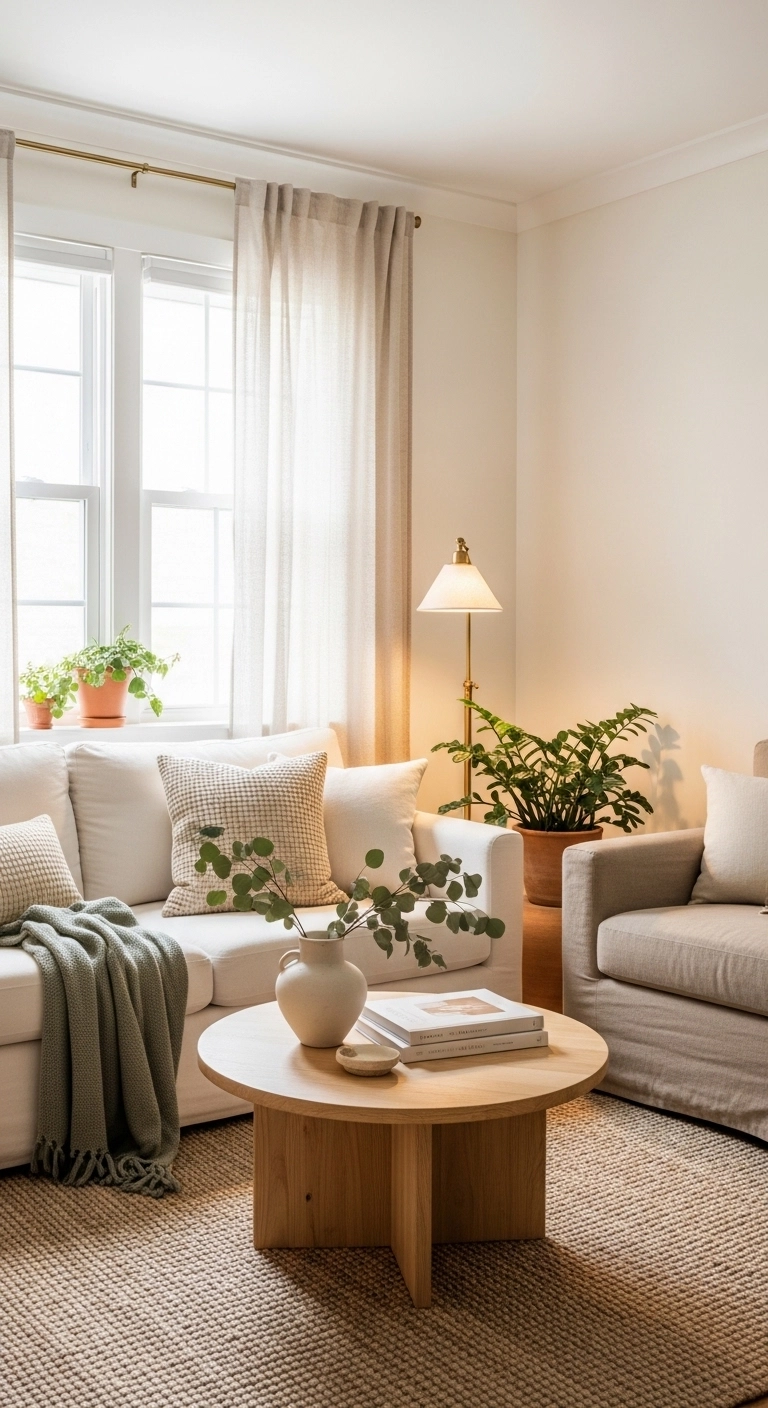
Color can make a small room feel put together or visually noisy. When too many tones compete, the room feels busy. When colors are connected to each other in a simple way, the room feels easy on the eyes. This simplicity is what often makes a small living room feel more comfortable.
A calm palette does not mean the room must be plain. It means the colors should work together instead of fighting. Warm whites, soft beige, muted green, clay, dusty blue, warm gray, brown, black, and wood tones often work well because they can bring warmth without too much visual stress. Then a few stronger notes can be added through a pillow, art, or throw.
This helps because small rooms carry every decision more strongly. A loud color jump that might disappear in a big room can dominate a small one. A calmer color story lets the room feel softer and more settled.
Add texture so the room feels warm instead of flat
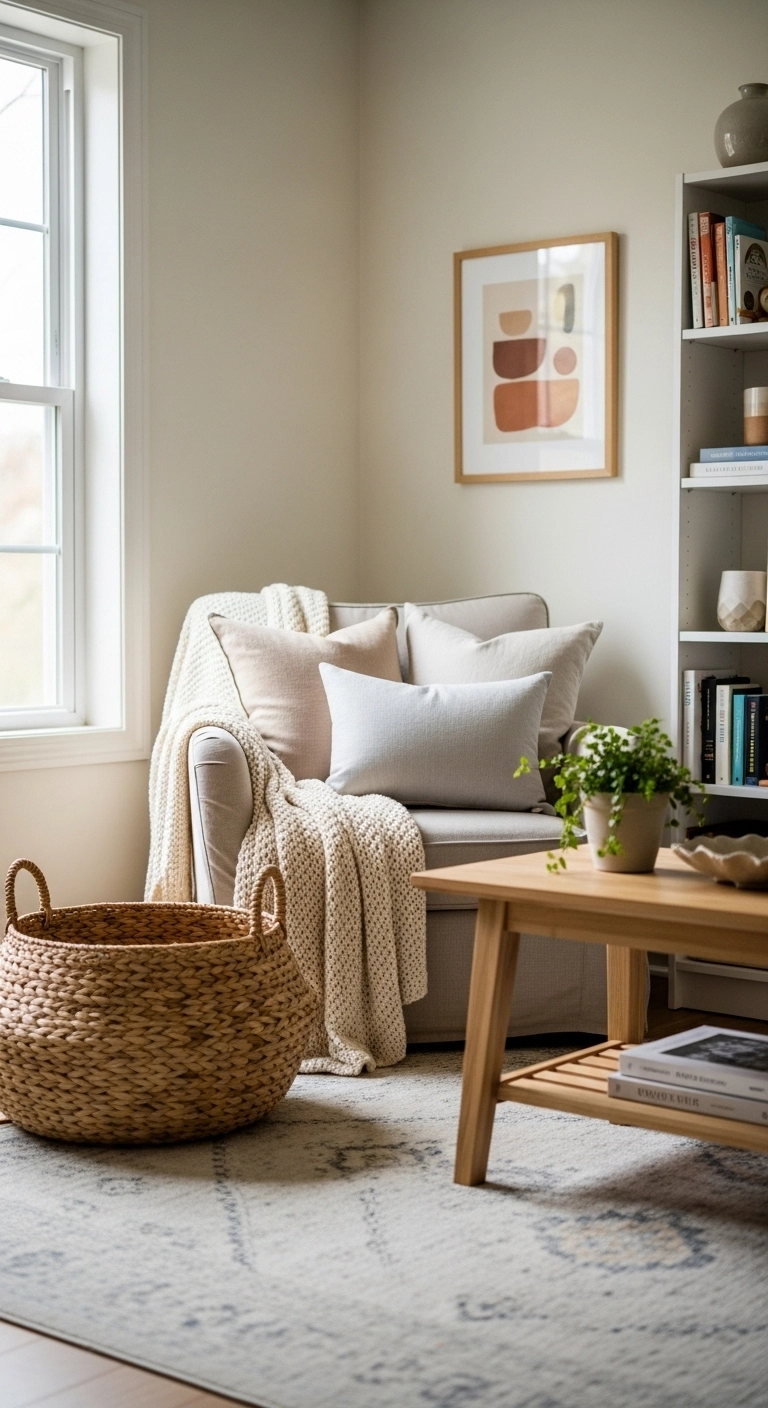
Some small living rooms look neat but still feel cold. This often happens when all the surfaces are too smooth or too similar. A sofa, plain wall, flat rug, simple table, and basic curtains may work fine together, but the room can still feel a little lifeless. Texture helps change that.
Texture can come through a knitted throw, velvet pillow, linen curtains, woven basket, wooden table, or soft rug. The goal is not to pile on too many items. The goal is to give the room a mix of surfaces that gently grab the eye. This gives the room body and helps it feel more human.
This is one of the easiest ways to create cozy comfort without making the room feel full. Texture adds warmth quietly. In a small living room, quiet warmth usually works better than big drama.
Choose one focal point so the room feels settled
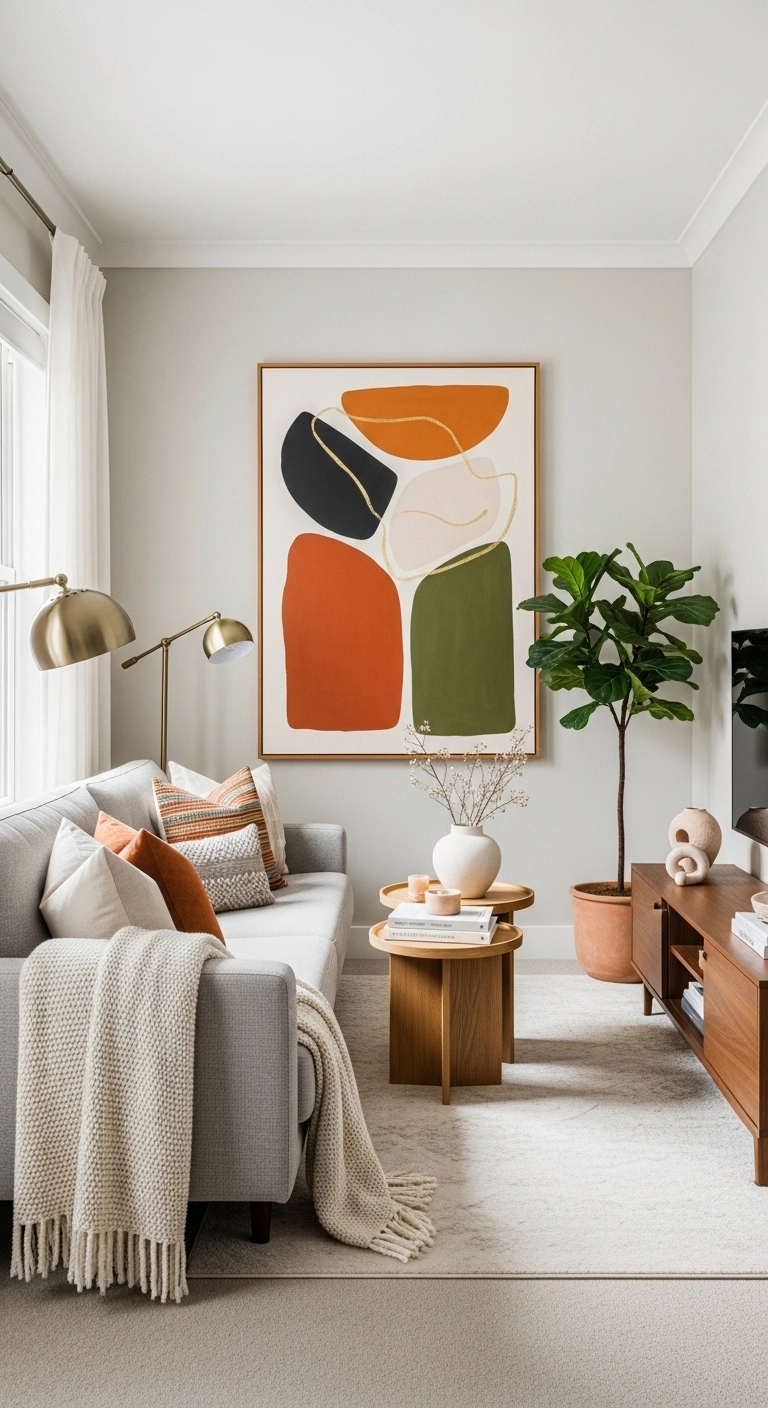
A small living room feels more balanced when the eye knows where to land first. That might be the sofa wall, a fireplace, a media unit, a large window, or one strong art piece. Without a focal point, the room can feel restless because the eye keeps bouncing from one thing to another.
That doesn’t mean every room needs a major statement piece. It does mean that the room needs an area that feels a little more complete than the rest. A large piece of art above the sofa, a well-styled media wall, or a full reading nook can all do it. Once the main focus is clear, the rest of the room can be quiet.
This matters because comfort is closely tied to order. A room feels calmer when it has visual direction. That is one reason a focal point helps even very small spaces.
Use side tables and surfaces that support real life
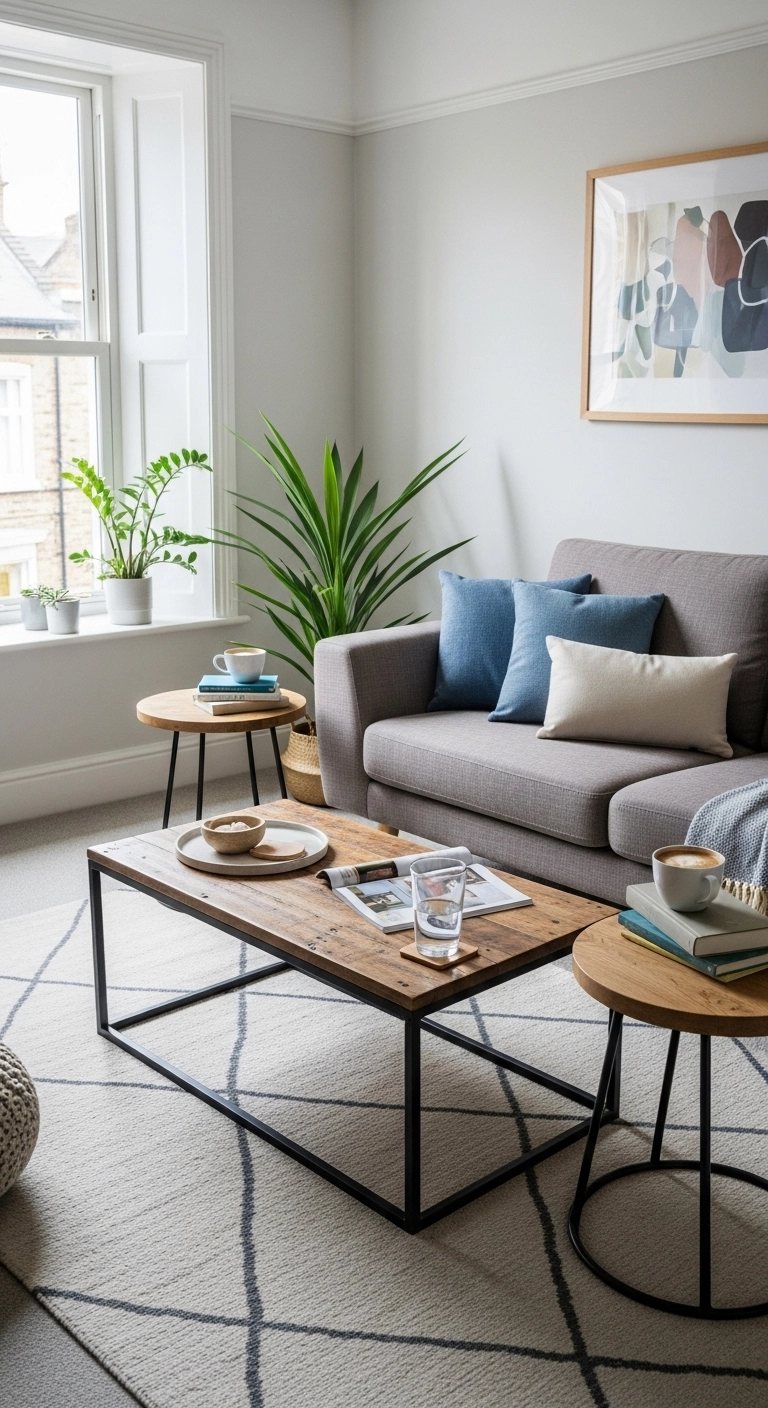
A living room looks nice when styled well, but it feels truly good when it supports daily use. That is why surfaces matter. People need a place to set a drink, put down a book, rest a phone, or place a lamp. If the room has no useful surfaces, comfort drops quickly.
In a small living room, these surfaces should be chosen carefully. A large coffee table can take up too much floor space. Sometimes a small round table works better. In other rooms, a slim side table next to the sofa and a small stool with a chair may suffice. The point is not to add tables everywhere. The point is to place them where people actually need them.
This kind of support makes the room easier to live in. Cozy comfort is not only about softness. It is also about ease.
Make the room feel fuller with vertical details, not more floor clutter
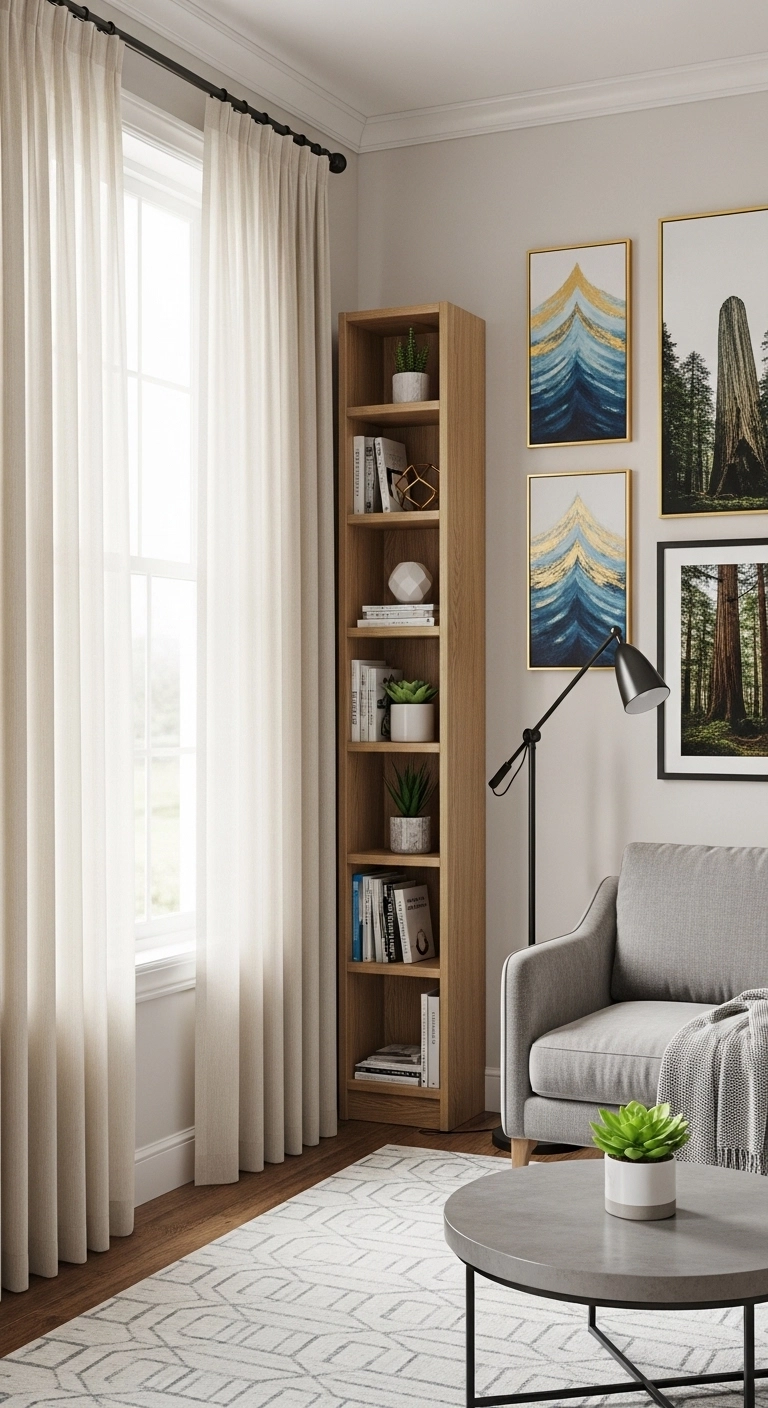
When a small living room feels bare, people often add more things on the floor. Another basket, another plant stand, another stool, another shelf. This can make the room feel smaller. A better move is often to use vertical space instead.
Curtains hung a little higher, placed with artful care, a tall lamp, mirror, or a narrow bookcase can help draw the eye upward. This gives the room more shape without crowding the walking space. The floor feels clean, and the room still gains interest.
This matters because small rooms need a little lift. If everything sits low, the room may feel flat and heavy. A few taller details give the eye more to travel through, which helps the room feel larger and more alive.
Keep storage hidden enough that the room can relax
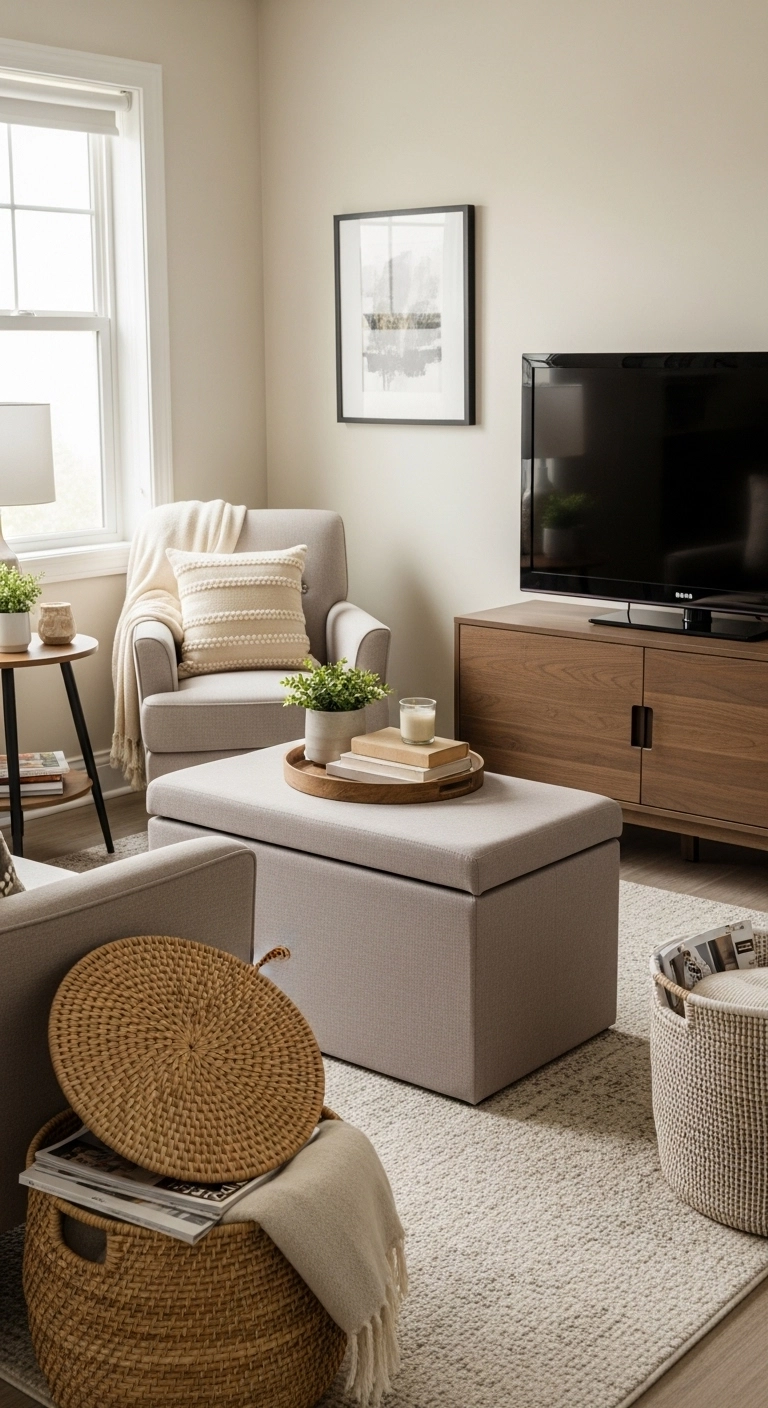
A small living room often needs more than just seating furniture. It may need to hold blankets, games, remotes, books, toys, chargers, magazines, and all the little things that accumulate over the course of the week. If it’s all visible, the room can start to feel cluttered, even when it’s clean.
This is where hidden or controlled storage helps. A storage ottoman, basket with a lid, console with doors, or drawers inside a media unit can make a big difference. The room feels more restful when the extra things have somewhere to go. That does not mean the room must look empty. It means the visible parts can stay calmer.
Good storage protects the cozy feeling. Without it, comfort gets crowded out by daily clutter very quickly.
Let the walls stay a little quiet
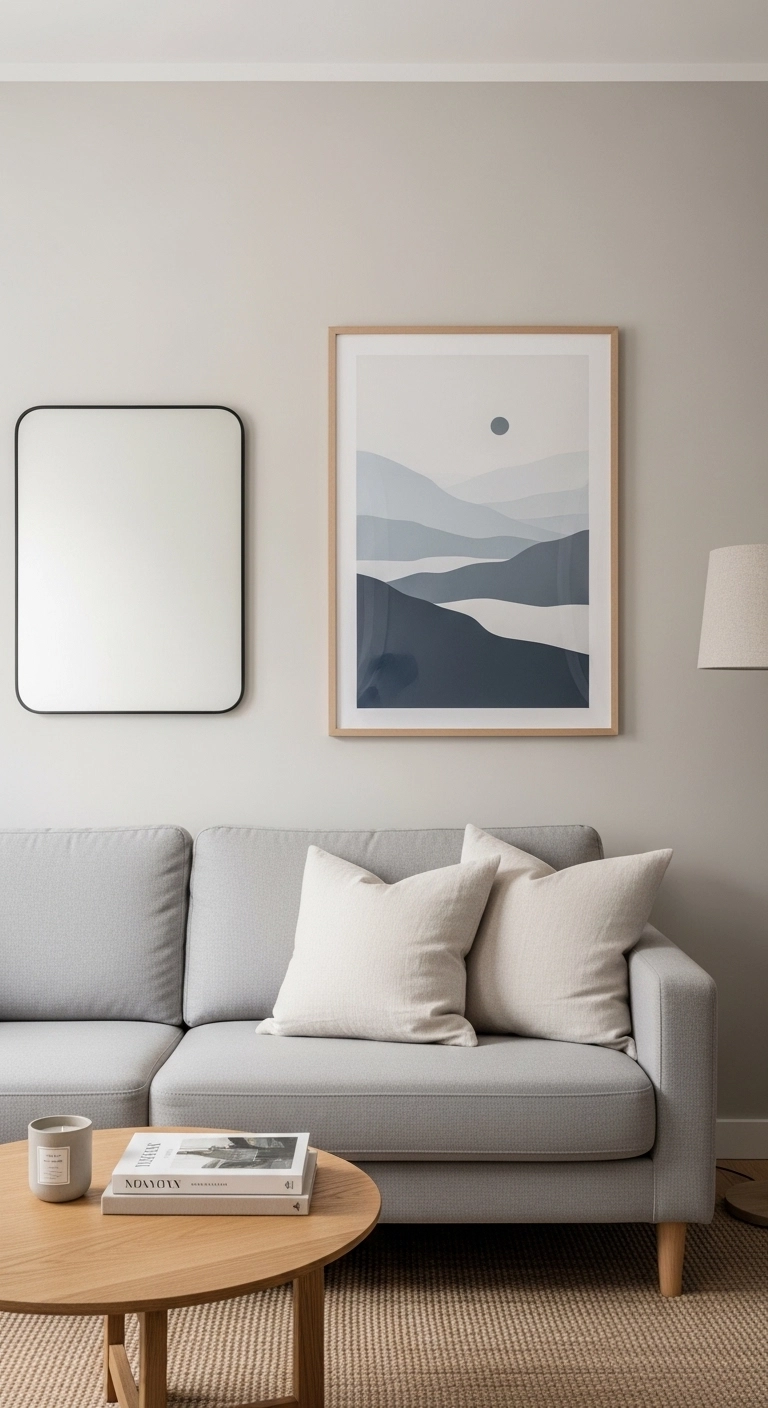
Many people worry that a small living room will feel plain if the walls are not doing a lot. But too much on the walls can make a small room feel louder, not richer. A better approach is to use the walls with care.
One large print often works better than many tiny ones. A mirror can help reflect light and open the room a little. One shelf can be enough instead of three. The wall should support the room, not turn into a second layer of clutter. If the sofa has texture, the rug has tone, and the lamps add shape, the walls do not need to work so hard.
Calm walls help a room feel calm. They make better pieces stand out more. In a small living room, this type of edit often creates the fresh calm that people are looking for.
Add one living touch that softens the room
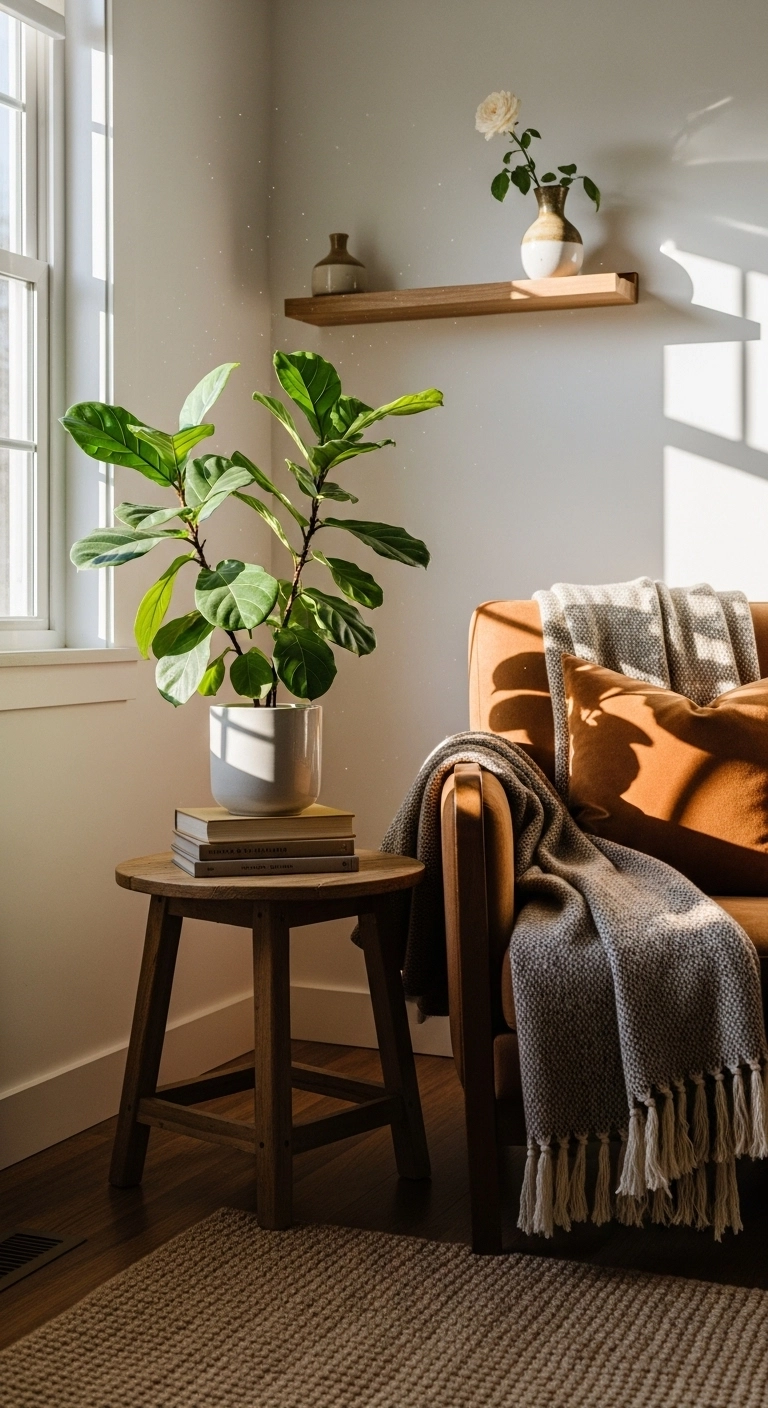
A small living room often feels better with one living element in it. This could be a plant, fresh branches, or a small vase of flowers. The reason it helps is simple. It breaks up the harder lines of furniture, shelving, and walls. It brings a little movement and softness into the space.
A living touch doesn’t have to be big. A plant on a side table, a simple stem arrangement on a coffee table, or a soft trailing plant on a shelf can be enough. The important thing is that it gives the room a natural detail that makes it feel less static and more alive.
This is part of cozy comfort too. A room feels good when it has a little life in it. That can be a small thing, but it changes the mood.
Build one easy reset into the room so comfort lasts
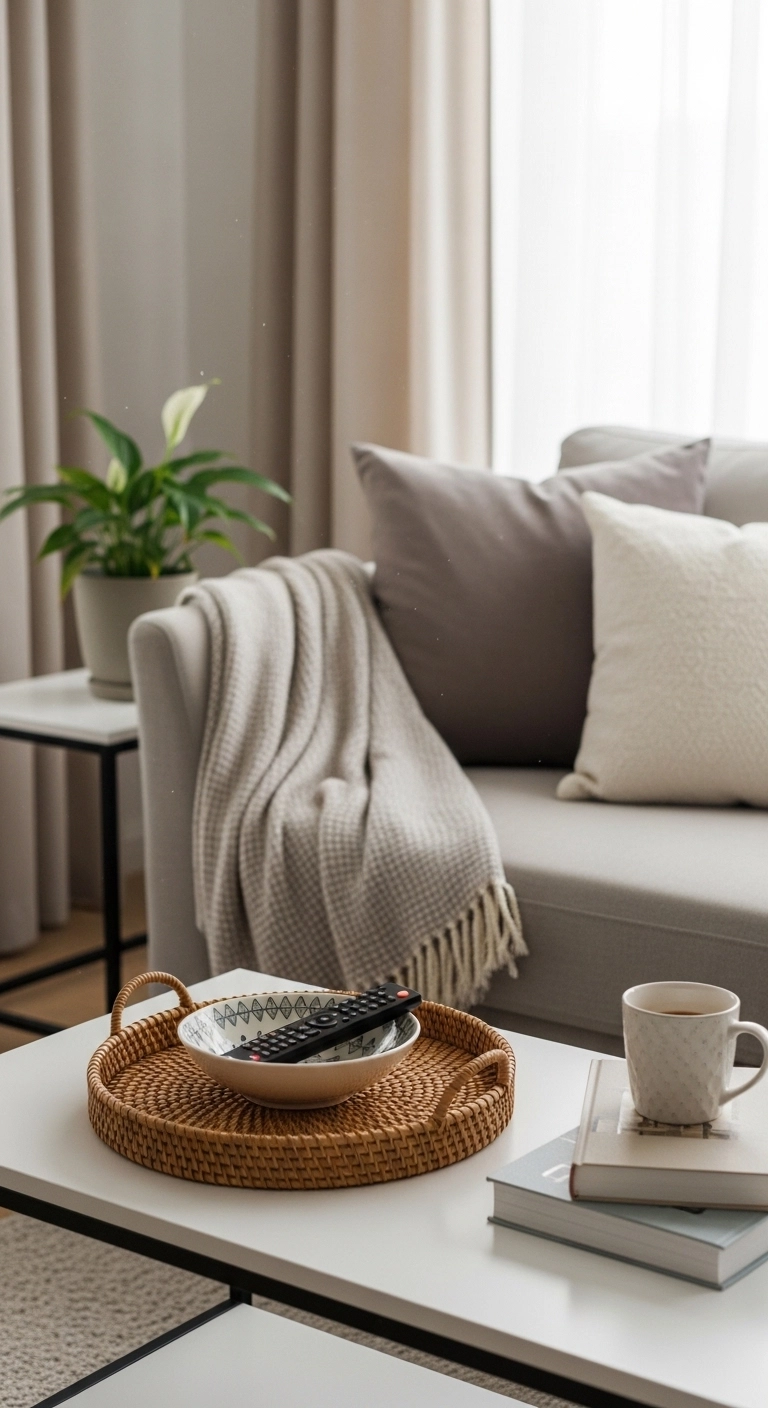
A living room stays cozy when it can return to order without much effort. This is one reason some rooms look good for one hour and then fall apart by evening. The decor may be fine, but the room has no easy reset. Throws pile up, remotes scatter, cups collect, and the room starts to feel tired.
A better room setup includes a simple reset habit. Maybe the throw blanket gets tucked away in a basket. Maybe the coffee table has just a tray, a book, and a candle. Maybe the remotes stay in a bowl. Maybe the side tables stay mostly clean by design. These small choices are important because they help the room quickly recover after use.
That is what keeps cozy comfort from turning into clutter. The room should feel warm and lived in, but it should also be able to breathe again by the end of the day.
Conclusion
A small living room does not need more stuff to feel comfortable. It needs better support. The right sofa size, one good rug, layered lighting, calm color, simple storage, softer texture, and a clearer layout can make the room feel much better without changing its size at all.
The best small living room decor ideas are the ones that help the space do its job. They make the room easier to sit in, easier to move through, and easier to keep calm. That is where real coziness comes from. Not from filling every corner, but from helping the room feel warmer, softer, and more settled.
If your living room feels cramped right now, start with the thing that creates the most stress. Maybe it’s the lighting. Maybe it’s the clutter. Maybe it’s the bulky furniture or the lack of softness. Solve that one problem first. Once the room starts to feel easy, the rest of the decorating choices will come naturally. That’s how a small living room becomes a place of true comfort.

Muskan Saleem
BukayHome shares practical home decorating ideas, room inspiration, and simple styling tips to help readers create a home they truly love.