12 Smart Kitchen Ideas For Small Spaces That Feel More Open
12 Smart Kitchen Ideas For Small Spaces That Feel More Open
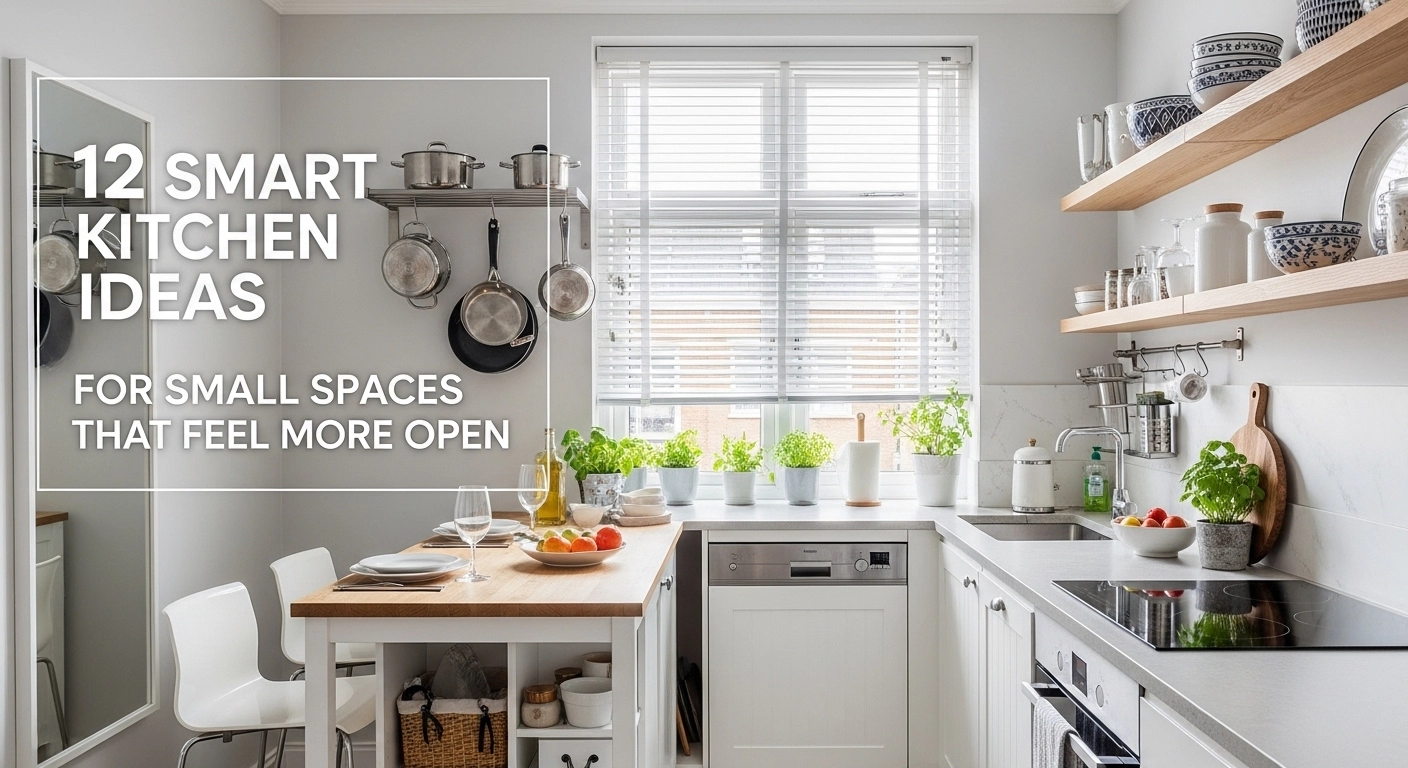
A small kitchen doesn’t have to feel cramped to be functional. In fact, some of the best kitchens are small ones that are well-planned. When every inch has a purpose, the room starts to work harder and feel more relaxed at the same time. This is usually what people are looking for when they look for kitchen ideas for small spaces. They don’t just want storage. They want a kitchen that’s easy to navigate, easy to use, and visually less crowded.
The good news is that making a kitchen feel more open is not always about knocking down walls or starting over. Often, it comes down to smarter choices with layout, lighting, storage, color, and what stays visible. Small kitchens respond quickly to thoughtful changes because there is less room for wasted space and less room for visual noise.
Here are 12 practical ideas that can help a small kitchen feel more open without making it feel stripped down or cold.
Keep the Upper Half of the Room Visually Light
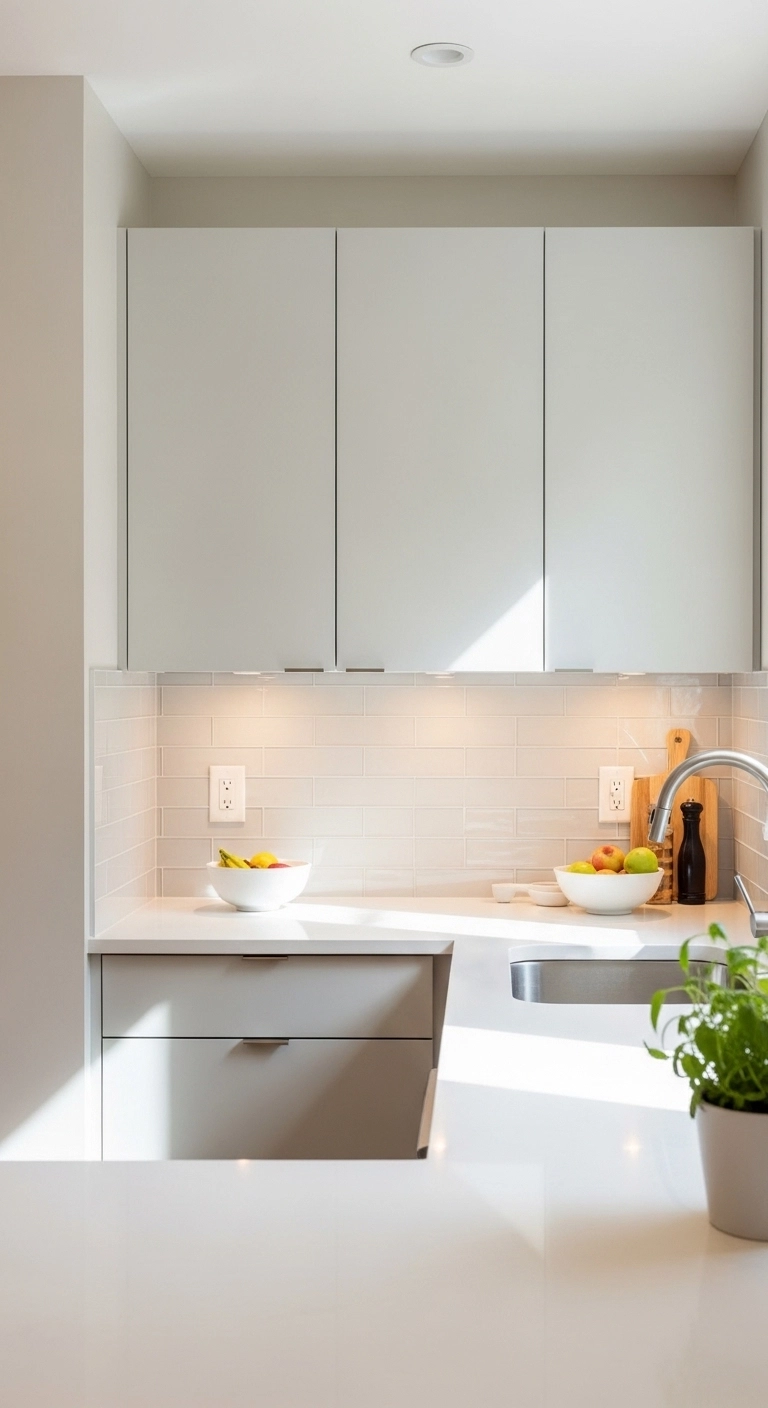
One of the fastest ways to make a small kitchen feel boxed in is to load the upper half of the room with heavy cabinetry, dark finishes, or too many visual breaks. The eye needs some breathing room.
That does not mean you need to remove all upper cabinets. But it does help to keep the top portion of the kitchen lighter in some way. That could mean using cabinets in a soft color, choosing simple flat or shaker fronts, using a lighter backsplash, or leaving one wall partially open with a shelf or range hood area that breaks up the bulk.
When the upper part of the room feels lighter, the ceiling seems higher and the whole kitchen feels less compressed. This matters especially in narrow kitchens, galley layouts, and apartments where the room already has limited air around it.
Use One Continuous Color Palette to Reduce Visual Stops
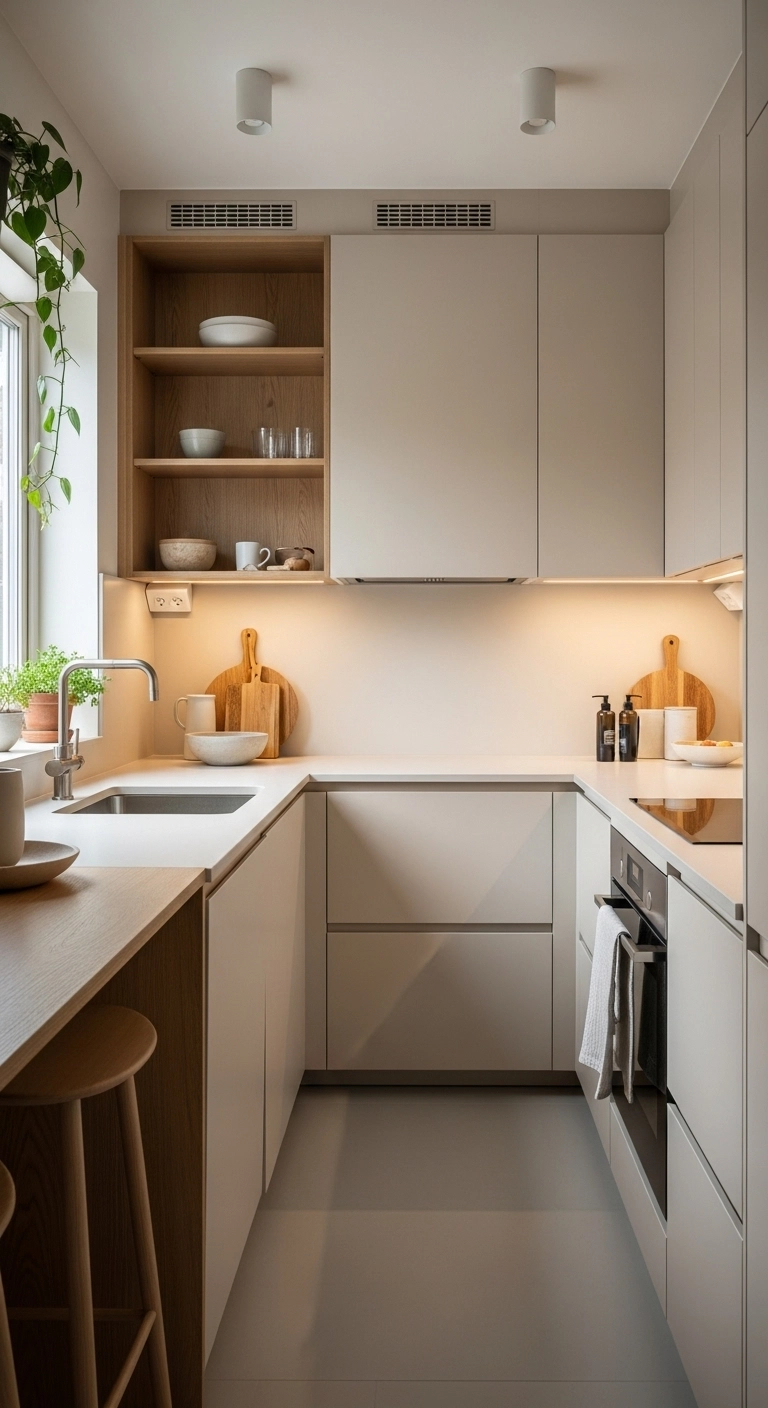
Small kitchens feel more open when the eye can move easily across the room. A choppy mix of too many colors, finishes, and strong contrasts interrupts that flow and can make the room feel smaller than it is.
A better approach is to use a palette that feels connected. Cabinets, walls, backsplash, and even larger accessories should relate to one another. This does not mean everything has to be identical. It means the room should not feel like four different ideas competing for attention.
Soft whites, warm neutrals, pale grays, muted greens, light wood tones, and light stone shades work well because they reflect light and create a calm rhythm. In small spaces, consistency often feels more spacious than variety.
Choose Open Shelving Carefully, Not Excessively
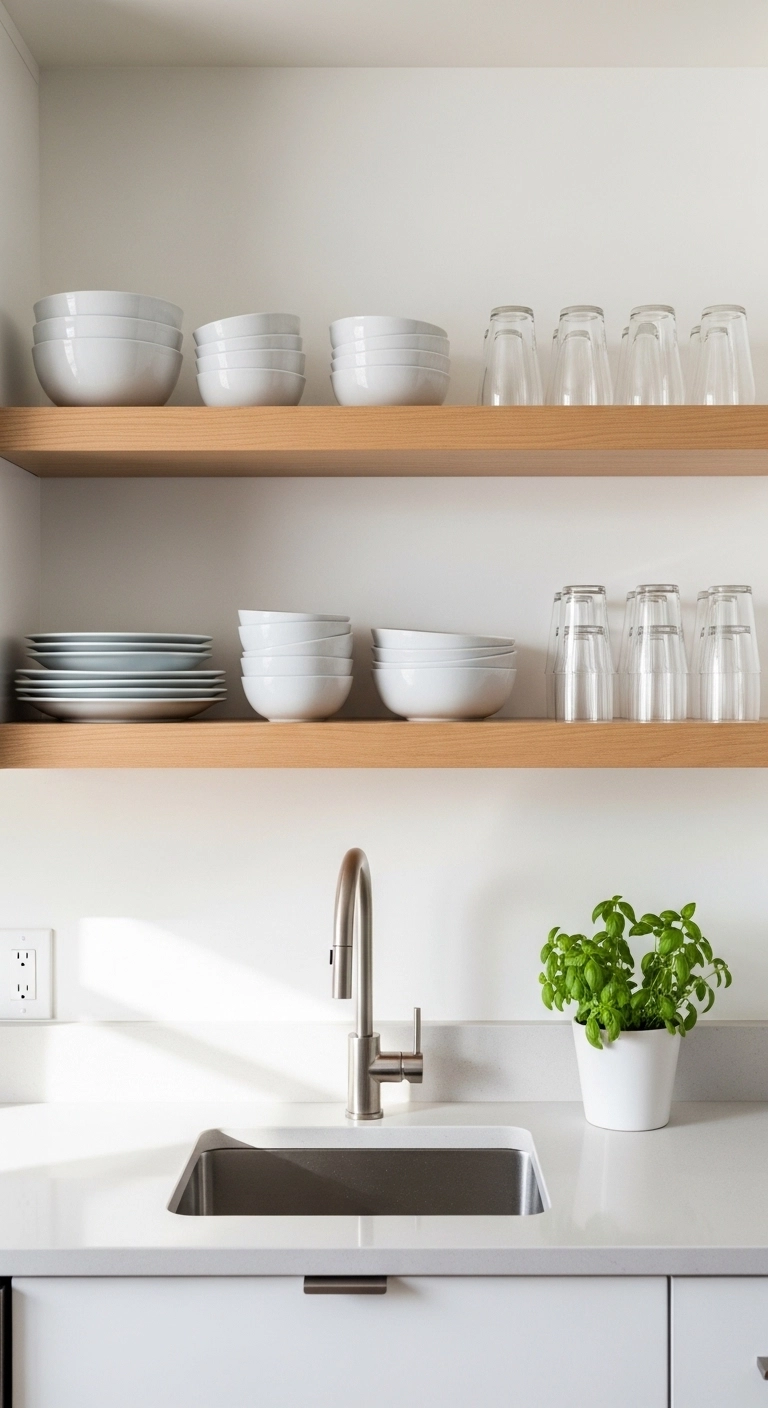
Open shelving can help a small kitchen feel lighter, but only when it is used with discipline. A couple of well-placed shelves can break up a wall of cabinets and make the room feel less closed in. Too many, and the kitchen starts to feel busy instead of open.
This is where people often go wrong. They remove upper cabinets hoping for a more spacious look, then fill the shelves with mismatched dishes, jars, decor, and items they do not really use. The result can feel more crowded than before.
If you use open shelves, keep them limited and purposeful. Display everyday items that look neat together, such as simple dishes, glasses, or a few bowls. Leave empty space between objects. Open shelving works best when it brings visual relief, not more visual work.
Let the Countertops Stay as Clear as Possible
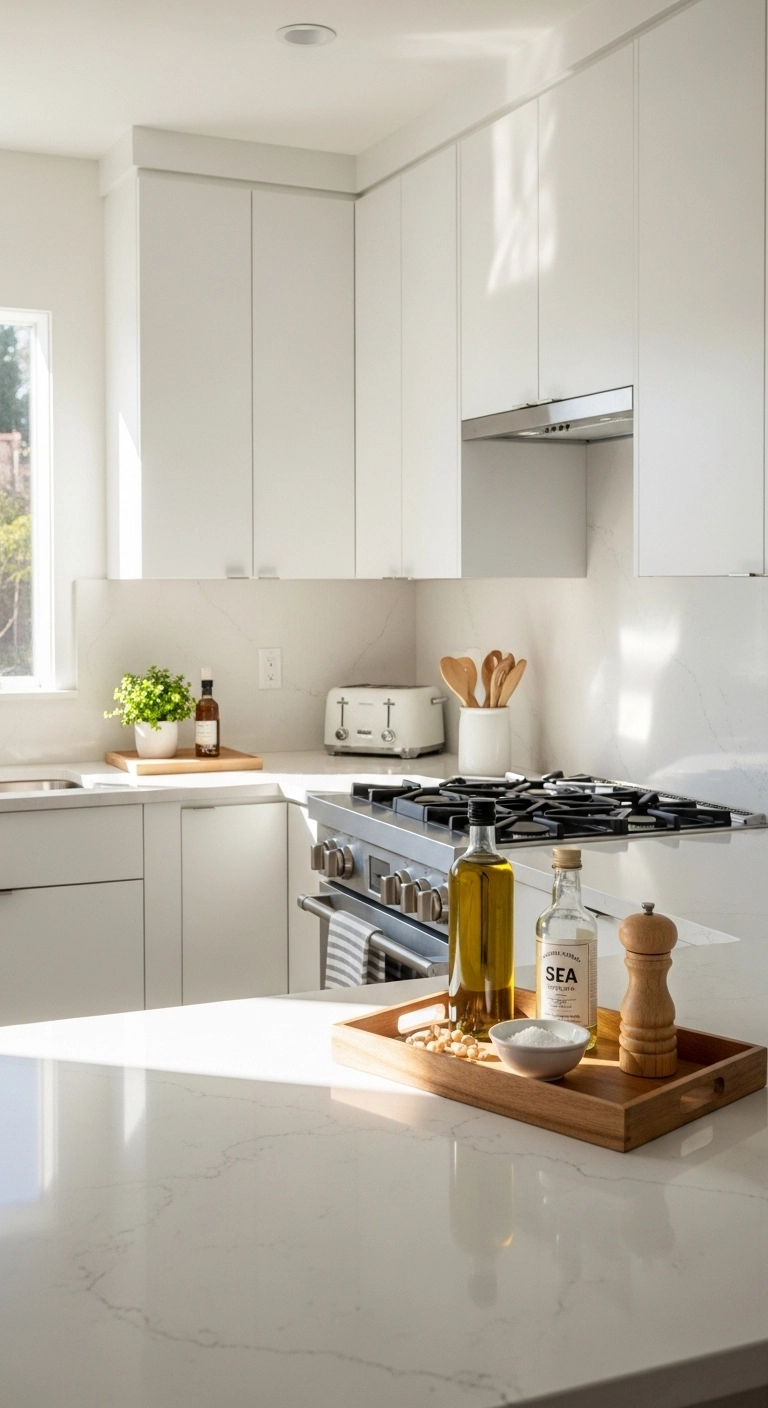
Nothing shrinks a kitchen faster than crowded counters. Even a well-designed kitchen can start to feel tight when every appliance, utensil holder, cutting board, and decorative object lives out in the open.
One of the smartest kitchen ideas for small spaces is to decide what truly deserves counter space. Most kitchens only need a few daily-use items visible. Everything else should either be stored away or grouped neatly in one zone.
This does not mean the counters have to look empty and severe. A coffee station, a tray with oils near the stove, or a bowl of fruit can still feel warm and useful. The point is that the room needs enough open surface to look larger and function better. Clear space is not wasted space in a small kitchen. It is part of the design.
Use Reflective Surfaces in Quiet Ways
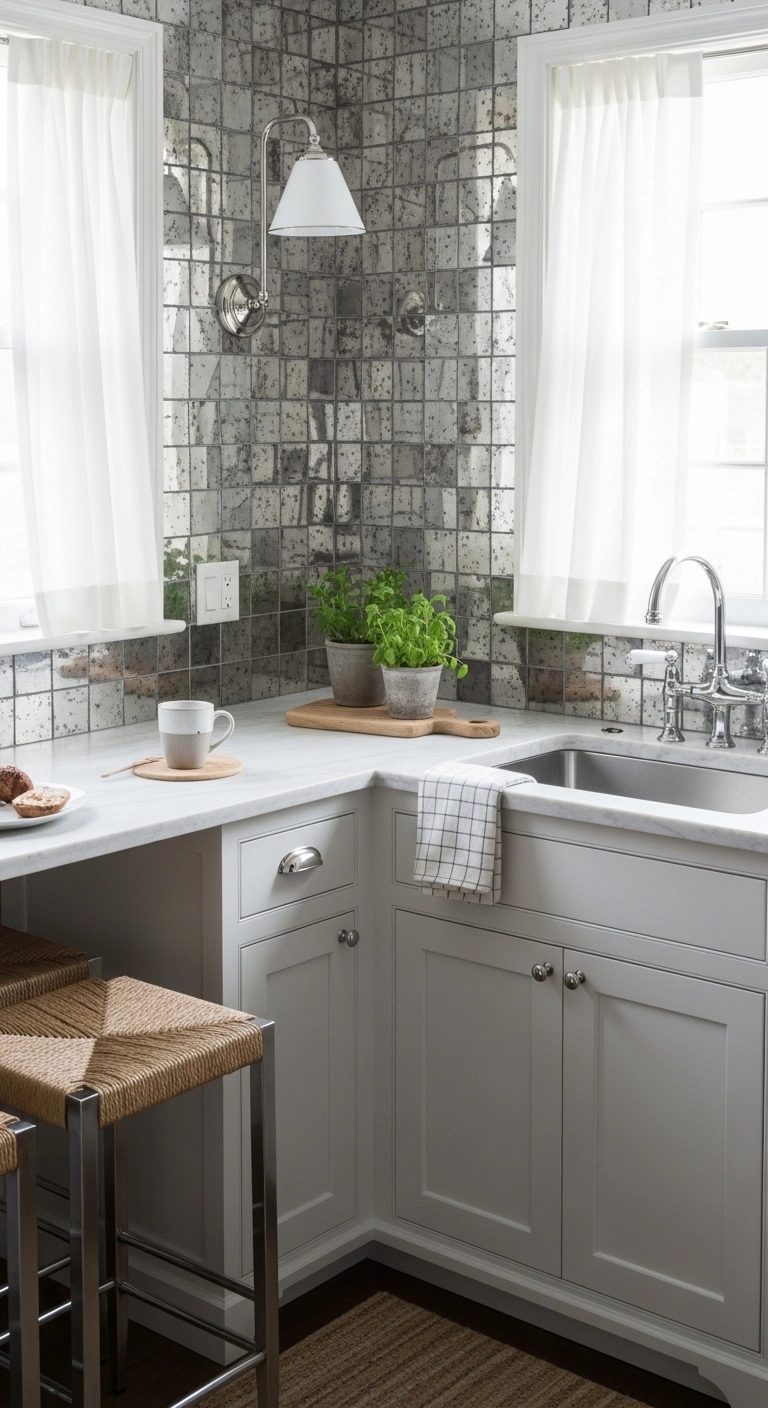
Reflection helps a room feel more open, and kitchens can benefit from that just as much as living rooms or bathrooms. The trick is to use it in a way that feels subtle rather than shiny for the sake of it.
Glossy tile, softly polished stone, glass cabinet inserts, reflective hardware, or even a light-catching backsplash can all help bounce light around the room. If the kitchen has little natural light, this becomes even more useful.
You do not need mirrored walls or anything dramatic. A little reflection in the right place makes the space feel less flat and a bit more alive. In small kitchens, that light movement helps the room feel less enclosed.
Make the Most of Vertical Storage
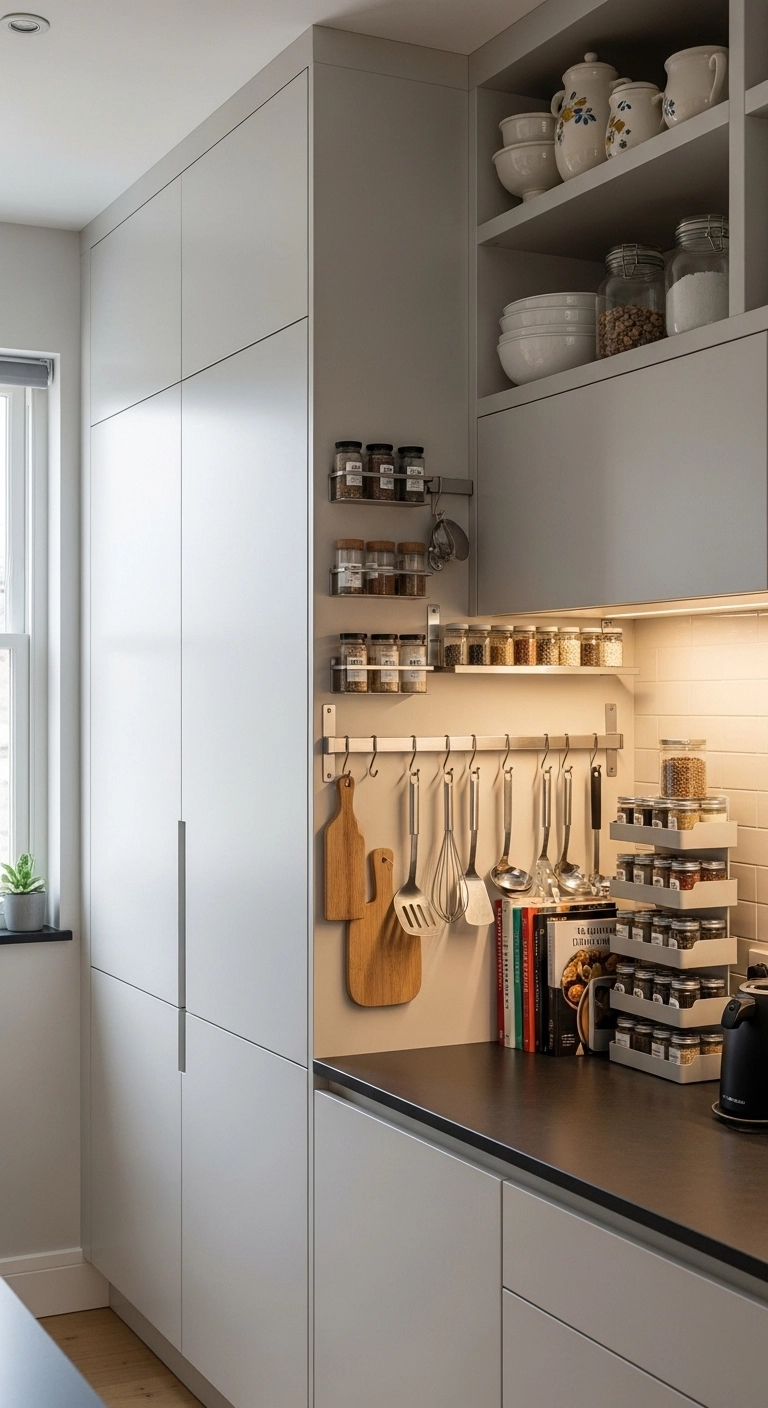
When floor space is limited, the walls have to work harder. Vertical storage is often what separates a cramped small kitchen from one that actually functions well.
Tall pantry cabinets, wall-mounted rails, stacked shelves inside cabinets, hooks under shelving, and narrow storage that goes upward instead of outward can all make a major difference. The goal is not just to fit more in. It is to keep frequently used things organized without crowding the main work zones.
Vertical storage works best when it supports the kitchen’s daily habits. Put everyday items within reach and less-used pieces higher up. A small kitchen feels more open when the storage is smarter, because the room does not need to fight with its own clutter.
Choose Slimmer Furniture and Fixtures
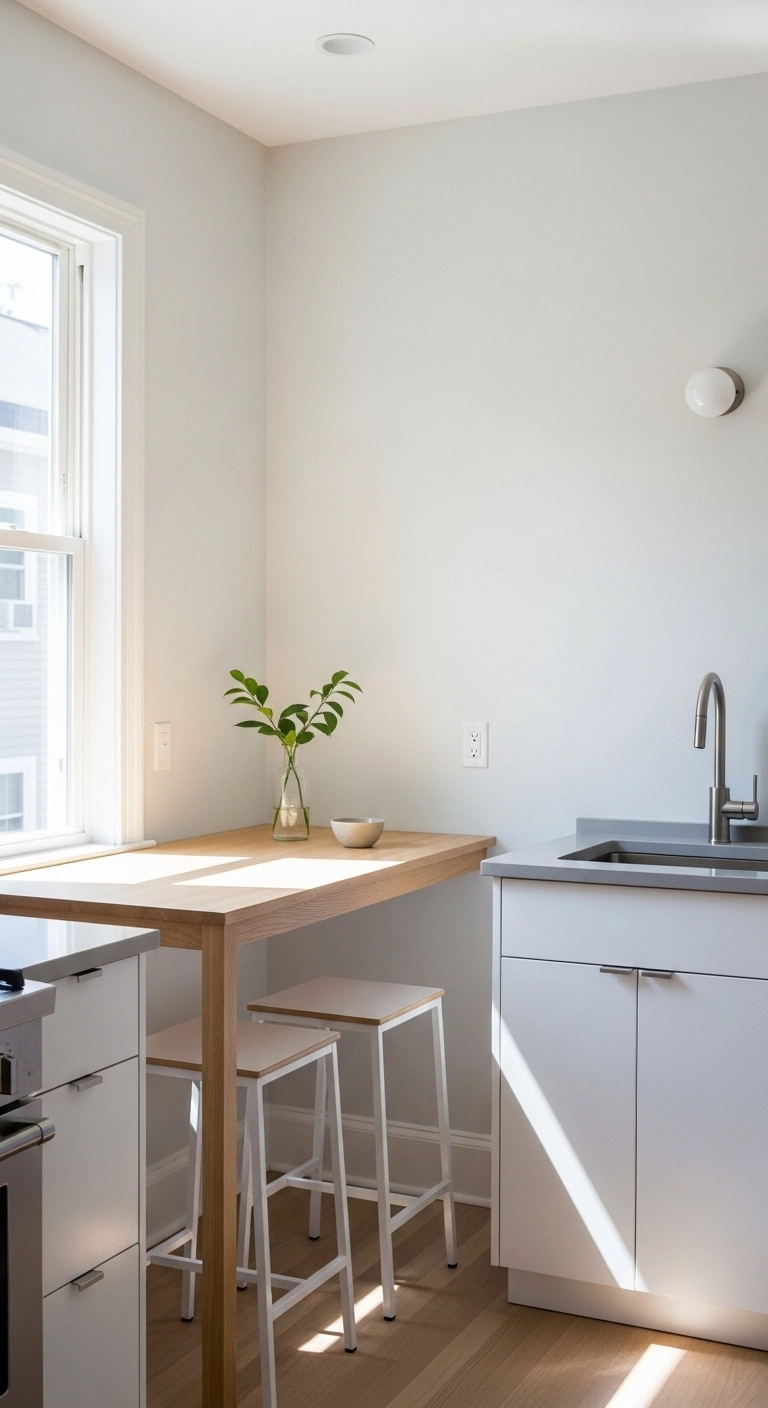
In small kitchens, bulky pieces can quietly steal more space than people realize. That might be oversized stools, a heavy table base, thick cabinet hardware, or a deep light fixture hanging too low.
Choosing slimmer elements helps the room breathe. A table with narrow legs, stools that tuck fully underneath, a streamlined faucet, simple pulls, and lighter-looking furniture can all make a kitchen feel less packed. This does not mean everything has to be tiny. It means the scale should make sense for the room.
The visual weight of furniture matters just as much as the actual measurements. Pieces that look lighter often help the room feel more open, even when they serve the same function.
Use Lighting to Open Up Dark Corners
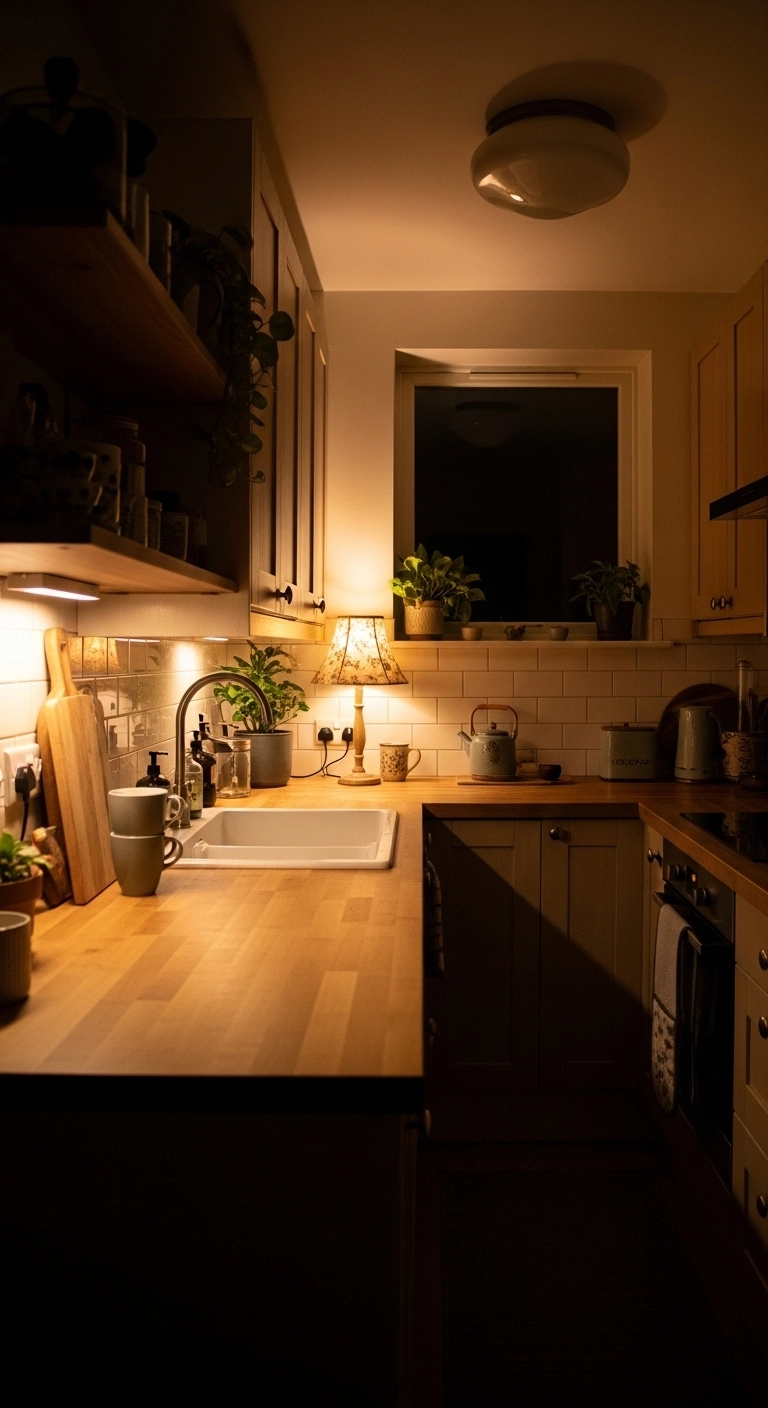
Poor lighting makes a small kitchen feel smaller. It flattens the room, creates shadows in work areas, and makes corners disappear in the wrong way.
Good lighting should come in layers. Overhead light is necessary, but it should not do all the work. Under-cabinet lighting, a small lamp on a counter, pendant lights over a peninsula, or even better daylight management can all help the room feel more open.
When light reaches the corners and work surfaces properly, the room instantly feels bigger and easier to use. This is especially important in kitchens with dark cabinets, limited windows, or deeper layouts where one central fixture leaves too much gloom around the edges.
Pick a Backsplash That Connects Rather Than Interrupts
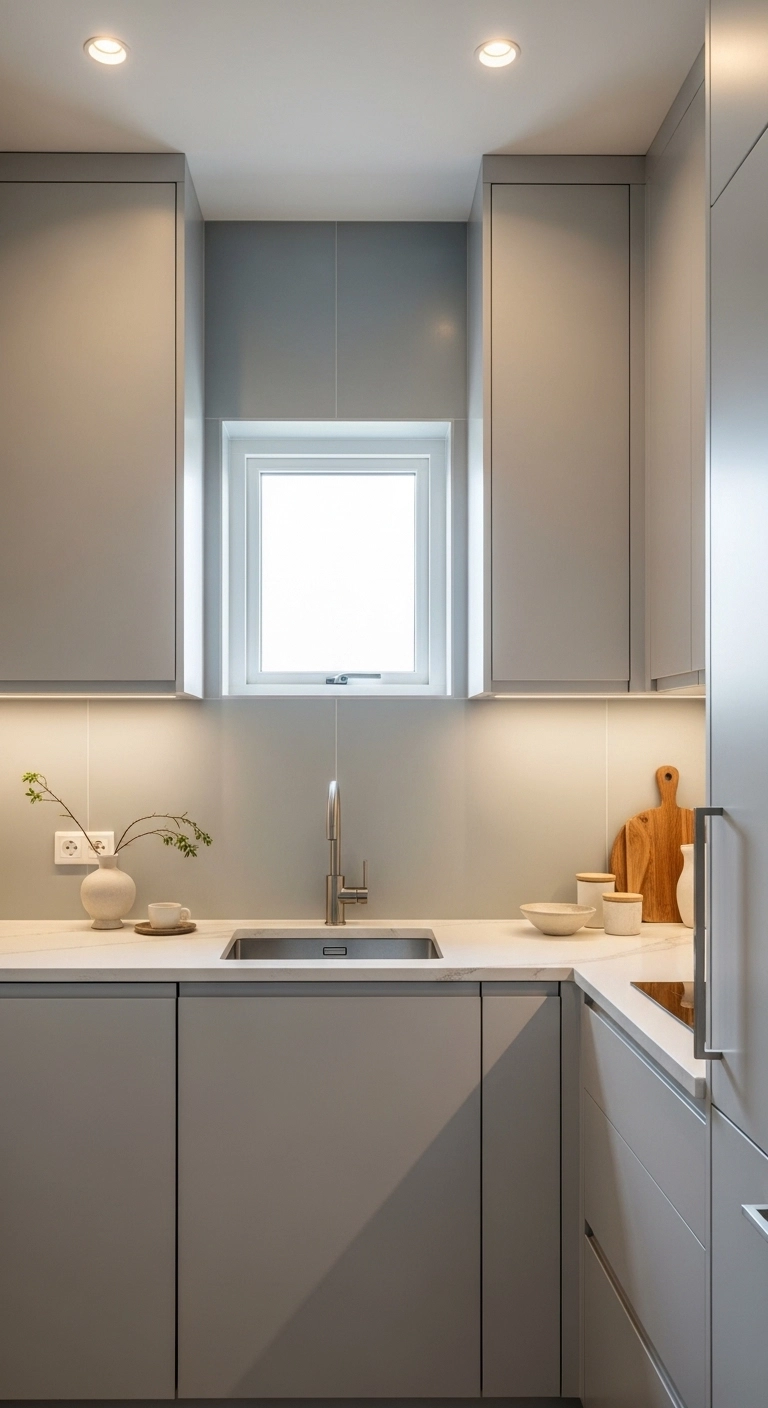
The backsplash covers a surprisingly visible amount of wall space in a kitchen, so its design has a strong effect on how large or small the room feels. In smaller kitchens, overly busy patterns or sharp color jumps can make the room feel more crowded.
A backsplash that blends well with the counters and cabinets usually helps the room feel smoother and more open. That could be a simple tile in a soft tone, a slab backsplash, or a quiet handmade-look tile with low contrast. Texture is fine. Too much visual interruption is usually the problem.
If you want personality, let it come through shape, finish, or subtle variation rather than loud contrast. Small kitchens respond well to materials that add interest without breaking the room into too many pieces.
Turn Awkward Gaps Into Useful Storage
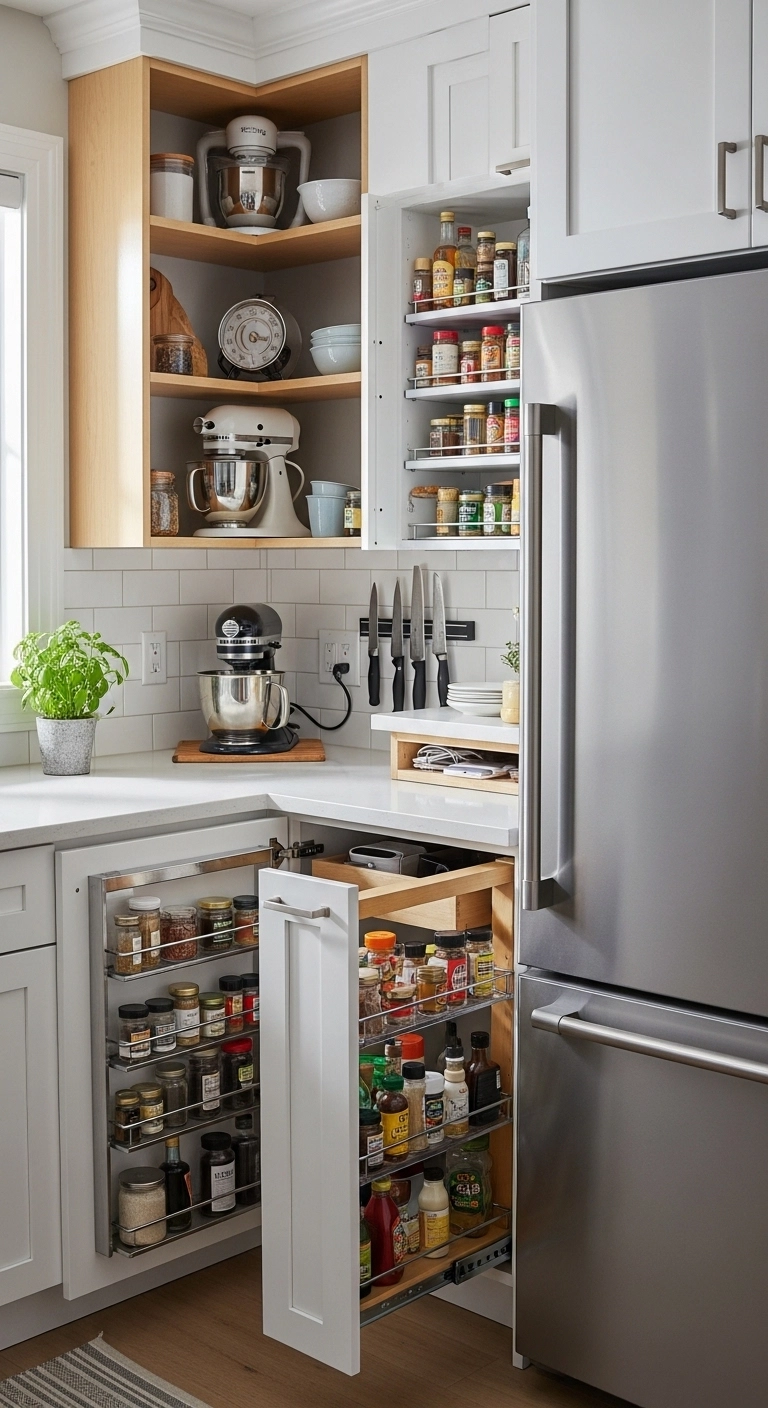
Small kitchens often have one or two annoying spaces that feel too narrow, too shallow, or too awkward to be useful. Those spots matter more than they would in a larger kitchen because every inch counts.
A narrow gap beside the fridge might become a pull-out pantry. The side of a cabinet might hold hooks, a rail, or a slim spice shelf. A small dead corner might work better with a lazy Susan, tray storage, or a custom divider system. Even the inside of cabinet doors can become valuable space.
Making use of these awkward areas helps the main kitchen stay cleaner and more open. The less overflow you have on the counters and in the walkways, the larger the room feels.
Use Glass or Leggy Pieces to Keep Sightlines Open
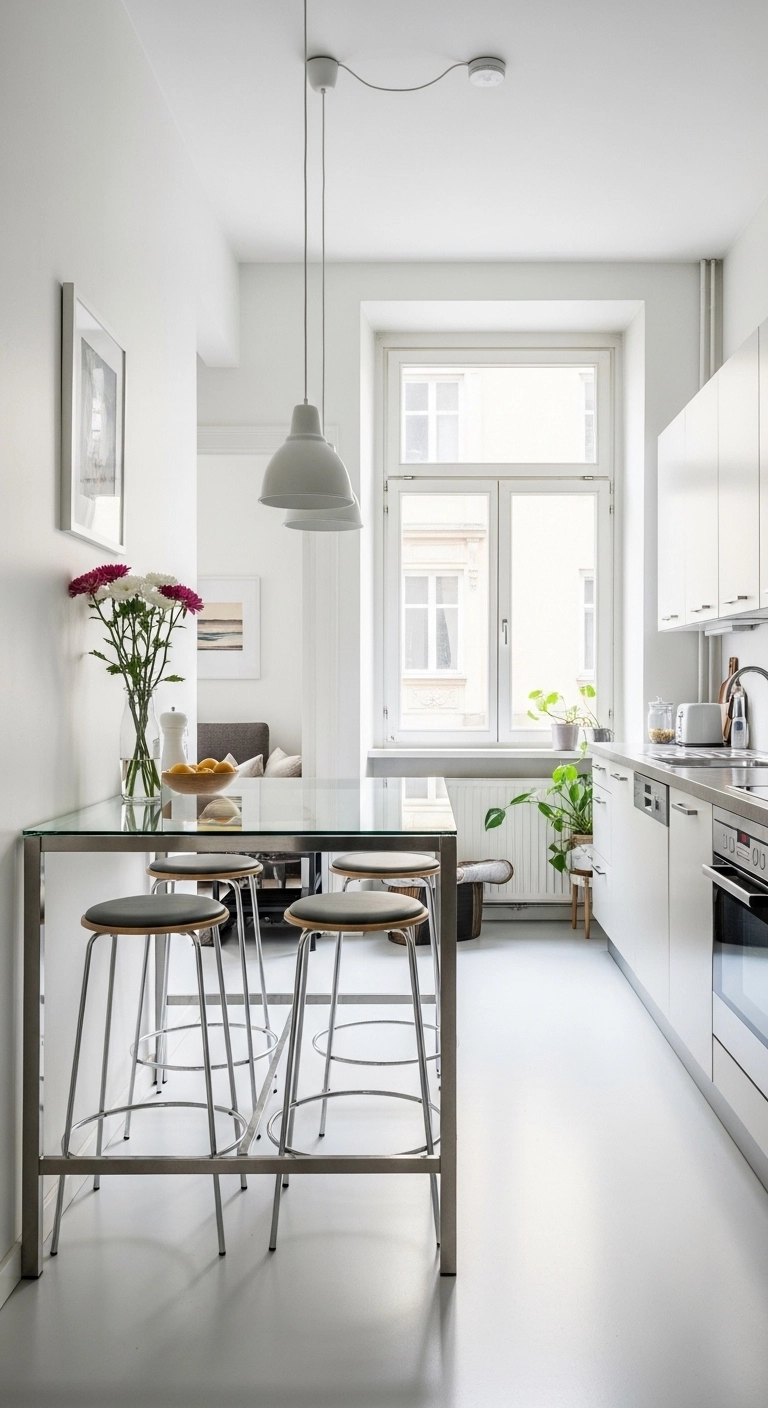
If your kitchen includes a small table, bar stools, or nearby breakfast area furniture, the sightline through those pieces matters. Solid, heavy furniture can stop the eye and make the room feel blocked.
Pieces with legs, open bases, glass tops, or slimmer profiles help the room feel more open because you can still visually move through them. This is especially useful in eat-in kitchens and apartment kitchens where dining and cooking zones overlap.
It is a small shift, but it works. When the eye can travel across the room more easily, the whole kitchen feels less crowded and more relaxed.
Edit the Room Ruthlessly, Then Add Warmth Back In
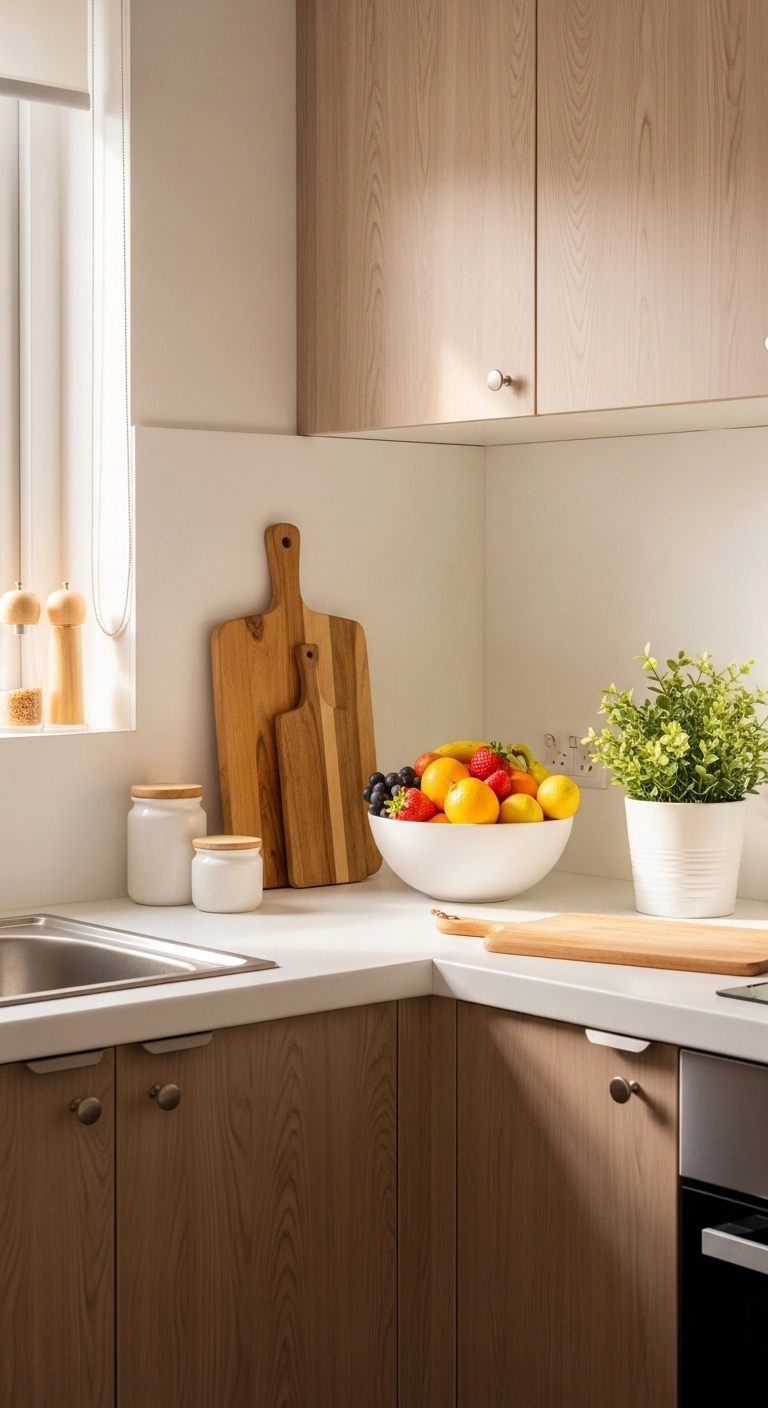
A small kitchen needs editing more than decoration. The room will never feel open if too many things are fighting for space, no matter how pretty each item is on its own.
Start by removing what you don’t need. Extra stools, duplicate dishes, rarely used appliances, oversized decorations, and clutter like magnets or papers all add up quickly. Once the room feels clean, carefully add warmth back in. A bowl of fruit, a nice cutting board, a small lamp, a plant, or a simple tray can make a kitchen feel welcoming again.
This matters because open should not mean sterile. The goal is to create a kitchen that feels spacious and lived in at the same time. The best small kitchens usually strike that balance well.
How to Make a Small Kitchen Feel More Open Without Renovating
If a full renovation is not happening anytime soon, focus on the changes that have the biggest everyday effect:
- clear the counters
- lighten the upper half of the room
- improve lighting
- use vertical storage
- keep the palette connected
- choose slimmer furniture and fixtures
- reduce visual clutter
These changes may sound simple, but in a small kitchen, simple changes often matter the most. The room does not need more complexity. It needs better flow.
FAQs About Kitchen Ideas for Small Spaces
What color makes a small kitchen look bigger?
Light and medium-toned colors usually help the most because they reflect light and reduce contrast. Soft whites, warm beiges, light grays, muted greens, and light wood tones often work well. The biggest factor, though, is keeping the palette cohesive so the room doesn’t feel visually fragmented.
How do I add storage to a small kitchen without making it feel crowded?
Use vertical space, cabinet organizers, hooks, narrow pull-outs, and the insides of doors. The best storage solutions keep daily items accessible while freeing up counters and reducing clutter in the main work zones.
Are open shelves good for small kitchens?
They can be, but only in moderation. One or two shelves can make the room feel lighter. Too many can create visual clutter and make the kitchen feel busier. Open shelves work best when they hold neat, everyday items and are not overloaded.
What is the biggest mistake in a small kitchen?
One of the biggest mistakes is leaving too many things out in the open. Crowded counters, heavy furniture, and too many visuals can make even a functional kitchen feel cramped.
How do I make a small kitchen feel expensive?
Keep the design simple and consistent. Good lighting, better organization, a calm palette, thoughtful hardware, and fewer but better-looking visible items often make a kitchen feel more polished than adding more decorative pieces.
Can a small kitchen still have personality?
Absolutely. Personality comes from thoughtful details, not clutter. A warm light, a beautiful tile, a wood board, a favorite mug area, or one well-chosen color can give the kitchen character without making it feel crowded.
Final Thoughts
The best kitchen ideas for small spaces are the ones that improve both function and feeling. A small kitchen should not just store more. It should feel easier to work in, easier to clean, and easier to enjoy.
This usually comes from smart editing, better lighting, robust storage, and a design that allows the eye to move in without hindrance. When those pieces come together, even a compact kitchen can feel open, calm, and surprisingly comfortable.

Muskan Saleem
BukayHome shares practical home decorating ideas, room inspiration, and simple styling tips to help readers create a home they truly love.